Atay bi Na'na.
Moroccan Mint Tea
أتاي بالنعناع · say it: ah-TAY bee NAH-nah
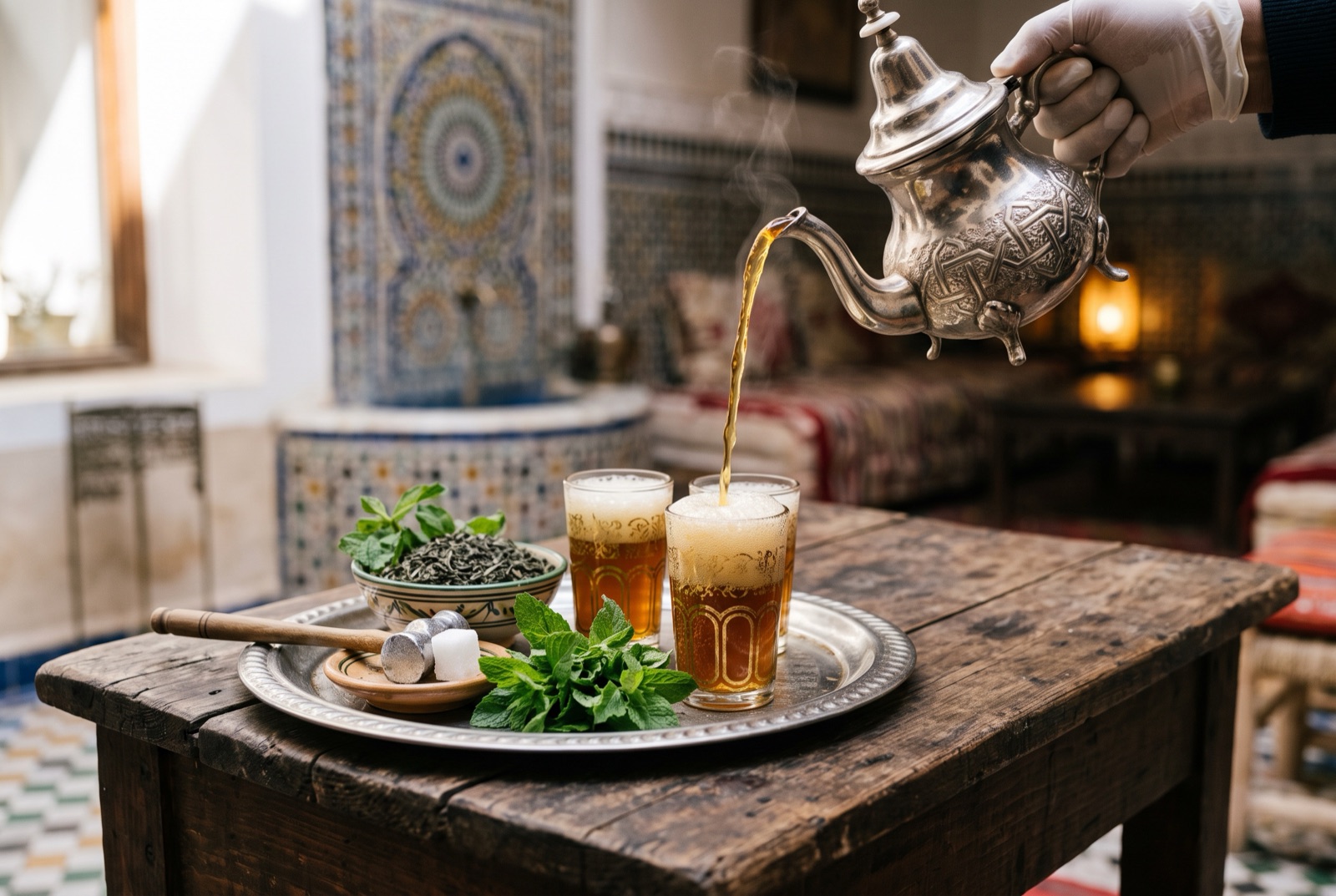
Moroccan mint tea is gunpowder green tea infused with a generous bunch of spearmint and sweetened in the pot, served scalding hot in small glasses topped with a layer of pale foam. The taste runs in three distinct stages: the bracing, slightly bitter astringency of the green tea underneath, a cold rush of mint above it, and sugar holding the two together. It is not a delicate infusion — the tea is brewed strong on purpose so the mint and sugar have something to push against. Almost everything about making it is technique rather than ingredients: rinsing the leaves, brewing hard, and pouring from a height so each glass arrives with its crown of bubbles.

- Gate
- Morocco
- Prep
- 5 min
- Cook
- 10 min
- Total time
- 15 min
- Serves
- 4
- Status
- Easy
- Nutrition / serving · estimated
- Calories 62 kcal
- Protein 0 g
- Carbs 16 g
- Fat 0 g
- Fiber 0 g
- Sugar 15 g
- Sodium 5 mg
Why this recipe works.
- Includes the rinse step that most foreign recipes skip — it is the difference between fresh mint tea and a mouthful of dusty bitterness.
- Treats the mint correctly: added whole and late, never boiled, so it stays green and aromatic instead of stewing into a dull herbal soup.
- Explains the pour-and-return method that actually mixes the sugar, rather than telling you to stir with a spoon.
- Gives honest sugar guidance with a range, since the traditional level surprises most people the first time.
Ingredients.
6 itemsFor the pot
To serve
Equipment
- Teapot with a long spout (berrad) or any pot you can heat
- Small tea glasses
- Kettle
Instructions.
Rinse the leaves
Put the gunpowder tea in the pot and pour over about 100 ml of boiling water. Swirl for ten seconds — the pellets will start to loosen and the water will turn cloudy grey — then pour that water away completely. This flush is discarded, not served.
Tip Some households keep this first rinse aside and add a splash back at the end. Discarding it entirely gives a cleaner, less bitter pot.
Brew the tea strong
Pour the remaining boiling water over the rinsed leaves, set the pot over low heat and let it steep for 3–4 minutes, until the liquid is a deep gold-green and smells sharply grassy. Do not let it boil hard or push past four minutes, or the tannins take over.
Sweeten and add the mint
Take the pot off the heat, add the sugar, then push the whole bunch of mint down into the tea stems-first so the leaves are submerged. Let it sit 3 minutes — the mint should stay bright green and perfume the steam, never darken or stew.
Tip Bruise the stems lightly between your palms before adding them; the stems carry as much aroma as the leaves.
Mix by pouring back
Pour a full glass of tea and tip it straight back into the pot. Repeat three or four times, raising the pot higher each round — this dissolves the sugar completely, evens the strength through the pot and drops the temperature from scalding to drinkable.
Taste and correct
Pour a small amount and taste it. It should be assertively sweet with the green tea still clearly present underneath and cold mint on the finish. If it tastes thin or harsh, add another spoonful of sugar and pour back through once more.
Pour from height
Fill each glass about two-thirds full, holding the pot as high above the rim as you can control so the tea falls in a thin ribbon and raises a pale head of foam. Drop in a few pine nuts if using and serve immediately, with the mint still in the pot for the next round.
Tips from our kitchen.
- Use gunpowder green tea — the tightly rolled pellets. Loose-leaf sencha or teabags produce something drinkable but not Moroccan; the pellets unfurl slowly and give the strong, astringent base the drink is built on.
- Never skip the first rinse. That short flush of boiling water carries off the dust and the harshest bitterness from the pellets, and it is discarded, not drunk.
- Spearmint, not peppermint. Moroccan na'na is a spearmint variety; peppermint is far more aggressive and its menthol flattens the tea underneath.
- Add the mint after the tea has brewed, never at the start, and push it under the surface rather than boiling it. Boiled mint turns dark and bitter within a minute.
- Pour from as high as you can manage without splashing. The foam is not decoration — it means the tea has been aerated and mixed properly.
- Fill glasses about two-thirds full so the top rim stays cool enough to hold between finger and thumb.
Substitutions.
- Gunpowder green tea → Any strong loose-leaf Chinese green tea
- Reduce the steeping time to 2 minutes, as unrolled leaves release their tannins faster and turn harsh. The drink will be lighter than the real thing.
- Fresh spearmint → A smaller quantity of fresh peppermint, or dried spearmint at a third of the weight
- Dried mint works in winter and is used in Morocco when fresh is scarce, though it gives a duller, more medicinal result.
- Sugar → Honey, or a reduced quantity of sugar
- Honey is not traditional and mutes the mint, but this is an honest trade rather than a ruined drink. Moroccans would consider a barely sweetened glass unfinished — try it their way once before deciding.
Variations.
- Atay bi chiba
- Winter tea with a small sprig of wormwood added alongside the mint, giving a distinctly bitter, medicinal edge. A little goes a long way — one short sprig for a whole pot.
- Sahara tea
- Made much stronger and much sweeter, sometimes with pine nuts dropped into the glass to float on the foam. Common in the south and in desert camps.
- Atay bi louiza
- Brewed with lemon verbena in place of some of the mint, producing a softer, more floral infusion often served in the evening.
Storage & reheating.
Mint tea is made and drunk immediately; there is no keeping it. The mint darkens and goes bitter within twenty minutes in hot liquid, and the foam collapses almost at once. What is traditional is to pour three successive glasses from the same pot: top the leaves up with fresh boiling water between rounds, and expect each glass to be stronger and more astringent than the last. Refrigerated leftover tea can be drunk cold over ice, which is common enough in summer, but it is a different drink rather than the same one chilled.
Serve with
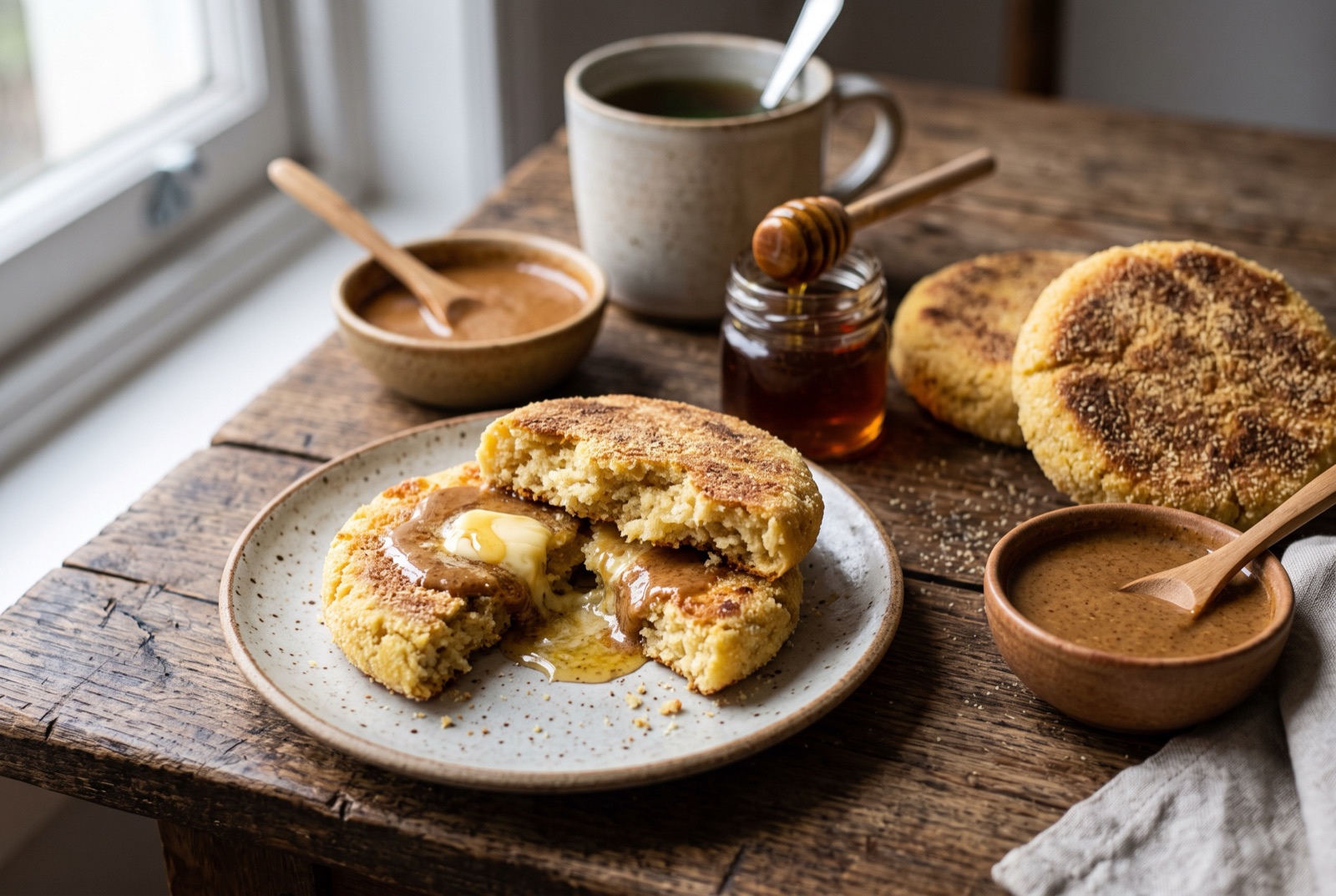
Chebakia, msemen with honey, or a plate of almond pastries — anything sweet that stands up to a very sweet glass.
The story behind Atay bi Na'na.
Green tea is not native to Morocco and did not arrive there until the nineteenth century, which makes the national drink a relatively recent adoption that took hold with remarkable speed. Gunpowder tea from China reached Moroccan ports through European trade, and it landed in a culture that already drank hot herbal infusions — mint, wormwood, verbena — sweetened heavily. The two habits fused almost immediately, and within a few generations tea had become inseparable from Moroccan hospitality, commerce and daily rhythm. Today the country is among the largest importers of Chinese green tea in the world.
The serving is where the meaning lives. Tea is offered to every guest, and refusing it outright is a social misstep rather than a dietary preference — it is closer to declining a handshake. In the souks it lubricates negotiation: a merchant who brings tea is signalling that a conversation, not a transaction, is underway, and the price talk happens between glasses. Tradition holds that three glasses are poured from the same pot, each steeping longer and tasting different, and the saying attached to them — the first gentle as life, the second strong as love, the third bitter as death — is repeated so often that it functions as a description of the brewing rather than poetry.
The pouring itself is deliberate showmanship with a practical basis. The teapot is raised high above the glass, sometimes a full arm's length, and the stream is dropped in a thin ribbon that aerates the tea and builds a head of foam on the surface. That foam is the visible proof of a well-made pot; a flat glass suggests carelessness. The pot is also poured out and back into itself several times before serving, which mixes the sugar, evens the strength and cools the tea from scalding to merely very hot. Men usually make it, often the head of the household, using a long-spouted brass or silver-plated berrad and small decorated glasses that are filled only two-thirds full so the rim stays cool enough to hold.
Questions, answered.
Why do you rinse the tea leaves first?
Gunpowder pellets carry dust from processing and release a harsh, dusty bitterness in the first few seconds of contact with boiling water. A short flush — pour a little boiling water over the leaves, swirl for about ten seconds and discard it — takes both away and leaves a cleaner, rounder brew. The liquid from that rinse is thrown out, never served.
Why is Moroccan mint tea poured from so high?
The long fall aerates the tea, which builds the layer of foam on top of each glass — the visible sign of a properly made pot. It also cools the stream slightly on the way down and helps mix the sugar through. A glass poured flat from close range looks and tastes duller, and in Morocco reads as carelessness on the part of whoever made it.
What kind of mint should I use?
Spearmint, known in Morocco as na'na, ideally a bunch with sturdy stems and broad leaves. Peppermint has a much higher menthol content that overwhelms the tea underneath and leaves a cooling numbness rather than a fresh aroma. If only peppermint is available, use roughly half the quantity and expect a sharper drink.
How sweet should Moroccan mint tea be?
Sweeter than most people outside Morocco expect — traditionally around a tablespoon of sugar per small glass. The sugar is not just for taste: it balances the deliberate astringency of a strong green tea brew and makes the mint read as fresh rather than grassy. Start with 60 g for a pot of four glasses and adjust upward if it tastes thin or harsh.
Do I need a special teapot?
No, though the long-spouted metal berrad helps. Its shape lets you pour a thin controlled stream from a height without splashing, and the metal body can go back on the heat. Any teapot with a decent spout works, but avoid glass or ceramic pots you cannot reheat, and keep the pour narrow so the foam still forms.
Why does my mint tea taste bitter?
Three likely reasons: the leaves were not rinsed, the tea steeped too long, or the mint was boiled with the leaves rather than added afterwards. Gunpowder tea gets aggressively tannic past about four minutes, and mint held in near-boiling water turns dark and bitter in under a minute. Rinse, steep no more than four minutes, and push the mint in off the boil.
You might also like.
All recipes →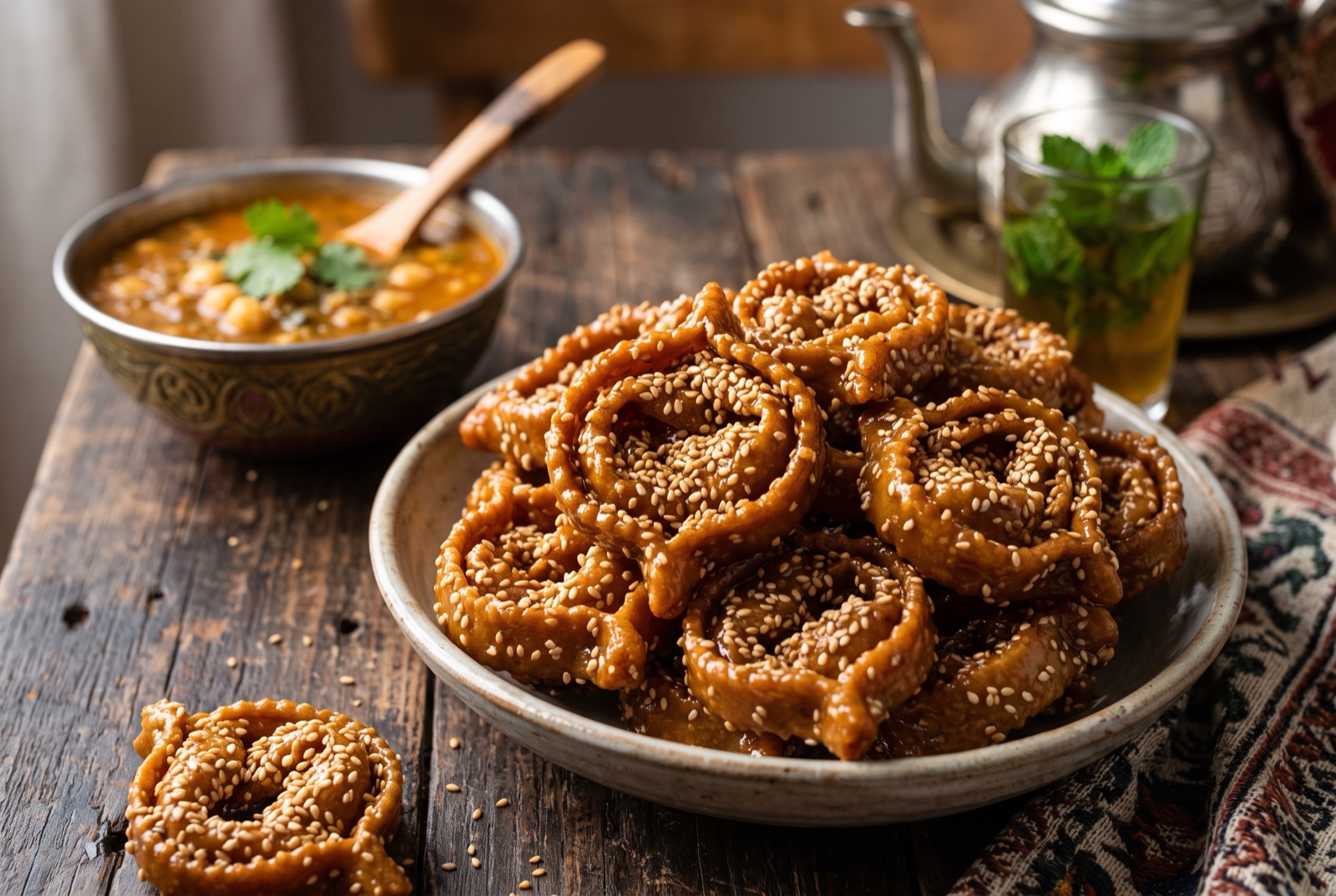
Keep exploring Morocco.
Morocco has 9 more dishes in the atlas — Bastilla and Chebakia, and 7 more.
Recipe by The DishRoute Kitchen · published August 19, 2026 · updated August 19, 2026