Nasi Goreng.
Indonesian Fried Rice
Nasi goreng · say it: NAH-see GOH-reng
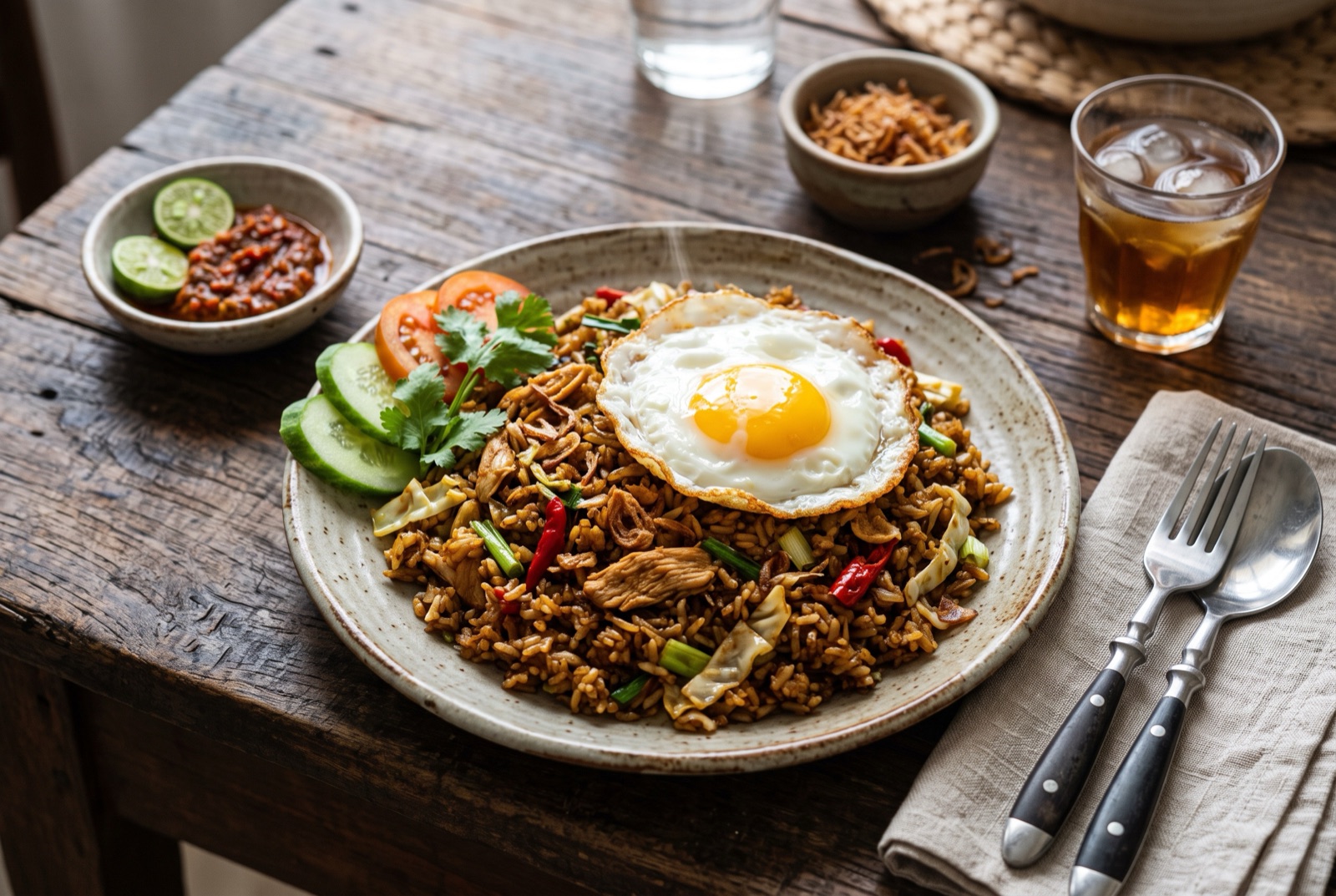
Nasi goreng is Indonesian fried rice, and what separates it from every other fried rice in Asia is kecap manis — a thick, molasses-dark sweet soy sauce that stains the grains mahogany and gives the dish its signature sweet-savory depth. Add garlic, shallot, a little chile, and the smoke of a very hot wok, and you have something closer to caramel-edged comfort food than a stir-fry. It is finished, always, with a fried egg on top, its runny yolk acting as the sauce. This version works from an ordinary home stove: day-old rice, high heat, and a homemade kecap manis stand-in if you cannot find the bottle.

- Gate
- Indonesia
- Prep
- 15 min
- Cook
- 15 min
- Total time
- 30 min
- Serves
- 2
- Status
- Easy
- Nutrition / serving · estimated
- Calories 620 kcal
- Protein 16 g
- Carbs 92 g
- Fat 21 g
- Fiber 3 g
- Sugar 14 g
Why this recipe works.
- Built on day-old rice and real wok heat — the two things that actually make fried rice taste right.
- Includes an honest kecap manis substitute (soy sauce simmered with brown sugar) for kitchens that cannot find the bottle.
- One pan, fifteen minutes of cooking, and it turns leftover rice into dinner.
- The fried-egg finish and cucumber garnish serve it the way an Indonesian warung would.
Ingredients.
13 itemsFor the rice
For serving
Equipment
- Wok or large heavy skillet
- Small pan for frying eggs
- Spatula or wok ladle
Instructions.
Break up the rice
Break the cold rice apart with wet hands until no clumps larger than a grape remain. Have everything else chopped and within arm's reach — once the wok is hot, the dish moves fast.
Fry the aromatics
Heat 2 tablespoons of oil in a wok over high heat until it shimmers. Add the shallots, garlic and chile (and terasi, if using) and fry, stirring, until the shallots soften and turn golden at the edges and the whole kitchen smells of them, about 1–2 minutes.
Tip If the garlic starts browning too fast, lift the wok off the heat for a few seconds rather than letting it burn.
Fry the rice
Add 4 cups of rice and toss to coat in the aromatics, then press it flat against the wok and leave it alone for 30–40 seconds at a time between tosses. It is ready for seasoning when the grains are hot right through and some have picked up toasty golden spots.
Season and caramelize
Drizzle the kecap manis and 1 tbsp of soy sauce around the edge of the wok so they sizzle on the metal, then toss everything together. Keep frying until the rice is stained an even mahogany brown and smells faintly of caramel, about 2 minutes. Stir in the scallions and take the wok off the heat.
Fry the eggs
In a small pan, heat a generous slick of oil over high heat and crack in the eggs. Fry until the whites blister and the edges turn brown and crisp while the yolks stay soft, about 2 minutes — spoon hot oil over the whites to set the tops.
Tip The crispy-edged fried egg (telur mata sapi) is non-negotiable in Indonesia — do not poach or scramble.
Plate the warung way
Mound the rice on plates and lay a fried egg on top of each. Arrange cucumber and tomato alongside, add a handful of krupuk if you have them, and serve immediately while the egg yolk is still runny enough to sauce the rice.
Tips from our kitchen.
- Use rice cooked the day before and refrigerated uncovered. Fresh rice steams and clumps; chilled, dried-out grains fry separate and pick up the wok's char.
- Break up the cold rice with wet hands before it goes near the pan — clumps that hit the wok stay clumps.
- Get the pan properly hot before the rice goes in, and resist stirring constantly. The rice needs still contact with hot metal to catch those toasty, faintly smoky edges.
- Add the kecap manis at the edge of the pan, not in the middle of the rice — it caramelizes on the hot steel first, which is where the flavor comes from.
- Fry the eggs in generous oil over high heat so the whites blister and the edges go brown and crisp while the yolk stays runny.
- Cook in two batches if your pan is small. A crowded pan drops in temperature and the rice stews instead of frying.
Substitutions.
- Kecap manis (Indonesian sweet soy sauce) → 2 tbsp soy sauce simmered briefly with 2 tbsp brown or palm sugar until syrupy
- A close, honest approximation. The real bottle (ABC or Bango brands) is cheap in Asian groceries and keeps for a year — worth buying.
- Shrimp paste (terasi) → Simply leave it out, or add ½ tsp fish sauce
- Terasi gives an authentic funky depth but the dish works without it. Fish sauce is a gentler stand-in.
- Fresh red chiles → 1 tsp sambal oelek or a pinch of chile flakes
- Sambal oelek is actually the more traditional route in many households — adjust the amount to your heat tolerance.
Variations.
- Nasi goreng ayam
- With shredded cooked chicken folded in — leftover roast chicken is ideal. The most common warung version.
- Nasi goreng kampung
- "Village style": no kecap manis, seasoned instead with shrimp paste and chiles — saltier, funkier, and hotter than the sweet city version.
- Nasi goreng seafood
- Shrimp and squid tossed in during the last minutes of frying, popular in coastal warungs — add them raw and cook just until opaque.
Storage & reheating.
Nasi goreng keeps 2 days refrigerated in a sealed container. Reheat it hard in an oiled pan rather than a microwave so the grains re-crisp instead of steaming. Fry a fresh egg for serving — a stored egg is not worth eating. Freezing works in a pinch (up to 1 month) but the texture softens noticeably.
Serve with
Krupuk (shrimp crackers), sliced cucumber and tomato, and sambal on the side — the full warung plate.
The story behind Nasi Goreng.
Nasi goreng simply means "fried rice," and its logic is the same as fried rice everywhere: yesterday's rice, too good to throw away, revived in a hot pan with whatever the kitchen holds. Frying rice likely arrived in the archipelago with Chinese traders centuries ago, but Indonesia made the dish unmistakably its own with kecap manis — soy sauce brewed thick with palm sugar, a condiment that exists nowhere else in quite that form. The sweetness caramelizes against the wok, and that faint burnt-sugar smokiness is the taste every Indonesian associates with the dish.
It is eaten everywhere and at every hour. Street vendors push carts through neighborhoods after dark, banging a wok to announce themselves, frying rice to order over roaring kerosene burners. Warungs — small family eateries — serve it as a standard. Households fry it for breakfast from last night's rice, which is why many Indonesians will tell you nasi goreng is a morning food as much as a midnight one. In 2018 the Indonesian government named it one of the country's five official national dishes, though ask anyone on the street and they will tell you it never needed the title.
The garnishes are part of the identity: a fried egg with crisp lacy edges laid on top (telur mata sapi, "cow's-eye egg"), slices of cucumber and tomato on the side, and a handful of krupuk — airy fried crackers, usually shrimp — for crunch. Fillings vary endlessly by region and household: chicken, shrimp, tiny sweet anchovies, goat in some kampungs, nothing at all in others. The constant is the rice itself: dry, day-old, every grain separate, fried hard enough to pick up the breath of the wok.
Questions, answered.
What makes nasi goreng different from Chinese fried rice?
Kecap manis, above all — Indonesia's thick sweet soy sauce, brewed with palm sugar. It turns the rice dark brown and gives nasi goreng a caramelized sweet-savory flavor that Chinese fried rice, seasoned with light soy and often eggs scrambled through, does not have. Nasi goreng also typically carries shallot, chile, sometimes shrimp paste, and is served with a whole fried egg on top rather than egg mixed in.
What is kecap manis and where do I find it?
Kecap manis is Indonesian sweet soy sauce: soy sauce brewed thick and syrupy with palm sugar, with a molasses-like sweetness. Any Asian grocery stocks it (ABC and Bango are the big Indonesian brands), and it keeps for about a year. If you cannot find it, simmer equal parts soy sauce and brown sugar until syrupy — a close approximation.
Why does fried rice need day-old rice?
Freshly cooked rice is moist and sticky, so it clumps and steams in the pan instead of frying. Rice cooked a day ahead and refrigerated dries out and firms up, so the grains stay separate and take on toasty, slightly charred edges in a hot wok. If you must cook rice the same day, spread it on a tray and refrigerate it uncovered for at least two hours.
Is nasi goreng eaten for breakfast?
Yes, very commonly. In Indonesia it began as the practical way to use rice left from the previous evening, so frying it in the morning is entirely normal — many households consider nasi goreng a breakfast dish first. It is equally a late-night street food, sold from carts after dark. There is no wrong hour for it.
What are krupuk and can I skip them?
Krupuk are light, airy Indonesian fried crackers, most commonly made from shrimp and tapioca, served alongside nasi goreng for crunch. Asian groceries sell them ready-fried in bags or as dry discs you fry yourself in hot oil, where they puff up in seconds. You can skip them and the dish still works — but the contrast of crisp cracker against soft rice is a real part of the experience.
You might also like.
All recipes →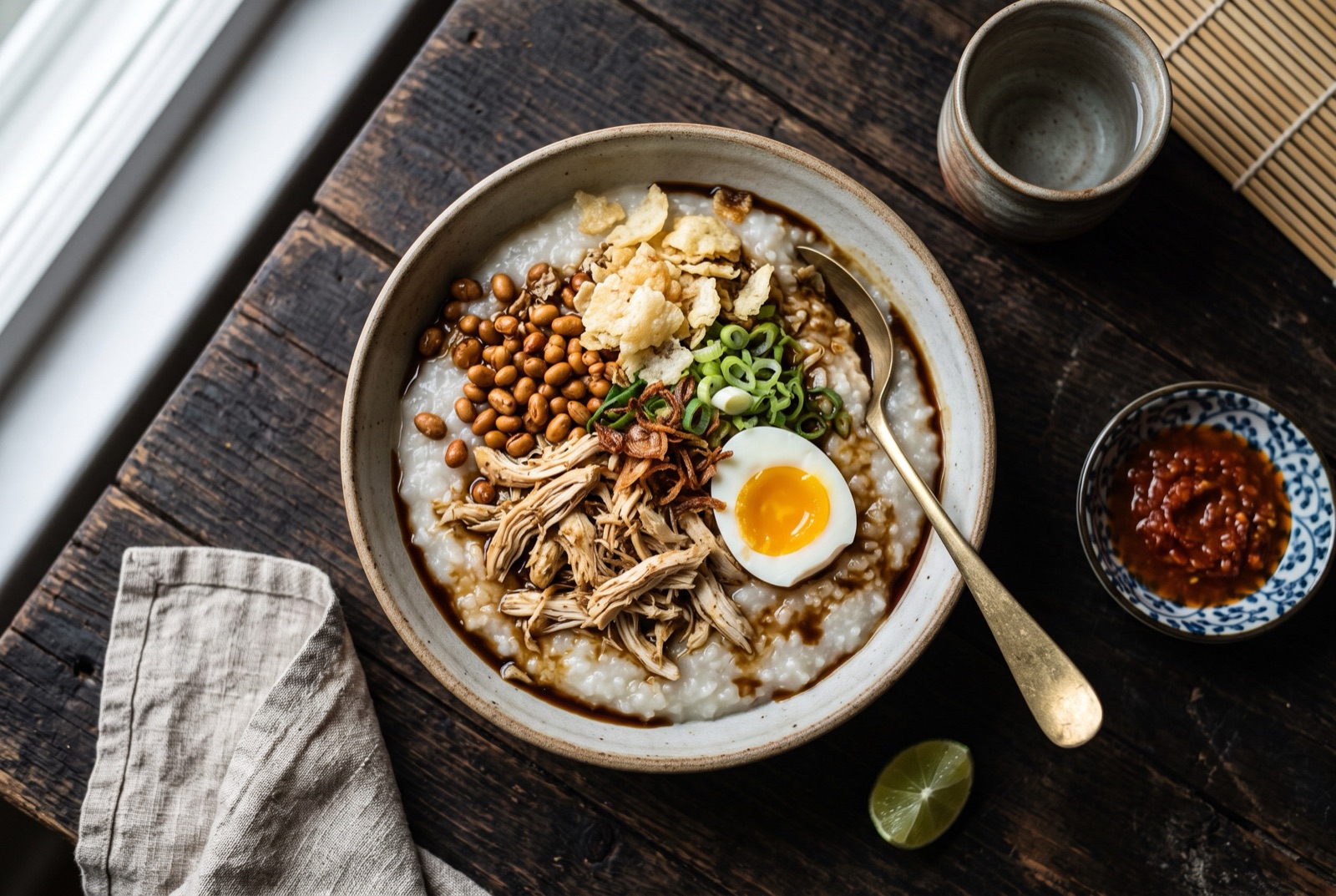
Keep exploring Indonesia.
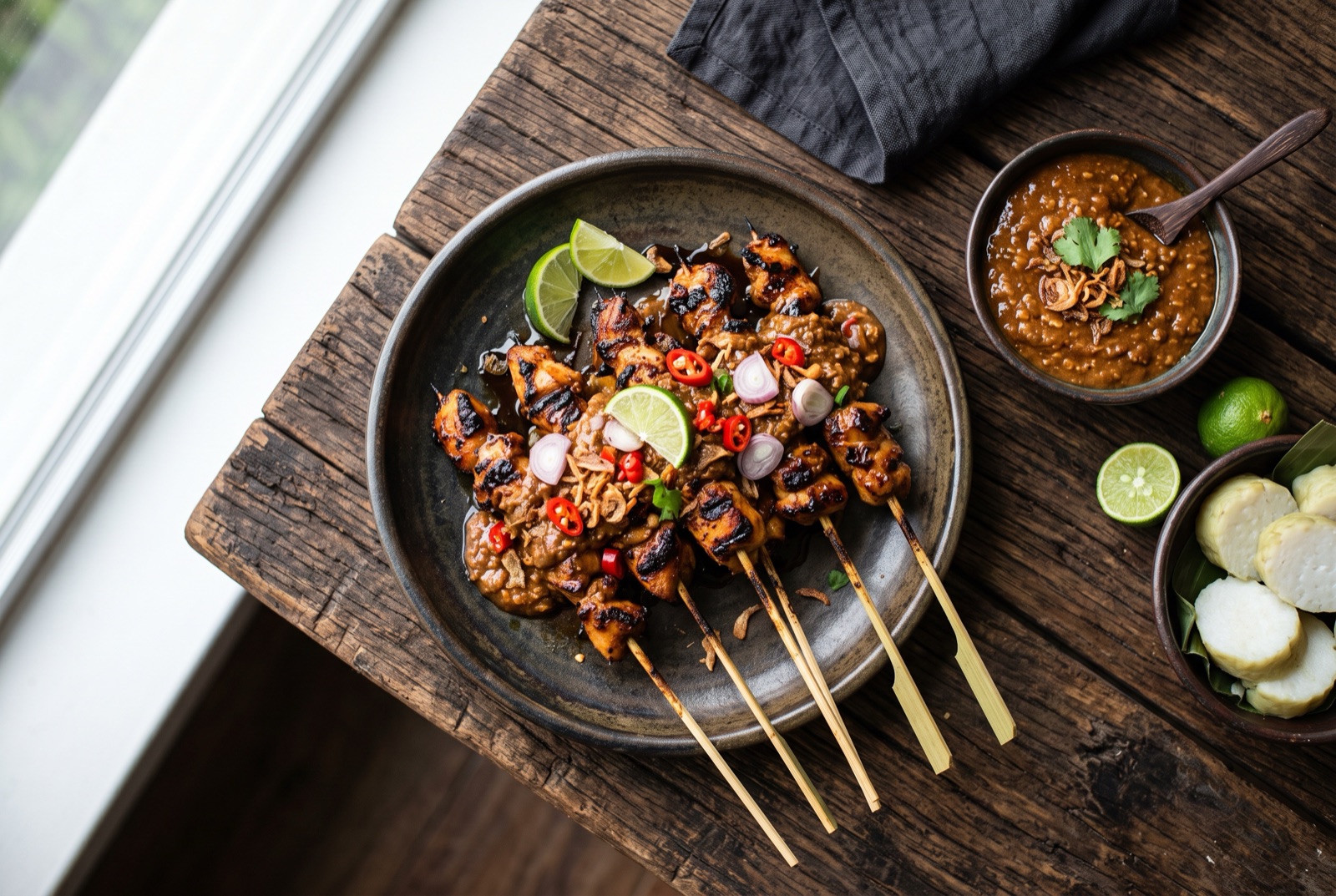
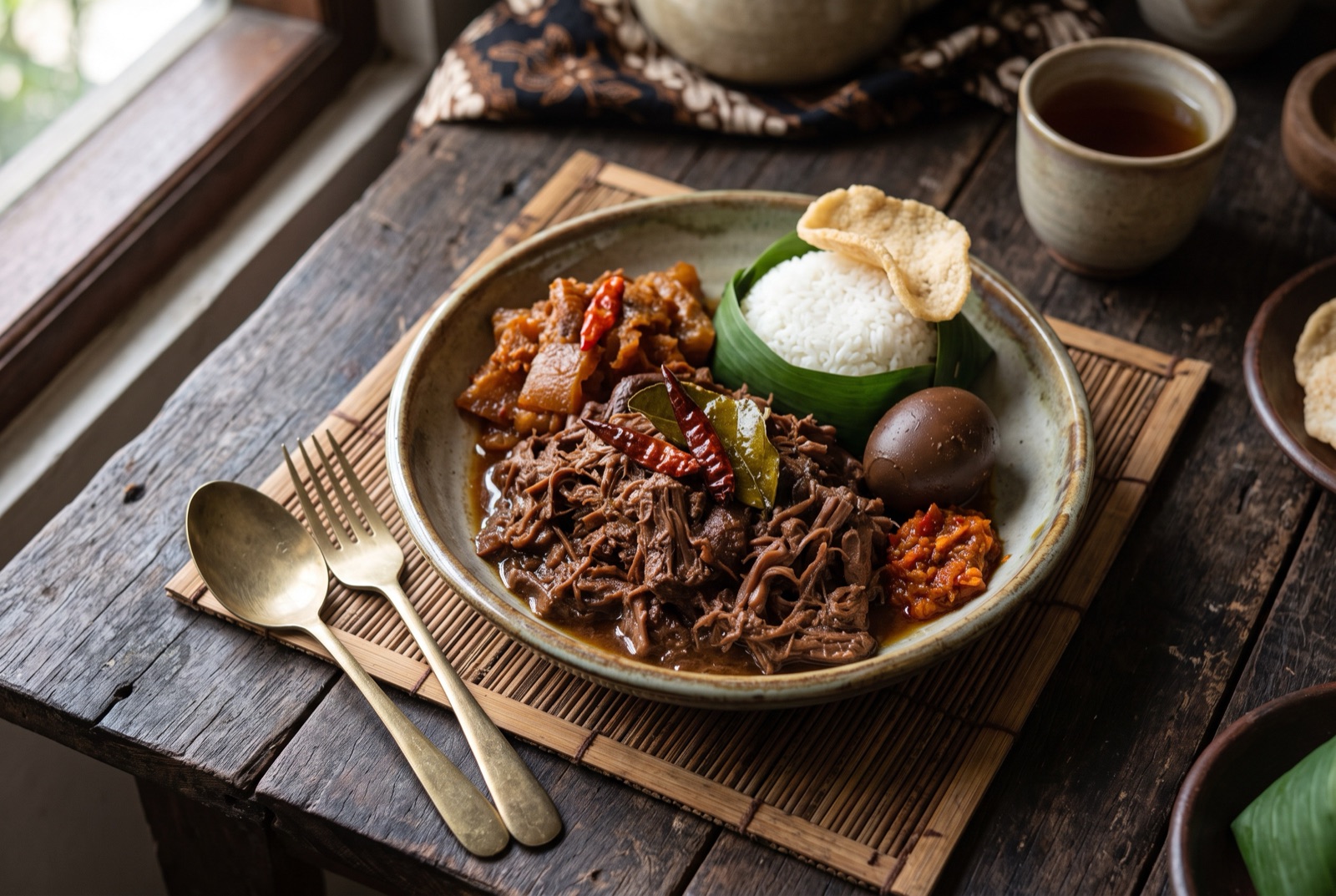
Indonesia has 9 more dishes in the atlas — Bakso and Bubur Ayam, and 7 more.
All Indonesia recipes Rice recipes Eggs recipes Garlic recipes mainbreakfaststreet fooddairy freenut freeRecipe by The DishRoute Kitchen · published August 18, 2026 · updated August 18, 2026