Samoon.
Iraqi Diamond-Shaped Bakery Bread
صمون · say it: sa-MOON
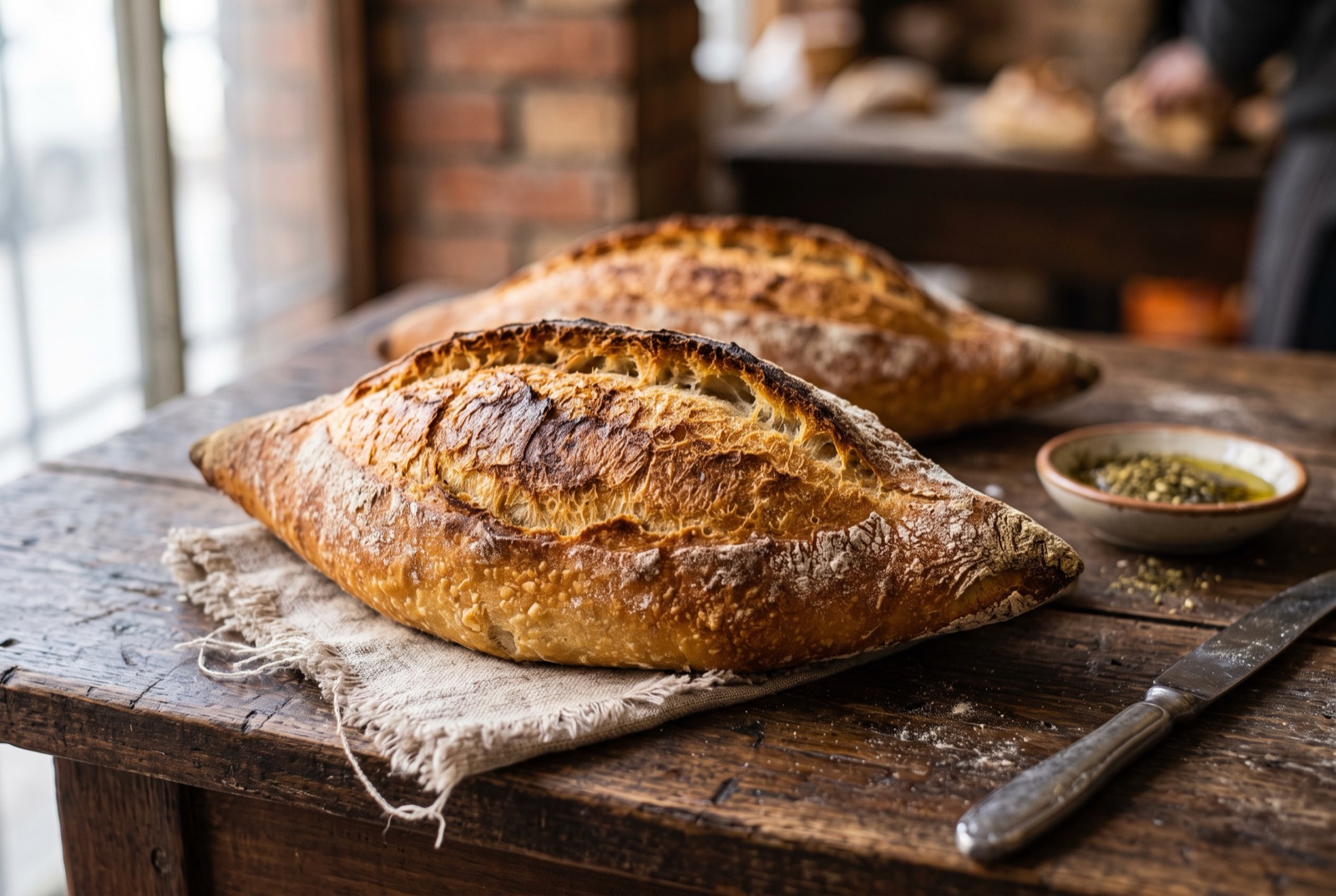
Samoon is the bread of Iraqi bakeries — a lean dough of flour, water, yeast and a little oil, shaped into a four-pointed diamond, and baked at high heat directly on a hot stone so it rises fast and sets with a thin, crackling crust. Inside it is soft, slightly chewy and full of irregular holes, which is precisely what makes it work as a sandwich bread: split down one side, it takes a filling of kebab, falafel or fried aubergine without going soggy. It has no enriching butter or milk and no sugar beyond a pinch to start the yeast, so it tastes of wheat and salt and very little else. That plainness is the job.

- Gate
- IraqBaghdad
- Prep
- 30 min
- Cook
- 15 min
- Total time
- 3 hr 15 min incl. 2 hr 30 min rest
- Serves
- 8
- Status
- Easy
- Nutrition / serving · estimated
- Calories 290 kcal
- Protein 8 g
- Carbs 56 g
- Fat 4 g
- Fiber 2 g
- Sugar 1 g
- Sodium 590 mg
Why this recipe works.
- A properly slack dough at high hydration, which is what produces the open, hole-riddled crumb rather than a tight sandwich loaf.
- Steam in the first minutes of baking, the single thing most home bakers skip and the reason their crusts come out dull.
- A clear shaping method for the diamond, described as folds rather than as a mystery.
- Baked on a preheated stone at maximum heat so the loaves spring instead of slowly drying out.
Ingredients.
7 itemsFor the dough
To finish
Equipment
- Baking stone or heavy inverted tray
- Dough scraper
- Large mixing bowl
- Wire cooling rack
Instructions.
Mix the dough
Whisk the flour, yeast, salt and sugar together in a large bowl, pour in the lukewarm water and the oil, and mix with a scraper until no dry flour remains. It will be wet, shaggy and unappealing at this stage — that is correct.
Tip Keep the salt and yeast apart in the dry flour until you add water; direct contact slows the yeast down.
Build strength with folds
Cover the bowl and rest for 15 minutes, then with a wet hand reach under one side of the dough, stretch it up and fold it over the top. Turn the bowl a quarter and repeat three more times. Do this fold set three times, 20 minutes apart.
Let it rise
Cover and leave in a warm spot for about 90 minutes, until the dough has roughly doubled, feels airy and jiggles when you shake the bowl, and the surface is domed with visible bubbles underneath.
Divide gently
Scrape the dough onto a lightly floured surface without punching it down and cut it into 8 equal pieces with a scraper. Handle each piece as little as possible so the gas stays inside.
Shape the diamonds
Flatten each piece into a rough oval with wet fingertips, fold the two long sides into the middle and pinch the seam closed, then roll each end between your palms to draw it out into a point. Set them seam side down on floured trays.
Prove and preheat
Cover the loaves loosely and prove for 40 minutes while the oven heats to its maximum, at least 250°C, with a baking stone on the middle shelf and an empty metal tray on the floor of the oven. The loaves are ready when a fingertip pressed into the side leaves a dent that springs back only halfway.
Bake with steam
Slide three or four loaves onto the hot stone, immediately pour a cup of boiling water into the empty tray below and shut the door fast. Bake for 6 minutes without opening, then vent the oven and bake another 6 to 8 minutes until the crust is deep gold and sounds hollow when tapped underneath.
Cool on a rack
Move the loaves straight to a wire rack and let them cool at least 15 minutes before splitting — bread cut hot goes gummy inside. Bake the remaining loaves while the first batch cools.
Tips from our kitchen.
- Give the stone or heavy tray a full 45 minutes at maximum heat. A stone that is merely hot rather than saturated with heat will not give the bread its initial spring.
- Work with wet hands rather than adding flour when shaping. Extra flour tightens the dough and closes up the crumb you are trying to create.
- Do not knock the air out during shaping. Handle the risen dough gently and fold rather than press, so the large bubbles survive into the oven.
- Throw a cup of boiling water into a hot tray on the oven floor the moment the bread goes in, and do not open the door for the first six minutes.
- Bake until the crust is properly coloured, not pale. Underbaked samoon looks fine and then goes tough and leathery within an hour.
- Cool the loaves on a rack, never on a flat surface, or the trapped steam softens the bottom crust into something gummy.
Substitutions.
- Baking stone → A heavy baking tray or cast-iron pan, inverted and preheated the same way
- Not quite as good at holding heat, but far better than baking on a cold sheet, which gives pale, flat bottoms.
- Instant yeast → Dried active yeast, doubled in quantity and activated in the warm water first
- Or 150 g of active sourdough starter with the water reduced by 75 g and a much longer rise, roughly four hours.
- Plain white flour → Strong bread flour
- Bread flour gives a chewier crumb and holds shape better. Plain flour is closer to what Iraqi bakeries use and makes a softer loaf.
Variations.
- Sesame samoon
- The shaped loaves brushed with water and pressed into sesame seeds before proving, giving a nuttier, crunchier crust. Common in bakeries that also sell simit-style breads.
- Samoon hajji
- A larger, flatter round version sold in some Baghdad bakeries, better for tearing and sharing at the table than for stuffing.
- Wholemeal samoon
- A quarter of the flour swapped for wholemeal, which adds flavour and colour but tightens the crumb — add an extra 20 ml of water to compensate.
Storage & reheating.
Samoon is at its best the day it is baked and noticeably worse the next, like all lean bread. Keep it in a paper bag or a cloth at room temperature rather than plastic, which softens the crust, and refresh a day-old loaf by spritzing it with water and putting it in a 200°C oven for 4 minutes. Never refrigerate bread — it goes stale several times faster than at room temperature. For longer keeping, freeze the loaves once fully cooled in sealed bags for up to two months and reheat from frozen at 200°C for 8 minutes.
Serve with
Any Iraqi stew, or split and filled with grilled kebab, fried aubergine, pickles and amba as a sandwich.
The story behind Samoon.
Samoon is what Baghdad eats. It comes out of neighbourhood bakeries in continuous batches through the day, stacked warm in the window and bought by the armful, and it sits on almost every table alongside whatever else is being served. The distinctive shape — a flattish diamond drawn out into points at both ends — is not decorative in origin: the tapered ends bake faster and go crisp, the thicker middle stays soft, and the shape allows a lot of loaves to sit close together in the mouth of a very hot oven.
The traditional oven is a stone-floored gas or wood-fired chamber running well above what a domestic oven can manage, which is why bakery samoon has a blistered, freckled crust and a home version usually does not. The workaround is straightforward and worth doing properly: get a baking stone or a heavy inverted tray as hot as your oven will go for a full 45 minutes, and put steam in the oven for the first few minutes so the surface stays elastic long enough for the bread to expand. Both of those things matter more than anything in the dough itself.
The name travels — variations of it appear across the Arab world for different breads — and Iraqis will point out that samoon is not the country's only bread. Khubz tannour, slapped onto the inner wall of a clay oven and pulled off in thin blistered sheets, is older and still made everywhere, and it is a different thing entirely. Samoon is the urban, bakery, twentieth-century bread: the one you buy on the way home, tear pieces from before you get there, and use to eat every stew in this collection.
Questions, answered.
Why is my samoon crust soft instead of crisp?
Either not enough oven heat or no steam at the start. The loaves need a fully preheated stone and the highest temperature your oven offers, plus a burst of steam for the first few minutes so the surface stays flexible while the bread expands, then dry heat afterwards to set and colour the crust. Also make sure you cool the bread on a wire rack, since steam trapped underneath will soften a crust that came out perfect.
Can I make samoon without a baking stone?
Yes. Turn a heavy baking tray upside down, or use a cast-iron pan, and preheat it in the oven at maximum heat for at least 45 minutes before the bread goes on. The point is thermal mass — a surface that dumps a lot of heat into the base of the loaf instantly. A thin, cold baking sheet gives pale bottoms and much less rise, though the bread is still edible.
How do I get the diamond shape right?
Flatten each piece of risen dough gently into an oval, fold the two long sides in to meet in the middle and seal the seam, then roll the ends between your palms to draw them into points. Set the loaves seam side down and let them prove; they spread as they rise, which turns the shape from a narrow spindle into the wide diamond you want. Do not aim for symmetry — bakery samoon is not uniform either.
Why is the dough so sticky?
Because it is meant to be. High hydration is what creates the open, hole-filled crumb that lets samoon be split and stuffed without collapsing. Resist adding flour; instead wet your hands and use a dough scraper, and give the dough a couple of stretch-and-fold turns during the rise to build strength. It becomes noticeably easier to handle after the first hour.
What is the difference between samoon and khubz tannour?
Samoon is a bakery loaf: shaped into diamonds, baked on a stone floor, thick enough to split open and fill. Khubz tannour is a thin flatbread slapped onto the inner wall of a clay tannour oven and peeled off after a minute or two, blistered and pliable, used for scooping rather than stuffing. Both are everyday Iraqi breads, but they belong to different traditions and are not interchangeable.
You might also like.
All recipes →
Keep exploring Iraq.
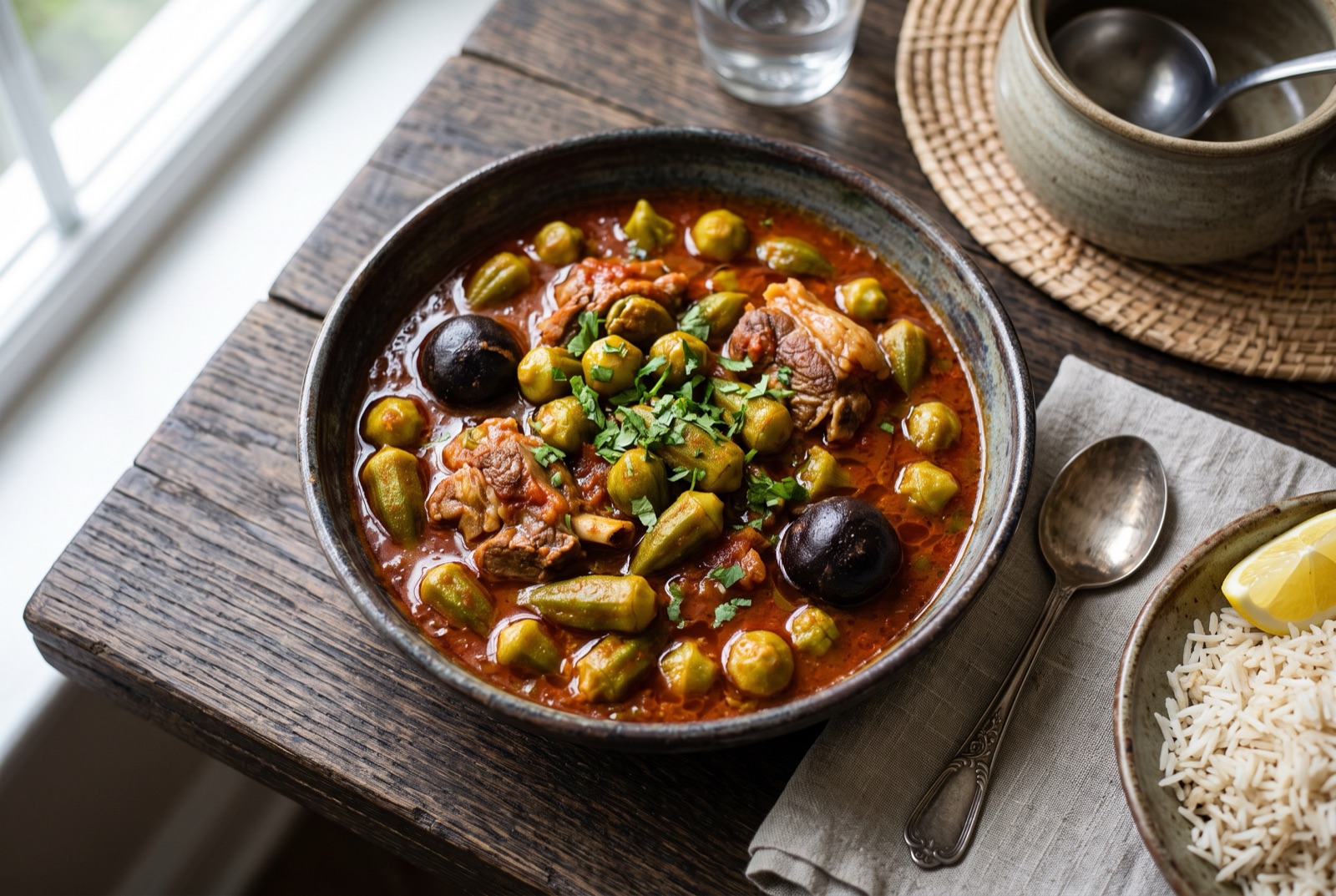
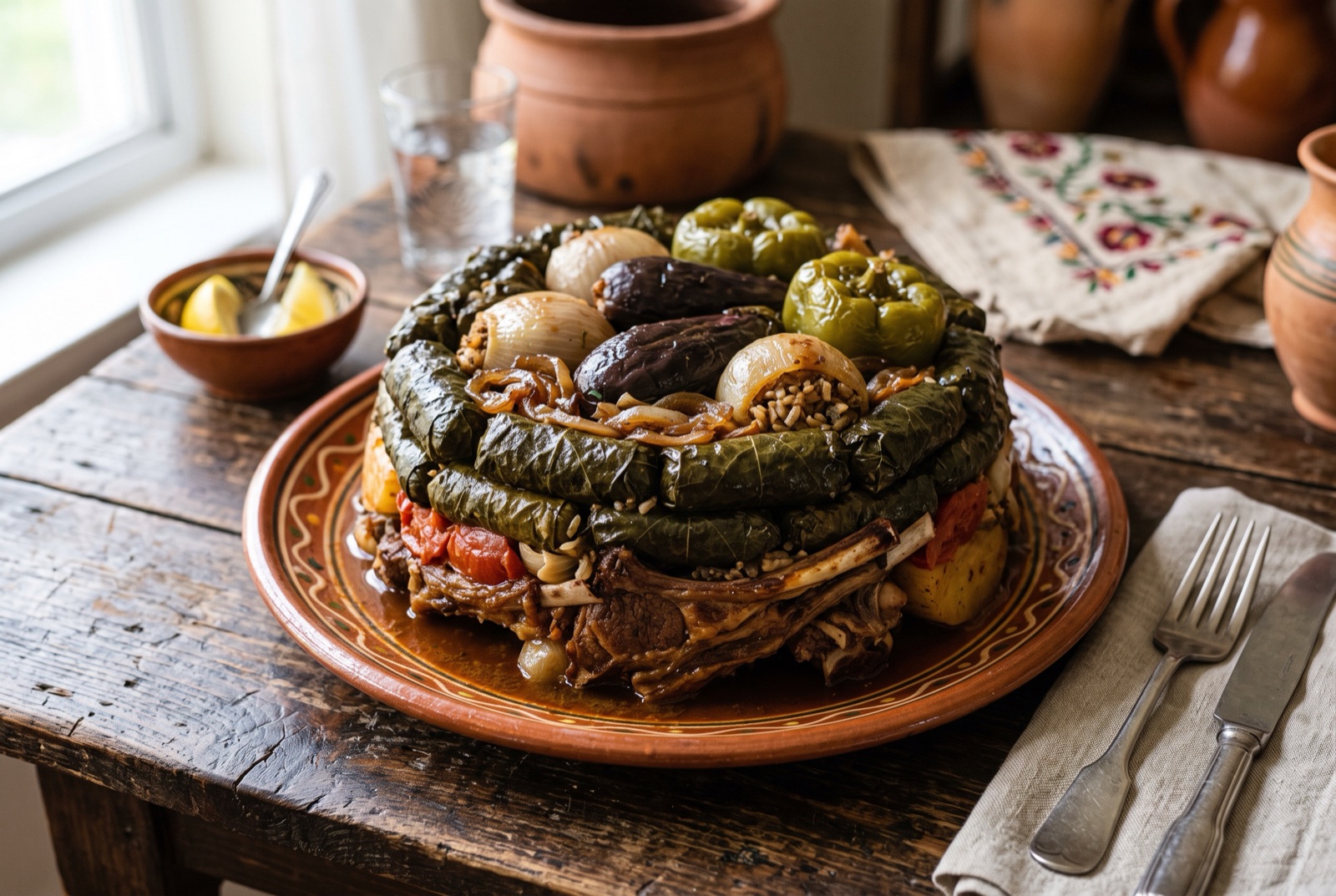
Iraq has 9 more dishes in the atlas — Bamia and Iraqi Dolma, and 7 more.
All Iraq recipes Flour recipes Yeast recipes Olive oil recipes breadveganvegetariandairy freenut freeRecipe by The DishRoute Kitchen · published August 20, 2026 · updated August 20, 2026