Tabbouleh.
Lebanese Parsley and Bulgur Salad
تبولة · Tabbouleh · say it: ta-BOO-leh
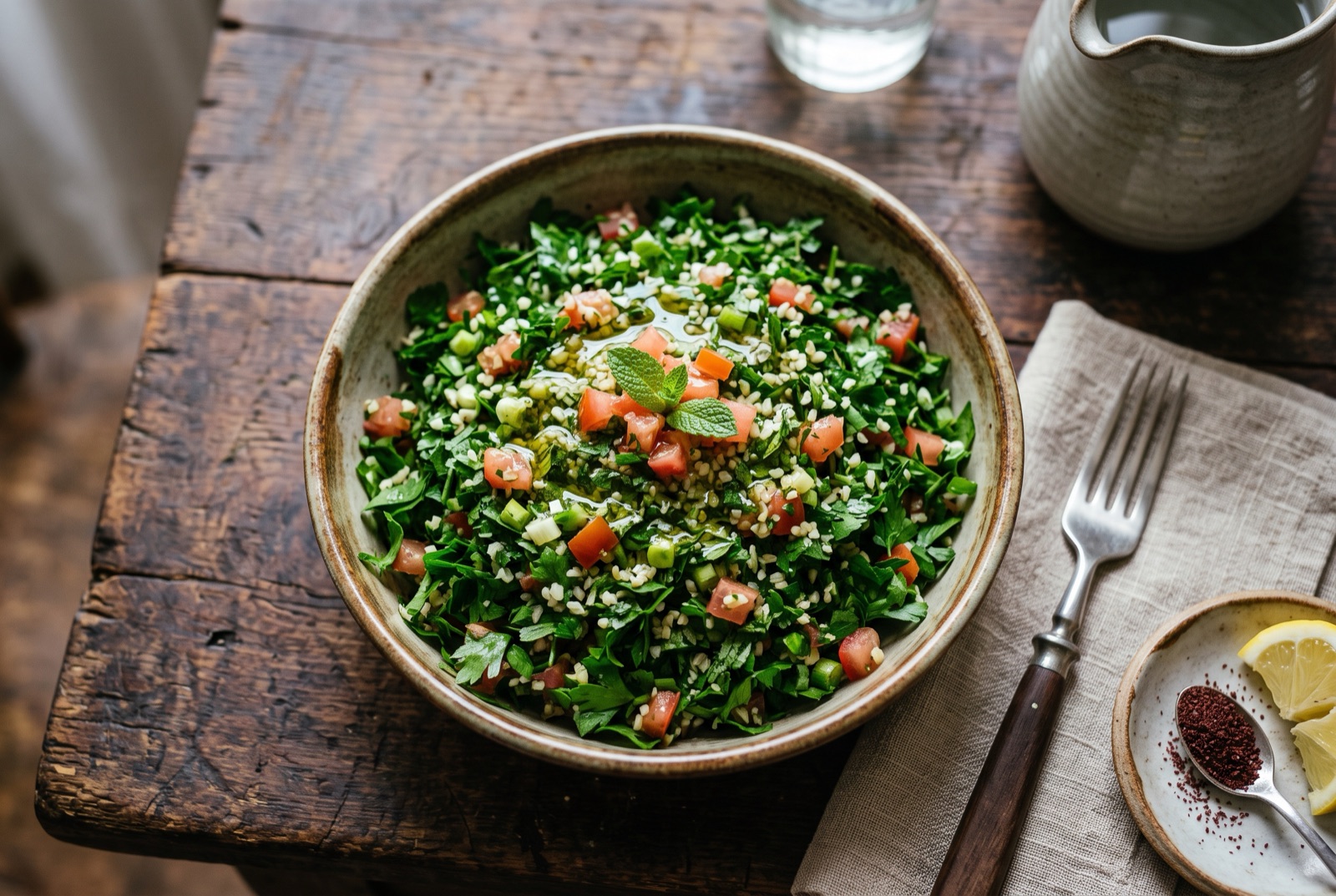
Tabbouleh, as Lebanon makes it, is a parsley salad — mountains of finely chopped flat-leaf parsley, brightened with mint, studded with diced tomato and a little onion, and carrying only a modest scatter of fine bulgur, softened rather than boiled. The dressing is nothing but lemon juice, good olive oil and salt, and the result is astonishingly fresh: green, sharp, juicy, almost effervescent. If your mental image of tabbouleh is a bowl of grain flecked with herbs, this recipe is the correction. Getting it right is not hard — it is a knife-skills dish more than a cooking dish — and the reward is one of the great salads of the Mediterranean.

- Gate
- Lebanon
- Prep
- 35 min
- Cook
- 0 min
- Total time
- 55 min incl. 20 min rest
- Serves
- 4
- Status
- Easy
- Nutrition / serving · estimated
- Calories 190 kcal
- Protein 4 g
- Carbs 17 g
- Fat 13 g
- Fiber 5 g
Why this recipe works.
- Lebanese proportions — parsley first, bulgur as a garnish-level grain, the way the dish is actually made.
- Fine bulgur softened in tomato juice and lemon, never boiled, so it stays light and separate.
- A wash-dry-chop method that gives fluffy, distinct parsley instead of wet green paste.
- Dressed just before serving, so it hits the table juicy and sharp, not soggy.
Ingredients.
9 itemsEquipment
- Large sharp knife
- Salad spinner or clean kitchen towels
- Fine sieve
- Large mixing bowl
Instructions.
Rinse and soak the bulgur
Rinse the bulgur in a fine sieve, shake it dry, and put it in a large bowl with the diced tomatoes and a third of the lemon juice. Leave it while you prep everything else — the grains should soften in the juices until tender to the bite, 15–20 minutes.
Wash and dry the parsley
Wash the parsley well, spin it, then roll it in a clean towel and press until the leaves are completely dry — they should feel fluffy, not damp. Pick the leaves with only their thinnest stems.
Tip Dry parsley is the single biggest difference between bright tabbouleh and green mush — do not skip the towel.
Chop the herbs
Gather the parsley into tight bundles and chop finely with a sharp knife in a few clean passes — the pieces should be small but distinct, never bruised into paste. Chop the mint the same way, just before mixing so it does not blacken.
Combine
Add the parsley, mint and scallions to the bowl of bulgur and tomatoes and toss gently with your hands or two forks until the pale bulgur is scattered evenly through a salad that reads overwhelmingly green.
Dress and season
Just before serving, add the remaining lemon juice, the 4 tbsp of olive oil, salt and pepper, and toss again. Taste: it should be sharp, juicy and mouth-watering, with the lemon clearly ahead of the oil — adjust and serve within the hour.
Tip If it tastes flat, the answer is almost always more lemon and more salt, not more oil.
Tips from our kitchen.
- Dry the parsley completely before chopping — spin it, then roll it in a clean towel. Wet parsley bruises and turns the salad muddy within minutes.
- Chop with a sharp knife in a few decisive passes rather than rocking endlessly; over-chopping crushes the leaves and bleeds their juice.
- Use fine (grade 1) bulgur and only soak it — coarse bulgur or boiled bulgur turns tabbouleh stodgy and shifts the balance away from the parsley.
- Seed and dice the tomatoes small, and let them sit with the bulgur so their juice does the softening.
- Dress and salt at the last minute. Salt draws water from the herbs and tomatoes, and tabbouleh should be juicy on the plate, not swimming in the bowl.
- Taste for lemon at the end — proper tabbouleh sits on the sharp side, and the olive oil is there to round it, not mute it.
Substitutions.
- Fine bulgur → Quinoa, cooked and cooled
- The standard gluten-free route. It is heavier than soaked fine bulgur, so use slightly less to keep the parsley in charge.
- Scallions → Finely minced white or red onion
- Equally traditional — many Lebanese cooks rub the minced onion with a pinch of salt and pepper first to tame its bite.
- Fresh mint → 1 tsp dried mint
- An accepted off-season fallback in Lebanese kitchens, rubbed in with the dressing. Fresh is noticeably better here.
Variations.
- With romaine scoops
- Serve the classic way, with crisp romaine or tender white cabbage leaves on the platter for scooping instead of forks.
- Extra-lemon mountain style
- Push the lemon further and add a pinch of ground allspice or Lebanese seven-spice — a sharper, more perfumed family style.
- Winter tabbouleh
- When tomatoes are poor, use fewer of them, seeded well, and lean harder on lemon and scallion so the salad stays lively.
Storage & reheating.
Best eaten within a few hours of dressing. Undressed, the chopped components keep separately in the fridge for a day — combine and dress just before serving. Dressed leftovers keep overnight but soften and weep; they will not survive freezing at all, so make only what the table will finish.
Serve with
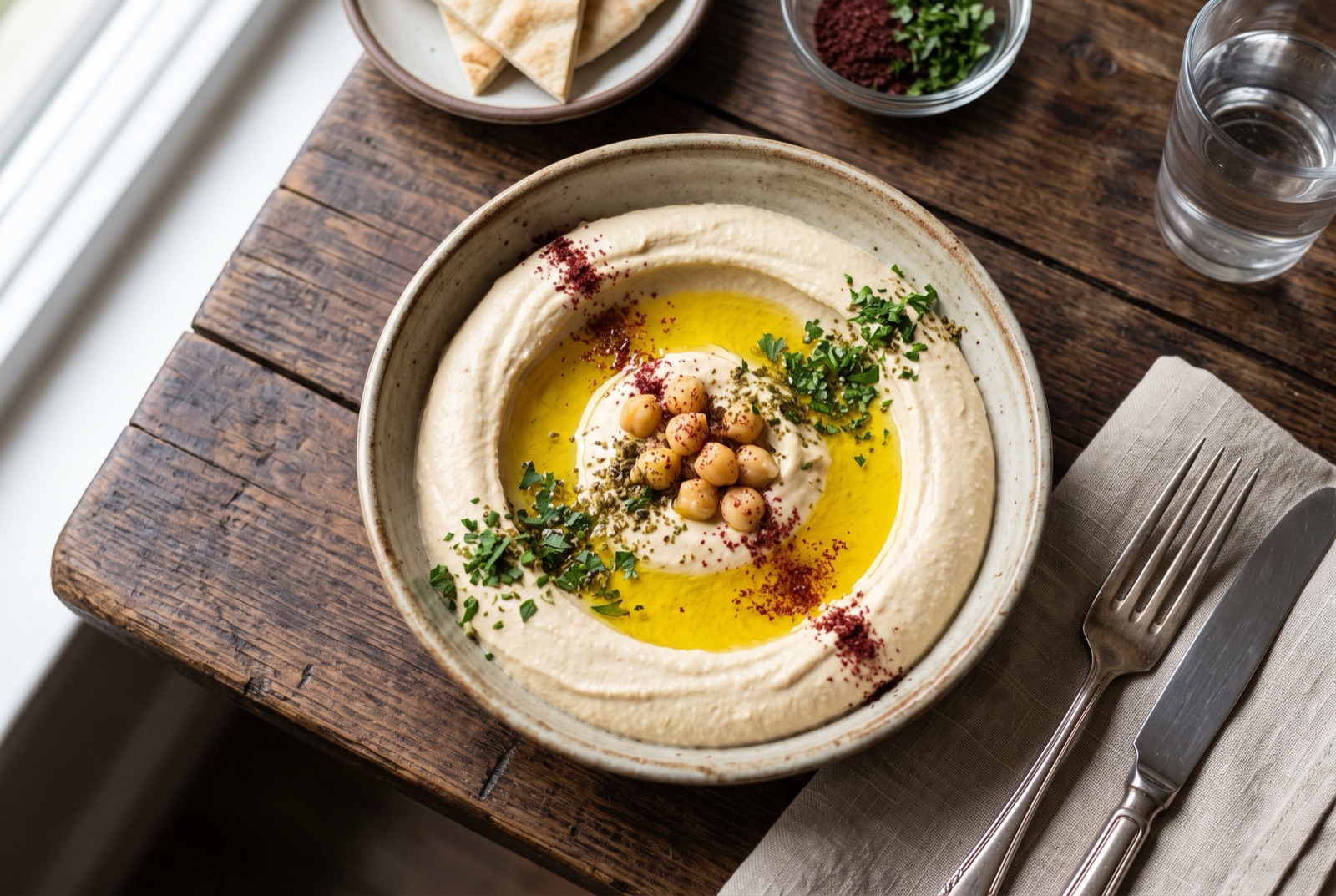
As part of a mezze spread with hummus, labneh and flatbread — plus romaine leaves for scooping.
The story behind Tabbouleh.
Tabbouleh belongs to the mezze table of Lebanon and the wider Levant, and in Lebanon it carries something close to national-dish status — the standard against which family gatherings and restaurant kitchens alike get measured. Its home territory is usually traced to the mountains of Lebanon and Syria, where wild and cultivated herbs have long been eaten in quantity; whatever the precise origin, the dish as the world knows it today is thoroughly Lebanese in identity, and Lebanese communities have carried it everywhere they have settled.
The defining fact of tabbouleh — the one this recipe is built around — is its proportions. It is a parsley salad with some bulgur, not a bulgur salad with some parsley. In a Lebanese bowl, the green overwhelmingly dominates and the fine grain is a supporting texture, drinking up tomato juice and dressing between the leaves. The grain-heavy versions common in Western supermarkets and delis are a different dish wearing the same name, and Lebanese cooks are not shy about saying so. The other house rules are almost as firm: the parsley must be chopped fine and dry (wet parsley bruises into mush), the bulgur must be the fine grade and merely soaked, and the dressing is lemon-forward — tabbouleh should make your mouth water.
On the table, tabbouleh arrives as part of a mezze spread alongside hummus, labneh and the rest, and it is traditionally scooped up in crisp leaves of romaine or tender cabbage rather than eaten with a fork — the leaf serving as both utensil and counterpoint. It is naturally vegan, ferociously fresh, and at its best in tomato season, which is exactly when a Lebanese cook would tell you to make it.
Questions, answered.
Is tabbouleh a parsley salad or a bulgur salad?
In Lebanon, unambiguously a parsley salad. Finely chopped flat-leaf parsley is the main ingredient by far, with mint, tomato and onion, and only a small amount of fine soaked bulgur running through it. The grain-dominated versions sold in many Western supermarkets invert those proportions and are considered a different dish by Lebanese cooks.
Do you cook the bulgur for tabbouleh?
No. Tabbouleh uses fine-grade bulgur, which needs no boiling — it softens in about 15–20 minutes from soaking in the juice of the diced tomatoes plus a little lemon. Boiled or coarse bulgur turns heavy and clumpy and pushes the salad toward the grain-bowl texture that authentic tabbouleh specifically avoids.
What kind of parsley is best for tabbouleh?
Flat-leaf (Italian) parsley, and lots of it — two to three big bunches for four servings. It should be washed, dried completely, and chopped fine with a sharp knife. Curly parsley is usable but chews tougher and tastes grassier; whichever you use, dryness before chopping matters more than the variety.
Is tabbouleh vegan and can it be gluten-free?
Traditional tabbouleh is naturally vegan: herbs, vegetables, bulgur, lemon and olive oil. It is not gluten-free as written, because bulgur is cracked wheat. Swapping the bulgur for cooked, cooled quinoa is the standard gluten-free adaptation and keeps the spirit of the salad intact.
How is tabbouleh traditionally eaten?
As part of a mezze — the spread of small dishes that opens a Levantine meal — and classically scooped up with crisp leaves of romaine lettuce or tender cabbage rather than a fork. It is served cool or at room temperature, freshly dressed, alongside dishes like hummus, labneh and grilled meats.
You might also like.
All recipes →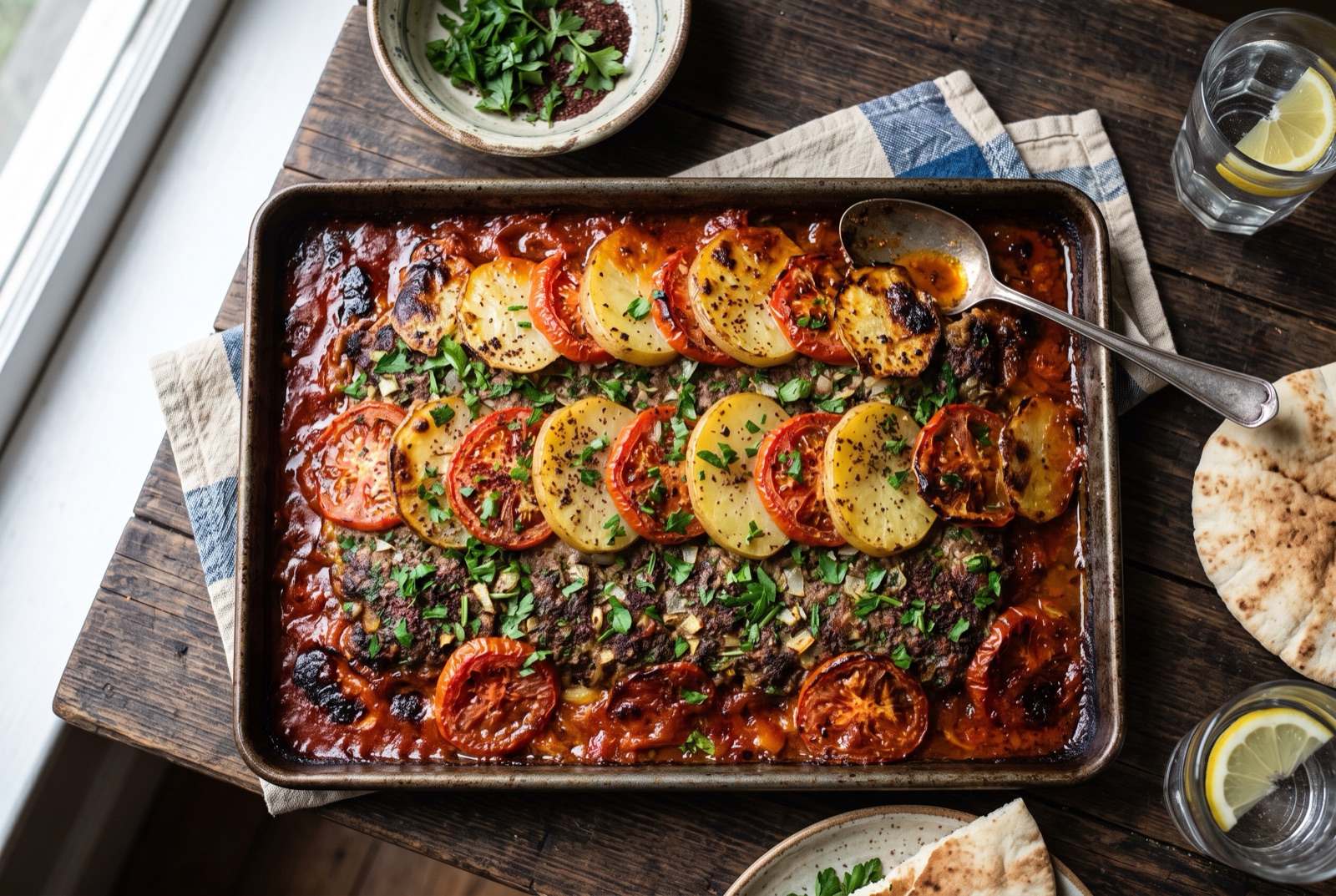
Keep exploring Lebanon.
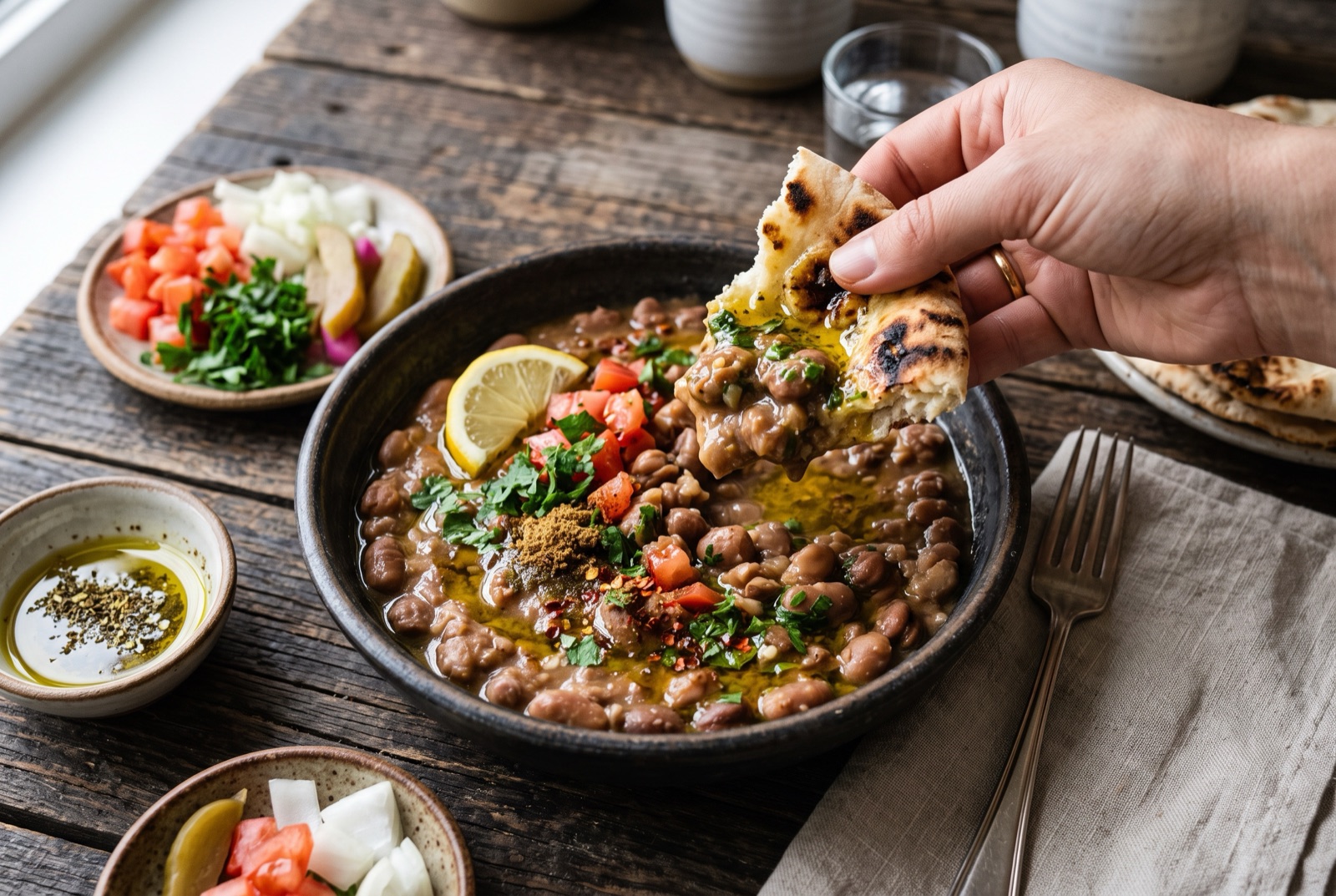
Lebanon has 9 more dishes in the atlas — Foul Mudammas and Kafta bil Sanieh, and 7 more.
All Lebanon recipes Parsley recipes Tomato recipes Mint recipes sideappetizervegandairy freenut freeRecipe by The DishRoute Kitchen · published August 18, 2026 · updated August 18, 2026