Tafelspitz.
Viennese Boiled Beef in Broth
Tafelspitz · say it: TAH-fel-shpitz
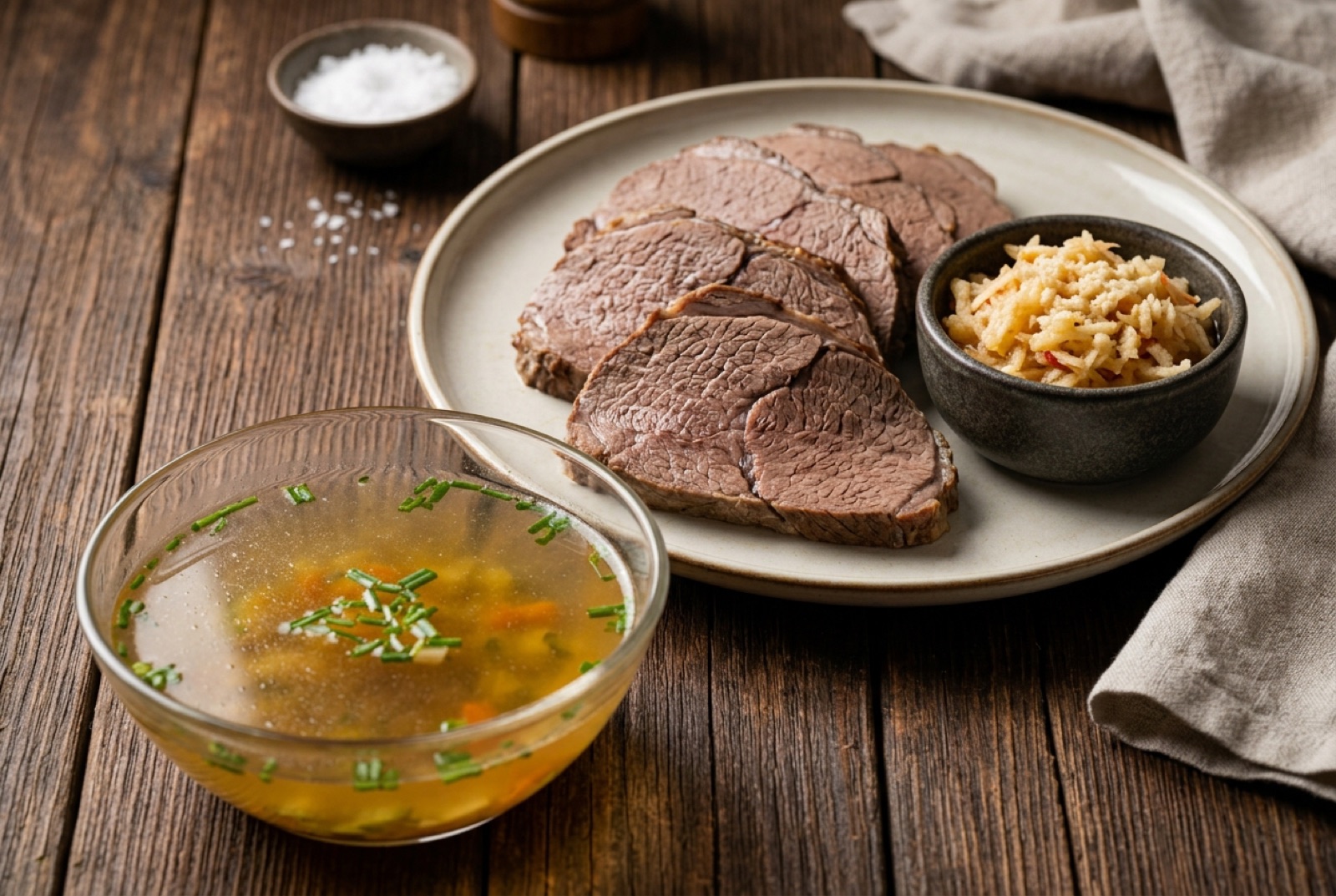
Tafelspitz is a single piece of beef — the triangular cap off the top of the rump — poached gently in water with root vegetables until it can be sliced clean across the grain and still be moist. It gives you two dishes from one pot. The clear, deeply beefy broth is served first with something in it, and the meat follows, sliced thin, with roast potatoes and two sharp sauces: grated horseradish loosened with apple, and a thick chive sauce built on soaked bread. The flavour is plain in the best sense — beef, salt, celery root, pepper — and the sauces exist to cut through it. Nothing is browned and nothing is thickened, which makes it a forgiving Sunday dish that mostly asks you to keep the pot from boiling.

- Gate
- AustriaVienna
- Prep
- 30 min
- Cook
- 3 hr
- Total time
- 3 hr 40 min incl. 10 min rest
- Serves
- 6
- Status
- Medium
- Nutrition / serving · estimated
- Calories 640 kcal
- Protein 48 g
- Carbs 34 g
- Fat 34 g
- Fiber 5 g
- Sodium 810 mg
Why this recipe works.
- Starts the meat in hot water, not cold, so the broth stays clear and the beef keeps its juices.
- Gives you the full two-course service — soup first, meat second — from one pot and one afternoon.
- Both classic sauces included, with an honest note on horseradish sourcing outside Central Europe.
- Explains the doneness test by feel rather than by clock, because rump cap varies wildly in size.
Ingredients.
19 itemsFor the pot
Apple-horseradish
Chive sauce
To serve
Equipment
- Large stockpot or Dutch oven (at least 6 litres)
- Fine sieve or muslin
- Ladle and skimmer
- Fine grater for the horseradish
- Sharp carving knife
Instructions.
Char the onion
Put the onion halves cut side down in a dry pan over high heat and leave them until the surfaces are properly blackened, about 5 minutes. This is what gives the finished broth its golden colour.
Start the beef in hot water
Bring 4 litres of water to a simmer in a large pot with the salt. Lower in 1.2 kg of beef, the charred onion, the marrow bones, peppercorns and bay leaves, and bring back to a bare simmer.
Tip The surface should tremble, with a bubble breaking every second or two. If it rolls, pull the pot half off the heat.
Skim thoroughly
For the first 15 minutes, lift off the grey foam as it rises with a ladle and discard it. Once the foam turns white and stops forming, the broth will stay clear for the rest of the cook.
Simmer for two hours
Cover the pot with the lid slightly ajar and cook gently for 2 hours, topping up with hot water if the meat is ever exposed. Do not stir, and do not let it come to a boil.
Add the root vegetables
Slide in the carrots, celeriac, leek and parsley stalks and continue simmering for 45–60 minutes, until a thin skewer pushed into the thickest part of the beef slides in and out with only light resistance.
Make the apple-horseradish
While the beef finishes, mix the grated apple and horseradish with the vinegar, a pinch of sugar and a little salt. Cover and keep cold; it should taste sharp enough to make your nose prickle.
Make the chive sauce
Blend the squeezed soaked rolls with the hard-boiled yolks until smooth, then trickle in the oil with the motor running until it thickens like a loose mayonnaise. Fold in the chives and season with salt and a splash of vinegar.
Tip If it splits, blend in one more piece of soaked bread — the starch pulls it back together.
Roast the potatoes
Parboil the halved potatoes for 8 minutes in salted water, drain, then roast at 220°C with a little fat skimmed from the broth for 25–30 minutes, until the cut faces are deep gold and crisp.
Serve the broth first
Lift the beef out and rest it in a bowl with a ladle of broth. Strain the rest of the broth through a fine sieve, correct the salt and serve it as a first course while the meat stays warm.
Carve and plate
Slice the beef across the grain no thicker than 5 mm, arrange on a warm platter and moisten with hot broth. Serve with the roast potatoes, the apple-horseradish and the chive sauce alongside.
Tips from our kitchen.
- Never let the pot boil. A steady sub-simmer with one bubble breaking every second or two keeps the broth clear; a rolling boil emulsifies the fat and turns it cloudy and grey.
- Skim the grey foam patiently in the first fifteen minutes and the broth will look like amber for the rest of the cook. Skim once more before you strain it.
- Char the cut onion half, skin on, directly on a dry pan until the surface is black. It gives the broth its golden colour and a faint sweetness.
- Add the root vegetables only in the last hour. Three hours of simmering turns them to mush and makes the broth taste flatly sweet.
- Slice the meat across the grain and no thicker than 5 mm, and keep the slices in a ladle of hot broth until they hit the plate — boiled beef goes dry the moment it cools.
- Make it a day ahead if you can: chilled broth lets you lift the fat off in a sheet, and the meat reheats perfectly in it.
Substitutions.
- Beef rump cap (Tafelspitz) → Brisket flat, top rump or beef shank
- Ask the butcher for a whole simmering cut with a fat cover. Brisket takes about 30 minutes longer; shank gives a richer broth but a coarser slice.
- Fresh horseradish root → Jarred grated horseradish, drained, plus a little extra grated apple
- Jarred horseradish is already acidulated, so hold back the vinegar in the Apfelkren and taste as you go. It is milder than fresh — use about a third more.
- Celeriac → Two celery stalks plus a small parsnip
- Not identical — celeriac has a deeper, earthier note that defines the broth — but it gets you close if celeriac is unavailable.
Variations.
- With Frittaten
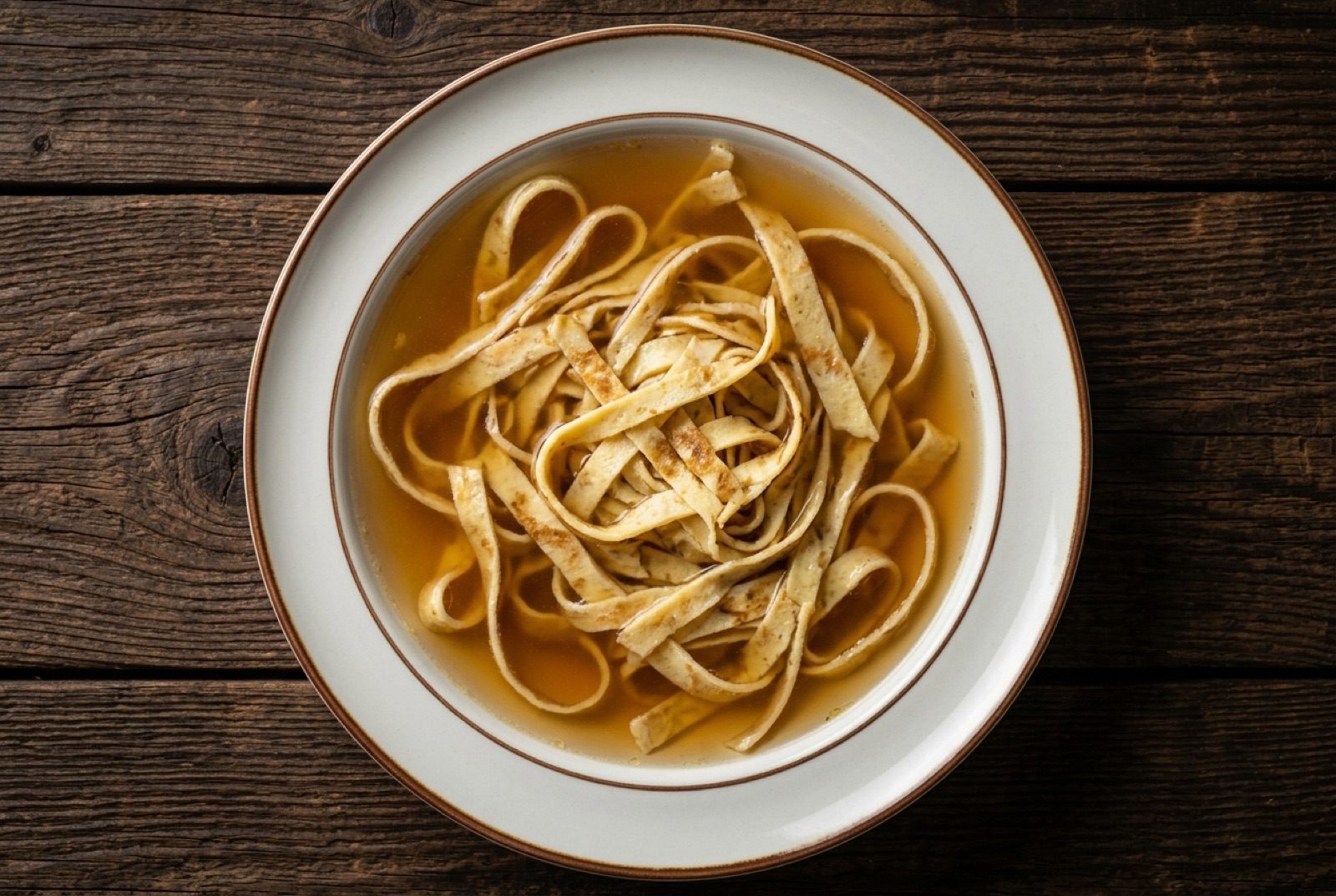
- Serve the first-course broth with ribbons of sliced savoury pancake, the most common Viennese way to eat it.
- With Grießnockerl
- Soft semolina dumplings poached in the broth instead of pancakes — richer, and a Sunday favourite in Austrian homes.
- Marrow bones on toast
- Simmer two marrow bones alongside the beef for the last hour and serve the marrow scraped onto toasted dark bread with salt and horseradish between courses.
Storage & reheating.
Tafelspitz keeps better than most roasts because it is stored in its own liquid. Cool the meat whole in a container of broth, refrigerate up to 3 days, and reheat slices in simmering broth for two minutes rather than in a pan. The strained broth keeps 4 days refrigerated or 3 months frozen and is worth making in excess — it is the base for Frittatensuppe and most Austrian soups. The chive sauce holds 2 days; the apple-horseradish should be made the same day, as grated horseradish loses its heat and grated apple browns overnight.
Serve with
Roast potatoes, creamed spinach, apple-horseradish and chive sauce — plus the strained broth served first with pancake ribbons.
The story behind Tafelspitz.
Boiling beef is the oldest reflex of the Viennese kitchen, and it grew out of an unusually detailed butchery tradition. Vienna's butchers divide the hindquarter of the ox into more than a dozen individually named simmering cuts — Tafelspitz, Schulterscherzel, Kruspelspitz, Beinfleisch, Hüferschwanzl and others — each with its own texture, fat content and recommended cooking time, and a Viennese eater of the old school will order by cut name the way a French diner orders a steak by cooking. Tafelspitz, the pointed tail end of the rump cap, sits at the top of that list because it holds a thin fat cover that bastes the meat from the outside while it cooks.
The dish is inseparable from Emperor Franz Joseph I, who reigned for sixty-eight years and is said to have eaten Tafelspitz constantly. That story is repeated in every Viennese cookbook and on every menu, and it is plausible given his famously plain tastes, but it is anecdote rather than record — worth knowing as part of the dish's image rather than as history. What is verifiable is the institutional life of the dish in Vienna: whole restaurants exist to serve boiled beef and nothing much else, wheeling the copper pot to the table and serving the broth, the marrow bones and the meat in sequence.
The ritual matters as much as the recipe. First the soup, usually with sliced pancakes or semolina dumplings in it. Then a marrow bone with toasted dark bread, salt and a little horseradish, eaten while the meat is being carved. Then the beef itself, sliced across the grain, with Apfelkren — apple and horseradish — and Schnittlauchsauce, the chive sauce whose body comes from soaked white bread rather than mayonnaise. Alongside go crisp roast potatoes and creamed spinach, and the whole thing takes an afternoon in the nicest possible way.
Questions, answered.
Why is my broth cloudy?
The pot boiled at some point. Once the liquid rolls, fat and proteins emulsify into the broth and no amount of straining fully clears it. Keep the surface barely moving, skim the grey scum thoroughly in the first fifteen minutes, and never stir the pot. A cloudy broth still tastes good — clarify it with an egg-white raft if presentation matters.
Should the meat go into cold or hot water?
Hot, for Tafelspitz. Starting in already-simmering water sets the surface proteins quickly so the meat keeps more of its own juices and flavour, which is what you want when the beef is the main event. Starting in cold water pulls more flavour into the liquid and is the right choice when the broth matters most, as in a pure Rindsuppe.
What cut can I use if I cannot find Tafelspitz?
Any whole simmering cut from the hindquarter with some fat and connective tissue: brisket flat, top rump, top round or beef shank. Avoid lean steak cuts, which turn stringy, and avoid anything pre-cubed. Weight matters more than name — aim for one piece of about 1.2 kg so it cooks evenly and slices attractively.
How do I know when it is done?
Push a thin skewer into the thickest part: it should slide in with light, even resistance and come out without dragging the meat up with it. Expect 2.5 to 3 hours for a 1.2 kg piece. Boiled beef should be sliceable and yielding, not falling apart — if it shreds, it has gone past the point where you can cut neat slices.
Can I make Tafelspitz ahead of time?
Yes, and it is arguably better the next day. Cook it fully, cool the meat in its broth and refrigerate both together. The chilled fat lifts off the broth in a solid sheet, and reheating slices in hot broth keeps them moist in a way that fresh-from-the-pot beef held in a warm oven never manages.
You might also like.
All recipes →
Keep exploring Austria.
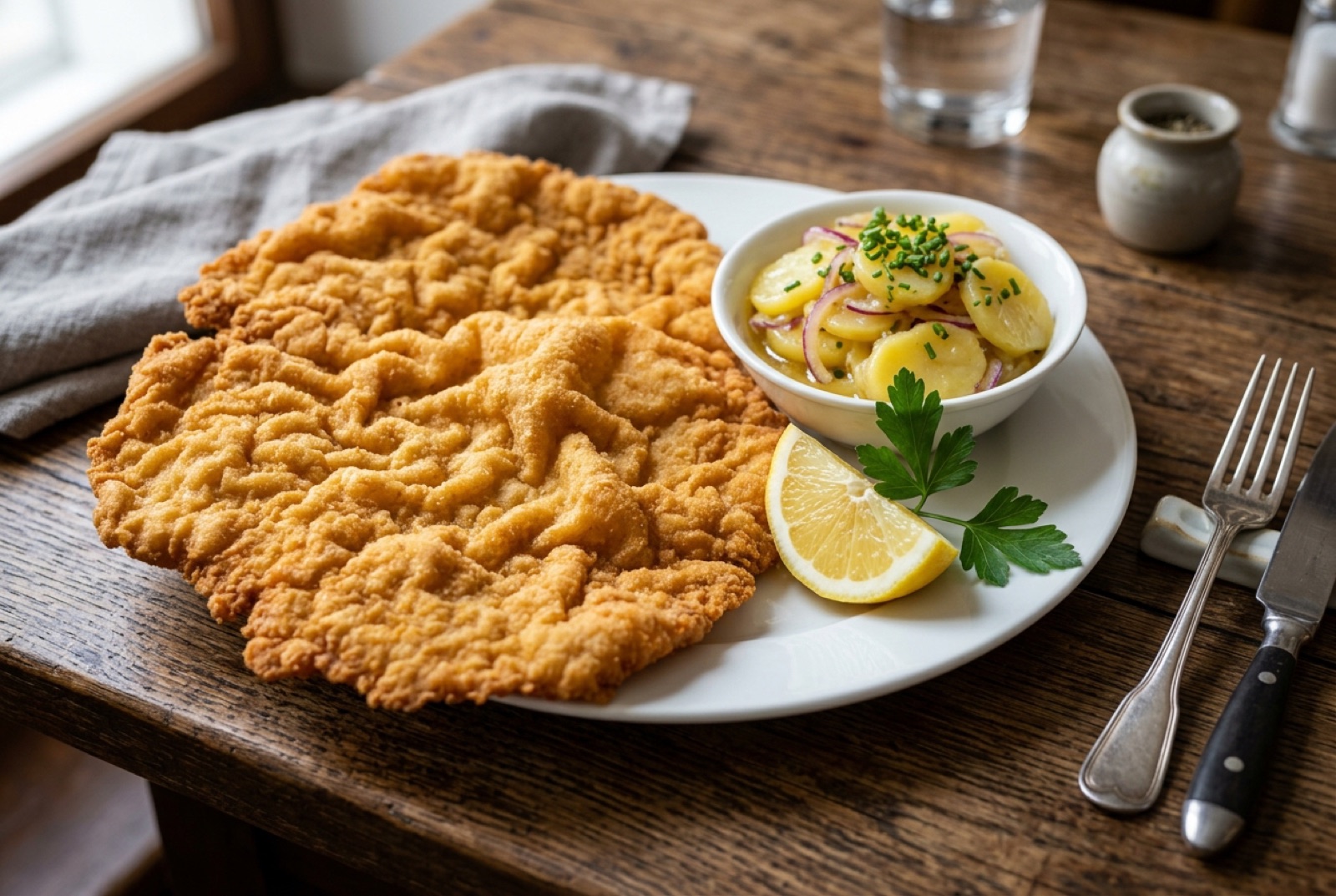
Austria has 9 more dishes in the atlas — Backhendl and Erdäpfelsalat, and 7 more.
Recipe by The DishRoute Kitchen · published August 19, 2026 · updated August 19, 2026