Tepsi Baytinijan.
Iraqi Baked Eggplant Tray
تبسي باذنجان · say it: TEP-see bay-tin-i-JAAN
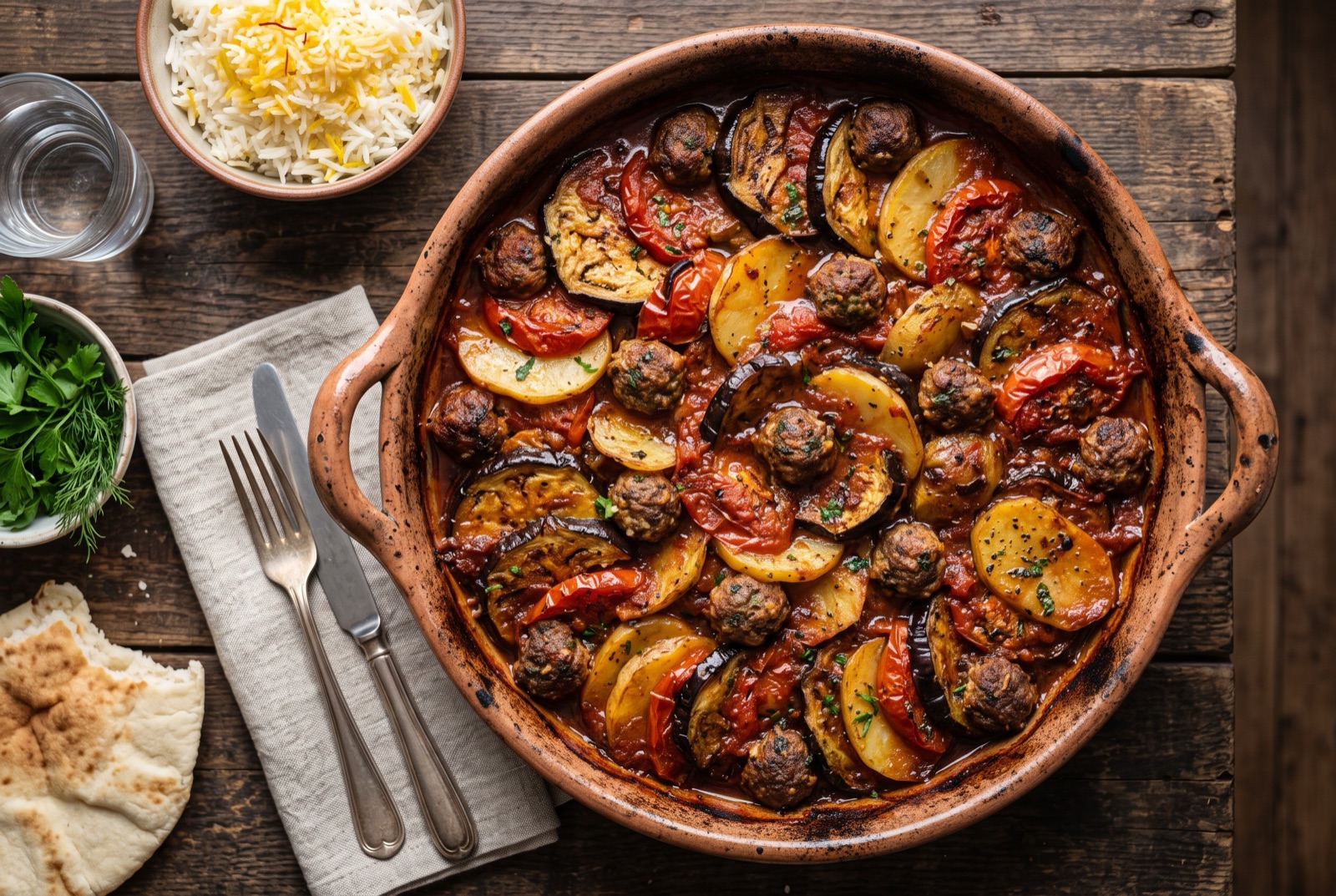
Tepsi baytinijan is Iraq's great tray bake: rounds of aubergine and potato fried until golden, small spiced lamb meatballs browned in the same pan, and everything shingled into a wide dish with tomato and onion, then flooded with a light tomato broth and baked until it collapses. The word tepsi is the tray itself, and the dish takes its name from the vessel because that is how it arrives at the table. The flavour is sweeter and rounder than most Iraqi savoury food — no tamarind here, just tomato, onion, garlic and baharat — and the texture is deliberately soft, with the fried edges of the aubergine dissolving into the broth. It is weekday cooking, made in quantity, eaten with rice and bread.

- Gate
- IraqBaghdad
- Prep
- 45 min
- Cook
- 1 hr
- Total time
- 1 hr 55 min incl. 10 min rest
- Serves
- 6
- Status
- Medium
- Nutrition / serving · estimated
- Calories 520 kcal
- Protein 21 g
- Carbs 34 g
- Fat 34 g
- Fiber 8 g
- Sugar 11 g
- Sodium 760 mg
Why this recipe works.
- Salting the aubergine before frying, which cuts oil absorption noticeably without any loss of flavour.
- Flat meatballs shaped to the same thickness as the vegetable slices so nothing is raw when the tray is done.
- One pan used for everything, so the browned residue from the meat ends up in the broth rather than in the sink.
- A broth quantity calibrated to reduce to a glaze rather than leaving the tray swimming.
Ingredients.
15 itemsFor the layers
For the meatballs
For the broth
Equipment
- Wide shallow baking tray or oven dish, about 30 cm
- Large frying pan
- Slotted spoon and plenty of paper towels
Instructions.
Salt the aubergine
Spread the aubergine rounds on a tray, salt both sides generously and leave for 20 minutes until beads of water sit on the surface. Press them firmly dry between paper towels — they should feel limp rather than springy.
Shape the meatballs
Knead the minced lamb with the grated onion, parsley, baharat and salt until it tightens and holds together, then form small flat patties about 4 cm across and 1 cm thick. Fry one to check the seasoning before shaping the rest.
Tip Flat, not round — they need to match the thickness of the vegetable slices so everything finishes together.
Fry the potato and aubergine
Heat 2 cm of oil in a wide pan until a scrap of bread sizzles briskly. Fry the potato slices in batches until golden at the edges but not fully soft, about 4 minutes a side, then the aubergine until deep brown and floppy, about 3 minutes a side. Drain everything on paper towels.
Tip Give each batch room. Crowding drops the oil temperature and the aubergine turns grey and greasy instead of browning.
Brown the meatballs
Pour off all but a tablespoon of oil and fry the patties over medium-high heat for about 2 minutes a side, just until crusted — they will finish in the oven. Leave the browned bits in the pan.
Make the broth
In the same pan, soften the sliced garlic for 30 seconds, stir in the tomato paste and turmeric and cook for a minute until the paste darkens from bright red to brick and smells sweet rather than raw. Whisk in the hot water, season well, and scrape the base clean.
Layer the tray
Cover the base of a wide tray with the onion rings, then shingle the potato, aubergine, meatballs and tomato slices in overlapping rows, leaning them against each other so the tray is tightly packed. Tuck any spare aubergine into the gaps at the edges.
Add broth and bake
Pour the broth down the side of the tray until it comes about a third of the way up the layers. Cover with foil and bake at 190°C for 40 minutes, then uncover and give it another 15 to 20 minutes until the tops are burnished and the liquid has reduced to a thick, glossy sauce around the edges.
Rest and serve
Let the tray stand for 10 minutes so the broth stops moving and the layers set enough to lift out in sections. Serve it straight from the tray with rice and bread, spooning sauce over each portion.
Tips from our kitchen.
- Cut the aubergine and potato to the same thickness, about 1 cm — mismatched slices mean crunchy potato under collapsed aubergine.
- Salt the aubergine slices for 20 minutes and press them dry between towels; wet slices spit in the oil and soak up far more of it.
- Fry in batches with space between the slices. A crowded pan drops the oil temperature and the aubergine steams into a grey sponge.
- Season the meatball mix boldly and fry one small test patty first — the broth will dilute whatever seasoning you put in.
- Pour the broth down the side of the tray rather than over the top so you do not wash the spices off the surface of the vegetables.
- Give the finished tray ten minutes out of the oven before serving; straight from the heat it is soupy, and it sets as it cools.
Substitutions.
- Minced lamb → Minced beef, or omit for a vegetarian tray
- Beef gives a slightly drier meatball, so add a tablespoon of oil to the mix. The vegetarian version is genuinely traditional, not a modern adaptation.
- Deep-fried aubergine → Aubergine brushed with oil and roasted at 220°C for 20 minutes
- Lighter and much less oil, but the tray comes out drier and the layers stay more distinct instead of melting together.
- Baharat → Equal parts ground allspice, black pepper and cinnamon, plus a pinch of nutmeg
- Iraqi baharat blends vary house to house, so an approximation here is completely normal.
Variations.
- Tepsi with courgette
- Half the aubergine replaced with courgette rounds, which cook faster and add a fresher, greener note to the broth. Fry them last and briefly, or they turn to water.
- Vegetarian tepsi
- No meatballs; instead, a layer of drained chickpeas scattered between the vegetables for body, and a little extra garlic in the broth to compensate.
- Tepsi with sliced kebab
- Instead of meatballs, leftover grilled minced-lamb kebab is sliced and layered in — a common way of turning yesterday's grill into today's tray.
Storage & reheating.
Tepsi keeps 3 days refrigerated and reheats better than most fried dishes because everything is already soft. Cover the tray tightly or transfer to a container with the broth, and reheat at 170°C for 20 minutes rather than in a microwave, which makes the aubergine rubbery. It freezes for up to two months, though the potato slices go slightly grainy on thawing; freeze it in portions with plenty of broth and reheat from frozen, covered, in a 180°C oven for about 40 minutes.
Serve with
Plain white rice to soak up the broth, flatbread, and a bowl of yoghurt or a cucumber-and-tomato salad on the side.
The story behind Tepsi Baytinijan.
Every cuisine in the region has a version of fried aubergine baked with tomato, and the Iraqi one is defined less by the ingredients than by the format. A tepsi is a wide, shallow round tray, and in Baghdad neighbourhoods it was for a long time carried to the communal bakery to be finished in the residual heat of the bread oven after the morning bake. That is where the dish gets its character: an hour of steady, even, ambient heat instead of a fierce blast, which is exactly what turns the layers into a single mass rather than a stack of separate slices.
The meatballs are small and flat rather than round, so they cook through at the same rate as the vegetables and pack neatly into the shingled rows. Some families skip them entirely and make the tray vegetarian, which is a real version and not a modern compromise — aubergine, potato, tomato and onion is a complete dish in a country where meat has often been expensive.
What gets argued about is frying. The traditional method deep-fries the aubergine and potato slices, and there is no honest way around the fact that this is why the dish tastes as good as it does: the aubergine drinks oil, then gives it back into the broth. Roasting the slices instead works and produces a lighter tray, but it is a different dish, drier and cleaner, and anybody who grew up with the fried version will notice immediately. This recipe fries, salts the aubergine first to limit how much oil it takes on, and tells you plainly what changes if you decide to roast.
Questions, answered.
Do I have to fry the aubergine?
Not strictly, but it changes the dish. Frying is what makes the aubergine collapse into the tomato broth and gives tepsi its characteristic silky texture. If you roast the slices instead at 220°C with a brush of oil, you get a lighter, drier tray where the layers stay separate — perfectly good food, just noticeably different from what an Iraqi cook would put on the table.
How do I stop the aubergine soaking up so much oil?
Salt the sliced aubergine and leave it for 20 minutes, then press it firmly dry between towels before it goes anywhere near the pan. The salt draws out water and partially collapses the spongy cell structure, so there is less room for oil. Frying at a properly hot temperature also matters — cool oil is absorbed, hot oil sears the surface and stays outside.
Why is my tray watery at the end?
Usually too much broth, or vegetables that were not dried before frying. The liquid should come only about a third of the way up the layered tray, since the tomatoes and aubergine release plenty more as they bake. If it looks soupy when the baking time is up, return it uncovered to a 200°C oven for 10 to 15 minutes so the surface reduces and glazes.
Can I assemble tepsi ahead of time?
Yes. Fry the vegetables and meatballs and layer the tray up to a day in advance, cover and refrigerate without the broth. Add the hot broth just before baking and allow an extra 10 minutes in the oven since everything is starting cold. Fully baked tepsi also reheats well, which makes it a practical dish for feeding a lot of people.
What does tepsi mean?
Tepsi is the tray itself — a wide, shallow round baking dish — and the name of the dish is simply the tray plus the main ingredient, baytinijan being aubergine. Historically these trays were assembled at home and carried to the neighbourhood bread oven to bake in the residual heat, which is why the dish is designed for long, even, ambient cooking rather than fierce direct heat.
You might also like.
All recipes →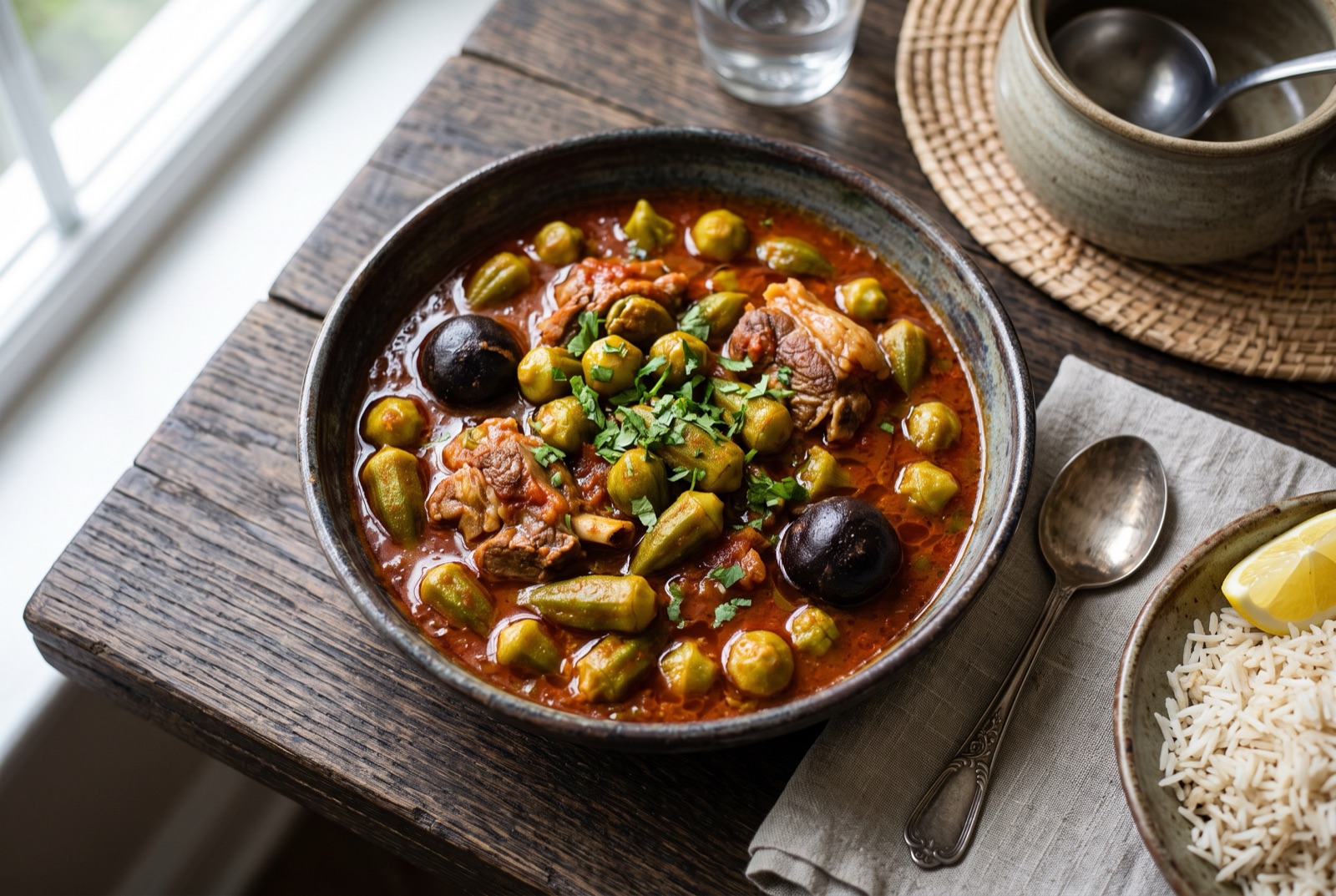
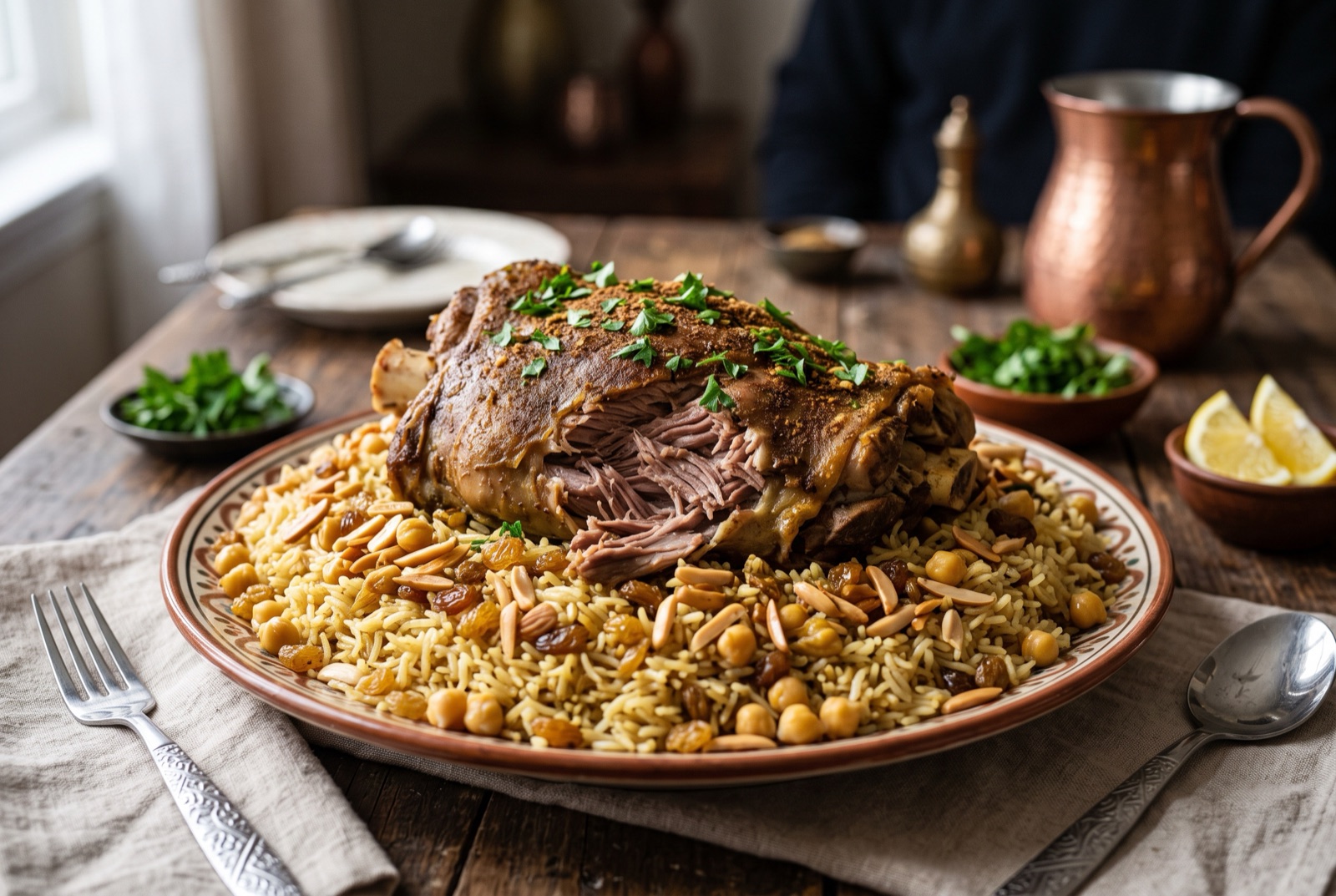
Keep exploring Iraq.
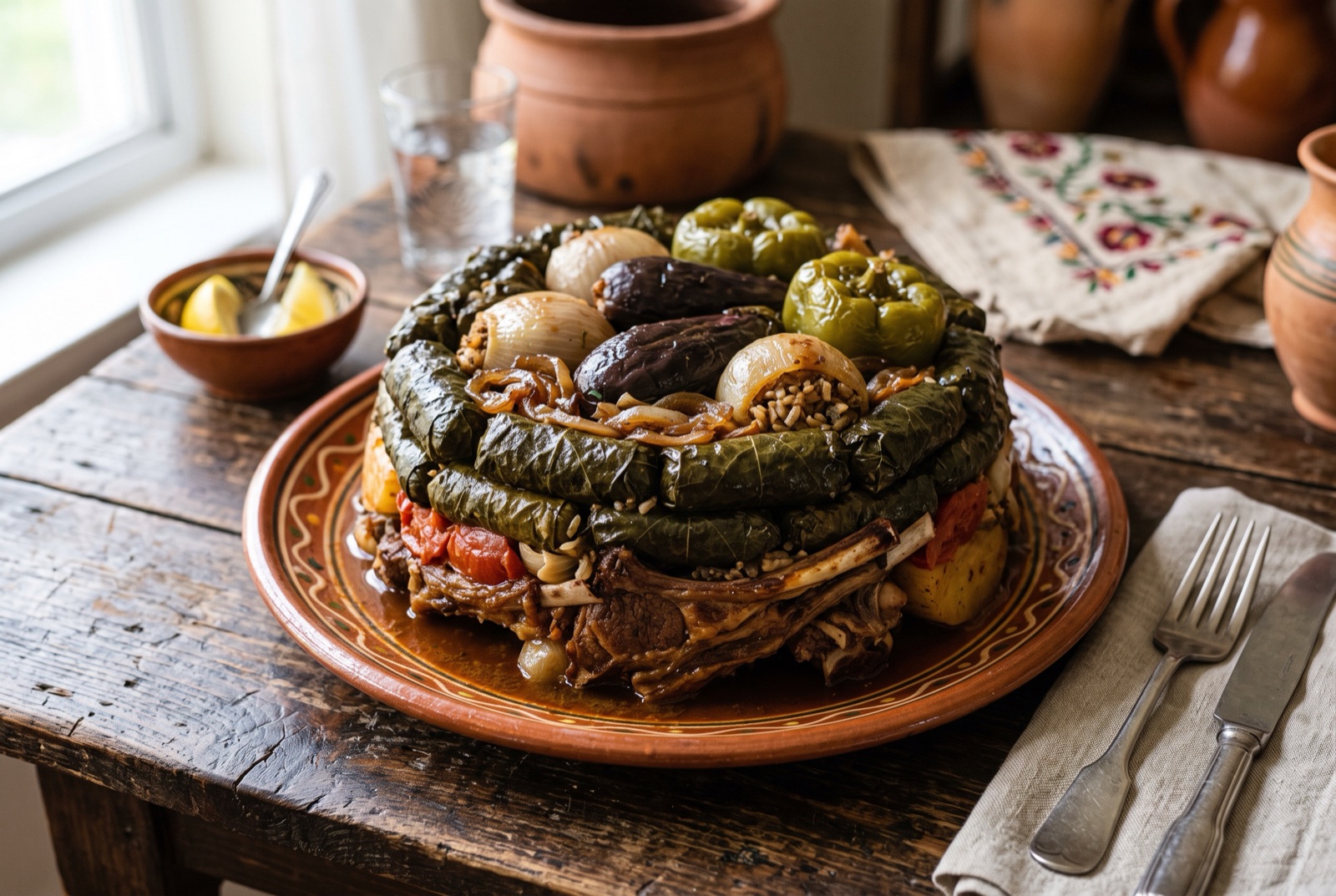
Iraq has 9 more dishes in the atlas — Bamia and Iraqi Dolma, and 7 more.
Recipe by The DishRoute Kitchen · published August 20, 2026 · updated August 20, 2026