Tonkatsu.
Japanese Panko Pork Cutlet
とんかつ · Tonkatsu · say it: TOHN-kah-tsoo
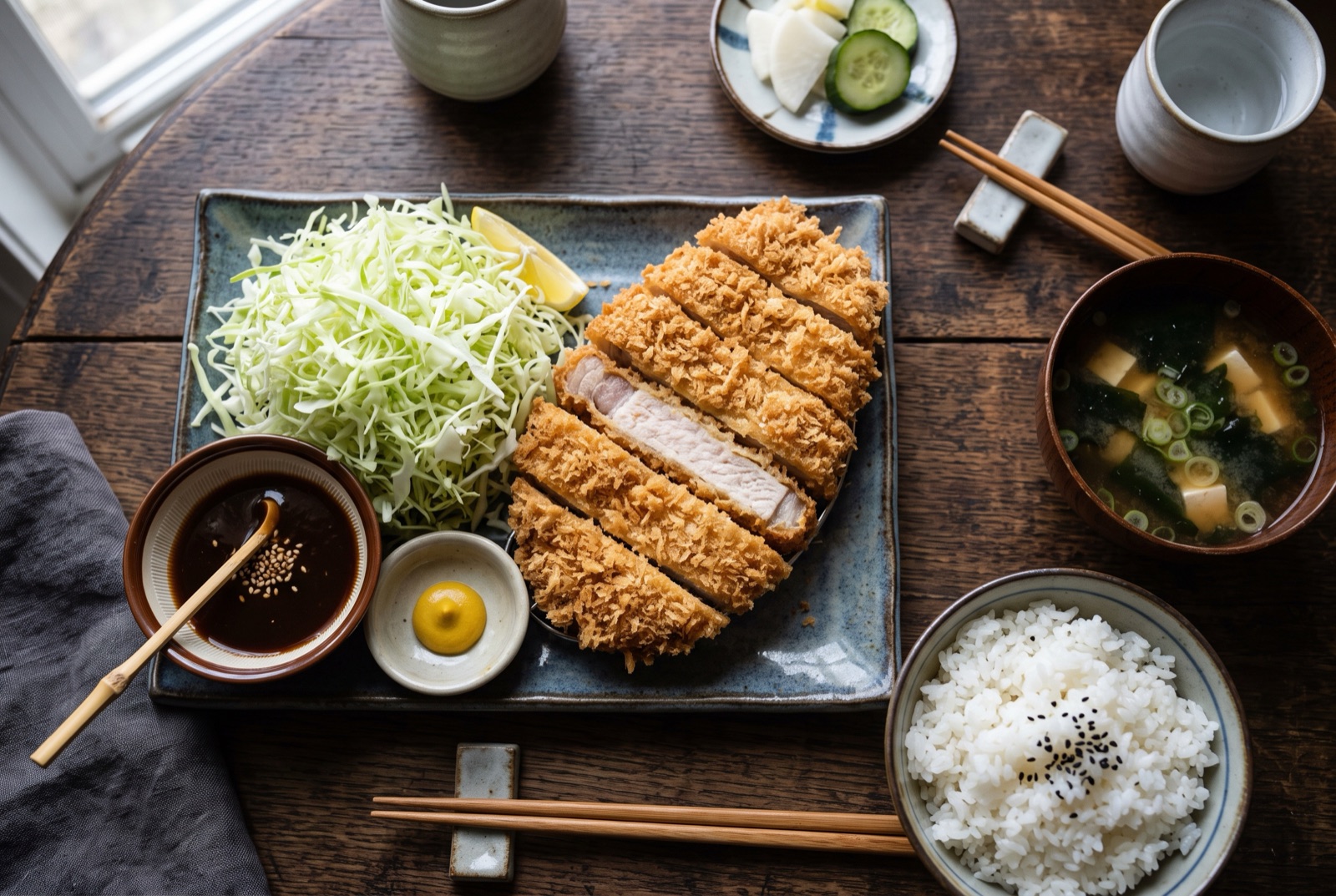
Tonkatsu is a thick pork cutlet coated in panko — the shaggy, splinter-like Japanese breadcrumb — and deep-fried until the crust is dry, hollow-sounding and barely blond, while the pork inside stays pale and dripping with juice. It is not schnitzel: the meat is left thick rather than pounded, the crumb is far coarser, and the target colour is much lighter than European frying. Sliced into fingers and stacked on a mountain of ice-cold shredded cabbage, it comes with a dark, tangy-sweet sauce built on fruit and vegetables that tastes somewhere between HP sauce and ketchup. Rice, miso soup and a wedge of lemon complete a set meal eaten across Japan every day of the week.

- Gate
- JapanTokyo
- Prep
- 25 min
- Cook
- 20 min
- Total time
- 50 min incl. 5 min rest
- Serves
- 4
- Status
- Medium
- Nutrition / serving · estimated
- Calories 690 kcal
- Protein 42 g
- Carbs 58 g
- Fat 32 g
- Fiber 4 g
- Sugar 8 g
- Sodium 980 mg
Why this recipe works.
- A two-temperature fry: gentle first to cook the pork through, hot at the end to dry and set the crust.
- Explains the fat-cap score, the step most home recipes skip, which is why cutlets curl in the pan.
- A four-bottle homemade katsu sauce that tastes close to Bulldog, with no specialist shopping.
- Cabbage cut and iced properly, so it stays crisp under the cutlet instead of wilting into a damp pile.
Ingredients.
12 itemsFor the cutlets
For the coating
To serve
Equipment
- Heavy pot or deep pan for frying
- Cooking thermometer
- Wire rack
- Three shallow bowls for breading
- Sharp knife
Instructions.
Prepare the pork
Snip through the sinew where the fat meets the meat at 2 cm intervals all around each cutlet, cutting about 5 mm deep. Season both sides with the salt and pepper and leave the pork at room temperature for 15 minutes so it does not go into the oil fridge-cold.
Tip Skipping the scoring is the single most common reason cutlets curl up and fry unevenly.
Ice the cabbage
Shred the cabbage into hair-fine ribbons, drop it into a bowl of ice water for 10 minutes, then drain and spin or pat it completely dry. It should be stiff, cold and squeaky rather than limp.
Set up the breading
Line up three shallow bowls: flour, beaten egg, and panko. Coat a cutlet in flour and slap off every loose speck, dip it fully in egg and let the excess drip away, then lay it in the panko and scoop crumbs over it, pressing only lightly so the coating stands up shaggy.
Heat the oil
Bring 4 cm of oil to 160°C in a heavy pot. Test with a pinch of panko — it should sink briefly, then float back up trailing a steady stream of small bubbles, without spitting or browning instantly.
Fry gently, then hot
Lower in two cutlets, keeping the oil around 160°C, and fry for 4 minutes, turning once, until the crumbs are set and pale straw-coloured. Raise the heat to 180°C for a final 1–2 minutes until the crust turns light gold and sounds crisp when tapped with tongs.
Tip Fry in two batches. Crowding the pot drops the oil temperature and the crust drinks oil instead of sealing.
Drain and rest
Stand the cutlets on their edge on a wire rack for 4–5 minutes. Standing them upright lets oil run off and steam escape from both sides, so the underside stays as crisp as the top while the juices settle back into the meat.
Slice and plate
Cut each cutlet across into 2 cm strips with one confident stroke of a sharp knife, keeping the slices together, and slide them onto the plate beside a tall pile of the iced cabbage. Add rice, a lemon wedge and a pool of tonkatsu sauce — grind the sesame seeds into the sauce first if you have them.
Tips from our kitchen.
- Buy pork loin cut 2–2.5 cm thick with the fat cap left on. Thin supermarket cutlets overcook before the crust colours and give you dry, grey meat.
- Snip through the line of sinew between fat and meat every 2 cm. That band shrinks faster than the muscle and is what makes cutlets buckle into a taco shape.
- Press the panko on lightly, never firmly. Crushed crumbs pack flat and fry into a hard shell rather than the standing, splintery crust you want.
- Fry at 160°C first, then lift the oil to 180°C for the last minute. One fixed high temperature browns the crumbs long before the middle is safe.
- Rest the cutlet upright on a rack for 4–5 minutes before slicing. Resting on a plate steams the underside soggy, and cutting straight away pours the juices out.
- Shred the cabbage as fine as you can, then soak it in ice water for 10 minutes and spin it dry — this is the difference between restaurant cabbage and sad salad.
Substitutions.
- Tonkatsu sauce → 4 tbsp ketchup + 2 tbsp Worcestershire sauce + 1 tbsp soy sauce + 1 tbsp mirin + 1 tsp sugar
- Simmer for a minute to take off the raw edge. Bottled Bulldog or Otafuku sauce is fruitier and thicker, and lasts months in the fridge once opened.
- Pork loin → Pork fillet (hire katsu) or boneless chicken thigh
- Fillet gives a leaner, more tender cutlet and is a standard menu option in Japan. Chicken thigh becomes chicken katsu and needs about the same frying time.
- Panko → Stale white bread, crusts removed, torn and pulsed briefly then dried in a low oven
- Regular dried breadcrumbs will not work — they are too fine and absorb oil, giving a dense, greasy coating instead of a light one.
Variations.
- Katsudon
- Sliced tonkatsu simmered briefly with onion in sweetened dashi, bound with a loosely beaten egg and slid over hot rice — the classic way to use a leftover cutlet.
- Katsu curry
- The cutlet laid beside rice and flooded with thick, mildly sweet Japanese curry sauce. The crust stays crisp if you sauce only half of it.
- Katsu sando
- A cold sandwich: cutlet brushed with sauce and pressed between buttered slices of soft milk bread with shredded cabbage, crusts trimmed, cut into neat rectangles.
- Miso katsu
- Nagoya's version, served with a dark, sweet red miso sauce thinned with dashi and mirin instead of the usual brown sauce.
Storage & reheating.
Tonkatsu is at its best within minutes of frying and does not keep well as a crisp cutlet. Refrigerated, it lasts 2 days; revive it in a 200°C oven or air fryer for 6–8 minutes on a rack, never in the microwave, which turns panko to damp sponge. A better plan for leftovers is katsudon, where the cutlet is meant to soften in broth and egg. Breaded raw cutlets can be frozen flat on a tray, then fried from frozen at 160°C for around 10 minutes.
Serve with
Steamed short-grain rice, miso soup, Japanese pickles and a lemon wedge — the standard teishoku set.
The story behind Tonkatsu.
Tonkatsu belongs to yoshoku — Japanese food adapted from Western dishes, born after the country reopened to foreign trade in the second half of the nineteenth century and beef and pork returned to a diet that had gone largely without them for centuries. Cooks in Tokyo took the European breaded veal cutlet, the katsuretsu, and gradually changed everything about it: pork instead of veal, deep-frying in a pot instead of shallow-frying in butter, a much thicker piece of meat, and panko instead of fine dry crumbs. By the early twentieth century the cutlet was being served pre-sliced with chopsticks rather than knife and fork, which is the moment it stopped being a foreign dish and became a Japanese one.
The supporting cast matters as much as the pork. The heap of raw shredded cabbage is not a garnish but a working part of the meal — crisp, watery and faintly sweet, it resets the palate between rich bites, and in most tonkatsu restaurants refills are free. The sauce, thick and near-black, is a Japanese descendant of Worcestershire thickened with fruit and vegetable purée. Many specialist shops set a small mortar of toasted sesame seeds on the table so you grind them yourself and stir the sauce into the fragrant paste, which is one of the small rituals that makes eating tonkatsu feel like an occasion even at a chain restaurant.
The cutlet also spawned an entire family. Katsudon puts it over rice, simmered with onion and egg in sweet dashi. Katsu curry drowns it in thick Japanese curry sauce. Katsu sando presses it between slices of soft milk bread with sauce and shredded cabbage, and has become the polished convenience-store sandwich that food writers abroad now build whole articles around. Students eat katsu before exams because katsu also sounds like the verb "to win" — a pun taken seriously enough that shops advertise it in January.
Questions, answered.
Why is my tonkatsu crust dark brown instead of pale gold?
The oil was too hot. Japanese frying aims for a light, sandy gold at around 160–180°C, which cooks the pork gently and keeps the panko dry rather than caramelised. If your crumbs go dark in under two minutes, lower the heat and check the temperature with a thermometer or by dropping in a crumb — it should sink slightly, then rise with steady small bubbles, not fizz violently.
How do I know when the pork is cooked through?
A 2 cm loin cutlet needs roughly 6–7 minutes total. The reliable test is an instant-read thermometer in the thickest point: 63°C, then rested 5 minutes. Without a thermometer, listen — the frantic bubbling calms noticeably as the moisture at the surface cooks off, and the cutlet feels lighter and firmer when lifted with tongs.
Can I bake or air-fry tonkatsu instead of deep-frying?
You can, and it is decent, but it is a different dish. Toss the panko with a tablespoon of oil first so it browns, then bake at 200°C or air-fry for around 15 minutes, turning once. The crust ends up thinner and more uniform, without the hollow, shattering layers that deep-frying builds.
What is the difference between tonkatsu and schnitzel?
Schnitzel is pounded thin, coated in fine dry breadcrumbs and shallow-fried, usually in butter or a mix, to a deep golden brown. Tonkatsu keeps the pork thick, uses coarse panko, is deep-fried in neutral oil to a paler colour and is served sliced with cabbage and a fruity brown sauce. They share an ancestor but the eating experience is not the same.
Do I really need to serve it with raw cabbage?
It is not decorative. The cabbage is cold, crisp and slightly sweet, and it cuts the fat between mouthfuls the way a pickle does — without it the meal feels much heavier by the last few pieces. If you skip it, serve something else sharp and raw, such as cucumber in rice vinegar.
You might also like.
All recipes →
Keep exploring Japan.
Japan has 9 more dishes in the atlas — Agedashi Dofu and Chicken Teriyaki, and 7 more.
Recipe by The DishRoute Kitchen · published August 19, 2026 · updated August 19, 2026