Aljotta.
Maltese Garlic and Tomato Fish Broth
Aljotta · say it: al-YOT-ta
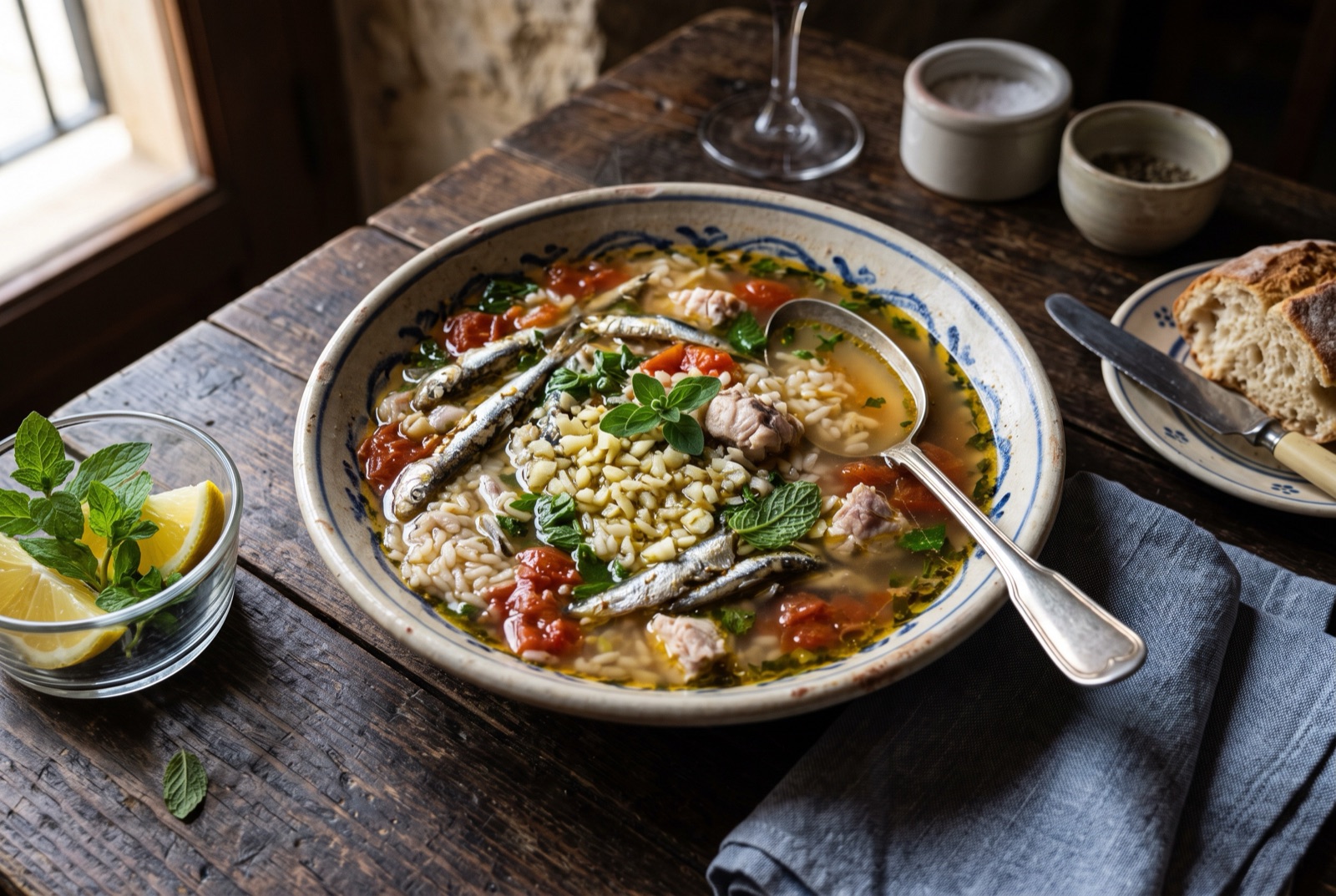
Aljotta is Malta's fish soup, and its defining ingredient is garlic — a whole head of it, not a clove or two. Small whole fish are simmered with tomato, marjoram, mint and that garlic until they give up everything they have, then the broth is strained, the good flesh picked back in, and rice is cooked in the liquid until the soup thickens slightly. A hard squeeze of lemon at the end lifts it. The result is thin-bodied but intensely savoury, sweet from the tomato, herbal in a way that is unmistakably Maltese, and hot with garlic in the back of the throat. It costs almost nothing to make and tastes like it should cost a great deal more.

- Gate
- Malta
- Prep
- 25 min
- Cook
- 55 min
- Total time
- 1 hr 20 min
- Serves
- 4
- Status
- Medium
- Nutrition / serving · estimated
- Calories 380 kcal
- Protein 34 g
- Carbs 32 g
- Fat 13 g
- Fiber 3 g
- Sodium 690 mg
Why this recipe works.
- Uses whole small fish with heads and bones, which is where a fish broth actually gets its body.
- Straining and returning the flesh gives a clean broth with real pieces of fish, not a murky mash.
- Garlic quantity is genuinely Maltese rather than politely reduced for a nervous audience.
- Rice is cooked in the broth at the end so it thickens the soup without going to porridge.
Ingredients.
14 itemsFor the broth
To finish
Equipment
- Large soup pot
- Fine sieve or colander lined with muslin
- Slotted spoon
Instructions.
Sweat the aromatics
Warm the olive oil in a large pot and cook the onion over medium-low heat for 8 minutes until soft and translucent. Add all the chopped garlic and cook for 2 minutes more, stirring constantly, until it smells sweet and looks pale gold — never brown, or the whole broth turns bitter.
Build the tomato base
Stir in the tomato paste and cook for a minute until it darkens, then add the chopped tomatoes, marjoram, half the mint, the parsley stalks and the bay leaf. Cook for 10 minutes until the tomatoes have broken down and the mixture looks thick and glossy.
Simmer the fish
Add the whole fish and pour over the water, which should just cover them. Bring slowly to a bare simmer, skimming the grey foam that rises in the first few minutes, then cook uncovered at the gentlest possible bubble for 25 minutes.
Tip If the surface starts rolling, pull the pot half off the heat. A boiled fish broth cannot be rescued.
Strain and pick
Lift the fish out with a slotted spoon onto a tray and strain the broth through a fine sieve back into the clean pot, pressing gently on the solids. When the fish is cool enough to handle, pick the flesh off in large pieces, discarding all skin, heads and bones.
Cook the rice in the broth
Bring the strained broth back to a gentle simmer, season with salt and pepper, and add the rice. Cook for 15 minutes, stirring occasionally, until the grains are tender and the broth has thickened just enough to cling faintly to a spoon.
Return the fish and finish
Slide the picked fish back into the pot with the remaining mint and warm through for 2 minutes without stirring hard, so the pieces stay whole. Taste and correct the seasoning — it should be strongly savoury and clearly garlicky.
Serve with lemon
Ladle into warm bowls and bring the lemon wedges to the table so each person squeezes their own in. Serve immediately, with garlic-rubbed bread alongside.
Tips from our kitchen.
- Ask the fishmonger for soup fish, rockfish or the heads and frames from filleting — that is what aljotta was designed to use and it costs very little.
- Rinse the fish and remove the gills before they go in. Gills carry bitterness and blood that clouds the broth.
- Never let the pot boil hard while the fish is in it. A rolling boil emulsifies fat and bone into the liquid and the broth goes grey and murky.
- Add the rice only about 15 minutes before serving. Left sitting in hot broth it swells and turns the soup into a stodgy mass.
- Squeeze the lemon at the table, not in the pot — the brightness fades within minutes of hitting hot liquid.
- If the broth tastes flat rather than weak, it needs salt and acid, not more simmering. Longer cooking will only make it bitter.
Substitutions.
- Whole small fish → 1 kg fish heads and frames plus 400 g white fish fillet
- The frames build the broth and the fillet gives you flesh to return to the bowl. Add the fillet only for the final 6 minutes.
- Fresh marjoram → Dried marjoram (1 tsp) or fresh oregano
- Oregano is stronger and more peppery, so use about half the quantity or it takes over from the mint.
- Rice → Broken vermicelli or small soup pasta
- Common in Maltese homes. Pasta cooks faster than rice, so add it about 8 minutes before serving instead of 15.
Variations.
- Aljotta with prawns
- Shell-on prawns simmered in the broth for the last few minutes, with the shells added earlier to deepen the base. Richer and slightly sweeter.
- Clear aljotta
- Strained and served with no rice or fish at all, as a light broth with bread rubbed with garlic — the version usually given to someone unwell.
- Aljotta with potato
- Diced potato cooked in the broth instead of rice, which gives a heartier, more filling soup and is common in winter.
Storage & reheating.
The broth keeps 2 days refrigerated and freezes well for 3 months, but store it without the rice — rice left in soup goes soft and cloudy and never recovers. Cook fresh rice into the reheated broth each time. Reheat gently to just below a simmer; boiling reheated fish broth flattens the flavour and toughens the fish pieces. Add lemon only at the moment of serving.
Serve with
Thick slices of crusty Maltese bread rubbed with a cut garlic clove, and lemon wedges on the table.
The story behind Aljotta.
The name comes from the same root as aioli and allioli — the Latin allium, garlic — which tells you exactly where the emphasis sits. Aljotta belongs to the Mediterranean family of fishermen's soups that also includes bouillabaisse, cacciucco and suquet: dishes invented to use the fish that could not be sold. Small, bony, awkward specimens that no market wanted went into the pot, and their bones and heads are precisely what makes the broth taste of the sea rather than of water with fish in it.
In Malta this was practical rather than romantic. The fishing villages — Marsaxlokk above all, with its harbour full of painted luzzu boats — worked with what the day brought, and a soup that could absorb whatever was left over after the catch was sorted was worth having. Rockfish, small scorpionfish, wrasse, gurnard and the bony inshore species all end up in aljotta. The rice is a later, thrifty addition that turns a broth into something that can be a meal, though some households use broken vermicelli instead and some serve it with nothing but bread.
The herb choice is what marks the soup as Maltese rather than Italian or Provençal. Marjoram grows wild across the islands and is used far more freely here than elsewhere in the Mediterranean, and the mint is not a garnish but a structural flavour, added during the simmer. There is no saffron, no fennel, no rouille — nothing to complicate it. Aljotta is a plain soup made unusually good by not being clever, and its reputation in Malta as a restorative for hangovers, colds and general low spirits is entirely deserved.
Questions, answered.
What fish should I use for aljotta?
Small, bony inshore fish are traditional: rockfish, wrasse, gurnard, small scorpionfish, or whatever the fishmonger sells as soup fish. Heads and frames left over from filleting work just as well and are usually free or nearly so. Avoid oily fish like mackerel or sardines, which make the broth heavy and strong.
Is a whole head of garlic really correct?
Yes. The name itself comes from the word for garlic, and Maltese versions use it in quantities that surprise visitors. Simmering mellows it considerably, so the finished broth tastes deeply savoury rather than harsh. If you are unsure, start with half a head and add more at the end, crushed into the hot broth.
Why did my broth turn cloudy and grey?
The pot boiled. A hard boil breaks fat, protein and fine bone particles into suspension and there is no way to clear it afterwards. Keep the liquid at a bare simmer where only occasional bubbles rise, and skim the foam that appears in the first ten minutes.
Can I make aljotta ahead for a dinner?
Make the strained broth a day ahead — it improves overnight — and keep the picked fish separately in the fridge. Reheat the broth gently, cook the rice in it, then return the fish for the last two minutes just to warm through. Finishing it this way keeps the fish in intact pieces rather than shreds.
How do I get the flesh off small bony fish?
Lift the cooked fish out with a slotted spoon and let it cool for a few minutes until you can handle it. The flesh comes away from the backbone easily at that point; work with your fingers rather than a fork so you can feel the small bones. Discard heads, skin and frames after straining the broth through them.
You might also like.
All recipes →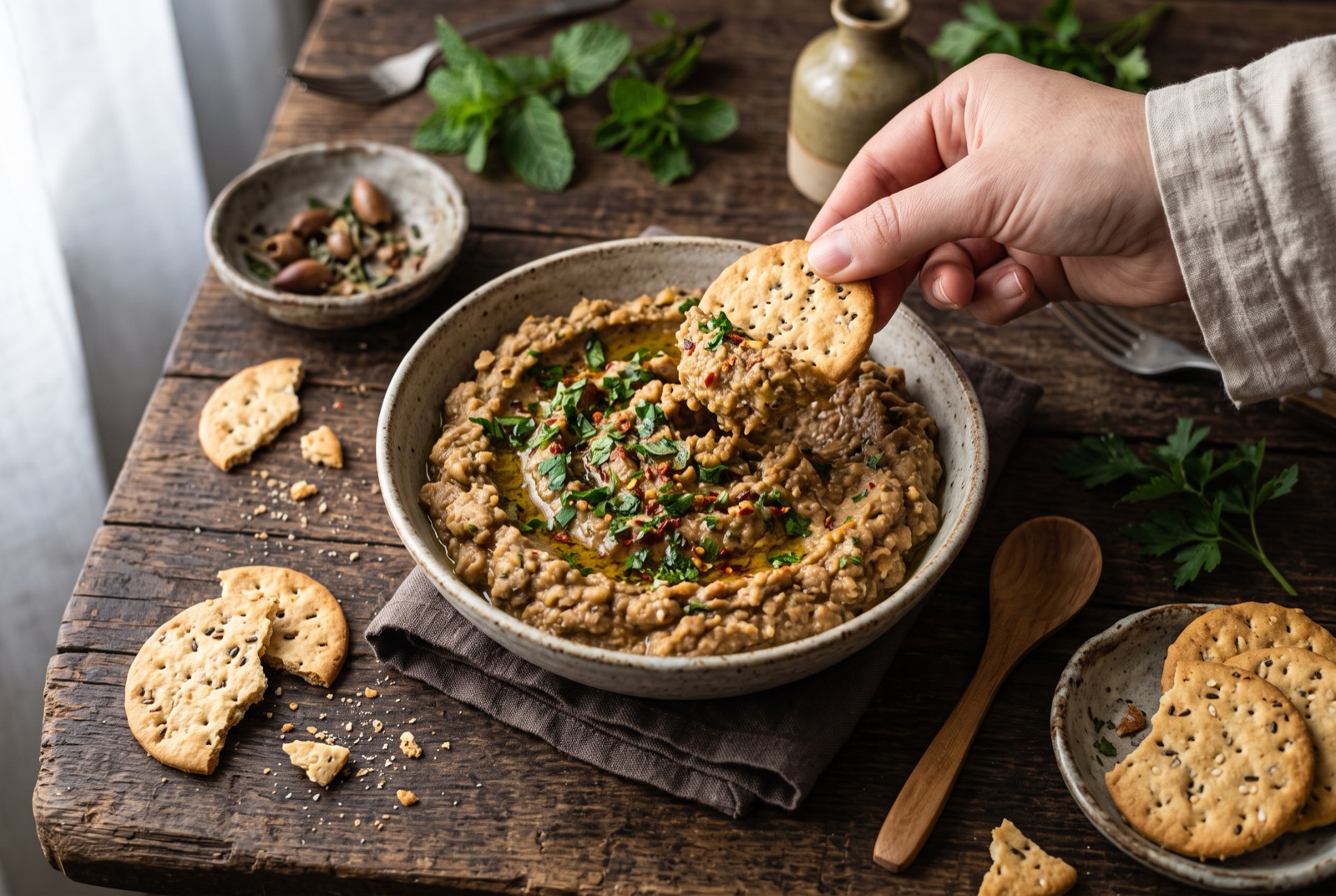
Keep exploring Malta.
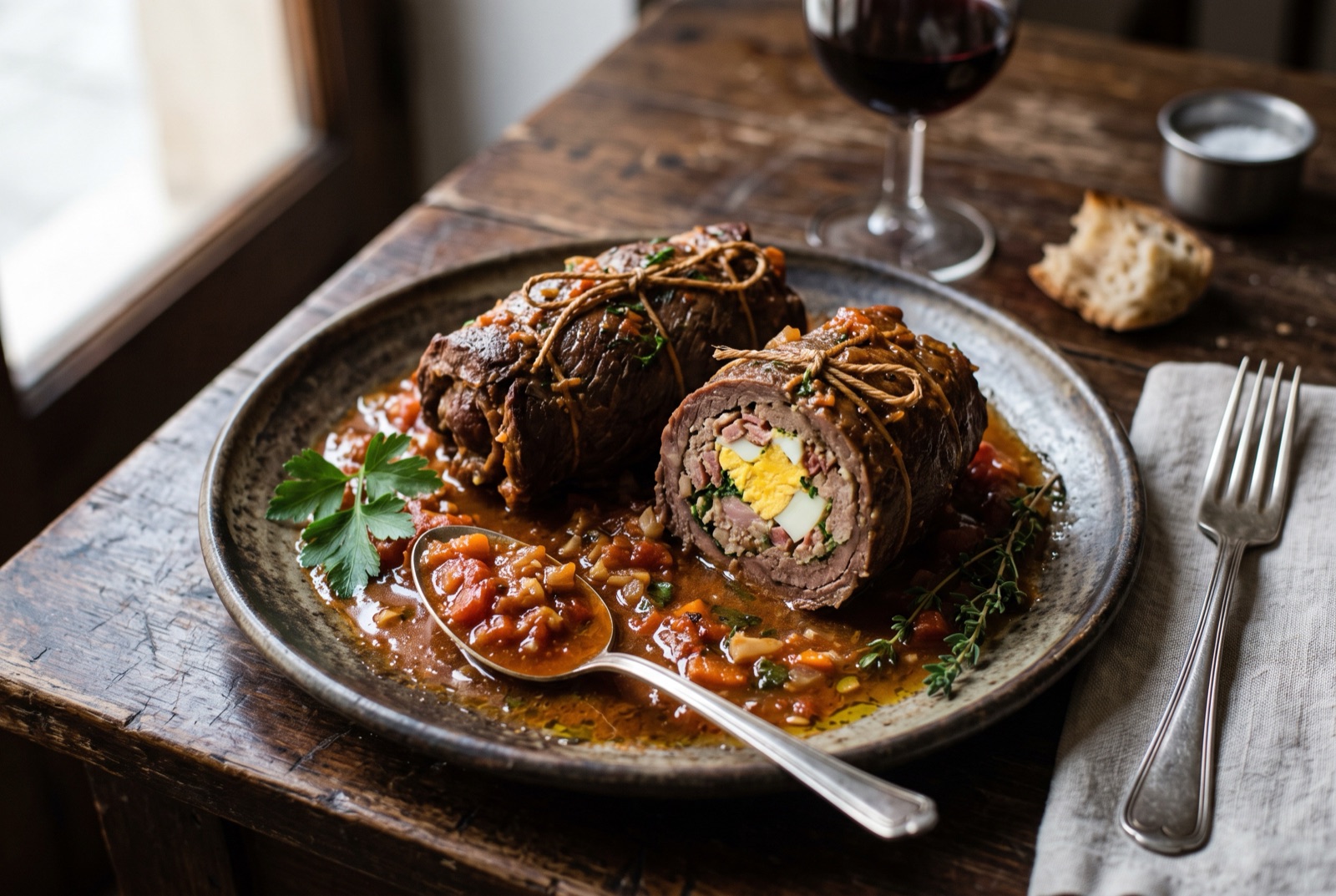
Malta has 9 more dishes in the atlas — Bigilla and Braġioli, and 7 more.
Recipe by The DishRoute Kitchen · published August 20, 2026 · updated August 20, 2026