Ayam Percik.
Kelantan Grilled Chicken in Coconut Gravy
Ayam percik · say it: AH-yam PER-cheek
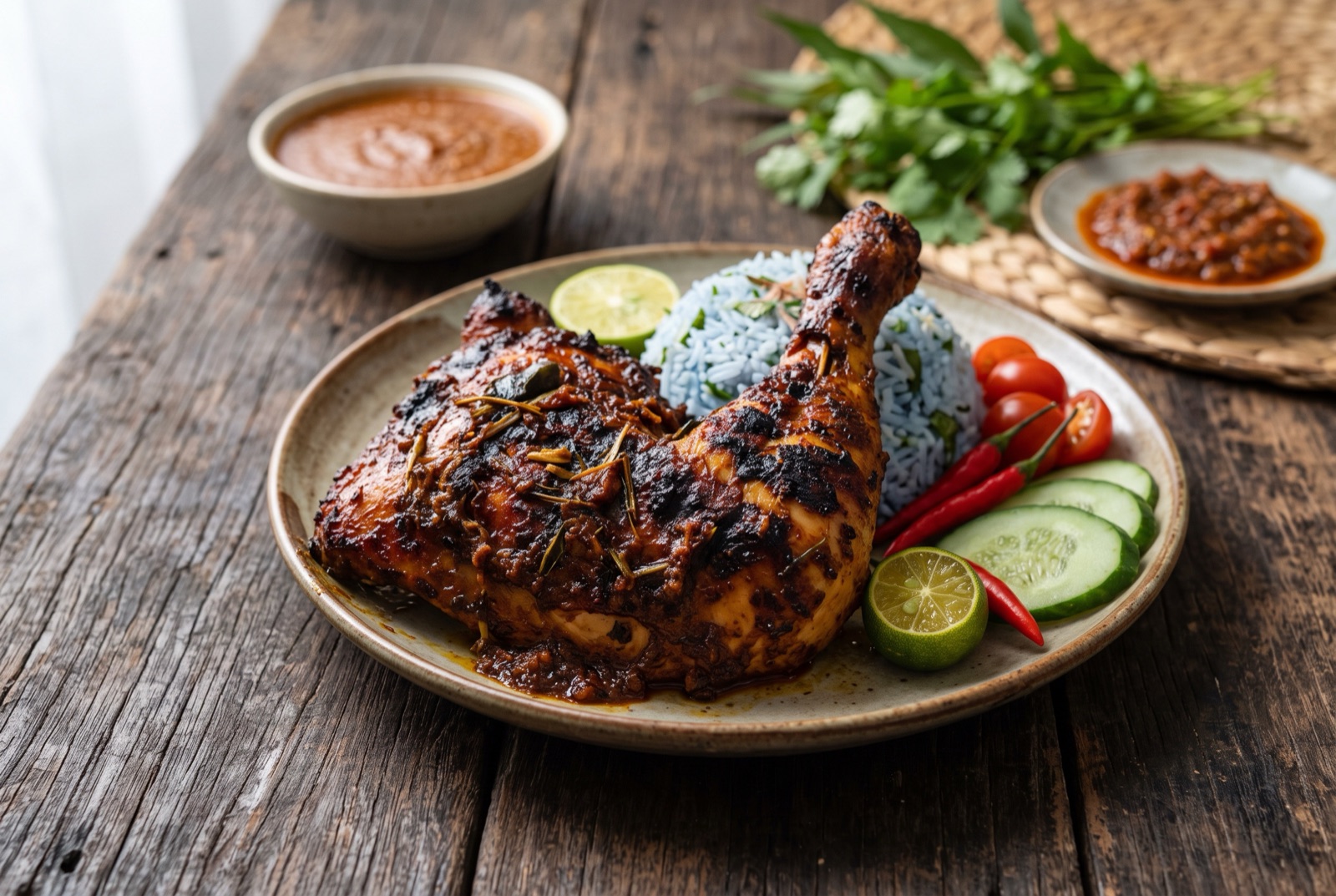
Ayam percik is grilled chicken with a sauce that never leaves the meat. A thick rempah of shallots, lemongrass, galangal, chile and turmeric is loosened with coconut milk into a gravy, and the chicken is cooked slowly over coals while that gravy is brushed on again and again — percik means to splash or spray. Each coat dries and caramelises before the next goes on, so by the end the skin carries several millimetres of sticky, faintly burnt, sweet-savoury crust while the meat underneath stays juicy. Any leftover gravy is spooned over at the table. It is Kelantanese Ramadan-bazaar food, and it smells like it from three streets away.

- Gate
- MalaysiaKelantan
- Prep
- 30 min
- Cook
- 55 min
- Total time
- 1 hr 35 min incl. 10 min rest
- Serves
- 4
- Status
- Medium
- Nutrition / serving · estimated
- Calories 620 kcal
- Protein 46 g
- Carbs 16 g
- Fat 42 g
- Fiber 3 g
- Sugar 10 g
- Sodium 780 mg
Why this recipe works.
- Two-zone cooking, so the sugary gravy caramelises without carbonising while the chicken cooks through to the bone.
- The gravy is thickened and reduced before basting begins, which is why it clings in layers instead of dripping into the fire.
- Includes a reliable oven-and-grill method for cooks without charcoal, with the trade-off stated honestly.
- Butterflying instructions for a whole bird, plus timings for thighs if you would rather not deal with one.
Ingredients.
16 itemsFor the chicken
For the rempah
For the gravy
Equipment
- Blender or stone mortar
- Charcoal grill or oven with a grill setting
- Basting brush
- Wide saucepan
Instructions.
Prepare the bird
Cut down either side of the backbone with heavy scissors and open the chicken out flat, pressing hard on the breastbone until it cracks. Slash the thighs and breast to the bone in two or three places each and rub all over with the salt.
Tip The slashes are not cosmetic — they let heat and gravy reach the thick parts so the bird finishes evenly.
Blend and fry the rempah
Blend the drained chiles, shallots, garlic, lemongrass, galangal, ginger, turmeric and candlenuts to a smooth paste with a splash of water. Fry it in the oil over medium heat for 12–15 minutes, stirring, until it darkens and oil beads out at the edges.
Build and reduce the gravy
Pour in the coconut milk, tamarind water, sugar and lime leaves. Simmer gently for 15–20 minutes until the gravy thickens enough to coat the back of a spoon and leaves a clean line when you draw a finger through it. Season with salt and set a third of it aside in a separate bowl for the table.
Tip Do not let it boil hard — the coconut milk will split and the gravy will look grainy on the skin.
Start over indirect heat
Bank the coals to one side of the grill, or heat an oven to 200°C. Brush the chicken all over with a thin coat of gravy and cook it skin side up on the cool side of the grill, lid down, for 25 minutes.
Baste in layers
Every 5–7 minutes, turn the bird and brush on another thin coat, always onto skin that has gone matt and dry. Keep doing this for a further 20–25 minutes, until the thickest part of the thigh reads 75°C and the juices run clear.
Tip Six or seven thin coats build the crust. Two thick ones just slide off into the fire.
Char and rest
Move the chicken over the hot coals for the last 3–4 minutes a side, watching constantly, until the gravy blackens in patches and the edges of the slashes crisp. Rest it 10 minutes on a board, then cut into pieces and serve with the reserved gravy spooned over.
Tips from our kitchen.
- Butterfly the chicken and press it flat. An unopened bird cooks unevenly and gives the gravy nowhere to sit.
- Reduce the gravy until it coats the back of a spoon before you start basting. Thin gravy runs straight off the skin and into the coals.
- Bank the coals to one side and cook the chicken on the cooler half, moving it over the heat only for the final minutes of each side.
- Baste every 5–7 minutes, and always onto skin that looks dry. Layering wet gravy onto wet gravy gives you one thick soggy coat instead of several thin sticky ones.
- Keep back a third of the gravy in the pan, untouched by the raw-chicken brush, to serve as sauce at the table.
- Bruise a small bundle of lemongrass stalks and use it as the basting brush if you have the stalks to spare — it perfumes each coat as it goes on.
Substitutions.
- Whole butterflied chicken → 8 bone-in, skin-on chicken thighs
- Thighs are far more forgiving and cook in about 30 minutes. Boneless thighs work too but lose the deep basting time that builds the crust, so add extra coats early.
- Fresh galangal → Frozen galangal, or an extra thumb of ginger plus a strip of lime zest
- The lime zest stands in for galangal's piney sharpness, which plain ginger does not have. It is a workaround, not an equivalent.
- Candlenuts → Macadamia nuts, or raw cashews
- Candlenuts thicken the rempah and add a waxy richness. Macadamias are the closest match. Do not eat any of these raw in quantity — candlenuts in particular are only edible cooked.
Variations.
- Ayam percik putih
- The mild white version: no dried chiles, more coconut milk and a little more galangal, giving a pale, creamy crust rather than a red one.
- Ikan percik
- The same gravy brushed onto a whole grilled fish — snapper or mackerel — which takes about a third of the time and suits the coastal origin of the dish.
- Percik wings
- Chicken wings cooked the same way for a party: they take about 20 minutes and pick up proportionally more crust than a whole bird.
Storage & reheating.
Cooked percik keeps 3 days refrigerated, and the crust stays surprisingly good — reheat it uncovered in a hot oven for 10 minutes rather than microwaving, which softens everything. The gravy keeps 4 days separately and freezes for 2 months; make a double batch and freeze half, since the rempah is the only laborious part. Raw chicken can sit in a thin coat of the gravy overnight as a marinade, which improves it, but do not marinate longer than 24 hours or the salt and acid start to cure the surface.
Serve with
Nasi kerabu or plain steamed rice, with sliced cucumber and extra gravy spooned over.
The story behind Ayam Percik.
The east coast states of Kelantan and Terengganu cook differently from the rest of peninsular Malaysia — sweeter, heavier on coconut, closer in accent to southern Thailand than to Kuala Lumpur — and ayam percik is one of the clearest expressions of that. It belongs to the same family as the region's nasi kerabu, the blue rice salad dish it is most often served alongside, and to a broader Malay tradition of cooking meat over coals with a wet spice paste rather than a dry rub.
It is above all bazaar food. During Ramadan, the pasar juadah — the afternoon markets that spring up in every Malaysian town before the breaking of the fast — line up whole butterflied chickens on long grills, each one stained yellow-orange, with a cook working down the row with a brush or a bundle of lemongrass stalks used as a basting whisk. The lemongrass brush is not decorative; it splits at the end into a natural mop and perfumes the gravy as it goes on. The chickens are turned constantly, and a good stall gets through several hundred before sunset.
There are two schools of percik. The white version, ayam percik putih, uses little or no chile and reads as creamy and mild. The red one, closer to what most people picture, is built on soaked dried chiles and turmeric, and is what this recipe follows. Neither is a modern invention and neither is more correct. What both require is patience: percik cooked fast over high heat gives you a black exterior and raw thighs, since the sugars in the coconut milk and palm sugar burn long before the bone-in chicken is done. Cooks who know the dish keep the coals low and off to one side, and treat the last few bastings as the only moment for real colour.
Questions, answered.
Why does my chicken burn before it cooks through?
Coconut milk and palm sugar both caramelise well below the temperature needed to cook a bone-in bird through. The fix is two-zone heat: bank the coals to one side, cook the chicken on the indirect side with the lid down or a foil tent, and only move it over direct heat in the final minutes to set the last coats of gravy.
Can I make ayam percik without a barbecue?
Yes. Roast the butterflied chicken at 200°C for about 40 minutes, basting every 10, then finish under a hot grill for 5–8 minutes to blister the surface. You lose the charcoal smoke, which is a real loss, but the layered gravy crust — the defining feature — comes out almost identical.
What is the difference between ayam percik and satay?
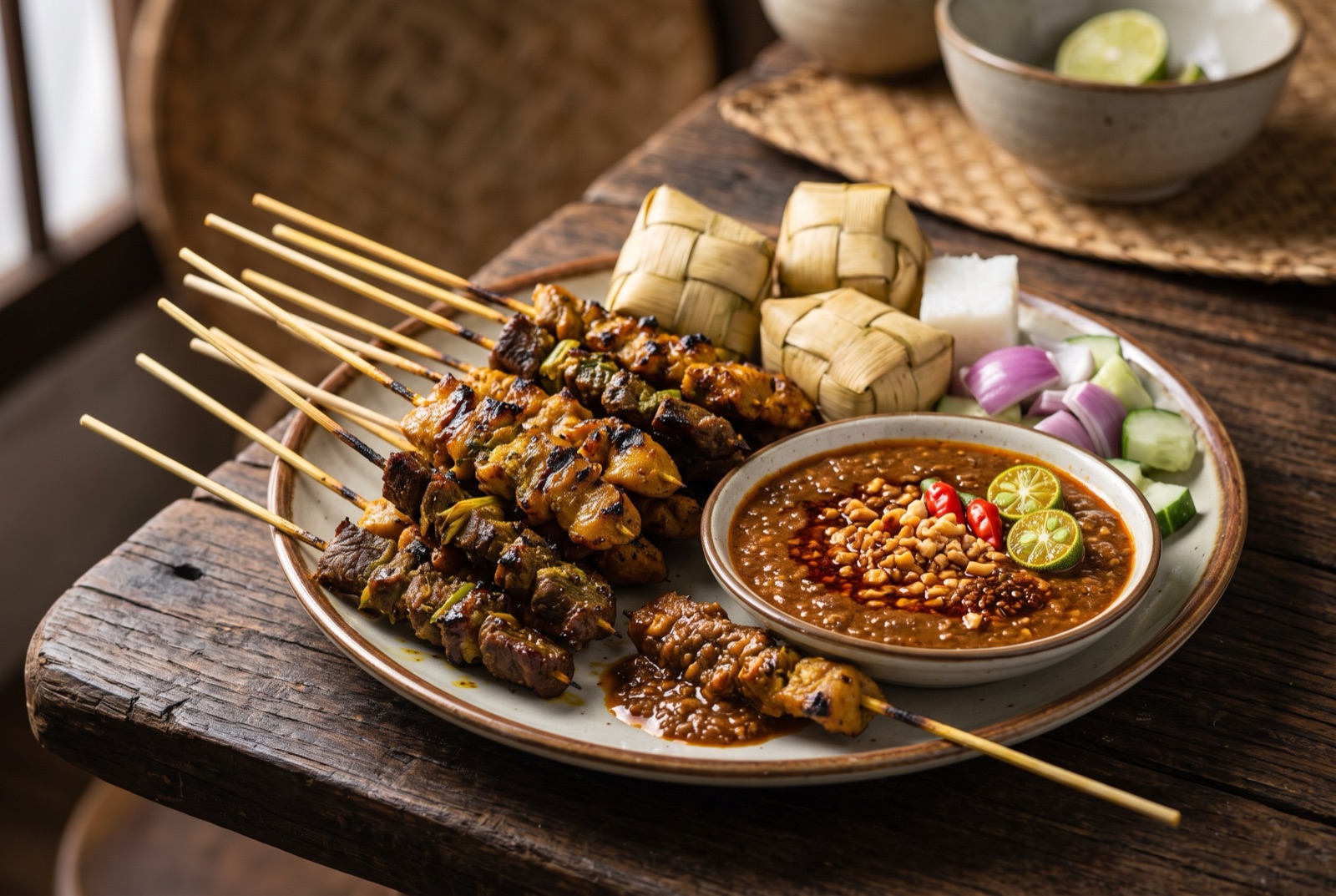
Satay is small pieces of marinated meat threaded on skewers, grilled fast, and dipped in a separate peanut sauce served on the side. Ayam percik is a whole bird or large pieces cooked slowly while its coconut-rempah gravy is repeatedly brushed on, so the sauce becomes part of the crust rather than an accompaniment.
How spicy should the gravy be?
Medium at most. The dried chiles used in Malay rempah give colour and a rounded warmth rather than sharp heat, and the coconut milk and palm sugar soften them further. Deseed the chiles for a mild version, or add two fresh bird's eye chiles to the blender if you want the gravy to actually bite.
Can I use the basting gravy as a sauce?
Only if you keep it separate. Set aside a third of the reduced gravy before you start basting and never let the brush that touched raw chicken go near it. The portion used for basting has been in contact with raw meat throughout; if you want to serve that too, boil it hard for at least 3 minutes first.
You might also like.
All recipes →
Keep exploring Malaysia.
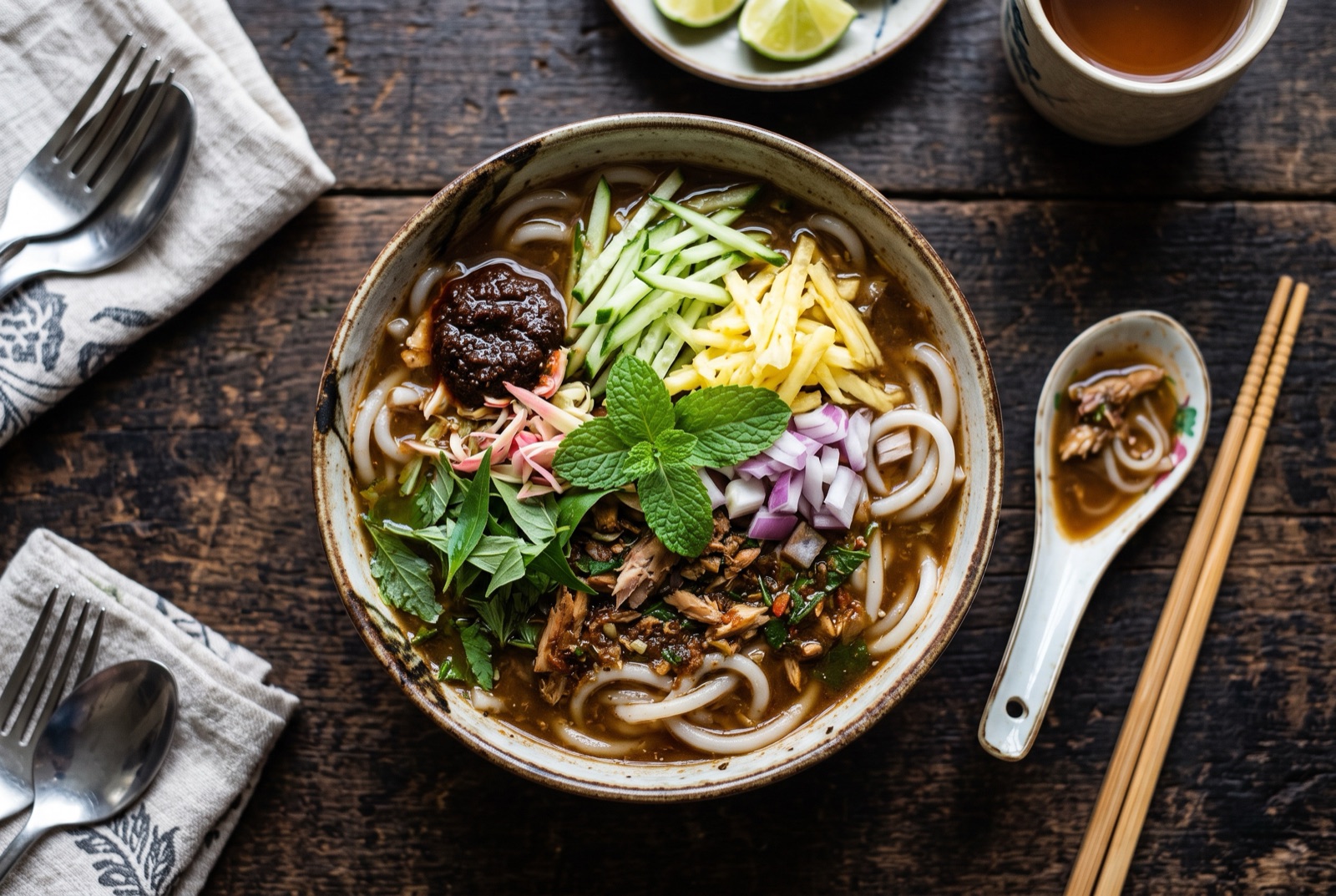
Malaysia has 9 more dishes in the atlas — Acar Awak and Asam Laksa, and 7 more.
All Malaysia recipes Chicken recipes Coconut milk recipes Lemongrass recipes maindairy freegluten freehalal friendlyRecipe by The DishRoute Kitchen · published August 20, 2026 · updated August 20, 2026