Satay Kajang.
Malaysian Skewers with Peanut Sauce
Sate · say it: SAH-tay ka-JANG
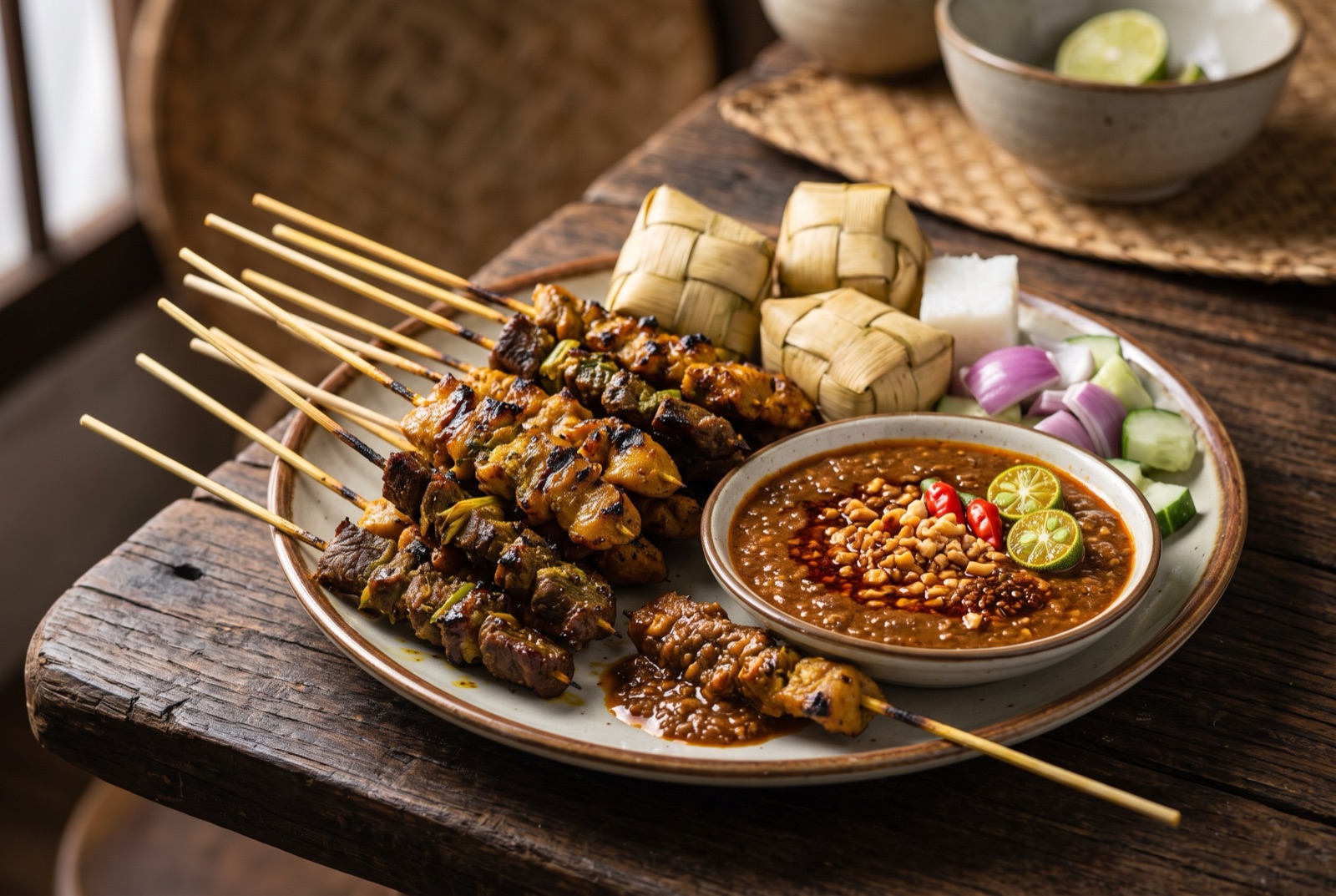
Satay is small pieces of meat on a bamboo stick, but the details decide everything. The Malaysian marinade is dry and yellow rather than sweet and dark: pounded lemongrass, turmeric, coriander seed, shallot and a little sugar, worked into the meat and left for hours until it stains the surface. The skewers are threaded flat and thin so they cook in minutes, basted with a lemongrass brush dipped in oil, and grilled over coals until the edges blacken and the fat spits. The sauce is coarse-ground roasted peanuts cooked into a chile rempah with tamarind — thicker, grittier and hotter than the smooth peanut sauces served elsewhere. You dip, you eat, you drop the stick in the pile.

- Gate
- Malaysia
- Prep
- 40 min
- Cook
- 35 min
- Total time
- 5 hr 15 min incl. 4 hr rest
- Serves
- 4
- Status
- Medium
- Nutrition / serving · estimated
- Calories 640 kcal
- Protein 42 g
- Carbs 38 g
- Fat 36 g
- Fiber 6 g
- Sugar 14 g
- Sodium 900 mg
Why this recipe works.
- Dry turmeric-lemongrass marinade in the Malaysian style, not the sweet soy marinade used across the strait.
- Peanut sauce built the proper way: whole peanuts roasted and coarsely ground, then cooked into a fried rempah with tamarind.
- Skewering and threading technique explained, because flat, thin skewers are why street satay cooks in three minutes and home satay often does not.
- Includes the lemongrass basting brush and a workable grill-pan method for anyone without charcoal.
Ingredients.
22 itemsFor the skewers
For the marinade
For the peanut sauce
To serve
Equipment
- Bamboo skewers
- Charcoal grill or ridged grill pan
- Blender or stone mortar
- Frying pan
Instructions.
Marinate the meat
Blend the lemongrass, shallots, garlic, turmeric, ground coriander, cumin, fennel, sugar, salt and oil into a thick paste. Rub it through the sliced meat until every piece is coated yellow, cover and refrigerate for at least 4 hours or overnight.
Roast and grind the peanuts
Toast the peanuts in a dry pan over medium heat for 8–10 minutes, shaking often, until the skins split and darken and the nuts smell strongly roasted. Rub them in a tea towel to loosen the skins, then pulse in a processor to a coarse rubble — some pieces should still be the size of split peas.
Tip Stop while it is still gritty. Grind it to butter and the sauce turns into a smooth paste with no character.
Fry the sauce rempah
Blend the soaked chiles, shallots, garlic and lemongrass to a paste and fry it in the oil over medium heat for 12 minutes, stirring, until it darkens and the oil separates out around the edge of the pan.
Finish the peanut sauce
Stir in the crushed peanuts, tamarind water, sugar and 300 ml of water. Simmer 15 minutes, stirring often, until the sauce thickens to the consistency of loose porridge and a spoon dragged across the base leaves a trail that fills in slowly. Season with salt.
Thread the skewers
Thread 3–4 slices of meat onto each soaked bamboo skewer, pushing them flat and close together like a folded ribbon, leaving a bare handle at one end. You should get around 24 skewers.
Grill hard and fast
Grill over hot coals or on a smoking grill pan for 3–4 minutes total, turning every 30 seconds and brushing with oil using a bruised lemongrass stalk, until the edges char and the meat is just firm. Pile onto a plate with the onion, cucumber and rice cubes, with the peanut sauce alongside.
Tip If nothing is blackening at the edges the fire is too cool — satay is supposed to carry some char.
Tips from our kitchen.
- Soak bamboo skewers in water for at least 30 minutes, and leave a bare handle at one end so you can turn them without burning your fingers.
- Cut the meat across the grain into thin slices about 3 cm square and 5 mm thick, then thread them flat like a ribbon rather than bunched into a ball.
- Marinate at least 4 hours, ideally overnight. The turmeric and coriander need time to move past the surface.
- Grill over hot coals with the skewers close to the heat and turn them every 30 seconds. Satay is meant to char at the edges while staying juicy, which only happens fast.
- Baste with oil, not with the marinade — a bundle of bruised lemongrass dipped in oil works as brush and flavouring at once.
- Roast and grind the peanuts yourself. Pre-ground peanut butter makes a smooth, dull sauce with none of the texture the dish depends on.
Substitutions.
- Ketupat rice cakes → Sticky rice pressed into a tin, chilled and cut into cubes
- Ketupat pouches are sold in Asian shops around festival season and rarely otherwise. Compressed cold rice serves the same purpose: something dense to soak up sauce.
- Fresh galangal → Extra lemongrass plus a thumb of ginger
- Galangal is more distinctive, but the marinade is already carried by turmeric and coriander, so this substitution costs less here than in a curry.
- Raw peanuts → Unsalted roasted peanuts, pulsed coarsely
- Skip the roasting step if using these, but check they are unsalted — the sauce is seasoned separately and salted peanuts will push it too far.
Variations.
- Satay ayam
- Chicken thigh instead of beef, marinated the same way. It cooks a minute faster and takes more kindly to a slightly sweeter marinade.
- Satay perut and satay babat
- Offal skewers — tripe and intestine — sold alongside the meat at Kajang stalls and considered the connoisseur's order.
- Satay celup
- A Malacca variation where raw skewers of meat, seafood and vegetables are cooked by the diner in a communal pot of boiling peanut sauce.
Storage & reheating.
Marinated raw meat keeps 24 hours refrigerated and freezes well on the skewer, which makes satay a good thing to prepare in advance for a barbecue. Grilled skewers are best within minutes; refrigerated and reheated they toughen, though a quick blast under a hot grill is better than a microwave. The peanut sauce keeps a week refrigerated and thickens as it sits — loosen it with hot water and re-season when reheating. It also freezes for 3 months, and the texture survives it.
Serve with
Ketupat or compressed rice, wedges of raw red onion and cucumber, and the peanut sauce in a shared bowl.
The story behind Satay Kajang.
Satay travelled. Most food historians trace it to Java, where Arab and Indian traders' grilled skewered meats met local cooking, and from there it spread across the Malay world, taking a different accent in each place. That shared ancestry is why Malaysia, Indonesia, Singapore and southern Thailand all have satay and all cook it differently, and why claiming sole ownership of it is a losing argument in every direction.
What Malaysia has is Kajang. The town, just south of Kuala Lumpur, built a reputation on satay strong enough that "Kajang satay" functions as a style name across the country: skewers grilled to order in banks of dozens over long charcoal troughs, served with cubes of ketupat — compressed rice cooked in woven palm-leaf pouches until dense enough to slice — plus raw red onion wedges and cucumber. The onion is not garnish. Its sharpness cuts the peanut sauce, and a satay plate without it feels unbalanced to anyone used to eating it properly.
The Malaysian marinade differs from the Indonesian in one obvious way: it leans on turmeric, lemongrass and toasted coriander rather than kecap manis, so the meat comes off the grill yellow-brown and savoury rather than dark and sweet. The sauce differs too — Malaysian kuah kacang is built on a fried chile rempah with tamarind, is noticeably spicier, and is deliberately left coarse so you can feel the peanut fragments. Satay is eaten in the evening, almost never as a main course alone, and always in a quantity that seems reasonable until the sticks are counted at the end. Stalls charge by the skewer, and everyone underestimates.
Questions, answered.
How is Malaysian satay different from Indonesian sate?
Mainly the marinade and the sauce. Malaysian satay is marinated in a dry-ish paste of turmeric, lemongrass, coriander and shallot, so the meat is yellow-brown and savoury. Indonesian sate ayam is typically marinated in kecap manis, the sweet dark soy, giving darker, sweeter meat. Malaysian peanut sauce is coarser, spicier and soured with tamarind; the Indonesian version is smoother and sweeter.
Why is my satay dry?
Usually the meat was cut too thick, threaded in a bunch, or cooked too slowly. Satay wants thin slices threaded flat and a very hot fire, so the outside chars in about three minutes total while the inside barely has time to dry out. Including a small piece of fat on every second skewer, which Malaysian stalls do routinely, also helps considerably.
Can I cook satay without a barbecue?
Yes, though you lose the smoke. A ridged cast-iron grill pan heated until it just smokes gives good char in about four minutes with frequent turning. Alternatively grill them 8 cm below a hot oven grill element, turning every minute. In both cases open a window — satay produces a lot of smoke by design.
Can I make the peanut sauce ahead?
Yes, and it is better for it. The sauce keeps a week in the fridge and the flavours settle overnight. It thickens as it cools, sometimes to a paste, so reheat it gently with a splash of hot water until it drops off the spoon in a thick ribbon and taste again for salt, sugar and tamarind before serving.
What is ketupat and do I need it?
Ketupat is rice cooked inside a woven palm-leaf pouch until it compresses into a dense cake that can be cut into cubes. It exists to soak up peanut sauce without falling apart. You do not need it, but you do need something starchy and firm — cold sticky rice pressed into a tin and cut into cubes does the job.
You might also like.
All recipes →
Keep exploring Malaysia.
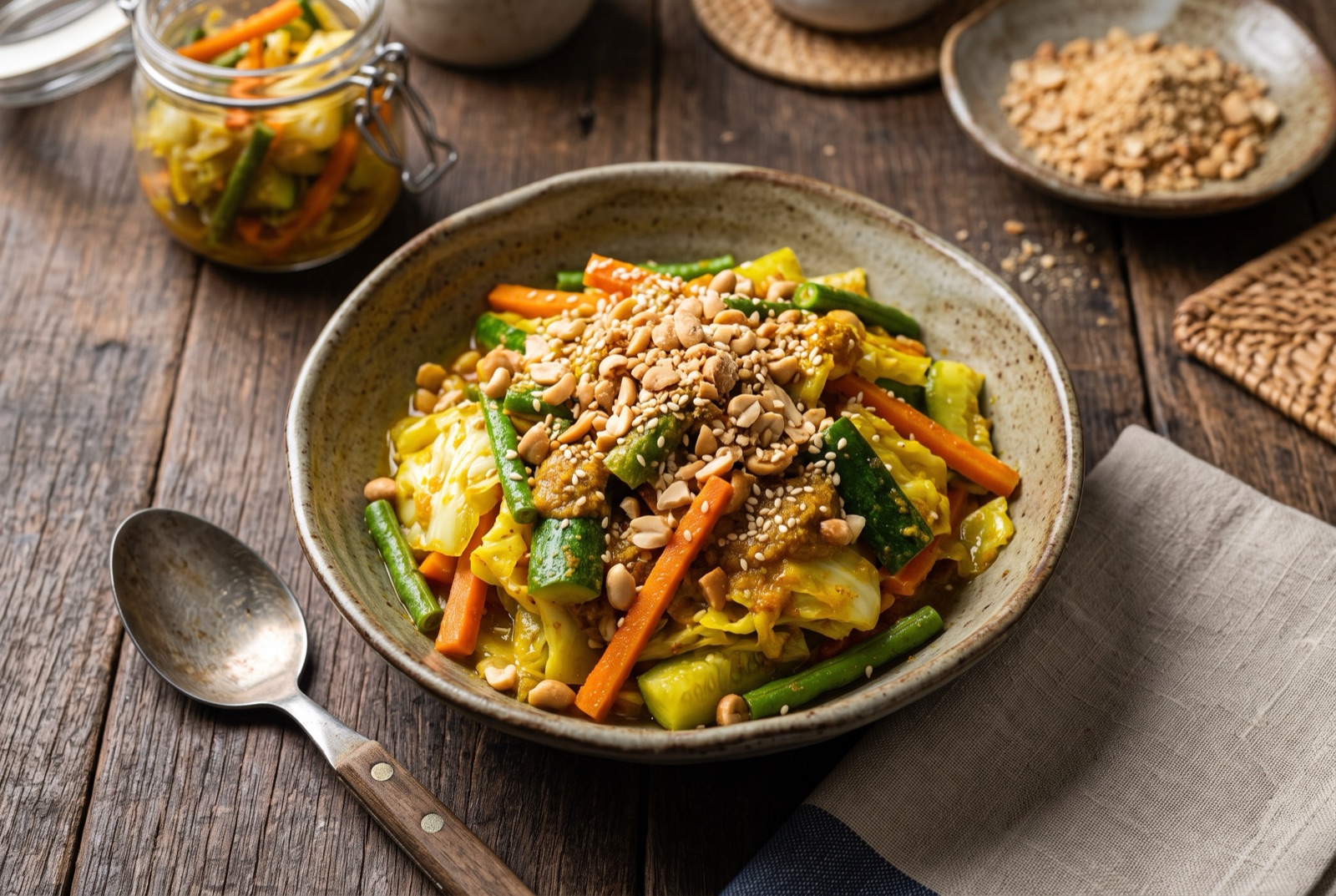
Malaysia has 9 more dishes in the atlas — Acar Awak and Asam Laksa, and 7 more.
All Malaysia recipes Beef chuck recipes Peanuts recipes Lemongrass recipes street foodappetizerdairy freegluten freehalal friendlyRecipe by The DishRoute Kitchen · published August 20, 2026 · updated August 20, 2026