Acar Awak.
Nyonya Spiced Pickled Vegetables
Acar awak · say it: AH-char AH-wak
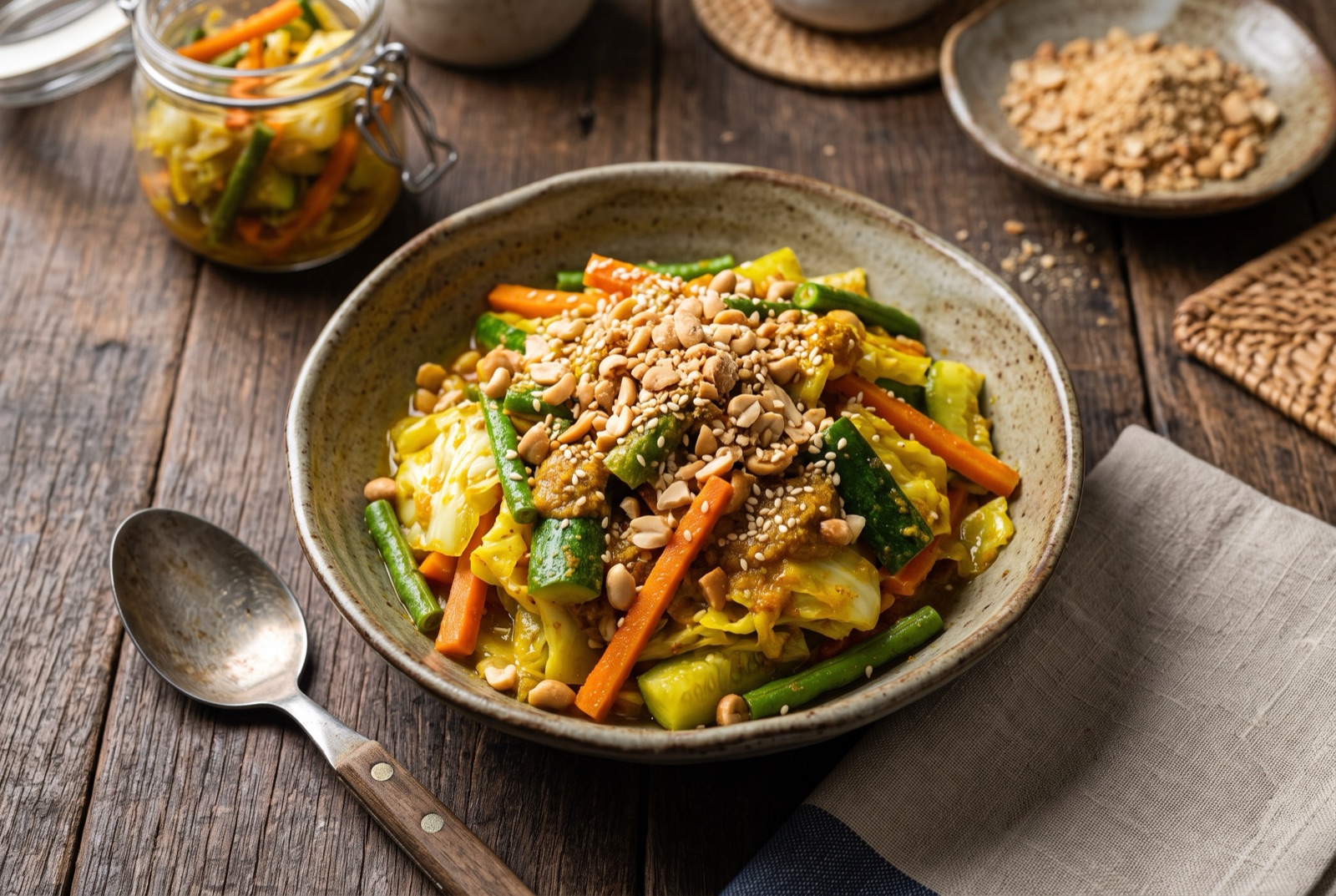
Acar awak is a spiced pickle that behaves like a salad. Vegetables are cut into batons, salted, briefly dipped in boiling vinegar and dried, then tossed through a fried rempah of turmeric, chile, shallot and candlenut loosened with more vinegar and sugar, and finally coated in coarsely ground roasted peanuts and toasted sesame seeds. The result is crunchy, sour, sweet, faintly hot and nutty all at once, and it sits on the table next to rich food — rendang, curry, roast meats — doing the job that a sharp chutney or a plate of gherkins does elsewhere. Made properly it takes a day to come into itself and keeps for weeks.

- Gate
- MalaysiaPenang
- Prep
- 50 min
- Cook
- 25 min
- Total time
- 13 hr 15 min incl. 12 hr rest
- Serves
- 8
- Status
- Easy
- Nutrition / serving · estimated
- Calories 220 kcal
- Protein 6 g
- Carbs 18 g
- Fat 14 g
- Fiber 5 g
- Sugar 12 g
- Sodium 480 mg
Why this recipe works.
- The vinegar-blanch and dry step is kept rather than skipped, because it is the only reason the vegetables stay crunchy for weeks.
- Peanuts and sesame are toasted and ground separately, so they coat the vegetables rather than dissolving into the dressing.
- Balanced for a table alongside rich food: sour first, sweet second, with the chile in the background.
- Explains the difference between acar awak and the quick cucumber acar so you can choose which one you actually want.
Ingredients.
20 itemsFor the vegetables
For the rempah
For the dressing
To finish
Equipment
- Large colander
- Wide saucepan
- Baking tray or drying rack
- Blender or stone mortar
- Clean glass jars
Instructions.
Salt the vegetables
Toss all the cut vegetables with the coarse salt in a colander and leave for 1 hour over the sink. Squeeze each handful gently to expel the water they have given up, but do not crush them.
Blanch in vinegar
Bring the 500 ml of vinegar to a boil in a wide pan. Dip the vegetables in batches for about 10 seconds each — long enough to turn the colours vivid, not long enough to soften — and lift them straight out with a slotted spoon.
Tip Do the cucumber last, since it clouds the vinegar most, and keep each batch small so the vinegar stays at a boil.
Dry them out
Spread the blanched vegetables in a single layer on trays and dry them for 2–3 hours in the sun, in a 60°C oven with the door ajar, or in front of a fan, until the surfaces feel leathery and no longer wet to the touch.
Tip This is the step that decides whether your acar is crunchy in a week or swimming in liquid.
Fry the rempah
Blend the drained chiles, shallots, garlic, turmeric, candlenuts, lemongrass and belacan into a smooth paste. Fry it in the oil over medium heat for 12–15 minutes, stirring, until it darkens to a deep ochre and the oil pools clearly at the edges of the pan.
Make the dressing
Stir the 150 ml of vinegar and the sugar into the fried rempah and simmer 3 minutes until the sugar dissolves and the mixture thickens slightly. Taste: it should be sharply sour with the sweetness right behind it. Let it cool to room temperature.
Dress and rest
Toss the dried vegetables through the cooled dressing until evenly coated, then fold in the ground peanuts and sesame seeds and season with salt. Pack into clean jars, refrigerate at least 12 hours, and stir before serving cold.
Tips from our kitchen.
- Cut everything into batons of roughly the same thickness — about 5 cm by 1 cm — so they pickle evenly and look deliberate on the plate.
- Salt the vegetables for an hour and squeeze them gently. Water left inside is what turns acar soupy on day three.
- Blanch in vinegar, not water, and keep it to about ten seconds. Long enough to set the colour, short enough that nothing softens.
- Dry the blanched vegetables properly — spread on a tray in the sun, in a low oven, or under a fan — until they feel leathery rather than wet.
- Fry the rempah until the oil separates. Underfried spice paste tastes raw and turns the finished pickle bitter as it sits.
- Make it at least a day ahead. On the day it is made it tastes like dressed vegetables; the following day it tastes like acar.
Substitutions.
- Candlenuts → Macadamia nuts or raw cashews
- They thicken the rempah and add richness. Macadamias are closest in fat and texture. Candlenuts must always be cooked, never eaten raw.
- Long beans → Green beans, cut into 5 cm lengths
- Long beans hold their bite better, but green beans are fine if blanched for only a few seconds. Avoid frozen ones, which go limp immediately.
- Belacan → Omit for a vegan pickle, and add an extra teaspoon of salt
- Belacan gives savoury depth but is not structurally necessary here as it is in sambal. Acar awak made without it is common in vegetarian Nyonya households.
Variations.
- Acar timun
- The quick version: cucumber, carrot, shallot and chile in sweetened vinegar with no rempah, ready in twenty minutes and served beside satay.
- Acar with pineapple
- Firm, slightly underripe pineapple added with the other vegetables, which sweetens the jar and softens the vinegar edge.
- Acar rebung
- Made with blanched bamboo shoot alongside the usual vegetables, giving a chewier, more textural pickle common in older Penang recipes.
Storage & reheating.
Acar awak keeps 3 weeks refrigerated in a clean sealed jar and is at its best from day two to day ten. Always lift portions out with a dry spoon; a wet or used spoon introduces the water and bacteria that shorten its life. The peanuts soften over time, so some cooks hold half the ground peanuts back and stir them in fresh before serving. Do not freeze it — the vegetables collapse completely on thawing and the dressing separates.
Serve with
Rendang, curry or grilled meats — anything rich enough to need cutting through — with plain rice.
The story behind Acar Awak.
Acar is the Malay branch of a preserving idea that runs from India through the archipelago — the word is a cousin of achar, the Indian pickle — but acar awak is specifically Nyonya, from the Peranakan communities of Penang and Malacca. Those were Chinese families who settled the Straits ports over centuries, married locally, and produced a kitchen that used Chinese ingredients with Malay technique. Acar awak sits exactly on that line: the rempah and the tamarind-vinegar sourness are Malay, and the fussy, labour-intensive preparation is Nyonya.
That labour is real. Traditionally each vegetable is salted separately, sun-dried to draw water out, blanched in vinegar rather than water so it does not lose its snap, and dried again before dressing. Nyonya cooking has a reputation for this kind of exactingness, and older cooks in Penang will describe acar as a test dish — the thing a prospective daughter-in-law was asked to make, because there is nowhere to hide a shortcut. Vegetables that were not dried properly leach water into the dressing within a day and turn the whole jar limp and watery.
It belongs to celebration tables. Acar appears at Chinese New Year in Peranakan households, at weddings, and at any meal heavy enough to need cutting through, which in Malaysia is most of them. There is also a simpler cousin, acar timun — a quick cucumber, carrot and chile pickle in vinegar and sugar with no rempah at all — which turns up beside satay and nasi lemak and takes twenty minutes. Both are called acar, and confusing them is easy; the rempah is the difference. Acar awak is the one that is worth a day of waiting.
Questions, answered.
What is the difference between acar awak and acar timun?
Acar awak is the elaborate Nyonya version: vegetables blanched in vinegar, dried, then dressed with a fried spice paste of chile, turmeric, shallot and candlenut, plus ground peanuts and sesame. Acar timun is a quick sweet-sour pickle of cucumber, carrot and chile in vinegar and sugar with no spice paste at all. One takes a day, the other twenty minutes.
Why did my acar turn watery?
The vegetables were not dried thoroughly enough after blanching. Cucumber especially holds a great deal of water and will release it into the dressing over the following days. Salt the vegetables first, squeeze them, blanch briefly, then dry them until they feel leathery — in the sun, in a 60°C oven, or in front of a fan — before they meet the rempah.
How long does acar need before it is ready?
At least 12 hours, and ideally a full day in the fridge. Fresh from the bowl it tastes like vegetables in dressing, with the spice paste sitting on the surface. Overnight the vinegar and rempah penetrate, the sharpness rounds off, and the peanut and sesame flavours spread through. It stays at its peak for about a week after that.
Can I make acar without shrimp paste?
Yes. Belacan adds savoury depth but the pickle is carried by vinegar, sugar, chile and turmeric, so leaving it out gives a lighter, cleaner acar rather than a broken one. Add an extra pinch of salt to compensate. This is a common adjustment in vegetarian Peranakan cooking and is not considered a compromise.
What vegetables can I use?
The traditional set is cucumber, carrot, cabbage and long beans, sometimes with cauliflower or bamboo shoot. The rule is firmness: anything that stays crunchy after a brief vinegar blanch works. Cauliflower, green beans and firm underripe pineapple are all reasonable additions. Soft vegetables like courgette or peppers collapse and are best avoided.
You might also like.
All recipes →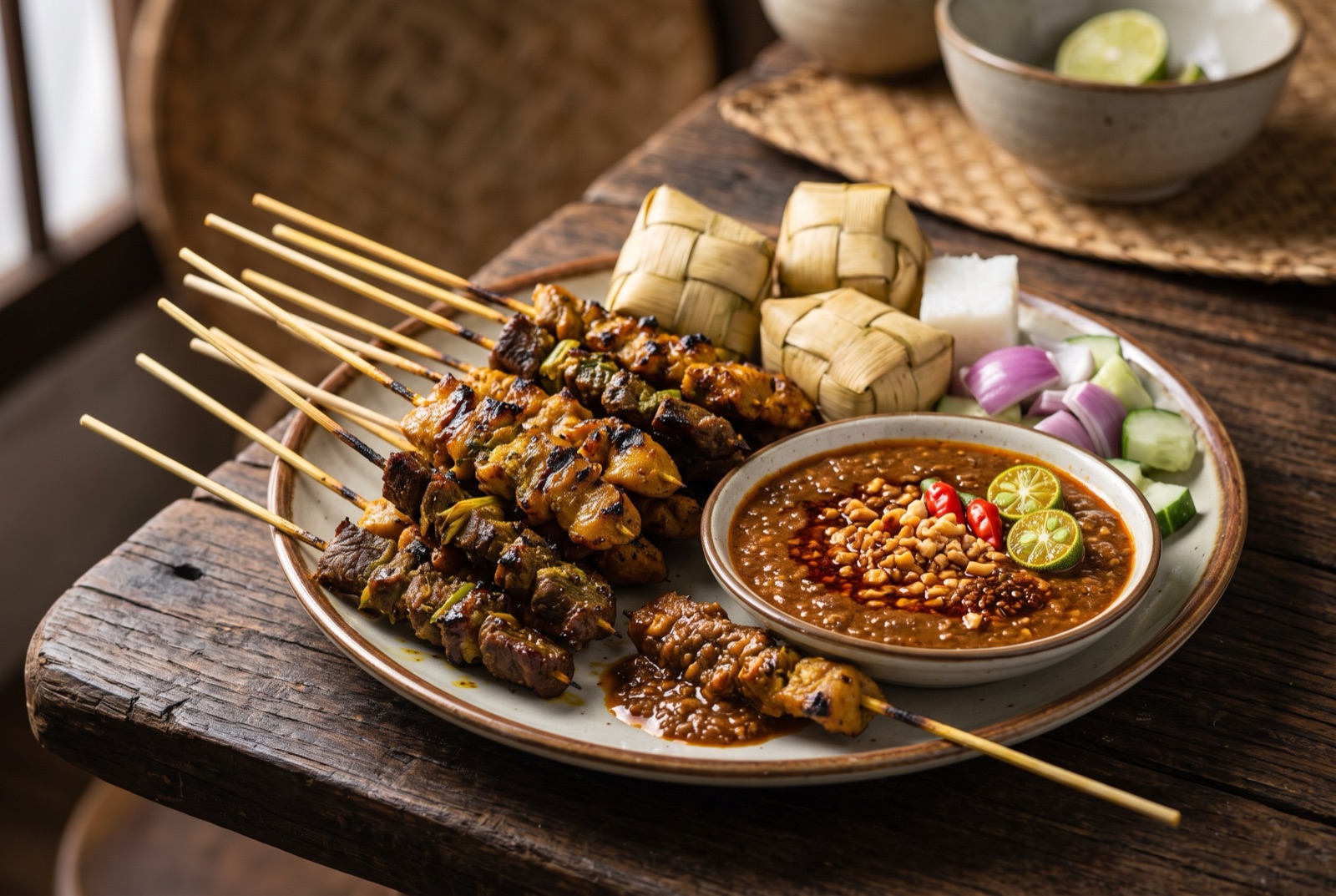
Keep exploring Malaysia.
Malaysia has 9 more dishes in the atlas — Asam Laksa and Ayam Percik, and 7 more.
All Malaysia recipes Cucumber recipes Carrot recipes Cabbage recipes sidedairy freegluten freehalal friendlyRecipe by The DishRoute Kitchen · published August 20, 2026 · updated August 20, 2026