Bacalhau à Brás.
Salt Cod with Eggs and Potatoes
Bacalhau à Brás · say it: bah-kah-LYOW ah BRAHSH
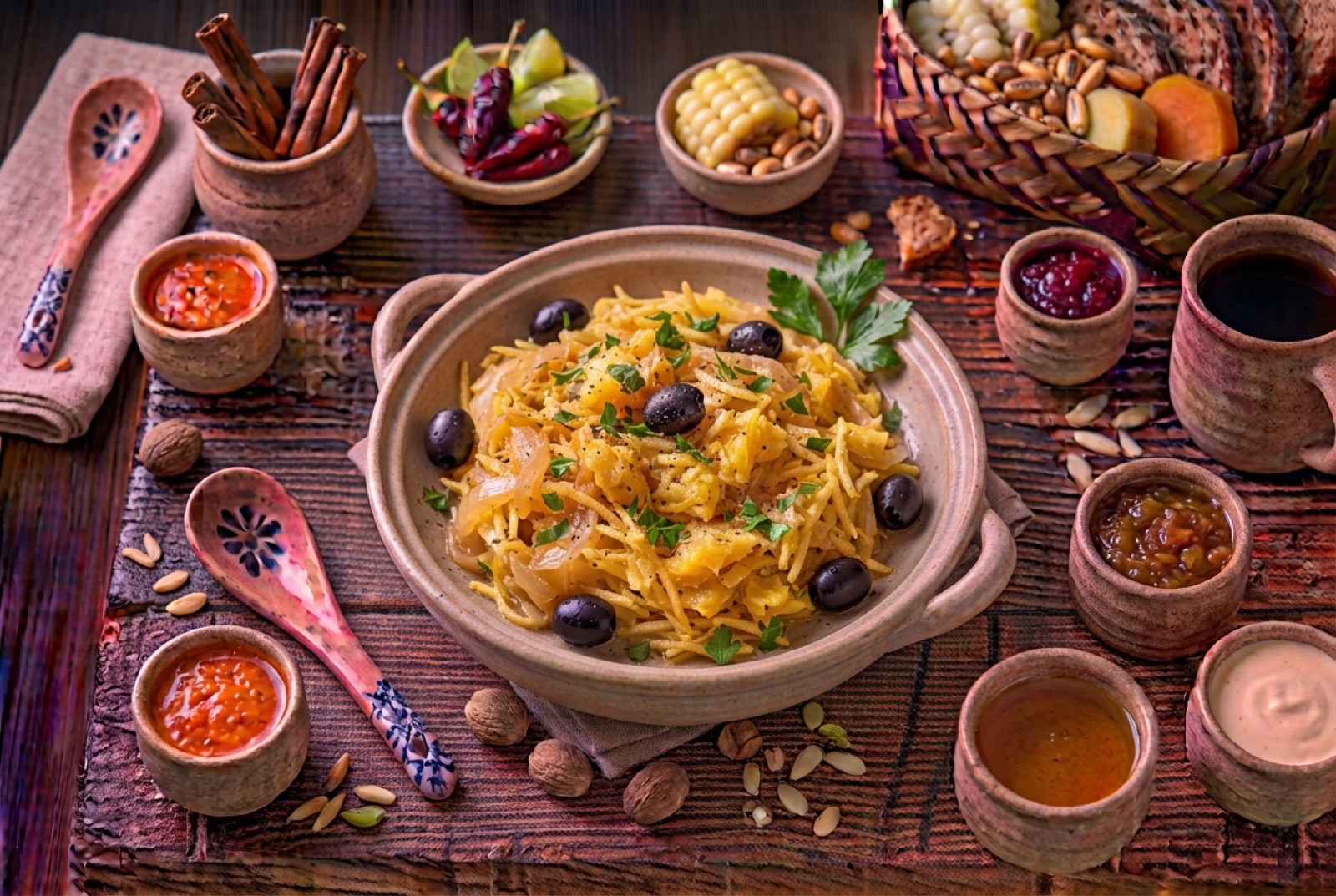
Bacalhau à Brás is what Portugal does with its three favorite ingredients — salt cod, potatoes and onions — bound together with eggs cooked just to the point of creaminess and no further. Shoestring potatoes are fried crisp, onions are melted slow and sweet in olive oil, desalted cod is flaked through, and beaten eggs are stirred in off the boil so they set soft and glossy, part scramble, part sauce. The result is savory, faintly briny, rich without cream, with the potatoes keeping a little crunch inside the softness. The only real commitment is the cod itself: proper bacalhau must be soaked for a day or two before cooking, which this recipe explains honestly rather than pretending it takes twenty minutes.

- Gate
- PortugalLisbon
- Prep
- 30 min
- Cook
- 30 min
- Total time
- 25 hr incl. 24 hr rest
- Serves
- 4
- Status
- Medium
- Nutrition / serving · estimated
- Calories 540 kcal
- Protein 38 g
- Carbs 30 g
- Fat 29 g
- Fiber 3 g
Why this recipe works.
- The desalting process is explained honestly — timing, water changes, and how to tell the cod is ready.
- Eggs are taken off the heat early so they land creamy, not scrambled dry — the step everyone gets wrong.
- The bagged shoestring-potato shortcut used in Lisbon homes is built in as a legitimate option.
- One pan after the frying, no oven, and the technique transfers to any leftover flaked fish.
Ingredients.
11 itemsFor the Brás
For serving
Equipment
- Large bowl for soaking the cod
- Wide sauté pan or deep skillet
- Frying pan or pot for the potatoes (skip if using bagged batata palha)
- Slotted spoon
Instructions.
Desalt the cod (start 1–2 days ahead)
Submerge the salt cod in plenty of cold water and refrigerate for 24–48 hours, changing the water 3–4 times — thin pieces need a day, thick loins two. It is ready when a flake from the thickest part tastes like well-seasoned fish rather than pure salt.
Tip Soak skin-side up so the salt falls away from the flesh as it draws out.
Flake the cod
Drain the soaked cod, pat it dry, and pull it apart with your fingers into rough shreds, discarding skin and every bone you find. The flakes should be about the size of the potato matchsticks.
Fry the shoestring potatoes
Dry the potato matchsticks thoroughly, then fry them in 2 cm of hot oil in batches until they are golden, stiff and rustling when stirred, 3–4 minutes per batch. Drain on paper towels and salt lightly. Skip this step entirely if using bagged batata palha.
Melt the onions
Warm the 4 tbsp olive oil in a wide pan over medium-low heat and cook the sliced onions with the bay leaf until completely soft, golden and sweet, stirring now and then, 12–15 minutes. Add the garlic for the last 2 minutes, until fragrant but not browned.
Warm the cod through
Stir 400 g of flaked cod into the onions and cook gently until the shreds are hot through and glossy with oil, 3–4 minutes. Discard the bay leaf and grind in plenty of black pepper.
Fold in eggs and potatoes
Beat the eggs, drop the heat to low, and add the fried potatoes to the pan followed by the eggs. Fold slowly and constantly with a spatula until the eggs thicken but still look wet and slightly underdone — then pull the pan off the heat and keep folding for another minute while they set to a soft cream.
Tip This is the make-or-break moment: off the heat early, always. The pan finishes the job.
Serve immediately
Taste for salt, then pile onto warm plates and scatter with chopped parsley and black olives. The surface should look glossy and just-set, with potato sticks poking through. Eat right away — a Brás does not wait.
Tips from our kitchen.
- Start the cod 24–48 hours ahead: soak it in cold water in the fridge, changing the water 3–4 times. Thick loin pieces need the full 48 hours; thin tail pieces are ready in 24.
- Taste a small flake from the thickest part before cooking — it should taste pleasantly seasoned, like well-salted fresh fish. If it puckers your mouth, soak longer.
- Cut the potatoes into true matchsticks, 2–3 mm, and dry them well before frying; wet, thick-cut potatoes turn soggy the moment the eggs arrive. Or do as Lisbon does and buy batata palha.
- Cook the onions slowly until they are completely soft and golden before anything else joins them — they are the sweetness of the dish.
- Pull the pan off the heat while the eggs still look wet and slightly underdone; keep folding and the residual heat sets them to a glossy cream. Dry eggs are the one unforgivable mistake.
Substitutions.
- Salt cod (bacalhau) → Fresh cod or another firm white fish, poached and flaked, plus extra salt
- You lose the distinctive cured depth that defines the dish, but the technique still makes an excellent supper — season more assertively.
- Home-fried shoestring potatoes → Store-bought batata palha (bagged shoestring potato sticks)
- Standard practice in Portuguese home kitchens, not a cheat. Fold them in at the last moment so some crunch survives.
- Black olives (ideally small Portuguese ones) → Kalamata or any good brined black olive
- Kalamatas are stronger and fruitier; use a few less. Skip canned pitted olives, which add nothing.
Variations.
- Brás de legumes
- A meat-free version made in modern Portuguese kitchens with sautéed mushrooms or leeks standing in for the cod — same onions, potatoes and creamy eggs.
- Extra-runny restaurant style
- Some Lisbon restaurants add an extra yolk at the end, off the heat, for an almost sauce-like Brás served with a spoon.
- Bacalhau à Brás with a green kick
- Fold in a handful of thinly sliced sautéed peppers with the onions — a common family variation that adds sweetness and color.
Storage & reheating.
Best eaten the moment it is made — the eggs keep cooking and the potatoes soften as it sits. Leftovers keep 2 days refrigerated and reheat acceptably in a pan over low heat with a splash of olive oil, though the texture becomes more scramble than cream. Do not freeze the finished dish; plain desalted cod, however, freezes well for 3 months.
Serve with
A simple green salad sharply dressed, black olives, and a glass of chilled vinho verde or white wine.
The story behind Bacalhau à Brás.
Salt cod is the backbone ingredient of Portuguese cooking. Portuguese fleets were fishing cod on the North Atlantic banks by the sixteenth century, and salting and drying was how the catch survived the voyage home — so thoroughly did the preserved fish embed itself in the national diet that the Portuguese call it "fiel amigo," the faithful friend, and claim to have a bacalhau recipe for every day of the year. That a country obsessed with a fish from cold, distant waters barely eats fresh cod at all is one of the pleasant ironies of European food history.
Bacalhau à Brás is one of the best loved of all those recipes. Tradition places its birth in a tavern in the Bairro Alto, Lisbon's old hillside nightlife quarter, run by a man remembered only as Brás — hence "à Brás," in the style of Brás. Like most tavern origin stories it is a traditional attribution rather than a documented fact, but the dish itself has the unmistakable logic of tavern cooking: scraps of cod, fried potatoes and eggs, ingredients any Lisbon kitchen had on hand, combined into something fast, cheap and better than the sum of its parts.
Today it sits on menus from corner tascas to serious restaurants, and it is many Portuguese cooks' honest answer to the question of which bacalhau dish to make at home, because it forgives imperfect cod and needs no oven. Lisbon home cooks often buy batata palha — bagged shoestring potatoes — instead of frying their own, a shortcut so universal it counts as tradition. The one rule everyone agrees on: stop cooking the eggs while they still look slightly underdone. The residual heat finishes them; a dry Brás is a failed Brás.
Questions, answered.
What is bacalhau and why is it salted?
Bacalhau is cod that has been heavily salted and dried, a preservation method Portuguese fleets used from the sixteenth century to bring North Atlantic catches home. The cure changed the fish's character — firmer flakes, deeper savor — and Portugal built an entire cuisine around it, famously claiming a different bacalhau recipe for every day of the year.
How do I desalt salt cod properly?
Soak it in plenty of cold water in the refrigerator for 24–48 hours, changing the water 3–4 times: thin pieces need about 24 hours, thick loins the full 48. Test by tasting a small flake from the thickest part — it should taste like well-seasoned fresh fish, not aggressively salty. There is no reliable shortcut; the soak is part of the recipe.
Who was Brás in bacalhau à Brás?
Tradition says the dish was created by a tavern keeper named Brás in the Bairro Alto, Lisbon's old hillside quarter — "à Brás" means "in the style of Brás." This is a traditional attribution rather than a documented fact, but the dish's tavern logic — cod scraps, fried potatoes and eggs turned into a fast, cheap supper — fits the story well.
Can I use store-bought shoestring potatoes for bacalhau à Brás?
Yes, and many Portuguese home cooks do exactly that. Bagged shoestring potato sticks (batata palha) are sold in every Portuguese supermarket largely for this dish. Fold them in at the very end, just before and after the eggs, so a little of their crunch survives the creamy eggs rather than dissolving into them.
How do I keep the eggs creamy instead of scrambled dry?
Take the pan off the heat while the eggs still look wet and slightly underdone, then keep folding — the residual heat of the potatoes, onions and cod finishes them to a soft, glossy cream in about a minute. Low heat, constant gentle folding, and an early exit are the whole technique; eggs cooked until they look done in the pan will be dry on the plate.
You might also like.
All recipes →
Keep exploring Portugal.
Portugal has 9 more dishes in the atlas — Arroz de Marisco and Bifana, and 7 more.
Recipe by The DishRoute Kitchen · published August 18, 2026 · updated August 18, 2026