Bandeja Paisa.
Antioquian Mixed Platter
Bandeja paisa · say it: ban-DEH-ha PIE-sah
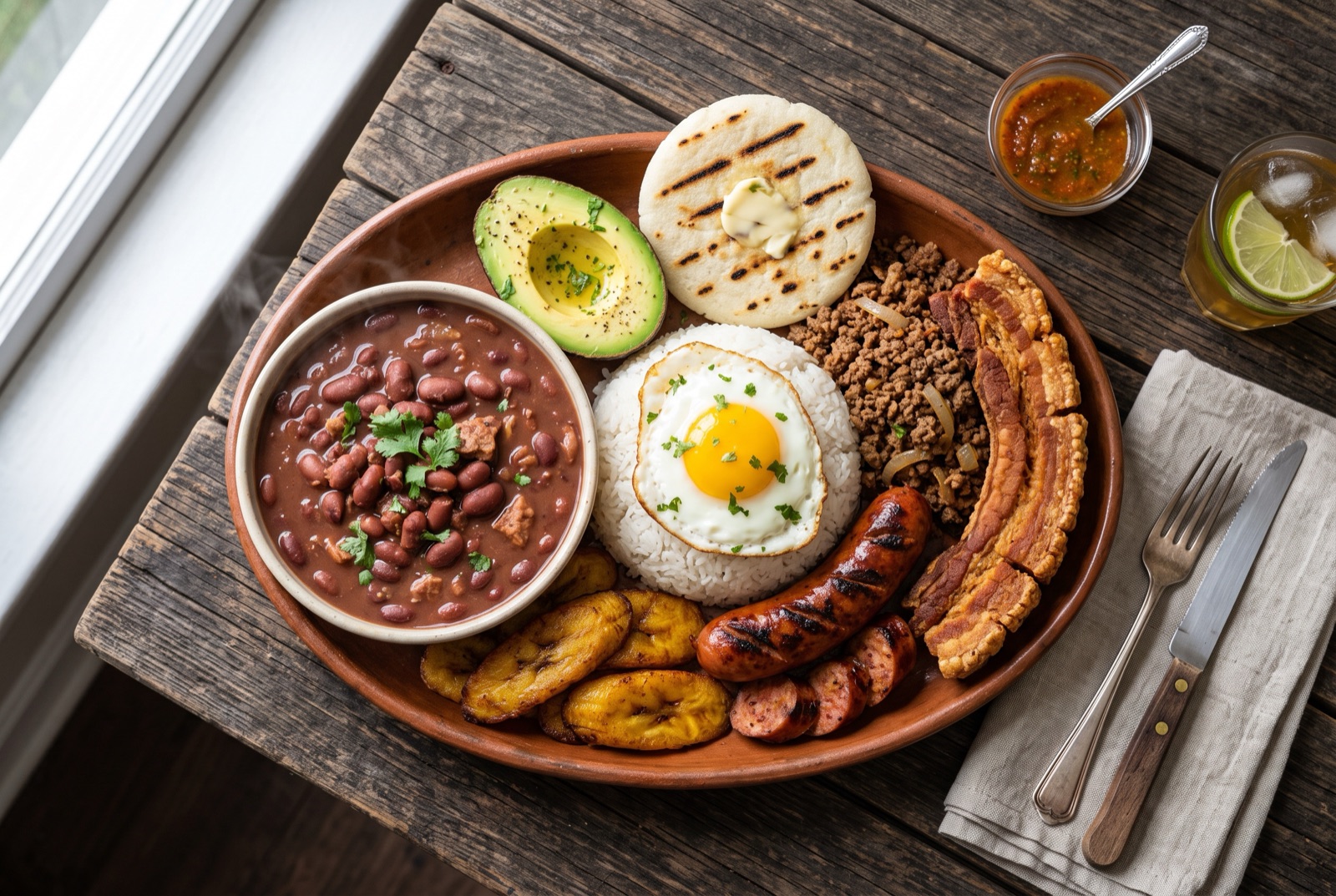
Bandeja paisa is a whole meal served as one plate — so wide it needs a tray rather than a dish. At its center are frijoles, red beans stewed soft with pork and green plantain until the liquid goes thick and glossy, and around them sit white rice, ground beef cooked down in hogao, a slab of chicharrón, a chorizo, a fried egg with a runny yolk, sweet fried plantain, a thin arepa and half an avocado. Nothing on it is complicated on its own; the challenge is timing, because everything is meant to arrive hot at the same moment. The flavor is savory and deeply porky, cut by the sweetness of the plantain and the cool fat of avocado, with cumin and scallion running underneath all of it.

- Gate
- ColombiaAntioquia
- Prep
- 40 min
- Cook
- 2 hr 30 min
- Total time
- 11 hr 10 min incl. 8 hr rest
- Serves
- 4
- Status
- Medium
- Nutrition / serving · estimated
- Calories 1240 kcal
- Protein 63 g
- Carbs 108 g
- Fat 62 g
- Fiber 19 g
Why this recipe works.
- The beans are built properly: soaked, simmered with pork and grated green plantain so they thicken themselves instead of leaning on flour.
- A single batch of hogao seasons both the beans and the ground beef, which is how paisa kitchens actually work.
- The chicharrón method starts in water, not hot oil, so the fat renders before the skin blisters and nothing spits across the stove.
- Component timings are staged in order, so all nine elements hit the tray hot rather than in shifts.
Ingredients.
19 itemsFor the beans
For the hogao
For the tray
Equipment
- Large heavy pot for the beans
- Wide frying pan or skillet
- Box grater
- Rice pot with a lid
Instructions.
Soak the beans
Cover the dried beans with plenty of cold water and leave them overnight, at least 8 hours. They should double in size and the skins should look tight and smooth rather than wrinkled. Drain and rinse before cooking.
Simmer the beans with pork
Put the drained beans in a large pot with the pork belly piece, the grated green plantain, the carrot if using, and enough fresh water to cover by three fingers. Bring to a boil, lower to a steady simmer and cook uncovered for about 90 minutes, topping up with hot water when the level drops below the beans.
Tip Do not add salt yet. The beans are ready for seasoning only when one crushes to paste between your fingers.
Cook the hogao
While the beans work, warm the oil in a frying pan over medium-low heat and soften the onion and scallion for 5 minutes without letting them color. Add the garlic, cumin and tomato, season with salt, and cook down for 15 minutes until the tomato has collapsed, the mixture is thick enough to hold a trail behind the spoon, and a slick of orange oil sits at the edge.
Finish the beans
Stir half the hogao into the tender beans, season generously with salt, and simmer another 15 minutes uncovered until the liquid is glossy and coats a spoon rather than running off it. Lift out the pork piece, chop it, and return it to the pot.
Render the chicharrón
Lay the scored pork belly skin-side down in a cold dry frying pan, add a splash of water and a good pinch of salt, cover and set over medium heat. Once the water has boiled away and clear fat is pooling in the pan, uncover and keep frying, turning once, until the skin is blistered and golden and taps hollow. Drain on paper and cut into strips.
Tip Keep a lid or splatter guard within reach for the moment the water finishes evaporating — that is when the pan gets loud.
Season the ground beef
Pour off all but a tablespoon of pork fat and brown the ground beef over high heat, breaking it up, until the liquid has evaporated and the meat starts catching on the pan. Stir in the remaining hogao and cook 5 minutes more, until the beef is coated, glossy and holds together in loose clumps.
Cook the rice
Rinse the rice until the water runs nearly clear, then cook it with 1.5 times its volume of salted water: bring to a boil, cover, drop to the lowest heat for 15 minutes and rest off the heat for 5 more. Fluff with a fork so the grains stay separate.
Fry the chorizo and sweet plantain
Fry the chorizo in a lightly oiled pan over medium heat until browned all over and firm to the touch, about 10 minutes, then set aside somewhere warm. In the same pan, fry the ripe plantain slices until the cut faces are deep caramel and the centres give under a spatula.
Tip The plantains must be black-skinned. Yellow ones stay starchy and refuse to caramelise.
Fry the eggs and build the tray
Fry the eggs in hot oil until the whites are set with lacy brown edges and the yolks still move. Give each person a wide plate or tray with a mound of rice, a bowl or pool of beans, ground beef, a strip of chicharrón, a chorizo, plantain slices, an arepa, sliced avocado and the egg on top of the rice. Serve immediately, with ají on the side.
Tips from our kitchen.
- Cargamanto beans are the paisa standard; cranberry or borlotti beans are the closest widely sold match, and pinto beans work at a pinch.
- Grate the green plantain straight into the bean pot — it dissolves and gives the traditional body without any starch or flour.
- Never salt the beans until they are fully tender. Salt added early keeps the skins tough no matter how long you cook.
- Buy pork belly in one thick slab with the skin on for chicharrón, and score it down to the fat but not into the meat.
- Scale the tray down without shame: beans, rice, chicharrón, egg and plantain make an honest small version, and most home cooks drop the ground beef or the chorizo.
Substitutions.
- Cargamanto red beans → Cranberry, borlotti or pinto beans
- Speckled cranberry beans are almost identical in size and texture. Avoid dark kidney beans — they hold their shape too stubbornly and the pot never turns creamy.
- Chicharrón (skin-on pork belly) → Thick-cut streaky bacon, cooked hard until brittle
- It is not the same thing, and any paisa will say so, but it delivers crunch and pork fat when skin-on belly is not available.
- Colombian chorizo → Fresh Mexican chorizo or a mild fresh sausage
- Colombian chorizo is fresh, mild and heavy on scallion and cumin — cured Spanish chorizo is a different product and will dominate the tray.
Variations.
- Frijoles con garra
- The beans on their own with a piece of pork skin cooked in them, served with rice and arepa. This is the everyday paisa meal the tray was assembled from.
- Bandeja with carne en polvo
- Instead of ground beef in hogao, some kitchens use carne en polvo — beef simmered, dried and pounded to a fluffy powder that soaks up bean liquid.
- Half tray (media bandeja)
- Standard on Medellín menus: beans, rice, chicharrón, egg, plantain and arepa, with the chorizo and ground beef left off for anyone who intends to work that afternoon.
Storage & reheating.
The beans improve overnight and keep 4 days refrigerated or 3 months frozen — reheat with a splash of water, since they tighten considerably when cold. Cooked ground beef keeps 3 days. Chicharrón, fried plantain and eggs must be made fresh; reheated chicharrón goes leathery and reheated plantain turns oily. The practical approach is to cook the beans and the hogao a day or two ahead, then fry everything else in the hour before lunch.
Serve with
A jar of ají on the table, plus lime wedges and, if you want the full lunch, a glass of aguapanela with lime.
The story behind Bandeja Paisa.
The plate belongs to Antioquia and the coffee-growing departments around it, and its logic is agricultural. Paisa farmers and the arrieros who drove mule trains through the mountains ate one large midday meal built from what the region produced in quantity: beans, maize, pork, plantain. The modern arrangement — everything laid out side by side on a wide tray instead of served in courses — is a restaurant invention of the twentieth century rather than something farmers carried into the fields, and Colombians argue about when exactly it took its current shape. What is not in dispute is that the components are old and the assembly is recent.
It is also the dish most often mistaken abroad for the national dish of Colombia, which irritates people from everywhere else in the country. Colombia has no official national dish; a 2005 congressional attempt to declare bandeja paisa one went nowhere, partly because a Caribbean cook, a Bogotano and a chocoano would each nominate something different. Sancocho probably has the broader claim, since some version of it is cooked in every department. Bandeja paisa won internationally because Medellín food travels well and because the plate photographs like a challenge.
Eating it is a commitment. A full restaurant portion regularly clears a thousand calories and is eaten at lunch, not dinner, usually followed by nothing more than a coffee and a long afternoon. Locals rarely order it more than occasionally, and plenty of paisa households make only the beans — which is the real weekly dish — and skip the parade around them. Cook it the way it is meant to be cooked, at midday, for people who have nowhere urgent to be afterwards.
Questions, answered.
Do I have to serve all nine components?
No. Restaurants in Medellín sell a media bandeja with roughly half the elements, and paisa households on a normal weekday eat only the beans with rice and an arepa. The beans, rice, plantain and egg are the non-negotiable core; the chicharrón, chorizo and ground beef are what turn it into a special-occasion tray.
Why did my beans stay hard even after two hours?
Two usual causes: salt or an acidic ingredient added early, which keeps the skins firm, or beans that have been sitting in the cupboard for over a year. Old beans can refuse to soften no matter how long they simmer. Soak overnight, cook in unsalted water, and season only once they crush easily against the side of the pot.
What is hogao and can I make it ahead?
Hogao is the Colombian sofrito of tomato, long scallion, onion, garlic and cumin cooked slowly until the tomato breaks down into a thick orange sauce. It is the seasoning base for a large part of the country's cooking. It keeps a week refrigerated and freezes well, so making a double batch is standard practice.
How do I get chicharrón to puff and crackle?
Start the scored pork belly in a pan with a little water and salt over medium heat, covered, until the water evaporates and the fat has rendered out. Then uncover and let it fry in its own fat, turning once, until the skin blisters and sounds hollow when tapped. Dropping raw belly straight into hot oil traps moisture under the skin and produces a chewy result.
Is bandeja paisa spicy?
Not at all. Like most Colombian food it is seasoned with cumin, scallion, garlic and tomato rather than chile, and any heat comes from a spoonful of ají added at the table by whoever wants it. If you are expecting Mexican-level chile, this is a different tradition entirely.
You might also like.
All recipes →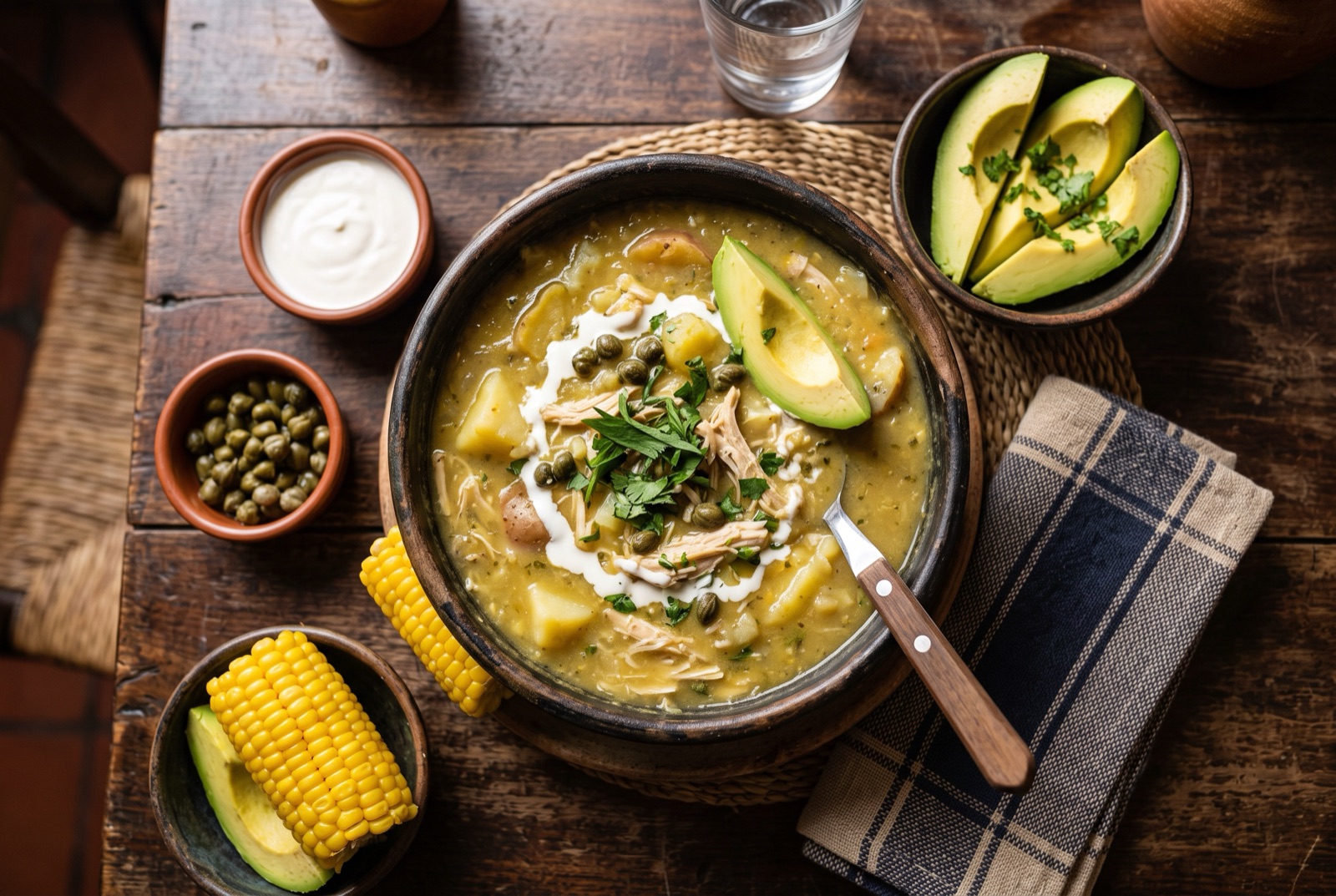
Colombia1 hr 35 min
Ajiaco Santafereño
Bogotá Chicken and Three-Potato Soup
Colombia16 hr 55 min
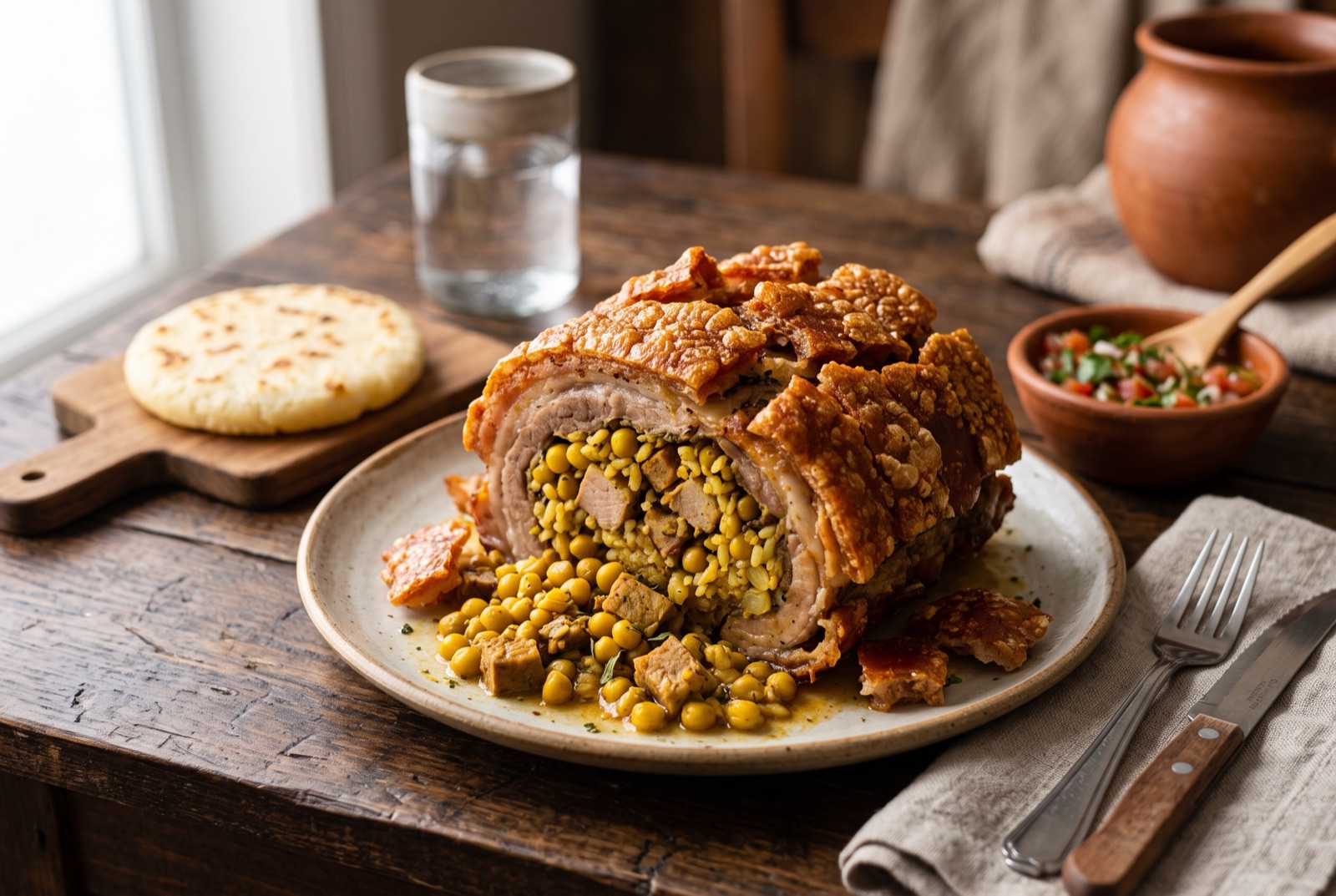
Lechona Tolimense
Stuffed Roast Pork with Yellow Peas
Colombia22 min
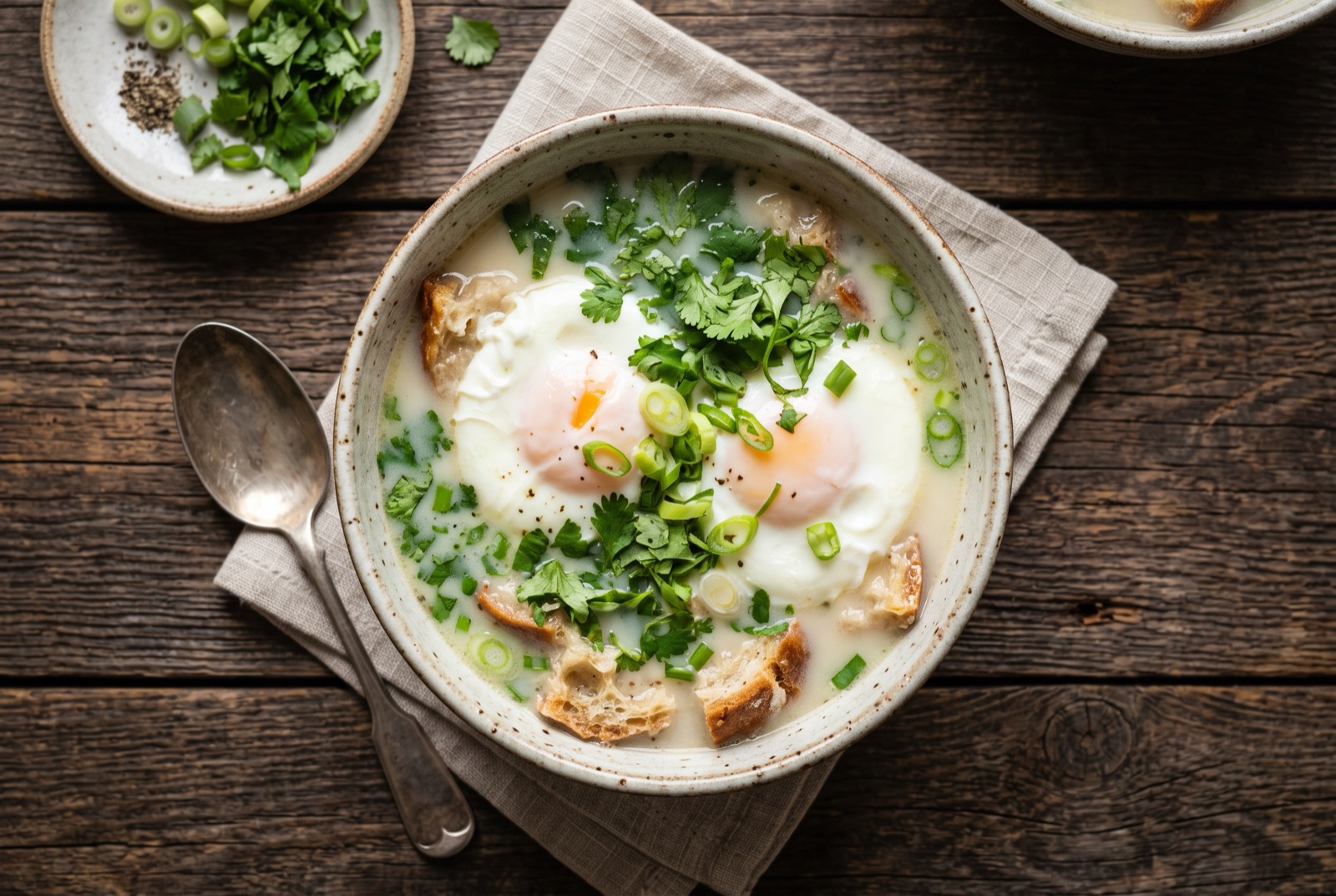
Changua
Bogotá Milk and Egg Breakfast Soup
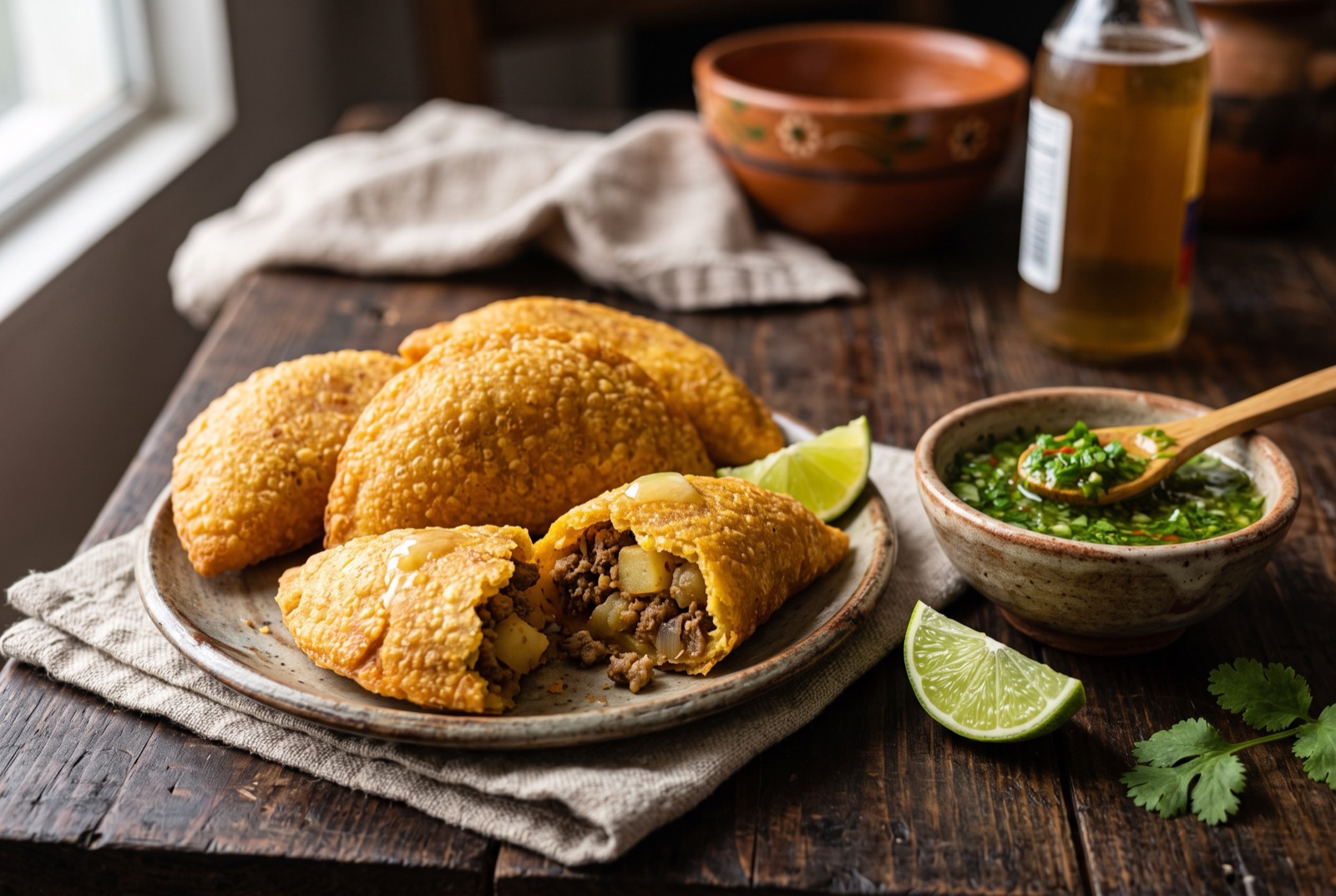
Colombia1 hr 40 min
Empanadas Colombianas
Fried Corn Pastries with Potato and Beef
Keep exploring Colombia.
Colombia has 9 more dishes in the atlas — Ajiaco Santafereño and Arepa de Maíz, and 7 more.
Recipe by The DishRoute Kitchen · published August 20, 2026 · updated August 20, 2026