Sogan-Dolma.
Sarajevo Stuffed Onions in Tomato Broth
Sogan-dolma · say it: SO-gan DOL-ma
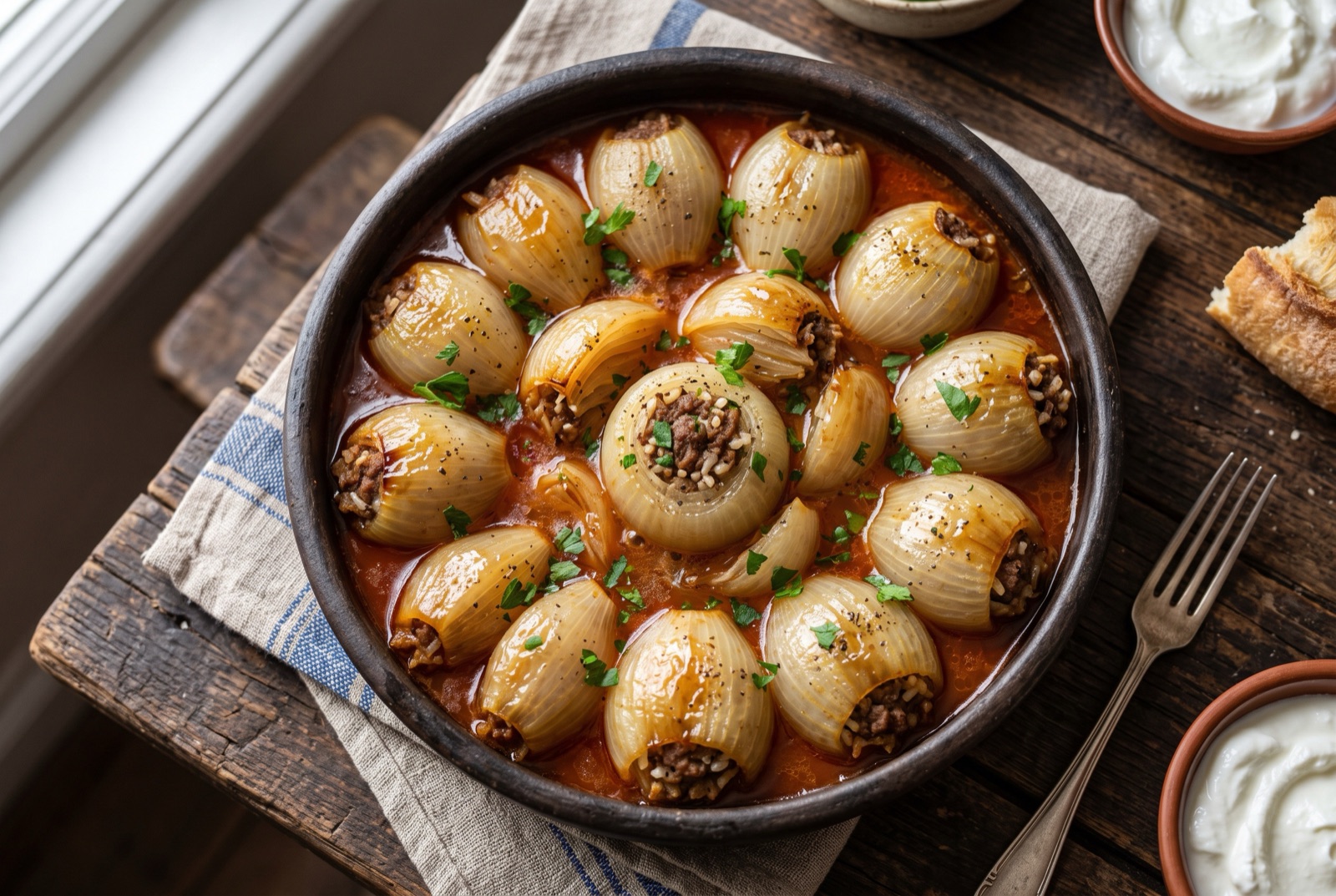
Sogan-dolma turns the onion from a background ingredient into the wrapper itself. Large onions are boiled until their layers slip apart into curved shells, each one is rolled around a filling of minced beef and rice, and the little parcels are stood shoulder to shoulder in a pot with a thin tomato broth and baked slowly. The onion loses all its rawness and turns silky and sweet — nothing like the sharp thing you cry over at the chopping board — while the filling stays loose and juicy because the rice cooks from raw inside it. It is a fiddly dish that looks impressive out of proportion to its cost, which is exactly why it appears on Ramadan tables across Bosnia, usually made in a quantity that suggests the cook expected more guests than turned up.

- Gate
- Bosnia and HerzegovinaSarajevo
- Prep
- 50 min
- Cook
- 1 hr 10 min
- Total time
- 2 hr 15 min incl. 15 min rest
- Serves
- 4
- Status
- Medium
- Nutrition / serving · estimated
- Calories 430 kcal
- Protein 25 g
- Carbs 38 g
- Fat 20 g
- Fiber 5 g
- Sodium 890 mg
Why this recipe works.
- Parboiling method that separates onion layers into intact shells instead of a pile of torn fragments.
- Raw rice in the filling, so it swells and drinks the broth rather than turning stodgy.
- Rolls packed upright and weighted, the Sarajevo way, so nothing unravels during the bake.
- A deliberately thin tomato broth that stays a broth — this is not a dish that wants a thick sauce.
Ingredients.
14 itemsFor the shells
For the filling
For the broth
To serve
Equipment
- Wide, shallow ovenproof pot or deep sauté pan with a lid
- Small plate that fits inside the pot as a weight
- Slotted spoon
Instructions.
Loosen the onions
Peel the onions and cut one slit from root to tip through the outer layers of each. Simmer them whole in salted water for 8–10 minutes, until a skewer meets only slight resistance and the layers begin to gape along the cut. Lift them out and let them cool enough to handle.
Separate the shells
Slide the layers apart along the slit, keeping each curved shell intact, and set aside any that are too small or torn. Chop those scraps finely — they go into the filling.
Tip You want roughly 24 usable shells. The centres of six large onions will give you a good handful of chopped onion as well.
Mix the filling
Combine the minced beef, rinsed raw rice, chopped onion scraps, salt, black pepper, paprika, parsley and the egg, mixing with your hands until evenly blended but not compacted. The mixture should feel loose and slightly wet.
Roll the dolme
Place about a tablespoon of filling along the inside of each shell and roll it up, tucking the sides in loosely so the rice has room to swell. Pack the rolls upright and tight in the pot, seam side down, in one or two layers.
Build the broth
Melt the butter in a small pan, stir in the tomato paste and cook for 1 minute until it darkens and smells sweet rather than sharp, then add the grated tomato and stock and bring to a simmer. Pour it over the rolls until the liquid comes just level with their tops, and tuck in the bay leaf.
Weight and bake
Press a small plate down on the rolls to hold them in place, cover the pot and bake at 180°C for 60–70 minutes, until the onion is translucent and yields to a spoon and the rice inside is fully swollen. Uncover for the last 10 minutes to let the tops glaze.
Rest and serve
Take the pot out and let it stand for 15 minutes so the filling sets and the rolls lift out whole. Serve several per person with broth spooned over and sour cream on the side.
Tips from our kitchen.
- Choose the biggest, roundest onions you can find. Small ones give shells too tight to roll and double the work.
- Cut a slit from top to bottom through one side of each onion before boiling — the layers then slide apart in one piece.
- Do not overfill. About a tablespoon per shell; the rice roughly doubles and a stuffed shell that is packed tight will split open.
- Pack the rolls in tightly, seam side down, and press a small plate on top so they cannot float or unroll.
- Keep the broth just level with the tops of the rolls. Submerged dolme boil apart; dry ones scorch on the exposed edge.
- Let the pot stand 15 minutes off the heat before serving so the filling firms up enough to lift out whole.
Substitutions.
- Minced beef → Half beef and half minced lamb, or minced veal
- Lamb is common in Herzegovina and gives a stronger, fattier filling. Keep total fat around 15–20 percent whichever you choose, or the rice has nothing to drink.
- Fresh tomatoes → 400 g tinned chopped tomatoes, or 2 tbsp tomato paste loosened with stock
- Tinned tomatoes are more reliable outside of summer. If using paste, fry it for a minute first so it loses its raw metallic edge.
- Sour cream to finish → Thick plain yoghurt, or leave it out
- Plenty of households serve sogan-dolma with no dairy at all. Yoghurt is sharper than sour cream, so add it off the heat to stop it splitting.
Variations.
- Ramadan iftar version
- Made with a mix of beef and lamb and enriched with a spoon of butter in the broth, served alongside soup and pita as part of the fast-breaking meal.
- Meat-free sogan-dolma
- Filled with rice, chopped onion centres, walnuts and parsley — a genuine variation from lean periods rather than a modern invention.
- With smoked meat
- Small pieces of smoked beef laid between the rolls, which perfumes the broth. More typical of northern Bosnia than of Sarajevo.
Storage & reheating.
Keeps 3 days refrigerated and genuinely tastes better on day two, once the onion sweetness has moved into the broth. Reheat covered at 160°C for 20 minutes or gently on the hob with a splash of water. Freezing works but the onion shells soften noticeably — freeze in the broth, thaw overnight in the fridge and reheat slowly rather than from frozen, or the outer layers slide off.
Serve with
Bread for the broth and a spoon of sour cream, with a simple tomato and onion salad if you want something raw on the table.
The story behind Sogan-Dolma.
Dolma, from the Turkish verb meaning "to be filled", covers an entire Ottoman category of stuffed vegetables that runs from Turkey through the Levant to the Balkans — peppers, courgettes, aubergines, vine leaves, quince. Bosnia inherited the whole category and then developed a preference the neighbours largely did not: sogan-dolma, built on onion, from soğan, the Turkish word for it. Stuffed peppers and cabbage rolls are cooked all over the region, but onion dolma is strongly identified with Bosnia and above all with Sarajevo.
The reason it clusters around Ramadan is practical as much as ceremonial. It is a dish of many small pieces — an hour of peeling, separating and rolling for something eaten in ten minutes — and iftar is one of the few occasions with both the reason and the household labour to justify that. It also reheats without suffering, which suits a meal served at a fixed minute after sunset. Older Sarajevo cooks make it in a wide shallow pan, packed so tight the rolls hold each other upright, and the pan goes straight to the table.
Seasoning stays typically Bosnian: salt, black pepper, onion, sometimes a little paprika or mint, and a broth built on tomato that is meant to be thin and light rather than a sauce. A spoonful of sour cream is often stirred into the pot at the end, or served alongside, softening the tomato without turning it creamy. Some households add a piece of smoked meat to the pot; many, following religious practice, do not use pork at all, and beef with a little lamb is the standard mix. The centres of the onions — everything too small to stuff — never get thrown away: they are chopped into the filling or the broth, which is a good indication of the household economy the dish came out of.
Questions, answered.
How do I separate onion layers without tearing them?
Peel the onions, cut a single slit from root to tip through the outer layers, then simmer them whole for about 10 minutes until they feel slightly yielding. The layers loosen and can be slid apart one by one along the slit. Onions that are still firm tear; ones boiled too long go floppy and split, so check them at 8 minutes and take them out when a skewer meets slight resistance.
Should the rice be cooked before stuffing?
No. Raw or briefly rinsed rice is correct — it swells inside the onion, absorbing meat juices and broth as it goes, which is what keeps the filling moist. Pre-cooked rice has nowhere left to expand, so the filling turns dense and pasty and the rolls tend to burst.
Why did my rolls fall apart in the pot?
Three usual reasons: the shells were overfilled, they were packed loosely so they had room to move, or the broth boiled hard instead of barely simmering. Use about a tablespoon of filling per shell, pack them tightly seam side down, weight them with a small plate, and keep the heat low.
What is the difference between sogan-dolma and stuffed peppers?
The technique is the same family — a vegetable filled with minced meat and rice, cooked in a light tomato broth — but the vegetable changes the dish completely. Onion layers are thin, so they collapse into softness and add a distinct sweetness that peppers never do, and each onion produces many small rolls rather than one large stuffed vegetable. Sogan-dolma is also far more labour, which is why it is occasion food.
Can I prepare it in advance?
Yes, and it is the sensible approach for a big meal. Roll the dolme and pack them in the pot with the broth up to a day ahead, refrigerate, then bake straight from cold, adding about 15 minutes to the cooking time. Fully cooked sogan-dolma also reheats well, so cooking a day early costs you nothing in quality.
You might also like.
All recipes →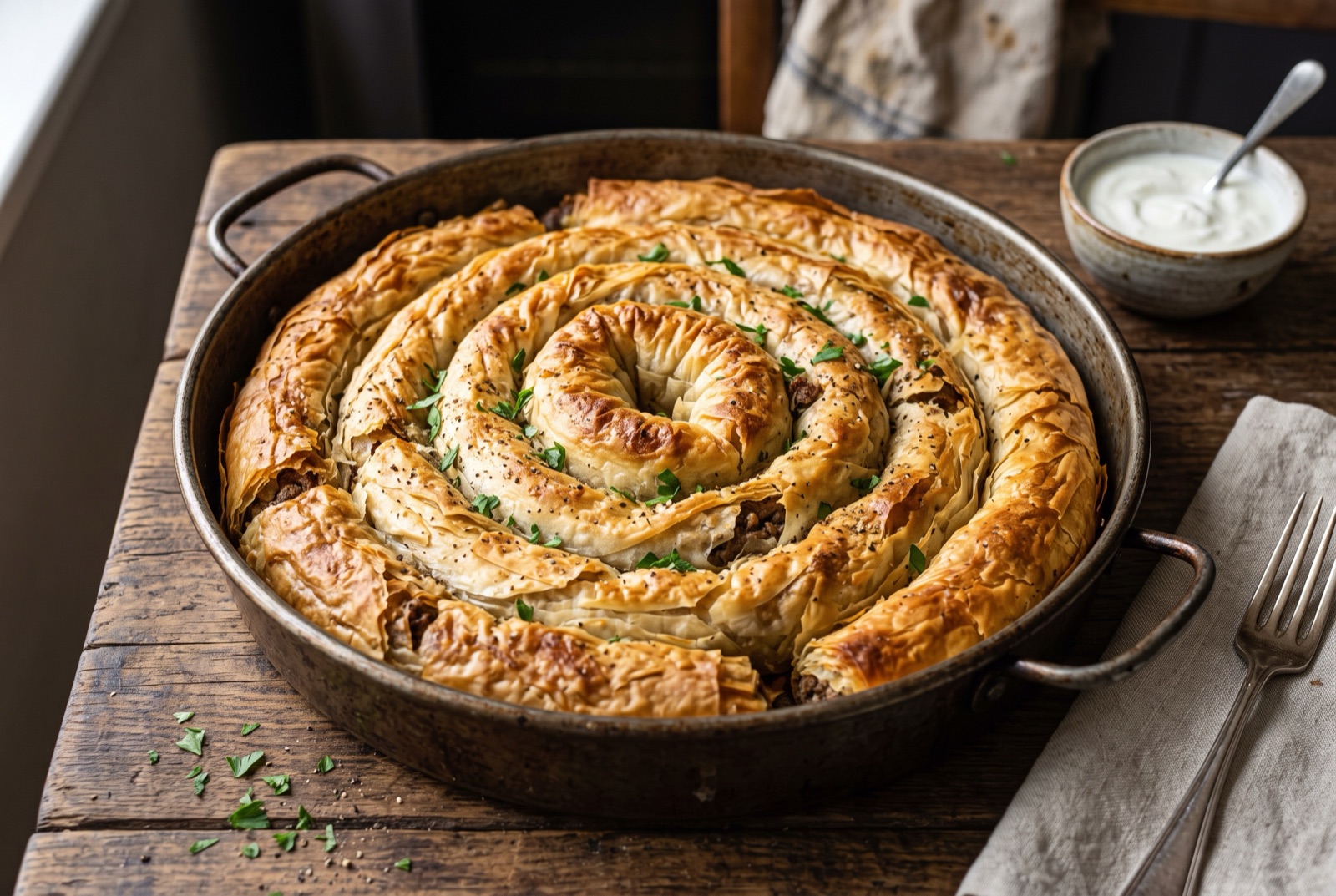
Bosnia and Herzegovina2 hr 5 min
Burek
Bosnian Coiled Filo Pie with Minced Beef
Bosnia and Herzegovina1 hr 45 min
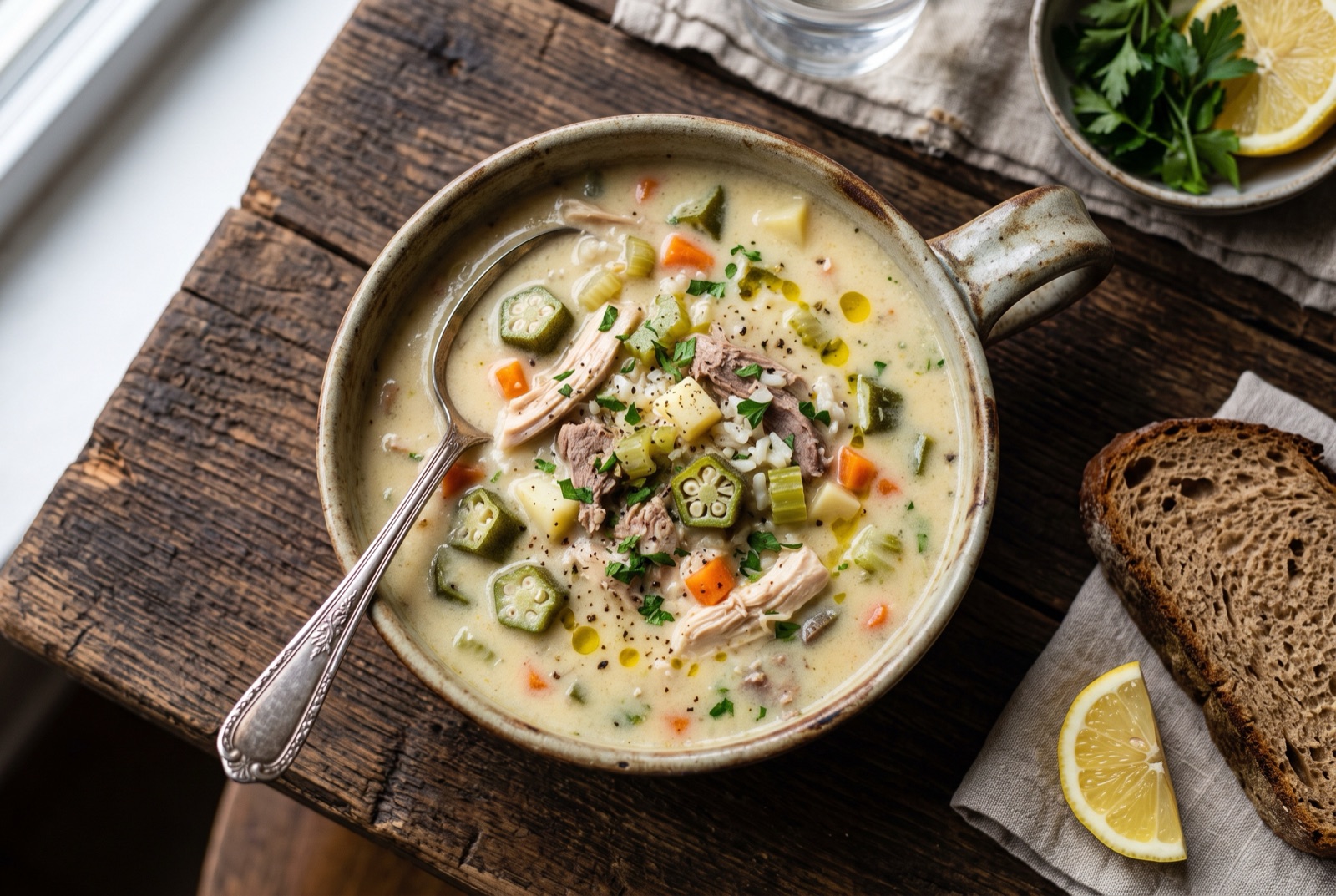
Begova Čorba
Bosnian Bey's Chicken and Okra Soup
Bosnia and Herzegovina1 hr 45 min
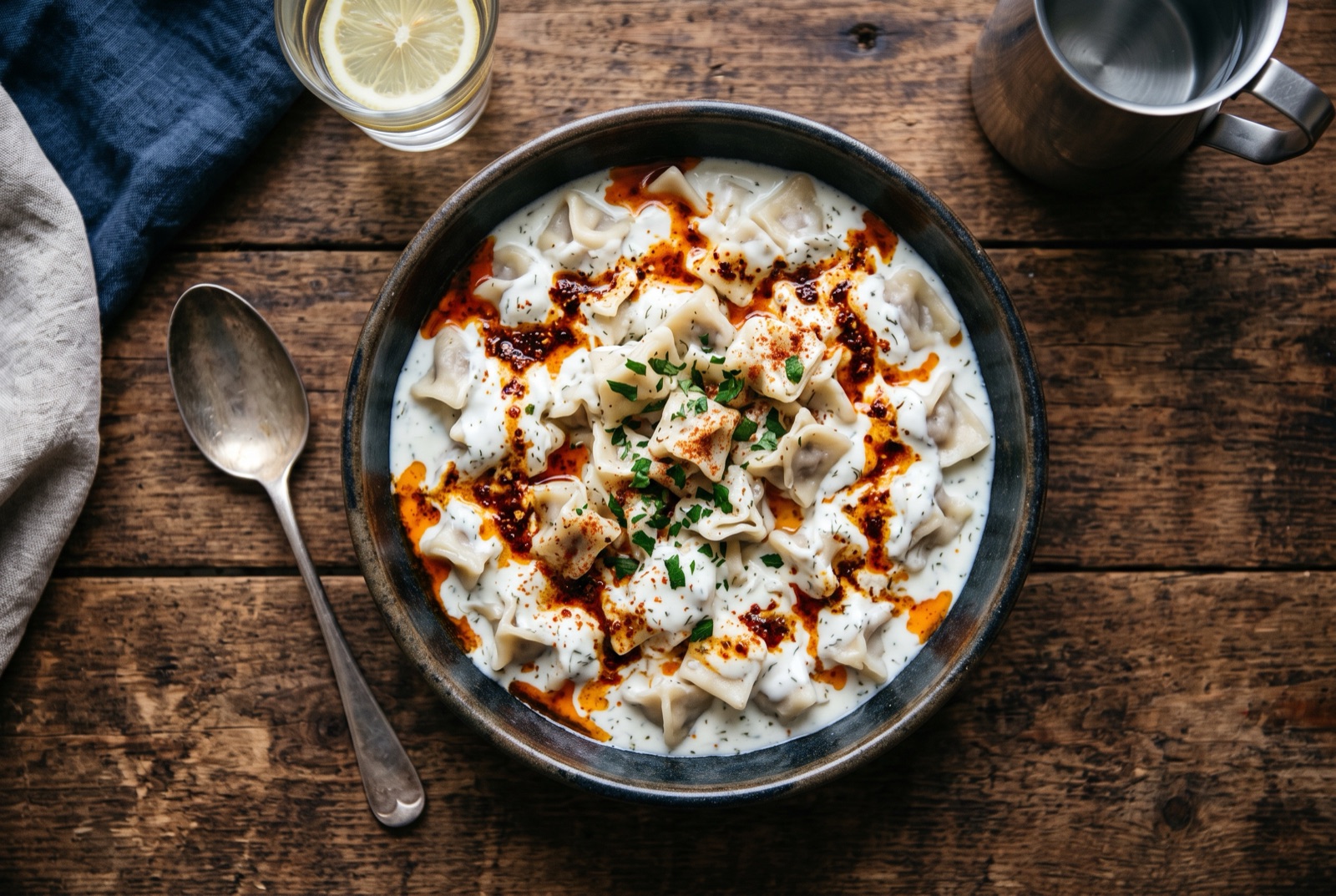
Klepe
Bosnian Beef Dumplings in Garlic Yoghurt
Bosnia and Herzegovina3 hr 45 min
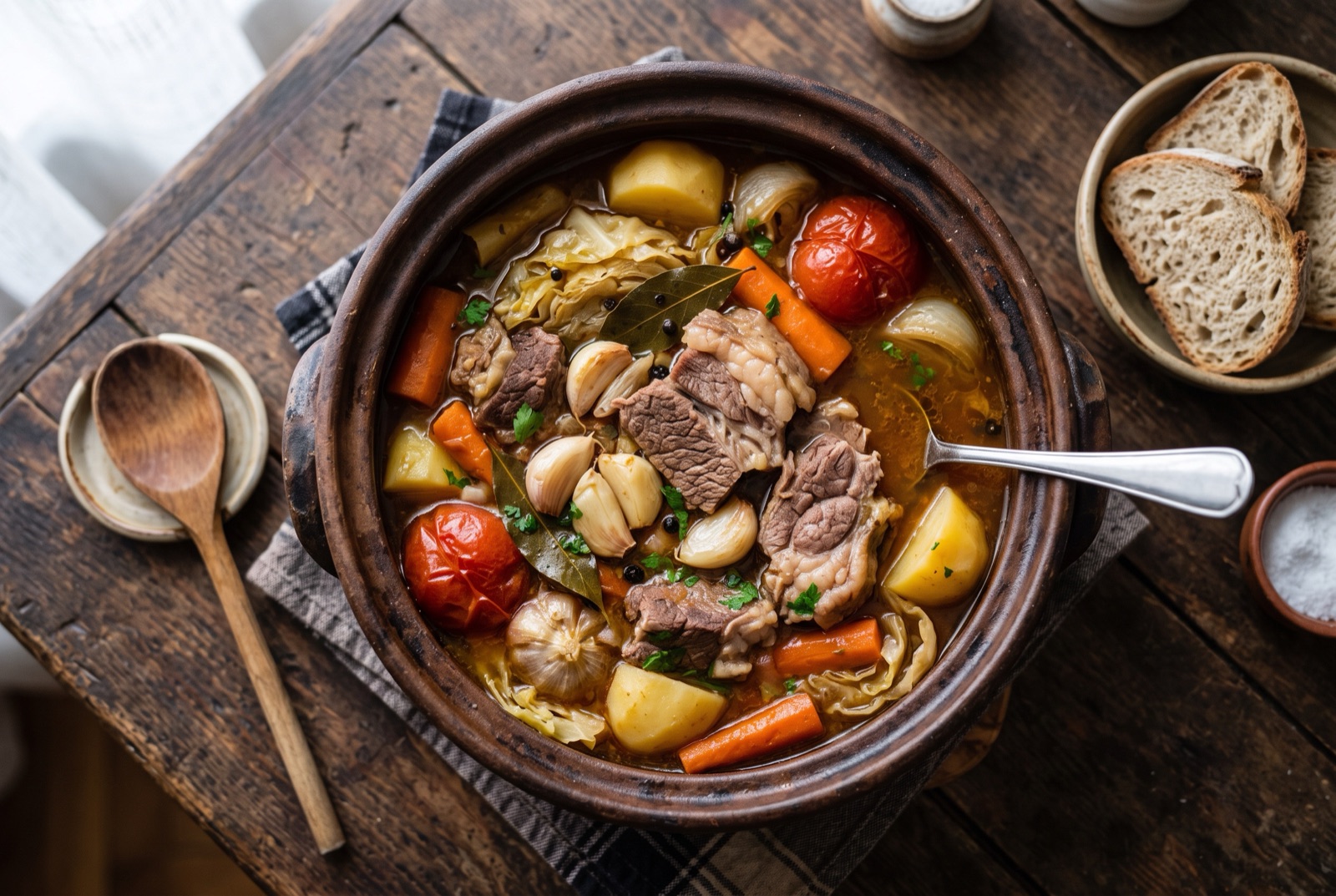
Bosanski Lonac
Layered Bosnian Meat and Vegetable Pot
Keep exploring Bosnia and Herzegovina.
Bosnia and Herzegovina has 9 more dishes in the atlas — Begova Čorba and Bosanski Lonac, and 7 more.
All Bosnia and Herzegovina recipes Onion recipes Ground beef recipes Rice recipes mainhalal friendlyRecipe by The DishRoute Kitchen · published August 20, 2026 · updated August 20, 2026