Brigadeiro.
Brazilian Chocolate Fudge Truffles
Brigadeiro · say it: bree-gah-DAY-roo
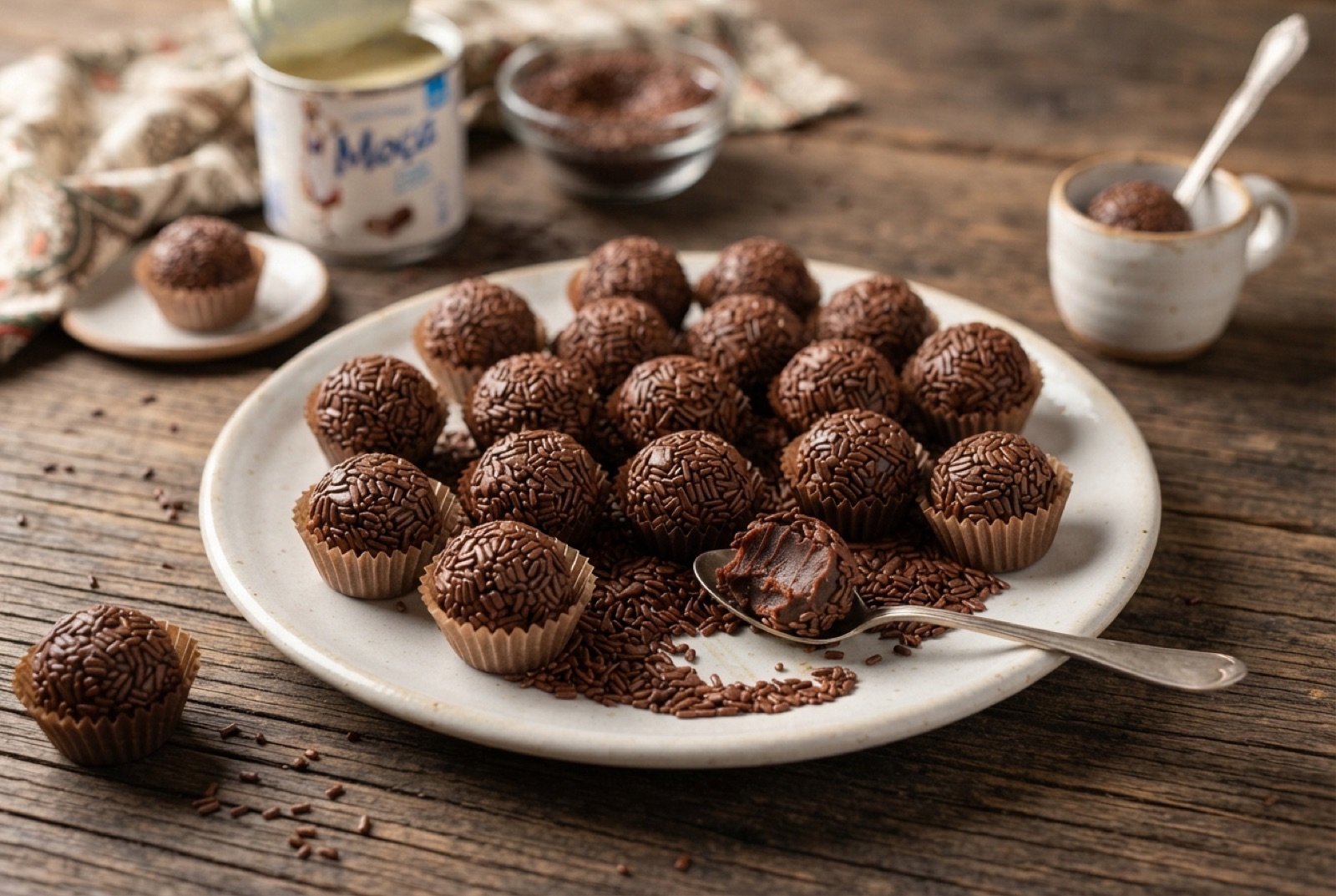
A brigadeiro is a small rolled truffle made from just condensed milk, cocoa powder and butter, cooked in a pan until thick, cooled, shaped into balls with buttered hands and rolled through chocolate sprinkles. The texture is what sets it apart from any other chocolate sweet: denser than mousse, softer than fudge, with a gentle caramel note from the slowly cooked condensed milk under the cocoa. It is the mandatory sweet at every Brazilian birthday party, and it is genuinely easy — the only skill is recognizing the moment the mixture is cooked enough, which this recipe describes precisely. Ten minutes of stirring, a rest in the fridge, and you have a plateful.

- Gate
- Brazil
- Prep
- 15 min
- Cook
- 12 min
- Total time
- 2 hr 27 min incl. 2 hr rest
- Serves
- 6
- Status
- Easy
- Nutrition / serving · estimated
- Calories 310 kcal
- Protein 6 g
- Carbs 48 g
- Fat 11 g
- Sugar 44 g
Why this recipe works.
- The doneness cue is described precisely — the pan-tilt test — so the fudge sets soft, not stiff or runny.
- True to the documented 1945 original: condensed milk, cocoa, butter, sprinkles, nothing else.
- Includes the spoon-brigadeiro shortcut Brazilians actually use when nobody feels like rolling.
- Scales in a straight line: double the tin, double the batch, same ten minutes of stirring.
Ingredients.
5 itemsFor the fudge
For coating
Equipment
- Heavy-bottomed saucepan
- Silicone spatula or wooden spoon
- Shallow bowl for the sprinkles
- Mini paper cups for serving (optional but traditional)
Instructions.
Combine off the heat
Whisk the condensed milk, sifted cocoa and salt together in a heavy saucepan while everything is still cold, until no streaks or lumps of cocoa remain. Add 1 tbsp of butter.
Cook and stir
Set the pan over low heat and stir constantly with a spatula, scraping the bottom and corners, as the mixture bubbles gently and thickens, about 10 minutes. It is done when a tilt of the pan makes it slide as one slow, heavy mass that briefly bares the pan bottom before settling.
Tip Softer side of done rolls into tender truffles; if in doubt, stop early — too-soft mixture becomes spoon brigadeiro, which nobody has ever complained about.
Cool completely
Scrape the mixture onto a buttered plate, press cling film onto the surface, and refrigerate until completely cool and set enough to hold a fingerprint, about 2 hours.
Roll the truffles
Butter your palms lightly, scoop walnut-sized portions (about a heaped teaspoon) and roll them between your hands into smooth balls. Re-butter your hands whenever the mixture starts to grip.
Coat in sprinkles
Immediately roll each ball through a shallow bowl of chocolate sprinkles, pressing gently so the coating grips the tacky surface all over. Set each finished brigadeiro in a mini paper cup or on a tray.
Rest and serve
Let the coated brigadeiros sit 15 minutes at room temperature so the surface sets and the sprinkles anchor — they should feel soft but hold a clean shape when picked up. Serve at room temperature.
Tips from our kitchen.
- Use low heat and stir constantly, scraping the bottom and corners — condensed milk scorches quietly, and one scorched patch flavors the whole batch.
- The doneness test: tilt the pan. The mixture is ready when it holds together and slides as one slow mass, briefly showing the pan bottom, rather than flowing back instantly.
- Undercooked brigadeiro will not roll — but it is perfect eaten with a spoon, so nothing is lost. Overcooked turns stiff and chewy; err on the softer side.
- Cool the mixture fully in the fridge (about 2 hours) before rolling, and butter your palms lightly — the mixture is designed to be sticky.
- Sift the cocoa before it goes into the pan, or whisk it into the condensed milk cold; lumps added over heat never dissolve.
- Roll the balls through the sprinkles immediately after shaping while the surface is tacky, or the coating will not grip.
Substitutions.
- Chocolate sprinkles (the classic coating) → Finely grated dark chocolate, cocoa powder, or chopped nuts
- Grated chocolate tastes better than most sprinkles; cocoa gives a bitter truffle-style finish. Sprinkles remain the birthday-party standard.
- Unsweetened cocoa powder → 100 g melted dark chocolate
- Common in upmarket brigadeiro shops — a deeper, glossier result. Cook a minute or two longer, as the chocolate adds fat.
- Butter → A neutral oil or plant butter
- Works and makes the sweet dairy-adjacent rather than dairy-free (the condensed milk is still milk). Butter gives the better flavor.
Variations.
- Brigadeiro de colher
- Cook the mixture slightly less, pour it into a bowl or little cups and eat it warm or chilled with a spoon — the beloved no-rolling version.
- Beijinho
- The brigadeiro's white twin: skip the cocoa, cook with shredded coconut, roll in more coconut and top each with a single clove.
- Gourmet dark
- Replace the cocoa with good 70% chocolate and roll in grated chocolate — the style sold by weight in São Paulo's brigadeiro boutiques.
Storage & reheating.
Rolled brigadeiros keep 4–5 days in an airtight container at cool room temperature, or a week refrigerated (bring back to room temperature before serving — cold stiffens them). The cooked, unrolled mixture keeps 5 days covered in the fridge. They freeze for up to 2 months, though sprinkles soften slightly on thawing; freeze uncoated and roll in fresh sprinkles if you can.
Serve with
Strong black coffee, or exactly as Brazil serves them: on a party table in little paper cups alongside cake.
The story behind Brigadeiro.
Few sweets have as tidy an origin story as the brigadeiro, and this one is actually documented. In 1945, Brigadier Eduardo Gomes — a decorated air force officer, brigadeiro in Portuguese — ran for president of Brazil. His campaign drew energetic support from women's groups, particularly in Rio de Janeiro, who organized rallies and fundraisers, and at those events they made and sold a chocolate sweet cooked from condensed milk and cocoa. The candy became known as the "doce do brigadeiro" — the brigadier's sweet — and eventually just brigadeiro. Gomes lost the election, twice in fact, but his namesake candy conquered the country more completely than any politician ever has.
The ingredients tell a second story about postwar Brazil. Fresh milk and sugar were subject to wartime shortages, while sweetened condensed milk — produced in Brazil since the early twentieth century — was shelf-stable, affordable and everywhere. The brigadeiro turned an industrial pantry product into a national icon, and condensed milk has held that place in Brazilian dessert-making ever since.
Today the brigadeiro is less a recipe than a ritual. No child's birthday party is complete without a tray of them in little paper cups, and every Brazilian learns the shortcut version: eating the warm mixture straight from the pan with a spoon, no rolling required — the "brigadeiro de colher," spoon brigadeiro, is a legitimate serving style, not a failure. Gourmet shops in São Paulo and Rio now sell versions rolled in pistachio or made with single-origin chocolate, but the classic remains the one coated in crunchy chocolate sprinkles, slightly messy, gone in two bites.
Questions, answered.
Why is the sweet called brigadeiro?
It is named after Brigadier (brigadeiro) Eduardo Gomes, a Brazilian air force officer who ran for president in 1945. His supporters — notably women's campaign groups in Rio de Janeiro — made and sold this condensed-milk chocolate sweet at rallies and fundraisers, and it became known as the "brigadier's sweet." Gomes lost the election, but the candy became Brazil's most beloved dessert.
How do I know when the brigadeiro mixture is cooked enough?
Tilt the pan: the mixture is ready when it holds together and slides across the base as one slow, heavy mass, briefly exposing the bottom of the pan before settling. If it flows back immediately like sauce, keep stirring. This usually takes about 10 minutes over low heat. Undercooked mixture will not roll into balls; overcooked turns stiff and chewy.
Can I eat brigadeiro without rolling it into balls?
Absolutely — Brazilians do it all the time. "Brigadeiro de colher" (spoon brigadeiro) is the mixture cooked slightly softer and eaten from a bowl or little cups with a spoon, warm or chilled. It is a recognized serving style at parties and cafés, not a shortcut to apologize for, and it is the standard fate of any batch that ends up too soft to roll.
Are brigadeiros gluten-free?
The core mixture — sweetened condensed milk, cocoa powder and butter — contains no gluten. The only thing to check is the coating: most chocolate sprinkles are gluten-free but some brands are produced alongside wheat products, so read the label or roll the truffles in grated chocolate or cocoa powder instead for a guaranteed gluten-free sweet.
Why won't my brigadeiros hold their shape?
Either the mixture was undercooked — it needs to reach the stage where it slides off the pan base as one mass — or it was rolled before cooling completely, which takes about 2 hours in the fridge. Warm mixture is always too soft to shape. If a cooled batch still will not roll, return it to low heat for a few more minutes of stirring, or serve it with spoons.
You might also like.
All recipes →
Keep exploring Brazil.
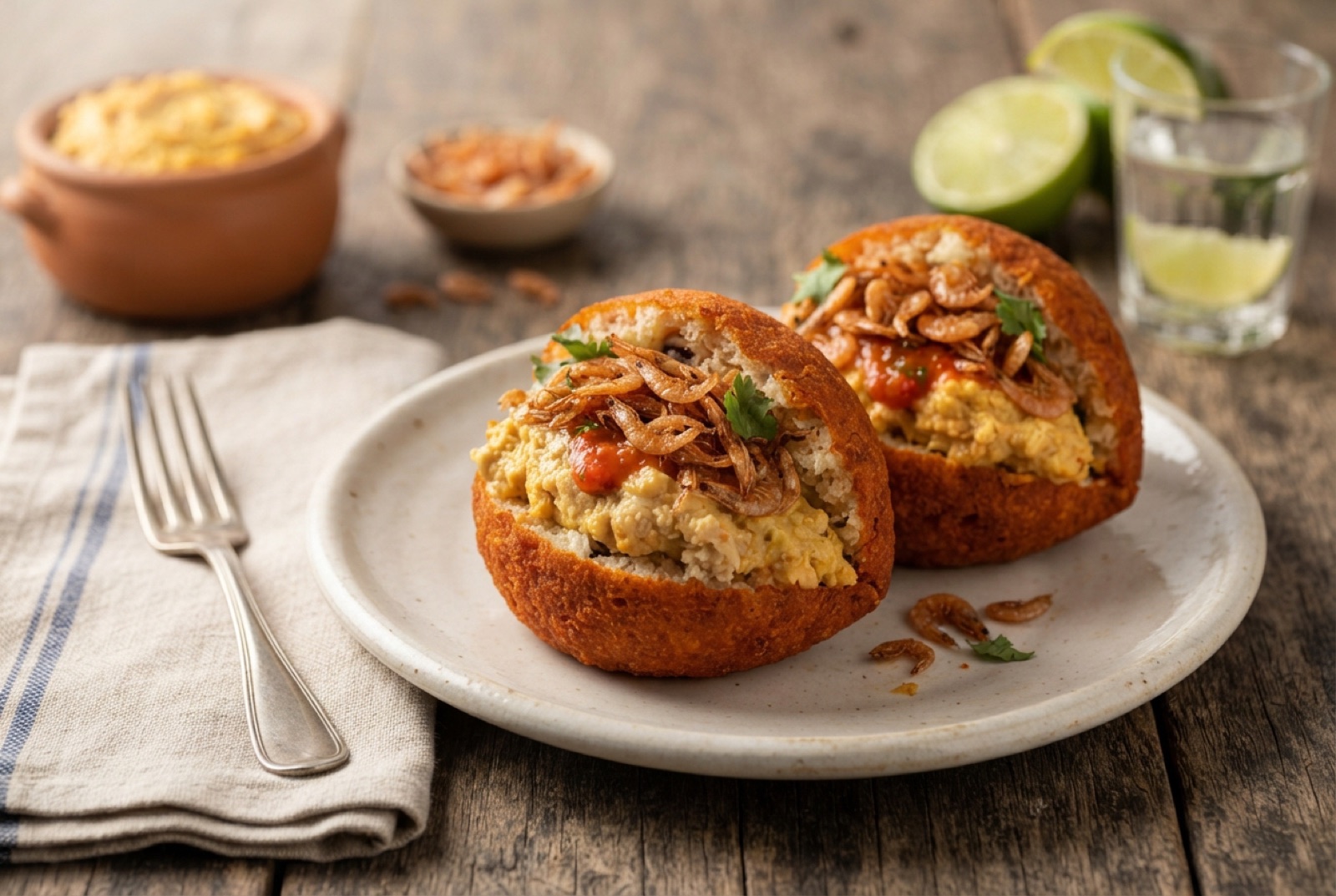
Brazil has 9 more dishes in the atlas — Acarajé and Bolo de Fubá, and 7 more.
Recipe by The DishRoute Kitchen · published August 18, 2026 · updated August 18, 2026