Bolo de Fubá.
Brazilian Cornmeal Cake
Bolo de fubá · say it: BOH-loo jee foo-BAH
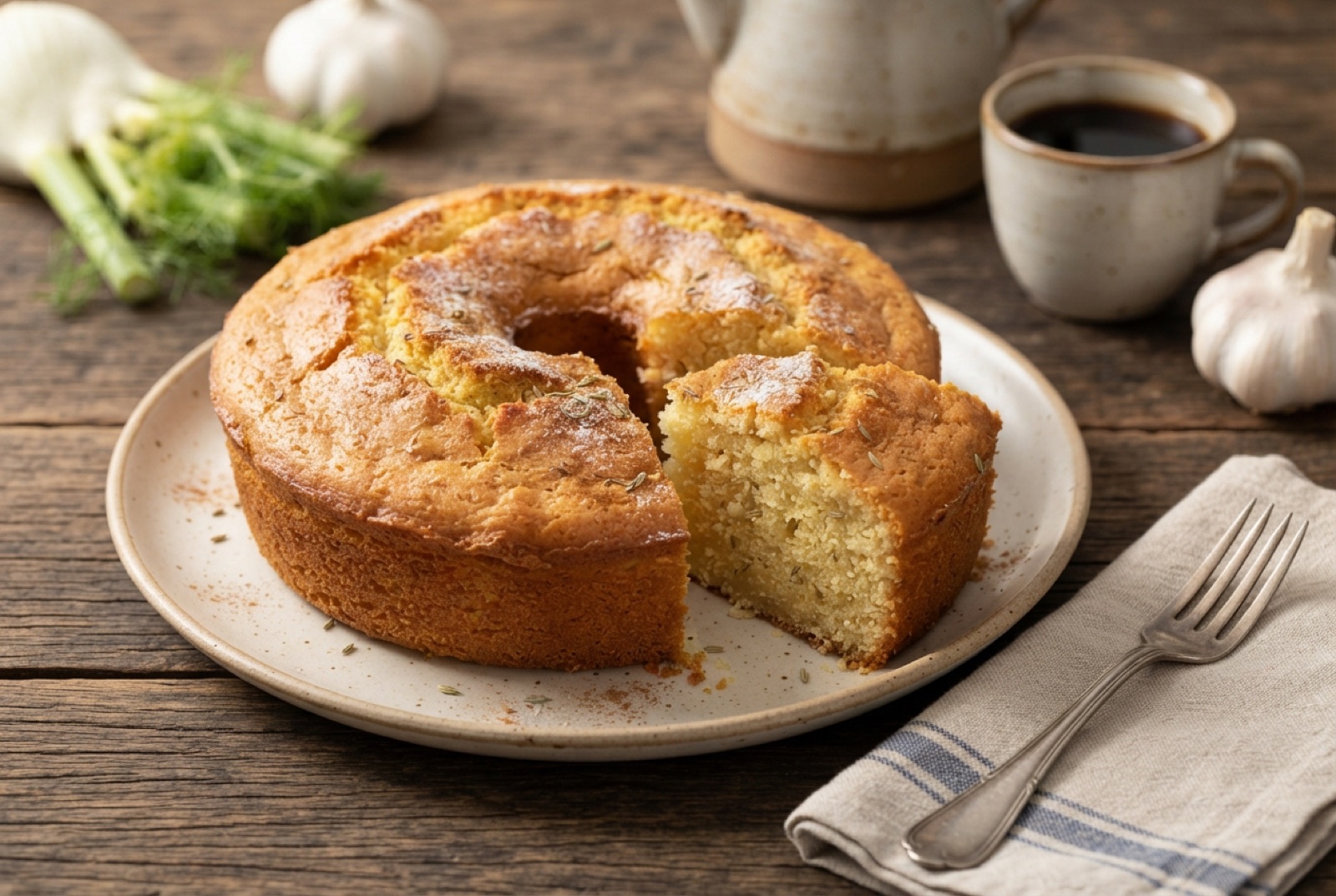
Bolo de fubá is a plain yellow cake built on fine cornmeal instead of mostly wheat, which gives it a crumb that is soft but very slightly sandy on the tongue — closer to a good cornbread than to a sponge. It is barely sweet, faintly perfumed with erva-doce, the fennel seed Brazilians scatter through it, and it has a thin crackly crust where the sugar meets the tin. Everything goes into a blender, which is not a shortcut but the standard method: this is a cake made on a weekday afternoon, in one jug, to be eaten warm with coffee while it is still steaming at the cut.

- Gate
- BrazilMinas Gerais
- Prep
- 15 min
- Cook
- 45 min
- Total time
- 1 hr 20 min incl. 20 min rest
- Serves
- 10
- Status
- Easy
- Nutrition / serving · estimated
- Calories 350 kcal
- Protein 7 g
- Carbs 54 g
- Fat 13 g
- Fiber 2 g
- Sugar 29 g
Why this recipe works.
- One blender jug and one bowl, which is genuinely how this cake is made in Brazil rather than a simplification.
- Balances fubá with a little wheat flour so the crumb stays tender instead of drying out by the next morning.
- Includes the fennel seed and the optional cheese, the two things that make it taste Brazilian rather than like plain cornbread.
- Gives visual doneness cues, since a cornmeal crumb browns before it is baked through and fools a lot of people.
Ingredients.
11 itemsWet
Dry
For the tin
Equipment
- Blender or large bowl and whisk
- 24 cm ring tin or 900 g loaf tin
- Skewer
Instructions.
Heat the oven and prepare the tin
Heat the oven to 180°C. Butter a 24 cm ring tin thoroughly, right into the central column and every groove, then dust it with cornmeal and tip out the excess so the whole inside is lightly coated.
Blend the wet ingredients
Put the eggs, milk, oil and sugar in a blender and run it for about a minute, until the mixture is pale, completely smooth and slightly foamy on top with no sugar grains visible at the bottom of the jug.
Add the dry ingredients
Combine the fubá, plain flour, baking powder, toasted fennel seed and salt in a bowl, then add them to the blender and pulse on the lowest speed just until no dry pockets remain, about 15 seconds. Stir in the cheese by hand if you are using it.
Tip The batter will look alarmingly thin, like pouring cream. That is exactly right — the cornmeal thickens it in the oven.
Bake
Pour the batter into the tin and bake for 40 to 50 minutes, without opening the door for the first 30. It is done when the top is deep golden and cracked, the cake has pulled slightly away from the sides of the tin, and a skewer pushed into the thickest part comes out with a few moist crumbs clinging to it.
Tip Cornmeal browns early. Judge by the skewer and the shrinking edge, not by colour alone.
Cool before turning out
Stand the tin on a rack for 15 to 20 minutes, until the cake is warm rather than hot and has firmed up enough to hold together. Run a thin knife around both edges, then invert it onto a plate in one confident motion.
Serve warm with coffee
Cut thick wedges while the cake is still slightly warm and serve with strong black coffee. Dust with sugar only if you want it sweeter — traditionally it goes to the table bare.
Tips from our kitchen.
- Use fine cornmeal (fubá mimoso), not coarse polenta grind. Coarse meal stays gritty and gives the cake a raw, sandy texture even when fully baked.
- Grease the tin with butter and dust it with cornmeal rather than flour — it releases more cleanly and adds a faint crunch to the crust.
- The batter should be thin, closer to double cream than to cake batter. That is correct; the cornmeal swells in the oven.
- Toast the fennel seed in a dry pan for thirty seconds before adding it. It wakes the aroma up considerably for almost no effort.
- Blend the wet ingredients thoroughly but fold the dry ones in on low speed or by hand, since overworking the wheat flour makes the cake tough.
- Let it cool for at least fifteen minutes in the tin. A hot fubá cake is fragile and will break as you turn it out.
Substitutions.
- Fubá (fine Brazilian cornmeal) → Fine yellow cornmeal or finely ground polenta
- Look for the finest grind you can find. Masa harina is not a substitute — it is nixtamalised and tastes distinctly of tortillas.
- Erva-doce (fennel seed) → Anise seed, or the finely grated zest of one orange
- Brazilian recipes use fennel and anise almost interchangeably. Orange zest is a common alternative in coastal versions and is very good.
- Whole milk → Coconut milk, or milk with 2 tablespoons of desiccated coconut folded in
- Bolo de fubá com coco is a standard variation, and coconut milk keeps the cake moist for longer.
- Plain flour → An extra 100 g of fubá, for an all-cornmeal cake
- This makes the cake gluten-free but noticeably drier and more crumbly. Eat it the same day if you go this route.
Variations.
- Bolo de fubá com queijo
- Fifty grams of grated parmesan or dry queijo minas blended into the batter. The salt cuts the sweetness and the cake ends up somewhere between dessert and savoury bread.
- Bolo de fubá cremoso
- More milk and a spoon of cornstarch, baked in a deep dish so the middle sets to a soft custard layer under a firm top. A different cake from the same ingredients.
- Bolo de fubá com goiabada
- Cubes of guava paste dropped into the batter before baking, which melt into sticky pockets. The classic Brazilian pairing of corn and guava.
Storage & reheating.
Bolo de fubá keeps 3 days in an airtight tin at room temperature and is at its best on the first two. Do not refrigerate it — cold makes the cornmeal crumb firm and chalky, and it never fully recovers. Ten seconds in a microwave or three minutes in a warm oven brings a day-old slice back convincingly. It freezes well for 2 months, either whole or in slices wrapped individually; thaw at room temperature rather than in the fridge.
Serve with
Strong black coffee, in the afternoon, ideally still warm from the tin.
The story behind Bolo de Fubá.
Fubá is finely milled cornmeal, and the word itself came to Portuguese from Kimbundu, an Angolan language in which it means flour — one of many words that arrived in Brazil with enslaved Central Africans and stayed in the everyday kitchen vocabulary. Corn, meanwhile, is native to the Americas and was already central to indigenous cooking long before either Portuguese wheat or European baking arrived. The cake sits exactly at that intersection: a European cake structure of eggs, sugar and fat, built on an American grain, named with an African word.
It belongs above all to the countryside of Minas Gerais and the interior of São Paulo, where it is café da tarde food — served at four or five in the afternoon with strong coffee, on a table that probably also has cheese and pão de queijo on it. It is also the defining cake of Festa Junina, the June festivals for Santo Antônio, São João and São Pedro, when corn is in season and almost everything served is made from it: pamonha, curau, canjica, pipoca and bolo de fubá, eaten around a bonfire in the cold months of the Brazilian winter.
Almost every Brazilian family has a version, and the differences are small but firmly held. Some bake it in a ring tin, some in a loaf. Some add grated parmesan or queijo minas, which sounds strange and works extremely well, cutting the sweetness and adding a savoury edge. Some pour cream over the top before baking to make bolo de fubá cremoso, where the middle stays like a set custard. The fennel seed divides people, and so does whether the cake should contain any wheat flour at all — all-fubá versions are drier and more crumbly, which is either the whole point or the reason to add wheat, depending on whose grandmother you ask.
Questions, answered.
What is fubá and can I use polenta instead?
Fubá is finely milled Brazilian cornmeal, softer and finer than the coarse grind sold for polenta. Finely ground polenta or fine yellow cornmeal both work well in this cake. Coarse polenta does not — the grains never fully soften in a batter this thin and the cake ends up gritty rather than tender.
What is erva-doce in Brazilian baking?
Erva-doce usually means fennel seed, though the name is applied to anise seed as well and Brazilian recipes often treat the two as interchangeable. In bolo de fubá it provides the faint sweet, slightly liquorice perfume that distinguishes the cake from plain cornbread. About a tablespoon of whole seeds is standard for a cake serving ten.
Why is my bolo de fubá dry?
Cornmeal absorbs a lot of liquid and keeps absorbing it as the cake cools, so an all-fubá cake with no wheat flour dries out quickly, and overbaking by even five minutes makes it worse. Include some wheat flour, pull the cake from the oven when a skewer comes out with a few moist crumbs rather than bone dry, and eat it within two days.
Can I make this cake without a blender?
Yes. Whisk the eggs and sugar together until pale, then whisk in the milk and oil, and finally fold in the dry ingredients until just combined. The blender is the traditional Brazilian method because it is fast and reliable, but the batter is thin enough that a bowl and whisk make no real difference to the result.
Is bolo de fubá supposed to be very sweet?
No. It is a modest, everyday cake meant to be eaten with strong unsweetened coffee, so the sugar is dialled back compared with most European cakes and the corn flavour carries the flavour instead. If you want it sweeter, dust the cooled cake with sugar rather than adding more to the batter, which would change the crumb.
You might also like.
All recipes →
Keep exploring Brazil.
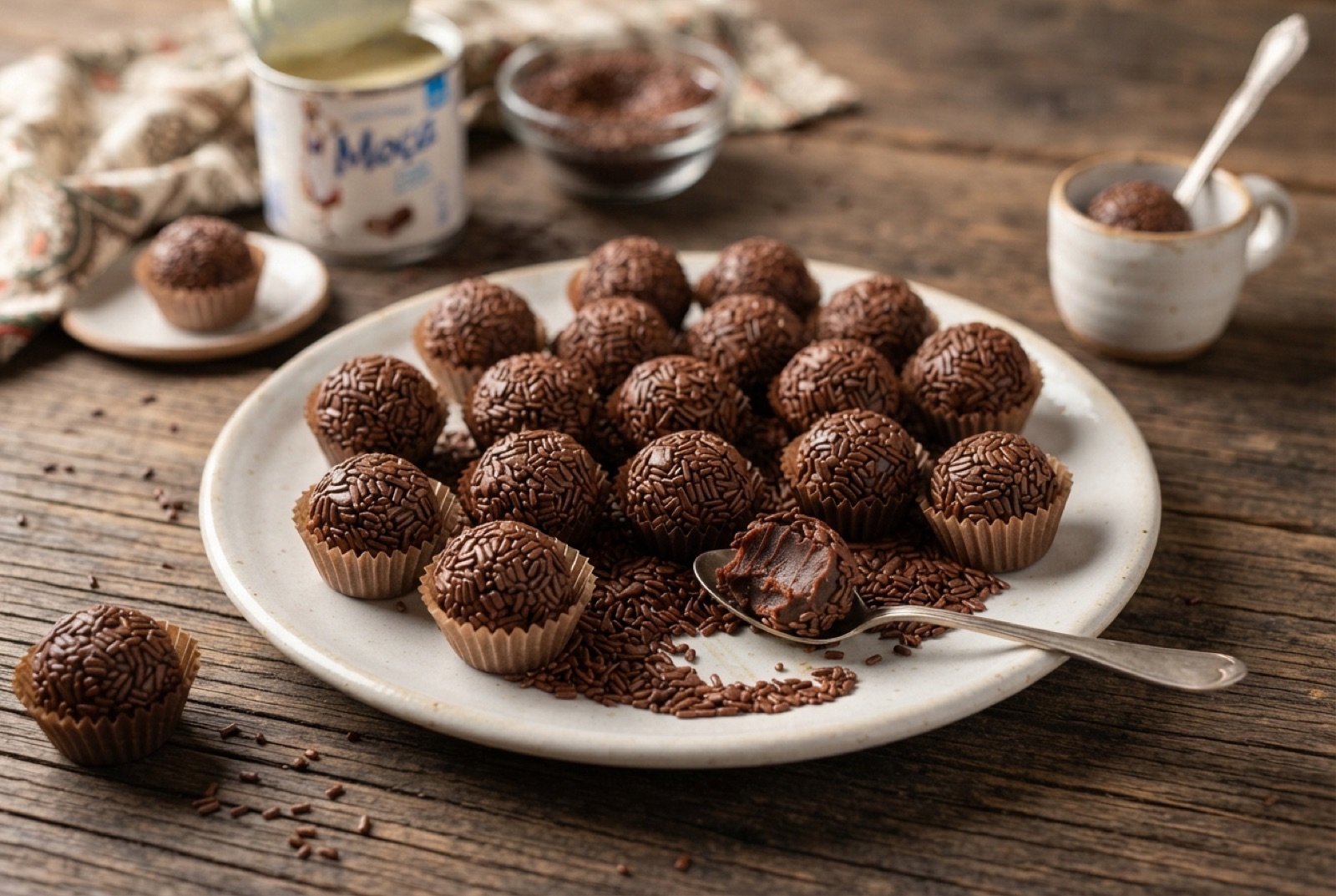
Brazil has 9 more dishes in the atlas — Acarajé and Brigadeiro, and 7 more.
Recipe by The DishRoute Kitchen · published August 19, 2026 · updated August 19, 2026