Brudet.
Adriatic Mixed Fish Stew with Soft Polenta
Brudet · say it: BROO-det
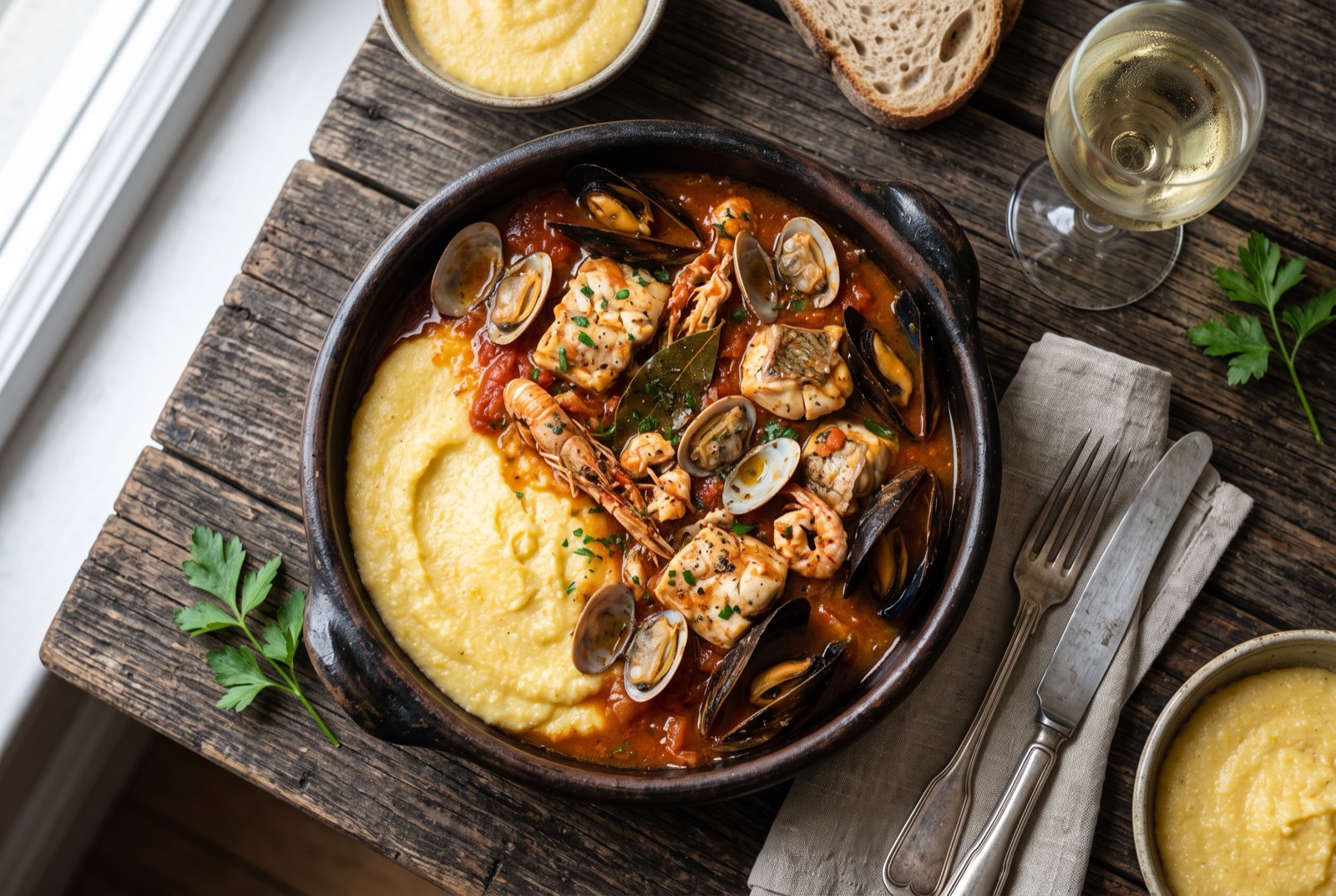
Brudet is the fisherman's stew of the eastern Adriatic: whatever the boat brought in, arranged in one layer over a base of onion, garlic and tomato, moistened with wine and vinegar, and simmered gently until the fish is just set. The defining rule is that nobody stirs it. Moving a spoon through the pan breaks up the fish and clouds the sauce, so the pan is gripped by the handle and shaken instead, which is a small piece of theatre every Croatian cook performs without thinking. The flavour is direct — sea, tomato, olive oil, a sharp edge from vinegar — and it is always eaten with soft polenta, which soaks up the sauce far better than bread. Two hours from shopping to table, and half of that is the polenta.

- Gate
- CroatiaDalmatia and Istria
- Prep
- 25 min
- Cook
- 50 min
- Total time
- 1 hr 15 min
- Serves
- 4
- Status
- Medium
- Nutrition / serving · estimated
- Calories 610 kcal
- Protein 52 g
- Carbs 55 g
- Fat 20 g
- Fiber 5 g
- Sodium 1100 mg
Why this recipe works.
- Layers the fish by firmness so everything finishes at the same moment instead of half of it disintegrating.
- Keeps the traditional shake-the-pan method and explains exactly what stirring would ruin.
- Balances vinegar and wine deliberately, so the sauce has the sharp Adriatic edge rather than tasting like plain tomato.
- Includes soft polenta timed to be ready at the same time as the stew, without either waiting on the other.
Ingredients.
17 itemsFor the stew
For the polenta
Equipment
- Wide shallow pan or braising dish with a lid
- Heavy saucepan for the polenta
- Whisk
Instructions.
Prepare the seafood
Rinse the fish steaks and pat them dry, discard any mussel that stays open when tapped, and keep the squid separate. Salt the fish lightly on both sides and leave it on a plate while you build the base.
Collapse the onions
Warm the olive oil in a wide shallow pan over medium-low heat and cook the onions with a pinch of salt for 15 minutes, until they are completely soft, pale gold and no longer smell raw. Add the garlic for the last 2 minutes so it perfumes the oil without browning.
Tip Undercooked onion is the most common fault in a home brudet. Wait for it to go slack and sweet.
Build the tomato base
Stir in the tomato paste and fry for a minute until it darkens, then add the chopped tomatoes, bay leaves and the squid rings. Simmer uncovered for 15 minutes, until the tomatoes have broken down into a loose sauce and a spoon dragged across the base leaves a brief trail.
Start the polenta
Bring the salted water to a boil in a heavy pan, rain in the polenta while whisking hard so no lumps form, then drop the heat right down. Cook for 30–35 minutes, stirring every few minutes, until it pulls away from the sides of the pan and tastes of corn rather than raw flour.
Sharpen the sauce and lay in the fish
Pour the wine and vinegar into the tomato base and let it bubble for 2 minutes. Take the pan off the heat and lay the fish steaks over the sauce in a single layer, thickest pieces first, pressing them gently so the sauce comes halfway up but does not cover them.
Tip From this point on, no spoon touches the pan.
Simmer without stirring
Return the pan to a low heat, cover, and cook for 12 minutes at a bare simmer, shaking the pan flat across the burner every few minutes to move the sauce beneath the fish. The surface should tremble, never bubble hard.
Add the mussels
Scatter the mussels over the top, cover again, and cook for a final 4–5 minutes until every shell has opened and the fish flakes from the bone when nudged but still holds as a whole piece. Discard any mussels that stayed shut.
Finish and serve
Beat the olive oil into the polenta and spoon it onto warm plates. Taste the brudet sauce and correct with salt, pepper and a few extra drops of vinegar, scatter the parsley over the pan, and serve the fish straight from it with plenty of sauce over the polenta.
Tips from our kitchen.
- Use at least three kinds of seafood. A one-fish brudet tastes thin — the mix is where the depth comes from, and cheap bony fish contribute more than expensive fillets.
- Ask for fish on the bone, cut into thick steaks or left whole if small. Skinless fillets fall apart and give the sauce nothing.
- Never put a spoon in the pan once the fish is in. Grip the handle and shake it flat across the burner every few minutes.
- Cook the onion far longer than feels necessary, until it is completely collapsed and sweet. A brudet with crunchy onion tastes unfinished no matter how long you simmer it.
- Add shellfish in the last five minutes only. Mussels open in three or four; anything longer and they shrink to rubber bands.
- Season the sauce, not the fish. Taste the liquid at the end and correct with salt and a few drops of vinegar before you serve.
Substitutions.
- Mixed Adriatic fish → Any firm white fish on the bone — monkfish, hake, cod, gurnard, red mullet — plus squid and mussels
- Aim for a mix that includes one gelatinous, bony fish. That one is doing the structural work in the sauce even if it is the least attractive thing in the pan.
- Red wine vinegar → Extra dry white wine plus a squeeze of lemon at the end
- Istrian versions often skip vinegar entirely. The stew is rounder and slightly sweeter, and the lemon restores the acid balance.
- Fresh tomatoes → 400 g tinned chopped tomatoes plus 1 tbsp tomato paste
- Outside high summer this is the better choice. Fresh tomatoes with no flavour make a watery sauce that no amount of reduction rescues.
Variations.
- Istrian brudet
- Lighter on tomato and heavier on white wine, sometimes with a bay-scented broth and no vinegar at all, so the fish comes through more clearly.
- Brudet with eel
- The river-mouth version around the Neretva delta, made with eel and frog in the most traditional households — rich, dark and much loved locally.
- Šalša brudet
- A deeper red Dalmatian style with extra tomato paste cooked out at the start, giving a thicker sauce that clings to the polenta rather than pooling around it.
Storage & reheating.
Brudet keeps 2 days refrigerated and the sauce arguably improves overnight, but the fish does not — it firms up and can go slightly woolly. Reheat covered over the lowest heat until the sauce steams, and never let it boil. It does not freeze: thawed fish loses its texture entirely and the sauce separates. If you want to get ahead, make the tomato and onion base a day early, refrigerate it, and lay in fresh fish just before serving.
Serve with
Soft yellow polenta, and bread for whatever the polenta misses. A cold Malvazija or Graševina.
The story behind Brudet.
Brudet has cousins all around the Mediterranean — brodetto on the Italian side of the Adriatic, bouillabaisse further west, kakavia in Greece — and they all began the same way: as a boat stew made from the fish that could not be sold. Small, bony, mixed and unglamorous species went into one pot with onion, oil and whatever acid was available, and the result turned out to be better than the sum of its parts. Along the Croatian coast the dish is made from Rovinj down to the southern islands, and every stretch of shoreline has an opinion about it.
Those opinions divide along a few lines. Istrians tend to be lighter on the tomato and heavier on the wine; Dalmatians go redder and often add a spoon of tomato paste. Some families insist on vinegar, others on white wine only, and the argument about whether brudet may contain potato is genuinely unresolved — traditionalists say the sauce should be soaked up by polenta and nothing else. Nearly everyone agrees on two things: the fish must be mixed, because a single species gives a flat sauce, and at least one gelatinous fish with a good deal of bone and skin should be in the pot, since that is what gives the liquid body. Scorpionfish, conger eel, monkfish and gurnard all do this work.
The no-stirring rule is the part visitors remember. Fish is laid in a single layer, the thicker and firmer pieces going in first and the delicate ones on top, and from that moment the only permitted movement is a firm sideways shake of the pan, which redistributes the sauce underneath without disturbing what is above it. It is not superstition — it is the only way to keep whole pieces of fish intact in a wet pan for twenty-five minutes. The stew is served in the pan it was cooked in, with a mound of soft palenta beside it or underneath it, and a glass of the same white wine that went into the sauce.
Questions, answered.
Why must I not stir brudet?
Because the fish is cooked in a single layer, on the bone or in thick pieces, and any spoon dragged through the pan breaks it apart and clouds the sauce with fragments. Instead you grip the pan by the handle and shake it flat across the burner, which moves the sauce underneath the fish without disturbing the pieces. Every Croatian cook does this automatically.
Which fish should I buy?
A mixture of at least three, including at least one bony, gelatinous fish that will give the sauce body — scorpionfish, conger eel, monkfish or gurnard are traditional. Add a firm white fish cut into steaks, plus squid and mussels. Avoid using only premium fillets: the cheap, bony species contribute the most flavour, which is exactly why the dish exists.
Can I make brudet with frozen fish?
Yes, though the texture suffers a little. Thaw it slowly in the fridge, pat it very dry, and be aware that frozen fish releases more water into the pan, so you may need to reduce the sauce a few minutes longer before the fish goes in. Frozen squid actually works well here and is often more tender than fresh.
Is polenta essential, or can I serve rice or bread?
Soft polenta is traditional and is the best possible partner because it absorbs the sauce rather than sitting in it. Bread is a perfectly acceptable everyday alternative and is on the table anyway. Rice works but is not something you would see on the Croatian coast with this dish, and potatoes in the stew itself are a genuine point of disagreement between households.
How do I know the fish is cooked?
The flesh should have turned from translucent to opaque and should just separate from the bone when nudged with a fork, but still hold together as a piece. For thick steaks this is usually 12 to 15 minutes at a gentle simmer. Overcooked fish in a brudet shreds into the sauce, so check earlier than you think you need to.
You might also like.
All recipes →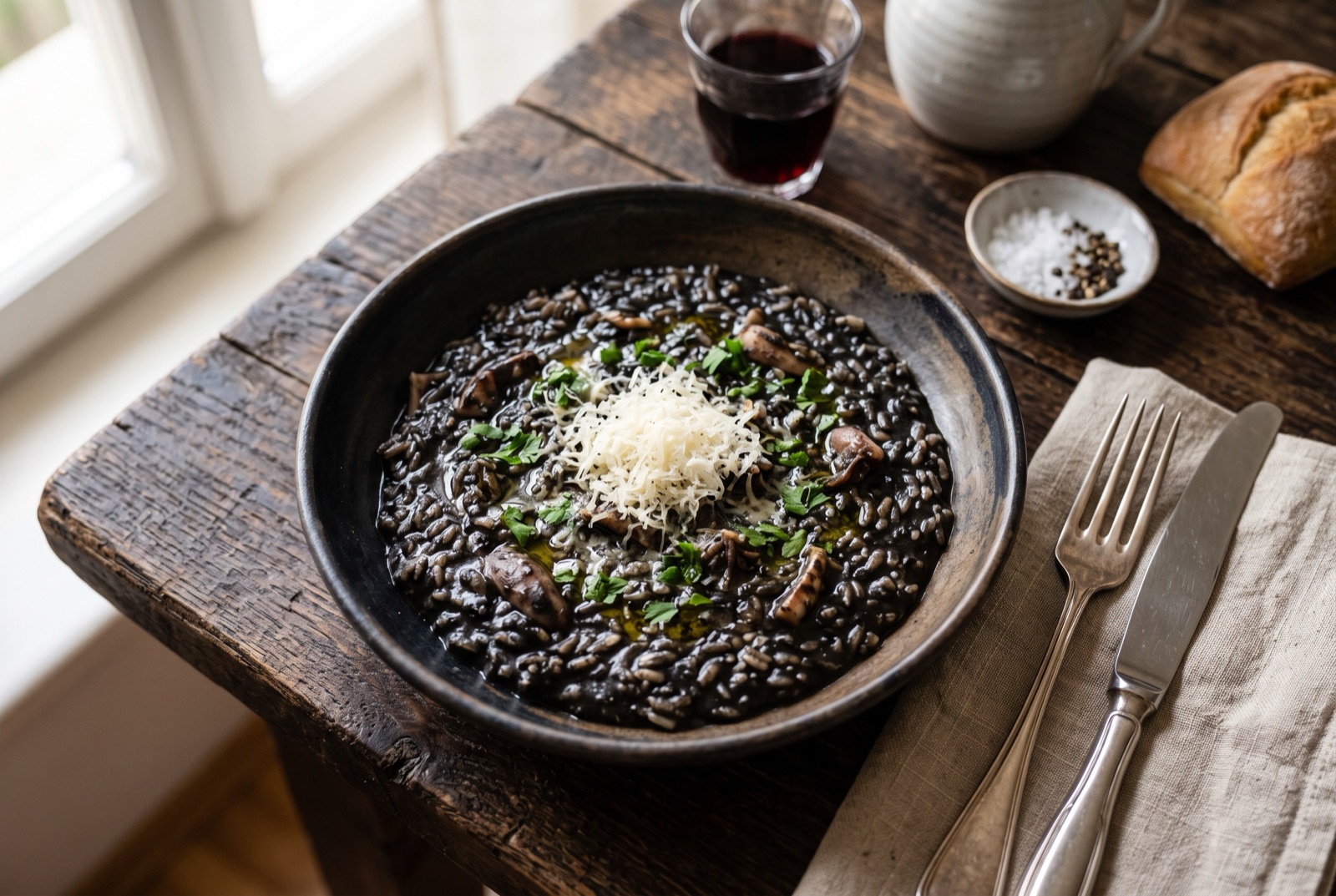
Croatia1 hr 5 min
Crni Rižot
Croatian Black Cuttlefish Risotto
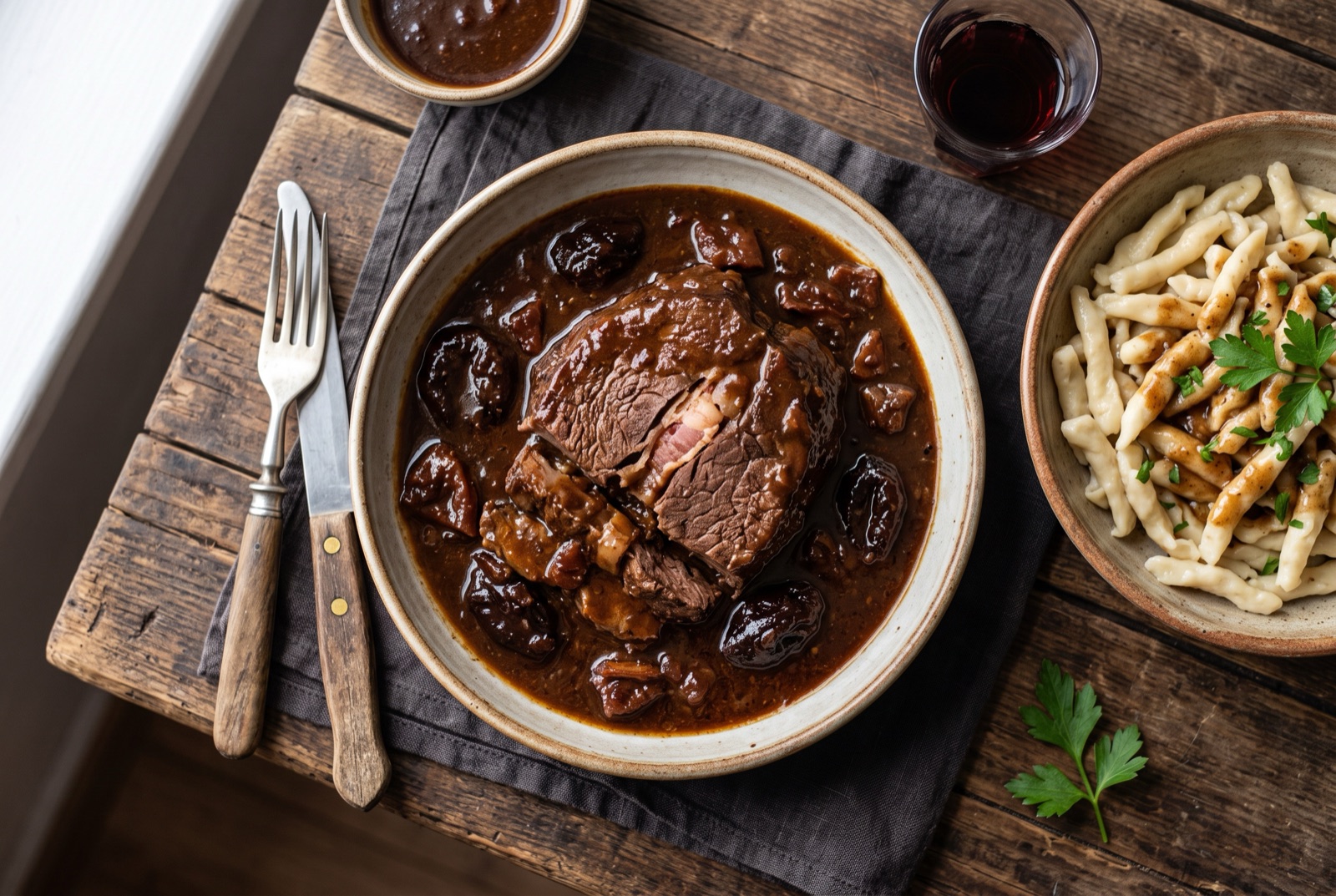
Croatia16 hr 10 min
Pašticada
Dalmatian Beef Braised in Sweet Prošek Wine
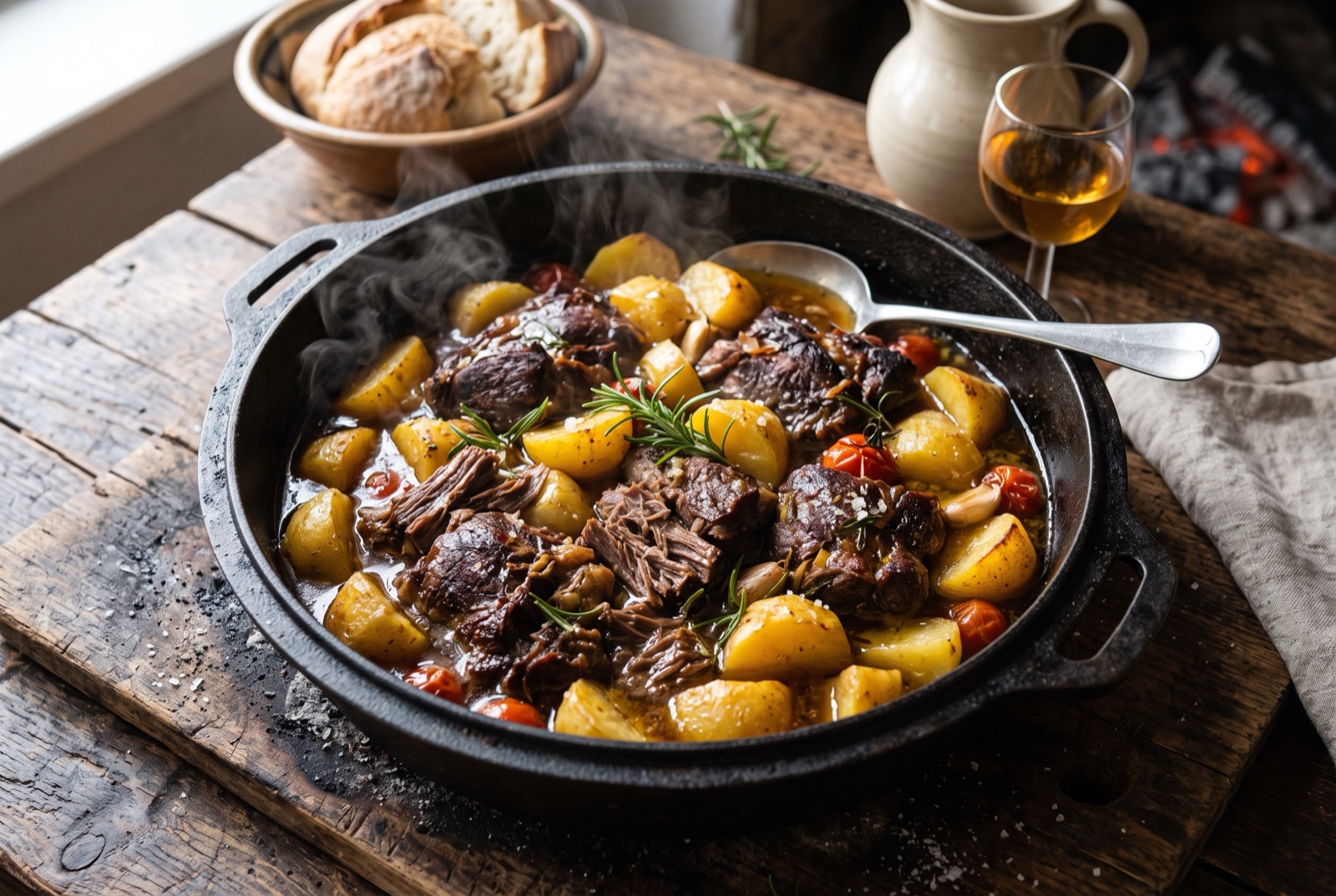
Croatia2 hr 35 min
Ispod Peke
Croatian Veal and Potatoes Baked Under a Bell
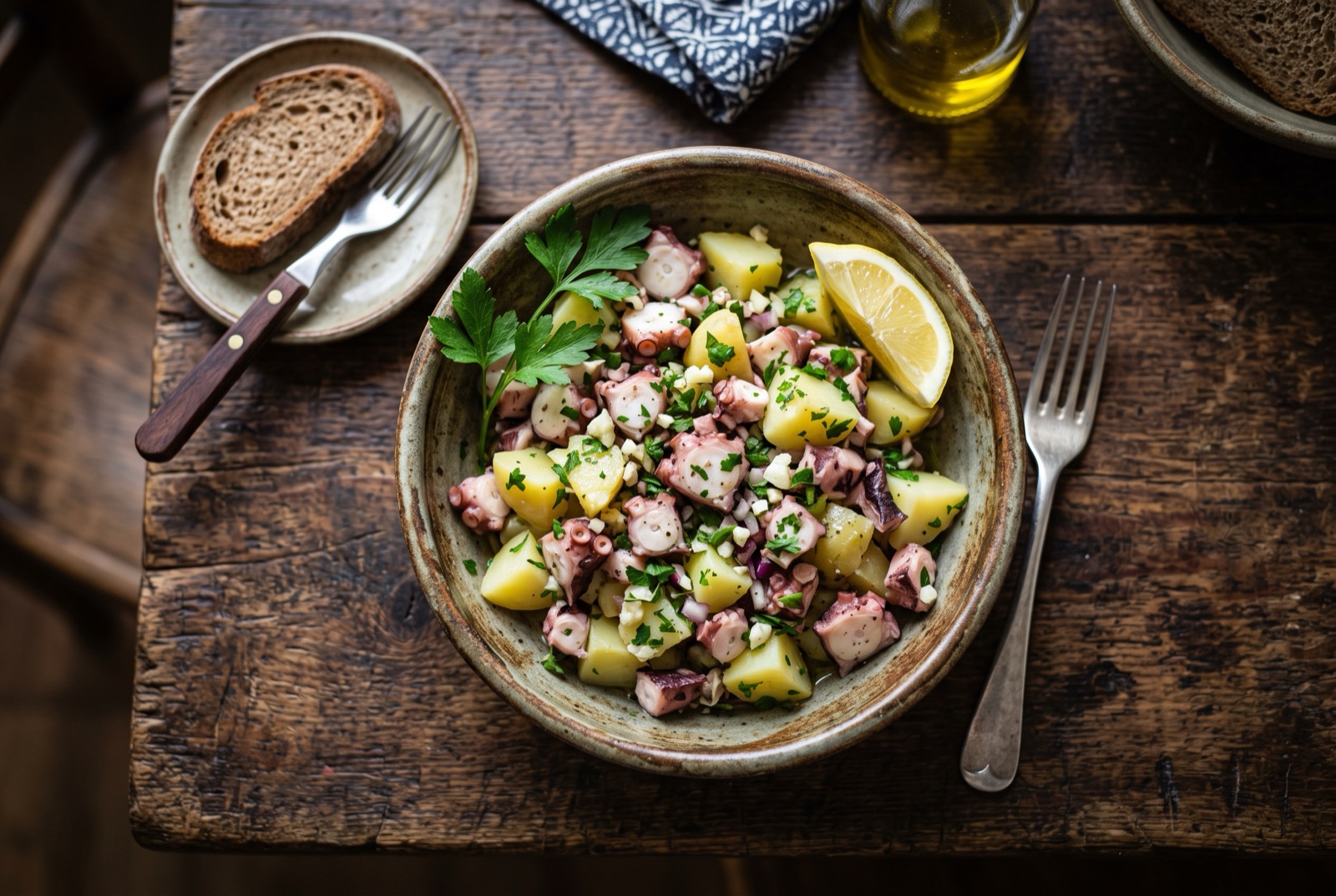
Croatia2 hr 25 min
Salata od Hobotnice
Dalmatian Octopus and Potato Salad
Keep exploring Croatia.
Croatia has 9 more dishes in the atlas — Crni Rižot and Fritule, and 7 more.
Recipe by The DishRoute Kitchen · published August 20, 2026 · updated August 20, 2026