Crni Rižot.
Croatian Black Cuttlefish Risotto
Crni rižot · say it: TSER-nee REE-zhot
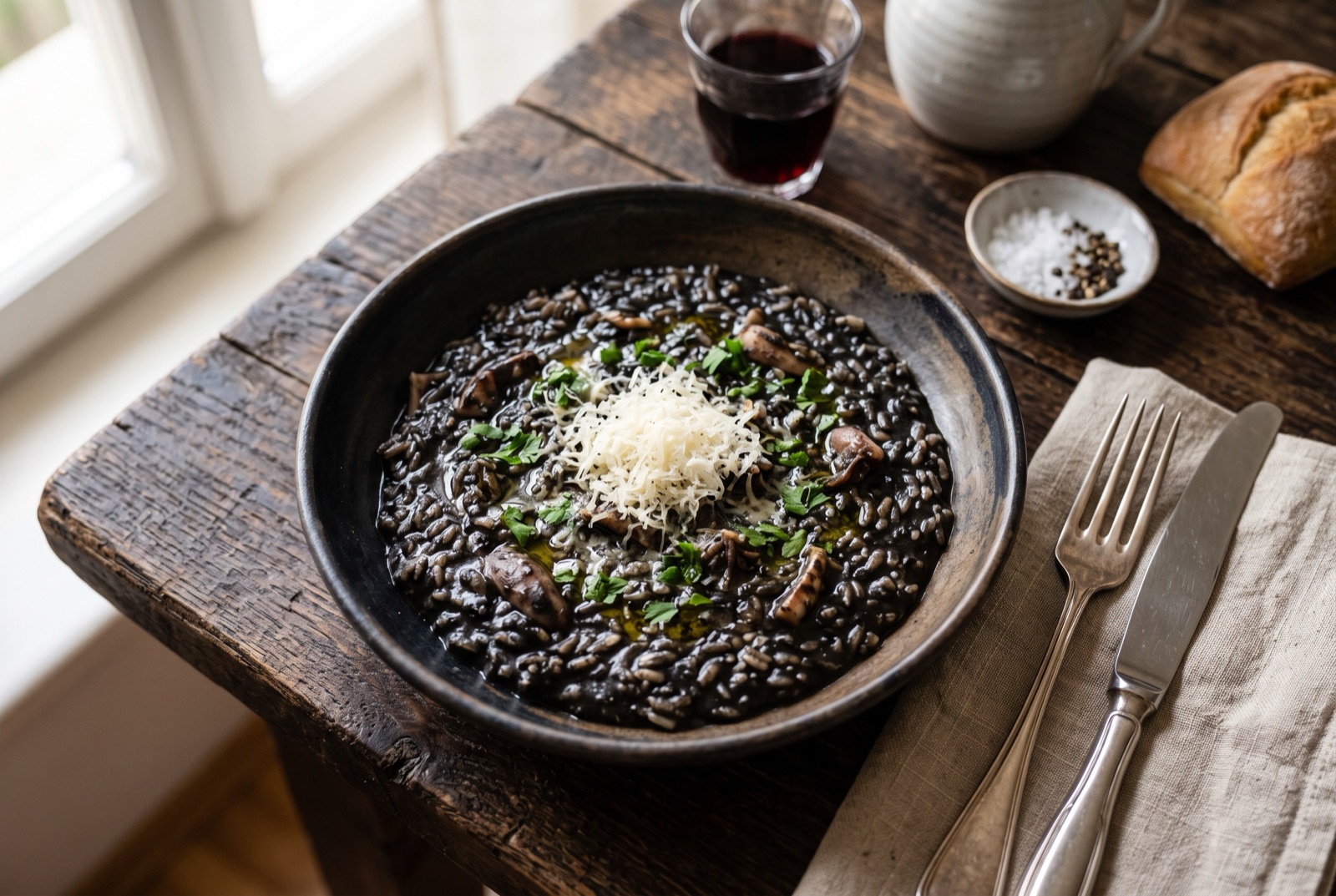
Crni rižot is a squid-ink risotto from the Croatian coast, and it looks alarming on purpose: matte black rice, black lips, black everything. The flavour is far gentler than the colour suggests — clean sea salinity, sweet cuttlefish, garlic and parsley, with the ink adding a faint mineral bitterness that keeps the whole thing from tasting merely rich. Unlike an Italian risotto it is usually cooked a little looser and, in a move that scandalises visiting Italians, finished with grated hard cheese even though it is full of seafood. Dalmatians consider this settled. It takes about an hour, most of it stirring, and the only genuinely tricky part is convincing your fishmonger to save you the ink sacs.

- Gate
- CroatiaDalmatia
- Prep
- 20 min
- Cook
- 45 min
- Total time
- 1 hr 5 min
- Serves
- 4
- Status
- Medium
- Nutrition / serving · estimated
- Calories 540 kcal
- Protein 34 g
- Carbs 68 g
- Fat 15 g
- Fiber 2 g
- Sodium 980 mg
Why this recipe works.
- Cooks the cuttlefish in two stages — a first slow sweat, then a return at the end — so it comes out tender rather than rubbery.
- Uses real fish stock rather than water, which is the difference between a black risotto and black rice.
- Explains what the ink actually contributes and how to season around its natural saltiness.
- Takes a clear position on the cheese argument and tells you exactly what happens if you leave it out.
Ingredients.
13 itemsFor the risotto
To finish
Equipment
- Wide heavy-bottomed pan or shallow casserole
- Second pan for keeping stock hot
- Wooden spoon
Instructions.
Prepare the cuttlefish and ink
Cut the cleaned cuttlefish bodies into 1 cm strips and halve the tentacles. Sit the ink sacs in a small bowl with 3 tablespoons of the hot stock, pierce them with a knife tip and stir until the liquid is uniformly black, then discard the empty sacs.
Tip Ink stains everything it touches. Work over the sink and keep a wet cloth nearby.
Sweat the cuttlefish
Warm 3 tablespoons of the olive oil in a wide pan over medium-low heat, add the cuttlefish with a pinch of salt and cook for 10 minutes. It will tighten and release a cloudy liquid — keep going until that liquid has almost cooked away and the pieces smell sweet rather than briny.
Build the base
Push the cuttlefish to one side, add the remaining oil, the onion and the garlic, and cook for 6–7 minutes until the onion is translucent and slack with no colour on it. Stir in the tomato paste and let it fry for a minute until it turns from bright red to brick.
Toast the rice
Tip in the rice and stir for 2 minutes until every grain is coated in oil and the edges have turned glassy while the centres stay chalky white. Pour in the white wine and let it bubble away almost completely, scraping the base as it goes.
Add the ink and the stock
Stir in the loosened ink — the pan will go instantly and dramatically black — then begin adding hot stock a ladle at a time, stirring often and waiting until each addition has been absorbed before adding the next. Keep the pan at a steady, lively bubble.
Tip The rice should always look wet, never dry or swimming. If a spoon dragged across the base leaves a trail that closes slowly, the consistency is right.
Cook to the right bite
Continue for 16–18 minutes, until the grains are tender at the edge with a faint firm core and the risotto slumps when you shake the pan. Taste as you go; you may not need all the stock, and you may need a splash of hot water beyond it.
Finish off the heat
Take the pan off the heat, beat in the last of the olive oil, the parsley and the grated cheese if using, and let it sit covered for 2 minutes. Season with salt and pepper only now — the ink and stock have already brought most of it.
Serve immediately
Spoon onto warm plates, where it should spread slowly into a loose pool rather than hold a mound. Add a final scatter of parsley, a lemon wedge on the side, and take it to the table before it tightens.
Tips from our kitchen.
- Buy whole cuttlefish and ask the fishmonger to clean them but keep the ink sacs. Two sacs give a deep grey-black; four give the proper matte ink colour.
- Cuttlefish is tender in the first two minutes or after twenty-five, never in between. Sweat it slowly at the start and it lands in the tender zone by the time the rice is done.
- Keep the stock at a bare simmer in a separate pan. Cold stock hitting hot rice stops the cooking and gives you chalky grains with mushy edges.
- Salt at the very end. Ink, stock and cheese all bring salt, and a risotto seasoned early can end up inedible.
- Stop cooking when the rice is one notch firmer than you want — it keeps absorbing after the pan leaves the heat and a perfect pot turns to porridge in three minutes.
- A Dalmatian rižot should slump when spooned onto a plate, not stand up in a dome. If it holds a shape, loosen it with another ladle of hot stock.
Substitutions.
- Fresh cuttlefish ink sacs → 8 g (2 sachets) of bottled squid ink
- Bottled ink is more concentrated and often salted. Start with one sachet, judge the colour, and add more before you add any salt.
- Cuttlefish → Squid, or half squid and half cuttlefish
- Squid is more widely sold and cooks faster — add it in the final 10 minutes instead of at the start, or it turns to elastic.
- Grated hard cheese → Omit entirely, and finish with an extra tablespoon of good olive oil
- This is the Italian route. The risotto is cleaner and more marine, slightly less glossy, and nobody at the table will complain.
Variations.
- With mussels
- A handful of mussels steamed open separately and stirred in at the end, their strained liquor added to the stock — common in island konobas.
- Rižot with shrimp
- Peeled shrimp folded in for the last three minutes, adding sweetness and a shock of pink against the black.
- Extra-garlic Dubrovnik style
- Double the garlic and add a second raw hit of chopped garlic and parsley off the heat, so the finish is sharper and more aromatic.
Storage & reheating.
Best eaten the moment it is made — risotto continues to absorb liquid and a leftover portion sets solid in the fridge. If you do have leftovers they keep 2 days refrigerated; reheat in a pan with a splash of hot stock or water, stirring until it loosens back to a slump. Do not freeze: the rice turns grainy and the cuttlefish goes tough. Cold leftovers can be rolled into balls, breaded and fried into black arancini, which is arguably a better second life than reheating.
Serve with
Crusty white bread, a plainly dressed green salad, and a cold glass of Malvazija or Pošip.
The story behind Crni Rižot.
The dish belongs to the Adriatic as a whole rather than to any one shore. Venetian cooks were making risotto nero long before Croatia existed as a state, and the same waters, the same cuttlefish and the same rice supply routes produced parallel versions all along the eastern coast — which is why arguing about whether crni rižot is Croatian or Italian tends to go nowhere useful. What is not in dispute is that the eastern Adriatic developed its own habits with it. Croatian versions lean harder on garlic and parsley, are often made with a mix of cuttlefish and squid, and are typically served softer and wetter than the Venetian standard.
Cuttlefish, not squid, is the traditional animal. Sipa in Croatian, it has a larger ink sac, denser flesh and a sweeter flavour than squid, and it needs a slightly longer, gentler cook to turn tender. Fishermen along the coast catch them in shallow water in spring, and the whole point of buying them whole is the ink: a small silvery sac tucked among the innards, which is lifted out intact, pierced, and squeezed into the pot. Supermarket sachets of ink work perfectly well and are far less messy, but they are seasoned differently, so taste before adding all of it.
The cheese question is the fun part. Standard Italian orthodoxy says never combine cheese and seafood, and plenty of Italian cooks would refuse to grate parmesan into a black risotto. In Dalmatia a spoon of grated hard sheep or cow cheese goes in at the end with the olive oil, and the result is a rounder, glossier risotto with a savoury edge that many people prefer. This recipe includes it because that is how it is eaten from Rovinj to Dubrovnik — but it is genuinely optional, and the risotto works without it. What is not optional is bread on the table, a chilled glass of Malvazija or Pošip, and a napkin you do not care about.
Questions, answered.
Where do I get cuttlefish ink?
From the cuttlefish itself, if you buy them whole — the ink sits in a small silvery sac among the innards, which you lift out carefully and squeeze into the pot. Otherwise most fishmongers and many supermarkets sell small sachets of bottled squid ink, which work perfectly and keep in the fridge for months. Bottled ink is usually saltier, so taste before you season.
Why is my cuttlefish rubbery?
It was cooked for the wrong length of time. Cephalopods are tender for the first minute or two of cooking, then seize up and stay tough for roughly the next twenty minutes before slowly relaxing again. In this recipe the cuttlefish sweats gently from the start and spends over half an hour in the pan, which puts it past the tough phase — a quick five-minute fry does the opposite.
Which rice should I use?
A short-grain risotto rice — arborio, carnaroli or vialone nano. Carnaroli holds its bite best and is the most forgiving if you overshoot the timing. Long-grain rice will not release the starch that gives the dish its creaminess, and basmati or jasmine rice will simply taste wrong.
Is putting cheese in a seafood risotto really traditional?
In Dalmatia, yes — a spoon of grated hard cheese goes in at the end alongside the olive oil, and it is completely standard along the Croatian coast. Italian tradition rejects cheese with seafood, so this is one of the few places the two neighbouring cuisines openly disagree. The dish works both ways; try it with cheese once and decide for yourself.
Can I make it ahead for a dinner party?
Partly. Cook the cuttlefish base and prepare the stock in advance, then start the rice about 25 minutes before you want to eat. Some cooks parcook the rice halfway, spread it on a tray to cool, and finish it to order — a restaurant trick that works, though the texture is very slightly less creamy than a risotto taken straight through.
You might also like.
All recipes →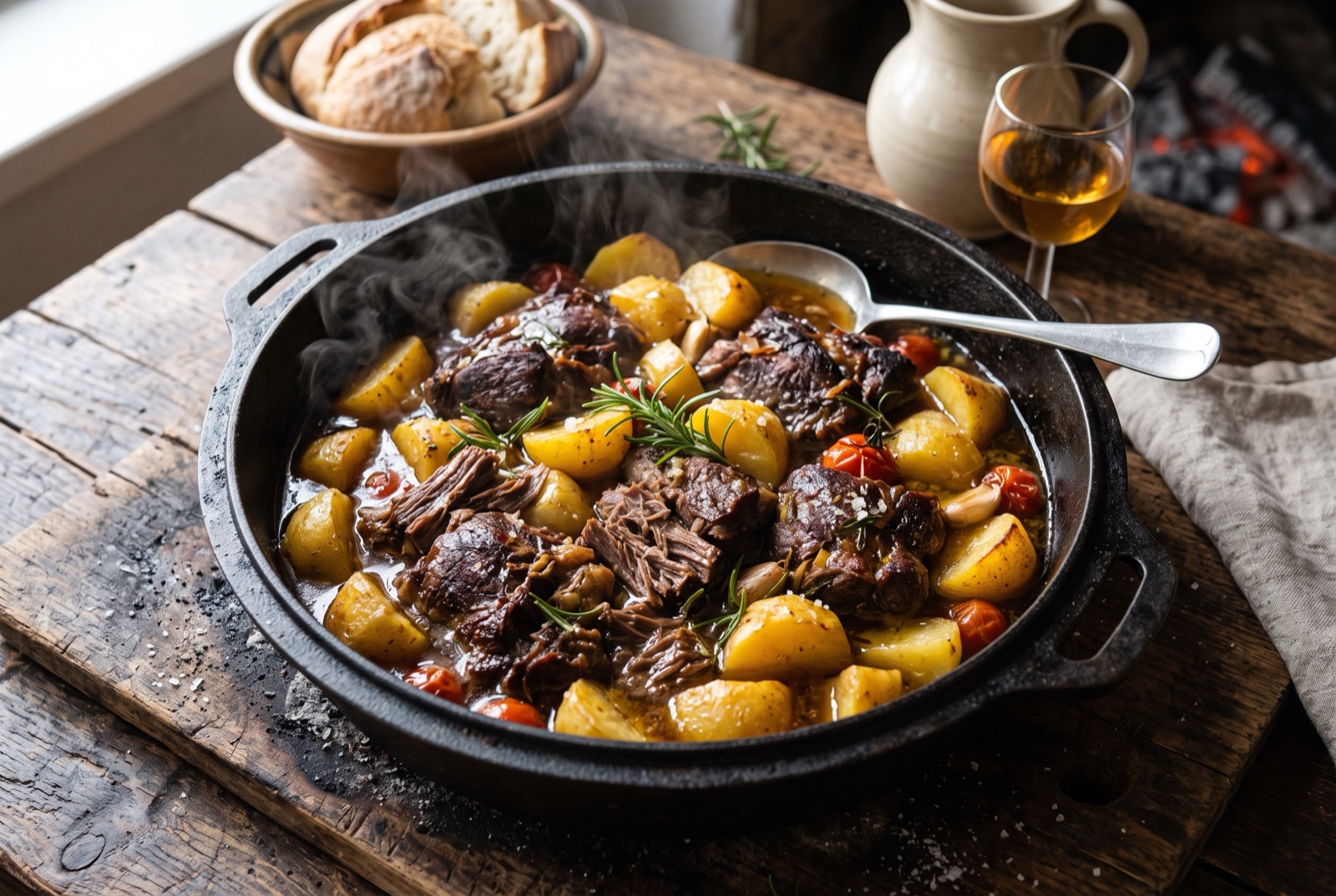
Croatia2 hr 35 min
Ispod Peke
Croatian Veal and Potatoes Baked Under a Bell
Croatia2 hr 25 min
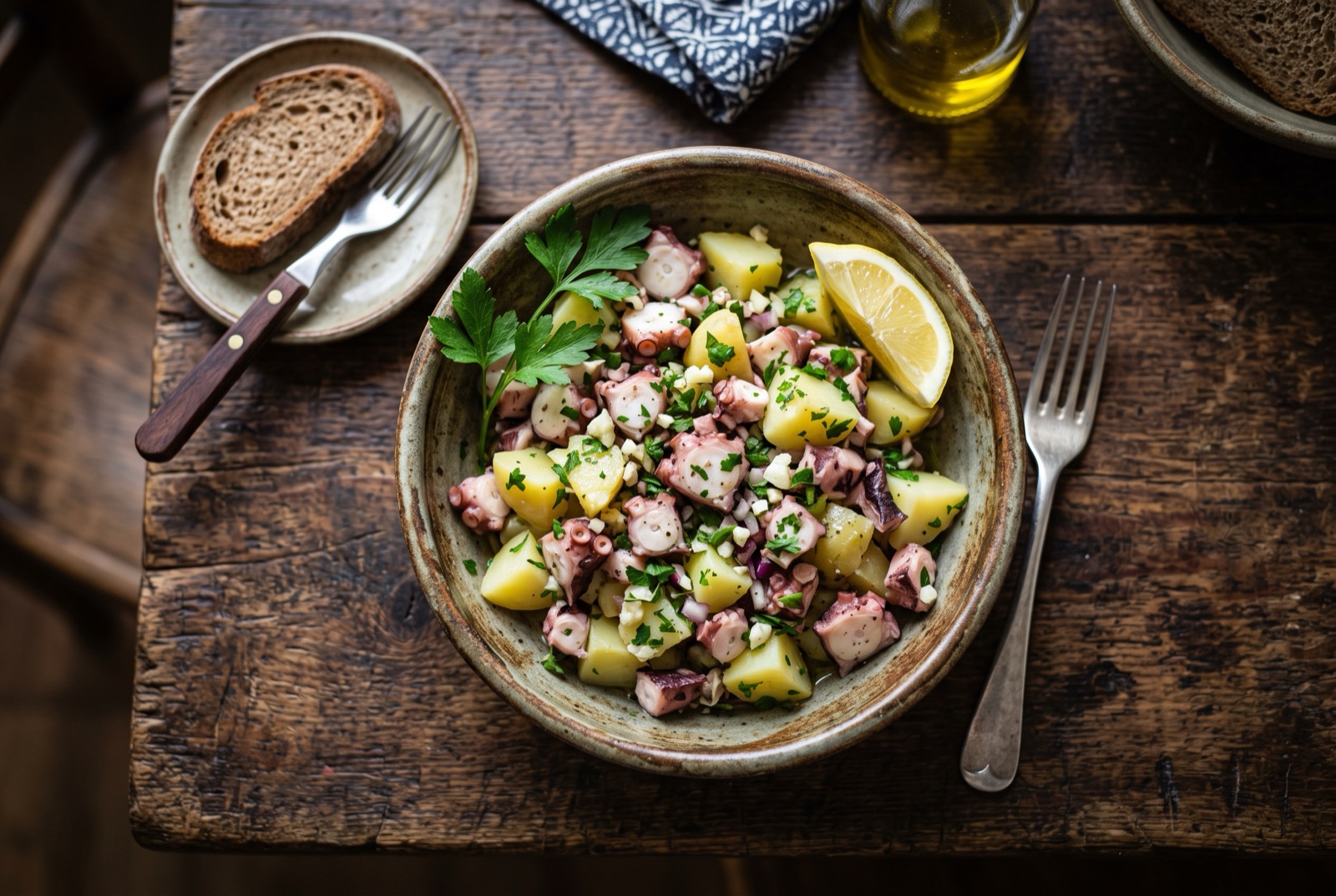
Salata od Hobotnice
Dalmatian Octopus and Potato Salad
Croatia1 hr 30 min
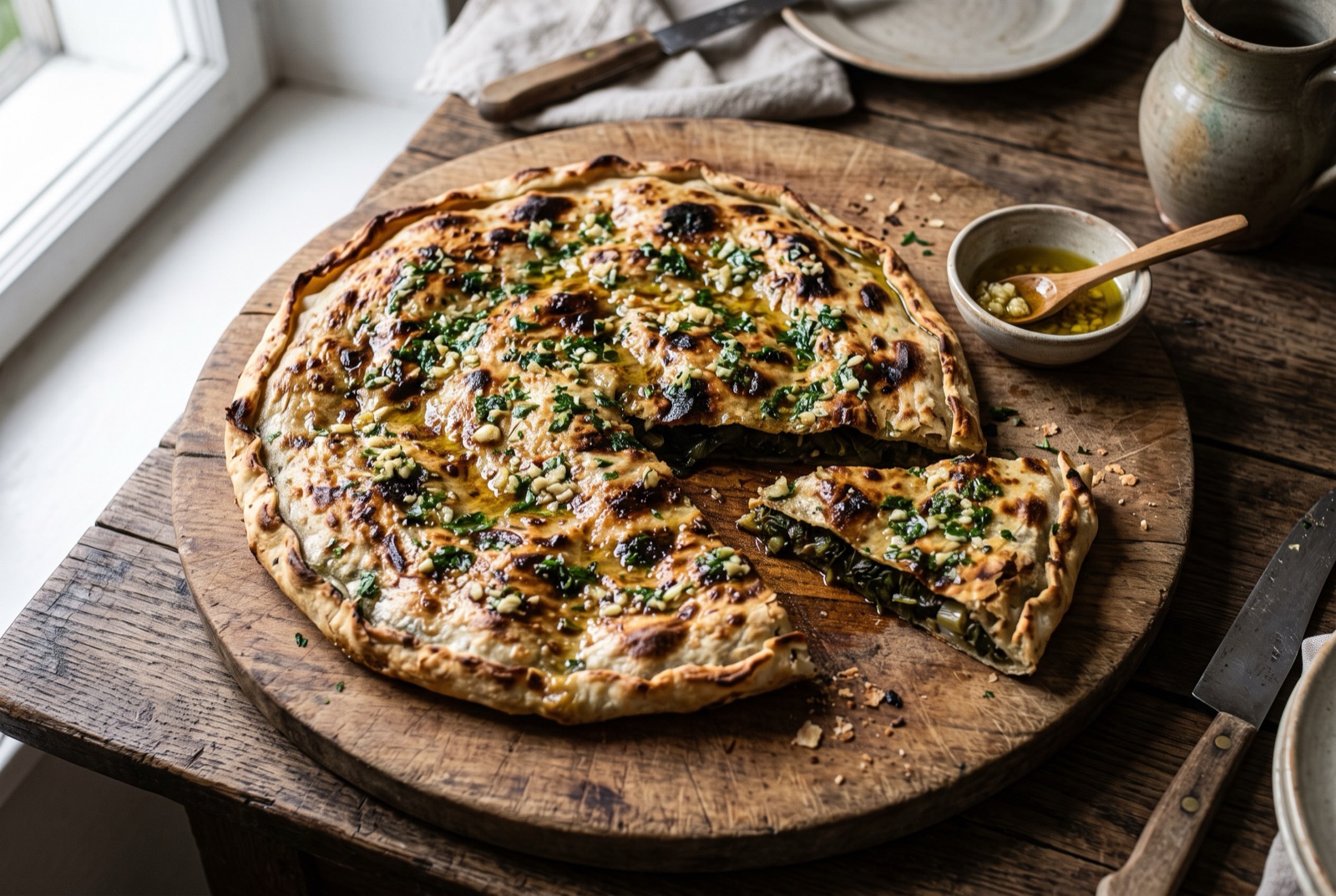
Soparnik
Poljica Chard Pie Baked on the Hearth
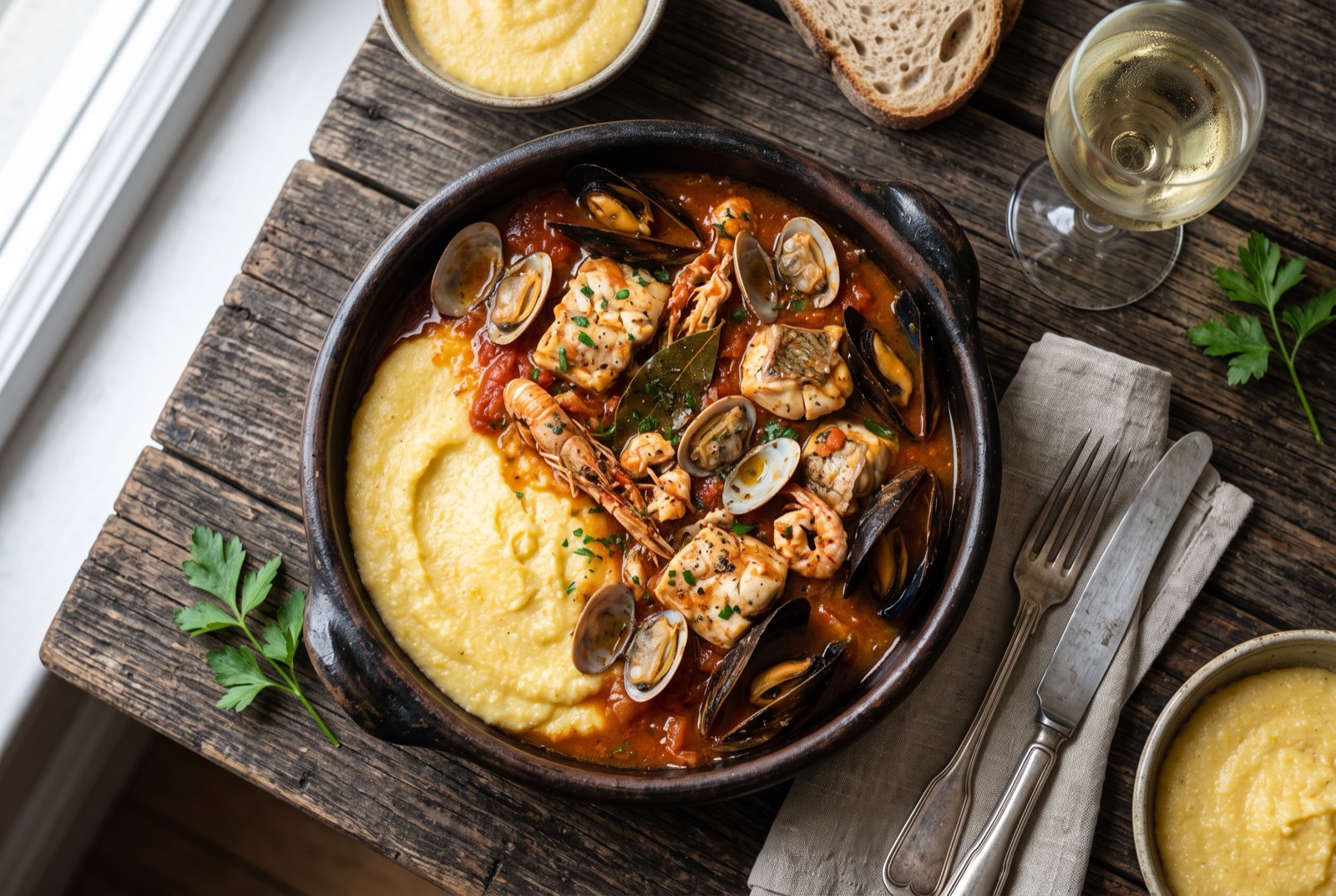
Croatia1 hr 15 min
Brudet
Adriatic Mixed Fish Stew with Soft Polenta
Keep exploring Croatia.
Croatia has 9 more dishes in the atlas — Brudet and Fritule, and 7 more.
Recipe by The DishRoute Kitchen · published August 20, 2026 · updated August 20, 2026