Caldillo de Congrio.
Chilean Conger Chowder
Caldillo de congrio · say it: kahl-DEE-yoh deh KOHN-gree-oh
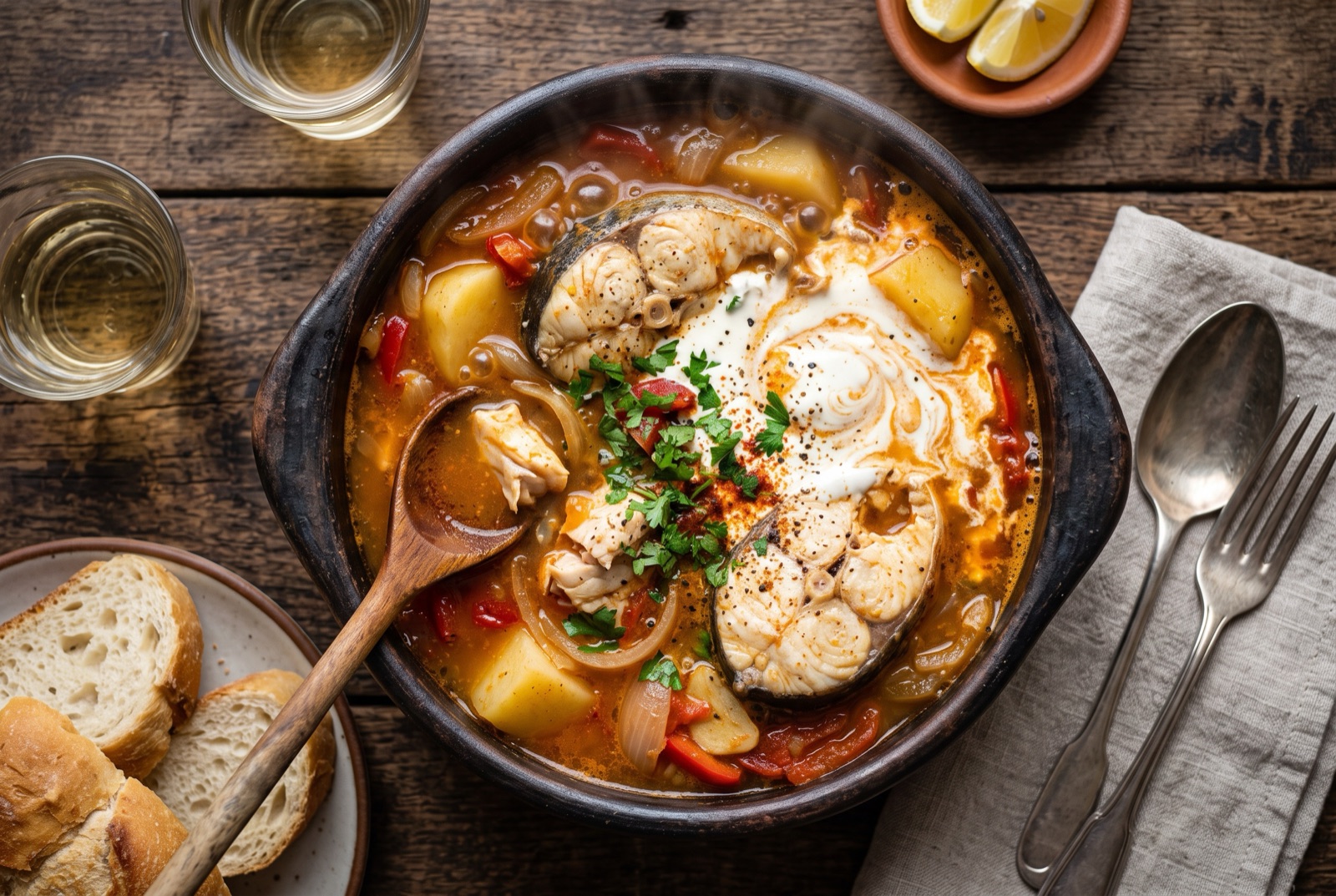
Caldillo is a fisherman's soup made substantial enough to be lunch. A soffritto of onion, garlic and tomato is softened with paprika and cumin, moistened with white wine and fish stock, and left to take on the flavour of the fish bones; potatoes cook in it until they start to give up their starch; and only in the last ten minutes do thick steaks of congrio go in, poached gently so they stay in one piece. Each bowl gets a spoonful of cream stirred through at the table, which turns the broth from red-gold to a soft coral and rounds off the acidity of the wine and tomato. It is eaten with bread and a wedge of lemon, in a port, preferably outdoors.

- Gate
- ChileValparaíso
- Prep
- 25 min
- Cook
- 40 min
- Total time
- 1 hr 5 min
- Serves
- 4
- Status
- Medium
- Nutrition / serving · estimated
- Calories 560 kcal
- Protein 44 g
- Carbs 36 g
- Fat 24 g
- Fiber 5 g
- Sodium 780 mg
Why this recipe works.
- Fish trimmings are simmered into the broth first, so the soup tastes of congrio rather than of vegetables and wine.
- The fish goes in whole and late, poached below a boil, which is the only way steaks survive intact.
- Cream is stirred in off the heat by the bowl, exactly as it is served on the coast, so the broth never splits.
- A tested substitution list for congrio, starting with the fish that is genuinely its closest relative.
Ingredients.
16 itemsFor the fish
For the broth
To finish
Equipment
- Wide heavy pot or Dutch oven
- Fine sieve for the stock
- Ladle
Instructions.
Simmer a quick fish stock
Put the fish head, bones and trimmings in a pan with the water and bay leaves, bring to a gentle simmer and cook 20 minutes, skimming any foam. Strain and set the broth aside; discard the bones once they have given everything up.
Tip Twenty minutes is the limit — fish bones simmered longer turn the stock bitter and glue-like.
Build the soffritto
Heat the olive oil in a wide pot and cook the onion, garlic and carrot over medium heat for 8 minutes, until the onion is translucent and the pot smells sweet. Stir in the paprika and cumin and fry 30 seconds, just until fragrant, without letting the paprika darken.
Add tomato and wine
Tip in the chopped tomatoes and cook 5 minutes, pressing them with the spoon until they collapse and the mixture looks jammy. Pour in the white wine and let it bubble hard for 2 minutes, until the sharp alcohol smell has burned off.
Cook the potatoes in the broth
Pour in the strained fish stock, add the potato slices and season with salt and pepper. Simmer 15 minutes, until the potatoes are tender and the edges of a few slices have started to fray and cloud the broth slightly — that starch is what gives caldillo its body.
Poach the fish
Taste and correct the seasoning now, then lower the heat until the surface barely moves and slide in the fish steaks in a single layer. Cover and poach 8–10 minutes, until the flesh turns opaque to the bone and separates into large flakes when nudged, but still holds as a steak.
Tip Swirl the pot rather than stirring. A spoon will break the steaks into rubble.
Serve with cream and lemon
Lift a fish steak into each bowl, ladle the broth and potatoes around it, and stir a generous spoonful of cream into each portion at the table. Scatter cilantro over the top and serve with lemon wedges and bread.
Tips from our kitchen.
- Ask for the fish cut into thick steaks across the bone, at least 3 cm. Thin fillets flake apart in the broth and disappear.
- Keep the head, bones and trimmings and simmer them for twenty minutes into the stock — this is where most of the flavour of the finished soup comes from.
- Never let the pot boil once the fish is in. Bubbles should barely break the surface, or the flesh turns fibrous and the broth clouds.
- Slice the potatoes reasonably thick and let two of them break down slightly; the released starch is what gives caldillo its body.
- Add the cream at the table, one spoonful per bowl. Cream boiled into the pot separates into grains and dulls the tomato.
- Season the broth before the fish goes in, not after — once the fish is poaching you cannot stir the pot without breaking it.
Substitutions.
- Congrio → Kingklip, monkfish, hake steaks, cod loin or halibut
- Kingklip is the same genus as Chilean congrio and by far the closest match. Any firm white fish cut thick will work; avoid soft, flaky fish such as tilapia or plaice, which will not survive the poach.
- Fish stock → Water plus the fish trimmings, or a light chicken stock
- Bottled fish stock is often oversalted. If you have the fish head and bones, water is genuinely enough — twenty minutes of simmering makes a better broth than any carton.
- Cream → Leave it out entirely
- Plenty of coastal kitchens serve caldillo without cream and consider it cleaner that way. The broth is thinner and sharper, and the fish comes forward.
Variations.
- Caldillo with shellfish
- A handful of mussels or a few prawns dropped in for the final five minutes, which sweetens the broth and turns it closer to a mariscal.
- Paila marina
- The related Chilean seafood soup, made with a mixture of shellfish and fish rather than a single steak, served in the shallow clay paila it takes its name from.
- Caldillo con merkén
- A pinch of the smoked Mapuche chilli stirred into the soffritto, which adds a low, smoky heat that suits the tomato particularly well.
Storage & reheating.
Caldillo is at its best within the hour and does not improve with keeping, because the fish continues to firm up in the hot liquid. If you have leftovers, lift the fish out, refrigerate it separately from the broth, and reassemble when reheating — no more than 24 hours. Warm the broth to steaming, then slide the fish in for a minute to heat through. Do not freeze it: potato goes grainy, the fish turns woolly and any cream in the bowl separates on thawing. The broth alone, made without fish or cream, freezes well for a month.
Serve with
Crusty marraqueta for the broth, lemon wedges, and a glass of cold Chilean sauvignon blanc.
The story behind Caldillo de Congrio.
Congrio is the fish this dish is named for, and it is worth clearing up what it actually is. Despite the English label conger eel, the Chilean congrio is not a true eel at all but a cusk-eel of the genus Genypterus, sold in three market varieties — colorado, negro and dorado — with dense white flesh that holds together in a hot broth far better than most white fish. Its closest relative on European and South African counters is kingklip, which belongs to the same genus and behaves almost identically in a pot.
The soup owes much of its fame to Pablo Neruda, who wrote the Oda al caldillo de congrio and published it in his Odas elementales in 1954, giving the recipe itself in verse: the fish skinned and cut, the onions, the tomatoes, the cream added at the end. Neruda kept houses on the coast at Isla Negra and in Valparaíso, and the poem reads like someone who had eaten a great many bowls of it in fishing coves rather than restaurants. It is one of the rare cases where a national dish has a canonical literary text, and Chilean cooks still cite it as an authority in arguments about whether the cream belongs.
Beyond the poem, caldillo is straightforward coastal cooking with a clear logic. The fish is expensive and delicate, so the broth carries the flavour and the fish is added last; the potatoes make it a meal rather than a starter; the wine and tomato keep it from being heavy. In the caletas — the small fishing coves that dot the Chilean shore — it is served in whatever the kitchen has, often a clay bowl, with the fish steak standing proud of the liquid and a bottle of pebre pushed across the table without asking.
Questions, answered.
What fish can I use instead of congrio?
Kingklip is the closest, since it belongs to the same genus as Chilean congrio and has the same dense flesh. Monkfish, hake, cod loin, halibut and any firm white fish cut into thick steaks all work well. What matters is thickness and firmness — the fish must hold together through eight to ten minutes of gentle poaching without flaking apart.
Is congrio actually an eel?
No. It is commonly translated as conger eel, but the Chilean congrio is a cusk-eel of the genus Genypterus, unrelated to the true congers of the Atlantic. It is sold in Chile as congrio colorado, negro or dorado depending on the species, and all three have firm white flesh that behaves in a pot much more like monkfish than like eel.
When do I add the cream?
Off the heat, ideally by the bowl at the table. A spoonful stirred into each serving softens the acidity of the wine and tomato while leaving the broth intact. Cream simmered in the pot is likely to split against the tomato's acidity, giving a grainy texture, and it flattens the flavour of the fish.
Why did my fish fall apart in the soup?
Either the pieces were too thin or the broth was boiling. Use steaks at least three centimetres thick, lower the heat until the surface barely trembles before the fish goes in, and do not stir once it is there — tilt and swirl the pot instead. Overcooking does the rest of the damage, so start checking at eight minutes.
Can I make caldillo ahead for guests?
Make the broth ahead, up to a day in advance, and refrigerate it with the potatoes in place. Bring it back to a simmer just before serving and poach the fish then, which takes under ten minutes. Fish cooked in advance and reheated in the soup loses its texture completely, so this is the one step that has to happen at the last minute.
You might also like.
All recipes →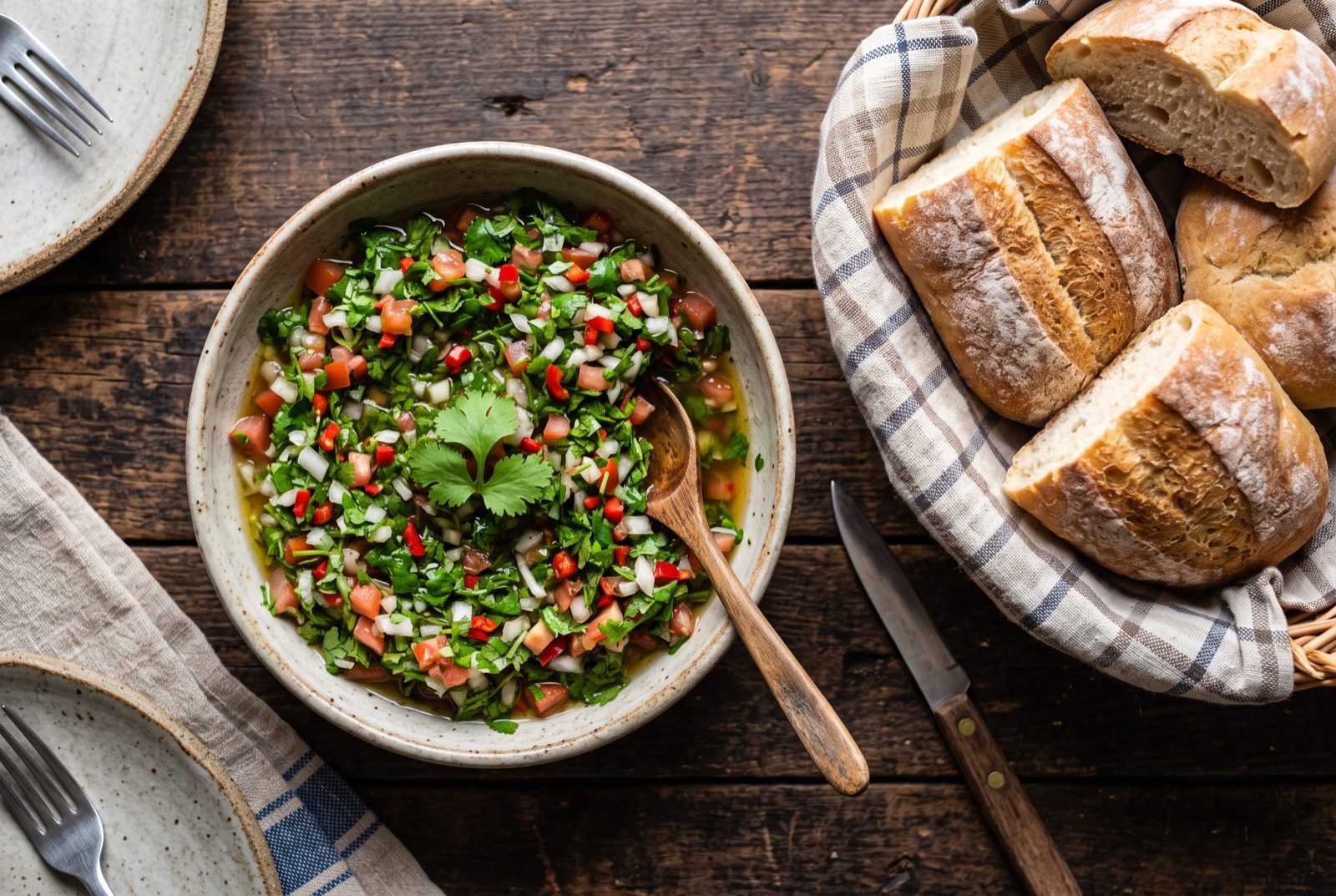

Keep exploring Chile.
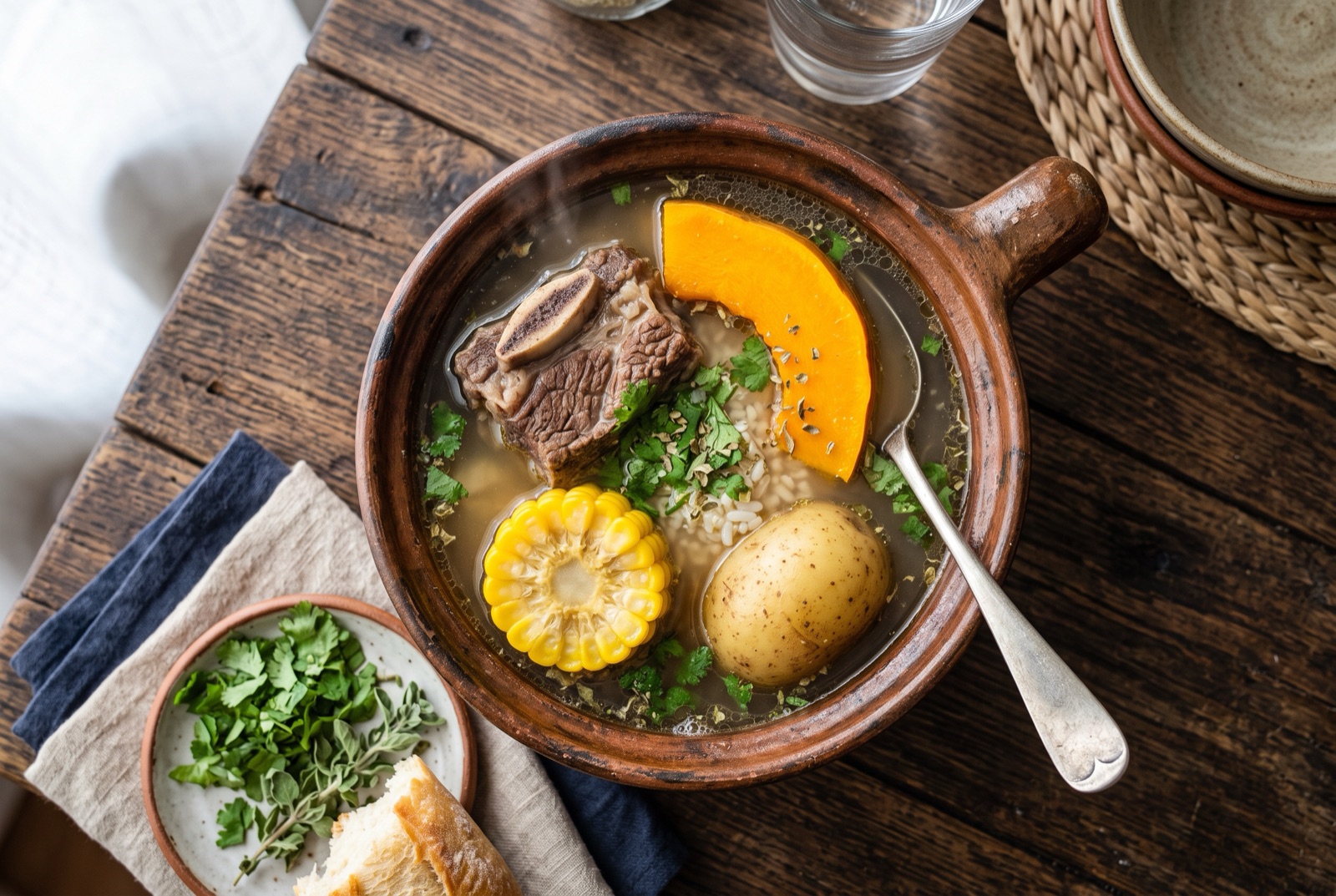
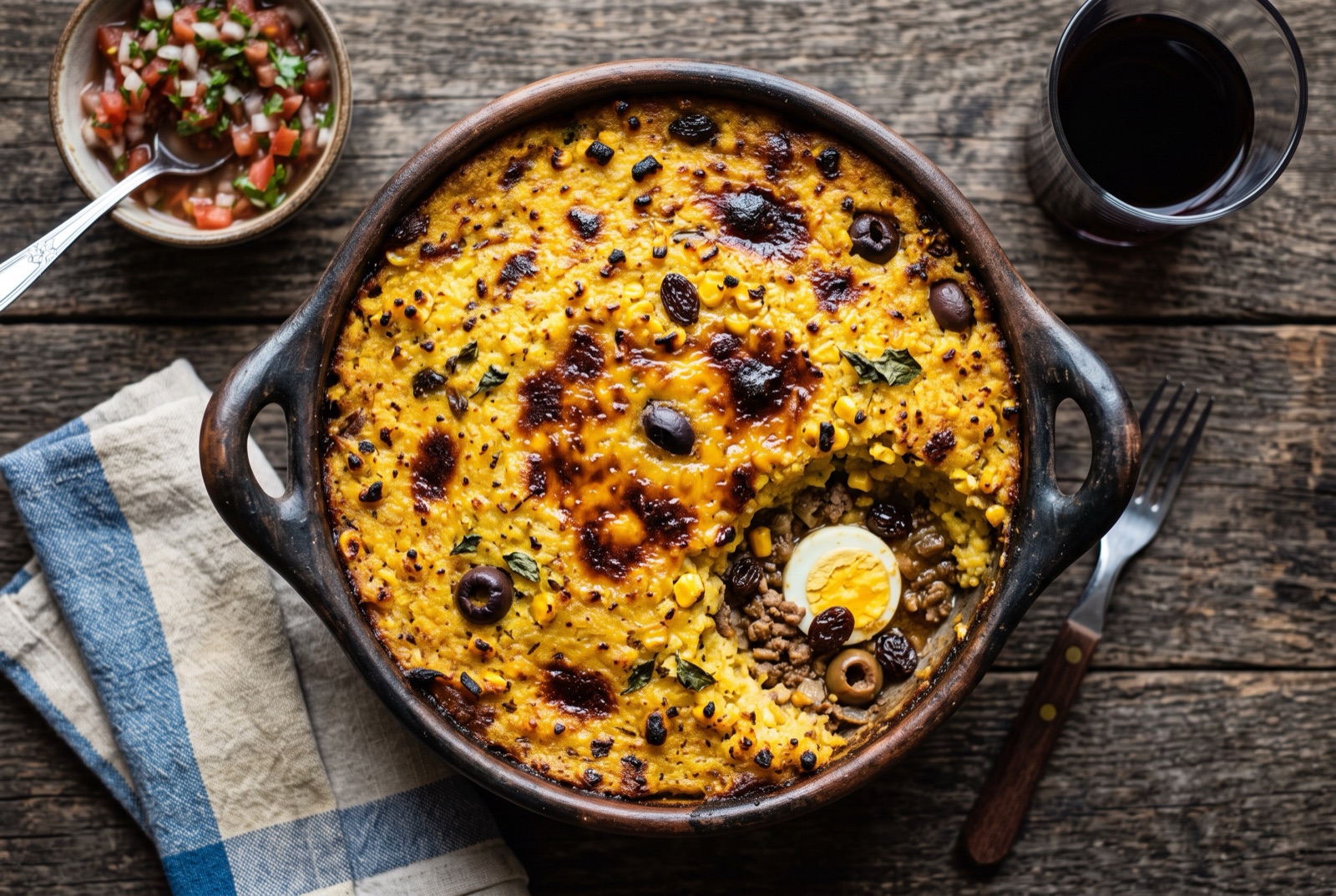
Chile has 9 more dishes in the atlas — Cazuela de Vacuno and Completo Italiano, and 7 more.
Recipe by The DishRoute Kitchen · published August 20, 2026 · updated August 20, 2026