Pastel de Choclo.
Chilean Corn-Topped Beef Casserole
Pastel de choclo · say it: pahs-TEL deh CHOH-kloh
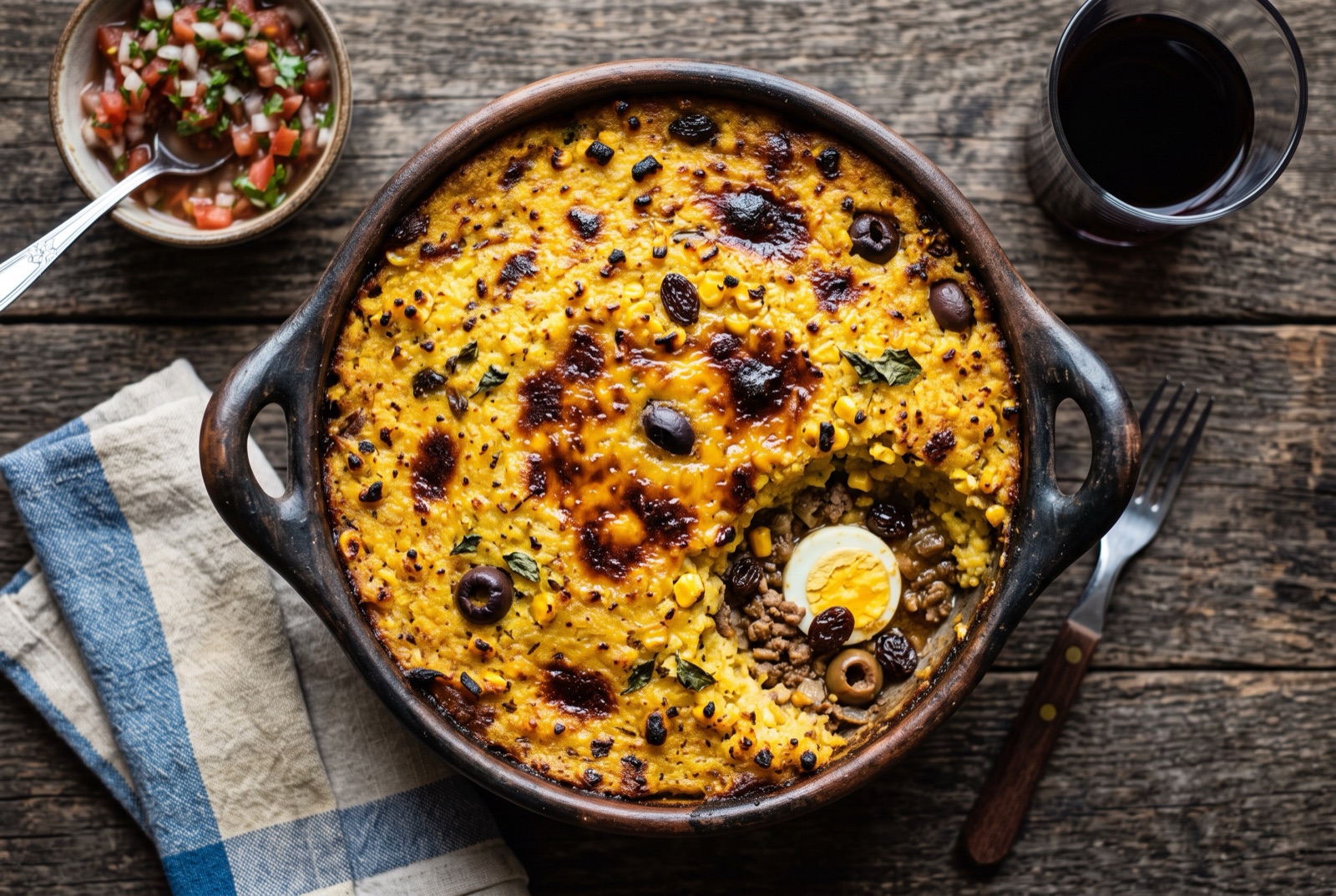
Pastel de choclo is a summer casserole with a corn lid instead of a pastry one. Underneath sits pino: beef and a great deal of onion sweated with cumin and paprika, studded with black olives, raisins, a piece of chicken and wedges of hard-boiled egg. Over it goes a thick paste of fresh corn kernels ground with basil and cooked briefly in milk until it holds a furrow. A dusting of sugar on the surface caramelizes under high heat into freckled brown patches, and that sweet-savoury collision — sugary corn crust, salty meat, sharp olive, sweet raisin — is the entire point of the dish. It is served straight from the dish it baked in, blistering hot, with a tomato salad on the side.

- Gate
- ChileZona Central
- Prep
- 40 min
- Cook
- 1 hr 5 min
- Total time
- 1 hr 55 min incl. 10 min rest
- Serves
- 6
- Status
- Medium
- Nutrition / serving · estimated
- Calories 610 kcal
- Protein 34 g
- Carbs 52 g
- Fat 29 g
- Fiber 6 g
- Sugar 18 g
- Sodium 720 mg
Why this recipe works.
- The pino is cooled before assembly so its juices set, keeping the corn layer from sinking into wet meat.
- Corn paste is cooked with milk and butter before it goes in the dish, so the top bakes to a crust instead of a raw, grainy mush.
- Honest substitution for choclo, with the cornmeal correction that keeps sweetcorn from turning the topping sweet and loose.
- Ratios built for a table of six from one dish, with a finishing method for either broiler or oven.
Ingredients.
18 itemsFor the pino
To assemble
For the corn topping
Equipment
- Wide ovenproof baking dish, about 30 × 20 cm
- Food processor or blender
- Large heavy skillet
Instructions.
Sweat the onions
Warm the oil in a wide skillet over medium-low heat and add 700 g of diced onion with a good pinch of salt. Cook for 15 minutes, stirring often, until the onion has collapsed to about half its volume, turned glassy and started to smell sweet rather than sharp. Do not let it colour.
Build the pino
Raise the heat, add the beef and break it up with a wooden spoon until it loses its raw colour, about 5 minutes. Stir in the cumin, paprika and oregano and fry for one minute, until the pan smells toasted and the fat turns orange. Scatter over the flour, pour in the stock, and simmer 10 minutes until the mixture is juicy but no longer soupy. Season firmly with salt and pepper.
Tip Taste now and over-season slightly — the corn layer above it is unsalted and will mute everything.
Cool the filling
Spread the pino in the baking dish and refrigerate for at least 20 minutes, until the surface no longer looks glossy with loose liquid. Tuck the chicken pieces, egg quarters, olives and drained raisins into the meat so they sit level with it.
Grind the corn
Blitz 1.2 kg of corn kernels with the basil in a food processor to a coarse, still slightly nubbly paste — stop before it becomes smooth. Work in batches so the blade actually cuts rather than spins.
Cook the corn paste
Melt the butter in a saucepan, add the corn paste and milk with a teaspoon of salt, and cook over medium heat for 8–10 minutes, stirring constantly with a wooden spoon. It is ready when a spoon drawn across the base leaves a trail that holds open for a full second and the paste mounds instead of running off the spoon.
Tip Keep stirring the corners of the pan — corn starch catches and scorches fast, and burnt corn taints the whole topping.
Assemble and bake
Spoon the hot corn paste over the chilled pino in dollops and spread it gently to the edges with the back of a wet spoon, sealing it against the sides of the dish. Bake at 200°C for 35 minutes, until the topping is set firm to the touch and lightly golden at the rim.
Caramelize the crust
Scatter the sugar evenly over the surface and slide the dish under a hot broiler for 3–5 minutes, watching it constantly, until the sugar has melted and darkened into scattered brown freckles. Rest 10 minutes before cutting so the layers hold their shape on the plate.
Tips from our kitchen.
- Weigh the onion against the meat — they should be roughly equal. Chileans use far more onion than looks reasonable, and it is what keeps the pino from drying out.
- Blitz the corn coarsely, not smooth. A little texture in the topping is correct; a purée bakes into something closer to pudding.
- If your corn paste refuses to thicken, add fine cornmeal a tablespoon at a time until a spoon drawn through it leaves a trail that stays open for a second.
- Basil goes into the corn, never into the meat. Chop it at the last moment, since bruised basil turns the paste grey-green.
- Sprinkle the sugar only after the pastel is fully baked, then blast it under a broiler — added early, it burns before the filling is hot.
- Let it sit ten minutes before serving. Straight from the oven the layers slide apart and the corn is scalding enough to be genuinely unpleasant.
Substitutions.
- Choclo (Chilean starchy corn) → Frozen or fresh sweetcorn kernels plus 3–4 tbsp fine cornmeal
- Sweetcorn has more sugar and less starch, so it tastes sweeter and never thickens on its own. The cornmeal restores the body; cut the sugar on top to two tablespoons to compensate for the extra sweetness.
- Chicken pieces in the filling → Leave them out and increase the beef to 900 g
- The chicken is traditional but not universal — plenty of Chilean households make an all-beef pastel and nobody objects.
- Fresh basil → A tablespoon of dried oregano stirred into the corn
- Not the same aroma, but it keeps the topping from tasting flat. Dried basil is not worth using here; it goes dusty in the milk.
Variations.
- Pastel de choclo vegetariano
- The pino is replaced by mushrooms and lentils browned with the same cumin, paprika and onion base, keeping the olives and egg for their salt and richness.
- Individual pailas
- Built in six small clay or ovenproof dishes instead of one large one. More crust per person, and the traditional way it is served in Chilean restaurants.
- Pastel de jaiba
- A coastal cousin filled with picked crab meat in a white sauce rather than pino, still under the same basil-scented corn lid.
Storage & reheating.
Refrigerate leftovers covered for up to 3 days. Reheat in a 180°C oven for 20 minutes rather than in a microwave, which turns the corn topping rubbery and weeping. The baked pastel freezes acceptably for a month if you skip the sugar crust and add it fresh on reheating, though the corn loses some of its bite. You can also split the work: make the pino up to two days ahead and refrigerate it, then grind the corn and assemble on the day, since corn paste browns and sours quickly once ground.
Serve with
Ensalada chilena — sliced tomato and thin ribbons of onion soaked in cold water, dressed with oil, salt and a little cilantro.
The story behind Pastel de Choclo.
The dish belongs to the Chilean summer and to a specific ingredient: choclo, the large-kerneled starchy corn harvested from January to March. It is not sweetcorn. The kernels are chewier, milkier and far less sugary, and when scraped and ground they release enough starch to thicken themselves into a paste with almost no help. That paste is the shared foundation of three Chilean corn dishes that appear together every year — humitas steamed in husks, pastel de choclo baked over meat, and the corn stirred into porotos granados. When choclo season ends, so does the season for making any of them properly.
The structure of the dish is colonial arithmetic laid over an indigenous staple. Corn, squash and beans were farmed in central Chile long before the Spanish arrived; beef, onion, raisins, olives and the habit of sweetening a savoury dish came with them. Pino, the meat filling shared with empanadas, is generally traced to Mapudungun, the Mapuche language, where the root refers to finely chopped or shredded meat — the name survived even as the contents became Spanish. The result is a casserole that reads as neither indigenous nor European but as a settled negotiation between the two, which is more or less the story of central Chilean cooking in general.
Tradition puts it in individual pailas de greda, the shallow black clay dishes turned in Pomaire, a pottery town southwest of Santiago that supplies much of the country. Clay holds heat so fiercely that a pastel keeps bubbling at the table for several minutes after it arrives, and Chileans warn each other about the first spoonful for good reason. A single large baking dish works exactly as well at home, and the sugar crust behaves the same. What matters far more than the vessel is the ratio: enough onion that the pino stays juicy, and a corn layer thick enough to bake into a crust rather than a skin.
Questions, answered.
Why is there sugar on top of a meat dish?
The sugar is scattered over the corn topping and caramelized under high heat so it forms a thin, freckled crust. Chilean cooking uses sweetness against salt deliberately — the same casserole also contains raisins and olives. The finished pastel is not a sweet dish; the sugar reads as a caramel edge on the corn, the way it does on a crème brûlée lid.
Can I use canned or frozen corn instead of fresh?
Frozen kernels work well and are the practical year-round choice; thaw and drain them first. Canned corn is packed in sweetened brine and gives a soggy, sugary topping, so rinse it thoroughly if it is all you have. In either case add a few tablespoons of fine cornmeal, because supermarket sweetcorn lacks the starch of Chilean choclo and will not thicken by itself.
Why did my corn topping sink into the filling?
Almost always because the meat filling was still warm and loose when the corn went on. Chilean cooks chill the pino so its juices set into a firm layer, then spread the corn paste over it in dollops rather than pouring it. A topping that is too thin also sinks, so cook the corn until it mounds on the spoon before you assemble.
What is pino exactly?
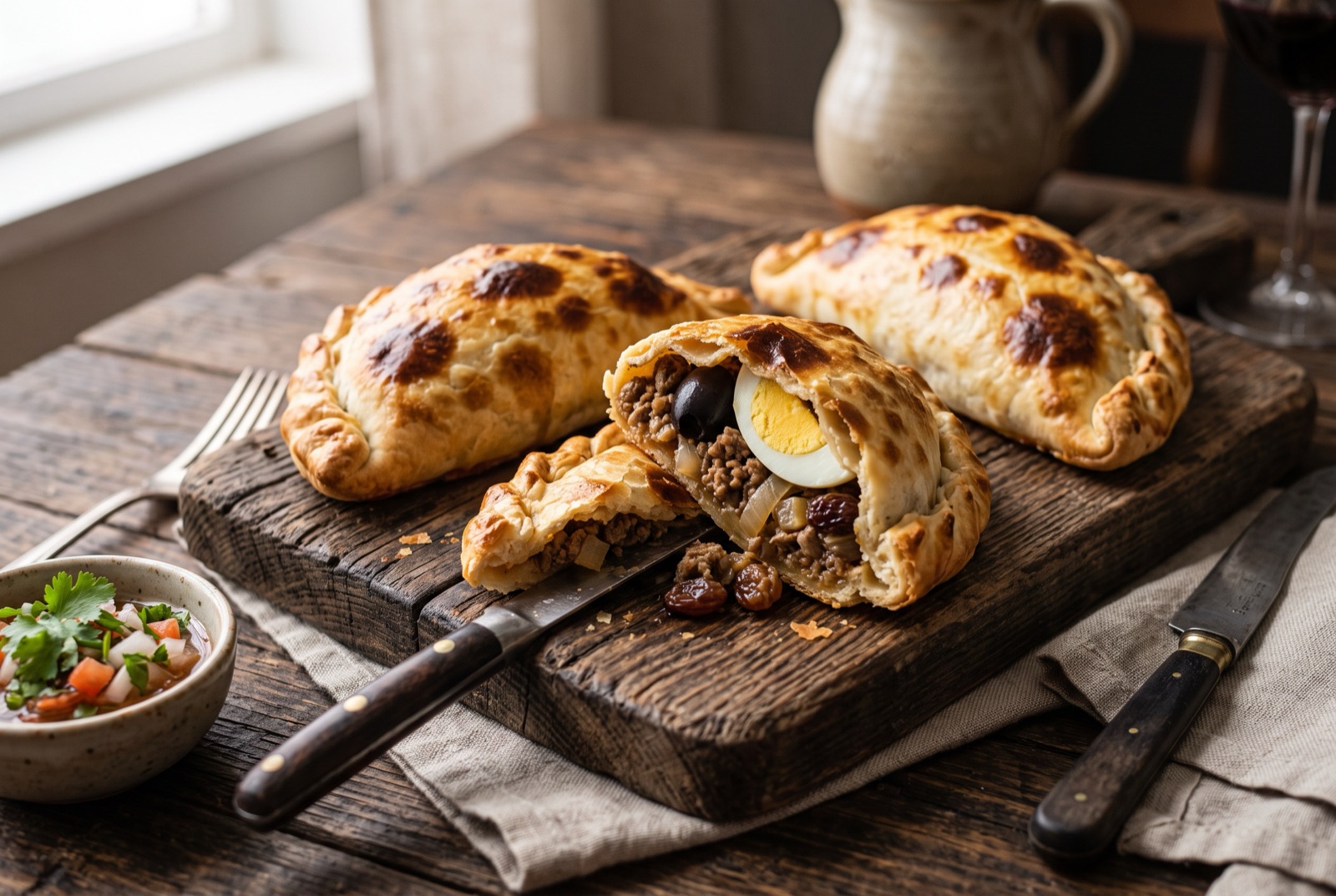
Pino is the Chilean filling of beef and onion in near-equal amounts, seasoned with cumin, paprika and oregano, usually with black olives, raisins and hard-boiled egg. It fills empanadas, sits under the corn in pastel de choclo, and appears in several baked dishes. The name is generally traced to Mapudungun, where the root refers to finely chopped meat.
Do I need a clay dish to bake it in?
No. Clay pailas from Pomaire are traditional and hold heat long enough to keep the dish bubbling at the table, but any ovenproof ceramic, glass or cast-iron dish gives the same result. Choose one that is wide rather than deep, so the corn layer stays around two centimetres thick and browns properly under the broiler.
You might also like.
All recipes →
Keep exploring Chile.
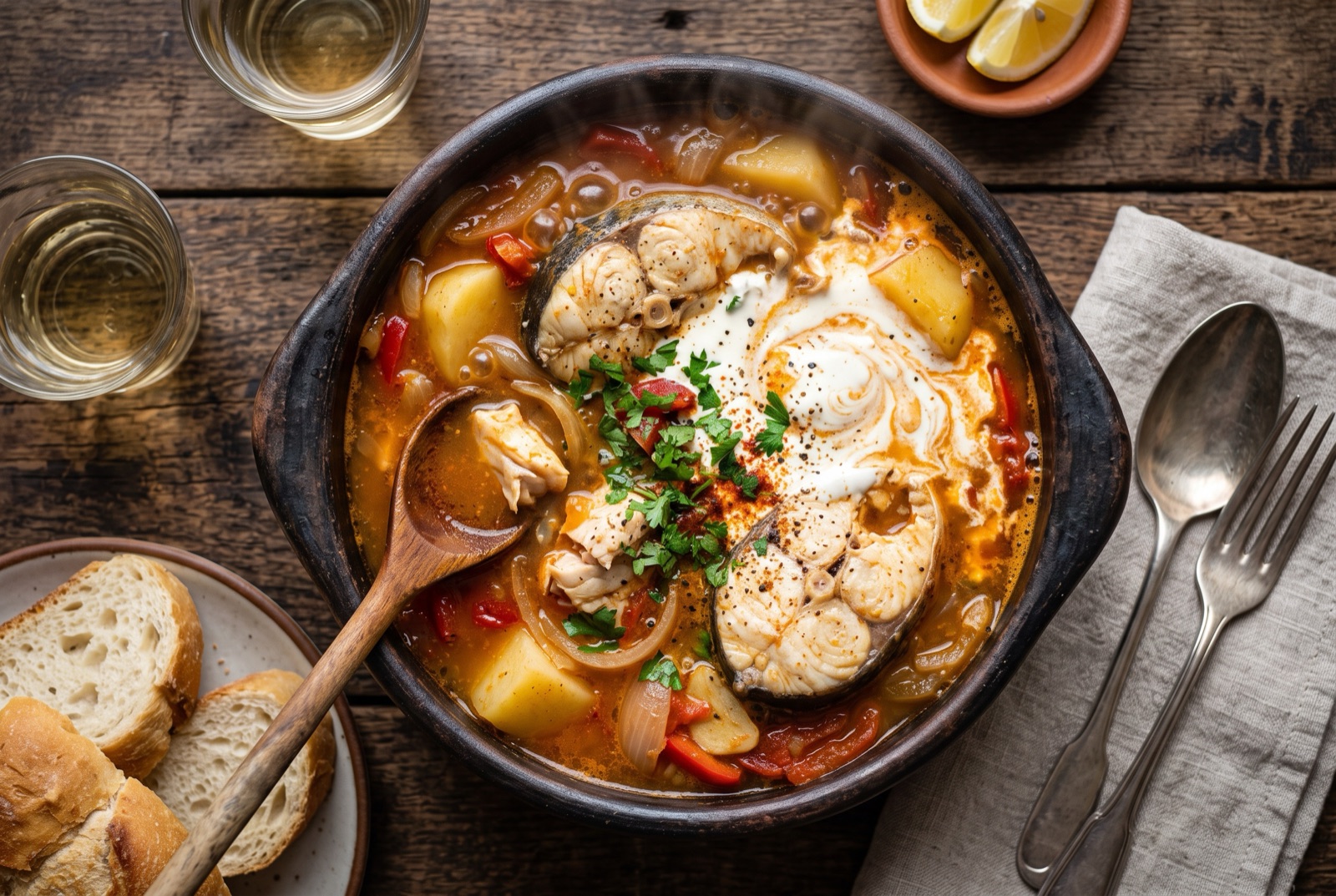
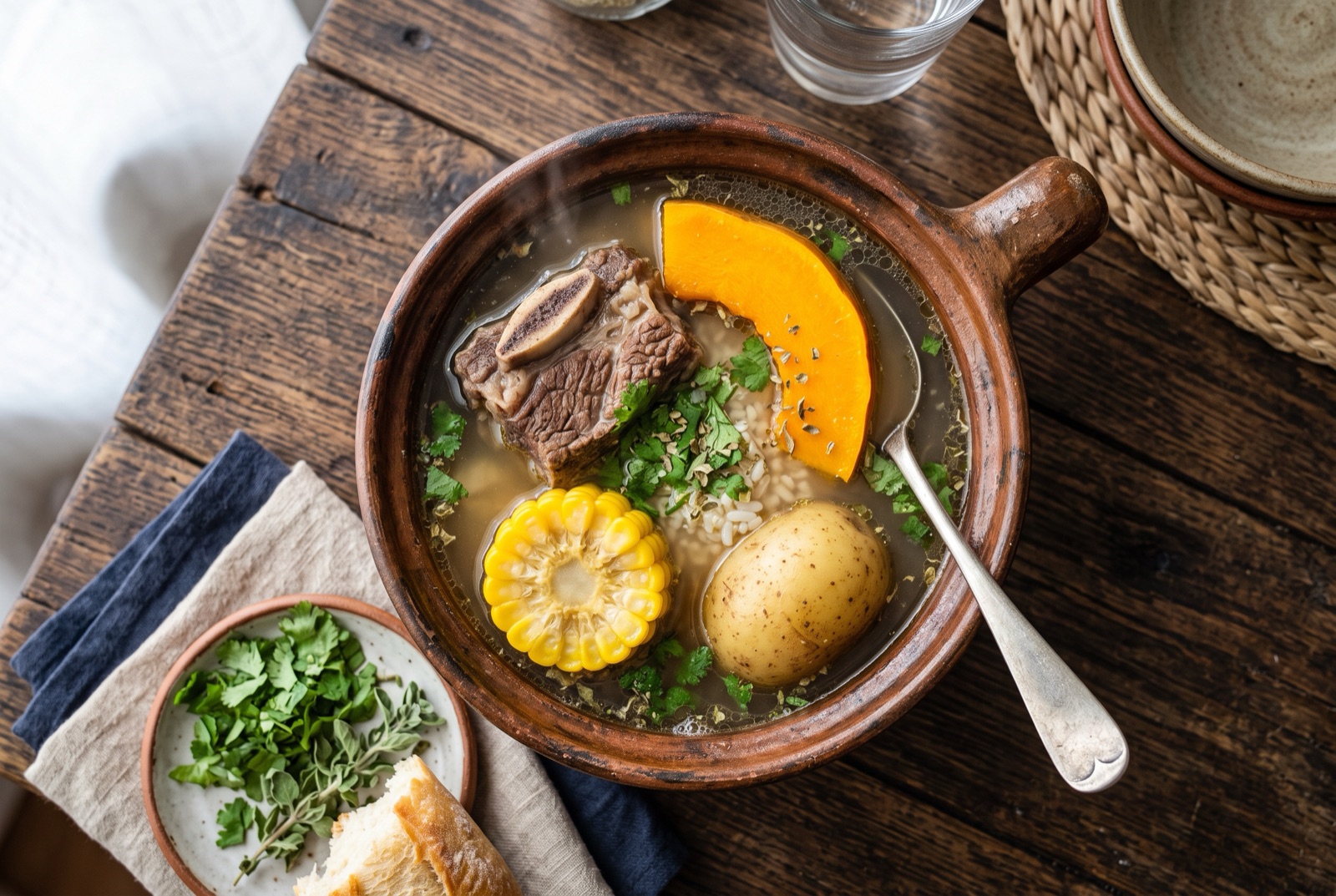
Chile has 9 more dishes in the atlas — Caldillo de Congrio and Cazuela de Vacuno, and 7 more.
Recipe by The DishRoute Kitchen · published August 20, 2026 · updated August 20, 2026