Empanadas de Pino.
Chilean Baked Beef and Olive Turnovers
Empanadas de pino · say it: em-pah-NAH-dahs deh PEE-noh
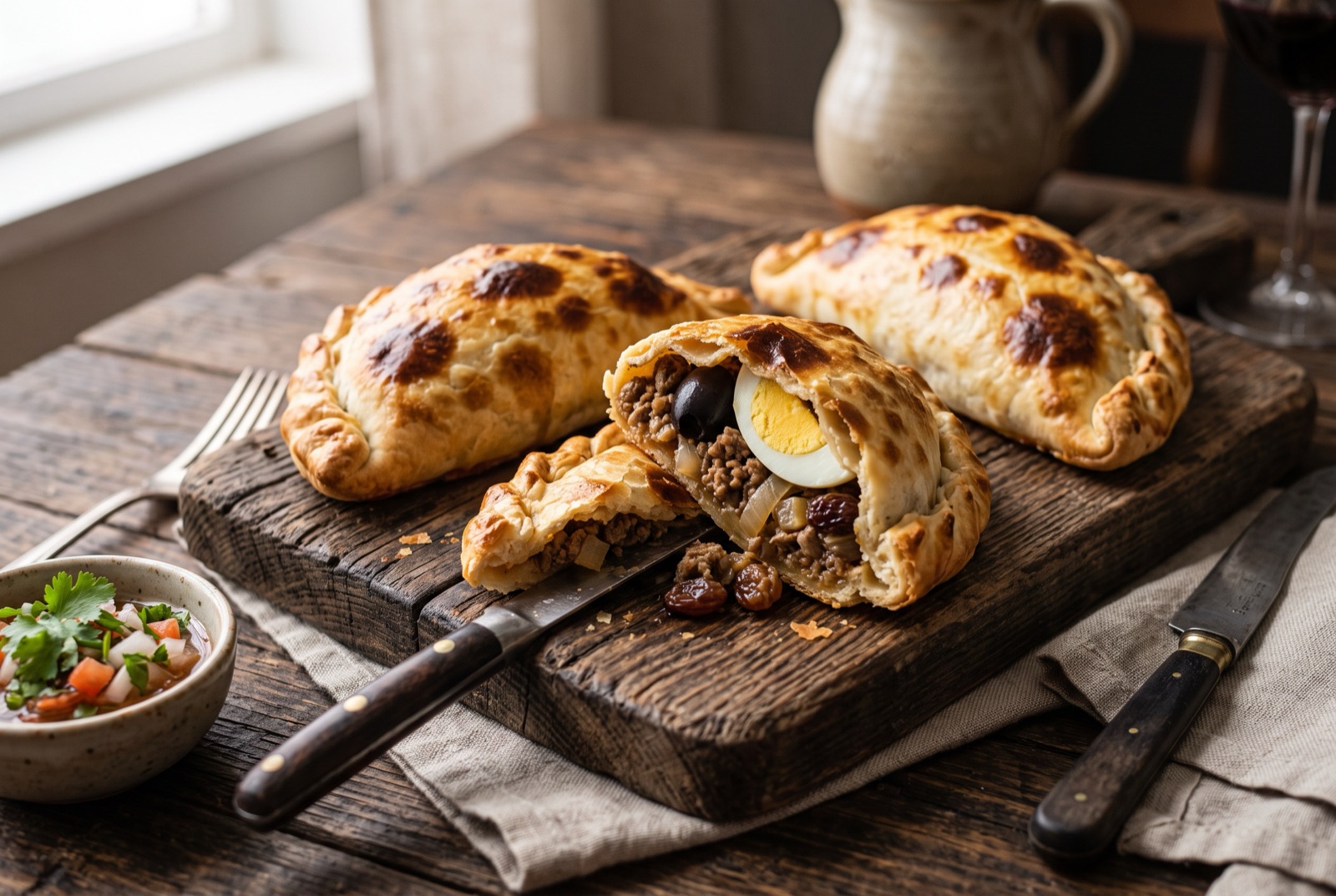
The Chilean empanada is large, baked rather than fried, and rectangular once folded — a hand-sized parcel of dough around pino, the mixture of chopped beef and an equal weight of onion cooked down with cumin and paprika until the onion nearly dissolves. Inside each one, without exception, sit a whole black olive, a slice of hard-boiled egg and a scatter of raisins. The filling is made a day ahead and refrigerated so its juices set into a sliceable block, which is the difference between a neat empanada and a leaking one. Baked hot, the crust turns deep bronze and blisters in patches, and the first bite releases a puff of cumin-scented steam.

- Gate
- ChileZona Central
- Prep
- 1 hr
- Cook
- 35 min
- Total time
- 9 hr 35 min incl. 8 hr rest
- Serves
- 6
- Status
- Medium
- Nutrition / serving · estimated
- Calories 720 kcal
- Protein 32 g
- Carbs 74 g
- Fat 33 g
- Fiber 5 g
- Sodium 890 mg
Why this recipe works.
- The pino chills overnight, which is not a convenience step — warm filling tears wet dough and produces the classic leaking empanada.
- Hot fat worked into the flour gives a crust that stays crisp for hours instead of going soft as it cools.
- The traditional tucked fold is explained step by step, so the seam holds instead of splitting in the oven.
- Makes twelve full-sized empanadas, with a freezing method that lets you bake them straight from frozen.
Ingredients.
18 itemsFor the pino
For the dough
To fill and finish
Equipment
- Large baking trays
- Rolling pin
- 18 cm plate or bowl for cutting discs
- Pastry brush
Instructions.
Cook the pino, the day before
Sweat 600 g of onion in the oil over medium-low heat for about 20 minutes, until it is soft, glassy and reduced by half. Add the diced beef, raise the heat and cook until it has lost all pink, then stir in the cumin, paprika and oregano and fry one minute more until the fat runs orange.
Thicken and chill it
Sprinkle over the flour, pour in the stock and simmer 10 minutes until the mixture is thick enough that a spoon dragged through it leaves a clear channel. Season assertively, spread it in a shallow tray, cool, then refrigerate uncovered until cold and covered overnight.
Tip Cold pino should hold its shape on a spoon like a soft pâté. If it still slumps, it needs longer or more reduction.
Make the dough
Mix the flour and salt in a large bowl, pour in the hot melted fat and rub it through with your fingers until the flour looks like damp sand. Beat the egg into the warm milk, add it to the bowl, and knead for 5 minutes until you have a smooth, soft dough that no longer sticks to the sides. Cover and rest 30 minutes.
Cut the discs
Divide the dough into 12 pieces and roll each into a round about 18 cm across and 3 mm thick, trimming to a neat circle with a plate. Keep the discs under a cloth as you work so the edges do not dry out and refuse to seal.
Fill and fold
Place two heaped tablespoons of cold pino on the lower half of each disc, leaving a 3 cm border, and press an olive, an egg slice and a few raisins into it. Brush the border with water, fold the top half over, and press from the filling outwards to expel air. Fold the flat seam up and over onto itself, then tuck the two side corners inward to make a rectangle.
Tip Seal only against dry dough — any smear of filling on the border will open up in the oven.
Bake until bronzed
Arrange the empanadas seam-side down on lined trays, brush with the egg and milk glaze, and bake at 220°C for 30–35 minutes, until deeply bronzed, blistered across the top and firm underneath when lifted with a spatula.
Rest before eating
Let them stand 10 minutes on a rack. The filling comes out of the oven hot enough to scald, and the crust firms up noticeably as steam escapes from underneath.
Tips from our kitchen.
- Chop the beef by hand into 5 mm dice if you have the patience. Ground beef works, but hand-chopped meat gives the pino its traditional bite against the soft onion.
- The onion must equal the meat by weight. It looks excessive in the pan and it is exactly right once cooked down.
- Roll the dough a little thicker than feels necessary, around 3 mm. Thin dough tears at the fold and cannot hold a heavy filling.
- Work with the pino straight from the fridge and spoon it out in a compact block, leaving a clear 3 cm border of dry dough all around.
- Press out the air as you seal. Trapped steam is what inflates an empanada until the seam gives way on the tray.
- Brush with beaten egg diluted with a splash of milk — pure egg goes patchy and dark before the dough is cooked through.
Substitutions.
- Lard in the dough → Butter, or half butter and half neutral oil
- Lard gives the most traditional flake and flavour. Butter browns more and tastes richer; all-oil dough is softer and better eaten warm.
- Beef chuck → Ground beef, shredded braised beef, or sautéed mushrooms for a meat-free version
- Whatever you use, keep the onion quantity the same — it provides the moisture that makes pino what it is.
- Whole olives with stones → Pitted black olives
- Purists insist on the stone for texture, but pitted olives spare your guests and your dentist. Use one whole olive per empanada either way.
Variations.
- Empanadas de queso
- Fried rather than baked, filled only with a slab of melting cheese. Sold at every beach and roadside stand, and eaten within a minute of leaving the oil.
- Empanadas de mariscos
- A coastal version filled with chopped shellfish — machas, mussels or shrimp — bound in a white sauce, usually smaller and often fried.
- Empanada de pino picante
- A teaspoon of merkén stirred into the pino, giving the smoky, gently hot edge that southern Chilean cooks favour.
Storage & reheating.
Baked empanadas keep 3 days refrigerated and reheat well in a 180°C oven for 12 minutes, which restores the crust; a microwave makes the pastry limp and leathery. They freeze better unbaked than baked: assemble them, freeze on a tray until solid, then bag them for up to 3 months and bake from frozen at 200°C for about 35 minutes. The pino itself can be refrigerated for 3 days or frozen for 2 months, and freezing actually helps, since it comes out of the freezer firm enough to fill dough neatly.
Serve with
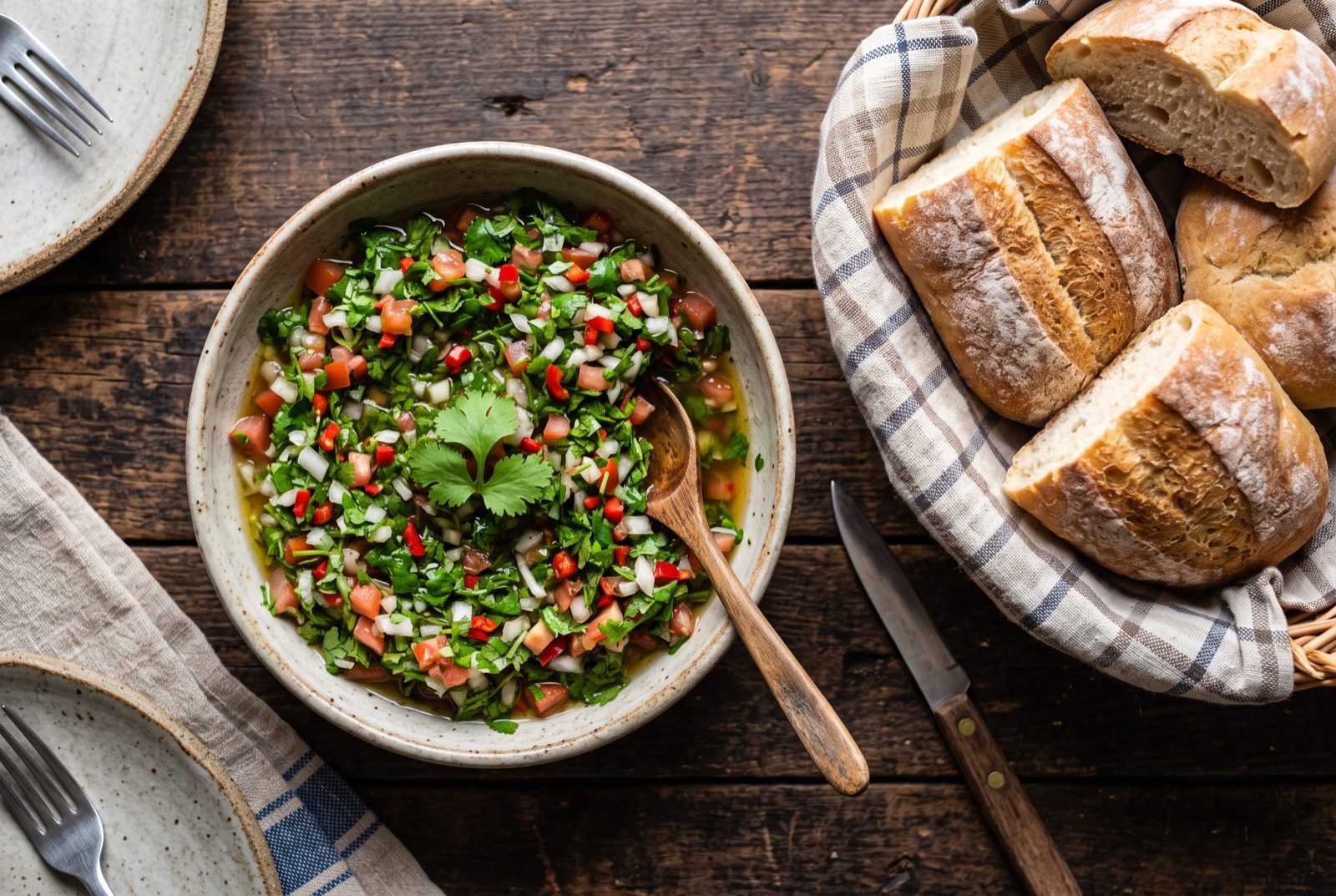
A glass of Chilean red or chicha, and a bowl of pebre for dipping the corners.
The story behind Empanadas de Pino.
Empanadas came to Chile with the Spanish, who had inherited the idea of enclosing a filling in dough from centuries of Iberian and Arab practice. What Chile did with it was to standardise: one shape, one filling, one set of inclusions. Regional empanadas exist — mariscos on the coast, cheese fried in oil, pino de horno everywhere — but the empanada de pino de horno is treated as the default, and any deviation is named explicitly on the menu.
Its calendar is fixed. September 18 marks the anniversary of the first Chilean junta of 1810, and the week around it, Fiestas Patrias, turns into a national eating event: fondas and ramadas set up with grills and dance floors, and empanadas are sold and eaten in quantities that Chilean media report on afterwards. The pairing is equally fixed — empanada with red wine or chicha, the fermented grape must drunk fresh in early spring. A household making a hundred empanadas for the eighteenth is not unusual, and the filling for them is cooked days in advance.
Several small conventions carry real weight. The olive traditionally goes in whole, with its stone, which preserves texture and also serves as a warning system — Chileans instinctively bite carefully. The fold is not a crimp but a series of tucked flaps that make the empanada rectangular and give it a thicker seam that resists splitting. And an empanada that bursts and weeps its juice onto the tray is called llorona, a crying one, which is nobody's intention but happens often enough to have earned a name. All three of those details come down to the same underlying rule: the filling must be cold and set before it goes anywhere near dough.
Questions, answered.
Why does the filling have to rest overnight?
Hot pino carries loose fat and juice that soak into raw dough and dissolve the seal, so the empanada splits and leaks in the oven. A night in the refrigerator sets the liquid into a firm, sliceable block that you can lift with a spoon and place on the dough without wetting it. It also gives the cumin and paprika time to spread evenly through the onion.
Should I bake or fry Chilean empanadas?
Empanadas de pino are baked — de horno, from the oven — and the large rectangular shape belongs to that method. Frying is reserved mainly for cheese and seafood empanadas, which are smaller and eaten immediately. A fried pino empanada is not wrong, but it will not look or eat like the Chilean standard.
How do I stop my empanadas from bursting?
Three things cause bursting: warm filling, trapped air and overfilling. Use cold pino, press the air out from the centre towards the edge as you fold, and leave a clear border of dough at least three centimetres wide. Do not prick the tops — a well-sealed empanada holds its steam, and the small holes only give the juices an exit.
What is in Chilean pino?
Pino is beef and onion in roughly equal weight, cooked slowly with cumin, sweet paprika, oregano, salt and pepper, and thickened lightly with flour. In empanadas it is joined by raisins, a black olive and a slice of hard-boiled egg. It is the same filling used under the corn topping of pastel de choclo.
Can I make the dough in a stand mixer?
Yes, with the dough hook on low speed for about four minutes, until the dough is smooth and pulls away from the bowl. It comes together faster than by hand but is easier to overwork — stop as soon as the surface looks even, and always rest it 30 minutes before rolling so the gluten relaxes and the discs stop shrinking back.
You might also like.
All recipes →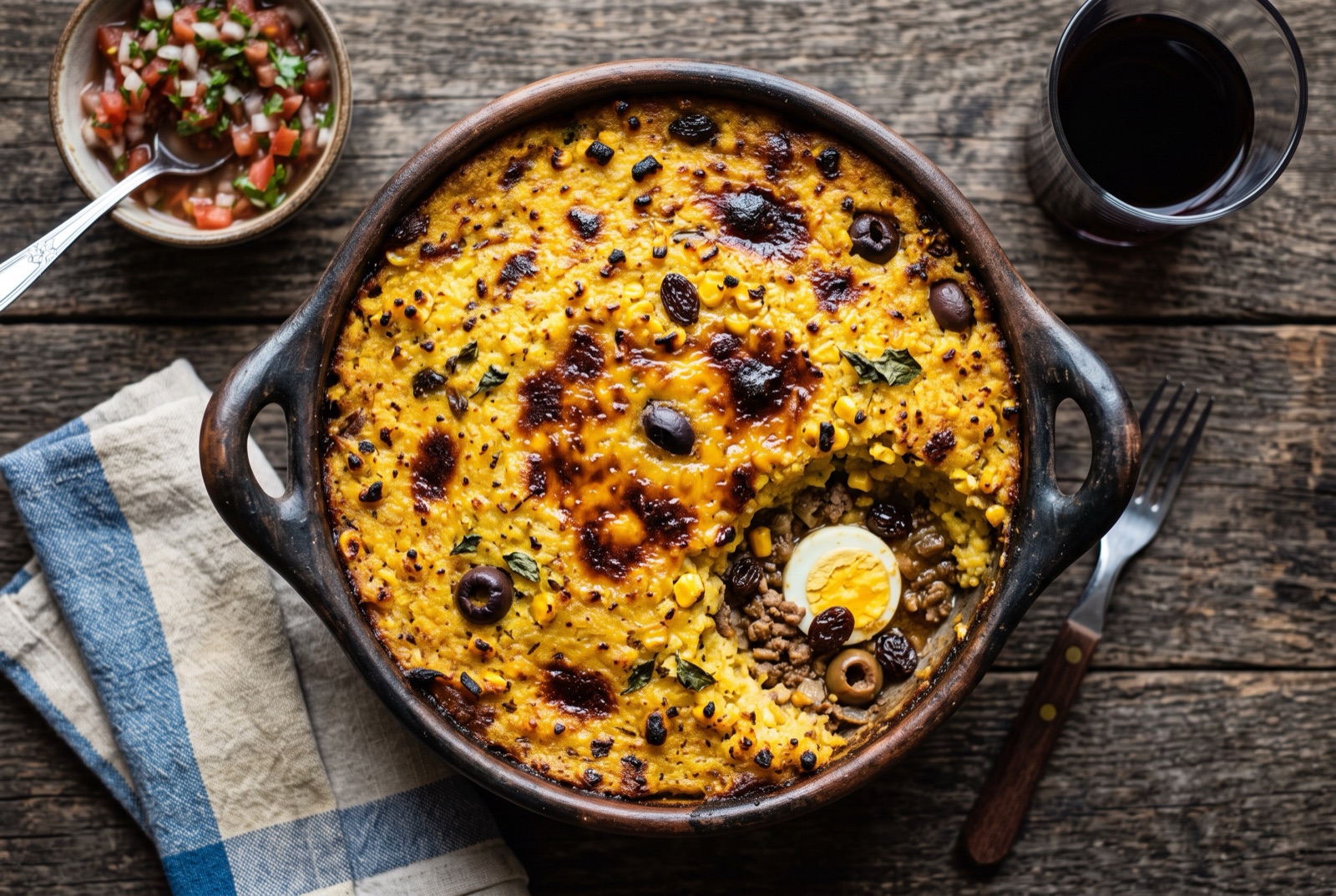
Keep exploring Chile.
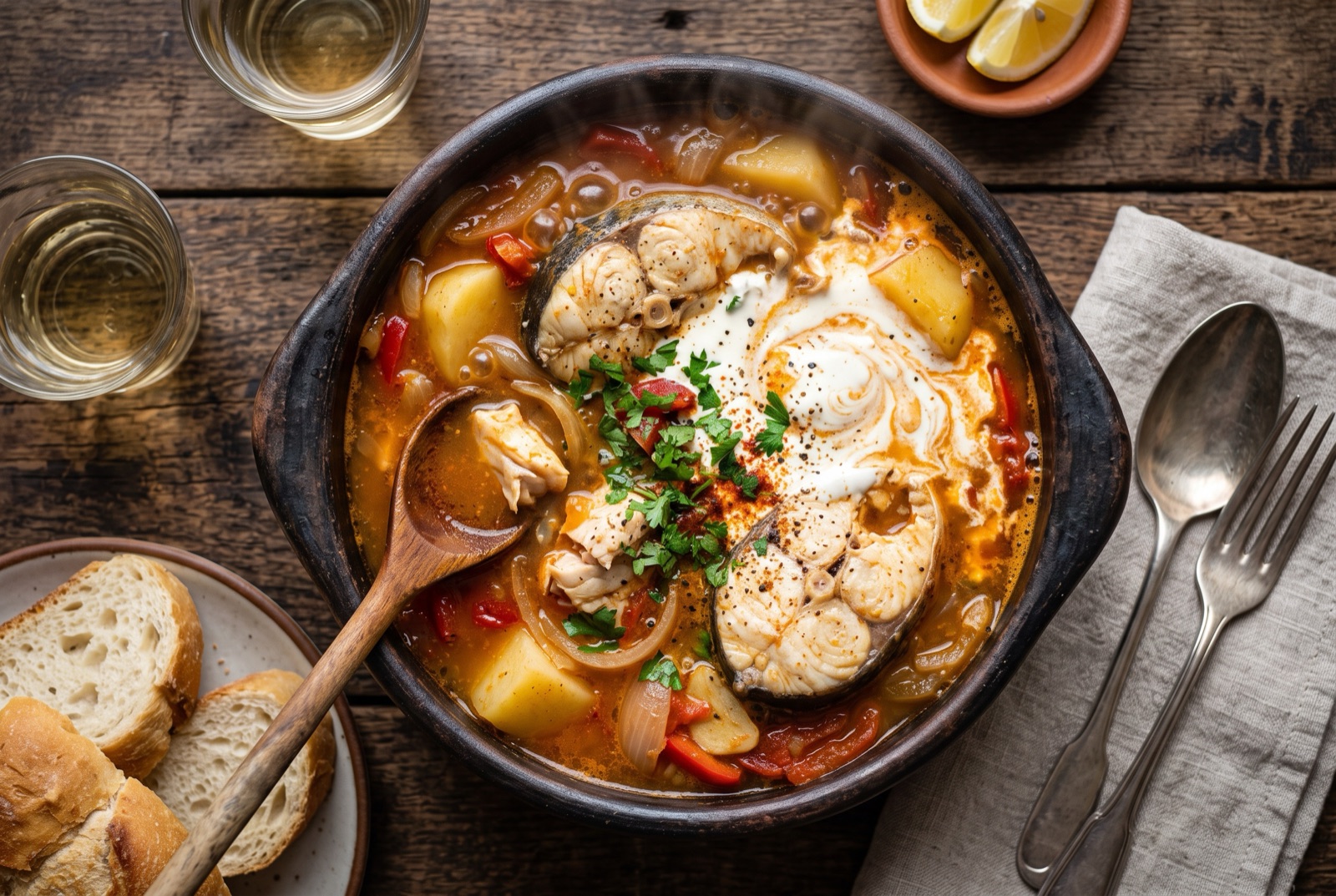
Chile has 9 more dishes in the atlas — Caldillo de Congrio and Cazuela de Vacuno, and 7 more.
Recipe by The DishRoute Kitchen · published August 20, 2026 · updated August 20, 2026