Cazuela de Vacuno.
Chilean Beef, Corn and Pumpkin Broth
Cazuela de vacuno · say it: kah-SWEH-lah deh vah-KOO-noh
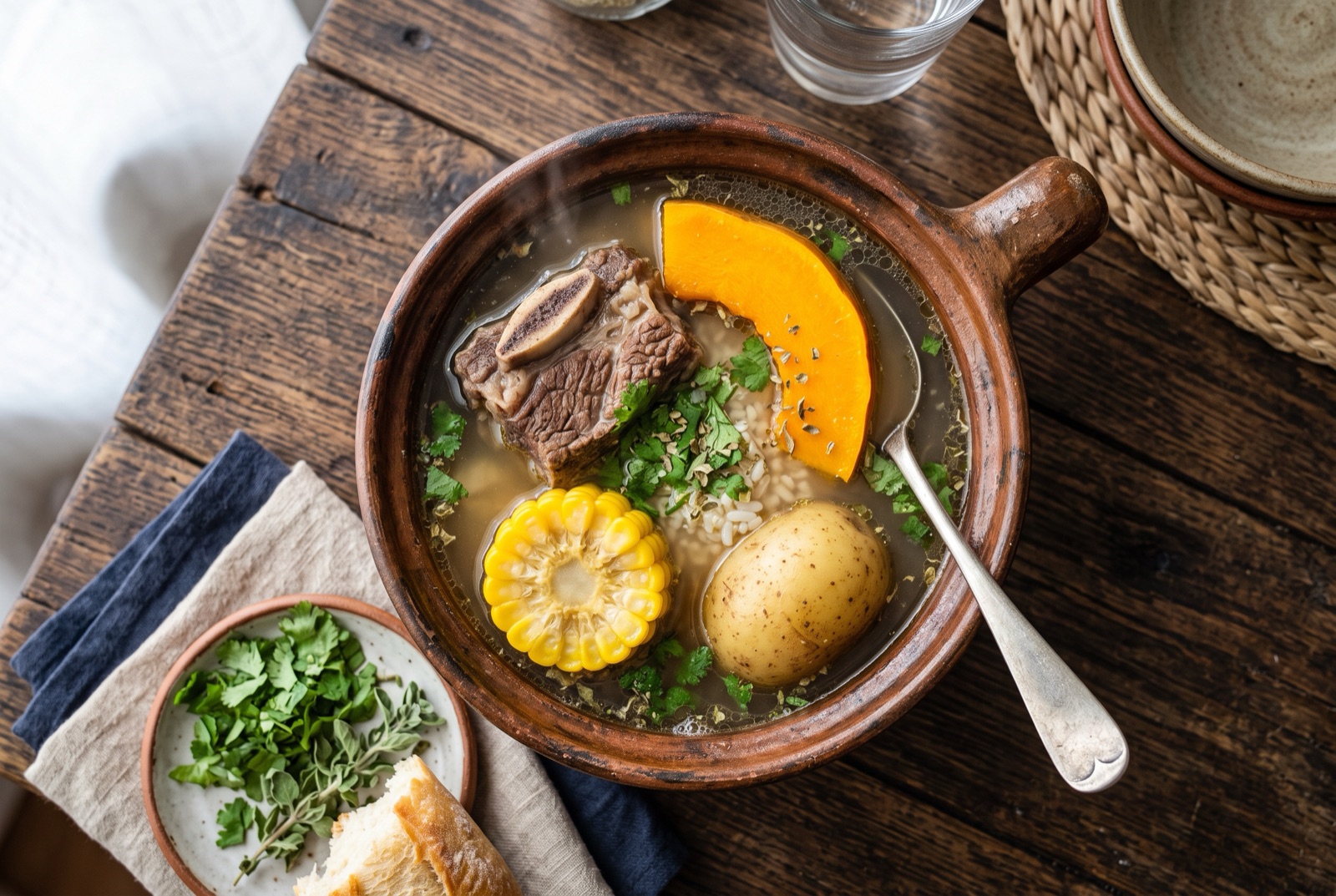
Cazuela is the Chilean weekday lunch, and its defining feature is restraint. A piece of beef on the bone goes into cold water and is simmered until the broth is clear and beefy; then a whole potato, a wedge of pumpkin, a round of corn on the cob and a handful of rice join it, each cooked in the same liquid until just done. Nothing is browned, no paste or roux is involved, and the only seasonings are oregano, a little paprika and a heavy scatter of cilantro at the end. Everything is served visible in one deep bowl — you eat the vegetables with a fork, gnaw the corn with your hands and drink the broth last.

- Gate
- ChileZona Central
- Prep
- 20 min
- Cook
- 1 hr 35 min
- Total time
- 1 hr 55 min
- Serves
- 4
- Status
- Easy
- Nutrition / serving · estimated
- Calories 520 kcal
- Protein 42 g
- Carbs 48 g
- Fat 16 g
- Fiber 7 g
- Sodium 640 mg
Why this recipe works.
- Meat is started in cold water and skimmed properly, which is the only way to get a broth that stays clear rather than cloudy.
- Vegetables go in staggered by cooking time, so the potato is not collapsing while the corn is still raw.
- Rice is cooked separately in a ladle of broth, keeping the soup from turning starchy and thick by the second helping.
- One pot, roughly 90 minutes, and the leftovers make a better lunch than the original.
Ingredients.
13 itemsFor the broth
For the bowl
To finish
Equipment
- Large stockpot
- Skimming spoon or ladle
- Small saucepan for the rice
Instructions.
Start the meat in cold water
Put 1 kg of beef shank in a large pot with the cold water, the halved onion and the carrot, and bring slowly to a simmer over medium heat. As it heats, grey foam will collect on the surface — lift it off with a ladle every few minutes until the liquid runs clear at the edges.
Tip Do not salt yet. Salting before skimming makes the foam break apart and disperse into the broth.
Simmer until tender
Add the oregano, paprika and a good pinch of salt, cover partly, and simmer very gently for 60 minutes, until the meat gives easily when prodded with a fork but has not yet fallen off the bone. Adjust the heat so bubbles break only every second or two.
Add potato and pumpkin
Lower the whole potatoes and the squash wedges into the pot and cook 15 minutes. The potatoes should take a knife tip with slight resistance at this point, since they will keep cooking with everything else.
Add the corn and beans
Slide in the corn rounds and green beans and simmer a final 12–15 minutes, until the corn kernels look plump and glossy, the beans are bright green but yielding, and a skewer passes through the potatoes without effort.
Cook the rice separately
While the vegetables finish, cook the rice in a small pan with 200 ml of broth ladled from the pot plus a pinch of salt, covered, for about 12 minutes until the liquid is absorbed and the grains are tender.
Tip Keeping the rice out of the main pot is what stops the broth thickening into porridge overnight.
Build the bowls
Taste the broth and correct the salt — it should be clean and beefy, not heavily seasoned. Give each deep bowl one piece of meat, one potato, one wedge of squash, one corn round, a share of beans and a spoonful of rice, then ladle the hot broth over. Scatter cilantro on top and serve at once.
Tips from our kitchen.
- Choose a cut with bone and connective tissue — shank, short rib or chuck on the bone. Lean steak makes a thin broth and dry meat.
- Skim patiently during the first fifteen minutes. Every scrap of grey foam you leave behind will end up as cloudiness in the finished bowl.
- Keep the pot at a lazy simmer with bubbles breaking only occasionally. A rolling boil emulsifies the fat and turns the broth murky and greasy.
- Cut the pumpkin into large wedges with the skin left on, so it holds together instead of dissolving into the liquid.
- Cook the rice apart in a ladleful of the broth. Rice added to the pot keeps swelling and drinks the soup while it stands.
- Add the cilantro off the heat, right before serving — boiled cilantro loses its aroma and turns a drab olive colour.
Substitutions.
- Zapallo camote (Chilean winter squash) → Butternut squash, kabocha or Hokkaido pumpkin
- You want a dense, dry-fleshed squash. Watery varieties such as spaghetti squash or field pumpkin fall apart and sweeten the broth too much.
- Beef shank → A whole chicken leg per person, or lamb shoulder on the bone
- These are the two other standard Chilean cazuelas. Chicken needs only about 40 minutes of simmering; lamb takes as long as beef.
- Fresh corn on the cob → Frozen corn cob rounds, added in the last 15 minutes
- Out of season this is the honest option. Loose kernels work in a pinch but you lose the cob, which is half the pleasure of eating cazuela.
Variations.
- Cazuela de ave
- Made with chicken on the bone instead of beef — lighter, faster, and the version Chilean households cook when someone is recovering from illness.
- Cazuela nogada
- A speciality of the Chillán area, finished with ground walnuts stirred into the broth, which turns it pale and gives it a soft, nutty body.
- Cazuela con chuchoca
- Southern style, thickened with coarsely ground dried corn added in the last twenty minutes so the broth turns golden and slightly porridge-like.
Storage & reheating.
Cazuela keeps 3 days in the refrigerator and is widely considered better on the second day, once the broth has taken on more of the beef. Store the solids in the broth but keep any leftover rice separate, or it swells into paste. Reheat gently until steaming — a hard boil breaks up the potato and pumpkin. Freezing is possible for 2 months, but the potato turns grainy on thawing, so freeze the broth and meat alone and cook fresh vegetables into it when you reheat.
Serve with
Marraqueta or any crusty bread for the broth, and pebre on the side for those who want heat.
The story behind Cazuela de Vacuno.
The word cazuela originally names the earthenware pot rather than what goes in it, and the format arrived from Spain with the olla and puchero tradition of meat and vegetables simmered in one vessel. Chile then rewrote the contents using what grows in the Central Valley: pumpkin, corn, potato and green beans, three of which the Spanish had never met before crossing the Atlantic. What emerged is a broth that tastes noticeably lighter than its European relatives, because nothing in it is fried first and the fat is skimmed rather than emulsified.
There is a cazuela for every animal and every latitude. Cazuela de vacuno is the beef version and the most common; cazuela de ave uses a whole chicken quarter and is what invalids and children are given; cazuela de cordero belongs to Chiloé and the far south, where lamb is the everyday meat. Around Chillán, cazuela nogada is finished with ground walnuts, and in the south cooks stir in chuchoca, dried corn ground coarse, which thickens the broth and turns it faintly golden. What stays constant is the shape of the bowl: one piece of meat, one piece of each vegetable, per person.
It is also a dish with table manners attached. The corn round is picked up in the fingers with no apology, which is one of the few times that is sanctioned at a Chilean table. The broth is not a starter but the last thing consumed, drunk from the tilted bowl or spooned once the solids are gone. And cazuela is what is cooked when someone in the house is unwell, when there are more people than expected for lunch, or when the point of the meal is to be nourishing rather than impressive — the reasons a national dish usually survives generations without ever appearing on a restaurant menu at any price worth mentioning.
Questions, answered.
Why is my cazuela broth cloudy?
Either the meat was not skimmed during the first fifteen minutes, or the pot was boiling instead of simmering. Proteins released by the meat rise as grey foam and must be lifted off before they break up and disperse; after that, keep the surface barely trembling. A clear broth is the single measure of a well-made cazuela, and no amount of straining afterwards fully recovers it.
What cut of beef is best for cazuela?
Cuts with bone and collagen: cross-cut shank (osso buco), short rib, oxtail or chuck on the bone. The bone contributes body to the broth and the connective tissue melts over ninety minutes into meat that pulls apart with a fork. Lean, boneless cuts cook to dryness long before the broth has any flavour.
Do you eat cazuela with a spoon or a fork?
Both, and your hands. Each bowl contains whole pieces of vegetable and a piece of meat, which are cut and eaten with knife and fork, while the corn round is picked up in the fingers. The broth is drunk or spooned at the end, once the solids have been dealt with, which is the traditional order at a Chilean table.
Can I make cazuela in a pressure cooker?
Yes for the meat stage — about 25 minutes at pressure will tenderise shank and build a good broth. Release the pressure, then add the vegetables and finish on normal heat, because potato, pumpkin and corn cooked under pressure disintegrate. You lose a little clarity compared with the slow method, since pressure cookers cannot be skimmed while they run.
Is cazuela spicy?
No. It is one of the mildest dishes in the Chilean repertoire, seasoned only with oregano, a little paprika, salt and fresh cilantro. Heat is added individually at the table with pebre or a spoonful of ají, which is the general Chilean approach to chilli — the pot stays gentle so that everyone, including children, can eat from it.
You might also like.
All recipes →
Keep exploring Chile.
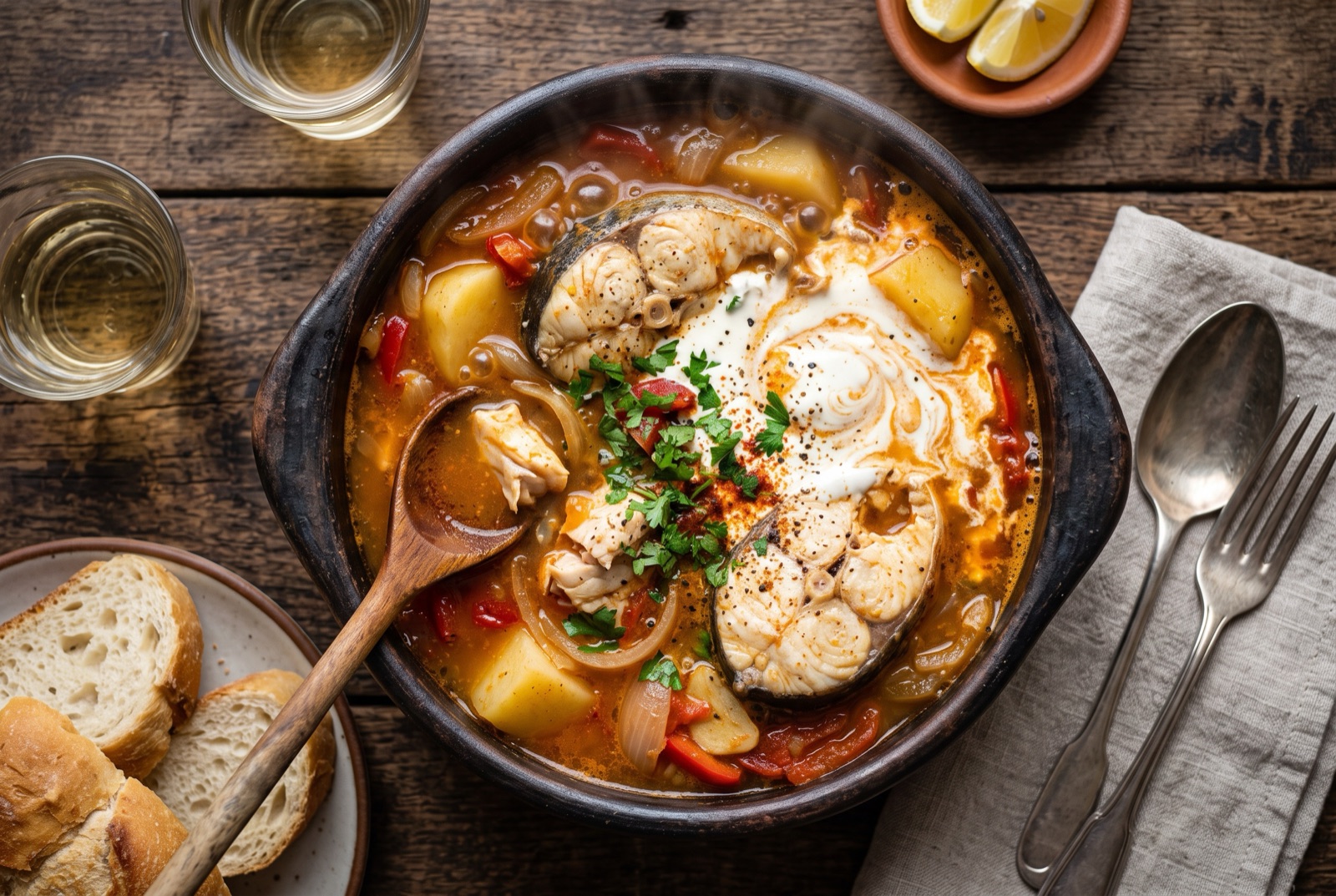
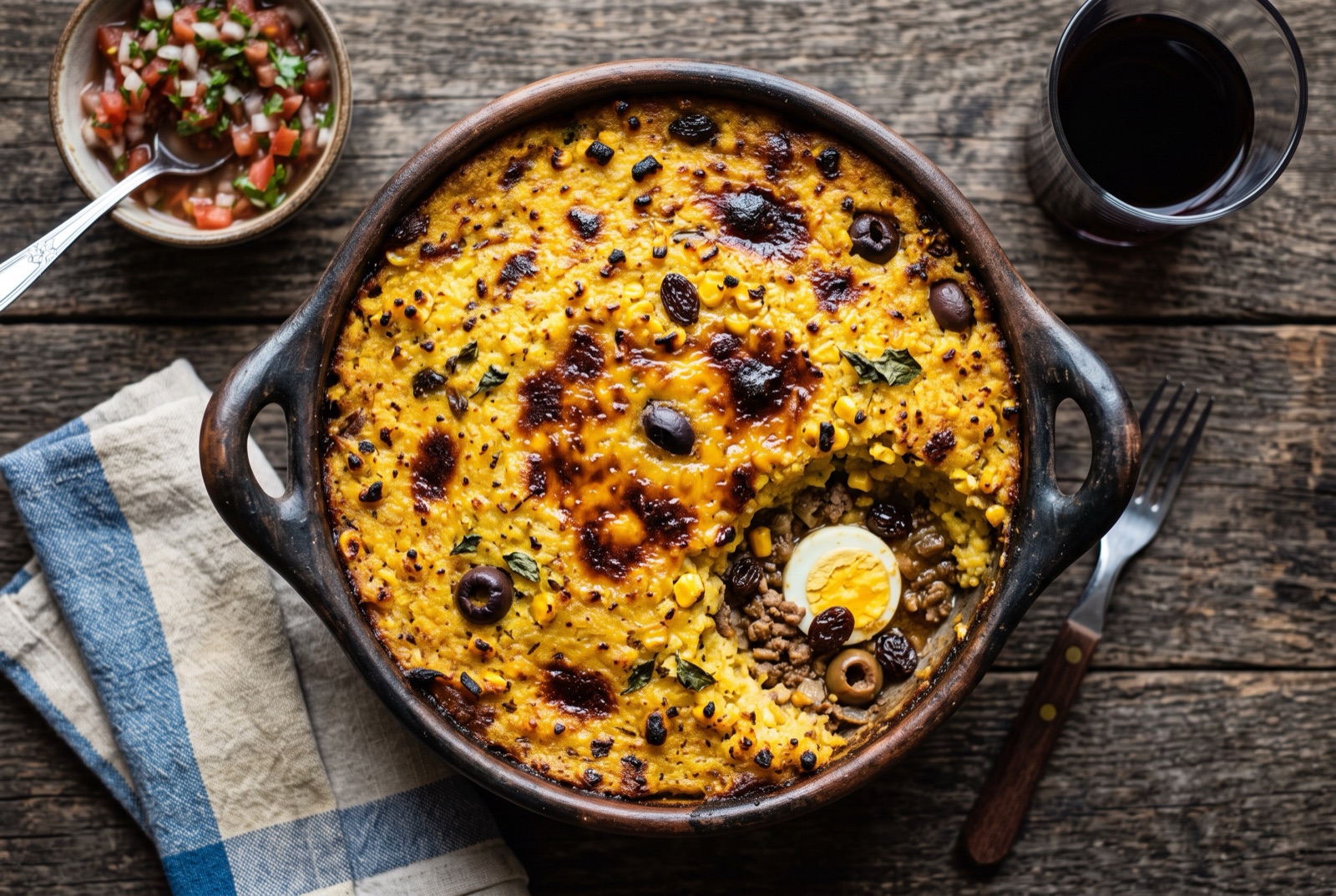
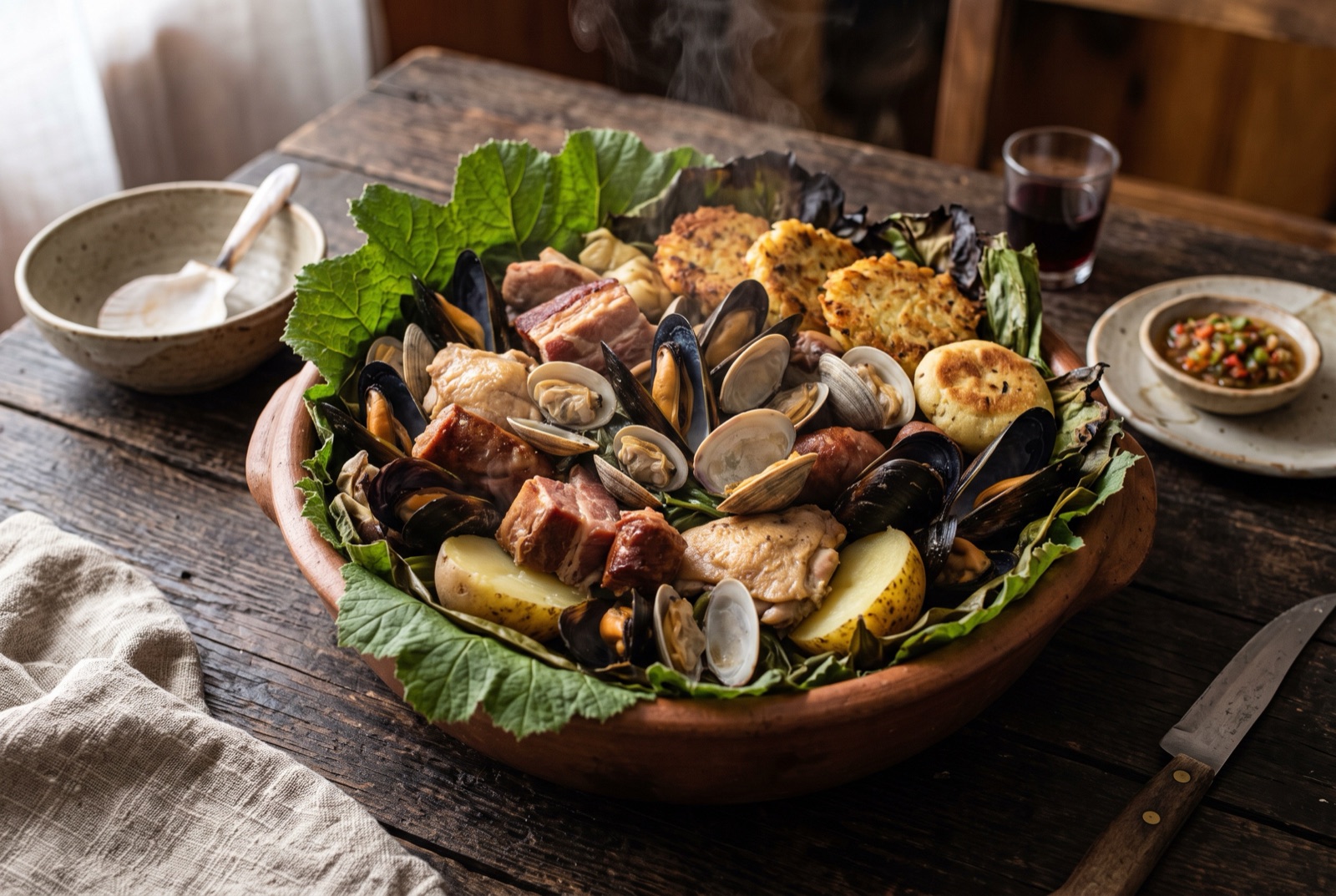
Chile has 9 more dishes in the atlas — Caldillo de Congrio and Completo Italiano, and 7 more.
Recipe by The DishRoute Kitchen · published August 20, 2026 · updated August 20, 2026