Chicken Tinga.
Tinga de Pollo
Tinga de pollo · say it: TEEN-gah deh POH-yoh
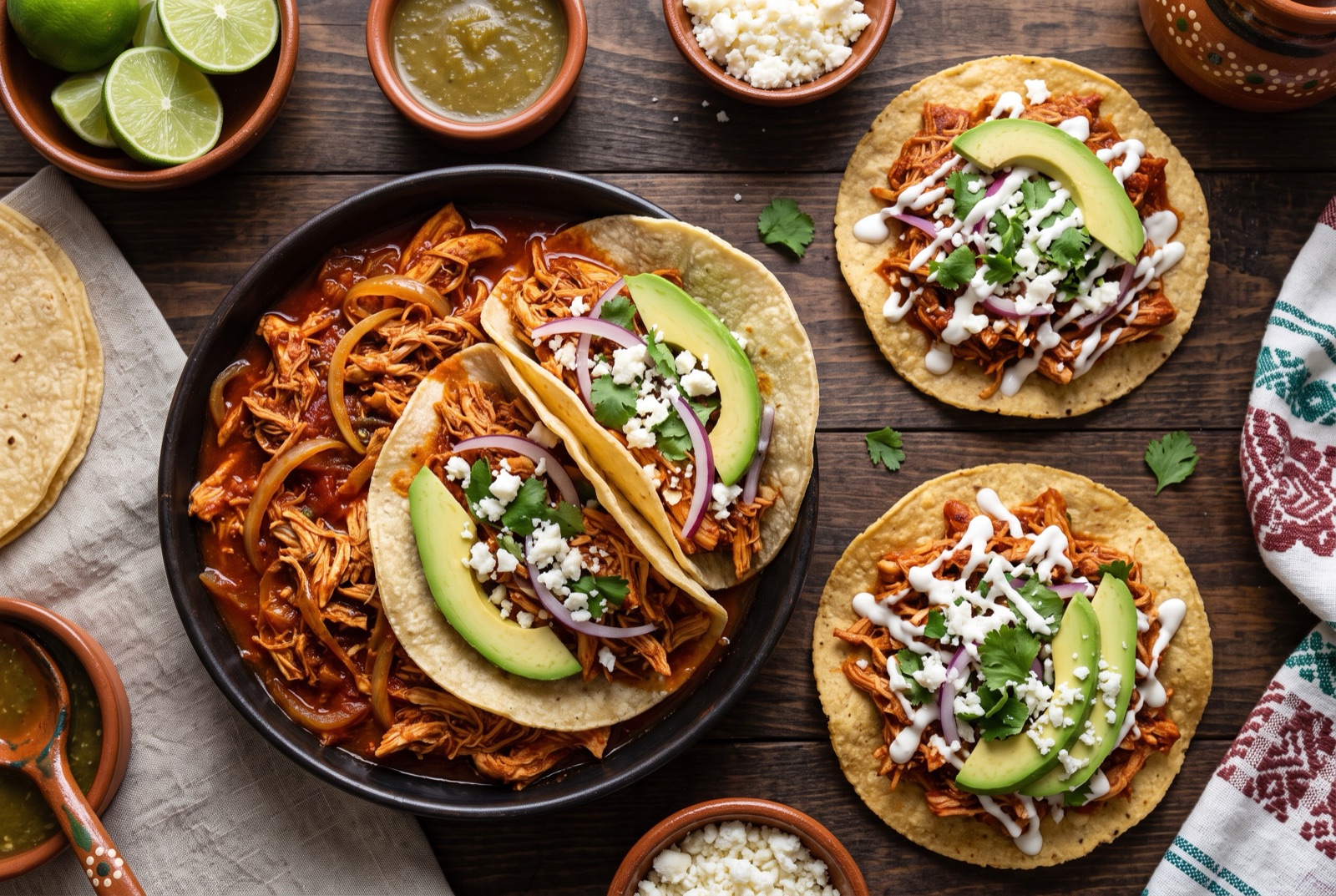
Tinga de pollo is poached chicken pulled into shreds and simmered in a sauce of blended tomatoes and chipotles in adobo, laced with strands of slowly cooked onion. The chipotles — smoked, dried jalapeños canned in a tangy adobo sauce — do most of the talking: the tinga tastes smoky first, then sweet from tomato and onion, with a warm heat that builds rather than bites. It is Puebla home cooking of the most practical kind, classically spooned over crisp tostadas with beans, lettuce and crema, and it may be the single best make-ahead taco filling there is, because the flavor deepens overnight and it reheats without losing anything.

- Gate
- MexicoPuebla
- Prep
- 20 min
- Cook
- 45 min
- Total time
- 1 hr 5 min
- Serves
- 4
- Status
- Easy
- Nutrition / serving · estimated
- Calories 340 kcal
- Protein 40 g
- Carbs 14 g
- Fat 14 g
- Fiber 3 g
Why this recipe works.
- The chicken poaches in seasoned water that becomes the broth that finishes the sauce — nothing wasted.
- Onions are cooked golden before the sauce goes in, adding the sweetness that balances chipotle heat.
- Heat is adjustable chile by chile, with honest guidance on what one, two or three chipotles taste like.
- Genuinely better the next day — a rare dish where making ahead is an upgrade, not a compromise.
Ingredients.
12 itemsFor the chicken
For the sauce
Equipment
- Medium pot for poaching
- Blender
- Wide deep skillet or sauté pan
- Two forks for shredding
Instructions.
Poach the chicken
Put 700 g of chicken in a pot with the water, half onion, smashed garlic, bay leaf and 1 tsp salt. Bring just to a boil, drop to a bare simmer and cook until the chicken is only just done — opaque throughout, no pink at the center — 15–18 minutes. Keep the broth.
Shred the chicken
Lift the chicken out and, while still warm, pull it into bite-sized shreds with two forks or your fingers — strands, not mince. Warm chicken shreds cleanly and will absorb more sauce.
Blend the sauce
Blend the tomatoes, chipotles, adobo sauce and the 2 whole garlic cloves with 120 ml of the poaching broth until completely smooth — a loose, brick-orange purée.
Tip Taste the purée now: this is the moment to blend in another chipotle if you want more fire.
Cook the onions golden
Heat the oil in a wide skillet over medium heat and cook the sliced onion with a pinch of salt, stirring occasionally, until the strands are soft, golden and sweet at the edges, 8–10 minutes. Do not rush this — the onions are the sweetness of the tinga.
Fry the sauce down
Pour the blended sauce into the onions — it will sputter — add the oregano, and simmer briskly, stirring often, until the sauce darkens a shade, thickens, and a spatula dragged across the pan leaves a slow-closing trail, 8–10 minutes.
Simmer the tinga
Stir in the shredded chicken and a splash of broth if needed, and simmer gently until the sauce clings to every strand rather than pooling around the meat, about 10 minutes. Taste and season with salt — it should taste smoky, sweet and fully seasoned.
Serve
Spoon the hot tinga over tostadas spread with refried beans, or into warm tortillas, and top with lettuce, avocado and lime — crema and crumbled cheese on the side. The tinga should sit in a glossy, clinging sauce, not a puddle.
Tips from our kitchen.
- Poach the chicken gently — bare simmer, never a rolling boil — and pull it at just-cooked so it shreds into moist strands instead of dry splinters.
- Start with 2 chipotles plus a spoonful of their adobo sauce for a medium heat; 1 keeps it family-mild, 3–4 with extra adobo reaches street-stand strength. You can always blend in another chile later.
- Shred the chicken while it is warm — it pulls apart easily and drinks up more sauce than cold meat does.
- Simmer the finished tinga until the sauce clings to the chicken rather than pooling around it; a watery tinga soaks tostadas into sadness.
- Do not skip cooking the blended sauce down in the onion pan — raw blended tomato tastes thin, and the frying step is where the sauce darkens and turns sweet.
- Save the leftover poaching broth: it is a light chicken stock, good for rice or soup the same week.
Substitutions.
- Chipotles in adobo (canned) → 1–2 dried chipotle (morita) chiles, soaked in hot water, plus 1 tsp vinegar and a pinch of sugar
- The dried route gives the same smoke with less tang; the canned version is easier to find and dose. Smoked paprika alone is a distant fallback.
- Chicken breasts → Boneless chicken thighs, or shredded rotisserie chicken
- Thighs are juicier and harder to overcook. Rotisserie chicken skips the poaching entirely — use store-bought or homemade stock for the sauce.
- Fresh tomatoes → 400 g canned whole or crushed tomatoes
- Fully traditional in modern Mexican kitchens and better than pale out-of-season fresh ones.
Variations.
- Tostadas de tinga
- The classic presentation: crisp tostadas spread with refried beans, then tinga, shredded lettuce, crema, crumbled cheese and a few avocado slices.
- Tinga de res or de hongos
- The same sauce over shredded braised beef, or over sliced sautéed mushrooms for a meat-free tinga that keeps all the smoke.
- Tinga tortas
- Piled warm into a crusty roll with beans, avocado and pickled jalapeños — a common market-lunch treatment in central Mexico.
Storage & reheating.
Tinga is a make-ahead dish by nature: it keeps 4 days refrigerated and the smoky flavor is noticeably deeper on day two. Reheat gently in a pan with a splash of the reserved broth or water. It freezes excellently for up to 3 months in portions — thaw overnight in the fridge. Store tostadas and toppings separately, always.
Serve with
Crisp tostadas or warm corn tortillas, refried beans, shredded lettuce, avocado and lime — crema and cheese on the side for those who want them.
The story behind Chicken Tinga.
Tinga belongs to Puebla, the colonial city southeast of Mexico City whose kitchens produced some of the country's most famous dishes. The word appears in Mexican cookbooks from the nineteenth century onward — Puebla recipe collections of that era already describe tingas of shredded meat stewed with tomato and chipotle — and the dish has been credited to poblano cooking ever since, a documented regional origin rather than a legend. The original tingas were often pork; chicken became the everyday standard in the twentieth century as it became the cheaper, quicker meat, and beef and even mushroom tingas are common now. What defines a tinga is not the protein but the method: shredded meat, tomato, and the smoke of chipotle.
That smoke is the dish's signature and one of Mexican cooking's oldest techniques. Chipotles are ripe red jalapeños dried slowly over smoke — a preservation practice that predates the Spanish conquest — and canning them in adobo, a vinegar-tomato-spice sauce, turned them into one of the great pantry conveniences of the modern Mexican kitchen. A single can carries the deep, campfire-sweet flavor that would otherwise take hours to build.
Tinga's natural habitat is the tostada: a crisp fried tortilla spread with refried beans, piled with warm tinga, and finished with shredded lettuce, crema, cheese and salsa. You will find it at market stalls and street stands across central Mexico, at family parties where a big pot feeds a crowd cheaply, and in the weekly rotation of countless home kitchens — the Mexican equivalent of a great Sunday ragù: humble, forgiving, and better the next day.
Questions, answered.
What are chipotles in adobo?
Chipotles are ripe red jalapeño chiles dried slowly over smoke — a Mexican preservation technique that predates the Spanish conquest. "In adobo" means they are canned in a tangy sauce of tomato, vinegar and spices. Sold in small cans in the international aisle of most supermarkets, they deliver deep smoky heat instantly, and leftovers keep for weeks refrigerated in a jar.
How spicy is chicken tinga?
Entirely up to the cook. Chipotles carry a warm, building heat rather than a sharp burn, and the tomato and golden onions soften it further. Two chipotles for a whole batch gives a medium warmth most people find comfortable; one chile is mild enough for children, while three or four with extra adobo sauce reaches the level of a Puebla street stand.
Where does tinga come from?
From Puebla, in central Mexico. Tingas of shredded meat stewed with tomato and chipotle appear in Mexican cookbooks from the nineteenth century, already identified with poblano cooking — a documented regional origin. Early tingas were often pork; chicken became the everyday standard in the twentieth century, and the name now covers beef and mushroom versions too.
Can I make tinga with rotisserie or leftover chicken?
Yes, and it is a completely legitimate shortcut used in Mexican home kitchens. Shred about 500 g of cooked chicken, make the chipotle-tomato sauce with store-bought or homemade chicken stock in place of the poaching broth, and simmer the shredded meat in it for 10 minutes so it absorbs the sauce. The dish loses almost nothing.
What is the traditional way to serve tinga de pollo?
On tostadas — crisp fried corn tortillas — spread first with refried beans, then topped with warm tinga, shredded lettuce, Mexican crema, crumbled fresh cheese and salsa or avocado. It is equally at home in soft tacos, tortas (crusty sandwiches), quesadillas or over rice, which is why a big pot of it is such a useful thing to have in the fridge.
You might also like.
All recipes →
Keep exploring Mexico.
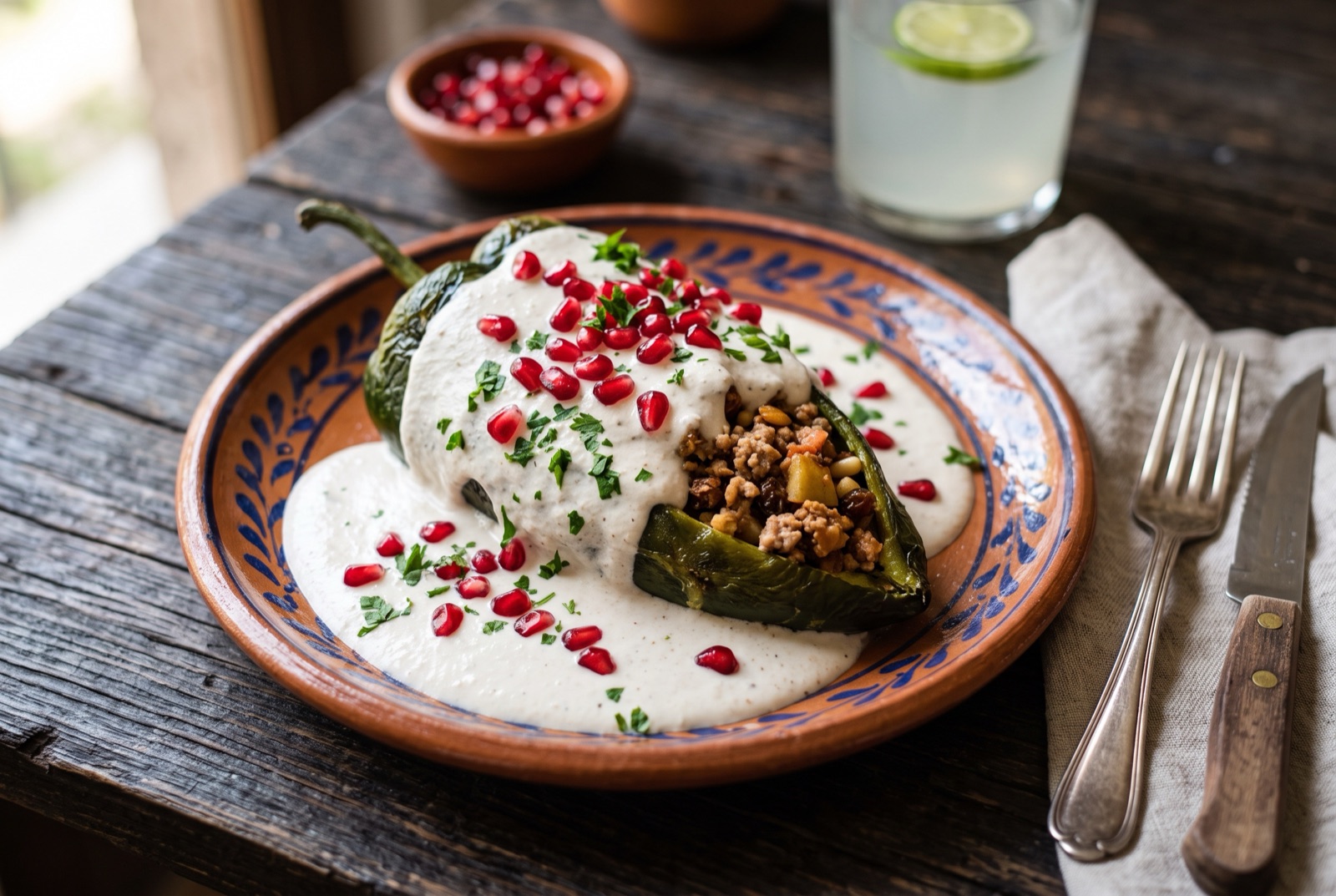
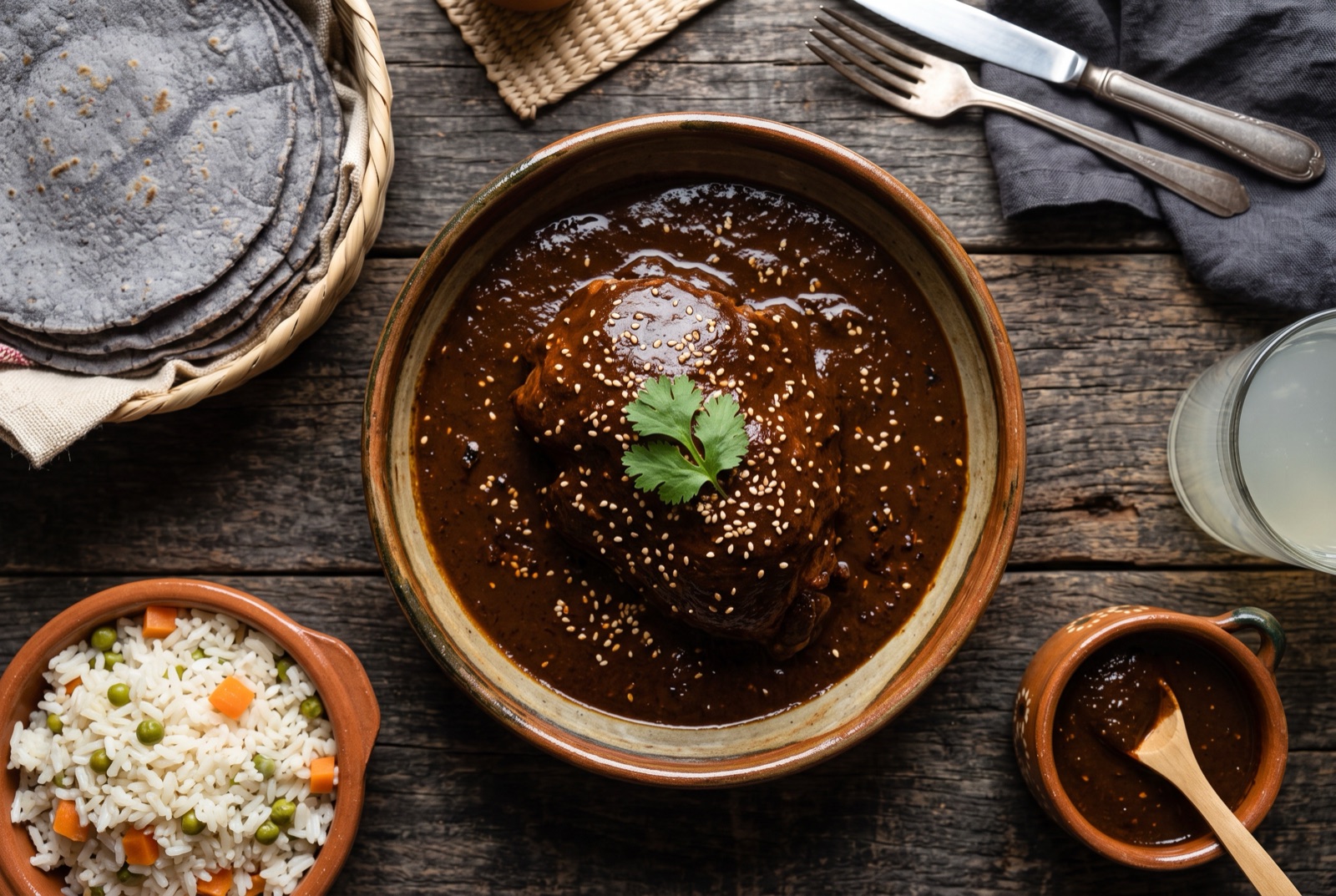
Mexico has 9 more dishes in the atlas — Chilaquiles Verdes and Chiles en Nogada, and 7 more.
All Mexico recipes Chicken recipes Tomato recipes Onion recipes mainstreet fooddairy freegluten freenut freeRecipe by The DishRoute Kitchen · published August 18, 2026 · updated August 18, 2026