Guacamole.
Molcajete-Style
Guacamole · say it: gwah-kah-MOH-leh
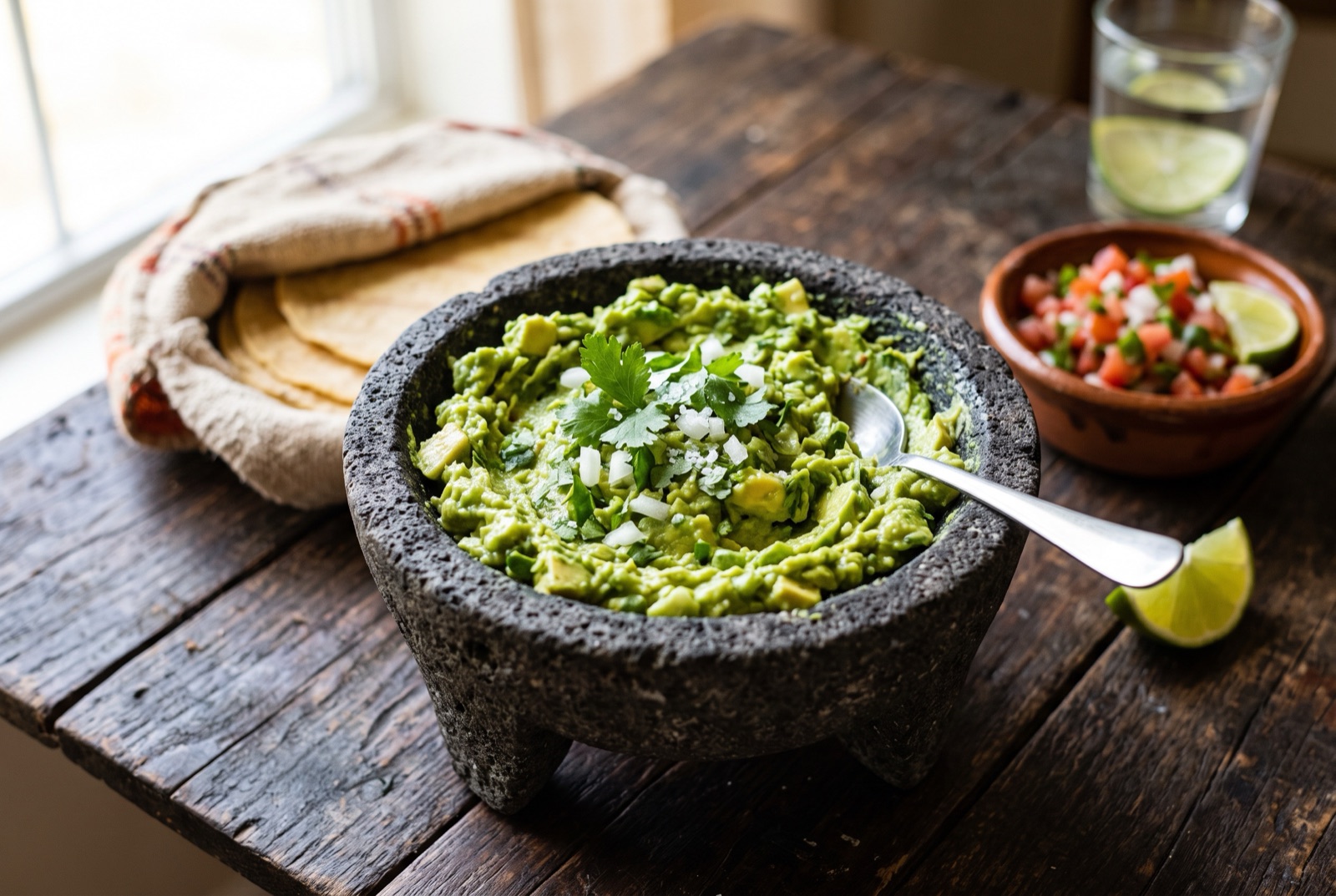
Guacamole is ripe avocado mashed coarsely with lime, white onion, green chile, cilantro and salt — and in the traditional Mexican version, tomato folded in at the end. The texture is the argument this recipe makes: real guacamole is chunky, with distinct pieces of avocado suspended in a rough, seasoned mash, not a smooth green cream. The method borrows the logic of the molcajete, the Mexican basalt mortar — pound the onion, chile and salt into a rough paste first so their flavor disperses, then fold the avocado through gently. Ten minutes, one bowl, and it needs nothing but good avocados and hot totopos.

- Gate
- Mexico
- Prep
- 15 min
- Cook
- 0 min
- Total time
- 15 min
- Serves
- 4
- Status
- Easy
- Nutrition / serving · estimated
- Calories 180 kcal
- Protein 3 g
- Carbs 11 g
- Fat 15 g
- Fiber 8 g
Why this recipe works.
- Molcajete logic with ordinary tools: pound the aromatics first, fold the avocado in last.
- Defends the traditional chunky texture — no food processor, no green mousse.
- Honest anti-browning guidance: plastic wrap pressed on the surface works, the pit trick does not.
- Ten minutes, one bowl, and proportions that let ripe avocado stay the main event.
Ingredients.
8 itemsFor serving
Equipment
- Molcajete or a sturdy bowl and fork
- Sharp knife
- Citrus squeezer
Instructions.
Pound the flavor base
In a molcajete or sturdy bowl, mash the onion, serrano, minced cilantro stems and salt together — grinding with a pestle or the back of a fork — until they collapse into a rough, wet, sharp-smelling paste. The salt should visibly draw juice from the onion.
Tip This paste is why molcajete guacamole tastes seasoned all the way through instead of in bites.
Open the avocados
Halve the avocados, remove the pits, and score the flesh into rough cubes in the skin. Scoop the cubes into the bowl — the flesh should be butter-yellow shading to green, with no grey streaks or hard patches.
Fold, don't purée
Add the juice of 1 lime and fold the avocado through the base with a fork, mashing only until it holds together while plenty of distinct chunks remain. The mash should look like a landscape, not a cream.
Finish and taste with a chip
Fold in the diced tomato and chopped cilantro leaves. Taste with a tortilla chip — not a spoon — and adjust salt and lime until the guacamole tastes bright and lands just shy of salty on its own.
Serve immediately
Serve straight away with warm totopos, while the surface is still vivid green. If it must wait, press plastic wrap directly onto the surface — air, not the missing pit, is what turns guacamole brown.
Tips from our kitchen.
- Judge ripeness by gentle pressure at the stem end — it should yield like a ripe pear. Rock-hard avocados have no place here, and no trick softens them in time.
- Mash the onion, chile, cilantro stems and salt into a rough paste before any avocado goes in; salt is the grinding agent and the flavors carry much further.
- Fold the avocado with a fork and stop early. The mash should hold visible chunks — it will soften further as people scoop.
- Seed and dice the tomato and fold it in last, so its juice does not water the mash down.
- Season with lime and salt in stages, tasting with a tortilla chip — chips carry salt of their own, and guacamole seasoned on a spoon often ends up over-salted.
- Making it ahead by an hour or two? Press plastic wrap directly onto the surface, excluding all air, and refrigerate. Leaving the pit in the bowl does nothing for the parts it does not touch.
Substitutions.
- Serrano chile → Jalapeño (milder) or a pinch of dried chile flakes
- Serrano is the classic sharpness; jalapeño is gentler and everywhere. Chile flakes are a last resort — you lose the fresh green heat.
- Fresh tomato → Simply omit it
- Plenty of respected Mexican versions are tomato-free. Do not substitute canned tomato, which makes the guacamole watery and sweet.
- Cilantro → Reduce rather than replace — there is no true stand-in
- For cilantro-averse eaters, use a small amount of parsley for greenness and accept a different, still pleasant sauce.
Variations.
- Guacamole taquero
- The smooth green sauce squeezed over tacos at street stands — avocado blended with tomatillos and chile. A different tool for a different job.
- With fruit
- Diced pomegranate seeds, mango or peach folded in — a festive style seen in central Mexico, sweet against the chile.
- Extra-fiery
- Leave the serrano seeds in and add a second chile, pounded with the base so the heat runs through every bite instead of arriving in pockets.
Storage & reheating.
Guacamole is best within an hour or two of mashing. To hold it briefly, press plastic wrap directly onto the surface so no air touches it and refrigerate up to a day; pour off any liquid and stir before serving. The pit-in-the-bowl trick does not prevent browning. Do not freeze — the texture collapses into a watery mash.
Serve with
Warm totopos (tortilla chips), or spooned onto tacos, tostadas and grilled meats.
The story behind Guacamole.
Guacamole is one of the oldest dishes still on the table in more or less its original form. Avocados were domesticated in Mesoamerica thousands of years ago, and the Aztecs were mashing them with chile and tomato long before the Spanish arrived. The name records the fact plainly: Nahuatl āhuacamōlli, a compound of āhuacatl (avocado) and mōlli (sauce or mash) — the same mōlli that survives in "mole." Spanish speakers wore the word down to guacamole, and the dish itself barely changed. What an Aztec kitchen would recognize is what a Mexico City taquería serves today.
The molcajete, the three-legged basalt mortar inherited from the same era, explains why traditional guacamole has the texture it does. Onion, chile, cilantro and salt are ground into a rough, potent paste against the volcanic stone, and the avocado is then mashed in only briefly, so the finished sauce is a landscape — creamy in places, chunky in others — rather than a purée. A bowl and a fork reproduce the idea faithfully; a food processor destroys it, whipping the avocado into something closer to a mousse and bruising the cilantro.
Two honest notes, since guacamole attracts folklore. First, the famous trick of leaving the avocado pit in the bowl to prevent browning is a myth: the pit protects only the surface it physically covers, and the rest oxidizes on schedule. Browning is caused by air contact, so the fix is mechanical — press plastic wrap directly onto the surface, or float a thin layer of lime juice or water over it. Second, lime does slow browning slightly and brightens everything, but no amount of it makes guacamole a keeper. It is a fresh sauce; make it close to serving, as Mexican kitchens always have.
Questions, answered.
What does the word guacamole mean?
It comes from Nahuatl, the language of the Aztecs: āhuacamōlli, combining āhuacatl (avocado) and mōlli (sauce or mash) — literally "avocado sauce." The same mōlli survives in the word "mole." The dish predates the Spanish conquest, and its modern form is remarkably close to what Mesoamerican kitchens made centuries ago.
Does leaving the avocado pit in guacamole stop it from browning?
No — this is a durable myth. Browning is oxidation caused by contact with air, and the pit protects only the small patch of surface it physically covers; everything around it browns on schedule. What actually works is excluding air: press plastic wrap directly onto the surface, or float a thin layer of lime juice or water on top and pour it off before serving.
Should guacamole be smooth or chunky?
Traditionally chunky. The molcajete method grinds the onion, chile and salt to a paste but mashes the avocado only briefly, leaving distinct pieces in a coarse, creamy base. A food processor whips avocado into a smooth mousse — a different (and by most Mexican standards inferior) result. A bowl and a fork give the right texture with no special equipment.
How do I pick a ripe avocado for guacamole?
Press gently near the stem end: a ripe avocado yields slightly, like a ripe pear, without feeling mushy or hollow. Hass avocados also darken from green toward black as they ripen. Hard fruit ripens on the counter in 2–4 days (faster in a paper bag with a banana); refrigerate once ripe to hold it a few days more.
How far ahead can I make guacamole?
It is genuinely a last-hour dish — the flavor is brightest and the color best within an hour or two of mashing. With plastic wrap pressed directly onto the surface and refrigeration it survives to the next day with minor browning at the edges, which you can stir in or scrape off. Making it a day ahead on purpose trades away most of what makes it good.
You might also like.
All recipes →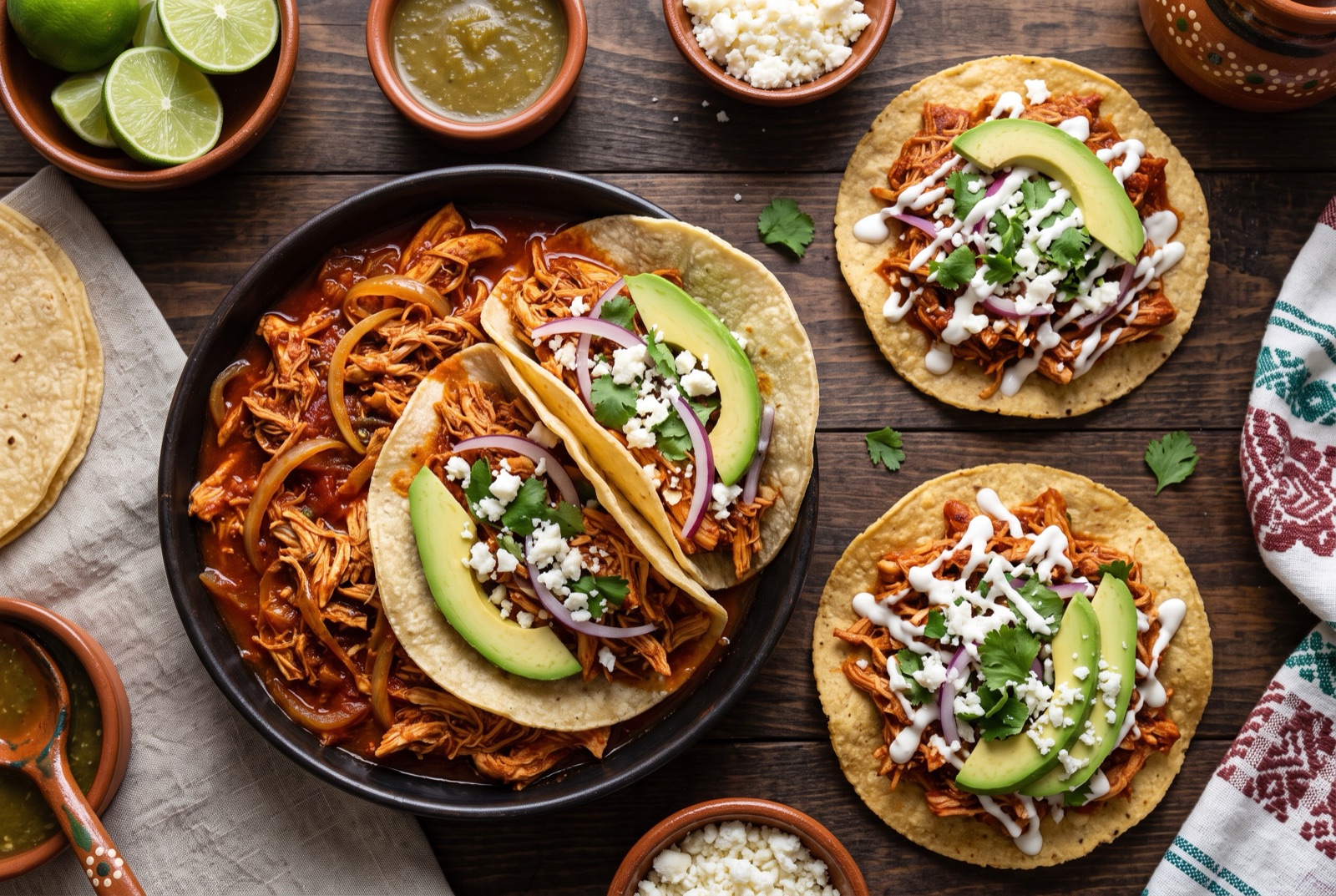
Keep exploring Mexico.
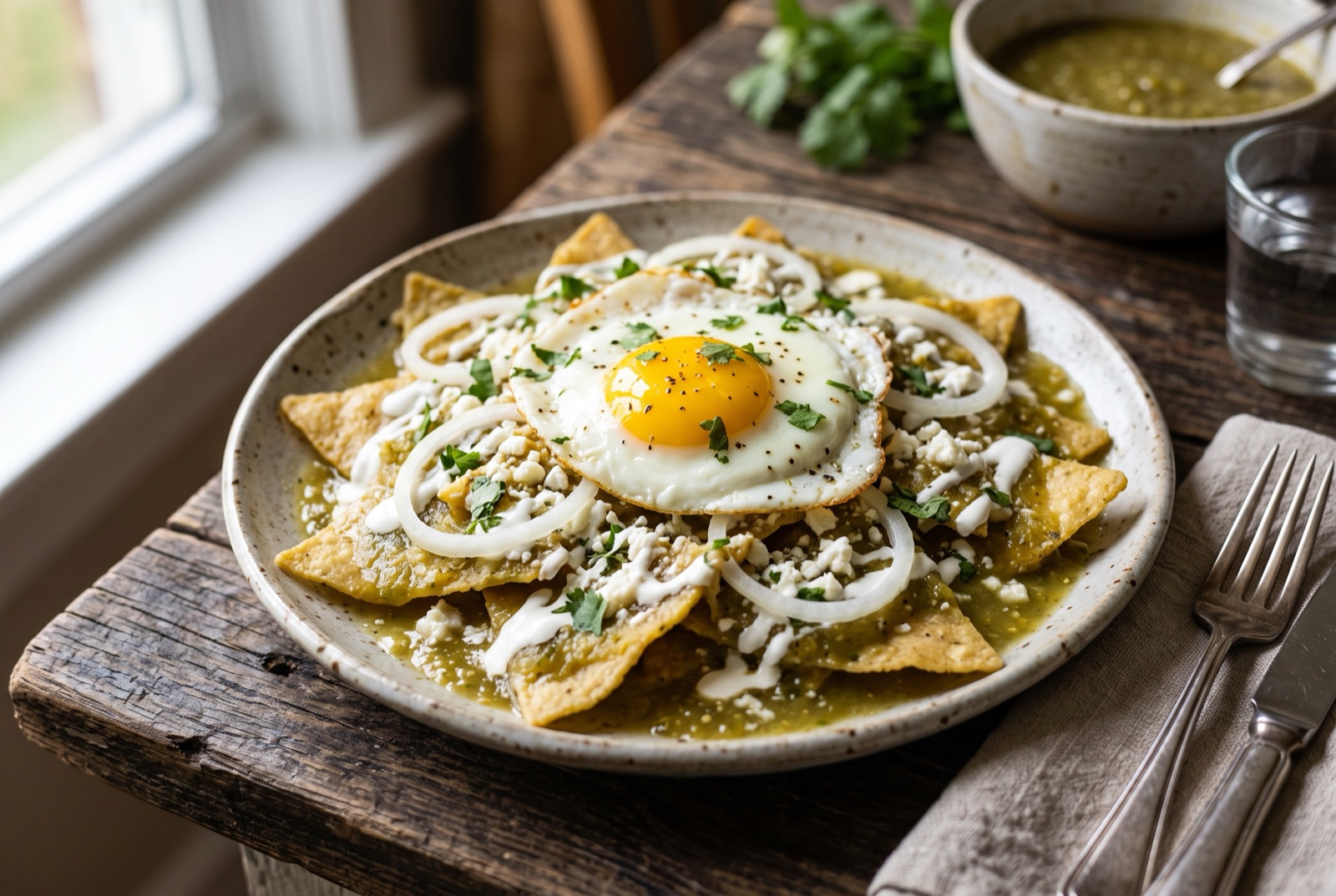
Mexico has 9 more dishes in the atlas — Chicken Tinga and Chilaquiles Verdes, and 7 more.
All Mexico recipes Lime recipes Onion recipes Cilantro recipes appetizersaucesnackvegangluten freedairy freenut freeRecipe by The DishRoute Kitchen · published August 18, 2026 · updated August 18, 2026