Pozole Rojo.
Red Hominy and Pork Stew
Pozole rojo · say it: poh-SOH-leh ROH-hoh
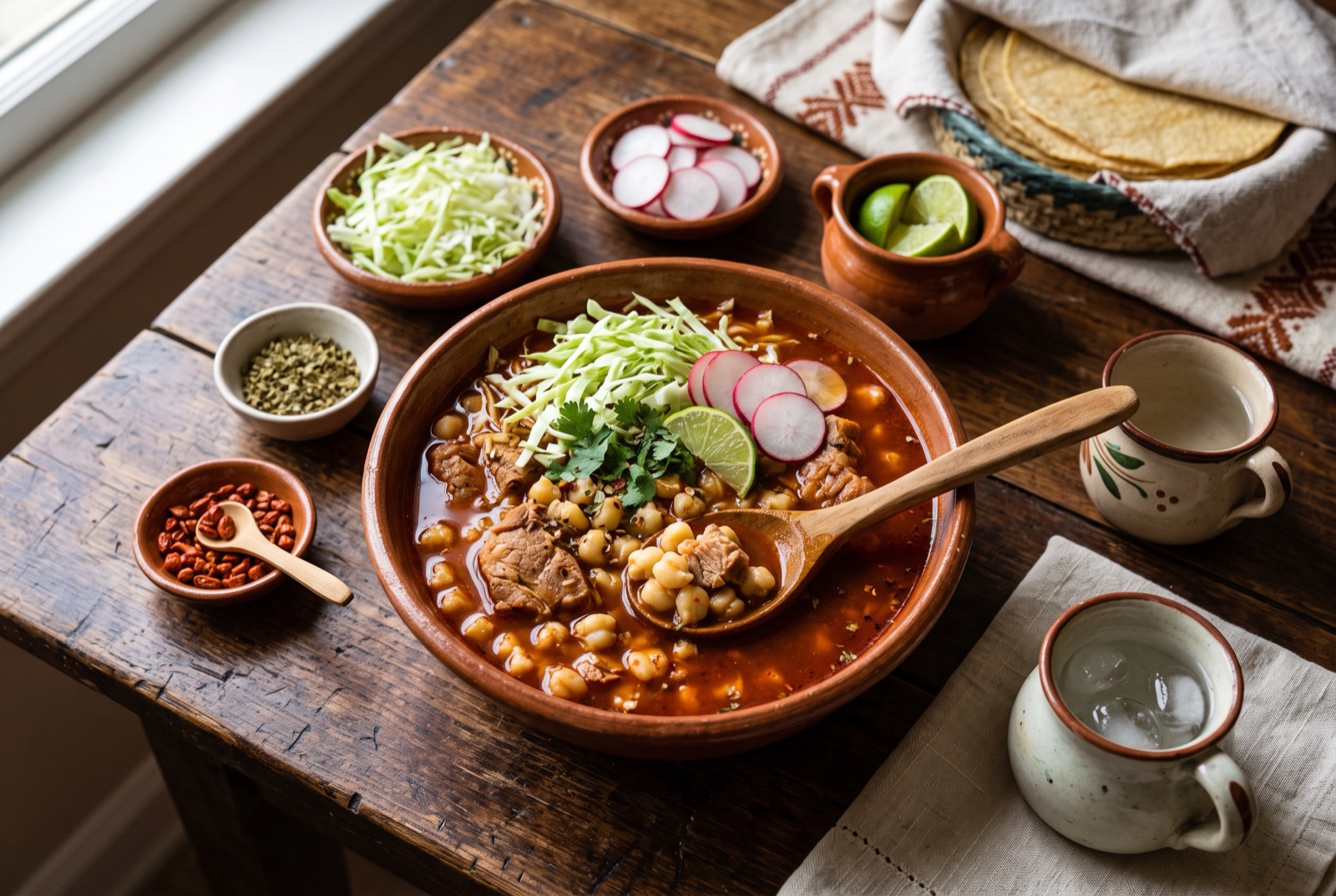
Pozole rojo is a pork and hominy soup with a broth stained brick-red by dried guajillo and ancho chiles — deep and mildly smoky rather than fiery, with the pork fat giving it body and the hominy giving it a soft, faintly limey chew that nothing else in the soup world quite matches. Half the dish arrives separately: a tray of shredded cabbage, sliced radish, raw onion, dried oregano, chile powder and lime wedges that everyone piles into their own bowl, so each spoonful has crunch and acid cutting through the rich broth. It is Saturday-night food, hangover food and Independence Day food, and it is cooked in quantities that assume people will show up.

- Gate
- MexicoJalisco and Guerrero
- Prep
- 25 min
- Cook
- 2 hr 30 min
- Total time
- 2 hr 55 min
- Serves
- 6
- Status
- Medium
- Nutrition / serving · estimated
- Calories 520 kcal
- Protein 38 g
- Carbs 42 g
- Fat 22 g
- Fiber 8 g
- Sodium 890 mg
Why this recipe works.
- Uses tinned hominy so the soup is a Saturday project rather than a two-day one, with instructions for dried corn if you want it.
- The chile purée is strained and fried before it meets the broth, which is what gives pozole its clean red color instead of a muddy one.
- Pork shoulder and a few bones together, so the broth has both shreddable meat and real body.
- Sets out the full garnish tray properly — the half of the dish most recipes reduce to an afterthought.
Ingredients.
21 itemsFor the pot
For the red broth
For the table
Equipment
- Large stockpot or Dutch oven
- Blender
- Fine sieve
- Comal or heavy frying pan
Instructions.
Start the pork
Put 1.2 kg of pork shoulder, the bones, halved onion, garlic and bay leaves in a large pot, cover with the water and bring slowly to a simmer. Skim off the grey foam that rises in the first ten minutes until the surface runs clear.
Tip Bringing it up slowly draws out more scum, which means a cleaner broth later.
Simmer until tender
Lower the heat so the pot barely bubbles, part-cover, and cook for 90 minutes until the pork gives easily when pressed with a spoon but still holds together in chunks. Do not let it boil hard or the meat will tighten and go stringy.
Toast and soak the chiles
While the pork cooks, press the opened guajillos and anchos onto a dry hot comal for about 15 seconds a side, until they smell nutty and turn flexible. Cover with hot water and soak for 20 minutes until fully soft.
Tip Do not let them darken. A scorched guajillo turns the whole broth bitter.
Blend and strain the chile purée
Blend the drained chiles with the raw garlic, cumin, oregano and 250 ml of the pork broth until completely smooth, then push the purée through a fine sieve, pressing hard and discarding the skins left behind.
Fry the purée
Heat the lard in a frying pan until it shimmers, pour in the strained purée and cook for 6–8 minutes, stirring, until it darkens to a deep brick red, thickens noticeably and smells toasted rather than sharp.
Build the soup
Fish the bones, onion and bay leaves out of the pot. Stir the fried chile purée and the rinsed hominy into the broth and simmer, uncovered, for 40 minutes so the corn absorbs the chile and the broth reduces slightly.
Season and rest
Taste and salt properly now — pozole needs more than you expect, and under-salted broth tastes watery. Turn off the heat and let the pot sit for 15 minutes so the fat rises and the flavors settle.
Set the table and serve
Arrange the cabbage, radish, onion, oregano, chile powder and lime wedges in bowls on the table. Ladle the soup into deep bowls, making sure each gets pork, hominy and a slick of red fat, and let everyone build their own from there.
Tips from our kitchen.
- Fry the strained chile purée in a little lard before adding it to the pot. Raw blended chile makes a broth that tastes flat and slightly dusty.
- Rinse tinned hominy thoroughly. The canning liquid is starchy and metallic, and it will cloud an otherwise clear broth.
- Skim the fat once, not obsessively. Pozole is supposed to carry a red slick of chile-stained pork fat on the surface — that is flavor, not a mistake.
- Crumble the dried oregano between your palms over the bowl rather than sprinkling it from the jar; the warmth of your hands releases far more aroma.
- Cut the cabbage as thin as you can manage. Thick shreds sit in the broth like leaves; fine shreds wilt slightly and thread through every spoonful.
- Salt late. The broth reduces over two hours, and pork bones give up their own salt as they cook.
Substitutions.
- Tinned hominy → 350 g dried nixtamalized corn (maíz para pozole)
- Soak overnight, then boil in fresh water for 2–3 hours until the kernels burst open before adding to the soup. Better texture and flavor, but it adds most of a day.
- Guajillo chiles → New Mexico or California dried chiles
- Similar mild fruity heat and the same red color. Avoid substituting with chile powder, which brings none of the fruitiness.
- Pork shoulder → Bone-in chicken thighs and legs
- Pozole de pollo is common and much quicker — simmer the chicken for 45 minutes rather than two hours.
Variations.
- Pozole verde
- Guerrero's green version: the chile broth is replaced by tomatillos, serranos, cilantro and toasted pumpkin seeds, which thicken it slightly and make it tart and grassy.
- Pozole blanco
- Sinaloa-style, with no chile in the broth at all. The pork and hominy broth is served plain and the garnish tray, plus a salsa, does the seasoning.
- Pozole with pig's trotters
- Adding a split trotter or two to the pot gives the broth a gelatinous body that shoulder alone cannot, which is how most pozolerías do it.
Storage & reheating.
Pozole keeps 4 days refrigerated and improves for the first two, as the chile settles into the broth. Store the garnishes separately and cut them fresh; cabbage and radish go limp within hours in the fridge. It freezes well for 3 months — freeze the pork, hominy and broth together, and expect the hominy to soften slightly on thawing. Reheat gently on the stove rather than the microwave so the pork does not toughen.
Serve with
Tostadas spread with crema, and lime wedges — the standard side that comes with every bowl in a pozolería.
The story behind Pozole Rojo.
Pozole is pre-Hispanic in the most literal sense — the corn at its heart is nixtamalized, treated with slaked lime in a process the Mesoamericans developed millennia ago, which loosens the hulls, makes the kernels bloom open when cooked and unlocks nutrients the body cannot otherwise take from maize. Spanish chroniclers of the conquest recorded that ritual versions of the stew in Mexica ceremony had used human flesh, a detail Mexicans repeat with a certain grim relish; when pork arrived with the Spanish, it took that place, and the version everybody eats today dates from the colonial period onward.
The soup splits into three colors and several fierce regional loyalties. Pozole rojo is the chile-broth version most associated with Jalisco and Guerrero, and it is the one most people mean by pozole. Pozole verde, strongest in Guerrero, builds its broth on tomatillos, pumpkin seeds and green chiles instead. Pozole blanco leaves the broth clear and lets the garnish tray do the seasoning, and it is the standard in Sinaloa. Arguments over which is correct are permanent and mostly good-natured, though a Guerrerense will tell you the green is the real one.
What unites all of them is the table. Pozole is never served finished; it comes as a bowl of broth, pork and hominy, and beside it the garnishes that turn a soup into a meal you assemble. In much of Mexico it is Thursday and Saturday food at pozolerías that open late, and on the night of 15 September, when the country stays up for the grito, an enormous pot of pozole is the near-universal answer to what everyone is eating. It reheats better than it cooks fresh, which is the other reason families make far more than they need.
Questions, answered.
What exactly is hominy?
Hominy is dried field corn that has been cooked in an alkaline solution, traditionally lime water, in a process called nixtamalization. The treatment strips the tough hull, gives the kernel a distinctive soft chew and slightly limey aroma, and makes the corn's niacin available to the body. It is the same process that turns corn into masa for tortillas. Sweetcorn is not a substitute in any sense.
Is pozole rojo spicy?
The broth itself is mild — guajillo and ancho chiles are fruity and low in heat, and their job is color and depth rather than fire. The heat comes from the table, where diners add chile powder, chile de árbol salsa or fresh chiles to their own bowl. This makes pozole an easy dish to serve to a mixed table.
Can I make pozole in a pressure cooker?
Yes, and it saves over an hour. Pressure cook the pork with the aromatics for 35 minutes at high pressure, release naturally, then add the fried chile purée and hominy and simmer uncovered for 20 minutes so the flavors combine. The broth will be slightly less reduced, so check the seasoning carefully.
Why is my pozole broth cloudy and dull instead of red?
Two usual causes: the chile purée was not strained, so pieces of skin cloud the liquid, or the pork was boiled hard rather than simmered, which emulsifies fat and protein into the broth. Strain the chiles through a sieve, and keep the pot at a lazy simmer where bubbles break the surface every second or two.
What goes on top and does it matter?
Finely shredded cabbage or lettuce, thin radish slices, chopped white onion, dried Mexican oregano, chile powder and plenty of lime. It matters a great deal — the raw crunch and acidity are what balance a rich pork broth, and a bowl of pozole without them tastes heavy and unfinished.
You might also like.
All recipes →
Keep exploring Mexico.
Mexico has 9 more dishes in the atlas — Chicken Tinga and Chilaquiles Verdes, and 7 more.
Recipe by The DishRoute Kitchen · published August 19, 2026 · updated August 19, 2026