Tacos al Pastor.
Adobo-Marinated Pork Tacos
Tacos al pastor · say it: TAH-kohs al pas-TOR
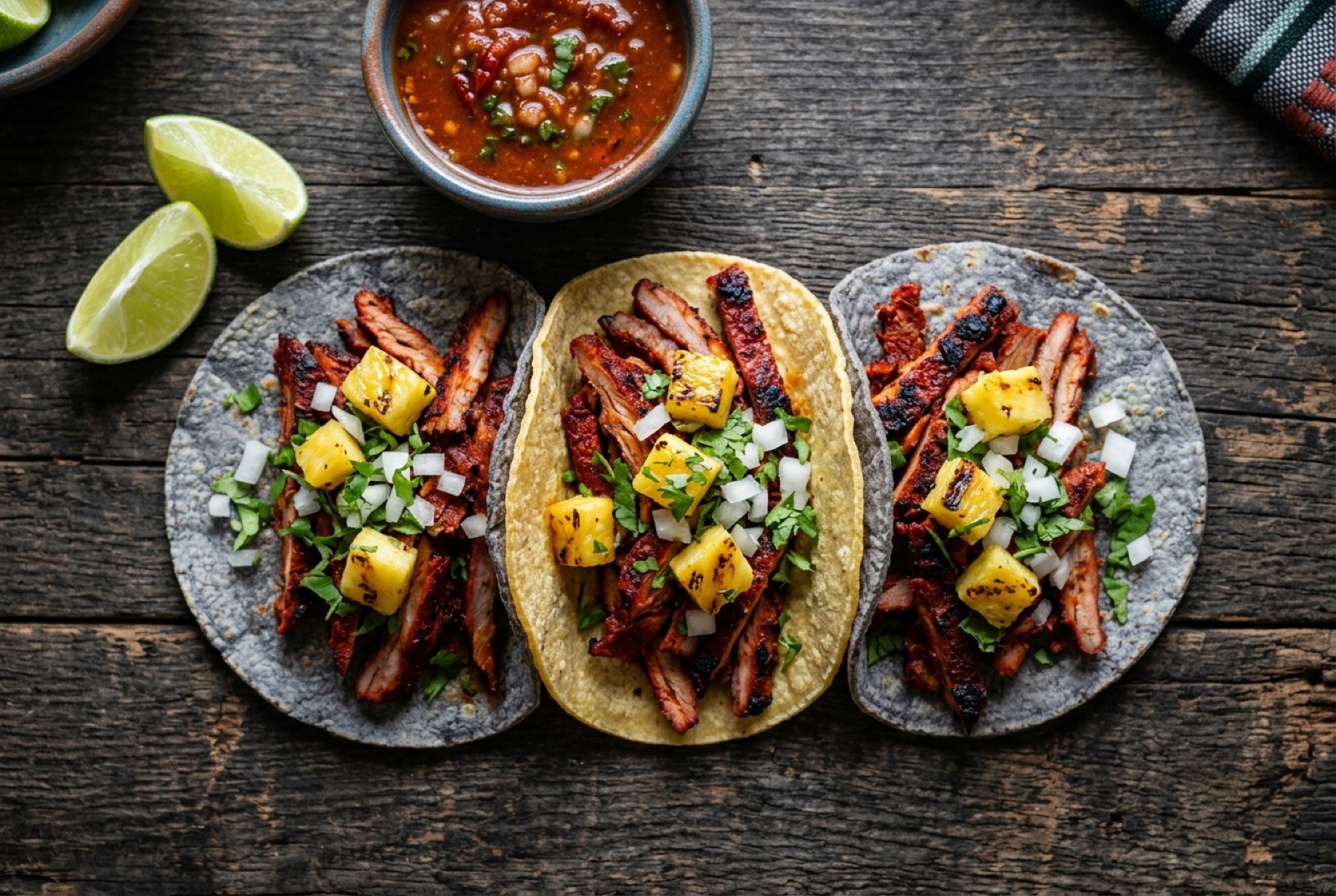
Tacos al pastor are Mexico City's signature taco: pork marinated in a brick-red adobo of guajillo chiles, achiote and spices, traditionally stacked on a vertical spit called a trompo and shaved off in crisp-edged ribbons, then folded into corn tortillas with charred pineapple, onion and cilantro. The flavor is layered rather than hot — fruity chile, earthy achiote, a vinegar tang, pork fat, and the sweet-acid hit of pineapple against it all. No home kitchen has a trompo, so this version stacks thin marinated slices, roasts them hard, and crisps the edges in a pan: not a compromise so much as a translation.

- Gate
- MexicoMexico City
- Prep
- 40 min
- Cook
- 45 min
- Total time
- 5 hr 25 min incl. 4 hr rest
- Serves
- 4
- Status
- Medium
- Nutrition / serving · estimated
- Calories 680 kcal
- Protein 42 g
- Carbs 52 g
- Fat 32 g
- Fiber 6 g
Why this recipe works.
- A true taquería adobo — toasted guajillos and achiote, not chili powder shortcuts.
- The stack-and-sear method recreates the trompo's crisp edges without any special equipment.
- Overnight marinade does the work; active cooking time is under an hour.
- Scales cleanly for a crowd — the oven roasts two stacks as easily as one.
Ingredients.
15 itemsFor the pork
For the adobo
For serving
Equipment
- Blender
- Sheet pan or roasting tin
- Cast-iron or heavy skillet
- Comal or dry pan for tortillas
Instructions.
Toast and soak the chiles
Toast the guajillos in a dry pan over medium heat, pressing them flat, about 30 seconds per side — fragrant, pliable, not smoking. Cover them with just-boiled water and let them soak until fully soft, about 15 minutes.
Tip Weigh the chiles down with a small plate so they stay submerged.
Blend the adobo
Drain the chiles and blend them with the achiote paste, vinegar, pineapple juice, garlic, cumin, oregano, cinnamon and salt until completely smooth, 1–2 minutes. It should be a thick, brick-red sauce; add a splash of water only if the blender struggles.
Marinate the pork
Coat 1 kg of sliced pork shoulder thoroughly with the adobo, massaging it between the slices so every surface is covered. Cover and refrigerate for at least 4 hours, ideally overnight.
Tip Reserve a spoonful of adobo before it touches raw pork — good for seasoning rice or beans later.
Roast the stack
Heat the oven to 230°C. Stack the marinated slices into two loose piles on a foil-lined sheet pan and roast for 30 minutes, until the edges brown and the adobo darkens. The stacks mimic the trompo: moist inside, roasted outside.
Char the pineapple
While the pork roasts, sear the pineapple slices in a dry, very hot pan (or under the grill) until deeply caramelized on both sides, 3–4 minutes per side. Chop into small pieces and set aside.
Chop and crisp
Rest the pork 5 minutes, then chop it roughly into ribbons. Working in batches, sear the chopped meat in a screaming-hot cast-iron pan for 2–3 minutes without stirring much, until the edges crisp and catch in spots. This sear is what makes it taste of the taquería.
Warm the tortillas and build
Warm the tortillas directly over a flame or in a dry hot pan until soft and blistered, keeping them wrapped in a cloth. Build each taco on doubled tortillas: hot pork, charred pineapple, chopped onion, cilantro, and a hard squeeze of lime. Serve immediately with more lime on the table.
Tips from our kitchen.
- Slice the pork thin — about 1 cm — and against the grain. Thin slices drink up the adobo overnight and crisp properly; thick slabs stay bland in the middle.
- Toast the dried chiles only until fragrant, 20–30 seconds a side. The moment they smoke they turn bitter, and bitterness in the adobo cannot be fixed later.
- Marinate at least 4 hours, ideally overnight. Achiote and chile need time to penetrate; a 30-minute marinade gives you painted meat, not seasoned meat.
- Get real char. Whatever the method, finish the sliced meat in a screaming-hot pan so the edges crisp and catch — those burnt-sugar edges are the taste of the trompo.
- Warm the tortillas properly, directly over flame or on a dry hot pan until they puff and blister in spots. A cold tortilla halves the taco.
- Double up small tortillas street-style: two per taco keeps the juices from breaking through.
Substitutions.
- Achiote paste → 1 tbsp sweet paprika + ½ tsp turmeric + splash more vinegar
- Approximates the color and earthiness. The flavor will be close, not identical — achiote is worth hunting down.
- Guajillo chiles → Ancho chiles, or 3 tbsp mild chile powder
- Ancho is sweeter and darker; the adobo still works. Avoid generic "chili powder" blends with cumin already added.
- Pork shoulder → Boneless chicken thighs
- A common taquería variant (pollo al pastor). Marinate the same way, grill or sear hard, chop roughly.
Variations.
- Gringas
- The same pastor meat and pineapple folded into a flour tortilla with melted cheese — a Mexico City taquería staple.
- Alambre al pastor
- Pastor meat griddled with bacon, peppers, onion and cheese, served with tortillas on the side for build-your-own.
- Oven trompo
- Stack the marinated slices on metal skewers standing in half an onion, roast upright, and carve — the closest home imitation of the spit.
Storage & reheating.
Cooked pastor meat keeps 3 days refrigerated and reheats best in a hot dry pan (a microwave steams away the crisp edges). The raw marinated pork can also be frozen for up to 2 months — thaw and cook as written. Store meat, tortillas and toppings separately; assembled tacos do not keep.
Serve with
Frijoles de olla, Mexican rice, or simply more salsa and a cold beer — the taquería way.
The story behind Tacos al Pastor.
Al pastor means "shepherd style," but the shepherds in question were Lebanese. Immigrants arriving in Mexico in the early twentieth century brought shawarma — lamb roasted on a vertical spit — and sold it as tacos árabes, on pita-like flatbread with Middle Eastern seasoning. Over the following decades, Mexican taqueros in Puebla and Mexico City rebuilt the idea from local parts: pork instead of lamb, corn tortillas instead of pita, and a marinade drawn from the Mexican pantry — guajillo chiles, achiote, vinegar, spices. By the 1960s the dish had settled into its modern form in the capital's taquerías, and the trompo, glowing and spinning behind glass, became the unofficial lighthouse of Mexico City nightlife.
The pineapple is the famous flourish. A whole one traditionally crowns the spit, roasting as the meat turns, and a showman taquero carves a slice and flips it through the air to land on the taco. Beyond theater, it earns its place: pineapple's acidity and caramelized sugar cut the richness of the pork, and its enzyme, bromelain, is a natural tenderizer that works on the meat as juices run down the spit.
Al pastor is now arguably the most beloved taco in Mexico and the standard by which taquerías are judged — locals will cross the city for the right trompo. It is also a neat piece of evidence for how cuisines actually work: a Lebanese technique, filtered through Mexican ingredients and street economics, produced something that belongs completely to Mexico. The home method here trades the spit for a hot oven and a cast-iron sear, which preserves the two things that matter most: deeply seasoned pork and crisp, slightly charred edges.
Questions, answered.
What does "al pastor" actually mean?
"Al pastor" translates as "shepherd style." The name is a nod to the dish's origin in vertical-spit roasting, a technique associated with Lebanese shawarma — originally lamb, a shepherd's meat — that immigrants brought to Mexico in the early 1900s. Mexican taqueros replaced the lamb with adobo-marinated pork, and the name stayed.
Is tacos al pastor spicy?
Moderately at most. Guajillo chiles are mild — fruity and tangy rather than fiery — and the adobo's heat is well below salsa level. The tacos get their real kick from whatever salsa you add at the table, so heat is entirely in your control. Children in Mexico eat al pastor without comment.
Can I make al pastor without a vertical spit?
Yes — virtually everyone outside a taquería does. The two things the trompo provides are self-basting (fat running down the stack) and crisp carved edges. At home, thin slices, a full-flavored adobo, a hot oven and a final hard sear in cast iron replicate both well enough that the difference is a detail, not a disappointment.
Why is there pineapple on tacos al pastor?
A whole pineapple traditionally roasts atop the trompo, and slices are carved onto the taco. It balances the dish — acidity and caramelized sweetness against rich, spiced pork — and its bromelain enzyme mildly tenderizes the meat. Charring the pineapple is essential; raw pineapple fights the taco instead of finishing it.
What is achiote and can I skip it?
Achiote (annatto) is a ground red seed paste from the Yucatán that gives al pastor its signature brick-red color and a subtle earthy, peppery note. You can approximate it with paprika and turmeric, and the tacos will still be very good — but the distinctive color and the faint background flavor of a true taquería pastor come from achiote.
You might also like.
All recipes →
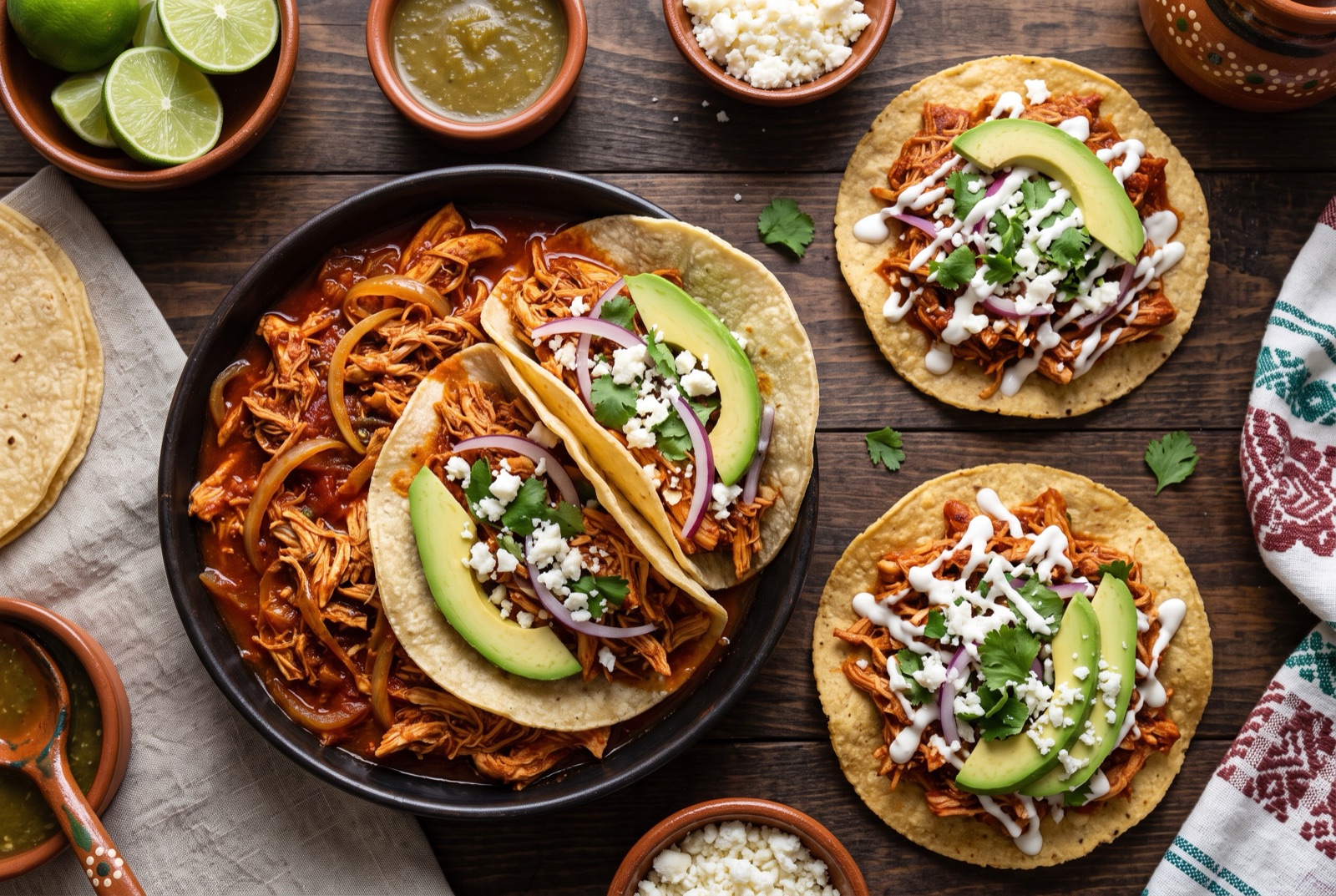
Keep exploring Mexico.
Mexico has 9 more dishes in the atlas — Chicken Tinga and Chilaquiles Verdes, and 7 more.
Recipe by The DishRoute Kitchen · published August 18, 2026 · updated August 18, 2026