Arepa de Maíz.
Colombian Griddled Corn Cakes
Arepa de maíz · say it: ah-REH-pah deh mah-EESS
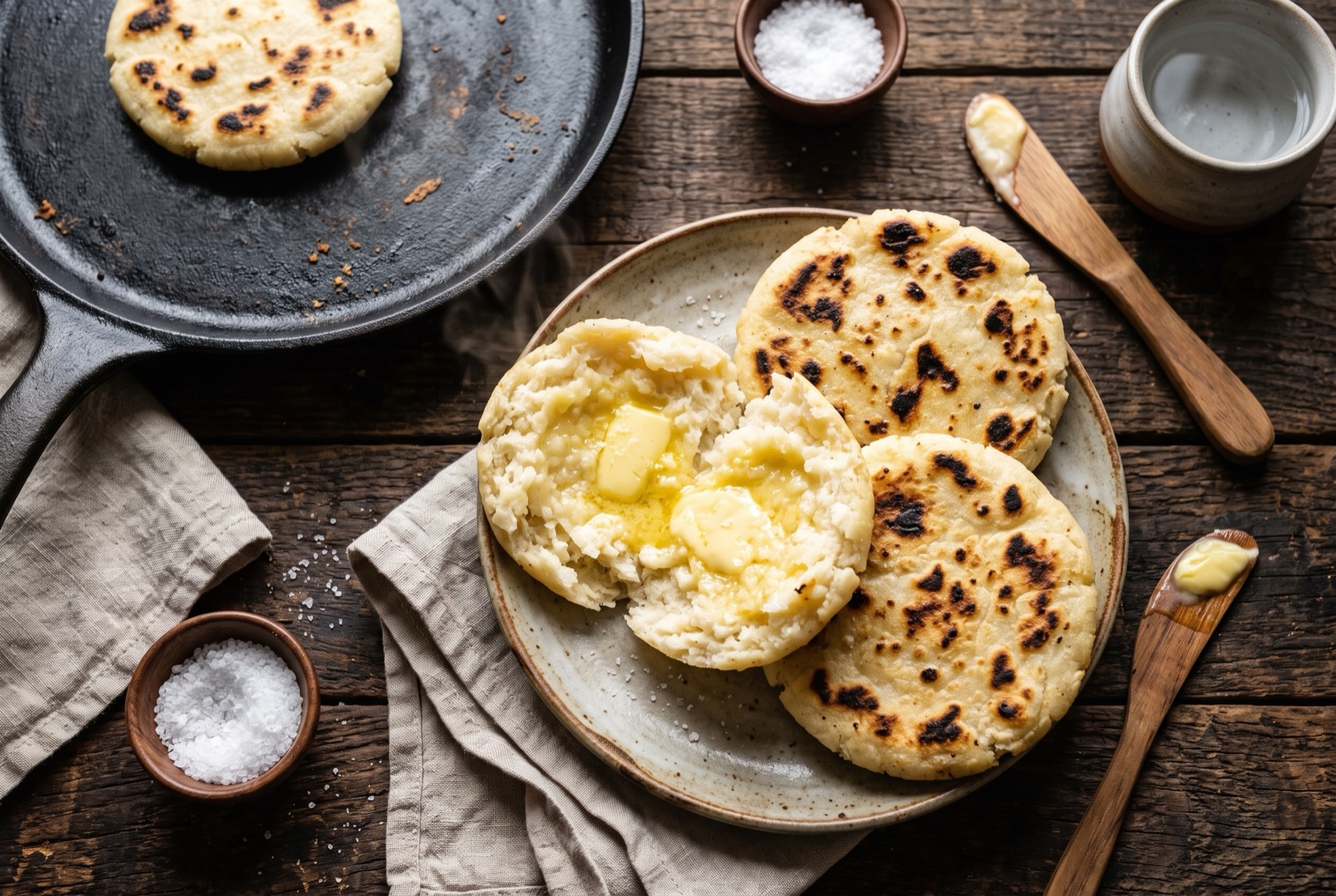
An arepa is a flat cake of corn dough cooked on a dry griddle until the outside is speckled and firm and the inside stays soft and steamy. The Colombian version most people meet is the arepa paisa from Antioquia: thin, pale, often made without salt, and eaten alongside food rather than filled — buttered while hot, laid under a fried egg, or dunked in a bowl of beans. It tastes plainly of toasted corn, which is the point; it is there to carry other flavors the way bread does elsewhere. The dough takes three minutes to mix, needs no yeast, no rising and no special equipment, and the entire skill lies in getting the hydration right by feel.

- Gate
- ColombiaAntioquia and nationwide
- Prep
- 15 min
- Cook
- 25 min
- Total time
- 45 min incl. 5 min rest
- Serves
- 4
- Status
- Easy
- Nutrition / serving · estimated
- Calories 390 kcal
- Protein 11 g
- Carbs 53 g
- Fat 15 g
- Fiber 5 g
Why this recipe works.
- Hydration taught by feel and not by a fixed number, which is the only way corn dough actually works.
- Explains plainly why masa harina cannot be swapped in, before you waste a bag finding out.
- Cooking times tied to what the surface looks and sounds like, so you can tell a done arepa from a pale one.
- Scales to a big batch and freezes raw, which is how Colombian households really keep up with them.
Ingredients.
6 itemsFor the dough
To serve
Equipment
- Heavy frying pan, cast-iron skillet or budare
- Mixing bowl
- Two sheets of plastic or a split freezer bag for shaping
Instructions.
Mix the dough
Stir the salt into the warm water in a wide bowl, then rain in the masarepa with one hand while stirring with the other so no dry pockets form. Work in the soft butter if you are using it. The mixture will look loose and soupy at this stage, which is correct.
Let it hydrate
Leave the bowl alone for 5 minutes. The flour drinks the water and the mixture firms up on its own from a batter into something you can handle — do not judge the dough before this has happened.
Knead and test
Knead the dough in the bowl for a minute until it is completely smooth and no longer sticks to your fingers. Press a small ball flat with your palm: if the rim splits into cracks, knead in warm water a tablespoon at a time until a flattened disc keeps a smooth, unbroken edge.
Tip The finished dough should feel like soft modelling clay — it takes a fingerprint cleanly and holds it.
Shape the arepas
Divide the dough into 8 balls, each about the size of a golf ball. Flatten each one between two sheets of plastic to a disc roughly 10 cm across and 1 cm thick, then smooth the edge by running a wet finger around it.
Griddle the first side
Heat a heavy pan over medium heat and grease it very lightly. Lay on the discs without crowding and cook for 6 minutes, until the underside is matte, dry and marked with dark toasted blisters and the arepa lifts cleanly without sticking.
Turn and finish
Flip and cook the second side for another 6 minutes. The arepa is done when both faces are speckled, the sides look set rather than damp, and it sounds hollow when you tap the middle with a fingernail.
Split, butter, eat
Split each hot arepa most of the way through with a knife, drop in butter so it melts into the steamy interior, and tuck in slices of cheese. Eat them straight away — arepas are at their best in the first ten minutes off the griddle.
Tips from our kitchen.
- Use warm water, not cold — warm water hydrates the flour faster and gives a smoother, more pliable dough.
- Judge the dough by pressing a ball flat: if the edges split into cracks, work in more water a tablespoon at a time until they stay smooth.
- Shape between two sheets of plastic or inside a split freezer bag; the dough sticks to bare hands and to every board.
- Cook on medium, never high. A screaming griddle scorches the outside while the middle stays raw and pasty.
- A finished arepa feels light and sounds hollow when you tap it. If it still feels dense and heavy, give it another minute a side.
Substitutions.
- Masarepa (precooked corn flour) → There is no working substitute
- Masa harina is nixtamalized for tortillas and behaves differently; polenta, cornmeal and corn starch will not form this dough at all. Masarepa is sold as harina P.A.N., Areparina or Goya masarepa in Latin American shops and most large supermarkets.
- Butter in the dough → Neutral oil, or nothing at all
- The traditional arepa paisa is corn, water and sometimes not even salt. Butter makes a softer, richer cake — leave it out for the plainer, more authentic version, or to keep the recipe vegan.
- Queso fresco → Feta rinsed of its brine, halloumi, or fresh mozzarella
- You want a mild, salty cheese that softens without turning to liquid. Colombian queso costeño is saltier and drier than most fresh cheeses sold elsewhere.
Variations.
- Arepa con queso
- Knead grated fresh cheese into the dough before shaping, or lay a slice between two thin discs and seal the edges so it melts into a molten centre on the griddle.
- Arepa de choclo
- Made with fresh sweet corn blitzed with a little masarepa, sugar and butter — soft, sweet and yellow, folded over cheese and eaten as a snack in Antioquia and Valle del Cauca.
- Arepa de huevo
- The coastal one: fry a thin arepa briefly, cut a slit in the puffed edge, drop in a raw egg, seal and fry again until the egg sets inside. It takes practice and it is worth it.
Storage & reheating.
Cooked arepas hold a few hours at room temperature and reheat well on a dry pan or in a toaster — the microwave turns them rubbery. Raw shaped discs are the better make-ahead: stack them between squares of parchment, freeze flat, and cook from frozen over slightly lower heat for a couple of extra minutes a side. The uncooked dough itself does not keep well beyond a few hours in the fridge, as it stiffens and starts to crack when shaped.
Serve with
Butter and salty fresh cheese, hot chocolate for breakfast, or a bowl of stewed beans at lunch.
The story behind Arepa de Maíz.
Arepas predate both Colombia and Venezuela by a long way. Corn was ground and cooked into flat cakes on clay griddles by indigenous peoples across the region now split between the two countries, and the word itself comes from an indigenous term for the griddle. That shared history is exactly why the argument over who owns the arepa cannot be settled: the tradition is older than the border that divides it, and both countries have a genuine claim. Colombians and Venezuelans have been trading the accusation of theft for decades, mostly cheerfully, occasionally not, and no amount of food history resolves it because there is nothing to resolve. Both are right.
What is real is that the two traditions diverged. Venezuelan arepas are thick, salted, and split open to be stuffed with fillings that have their own names — reina pepiada, pelúa, dominó. Colombian arepas are usually thinner and eaten as an accompaniment, closer in function to a slice of bread than to a sandwich. That difference is what makes the ownership question mostly beside the point: the objects are related, but they are not doing the same job at the table.
Within Colombia the arepa is not one thing either. Antioquia makes the thin unsalted arepa paisa. Boyacá makes a thicker arepa boyacense enriched with cheese and a little wheat flour. The Caribbean coast deep-fries arepas de huevo with a whole egg cooked inside, and makes arepas de queso that ooze. Valle del Cauca and Antioquia both claim the arepa de choclo, sweet and made from fresh corn rather than dried. The mass-market shortcut that made all of them easy at home is masarepa, corn precooked, dried and milled industrially since the middle of the twentieth century, which turned an all-day process of soaking and grinding into a five-minute one.
Questions, answered.
Can I use masa harina instead of masarepa?
No, and this is the single most common failure. Masa harina is corn treated with lime (nixtamalized) for tortillas and tamales, and it makes a dough that tastes and behaves like a tortilla. Masarepa is corn that has been cooked, dried and milled without lime, and it is the only flour that produces the texture of an arepa. The bags look similar, so check the packet for the words precooked or precocida.
Why does my arepa dough crack at the edges?
It is too dry. Corn flour keeps absorbing water for several minutes after mixing, so a dough that felt right at first can tighten as it rests. Wet your hands and knead in more warm water a spoonful at a time until you can flatten a ball into a disc with a smooth, unbroken rim. Cracked edges become hard, dry ridges on the finished arepa.
Is the arepa Colombian or Venezuelan?
Both, genuinely. Corn cakes cooked on a griddle were made by indigenous peoples across the whole region long before the modern border existed, so neither country invented it and the dispute has no factual answer. The traditions did diverge afterwards: Venezuelan arepas are thick and stuffed as a meal in themselves, while Colombian ones are usually thinner and eaten as an accompaniment.
Do I need a special griddle?
No. Colombians use a budare or a flat cast-iron plate, but any heavy frying pan, a cast-iron skillet or a flat grill pan will do. What matters is even, moderate heat and a surface that is either well seasoned or very lightly greased, since the dough contains no fat of its own to stop it sticking.
Are arepas gluten-free?
Plain arepas made from masarepa, water and salt contain no wheat and are naturally gluten-free. Some regional versions are not — the arepa boyacense, for example, includes wheat flour. If it matters, check the masarepa packet for cross-contamination warnings, since some brands are milled on shared lines.
You might also like.
All recipes →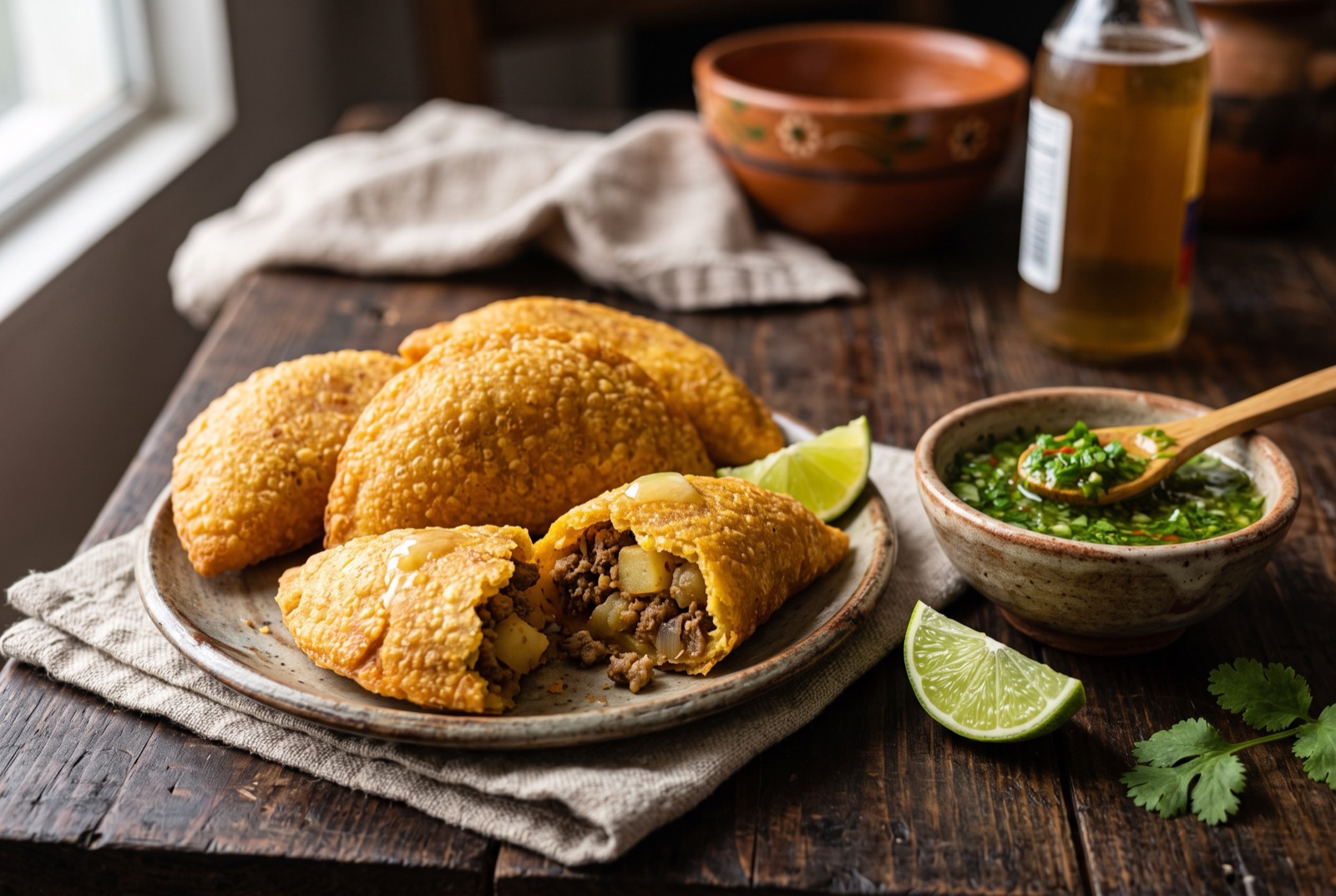
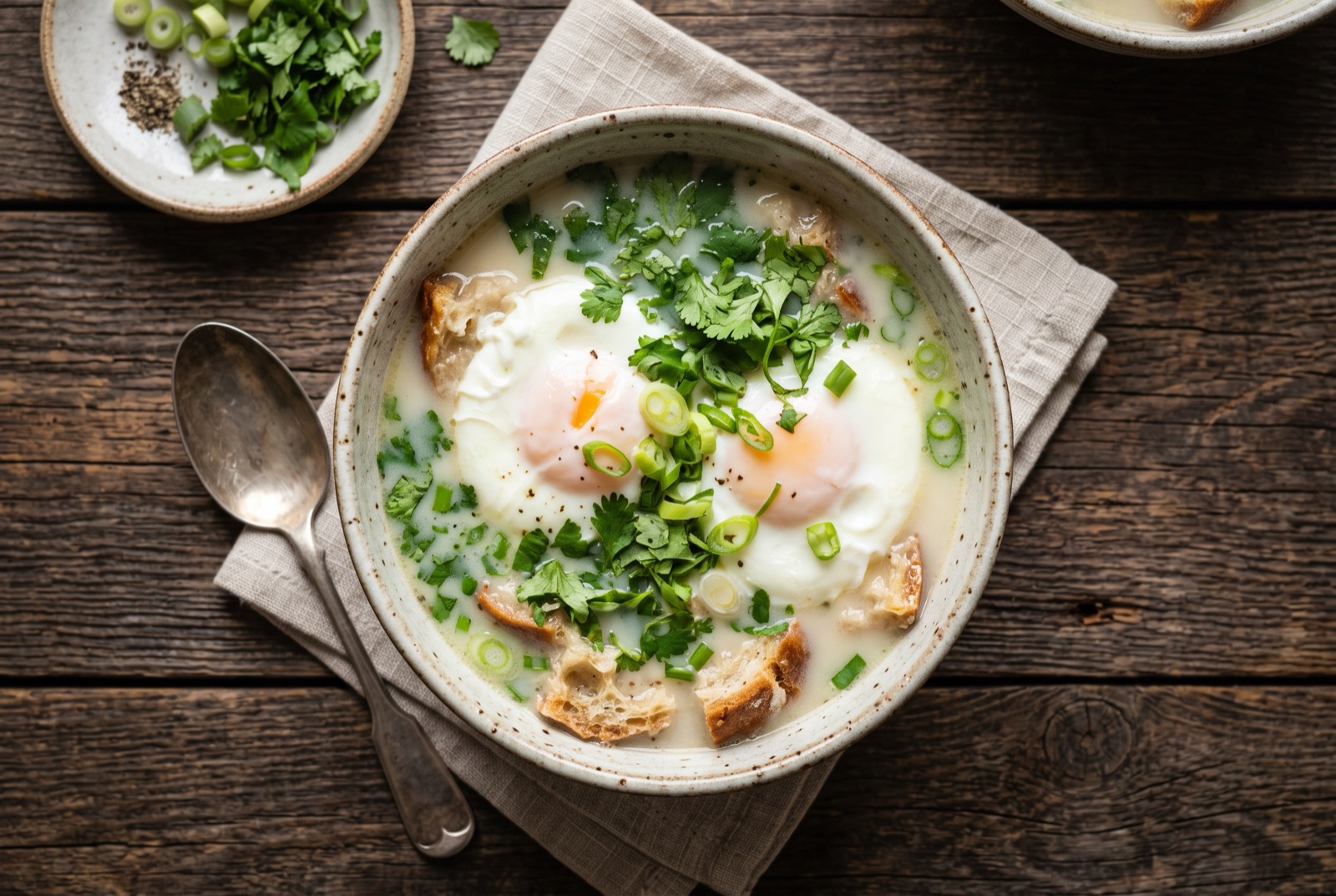
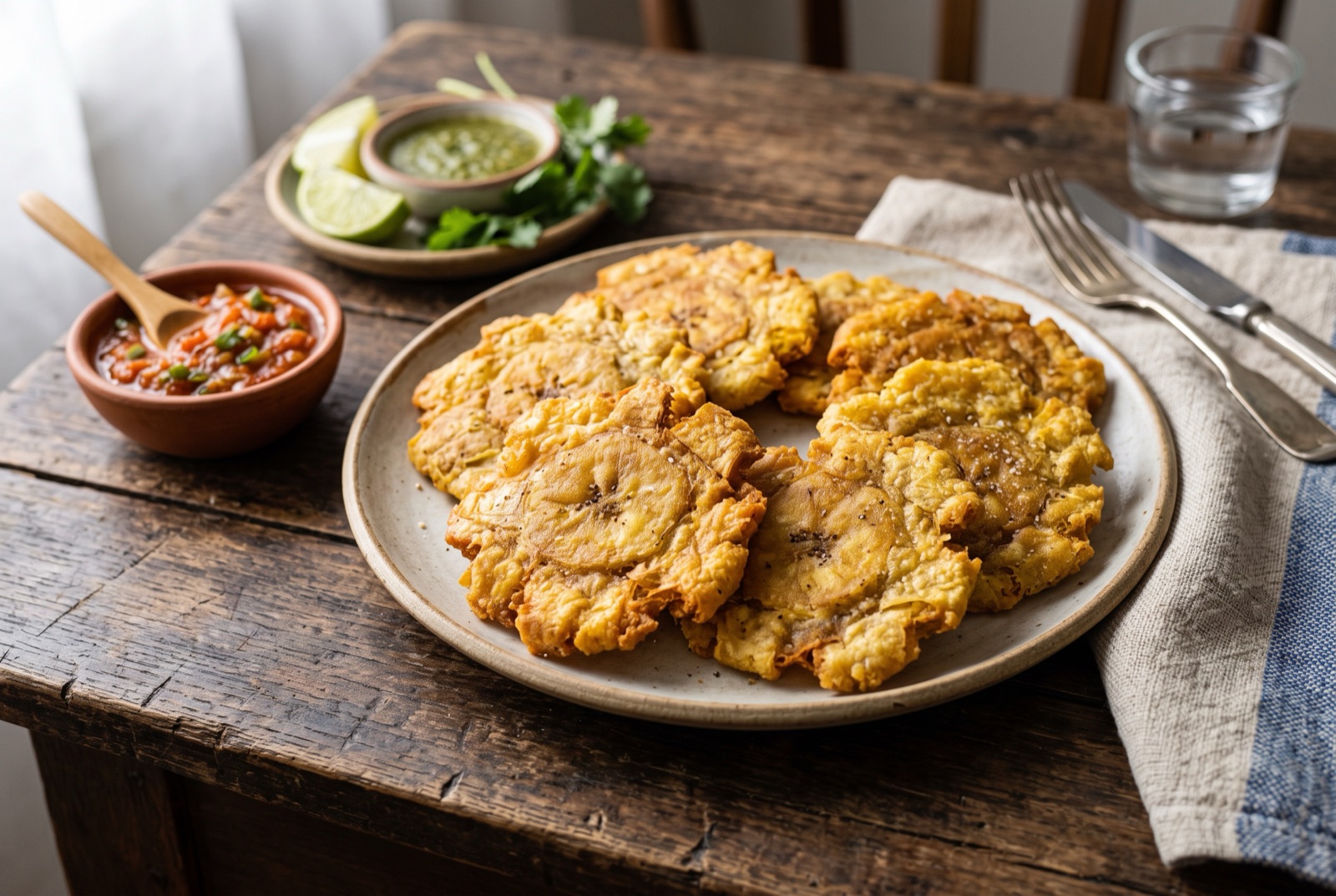
Keep exploring Colombia.
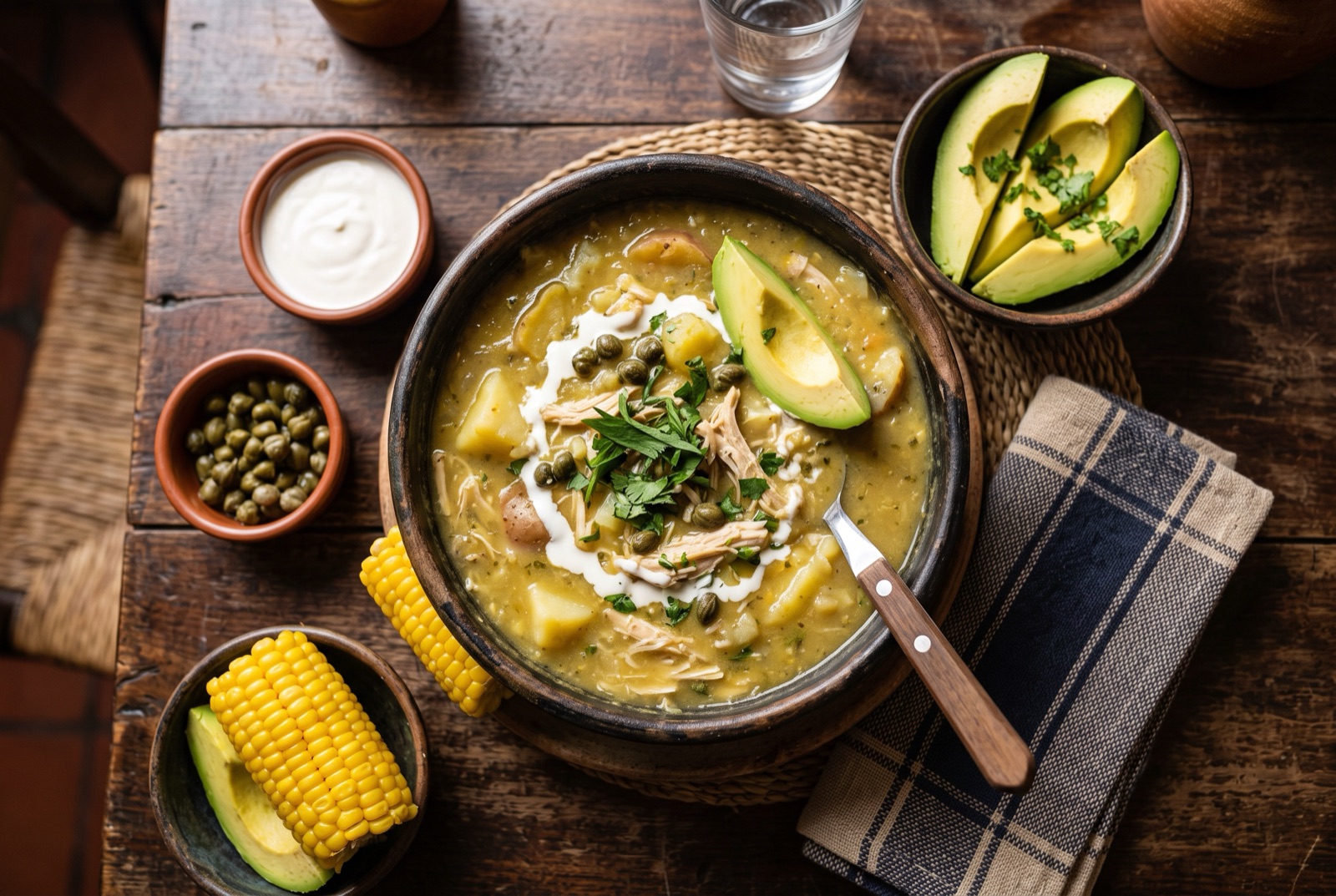
Colombia has 9 more dishes in the atlas — Ajiaco Santafereño and Bandeja Paisa, and 7 more.
All Colombia recipes Cornmeal recipes Butter recipes Queso fresco recipes breadsidebreakfastvegetariangluten freeRecipe by The DishRoute Kitchen · published August 20, 2026 · updated August 20, 2026