Hovězí Guláš.
Czech Beef Goulash with Bread Dumplings
Hovězí guláš · say it: HOH-vyeh-zee GOO-lahsh
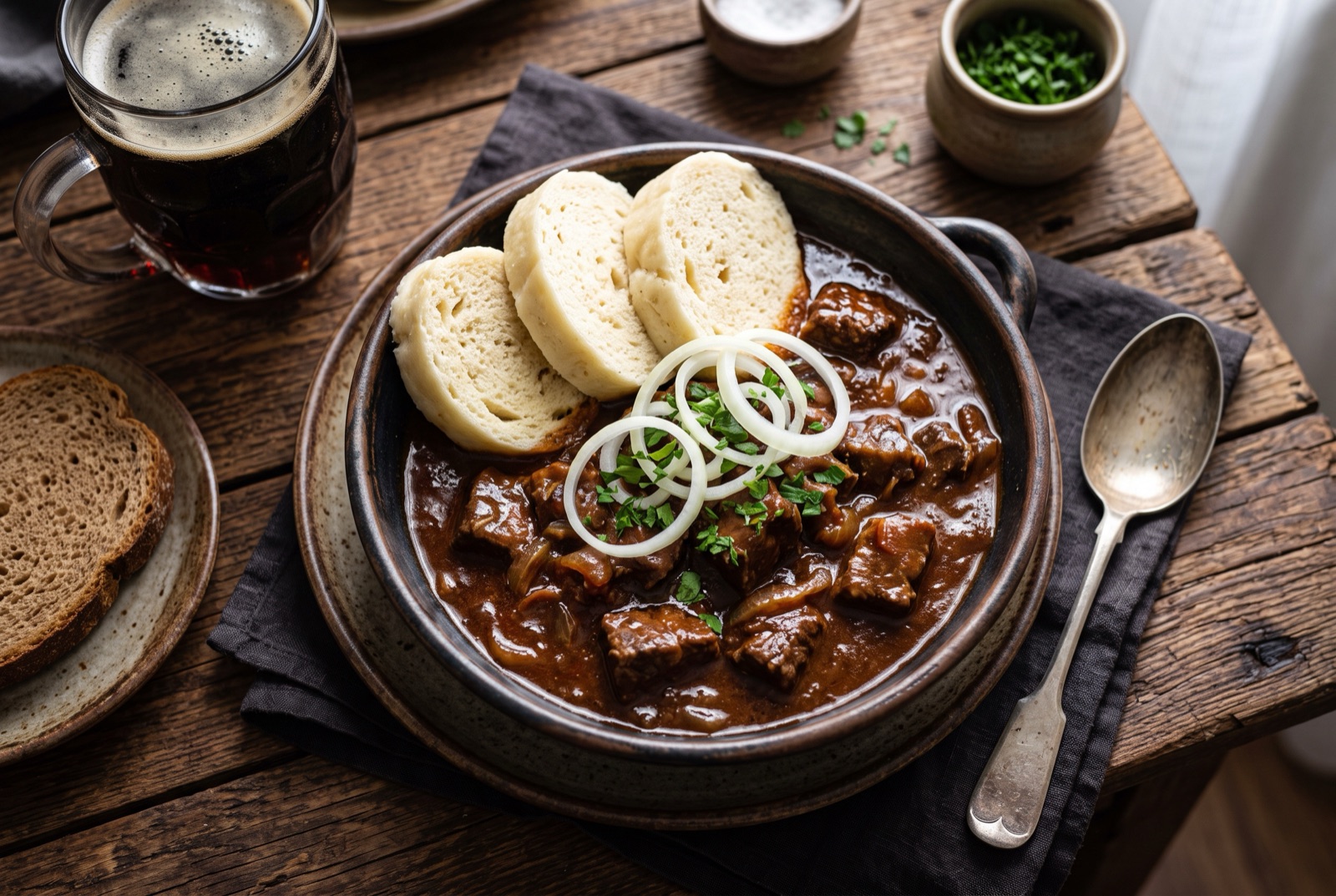
Hovězí guláš is the Czech pub reading of goulash: cubes of chuck cooked with roughly their own weight in onion, seasoned with sweet paprika, caraway and marjoram, and loosened with dark beer until the onions have melted into a sauce so thick it holds a spoon upright. It is darker, denser and less soupy than the Hungarian gulyás it descends from, and nobody here would call it a soup. The flavour is deeply savoury and faintly bitter from the beer, with the sweetness of long-cooked onion behind it. It is served with sliced bread dumplings, a scattering of raw onion rings and a beer, and it is the dish most often used as a measure of whether a Czech pub kitchen is any good.

- Gate
- CzechiaBohemia
- Prep
- 25 min
- Cook
- 2 hr 30 min
- Total time
- 2 hr 55 min
- Serves
- 4
- Status
- Medium
- Nutrition / serving · estimated
- Calories 610 kcal
- Protein 47 g
- Carbs 28 g
- Fat 33 g
- Fiber 5 g
- Sugar 12 g
- Sodium 890 mg
Why this recipe works.
- A one-to-one ratio of onion to beef, which is what actually thickens the sauce — no cornflour, no shortcut roux.
- The paprika goes in off the heat, so it blooms in fat without scorching into bitterness.
- Dark lager rather than stock gives the malt depth that separates Czech goulash from every other version.
- Timings tuned so the beef reaches falling-apart tender at the same moment the sauce reaches coating thickness.
Ingredients.
14 itemsFor the stew
To finish
Equipment
- Heavy lidded pot or Dutch oven
- Sharp knife
- Wooden spoon
Instructions.
Brown the beef in batches
Heat 2 tablespoons of the lard in a heavy pot over high heat and brown the beef cubes in two or three batches until each side is deeply coloured, about 4 minutes per batch. Set the meat aside on a plate and keep every scrap of fat and fond in the pot.
Tip Crowding the pot makes the beef steam and go grey. Wait for the sizzle to sound aggressive before adding the next batch.
Cook the onions to jam
Add the remaining lard and all the sliced onion with a good pinch of salt. Cook over medium heat for 25 minutes, scraping the browned bits off the base as the onions release water, until the pile has collapsed to a fraction of its volume and turned deep gold and sticky.
Tip This is the longest step and the most important. Onions that are merely soft will leave you with a thin sauce.
Bloom the paprika off the heat
Stir in the garlic and cook for a minute, then pull the pot off the heat entirely and stir in the paprika and tomato purée. Keep stirring for 30 seconds in the residual heat until the fat turns brick red and smells sweet — if it smells sharp or acrid, the paprika has caught and you should start this step again.
Deglaze with the beer
Return the pot to medium heat and pour in the lager, scraping the base clean. Let it bubble for 3 minutes to boil off the raw alcohol edge, then return the beef with its juices and add the caraway, bay leaves and enough stock to almost cover the meat.
Simmer low and long
Bring to a bare simmer, cover with the lid slightly ajar, and cook on the lowest heat for 2 hours, stirring every half hour. The goulash is ready when a cube of beef falls apart under gentle pressure from a spoon and the onions have vanished into the sauce.
Reduce to coating thickness
Take the lid off and simmer for a final 10–15 minutes, until the sauce is glossy and thick enough that a spoon dragged across the base leaves a track that closes slowly. Fish out the bay leaves.
Finish with marjoram
Crush the marjoram between your palms as you scatter it over the pot, stir it through, and season aggressively with salt and black pepper. Taste — it should be savoury and deep with a faint malt bitterness, not sweet.
Serve with dumplings and raw onion
Spoon the goulash onto plates beside five or six slices of bread dumpling and pile the thin raw onion rings on top of the meat. Serve immediately, with the dumplings positioned so they soak up the sauce at the edge.
Tips from our kitchen.
- Use beef chuck or shin with visible connective tissue. Lean stewing steak stays dry and the sauce never gets the body it needs from the meat.
- Cook the onions far longer than feels necessary — 25 minutes, until they are deep gold and jammy. This is the whole thickening mechanism of the dish.
- Take the pan off the heat before adding the paprika and stir it into the hot fat for 30 seconds. Paprika burns fast and burnt paprika tastes acrid all the way through the finished stew.
- Rub the marjoram between your palms as it goes in near the end. It is a finishing herb here, not a braising one, and its aroma fades with long cooking.
- If the sauce is still thin when the meat is tender, lift the lid and simmer hard for ten minutes rather than adding thickener.
- Make it a day ahead if you can. Goulash genuinely tastes better on the second day, once the fat and the sauce have settled together.
Substitutions.
- Czech dark lager → Any dark lager, a Munich dunkel, or beef stock with a teaspoon of molasses
- Avoid heavily hopped stouts and IPAs — their bitterness concentrates as the sauce reduces and turns harsh.
- Lard → Beef dripping, or a neutral oil with a knob of butter
- Lard is traditional and gives the roundest flavour, but the dish works with any fat that tolerates browning.
- Bread dumplings → Boiled potatoes, wide egg noodles or plain white bread
- Czech pubs serve guláš v chlebu — in a hollowed loaf — which is an accepted and excellent alternative.
Variations.
- Segedínský guláš
- Pork instead of beef, with sauerkraut and sour cream stirred through. Despite the Hungarian-sounding name it is a Czech pub fixture in its own right.
- Guláš v chlebu
- Served inside a hollowed round loaf, with the lid on the side. Beer-garden format, and the bread ends up better than the dumplings.
- Znojemský guláš
- Finished with sliced pickled gherkins and a splash of their brine, which cuts the richness with a sharp, vinegary edge.
Storage & reheating.
Refrigerate for up to 4 days; the flavour deepens noticeably after the first night and the sauce thickens as it cools. Reheat gently over low heat with a splash of water or beer to loosen it back to a coating consistency. It freezes very well for 3 months — freeze the stew alone, without dumplings, in portion-sized containers. Thaw overnight in the fridge rather than in a hot pan, which can make the meat seize and go stringy.
Serve with
Sliced bread dumplings, a pile of raw onion rings and a cold pilsner — the standard Czech pub arrangement.
The story behind Hovězí Guláš.
Goulash arrived in the Czech lands from Hungary through the shared plumbing of the Austro-Hungarian Empire, and then changed almost everything about itself. Hungarian gulyás is a brothy herdsman's soup, thin enough to drink, built on lard, onion and a great deal of paprika. The Czech version keeps the paprika but shifts the balance decisively: less liquid, more onion, and a long enough cook that the onion disintegrates entirely and does the thickening work that flour or roux would do elsewhere. Which country makes goulash "properly" is not a question with an answer, and anyone who tells you otherwise is picking a side rather than reporting a fact.
The beer is the other Czech signature. A dark lager — Czech tmavé — brings malt sweetness and a light bitterness that reads as depth rather than beer flavour, and pub kitchens have used whatever was on tap for as long as the dish has existed. Regional variations multiply from there. Some cooks finish with a spoonful of flour whisked into a little of the sauce to guarantee thickness; some add a square of dark chocolate or a spoon of plum jam; Moravian versions lean harder on paprika and garlic. Version arguments in this country are conducted at length and in good humour.
A restaurant plate of guláš is a specific arrangement: the stew in a shallow bowl or on a plate, six or seven dumpling slices fanned alongside, and a small pile of raw white onion rings on top. The onion is not garnish — it supplies the sharp raw bite the rich sauce needs, and skipping it is noticed. Order it in a Prague pub and the dish arrives with a half-litre before you have finished sitting down, which is not a coincidence: guláš was designed to be eaten with beer, and the two taste like they were developed together, because they were.
Questions, answered.
How is Czech goulash different from Hungarian goulash?
Hungarian gulyás is essentially a soup: thin, brothy, heavily paprika-led and often containing potato. The Czech version uses far more onion and far less liquid, cooks until the onion has broken down into a thick sauce, and is served as a stew with bread dumplings rather than eaten with a spoon from a bowl. Both are legitimate; they are simply different dishes that share a name.
Why is my goulash sauce thin?
Most often the onions were not cooked down far enough before the liquid went in, or the pot was covered too tightly so nothing evaporated. Fix it by removing the lid once the beef is tender and simmering hard for ten to fifteen minutes. As a last resort, whisk a teaspoon of flour into a ladle of the hot sauce and stir it back in, then boil for two minutes to cook out the raw taste.
Can I make it without alcohol?
Yes. Replace the beer with beef stock and add a teaspoon of molasses or dark brown sugar to mimic the malt sweetness. The stew loses a little of its characteristic bitterness but is still very good. Note that in the standard recipe the alcohol itself cooks off almost completely during the long simmer.
What cut of beef should I buy?
Chuck, shin or brisket — anything with collagen that turns to gelatine over two hours. Cut it into generous 4 cm cubes, because smaller pieces shrink and dry out before the sauce is ready. Avoid lean cuts such as topside or rump, which stay firm and chalky no matter how long they cook.
Do I really need the raw onion on top?
It is not decoration. The stew is rich, sweet and fatty, and a few thin rings of raw white onion give each mouthful a sharp, crunchy counterpoint. In Czech pubs it comes as standard and its absence is noticed. If raw onion is too aggressive for you, soak the rings in cold water for ten minutes first to mellow them.
You might also like.
All recipes →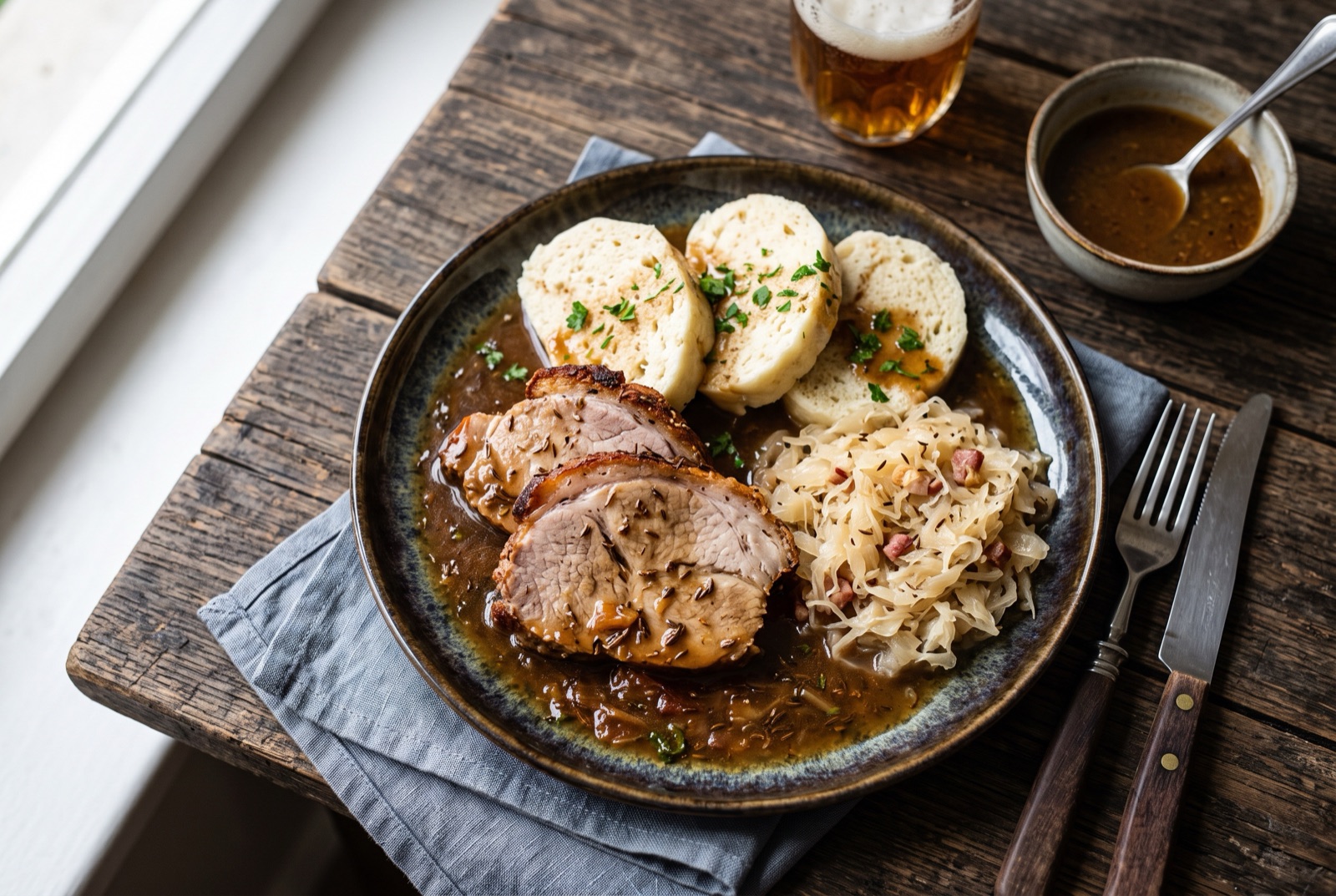
Czechia4 hr 55 min
Vepřo Knedlo Zelo
Roast Pork with Dumplings and Sauerkraut
Czechia336 hr 30 min
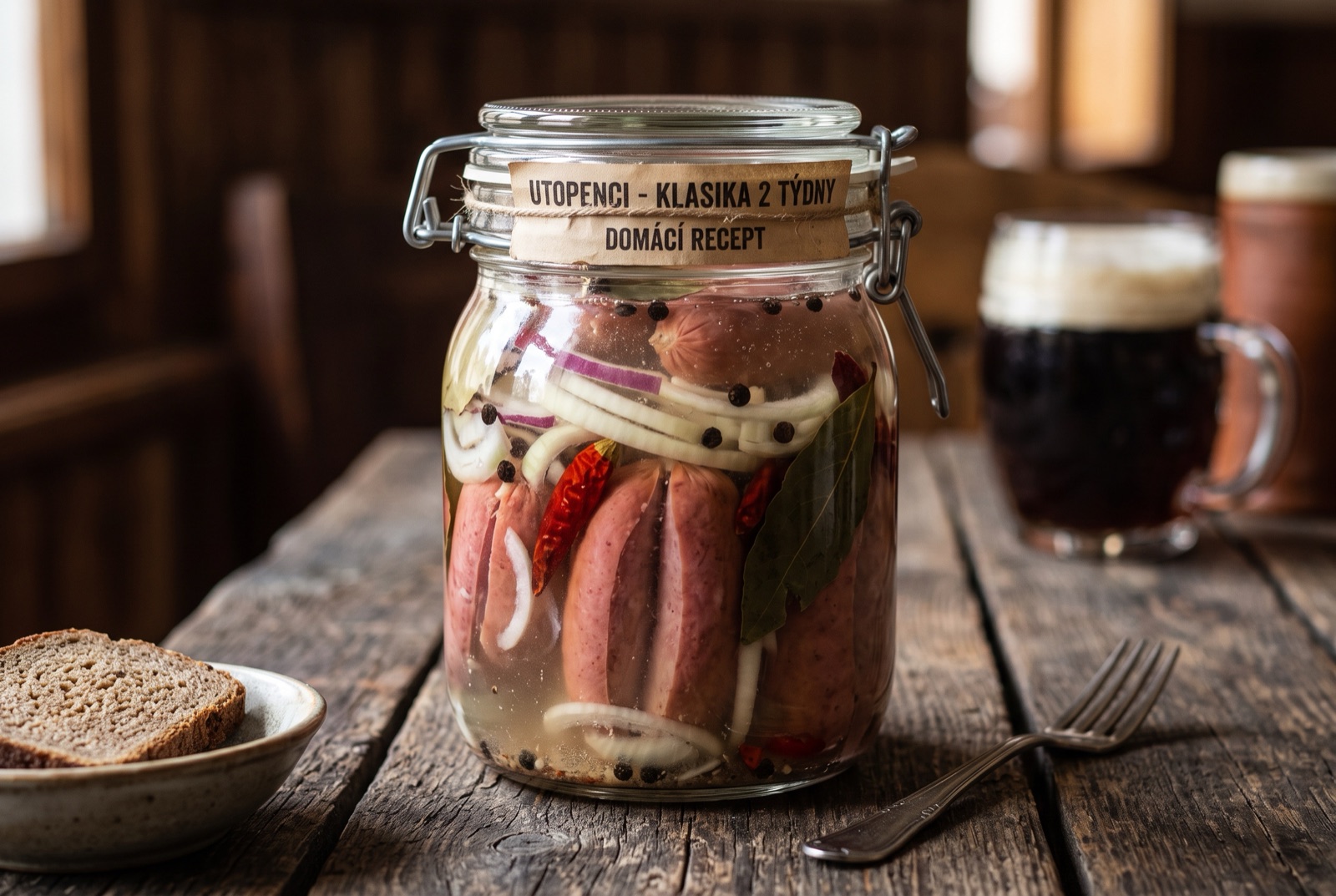
Utopenci
Czech Pickled Sausages with Onion
Czechia3 hr 55 min
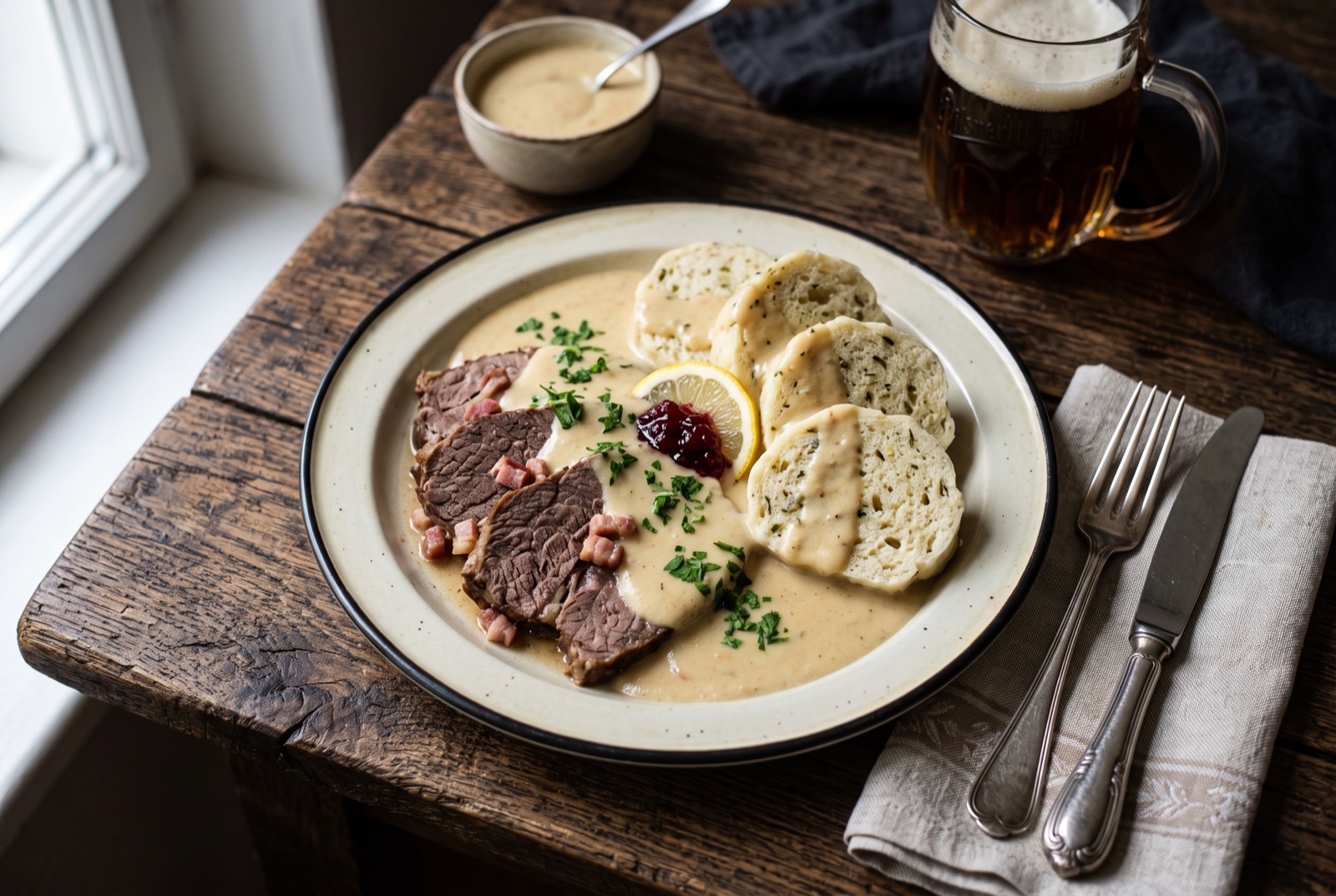
Svíčková na Smetaně
Beef in Root Vegetable Cream Sauce
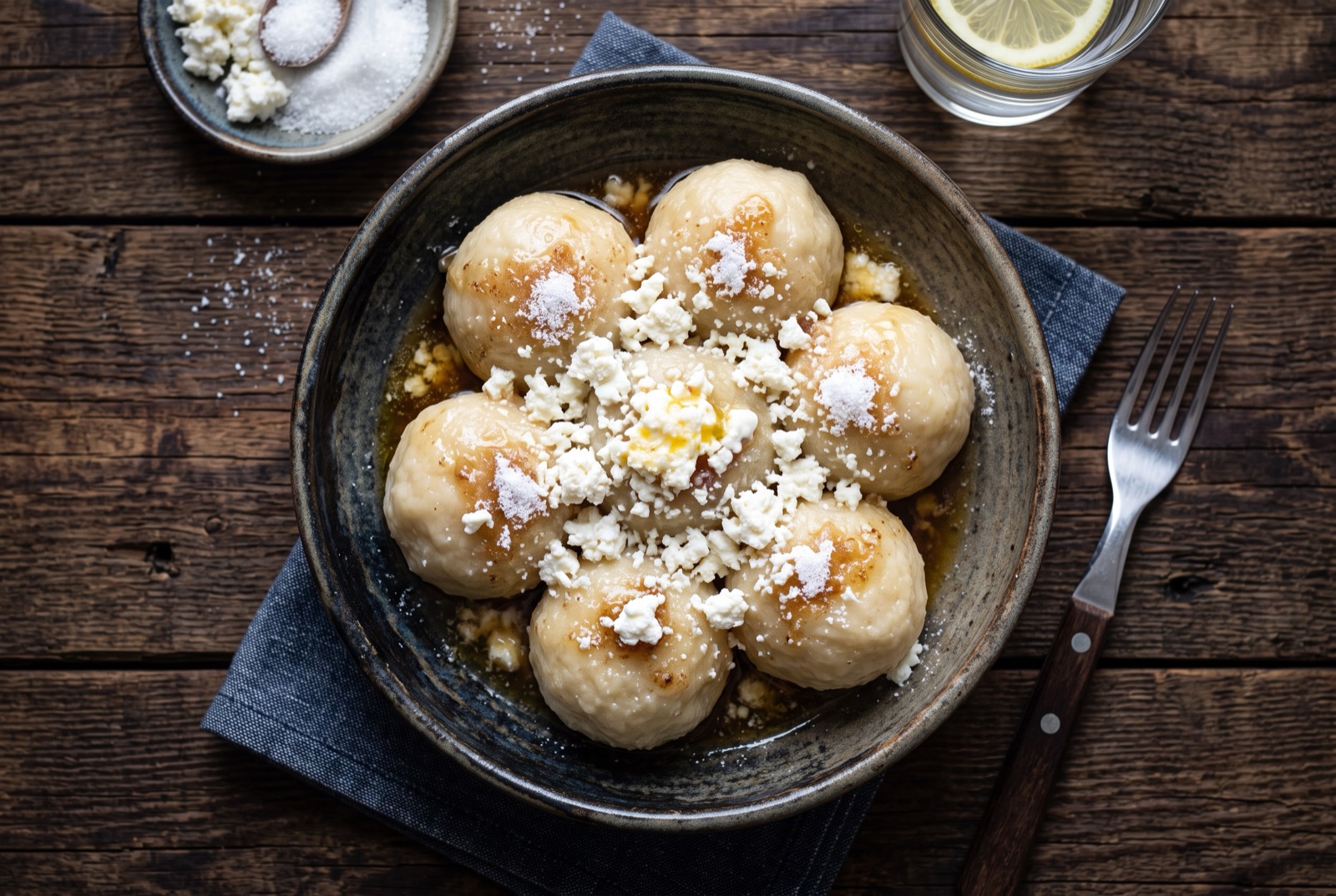
Czechia1 hr 20 min
Ovocné Knedlíky
Czech Fruit-Filled Quark Dumplings
Keep exploring Czechia.
Czechia has 9 more dishes in the atlas — Bramborák and Kulajda, and 7 more.
Recipe by The DishRoute Kitchen · published August 20, 2026 · updated August 20, 2026