Vepřo Knedlo Zelo.
Roast Pork with Dumplings and Sauerkraut
Vepřo knedlo zelo · say it: VEP-rzho KNED-lo ZEH-lo
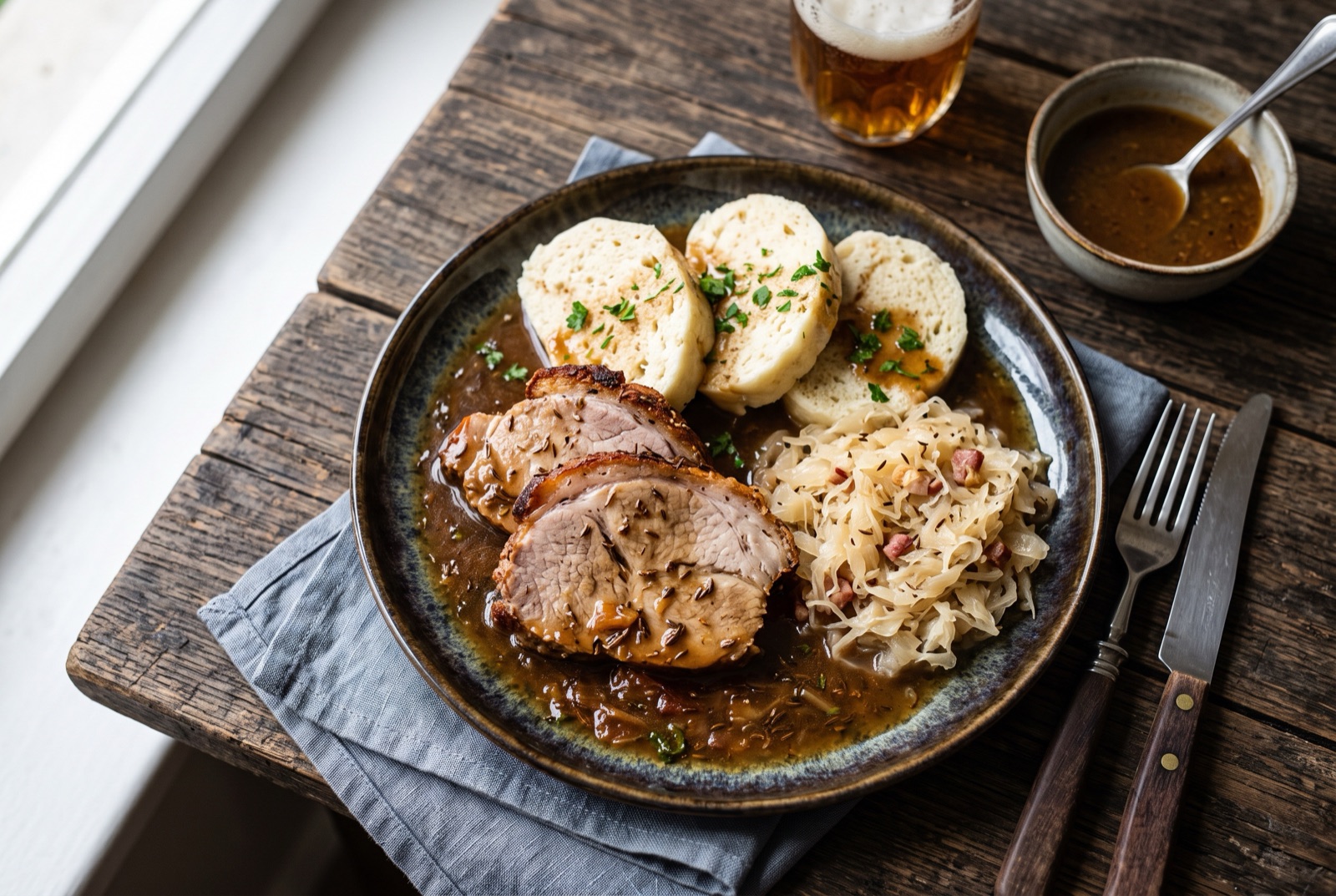
Vepřo knedlo zelo is pork, dumpling and cabbage on one plate, and Czechs abbreviate it in speech exactly the way it is abbreviated here because everyone already knows what it means. The pork is a shoulder or neck rubbed with salt, caraway and garlic and roasted slowly until the fat renders and the crust darkens, the dumplings are steamed bread dough sliced into soft discs, and the cabbage is sauerkraut braised with onion, caraway and a spoon of sugar until it lands halfway between sharp and sweet. Eaten together the plate makes complete sense: fatty, sour, soft, savoury, with the pan juices tying all three together. It is Sunday food, pub food and the meal most Czechs abroad describe when asked what they miss.

- Gate
- CzechiaBohemia
- Prep
- 40 min
- Cook
- 3 hr 15 min
- Total time
- 4 hr 55 min incl. 1 hr rest
- Serves
- 6
- Status
- Medium
- Nutrition / serving · estimated
- Calories 820 kcal
- Protein 48 g
- Carbs 62 g
- Fat 41 g
- Fiber 6 g
- Sugar 8 g
- Sodium 1450 mg
Why this recipe works.
- A dry caraway-and-garlic cure on the pork the night before seasons the meat all the way through instead of only the surface.
- Bread dumplings are steamed rather than boiled, which keeps them light and stops the outside going gluey.
- The sauerkraut is rinsed, then rebalanced with onion, sugar and its own juice, so it tastes bright rather than aggressively acidic.
- The pan juices are used as they are, unthickened, which is how the dish is served in Czech pubs.
Ingredients.
18 itemsFor the pork
For the dumplings
For the sauerkraut
Equipment
- Deep roasting tin with a lid or foil
- Large steamer or wide lidded pan
- Sewing thread for slicing dumplings
- Meat thermometer
Instructions.
Cure the pork overnight
Crush the caraway coarsely and mix it with the garlic paste and coarse salt. Rub the mixture into every surface of the pork, score the fat cap in a diamond pattern, and refrigerate uncovered for at least 8 hours or overnight so the surface dries.
Start the slow roast
Scatter the sliced onion in a roasting tin, sit the pork on top fat side up, and pour the water or lager around it. Cover tightly with a lid or foil and roast at 160°C for 2 hours, basting once or twice with the liquid in the tin.
Make the dumpling dough
Whisk the yeast into the lukewarm milk with a pinch of sugar and leave for 10 minutes until foamy. Mix into the flour with the egg and salt to a soft, slightly sticky dough, knead briefly, then fold through the bread cubes and leave covered in a warm place for 1 hour, until doubled.
Tip The dough should be softer than bread dough — sticky enough to cling to your fingers but still shapeable with wet hands.
Braise the sauerkraut
Melt the lard in a saucepan and cook the chopped onion until translucent, then add the sauerkraut, caraway, bay and sugar with 150 ml water. Simmer covered for 40 minutes, until the cabbage is tender and the liquid has almost gone, then taste and correct with reserved brine or more sugar.
Steam the dumplings
With wet hands, shape the risen dough into two logs about 8 cm across. Steam them for 20–25 minutes over simmering water without lifting the lid; a dumpling is done when a skewer comes out clean and the surface springs back when pressed.
Tip Prick each log with a fork the moment it comes off the heat so trapped steam escapes and they do not sink.
Brown the roast uncovered
Take the cover off the pork, turn the oven up to 200°C and roast for a final 30–40 minutes, basting twice, until the fat cap is deep brown and crisp at the edges and a thermometer reads 85–90°C in the thickest part.
Rest and slice
Rest the pork on a board under loose foil for 15 minutes while you strain the pan juices into a jug and skim off some of the fat. Slice the dumpling logs into 1.5 cm discs by drawing a length of thread through them.
Build the plate
Carve the pork into thick slices and lay them beside a mound of sauerkraut and three or four dumpling discs. Spoon the hot pan juices over the meat and the dumplings — enough that the dumplings soak and darken — and serve immediately while the crust is still crisp.
Tips from our kitchen.
- Buy pork with a good fat cap — neck or shoulder, never loin. Lean pork turns dry and stringy over three hours and no amount of juice will rescue it.
- Cook the roast covered for the first two hours and uncovered for the last, so the meat steams tender first and the surface only browns at the end.
- Slice the dumplings with a length of sewing thread pulled through them rather than a knife. A knife smears the crumb; thread leaves a clean face.
- Taste the sauerkraut before you serve it. If it makes you wince, add sugar in pinches; if it tastes flat, add a splash of its own brine back.
- Let the roast rest at least 15 minutes before carving or the juices run out onto the board rather than staying in the meat.
- Save every drop of pan liquid. Skim some fat off if you like, but the juices are the sauce and there is no other one.
Substitutions.
- Stale white bread rolls for the dumplings → Any stale white bread with the crusts cut off, cubed and dried in a low oven
- Czech rohlíky are ideal because they are dry and not sour, but plain white sandwich bread behaves almost identically.
- Sauerkraut → Fresh white cabbage shredded and braised with vinegar, sugar and caraway
- This is the sweet zelí version served in many Czech homes and pubs — legitimate, just softer and less sour.
- Pork neck or shoulder → Boneless pork belly, rolled and tied
- Fattier and richer, and the skin can be scored for crackling. Reduce the roasting time by about 30 minutes.
Variations.
- Moravian red cabbage version
- Swap the white sauerkraut for red cabbage braised with apple, sugar and vinegar. Sweeter, darker, and standard in the east of the country.
- Potato dumplings instead of bread
- Bramborové knedlíky — made from boiled potato, flour and egg — are denser and slightly chewy, and stand up better to very fatty pork.
- Beer-basted roast
- Replace the water in the roasting tin with a light lager. The juices reduce to something maltier and a shade bitter, which suits the sour cabbage.
Storage & reheating.
The pork keeps 3 days refrigerated in its juices and reheats well, covered, in a moderate oven. Sauerkraut keeps a week and genuinely improves on the second day. Dumplings are the weak link: refrigerated they go firm and dry, so slice them and fry the slices in butter until golden, which is how Czech kitchens handle leftovers deliberately. Everything except the dumplings freezes for up to 3 months; freezing bread dumplings works but expect a denser crumb after reheating in steam.
Serve with
A cold half-litre of pilsner, and nothing green — the sauerkraut is the vegetable and Czech tradition sees no gap to fill.
The story behind Vepřo Knedlo Zelo.
Pork has been the everyday meat of the Czech lands for centuries, for the practical reason that a pig converts kitchen scraps into fat and can be slaughtered by a single family in winter. The zabijačka, the village pig slaughter, produced a whole calendar of foods — sausages, black pudding, cracklings, soups — and roast pork was the honest centre of it. Cabbage, preserved as sauerkraut in barrels, was the vegetable that survived from autumn to spring. The dumpling completes the logic: stale bread rescued into something soft and new, and a starch that soaks up every drop of rendered fat and juice.
All three parts are argued over. Bohemian cooks tend towards white sauerkraut braised with onion, caraway and a little sugar, sometimes thickened with a spoon of flour; Moravian versions run redder and sweeter, occasionally with apple. Some households insist the dumplings must be yeasted and steamed as a long roll; others swear by an egg-raised dough boiled in salted water. Whether the roast should be neck or shoulder, and whether the crackling matters, are conversations that outlast the meal.
What is not in dispute is the plate itself. Vepřo knedlo zelo is served in almost every pub kitchen in the country and functions as a fixed point of comparison — you can judge a pub by it the way you can judge an Italian restaurant by its carbonara. The name has become shorthand for Czechness in general, sometimes affectionately and sometimes as a complaint about how conservative the national palate can be. Both readings are fair. It is also, cooked properly, genuinely excellent: crisp-edged pork, sour cabbage cutting the fat, and dumplings that arrive dry and leave the plate soaked.
Questions, answered.
Can I make bread dumplings without a steamer?
Yes. Shape the dough into two long rolls and simmer them in a wide pan of salted water for about 20 minutes, turning halfway, then prick them immediately so steam escapes and they do not collapse. They come out slightly wetter than steamed ones but are perfectly good. A metal colander over a pan of boiling water with a lid on top also works as an improvised steamer.
Why are my dumplings dense and heavy?
Usually one of three things: the yeast dough did not get a full rise in a warm place, the dough was overworked into toughness, or the dumplings were crowded so they could not expand. Give the dough a proper hour to double, mix it only until it comes together, and cook in batches with room around each roll.
Should I rinse the sauerkraut?
Rinse it if it tastes fiercely sour straight from the jar, then keep some of the brine to add back after braising so you control the level. Milder sauerkraut needs no rinsing at all. The finished cabbage should taste balanced against the fatty pork, not like a pickle.
What temperature should the pork reach?
This is not a pink-in-the-middle roast. Aim for an internal temperature of around 85–90°C in the thickest part, where the connective tissue has melted and the meat pulls apart under gentle pressure. A shoulder taken off at 70°C will be safe to eat but tough and disappointing.
Can I make the whole plate ahead of time?
Mostly. Cook the sauerkraut a day or two ahead and the pork on the morning of, then reheat both gently in a covered oven dish. Make the dumplings as close to serving as you can, since they are at their best within an hour of steaming. If that is impossible, steam them ahead and refresh the slices in butter in a pan.
You might also like.
All recipes →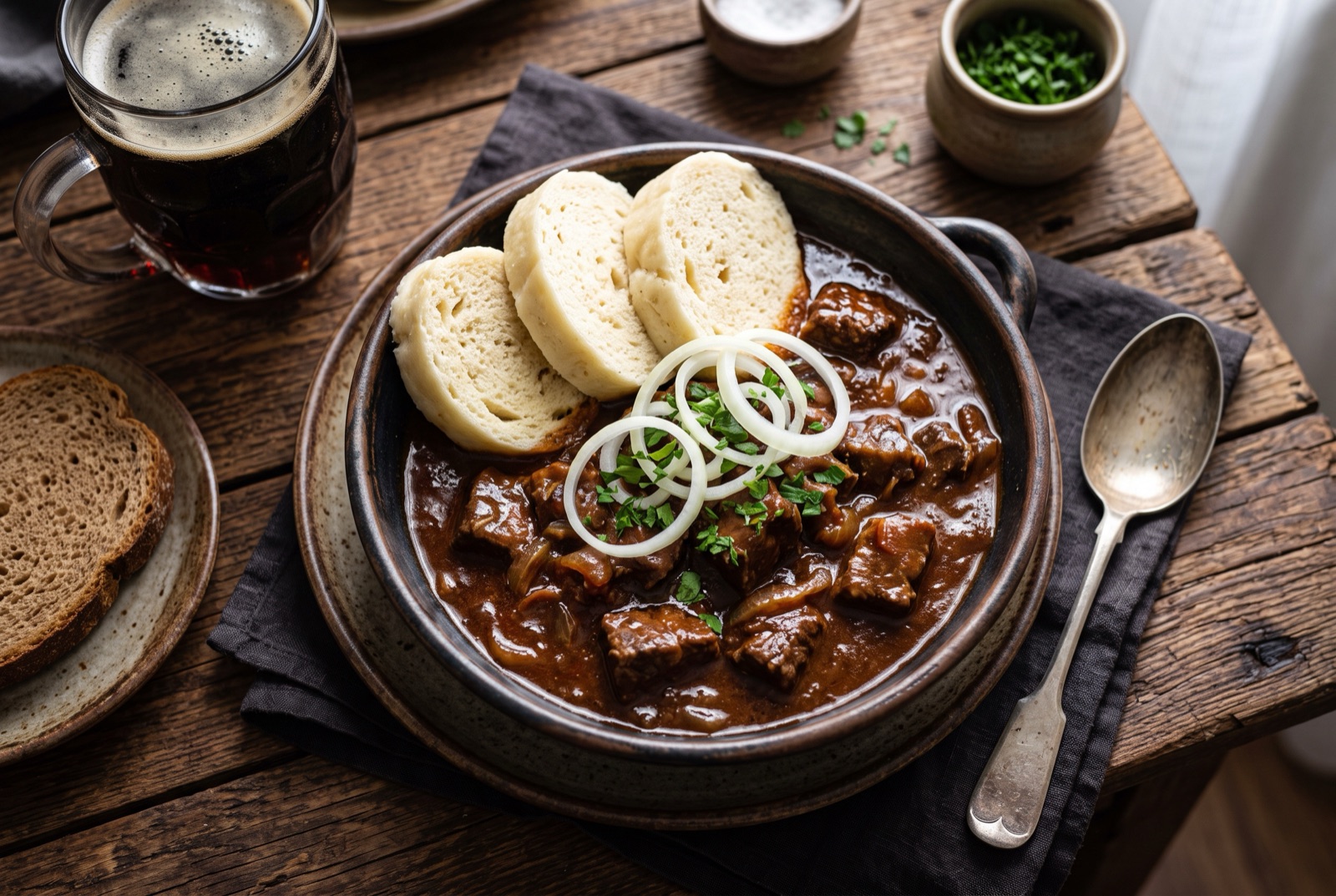
Keep exploring Czechia.
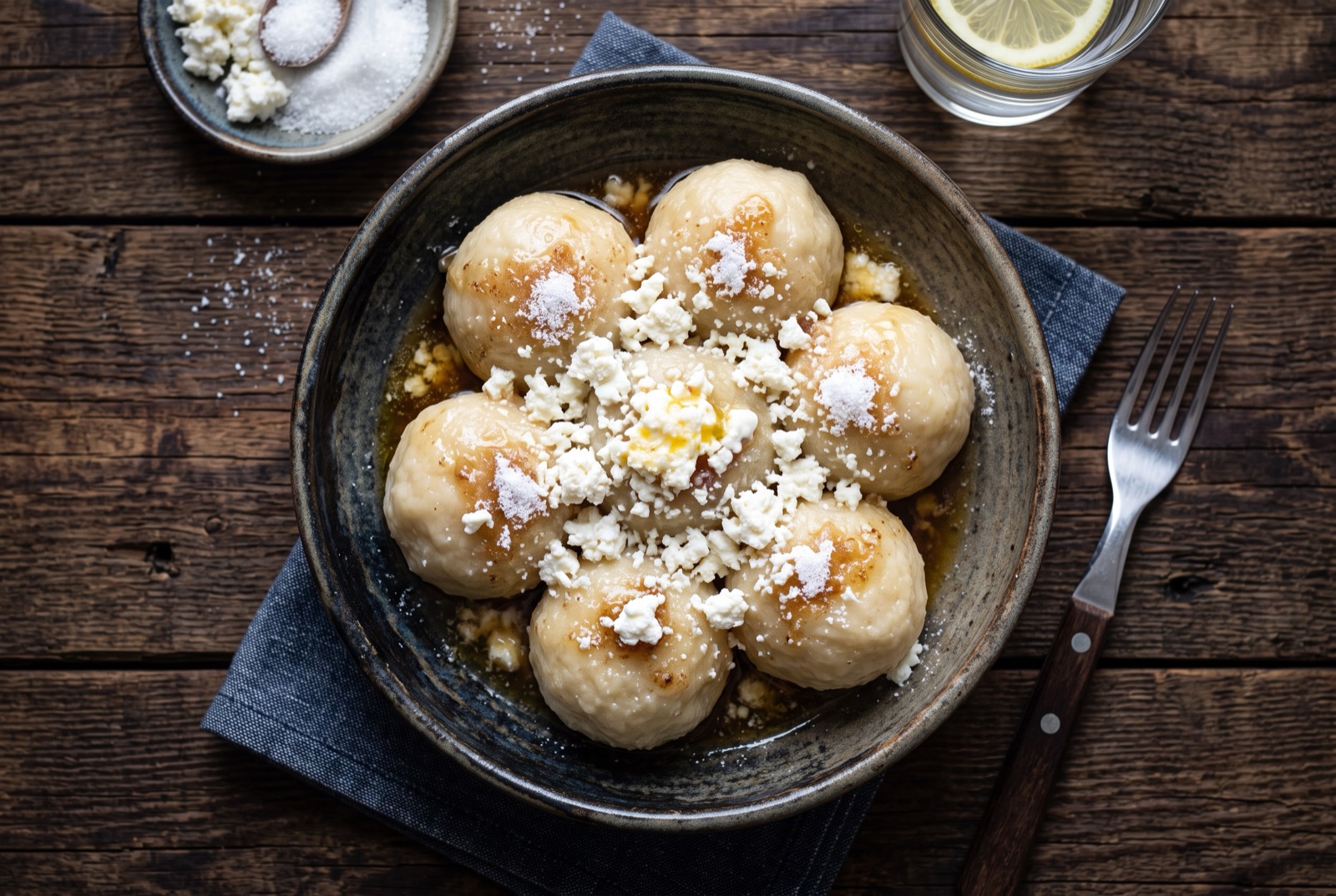
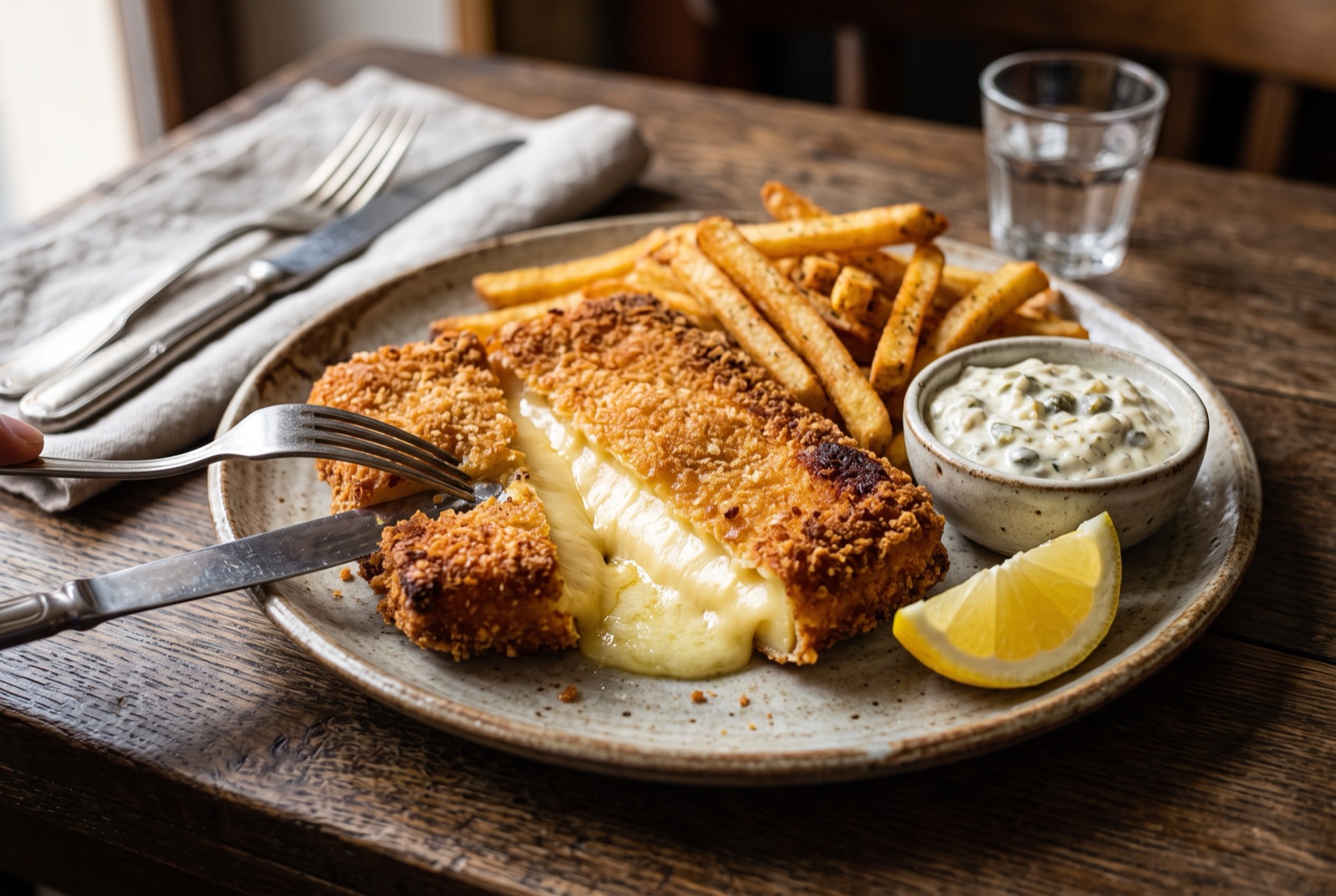
Czechia has 9 more dishes in the atlas — Bramborák and Hovězí Guláš, and 7 more.
Recipe by The DishRoute Kitchen · published August 20, 2026 · updated August 20, 2026