Chicharrón de Pollo.
Dominican Crisp Fried Chicken Bites
Chicharrón de pollo · say it: chee-cha-RRON deh POH-yoh
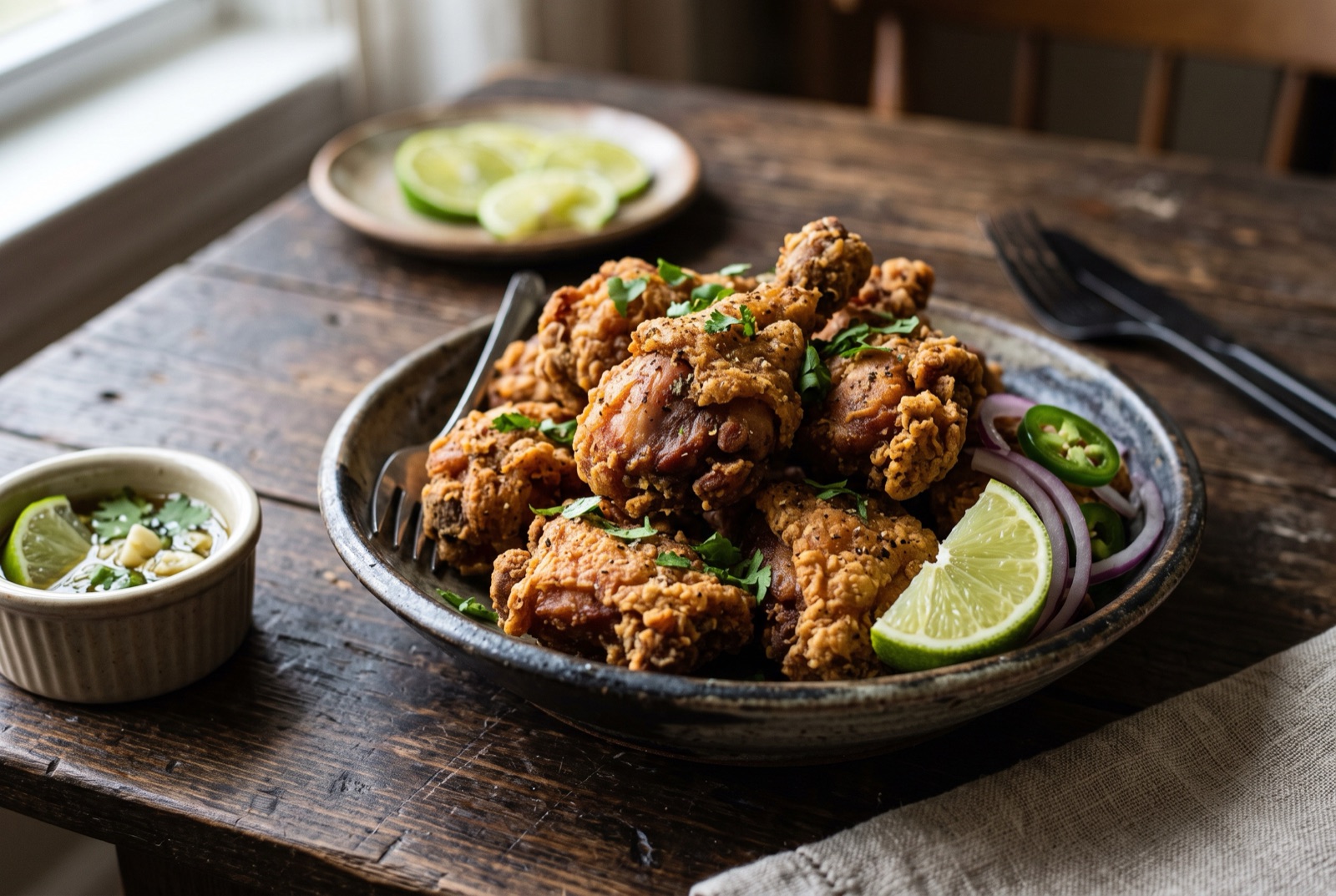
Chicharrón de pollo is Dominican fried chicken cut small: a whole bird hacked into two-bite, bone-in pieces, marinated in sour orange, garlic, oregano and a splash of soy sauce, tossed in seasoned flour and fried until the coating is dark gold and audibly crisp. The name borrows from chicharrón, pork crackling, because the target texture is the same — thin, brittle, shattering rather than crunching. Because the pieces are small, they cook fast and the bones stay in, which keeps the meat from drying out and gives you something to hold. It arrives in a paper-lined basket with lime wedges and tostones, eaten with fingers, and it is the standard order at Dominican roadside stops and beach shacks.

- Gate
- Dominican Republic
- Prep
- 20 min
- Cook
- 25 min
- Total time
- 1 hr 45 min incl. 1 hr rest
- Serves
- 4
- Status
- Medium
- Nutrition / serving · estimated
- Calories 560 kcal
- Protein 40 g
- Carbs 28 g
- Fat 32 g
- Fiber 1 g
- Sodium 1120 mg
Why this recipe works.
- Small bone-in pieces, cut the way a picapollo cuts them, so the crust-to-meat ratio is right.
- Double frying that produces a coating which shatters instead of going soft ten minutes later.
- A marinade with the soy sauce Dominicans actually use, not a sanitised version without it.
- Oil temperatures given in numbers, because this dish fails almost entirely on heat control.
Ingredients.
13 itemsFor the marinade
For the coating
For frying
Equipment
- Deep heavy pan or fryer
- Cooking thermometer
- Wire rack set over a tray
- Spider or slotted spoon
Instructions.
Marinate
Mix the sour orange juice, juice of one lime, garlic paste, oregano, soy sauce, grated onion and black pepper in a bowl. Add the chicken pieces, turn them until every surface is coated, cover and refrigerate for at least 1 hour.
Bring up and drain
Take the chicken out of the fridge 20 minutes before frying. Lift the pieces into a colander and let them drain for 5 minutes so they are damp rather than dripping, which is what the flour needs to grip.
Coat the pieces
Whisk the flour, cornstarch, paprika and salt in a wide bowl. Working in batches, drop in the chicken and toss until each piece wears a thin, even coat, then shake off the excess against the side of the bowl.
Tip Thick clumps of flour fall off in the oil and burn. You want a dusting, not a batter.
First fry
Heat the oil to 165°C and fry the chicken in three batches for 7 to 8 minutes each, until the coating is pale gold and set and the meat is cooked through. Lift onto a wire rack and let the pieces rest for at least 5 minutes.
Second fry
Raise the oil to 190°C and return the chicken in batches for 90 seconds to 2 minutes, until the crust turns deep gold and the sizzle changes from a rolling boil to a sharp, dry crackle.
Tip Listen rather than watch. The sound going quieter and higher means the surface moisture has gone.
Salt and serve
Tip the chicken onto the rack, salt it immediately while the surface is still glossy, and pile it into a bowl. Serve at once with lime wedges, tostones and a sharp cabbage salad.
Tips from our kitchen.
- Ask the butcher to cut a whole chicken into small bone-in pieces, or use kitchen shears on thighs and drumsticks. Boneless chunks dry out during the second fry.
- Drain the chicken well before flouring, but do not rinse it. You want the marinade clinging so the flour sticks in a thin, even film.
- Flour the pieces just before they go in the oil. Coated chicken left sitting turns pasty and the crust slides off in the pan.
- Fry in small batches. Crowding drops the oil temperature and the coating absorbs fat instead of setting.
- Rest the pieces on a wire rack, never on paper towel, between the two fries — trapped steam softens the underside immediately.
- Salt the chicken the moment it leaves the second fry, while the surface is still glistening enough to hold it.
Substitutions.
- Sour orange → Two parts orange juice and one part lime juice
- The blend gets you close. Bottled naranja agria from a Latin grocer is another option and keeps for months in the fridge.
- Soy sauce → Tamari, or an extra half teaspoon of salt
- Tamari also keeps the dish gluten-free if you swap the coating flour for a gluten-free blend.
- Plain flour coating → Three parts flour to one part cornstarch
- Cornstarch makes the crust lighter and more brittle. Many picapollos use exactly this ratio.
Variations.
- Pollo frito a la dominicana
- The same marinade on full-size pieces, fried longer at a lower temperature — what most picapollo counters sell by weight.
- Chicharrón de pollo sin hueso
- Boneless thigh cut into cubes. Quicker to eat and popular with children, though the meat is noticeably less juicy.
- With wasakaka
- Served with the Dominican garlic-citrus sauce — raw garlic, lime, oregano and oil — spooned over at the table.
Storage & reheating.
Best eaten within minutes of frying — this is a dish that loses its point as it cools. Leftovers keep 2 days refrigerated and can be brought most of the way back in a 200°C oven or air fryer for 8 minutes; the microwave turns the coating to leather. Do not freeze fried pieces. You can, however, marinate the chicken and freeze it raw in its marinade for up to a month.
Serve with
Tostones, a lime-dressed cabbage salad and plenty of lime wedges; a cold beer is the standard accompaniment.
The story behind Chicharrón de Pollo.
Fried chicken in the Dominican Republic is its own institution, sold from picapollo counters — literally chicken-chopper shops — that operate in every town and stay open long after restaurants close. Chicharrón de pollo is the small-cut version, and the cutting is the defining choice: a cleaver goes through bone and all, producing irregular knuckly pieces with a very high ratio of crust to meat. Nothing about it is elegant, and nobody wants it to be.
The marinade is where the dish stops being generic fried chicken. Sour orange and lime do the acid work, dried oregano gives it the resinous note that runs through Dominican savoury cooking, and mashed garlic goes in raw and generously. The soy sauce is the surprise: it is genuinely traditional here, part of a broader Dominican habit — salsa china is a supermarket staple — that traces to Chinese migration to the Caribbean in the nineteenth and twentieth centuries. It contributes salt and colour, and its presence in a Caribbean marinade tells you something real about who has cooked on this island.
The coating is deliberately thin. This is not a battered, craggy American fried chicken; the flour is barely more than a dusting, sometimes cut with a little cornstarch, and the crust is meant to fit the meat tightly like a lacquer. Frying twice is what gets it there: a first pass to cook the chicken through at moderate heat, a rest so the steam escapes, then a short blast in hotter oil that dries and hardens the surface. Served with tostones, a sharp cabbage salad and lime, it is Friday-night food, beach food, and the thing Dominican children ask for by name.
Questions, answered.
Why fry the chicken twice?
The first fry at moderate heat cooks the meat through and drives moisture out of the coating. A short rest lets that steam escape instead of soaking the crust from beneath. The second, hotter fry then dehydrates and hardens the surface in a couple of minutes without overcooking the meat. Single-fried chicken is perfectly edible but goes soft within ten minutes, which defeats the whole idea.
What oil temperature should I use?
About 165°C for the first fry and 190°C for the second. Without a thermometer, drop in a pinch of flour: at the lower temperature it should sizzle steadily, at the higher one it should fizz aggressively and vanish. Let the oil come back up to temperature between batches, since cold chicken can drop it by twenty degrees or more.
Is soy sauce really traditional in this?
Yes. Soy sauce, sold widely as salsa china, is a fixture in Dominican kitchens and appears in marinades for chicken and pork across the country. It reflects Chinese migration to the Caribbean over the last century and a half. Recipes that leave it out are usually trying to make the dish look more purely Spanish-Caribbean than it actually is.
Can I make this in an air fryer?
You can get a good result but not the same one. Toss the floured pieces in a tablespoon of oil, cook at 190°C for about 18 minutes, shaking twice, and expect a drier, more baked crust rather than the thin shattering shell that deep frying gives. If you go this route, add a little more cornstarch to the coating to help it crisp.
How long should the chicken sit in the marinade?
One hour is the minimum for the flavour to reach past the surface, and four to six hours is ideal. Overnight works but keep the citrus proportion modest, because a long soak in strong acid firms the outer layer of the meat and can leave it slightly chalky. Always let marinated chicken come back to room temperature before frying.
You might also like.
All recipes →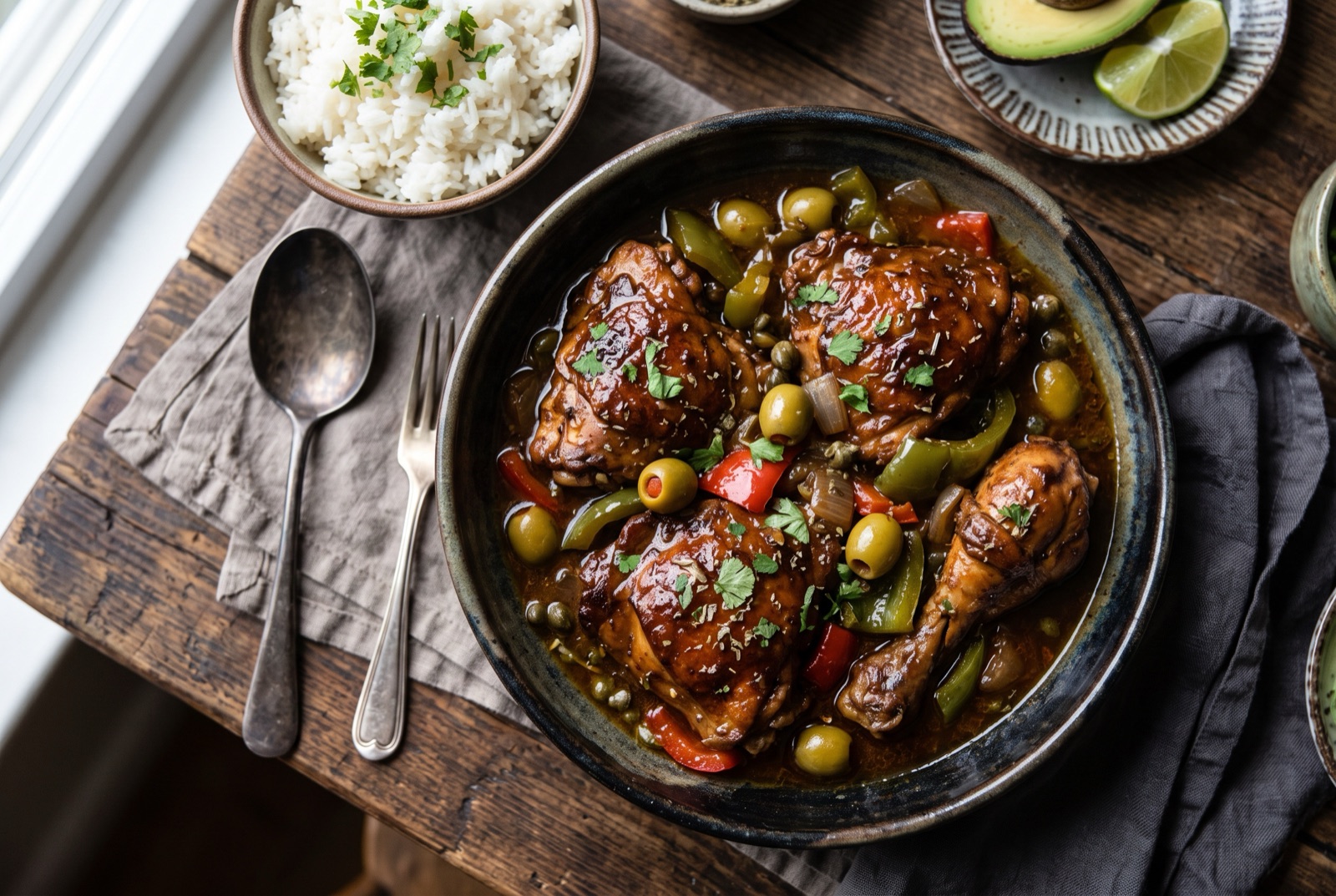
Dominican Republic1 hr 35 min
Pollo Guisado
Dominican Braised Chicken in Burnt Sugar
Dominican Republic45 min
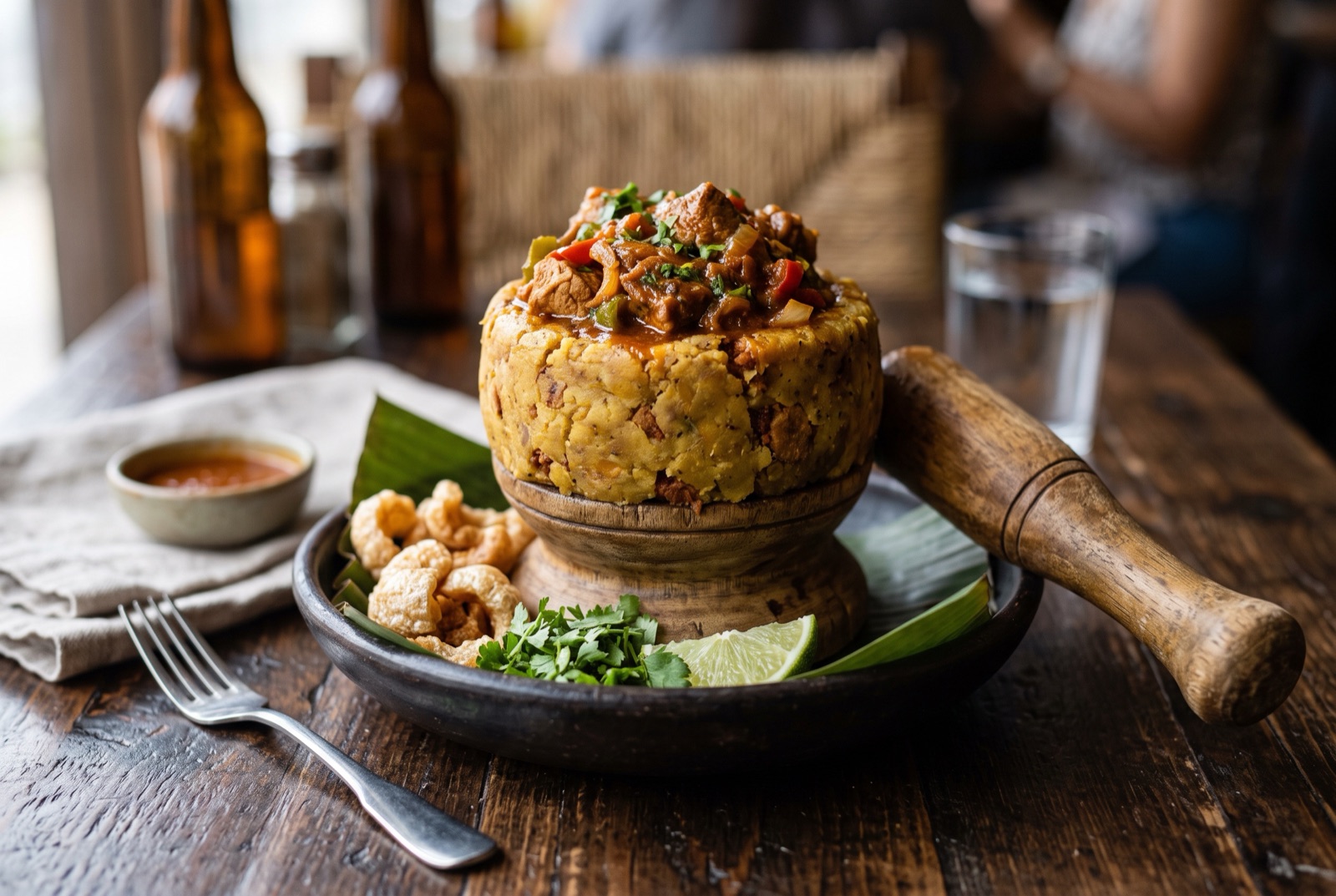
Mofongo
Pounded Plantain with Garlic and Crackling
Dominican Republic3 hr 15 min
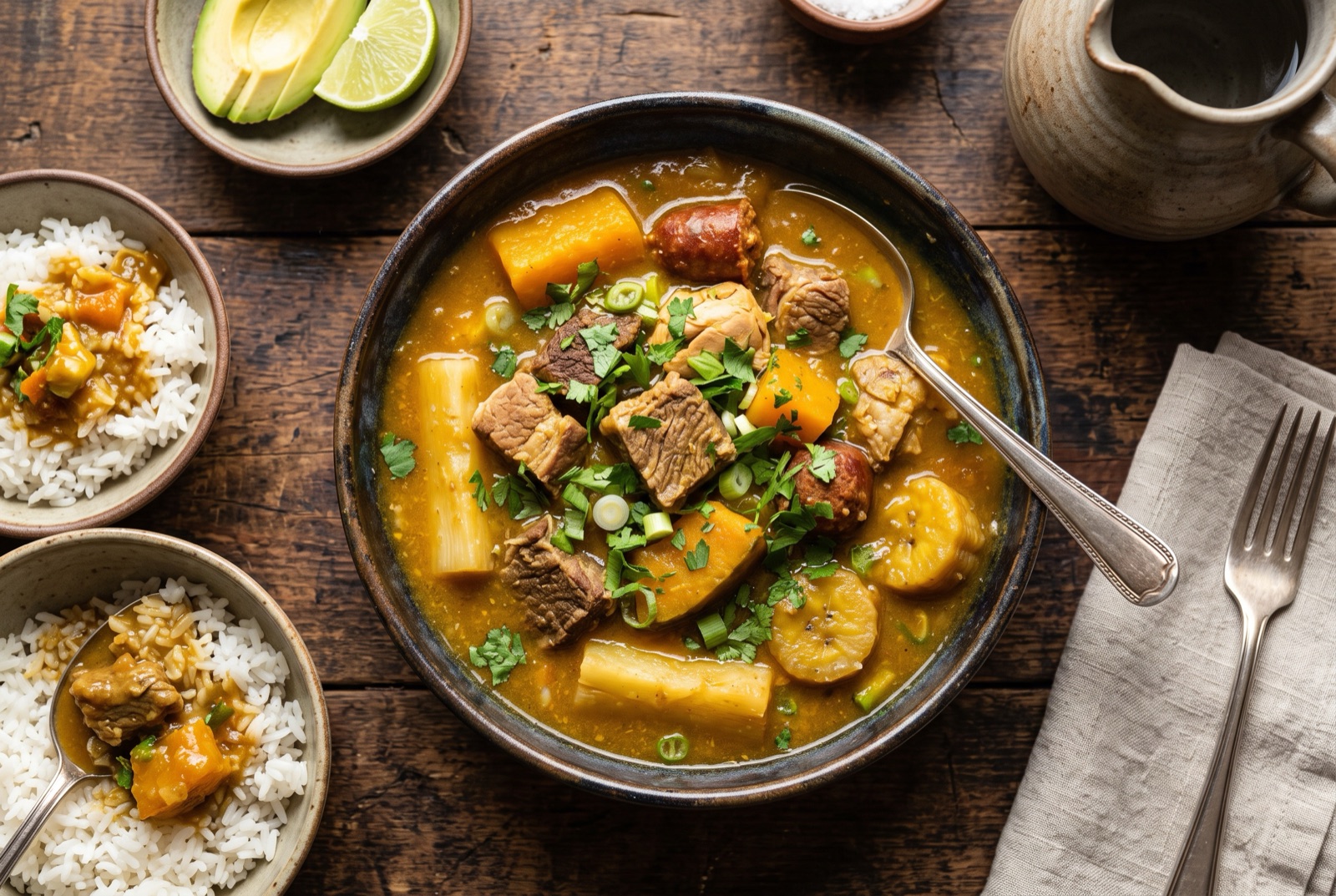
Sancocho de Siete Carnes
Dominican Seven-Meat Root Stew
Dominican Republic1 hr 5 min
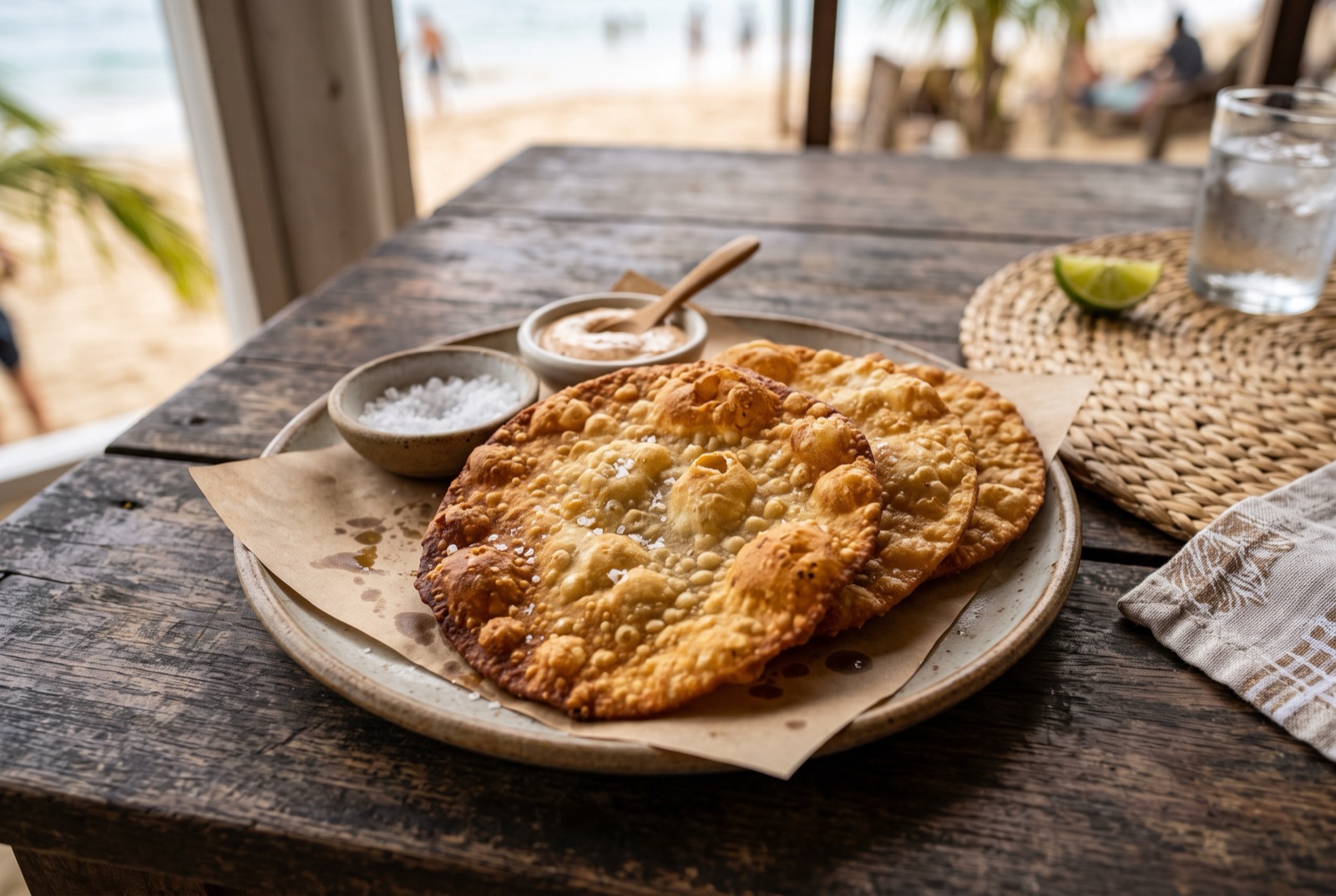
Yaniqueques
Dominican Fried Beach Flatbread
Keep exploring Dominican Republic.
Dominican Republic has 9 more dishes in the atlas — Habichuelas con Dulce and Habichuelas Guisadas, and 7 more.
Recipe by The DishRoute Kitchen · published August 20, 2026 · updated August 20, 2026