Pollo Guisado.
Dominican Braised Chicken in Burnt Sugar
Pollo guisado · say it: POH-yoh gee-SAH-doh
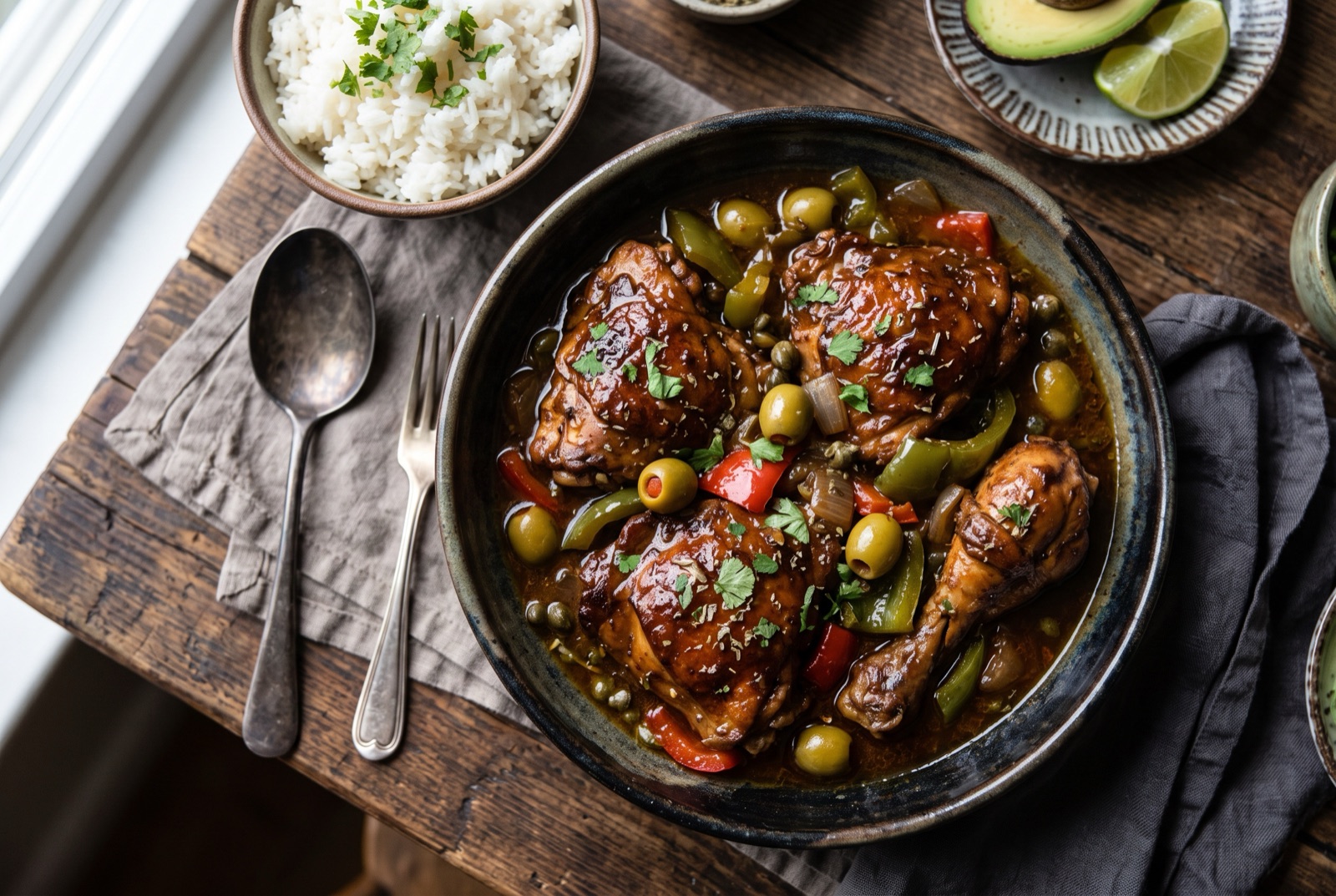
Pollo guisado is the weekday backbone of Dominican cooking: bone-in chicken seasoned with garlic, oregano and lime, seared in sugar cooked to a dark caramel, then simmered until the meat slides off the bone and the sauce reduces to something between a gravy and a glaze. The caramel is not there to sweeten. Taken far enough it loses most of its sugar character and leaves colour and a faint bitter edge that gives the sauce its depth, which is why Dominican braises look mahogany without a drop of soy or browning liquid. Olives and capers cut the richness, the peppers go soft and sweet, and the whole thing is designed to be eaten over white rice with the sauce pooling into the grains.

- Gate
- Dominican Republic
- Prep
- 20 min
- Cook
- 45 min
- Total time
- 1 hr 35 min incl. 30 min rest
- Serves
- 4
- Status
- Easy
- Nutrition / serving · estimated
- Calories 520 kcal
- Protein 42 g
- Carbs 12 g
- Fat 33 g
- Fiber 2 g
- Sodium 940 mg
Why this recipe works.
- The caramel step is described by colour and timing, so you can tell correct from burnt before the chicken goes in.
- Bone-in, skin-on chicken for a sauce with real body — boneless breast makes a thin, forgettable version.
- A short sour-orange marinade that seasons the meat rather than just perfuming the surface.
- Finishes uncovered so the sauce reduces to the thickness that actually clings to rice.
Ingredients.
15 itemsFor the marinade
For the braise
To finish
Equipment
- Wide heavy pot or Dutch oven with a lid
- Tongs
- Citrus juicer
Instructions.
Marinate the chicken
Rub 1 kg of chicken with the garlic paste, crumbled oregano, sour orange juice, salt and black pepper. Cover and leave for at least 30 minutes at room temperature, or refrigerate overnight for a deeper result.
Dry the pieces
Lift the chicken out of the marinade and pat every piece dry with paper towel, keeping the marinade liquid for later. The surface should feel tacky rather than wet, or the caramel will seize instead of coating.
Burn the sugar
Heat the oil and sugar together in a wide pot over medium heat. Leave it alone as the sugar melts, foams and darkens; the instant it reaches the colour of strong tea and smells nutty rather than sweet, lay in the chicken skin side down.
Tip Stand ready with the tongs. From amber to acrid is roughly ten seconds at this heat.
Colour the chicken
Let the chicken sit undisturbed for 4 minutes, then turn each piece. The skin should be a deep glossy brown and the caramel should have dissolved into a dark film on the bottom of the pot rather than sitting in lumps.
Build the braise
Scatter in the onion and pepper strips and cook for 3 minutes until they slump and release their moisture. Stir in the tomato paste, fry it for a minute until it darkens, then add the reserved marinade and the hot water.
Simmer covered
Bring to a simmer, cover, and cook over low heat for 25 minutes, turning the pieces once. The meat should be pulling back from the drumstick bones and the sauce should already be a clear reddish-brown.
Reduce and finish
Add the olives and capers, uncover, and simmer for a final 8 to 10 minutes until the sauce coats the back of a spoon and leaves a clean trail when you drag a finger through it. Taste for salt, scatter the cilantro and serve over rice.
Tip The olives and capers are already salty — always taste before adding more salt at this stage.
Tips from our kitchen.
- Dry the chicken thoroughly before it meets the caramel. Wet skin drops the pot temperature and the sugar seizes into hard shards instead of coating the meat.
- Use a wide pot so the chicken sits in one layer. Crowded pieces steam, and steamed skin never takes on the mahogany colour.
- Crumble the dried oregano between your palms as it goes in — the friction releases far more aroma than tipping it from the jar.
- Add the olives and capers in the last ten minutes. Long simmering makes them dull and turns the sauce oddly salty.
- If the sauce is thin at the end, lift the lid and raise the heat rather than adding starch. Five minutes of reduction fixes almost every case.
- Save any sauce left in the pot. Dominicans pour it over rice the next day and consider that a meal in itself.
Substitutions.
- Sour orange (naranja agria) → Two parts orange juice to one part lime juice
- Sour orange is sharper and more floral, but the blend is what most Dominican cooks abroad use permanently.
- Ají cubanela → Green bell pepper, or half a poblano
- Cubanela is thinner-walled and milder than bell pepper. Poblano adds a slight grassy heat that works well here.
- Bone-in chicken thighs → Chicken drumsticks, or a whole chicken cut into eight
- Any bone-in cut works. Boneless breast is the one to avoid — it dries out well before the sauce is ready.
Variations.
- Pollo guisado con papas
- Potatoes added halfway through so they absorb the sauce and thicken it slightly — the most common household variation.
- Pollo guisado con coco
- A Samaná-style version finished with coconut milk instead of extra water, sweeter and considerably richer.
- Chuleta guisada
- The same method applied to bone-in pork chops, which need about twenty minutes less braising time.
Storage & reheating.
Pollo guisado keeps 3 days refrigerated and genuinely improves on day two as the sauce settles into the meat. Reheat covered over low heat with a splash of water, since the sauce tightens considerably when cold. It freezes well for 3 months; freeze it in its sauce, never drained, or the chicken dries out on reheating.
Serve with
White rice with concón, stewed red beans and tostones — and hot sauce on the table rather than in the pot.
The story behind Pollo Guisado.
Guisar simply means to stew, and the guisado family — pollo, carne, chuleta, bacalao — accounts for an enormous share of what actually gets cooked in Dominican homes. Chicken is the cheapest and quickest of them, which is why pollo guisado shows up on Monday as easily as on a birthday. Ask a Dominican cook for the recipe and you will rarely get measurements; you will get a sequence, because the sequence is the recipe and the quantities move with what is in the kitchen.
The defining step is what Dominicans call quemar el azúcar, burning the sugar. Oil and sugar go into the pot alone, the sugar melts and passes through amber into a deep tea colour, and the seasoned chicken goes in at the exact moment before it would turn acrid. The caramel seizes onto the skin and dissolves into the liquid as the braise goes on. Cuban and Puerto Rican kitchens share the technique, and there is no settled account of where it started; what is clear is that in the Dominican Republic it became the default way to start almost any stew, to the point that bottled browning sauce is regarded as a shortcut for people in a hurry rather than a real ingredient.
The rest of the seasoning is a compact set repeated across the cuisine: crushed garlic, dried oregano rubbed between the palms, ají cubanela peppers, onion, a little tomato paste, olives and capers for salt and sharpness, and sour orange or lime for lift. Nothing is fried long, nothing is browned twice, and the sauce is finished by uncovering the pot and letting it reduce. Served with rice, a spoon of beans and a couple of tostones, it is the dish most Dominicans abroad learn to cook first, because it is the one that most immediately tastes like home.
Questions, answered.
Do I have to burn the sugar, or can I use browning sauce?
Bottled browning sauce will give you the colour but not the flavour — the slight bitterness of properly darkened caramel is what keeps the sauce from tasting merely sweet and tomatoey. That said, plenty of Dominican households keep a bottle for busy nights. If you use it, add a teaspoon with the tomato paste and skip the caramel step entirely rather than doing both.
Why did my sauce turn out thin and pale?
Three usual causes: too much water at the start, a pot too small so the chicken steamed instead of colouring, or the sugar stopped at golden rather than deep brown. Fix it by uncovering the pot and simmering hard for five to ten minutes, which reduces the liquid and concentrates the colour. Add liquid sparingly next time — the chicken releases a surprising amount.
Can I use boneless chicken?
You can, but the result is noticeably weaker. Bones and skin release gelatin that gives the sauce its body and gloss, which is the whole character of a guisado. If you only have boneless thighs, shorten the braise to about 20 minutes and consider adding a little chicken stock instead of water to compensate.
How long should the chicken marinate?
Thirty minutes is the practical minimum and gets you a decent result on a weeknight. Two to four hours is noticeably better, and overnight in the fridge is best of all, especially with sour orange, whose acidity works slowly. Do not go beyond about twelve hours in a citrus marinade or the surface of the meat starts to turn chalky.
Is this the same as Puerto Rican pollo guisado?
They are close cousins rather than the same dish. The Puerto Rican version usually starts from a green sofrito base with recaíto and often includes potatoes and sazón with achiote for colour. The Dominican version leans on the burnt sugar for colour, uses more dried oregano, and typically keeps the vegetables to onion and cubanela pepper.
You might also like.
All recipes →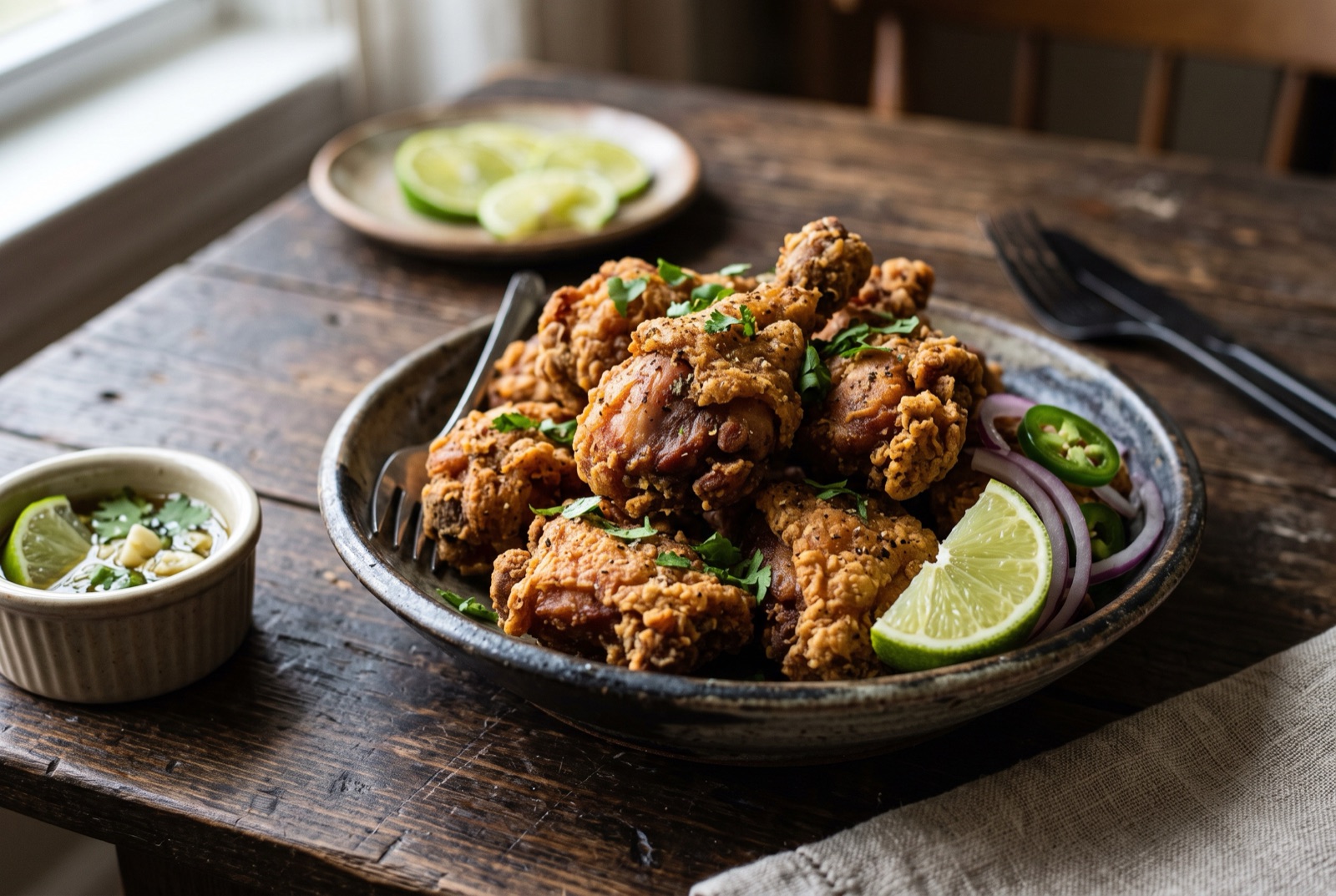
Dominican Republic1 hr 45 min
Chicharrón de Pollo
Dominican Crisp Fried Chicken Bites
Dominican Republic55 min
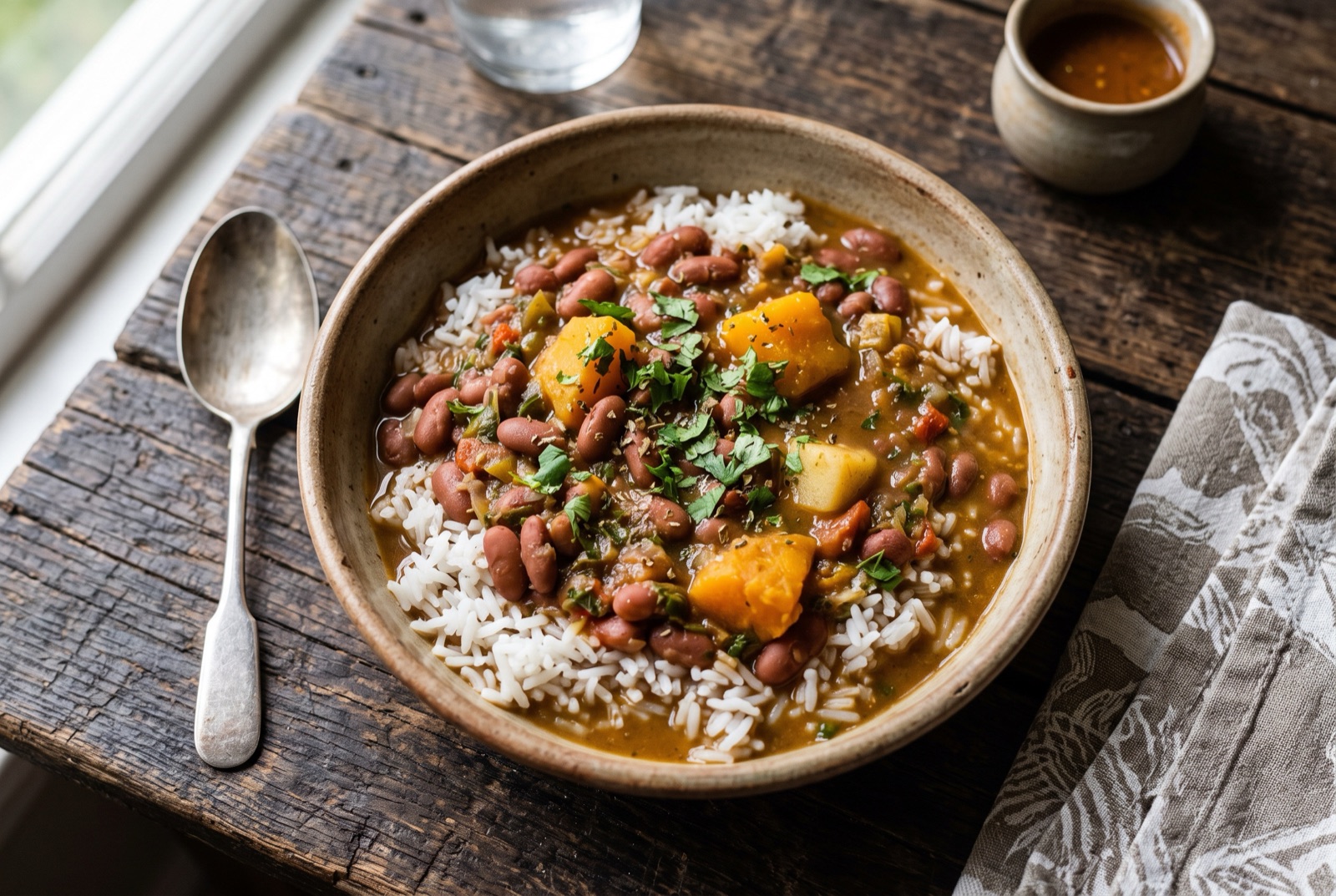
Habichuelas Guisadas
Dominican Stewed Red Beans
Dominican Republic2 hr 15 min
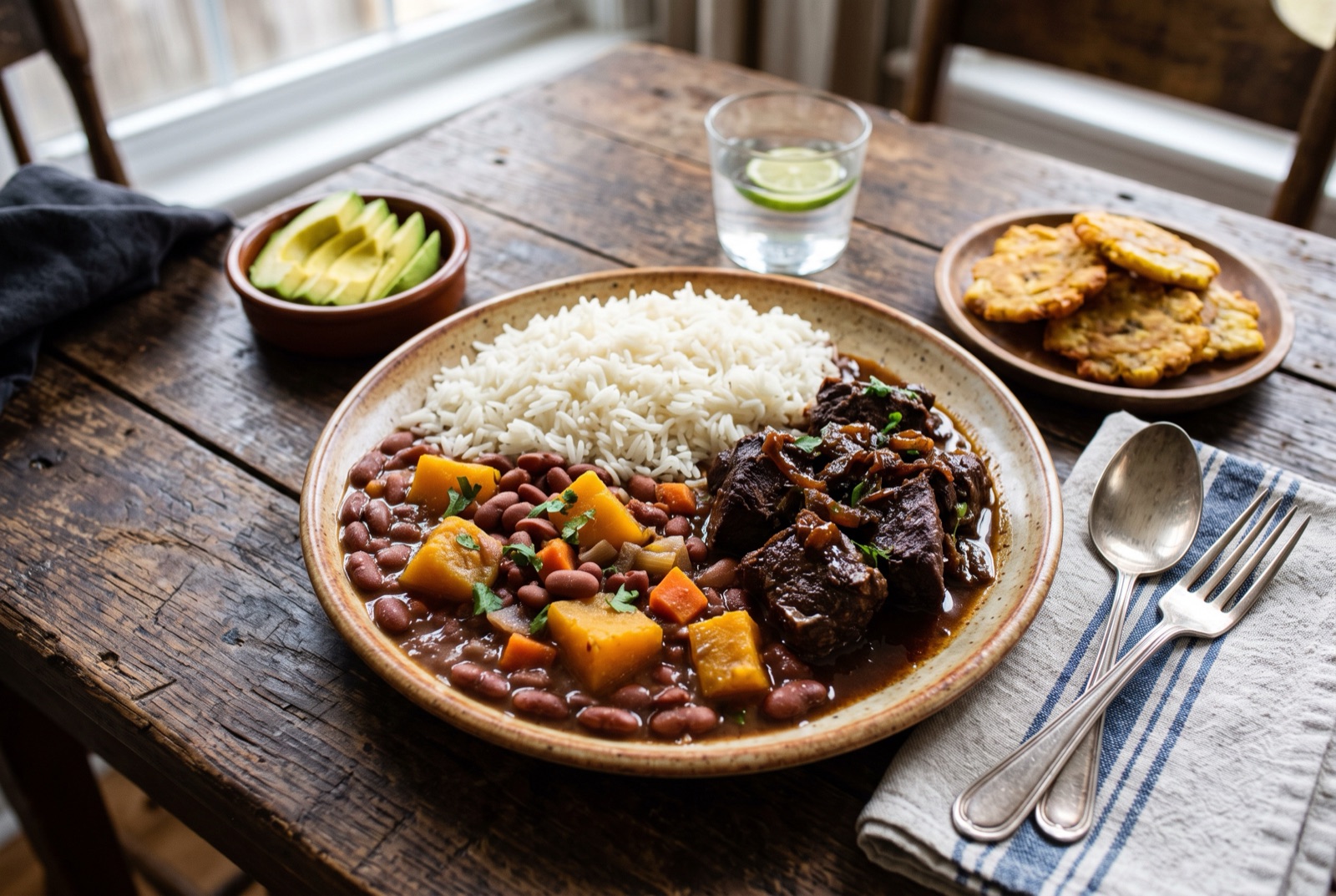
La Bandera Dominicana
The Dominican Flag Lunch Plate
Dominican Republic3 hr 15 min
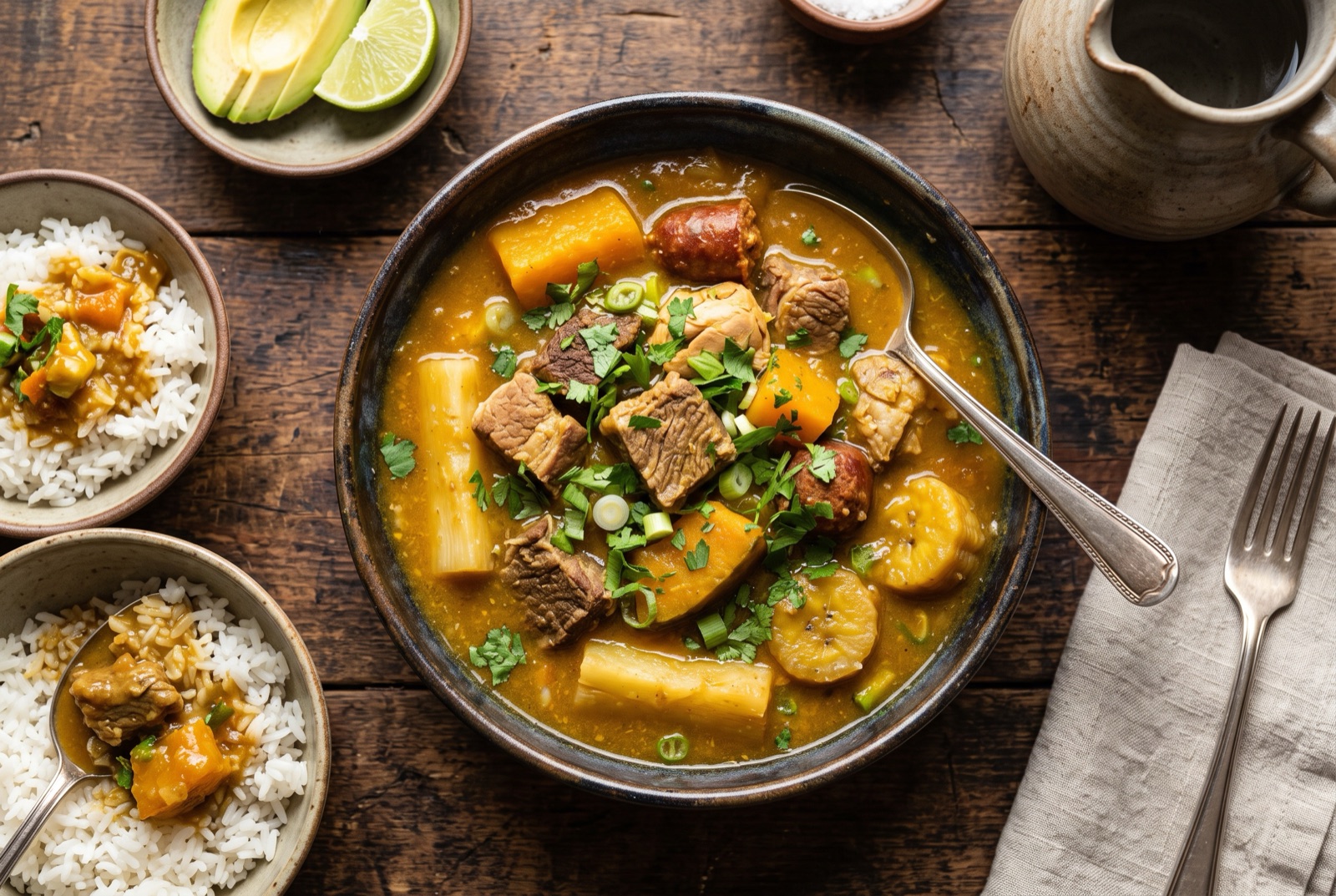
Sancocho de Siete Carnes
Dominican Seven-Meat Root Stew
Keep exploring Dominican Republic.
Dominican Republic has 9 more dishes in the atlas — Chicharrón de Pollo and Habichuelas con Dulce, and 7 more.
All Dominican Republic recipes Chicken recipes Olives recipes Capers recipes maindairy freegluten freeRecipe by The DishRoute Kitchen · published August 20, 2026 · updated August 20, 2026