La Bandera Dominicana.
The Dominican Flag Lunch Plate
La bandera dominicana · say it: lah ban-DEH-rah doh-mee-nee-KAH-nah
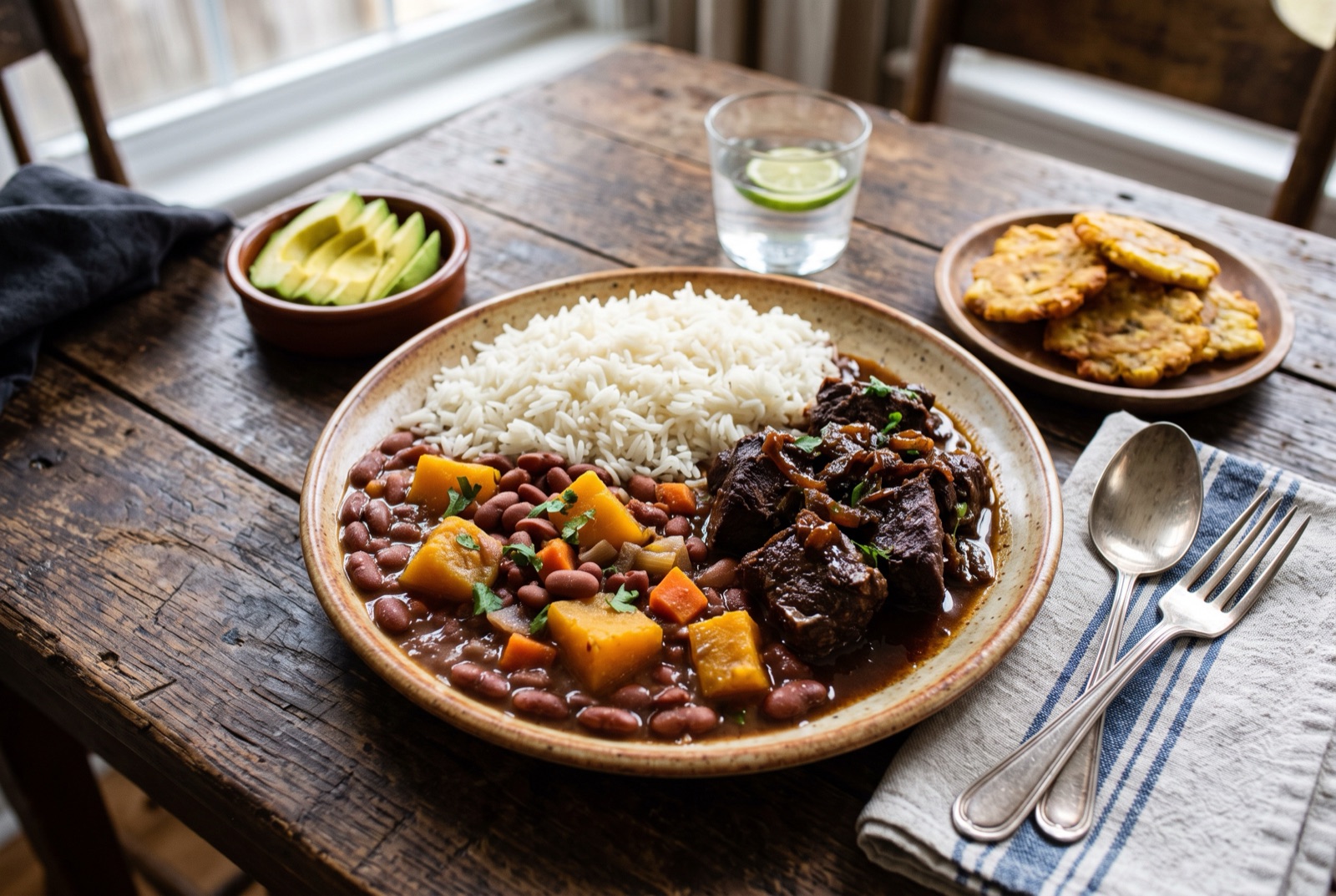
La bandera is not a single dish but a fixed arrangement of three: white rice, stewed red beans poured over it, and a braised meat with its sauce — most often carne guisada, beef simmered in caramelised sugar, tomato and oregano until it is fork-soft. The name comes from the colours reading like the national flag on the plate, and the combination is eaten at midday by a large share of the country on a large share of days. The flavour is deep and savoury rather than spicy: sweet-edged brown sauce on the beef, a bean broth thickened with auyama, and plain rice underneath to absorb both. A crisp cabbage salad or a pile of tostones goes alongside to break up the softness.

- Gate
- Dominican RepublicSanto Domingo
- Prep
- 30 min
- Cook
- 1 hr 45 min
- Total time
- 2 hr 15 min
- Serves
- 4
- Status
- Medium
- Nutrition / serving · estimated
- Calories 780 kcal
- Protein 45 g
- Carbs 92 g
- Fat 26 g
- Fiber 11 g
- Sodium 890 mg
Why this recipe works.
- All three components timed to finish together, so nothing sits going cold while something else cooks.
- The burnt-sugar browning is explained by colour and smell, not by a vague instruction to caramelise.
- Rice cooked the Dominican way — dry, separate grains and a deliberate concón crust at the bottom.
- Beans thickened with squash rather than mashed, which is how the broth stays pourable instead of pasty.
Ingredients.
19 itemsFor the carne guisada
For the rice
For the beans
For the salad
To finish
Equipment
- Heavy lidded saucepan for the rice
- Dutch oven or heavy braising pot
- Medium saucepan for the beans
Instructions.
Season the beef
Toss 700 g of beef with the crushed garlic, oregano, lime juice, a teaspoon of salt and plenty of black pepper. Leave at room temperature for an hour, or refrigerate overnight and bring back to room temperature before cooking.
Burn the sugar
Heat the olive oil and sugar in a dry heavy pot over medium heat without stirring. Let the sugar melt, foam and darken to the colour of strong tea — about 3 minutes — then immediately tip in the beef and toss to coat it in the dark caramel.
Tip Have the beef within arm's reach before you start. The window between correct and burnt is about ten seconds.
Braise the beef
Let the beef sit undisturbed for 8 to 10 minutes so it colours against the pot base, then stir in the onion, pepper and tomato paste. Add 300 ml of hot water, cover, and simmer over low heat for 70 to 80 minutes until a fork twists the meat apart easily.
Stew the beans
Simmer the beans, their liquid and the cubed auyama in a small pot for 20 to 25 minutes, until the squash has collapsed and the broth is opaque and just thick enough to coat a spoon. Season with salt and stir in the cilantro at the end.
Tip If the broth is still thin, mash a few pieces of squash against the pot and simmer uncovered for five more minutes.
Cook the rice
Bring the rice, water, oil and salt to a boil in a heavy lidded pan. Boil uncovered until the water is level with the surface of the rice and small craters appear, then cover, drop to the lowest heat and leave undisturbed for 18 minutes.
Finish the sauce and the salad
Uncover the beef, stir in the olives and simmer for a final 10 minutes so the sauce reduces to a glossy gravy that clings to the meat. Dress the shredded cabbage and sliced tomato with lime juice, olive oil and salt.
Build the plate
Spoon rice onto each plate, scraping up some concón from the bottom of the pot. Ladle beans over one side of the rice, set the beef and its sauce alongside, and add the salad. Pass hot sauce at the table.
Tips from our kitchen.
- Take the sugar past golden to the colour of strong tea before the beef goes in. Golden sugar makes a sweet stew; properly dark sugar makes a savoury one.
- Season the beef at least an hour ahead with garlic, oregano and lime. Fifteen minutes only flavours the outside of the cubes.
- Cook the rice with the lid on and the heat low after the water is absorbed, then leave it undisturbed — that is what forms the concón.
- The bean broth should pour like thin gravy, not sit like paste. If it thickens too far, loosen it with hot water and re-season.
- Do not stir the beef during the first ten minutes of braising. Letting it sit against the pot base builds the colour the dish is named for.
- Serve the beans in a separate bowl at the table so each person decides how much broth goes onto their rice.
Substitutions.
- Beef chuck → Chicken thighs, pork shoulder or goat
- La bandera changes with whatever meat is on hand — pollo guisado is just as standard as carne guisada, and cooks faster.
- Auyama in the beans → Kabocha, butternut squash or a small potato
- The squash is there to dissolve and thicken. Butternut is sweeter than auyama, so use slightly less.
- Sour orange → Half lime juice, half orange juice
- The standard workaround outside the Caribbean, and close enough that the difference is hard to taste in a braise.
Variations.
- Bandera with pollo guisado
- Braised chicken instead of beef — the most common weekday version and about forty minutes faster from start to plate.
- Bandera con tostones
- Twice-fried green plantain replaces the salad, turning the plate heavier and considerably better suited to a long afternoon.
- Moro de habichuelas
- Rice and beans cooked together in one pot instead of separately, common in the east and when there is no time for two pans.
Storage & reheating.
All three components keep 3 days refrigerated and are best stored separately. Beans thicken in the fridge — loosen with hot water when reheating. Rice reheats best in a covered pan with a tablespoon of water over low heat, or in a steamer basket; the microwave dries the grains. The beef improves overnight and freezes well for 2 months, though the beans lose some texture on thawing.
Serve with
A sharp cabbage and tomato salad dressed with lime and olive oil, plus avocado slices and hot sauce on the table.
The story behind La Bandera Dominicana.
Dominicans call the midday meal la comida, and it is the meal that matters — larger than breakfast, larger than dinner, and until recently something most people went home for. La bandera is what that meal looks like. The structure is so consistent that a Dominican describing lunch will often name only the meat, because everyone already assumes the rice and the beans. Cheap comedores and expensive Santo Domingo restaurants serve the same three components; only the cut of meat and the quality of the salad move.
Each element carries a different piece of the island's history. The rice is a colonial-era staple that became the national carbohydrate, cooked dry and separate with a prized crust — concón — left at the bottom of the pot and fought over at the table. The beans are Spanish-Caribbean, stewed with sofrito and given body by auyama rather than by mashing. The burnt-sugar browning of the meat is the distinctly Dominican move, a technique shared with parts of Cuba and Puerto Rico that turns a plain braise dark, glossy and faintly bittersweet without any browning sauce.
What makes la bandera worth cooking as a set rather than as three recipes is the way the components are eaten. The beans are ladled over the rice, not served beside it, so the rice must be dry enough to take that liquid without collapsing. The meat sauce goes on top of that. By the last few bites everything has merged into one thing, which is exactly what is supposed to happen. Dominicans abroad describe missing this plate more than any single dish, and the reason is less about any one flavour than about the specific way the three run together.
Questions, answered.
Why is it called la bandera?
Because the plate's colours echo the Dominican flag: white rice, red beans, and the meat and salad filling in the rest. The name is affectionate shorthand for the standard national lunch rather than an official dish title, and Dominicans use it the way other cultures say "a roast dinner" — everyone knows what is coming.
What is concón and how do I get it?
Concón is the toasted crust of rice at the bottom of the pot, prized enough that Dominican families argue over it. To get it, once the water is absorbed cover the pot, drop the heat to its lowest setting and leave the rice completely alone for about fifteen minutes. Use a heavy pot, not non-stick, and listen for a faint crackle rather than lifting the lid.
My burnt sugar turned bitter — what went wrong?
It went one stage too far. Sugar melts, turns golden, then deepens to the colour of strong tea, and a few seconds later it smokes and turns acrid. Work over medium heat, keep the meat ready beside the stove, and add it the moment the colour is right — the cold meat stops the cooking instantly. If it does smoke, wash the pot and start again; bitterness cannot be diluted out.
Can I cook the rice and beans together instead?
Yes, and that dish has its own name — moro. It is genuinely Dominican and very common, but it is not la bandera, because the point of the flag plate is the separate white rice with the bean broth poured over at the table. Cook moro when you want one pot; cook la bandera when you want the real lunch.
Is la bandera spicy?
No. Dominican cooking seasons for depth rather than heat, so the pot itself contains almost no chile. Hot sauce sits on the table and each person adds their own, which is standard practice across the country and the reason visitors sometimes assume the food is bland when it is simply not fiery.
You might also like.
All recipes →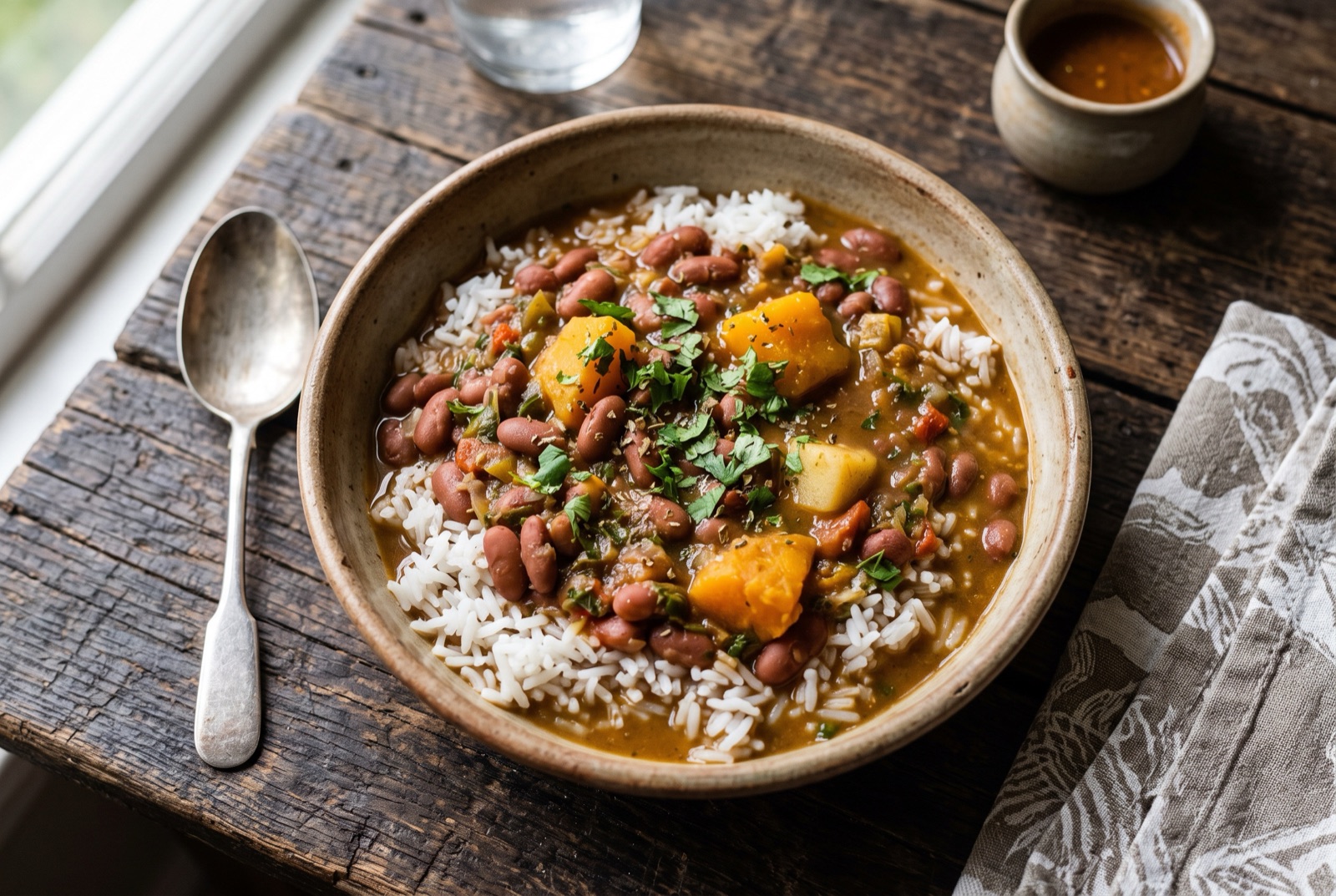
Dominican Republic55 min
Habichuelas Guisadas
Dominican Stewed Red Beans
Dominican Republic1 hr 35 min
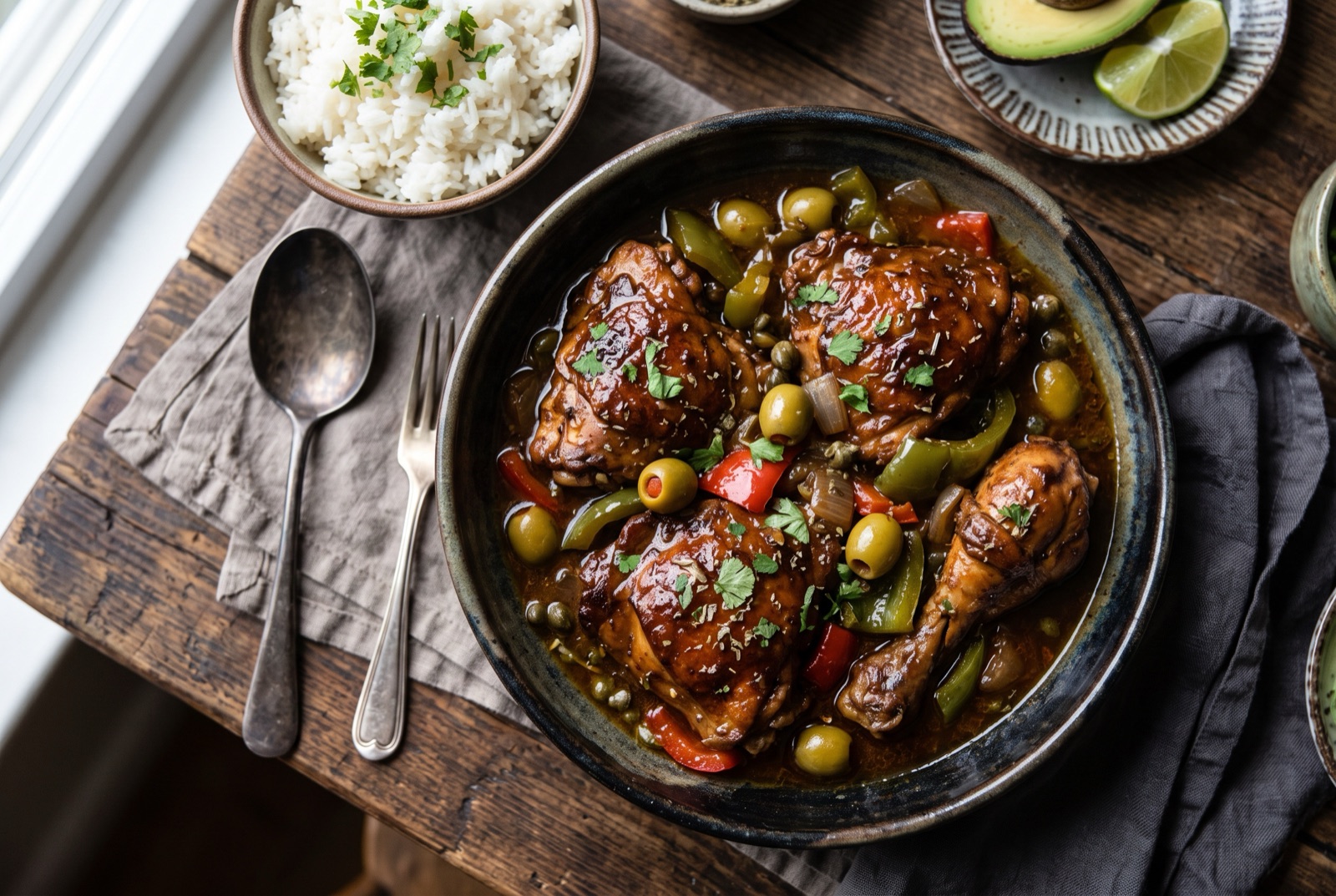
Pollo Guisado
Dominican Braised Chicken in Burnt Sugar
Dominican Republic3 hr 15 min
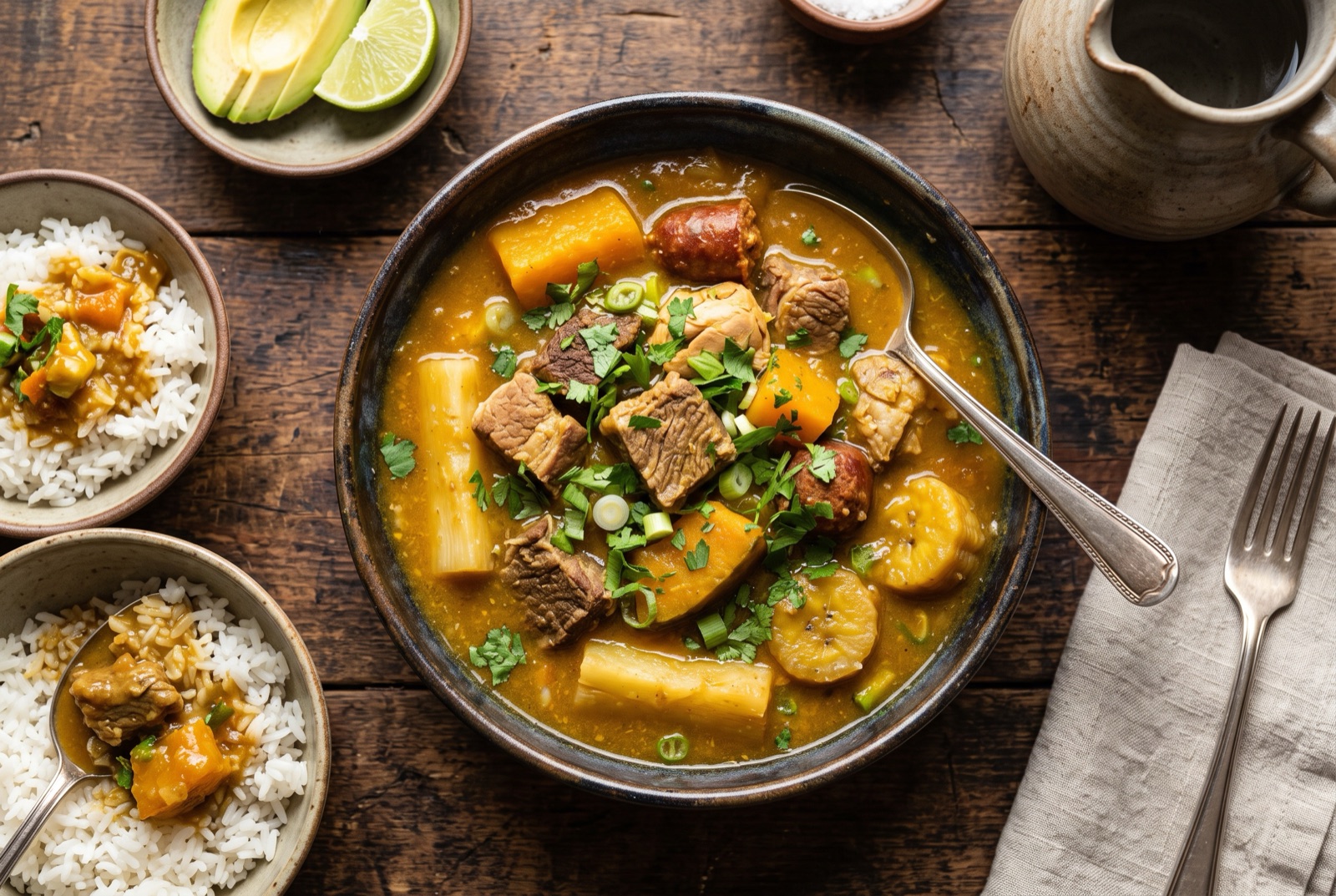
Sancocho de Siete Carnes
Dominican Seven-Meat Root Stew
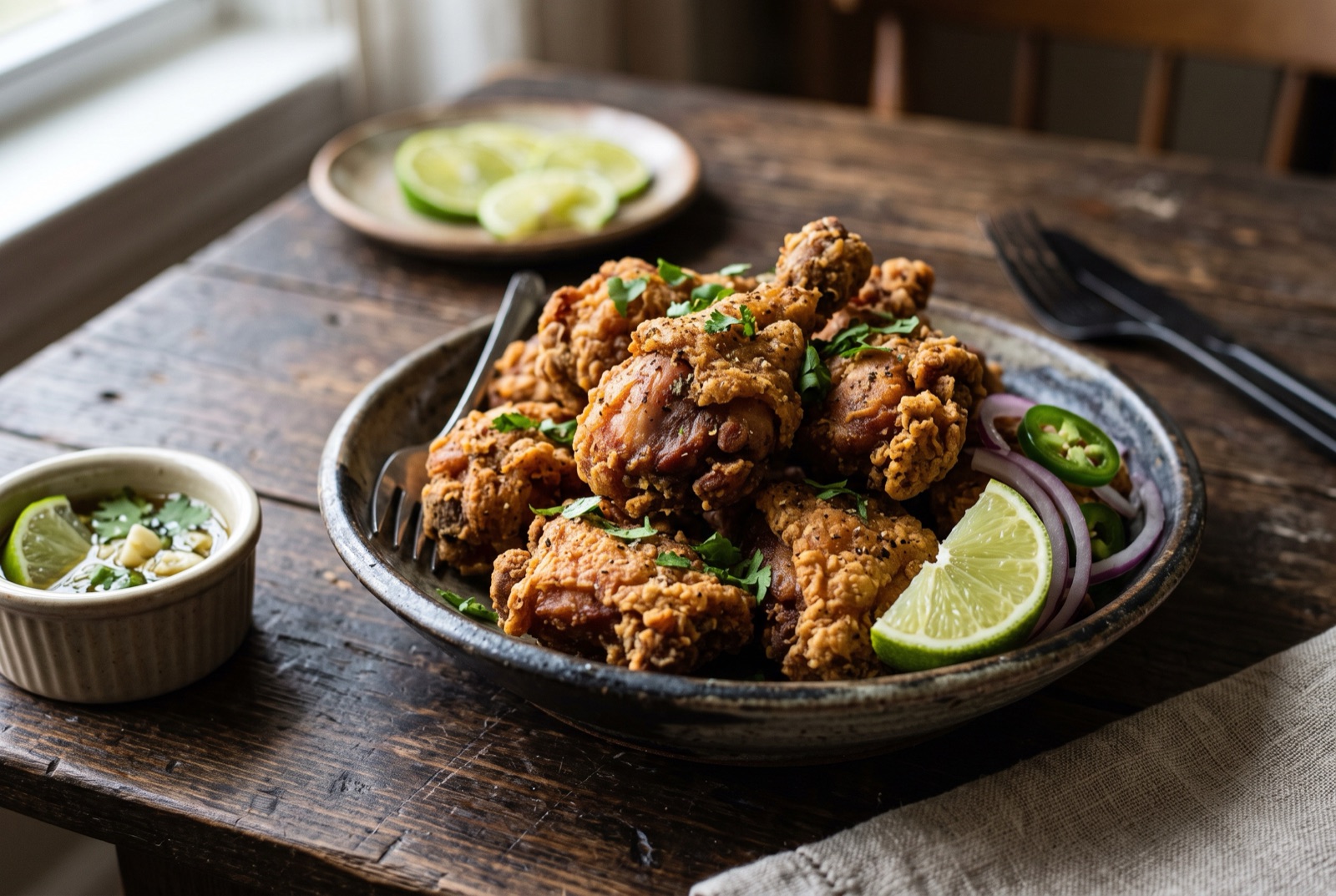
Dominican Republic1 hr 45 min
Chicharrón de Pollo
Dominican Crisp Fried Chicken Bites
Keep exploring Dominican Republic.
Dominican Republic has 9 more dishes in the atlas — Chicharrón de Pollo and Habichuelas con Dulce, and 7 more.
All Dominican Republic recipes Beef chuck recipes Rice recipes Tomato paste recipes maindairy freegluten freeRecipe by The DishRoute Kitchen · published August 20, 2026 · updated August 20, 2026