Erdäpfelsalat.
Austrian Warm Potato Salad
Erdäpfelsalat · say it: AIRD-ap-fel-zah-laht
Erdäpfelsalat is the Austrian potato salad: waxy potatoes boiled in their skins, peeled and sliced while still hot, then dressed with hot broth, vinegar, mustard, onion and oil and left to absorb everything. There is no mayonnaise. What makes it creamy is starch — the warm slices release enough of it into the broth to thicken the dressing into a light, glossy sauce that clings to every piece. The flavour is unapologetically sharp, since its job is to cut through fried food, and in Styria it is finished with dark pumpkin seed oil that turns the whole bowl green-black and nutty.
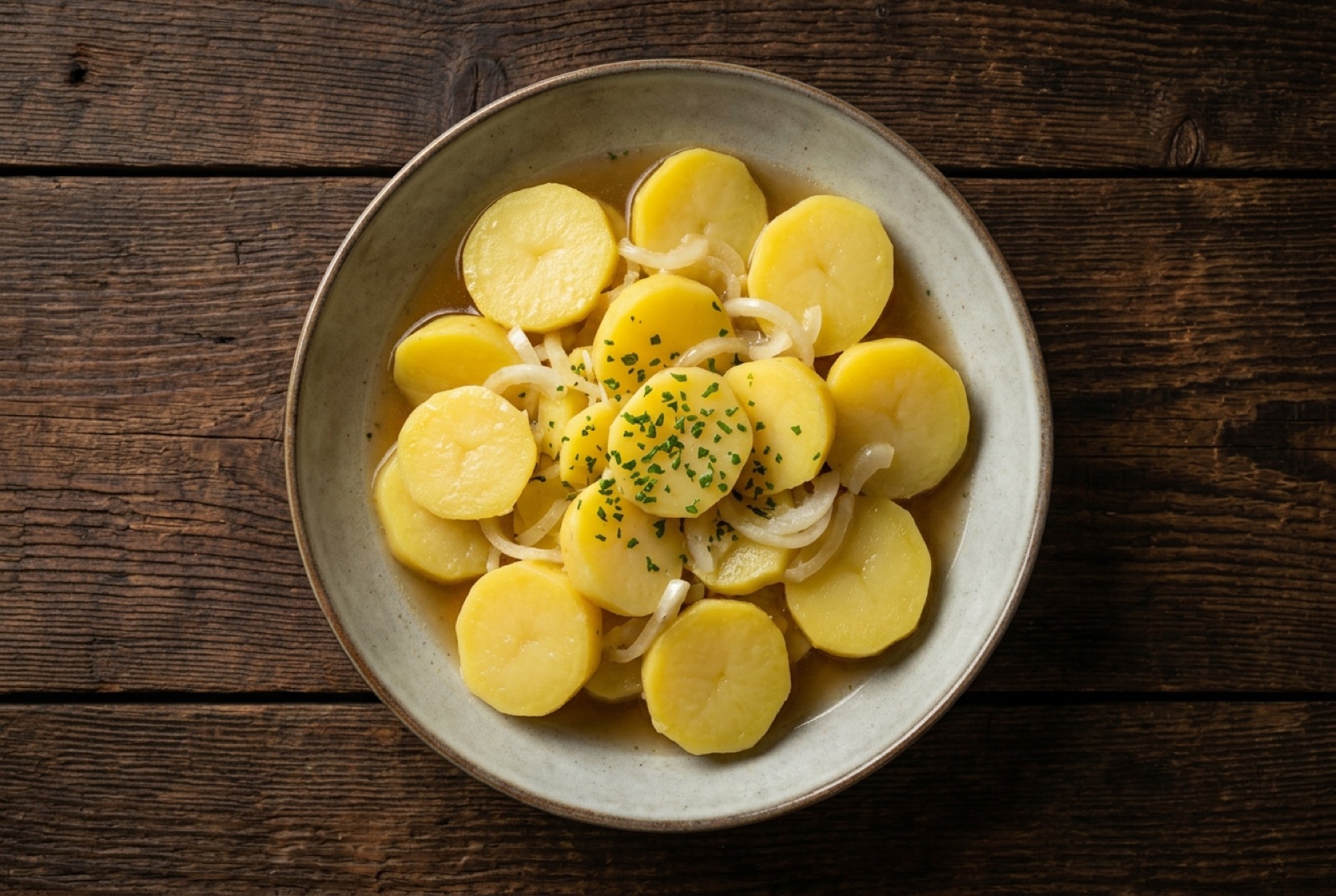

- Gate
- AustriaVienna and Styria
- Prep
- 20 min
- Cook
- 25 min
- Total time
- 1 hr incl. 15 min rest
- Serves
- 6
- Status
- Easy
- Nutrition / serving · estimated
- Calories 240 kcal
- Protein 4 g
- Carbs 32 g
- Fat 11 g
- Fiber 4 g
- Sodium 620 mg
Why this recipe works.
- Dresses the potatoes hot, so the starch thickens the broth into a natural creamy coating.
- Gives both the Viennese and the Styrian pumpkin seed oil finish, with the reasoning behind each.
- Correct potato guidance up front — waxy only — because the wrong variety collapses into mash.
- Balanced to sit next to fried food, sharp enough to actually do its job on the plate.
Ingredients.
10 itemsFor the salad
For the dressing
To finish
Equipment
- Medium saucepan
- Large mixing bowl
- Sharp knife or mandoline
- Small pan for warming the broth
Instructions.
Boil the potatoes whole
Put 1 kg of unpeeled waxy potatoes in cold salted water, bring to a simmer and cook for 20–25 minutes, until a knife slides into the centre with slight resistance. Do not let them collapse.
Warm the dressing
While the potatoes cook, heat the broth in a small pan with the vinegar, mustard, sugar, salt and pepper until steaming but not boiling, then drop in the sliced onion and take it off the heat.
Tip The residual heat softens the onion just enough to lose its raw bite while keeping some crunch.
Peel and slice hot
Drain the potatoes and peel them as soon as you can handle them, holding each one in a cloth. Slice into 4 mm rounds straight into a wide bowl — they must still be hot when the dressing arrives.
Dress immediately
Pour the hot broth mixture over the warm slices and fold gently with a rubber spatula until every piece is coated. The liquid will look like far too much at this stage; it will be absorbed.
Crush a few slices
Press five or six potato slices against the side of the bowl with a fork and stir them back in. This releases the starch that thickens the dressing into a creamy coating.
Rest, then finish with oil
Leave the salad to stand for at least 15 minutes, then fold in the oil and taste again for salt and vinegar. Scatter with chives and serve just warm or at room temperature.
Tip If you are using pumpkin seed oil, add it now and never before — heat kills its aroma.
Tips from our kitchen.
- Waxy potatoes only — Charlotte, Nicola, Anya, or anything sold as salad potatoes. Floury varieties break apart the moment you stir them into hot dressing.
- Boil them whole in their skins and peel them while they are almost too hot to handle. Peeled potatoes boiled in water absorb it and dilute everything.
- Warm the broth before it meets the potatoes. Cold liquid on warm slices sets the starch instead of drawing it out and the salad stays watery.
- Mash five or six slices against the side of the bowl with a fork. That small amount of crushed potato is the traditional way to thicken the dressing.
- Let it stand at least 15 minutes and up to an hour before serving. Straight after mixing it tastes thin and separate; standing is when it becomes a salad.
- Season the dressing to taste too sharp on its own — the potatoes absorb an astonishing amount of acid and salt.
Substitutions.
- Beef broth → Vegetable broth
- Makes the salad vegetarian and vegan. Use a well-flavoured one, since the broth is doing most of the seasoning work in this recipe.
- Sunflower or rapeseed oil → Styrian pumpkin seed oil (Kernöl)
- Turns the salad dark green and nutty. Add it at the very end and never heat it — its aroma is destroyed by heat and it is expensive enough to matter.
- White wine vinegar → Apple cider vinegar
- Slightly fruitier and a common home swap. Avoid balsamic, which is too sweet and dyes the potatoes an unpleasant brown.
Variations.
- Steirischer Erdäpfelsalat
- The Styrian version dressed with dark pumpkin seed oil instead of neutral oil, often with a little more vinegar to balance the richness.
- Erdäpfelsalat mit Gurken
- With sliced pickled or fresh cucumber folded in, common in Austrian homes in summer and slightly lighter alongside cold meats.
- With sour cream
- A spoonful of sour cream stirred in at the end for a rounder, milder salad — accepted in Vienna, frowned on in Styria.
Storage & reheating.
Erdäpfelsalat keeps 3 days refrigerated and many Austrians think day two is better, once the vinegar has fully penetrated the slices. Take it out of the fridge at least 30 minutes before serving and stir it well — cold potato dulls both salt and acid, and the dressing tightens considerably. If it has gone stiff, loosen it with a spoonful of warm broth rather than more oil. It does not freeze: the potato cells rupture and thaw into a grainy, watery mess.
Serve with
Wiener Schnitzel, Backhendl, or a Heuriger plate of cold cuts and dark bread.
The story behind Erdäpfelsalat.
The name is the first thing to know. Austrians say Erdäpfel, earth-apples, where Germans say Kartoffeln, and the word survives as one of the clearest markers of Austrian German — along with Paradeiser for tomatoes and Marillen for apricots. Potato salad made this way is spread across the old Habsburg territories, from Bavaria through Bohemia to Slovenia, and the broth-and-vinegar method is the shared southern approach, in contrast to the mayonnaise-bound salads of the north.
In Austria the salad exists mostly in relation to something else. It is what a Wiener Schnitzel is served with, what Backhendl arrives beside, what goes on the table at a Heuriger with cold cuts. That supporting role dictates its character: it is much sharper than a potato salad eaten on its own would be, because it is designed to reset the palate between mouthfuls of fried crumb. Order schnitzel in Vienna without potato salad and the kitchen will assume you made a mistake.
The regional split is real and worth knowing. The Viennese version uses beef broth, white wine vinegar, mustard and a neutral oil, sometimes with a spoonful of sour cream stirred through at the end. The Styrian version replaces the neutral oil with Kernöl, the thick dark pumpkin seed oil pressed in the province from roasted hulless pumpkin seeds, which stains the salad an alarming shade of green and gives it a toasted, almost chocolatey depth. Styrians consider the Viennese version bland; Viennese cooks consider the Styrian one overwhelming for delicate food. Both are correct about the other.
The technique that matters more than either is temperature. The potatoes must be sliced hot and dressed hot, because warm starch drinks the liquid and cold starch refuses it. A salad assembled from cold potatoes will never be creamy, however long you leave it.
Questions, answered.
Why is Austrian potato salad made without mayonnaise?
Because the creaminess comes from potato starch, not from egg. Slicing waxy potatoes while hot and dressing them with warm broth draws starch out into the liquid, which thickens into a light glossy sauce on its own. This broth-and-vinegar style is standard across Austria, Bavaria and much of Central Europe, while mayonnaise-based salads belong to northern Germany and Scandinavia.
What potatoes should I use?
Waxy varieties, sold as salad or boiling potatoes — Charlotte, Nicola, Anya, Ratte or similar. They hold their shape when sliced and stirred while hot. Floury baking potatoes such as Russets or King Edwards fall apart into mash as soon as they meet the dressing, and no amount of careful handling prevents it.
Why is my potato salad watery instead of creamy?
Most likely the potatoes were cold when dressed, or peeled before boiling. Warm starch absorbs the broth and thickens it; cold starch does not. Boil the potatoes whole in their skins, peel and slice them hot, and pour warm broth over them straight away. Crushing a few slices against the bowl also helps bind the dressing.
What is pumpkin seed oil and do I need it?
Kernöl is a thick, dark green oil pressed from roasted hulless pumpkin seeds grown in Styria in southern Austria, with a strong toasted, nutty flavour and protected regional status. It is not required — the Viennese version uses neutral oil — but it transforms the salad and is the defining ingredient of the Styrian style. Never heat it, as heat destroys the aroma.
Can I make it ahead for a party?
Yes, and you should. Make it up to a day in advance so the flavours settle, keep it refrigerated, then bring it back to cool room temperature and stir before serving. Hold back a little of the broth and a splash of vinegar to refresh it just before it goes on the table, since the potatoes will have drunk most of the dressing overnight.
You might also like.
All recipes →
Keep exploring Austria.
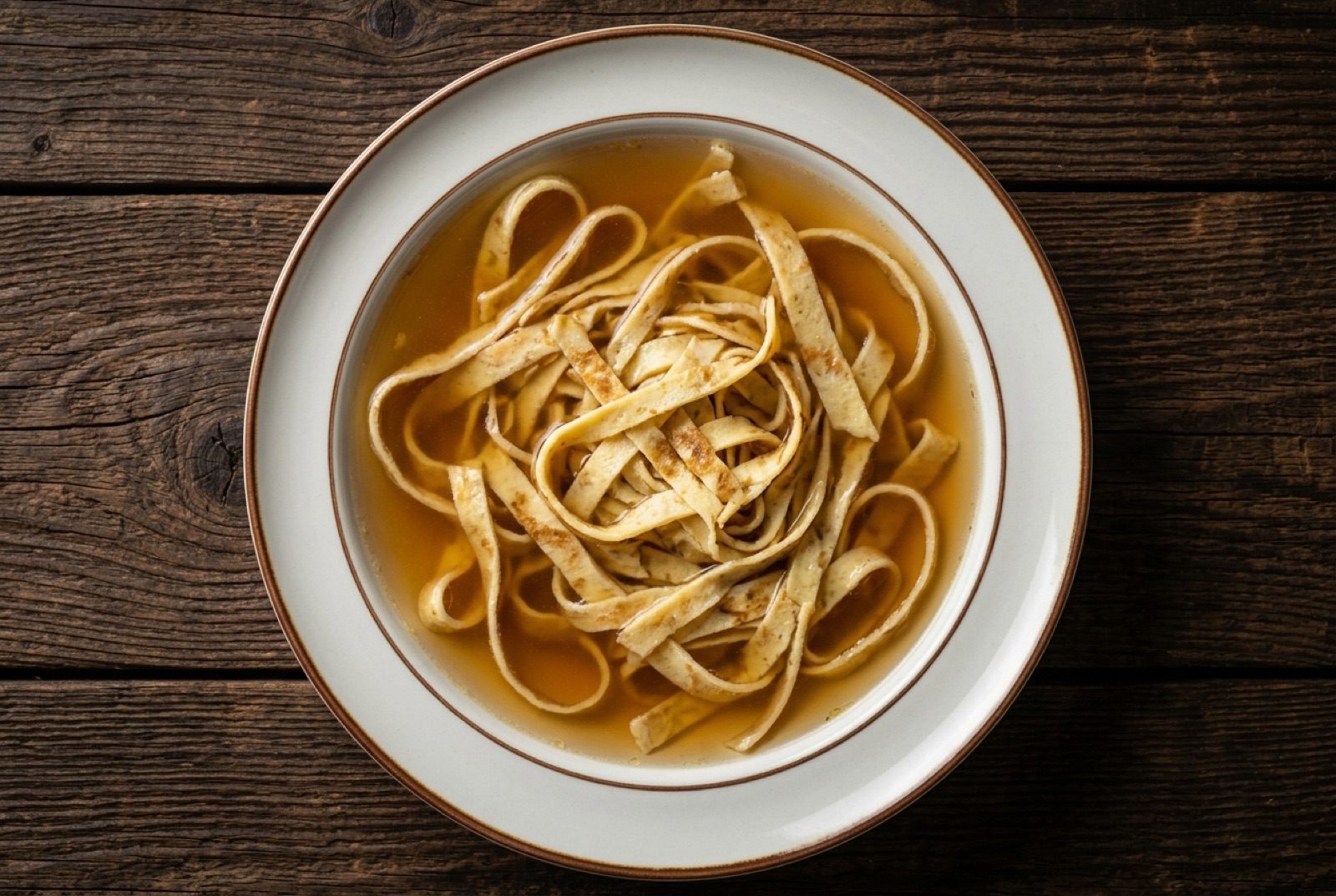
Austria has 9 more dishes in the atlas — Backhendl and Frittatensuppe, and 7 more.
Recipe by The DishRoute Kitchen · published August 19, 2026 · updated August 19, 2026