Fårikål.
Norwegian Mutton and Cabbage Stew
Fårikål · say it: FOR-ee-kohl
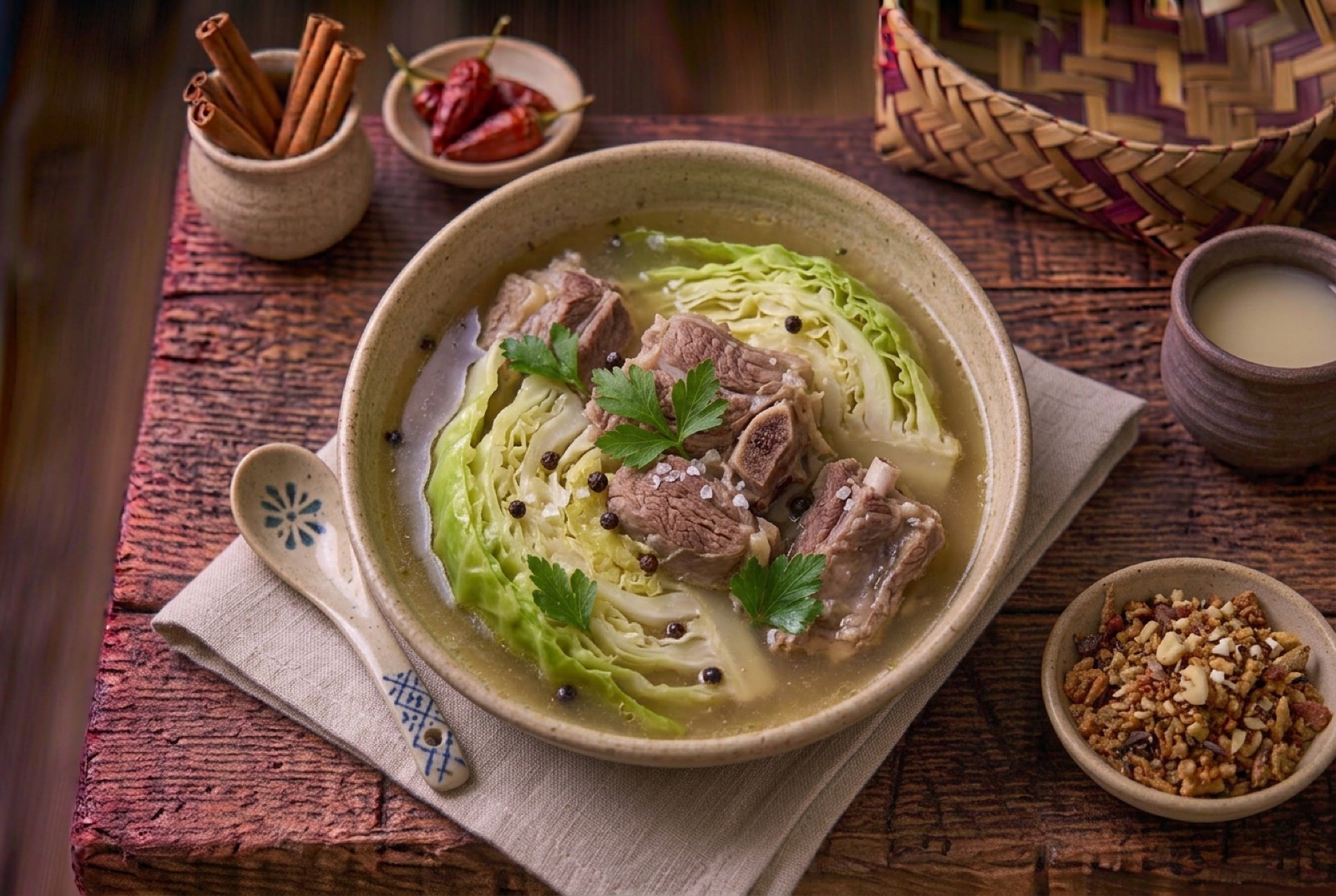
Fårikål is bone-in mutton and cabbage stacked in a heavy pot with a startling quantity of whole black peppercorns, covered with a little water, and simmered for two to three hours until nothing is left to do. There is no browning, no stock, no aromatics beyond the pepper, and no thickening apart from the flour some cooks dust between the layers. What comes out tastes of sheep and sweet cabbage and a slow, resinous pepper heat that builds across the plate, with a broth that is thin, clear and deeply savoury. It is the dish Norwegians vote for when a national broadcaster asks what the country should eat, and its appeal is precisely that it asks so little: good mutton, patience, and the discipline not to add anything.

- Gate
- Norway
- Prep
- 20 min
- Cook
- 2 hr 40 min
- Total time
- 3 hr
- Serves
- 4
- Status
- Easy
- Nutrition / serving · estimated
- Calories 620 kcal
- Protein 42 g
- Carbs 38 g
- Fat 32 g
- Fiber 8 g
- Sodium 1100 mg
Why this recipe works.
- Layered the traditional way — meat fat-side down at the bottom, so it renders up through the cabbage instead of frying on the pan base.
- Honest about the flour question: it is optional, the recipe explains what it changes, and the dish works either way.
- A pepper quantity that is actually correct rather than timid — this is what makes fårikål taste like fårikål.
- Almost no active work: twenty minutes of stacking, then the pot cooks itself while you do something else.
Ingredients.
7 itemsEquipment
- Large heavy pot or Dutch oven with a tight lid
- Sharp heavy knife for the cabbage
Instructions.
Prepare meat and cabbage
Pat 1.5 kg of mutton dry and sort the pieces into fattier and leaner ones. Quarter the cabbage, cut out the hard core, and slice each quarter into wedges about 3 cm thick at the widest point, leaving enough core attached that the wedges hold together.
Tip Wedges, not shreds. Shredded cabbage disintegrates completely over three hours.
Build the first layer
Lay the fattiest pieces of meat fat-side down across the base of a large heavy pot in a single layer. Cover with a layer of cabbage wedges, then sprinkle over a third of the peppercorns, a third of the salt and, if using, a third of the flour.
Tip The fat on the bottom is not an accident — it renders first and rises through everything above it.
Repeat the layers
Continue stacking meat and cabbage in alternating layers, seasoning each one with peppercorns, salt and flour, and finish with a top layer of cabbage. Pack it in firmly; the pot should look overfull, because the cabbage will lose more than half its volume.
Add water and bring to a simmer
Pour the water down the side of the pot rather than over the top, so the seasoning stays where you put it. Cover, bring to a boil over medium heat, then immediately drop the heat until the surface only murmurs and the lid stops rattling.
Simmer undisturbed
Cook covered for 2½ to 3 hours without stirring. Check once an hour: there should always be 2–3 cm of liquid in the base, and if the pot looks dry add a splash of boiling water. Resist lifting the lid more often than that.
Tip If you can hear a hard boil through the lid, the heat is too high — you will get shredded cabbage and tight meat.
Check for doneness
The dish is ready when the meat comes away from the bone with a nudge of a spoon and the cabbage has turned translucent and glossy rather than white and firm. Taste the broth and add salt — it should be clearly savoury, with the pepper arriving a moment after.
Serve straight from the pot
Boil the potatoes in salted water while the pot rests off the heat for 10 minutes. Ladle meat, cabbage and plenty of broth into deep plates, and serve the potatoes alongside for crushing into the liquid.
Tips from our kitchen.
- Buy mutton or hogget if you can find it, and insist on bone-in pieces cut across the bone. Boneless lamb leg makes a thin, characterless version.
- Do not trim the fat. It renders down into the cabbage and is the only fat in the dish — a lean pot tastes watery no matter how long it cooks.
- Use a firm white winter cabbage, not a soft summer one or savoy. It has to hold together for three hours without turning to grey pulp.
- Add far less water than looks right — 300 to 400 ml. The cabbage releases a surprising amount of liquid and you want broth, not soup.
- Keep the lid on and the heat at the barest bubble. A rolling boil shreds the cabbage and toughens the meat before the collagen has a chance to melt.
- Fårikål is better on day two. Cook it the day before you plan to eat it if you can, and reheat gently.
Substitutions.
- Mutton, bone-in → Bone-in lamb shoulder and neck, cut across the bone
- Lamb is milder and cooks faster — start checking at 90 minutes. Ask the butcher not to remove the bones; they are doing structural work in the broth.
- Whole black peppercorns → The same quantity tied into a muslin bag or a tea infuser
- Traditionalists leave them loose and simply eat around them, but a bag makes the dish easier to serve to guests who are not expecting to bite one.
- Plain flour between the layers → Leave it out entirely
- Without flour the broth stays thin and clear, which many Norwegian families consider the correct version. With it, you get a lightly bound sauce that clings to the potatoes.
Variations.
- Fårikål with carrot
- A minority practice, mostly in eastern Norway: a few thick carrot rounds added with the cabbage for sweetness. Purists object loudly, which is part of the pleasure.
- Get i kål
- The same construction made with goat instead of sheep, found where goat farming is common. Stronger and leaner; give it the full three hours.
- Fårikål with a bay leaf and juniper
- Some cooks add two or three crushed juniper berries and a bay leaf to lift the pot. It is not classic, but it suits mutton and disappears into the background.
Storage & reheating.
Fårikål keeps four days refrigerated and genuinely improves after the first night, once the pepper has spread through the broth and the fat has set on top and can be skimmed if you want it leaner. Reheat covered over low heat until it steams through; the cabbage will soften further, which is expected. It freezes well for three months in its broth — freeze it with the meat on the bone and the texture survives better than most stews.
Serve with
Plain boiled floury potatoes and cold beer or aquavit — nothing else belongs on the plate.
The story behind Fårikål.
Fårikål means, plainly, "sheep in cabbage," and it belongs to the autumn slaughter. Before refrigeration, sheep came down from the mountain pastures in September, and the animals not kept through the winter were killed in a few concentrated weeks — which is also when the cabbage heads were heavy and ready. The dish is the calendar written as a recipe. That timing survives: the last Thursday in September is marked in Norway as fårikålens festdag, the dish's own feast day, and supermarkets sell pre-cut fårikål meat in bags from late summer onward.
Its status is unusually formal for a stew. Fårikål has twice been confirmed as Norway's national dish through public polls run by the national broadcaster, and when a government minister once floated replacing it, the suggestion went nowhere. Part of that loyalty is nostalgia and part of it is stubbornness about the recipe itself: fårikål is one of very few dishes where Norwegians will argue about whether you may add anything at all. Flour between the layers is traditional in many families and heresy in others. Carrot is a step too far for most. Peppercorns in a muslin bag rather than loose is considered a small cowardice.
The cut matters more than any technique. Real fårikål uses mutton — an older sheep, not spring lamb — cut across the bone into thick pieces from the shoulder, neck and ribs, with fat and bone left in. That fat renders into the cabbage, the bones give the broth its body, and the stronger flavour of mature sheep is what the pepper is there to meet. Made with lean boneless lamb, the dish is pleasant and slightly pointless. Made properly, it is one of the clearest arguments in European cooking for leaving food alone.
Questions, answered.
What cut of meat should I use for fårikål?
Bone-in mutton or lamb from the shoulder, neck and breast, cut across the bone into pieces roughly 4 cm thick, with the fat left on. Norwegian butchers sell it pre-cut as "fårikålkjøtt". The bones give the broth body and the fat renders into the cabbage, so boneless, trimmed meat produces a noticeably weaker dish.
Why are the peppercorns left whole instead of ground?
Whole peppercorns release their heat slowly over hours of simmering, giving a warm, aromatic background rather than the sharp bite of ground pepper, and they do not cloud the broth. The traditional quantity is much larger than it looks — around two tablespoons for a family pot — because most of that flavour ends up in the liquid rather than on the tongue.
Do I have to add flour?
No, and Norwegian families are genuinely split on it. Flour dusted between the layers gives a lightly thickened, slightly cloudy broth that coats the potatoes; leaving it out gives a clear, clean broth. Both are considered authentic. If you are cooking gluten-free, simply omit it — nothing else in the dish needs changing.
How do I know when fårikål is done?
The meat should pull away from the bone under light pressure from a spoon, and the cabbage should be translucent and collapsing rather than merely soft. With mutton this usually takes two and a half to three hours; with young lamb, closer to ninety minutes. Undercooked fårikål is chewy and tastes flat, so give it the extra half hour if you are unsure.
Can I make fårikål in advance?
It is better made in advance. Cook it a day ahead, cool it and refrigerate it in the pot, then reheat gently before serving — the pepper distributes more evenly overnight and the broth tastes rounder. This is standard practice in Norway, where a large pot is often cooked on Sunday and eaten across two days.
You might also like.
All recipes →
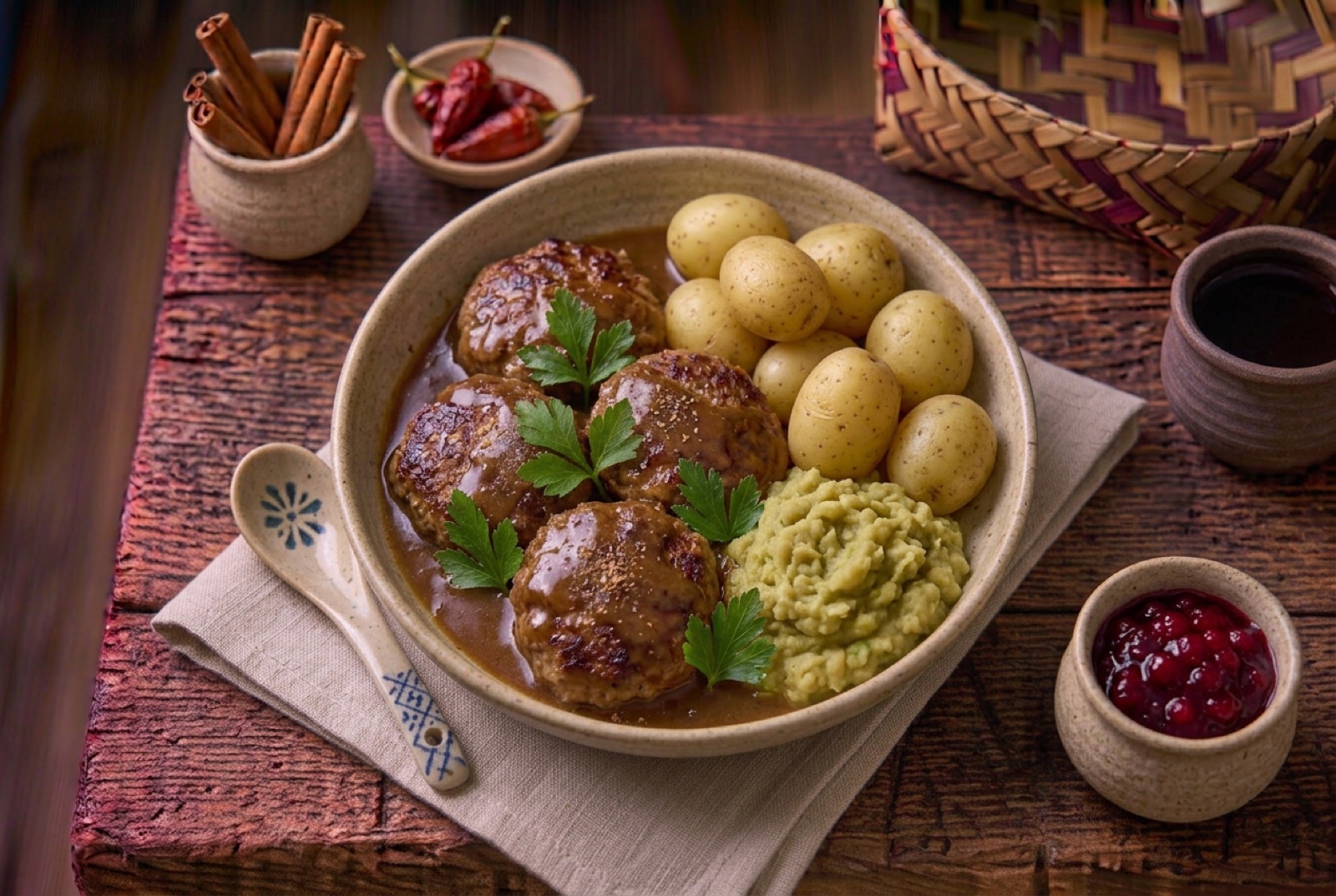
Keep exploring Norway.
Norway has 9 more dishes in the atlas — Bergensk Fiskesuppe and Kjøttkaker, and 7 more.
Recipe by The DishRoute Kitchen · published August 19, 2026 · updated August 19, 2026