Norway.
Norge
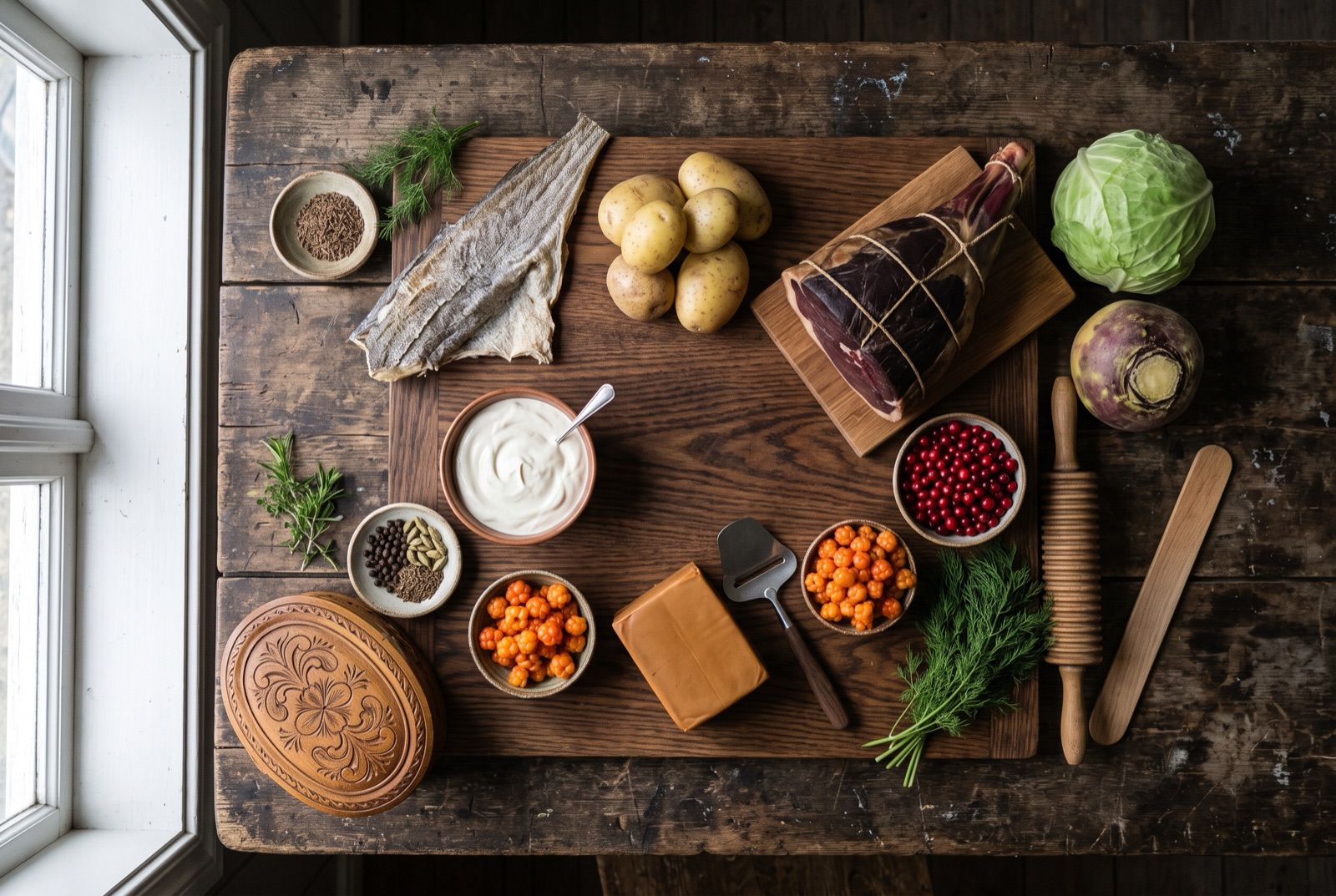
Norwegian cooking was built by a country where food had to survive the winter before anyone could eat it. Stretch a nation up past the Arctic Circle, give it a growing season of a few short months, mountains instead of grain fields, and a coastline longer than most continents, and the kitchen that results is not primitive — it is engineered. Cod is hung on wooden racks in the cold spring wind until it is hard as timber. Lamb ribs are packed in salt and dried. Cream is soured deliberately, milk whey is boiled down for hours into caramel-brown cheese, trout is buried in brine to ferment, flatbread is baked until it will keep for a year. What outsiders read as plain food is usually the opposite: an ingredient that has been through months of controlled transformation and needs almost nothing done to it at the stove. The seasoning is correspondingly restrained — salt, whole peppercorns, caraway, cardamom, juniper — because the preserving already did the flavoring.

- Continent
- EuropeNordics
- Recipes in atlas
- 10
- Must-try dishes
- 3
- Pantry staples
- 10
Start with the classics.
Must tryThe dishes that explain the Norway kitchen fastest — if you cook only a few things from this page, cook these.
Inside the Norway kitchen.
Preservation is not folklore in Norway; it is the structural logic of the cuisine, and it explains nearly every classic dish. The country sits at latitudes where crops fail more often than they succeed and where, for most of its history, there was no way to keep an animal fed through the winter. Livestock were slaughtered in autumn, and the entire year's protein had to be stabilized in a few weeks. Drying, salting, smoking and fermenting were the three or four available technologies, and each left a permanent mark on the table. Tørrfisk — cod air-dried unsalted on racks in the Lofoten islands, where the cold, dry, windy spring is exactly right — became Norway's oldest export and the commodity that made Bergen a Hanseatic trading city. Salt itself had to be imported, which is why unsalted air-drying came first and salted-then-dried klippfisk only later, once the salt trade ran reliably. Pinnekjøtt, fenalår and spekemat are the same principle applied to lamb; rakfisk applies it to freshwater trout through controlled fermentation.
The dairy tradition follows the same instinct. Summer pasture in the high mountains — the seter system, where animals and dairymaids moved up to summer farms — produced far more milk than could be drunk, so it was converted: into cultured sour cream (rømme) thick enough to stand a spoon in, into butter, into cheese, and into brunost, the sweet brown whey cheese made by boiling whey down for hours until its milk sugars caramelize. Brunost exists because throwing away whey was unthinkable. Rømmegrøt, the porridge cooked from sour cream until its own butterfat separates out, is a way of eating the richest thing a farm produced on the days that deserved it.
Starch is the third pillar, and it changed hands in the 1800s. Barley and oats grow where wheat will not, so Norwegian bread was historically flatbread — thin, dried hard, stacked, stored. Then the potato arrived and rewrote the diet: raspeballer, lefse, lompe, lapskaus and the boiled potatoes beside almost every dinner plate all descend from it. Root vegetables that keep in a cellar — swede, carrot, celeriac, cabbage — do the work that leafy vegetables do further south.
The technique list is short and deliberate. Long, gentle simmering in a covered pot, so tough autumn meat surrenders. Steaming, especially over birch sticks. Poaching fish barely below a simmer. Cooking with whole spices left in the pot rather than ground into a sauce. Fat added at the end — melted butter poured over dumplings, porridge or flatbread — rather than cooked into the dish. And a sweet-sour instinct that shows up in Bergen fish soup, in pickled herring, in the lingonberries beside meat: sugar and acid used as seasoning, not as dessert.
A modern Norwegian week does not look like this every day. Frozen pizza, pasta and taco night are real and beloved, and the New Nordic movement of the 2000s pushed the country's restaurants toward foraging and fermentation with a sophistication the old farm kitchen never claimed. But Sunday dinner, Christmas Eve and every festival still run on the preserved-and-simmered canon, and that is where the cuisine is legible.
Signature pantry.
10 staplesThe ingredients this cuisine cannot function without.
- dried and salted cod
- cured lamb
- potatoes
- sour cream (rømme)
- brown cheese (brunost)
- cloudberries and lingonberries
- cabbage and swede
- whole black peppercorns
- cardamom
- dill and caraway
How people eat in Norway.
Norwegians eat bread at both ends of the day and a hot meal in between. Breakfast and the packed lunch — the matpakke, open sandwiches layered with paper and eaten at a desk or on a mountain — bookend a middag served startlingly early by southern European standards, often between four and five in the afternoon, followed by kveldsmat, a light supper of bread again before bed. Dinner is a knife-and-fork affair with boiled potatoes on the side almost by reflex. Coffee is constant and strong, and it comes with something baked; waffles in particular are less a dessert than a social utility, appearing at ski cabins, church basements, workplaces and volunteer dugnad days. Toasts are made with eye contact and the word skål, and at a formal table nobody drinks before the host has raised a glass.
Regional kitchens.
Norway cooks 4 distinctly different ways depending on where you stand — here is what changes between them.
- R1Vestlandet (the western fjords)
- Bergen and the fjord country: creamy fish soup, salted and dried lamb, and the grated potato dumplings eaten so reliably on Thursdays that the day has its own name. Cured meat and dairy from the mountain summer farms define the inland valleys.
- R2Nord-Norge and Sápmi
- The Arctic north, where cod is dried on racks in the Lofoten wind into tørrfisk and cloudberries ripen on open bogs for a few weeks a year. Sami cooking adds reindeer, smoked and dried, plus bidos stew and thin sour-milk cheeses.
- R3Østlandet and the mountain valleys
- The grain and dairy heartland around Oslo, Valdres and Gudbrandsdalen — sour cream porridge, cured meats, flatbread and rakfisk, the fermented trout that inland farms made when the sea was days away.
- R4Trøndelag and Sørlandet
- Trøndelag farms the country's best arable land and sends salmon and sødd, a clear meat-and-root soup, to the table; the southern coast lives on mackerel, shrimp boiled on the boat and eaten off newspaper, and small-town summer harbour food.
All Norway recipes.
10 recipes and counting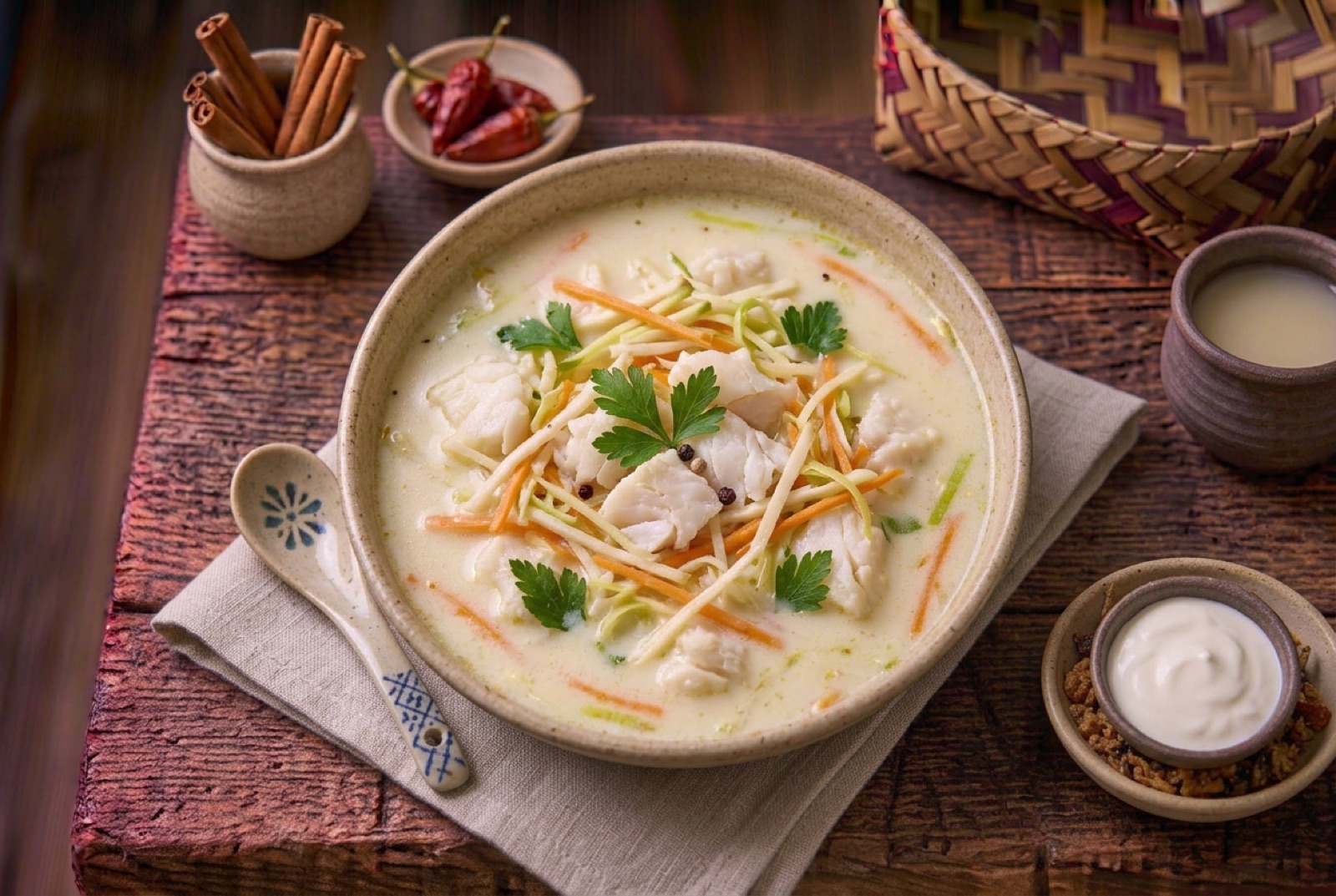
Norway1 hr
Bergensk Fiskesuppe
Bergen Creamy Fish Soup
Norway3 hr
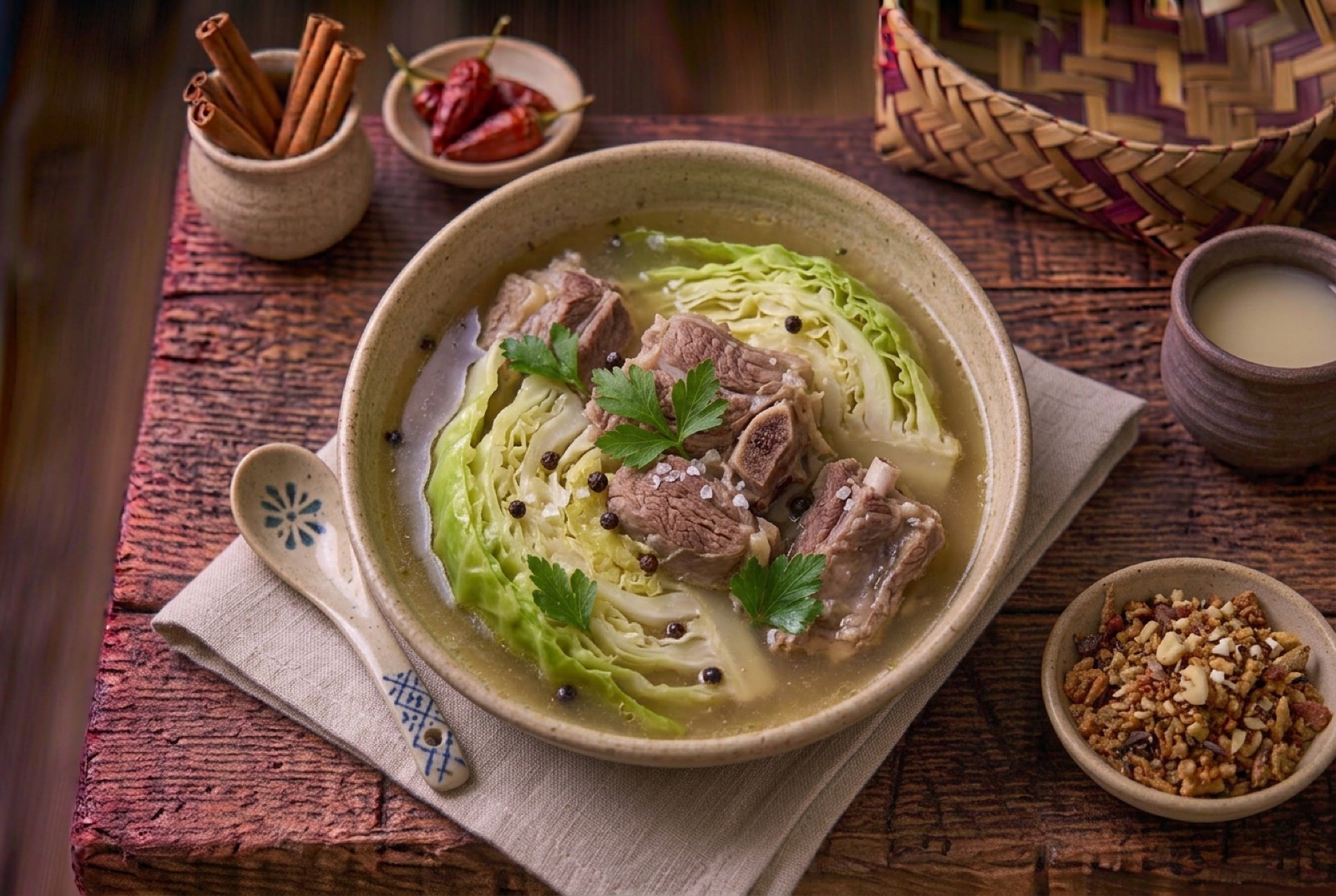
Fårikål
Norwegian Mutton and Cabbage Stew
Norway1 hr 25 min
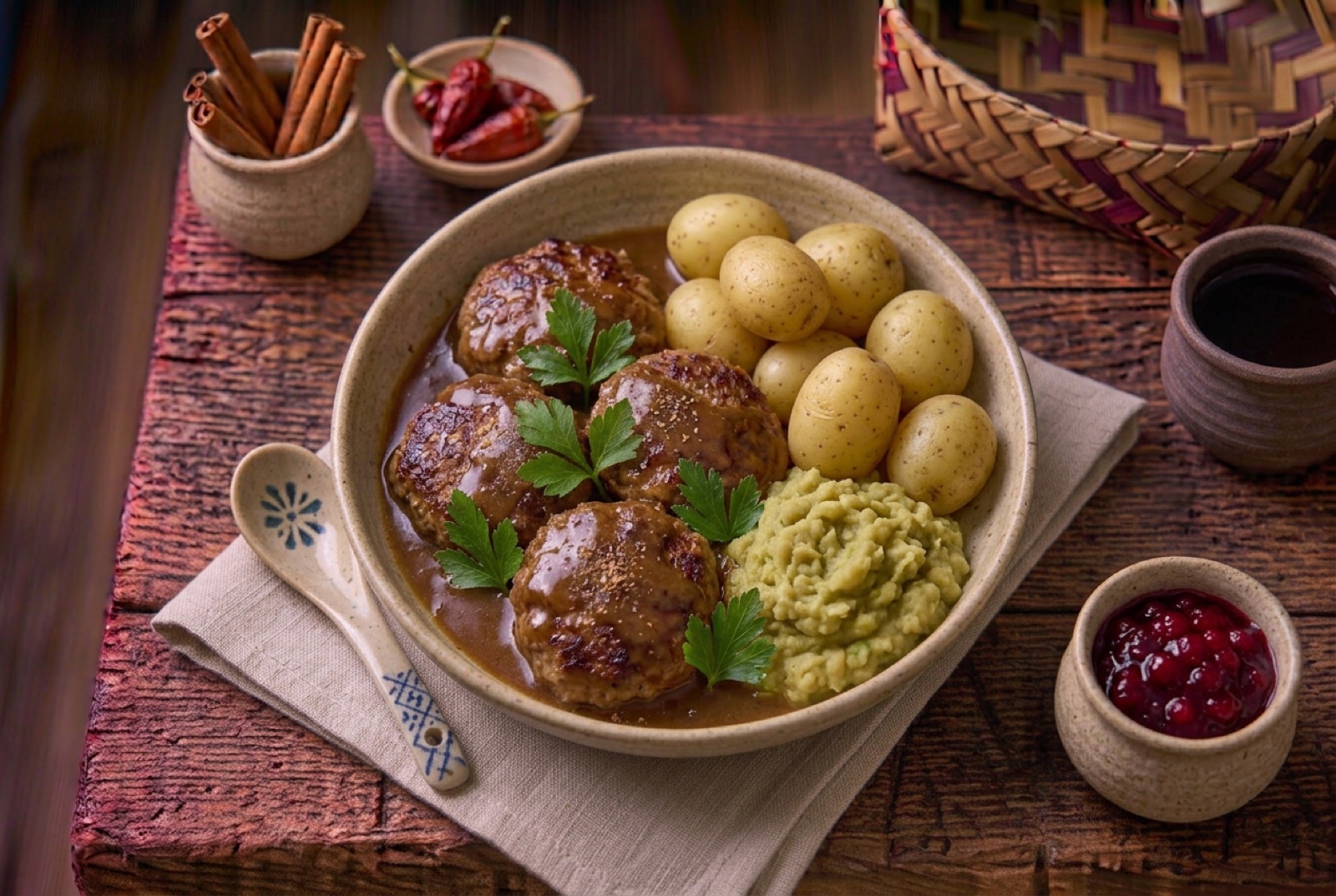
Kjøttkaker
Norwegian Meat Patties in Brown Gravy
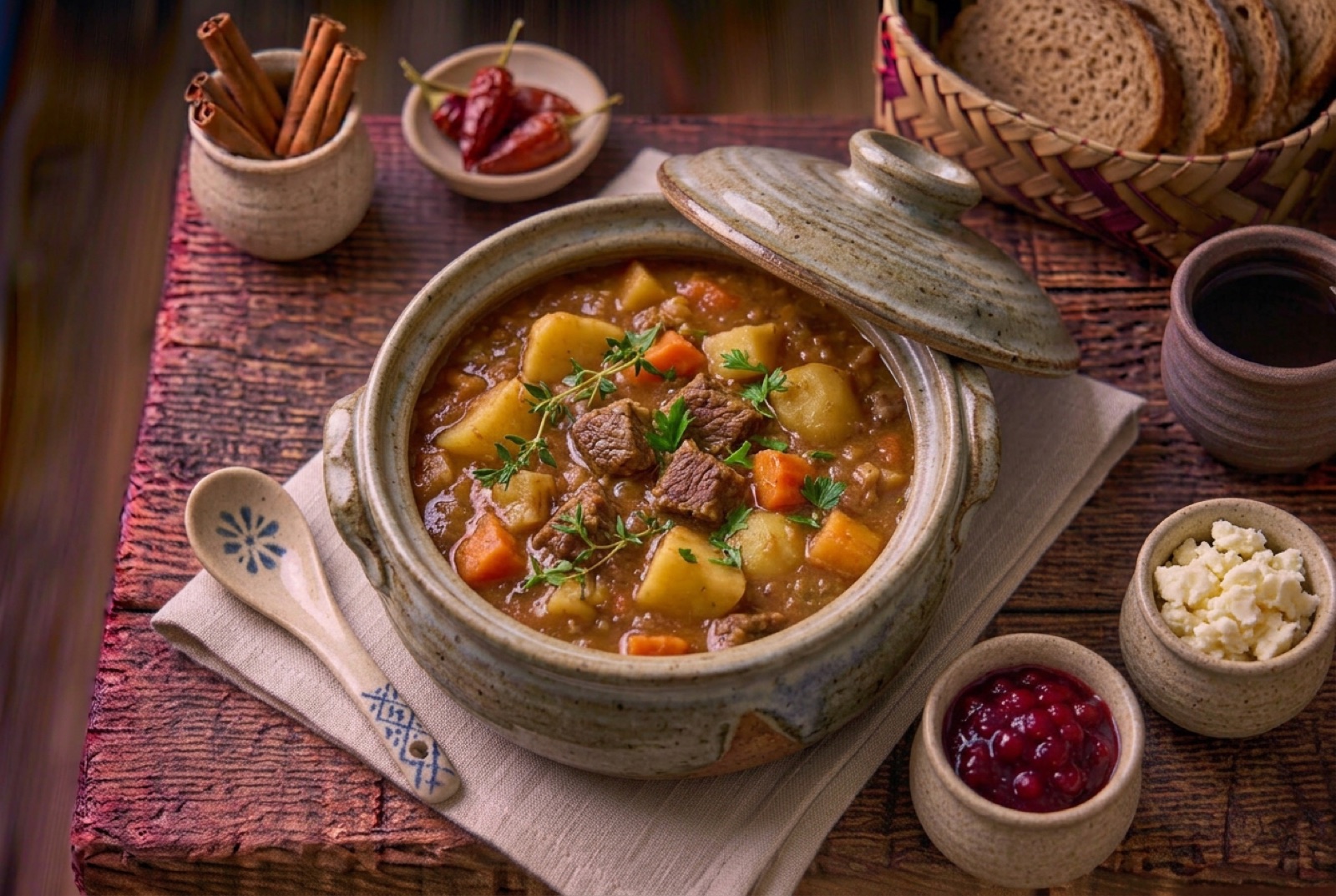
Norway2 hr
Lapskaus
Norwegian Sailors' Meat and Root Stew
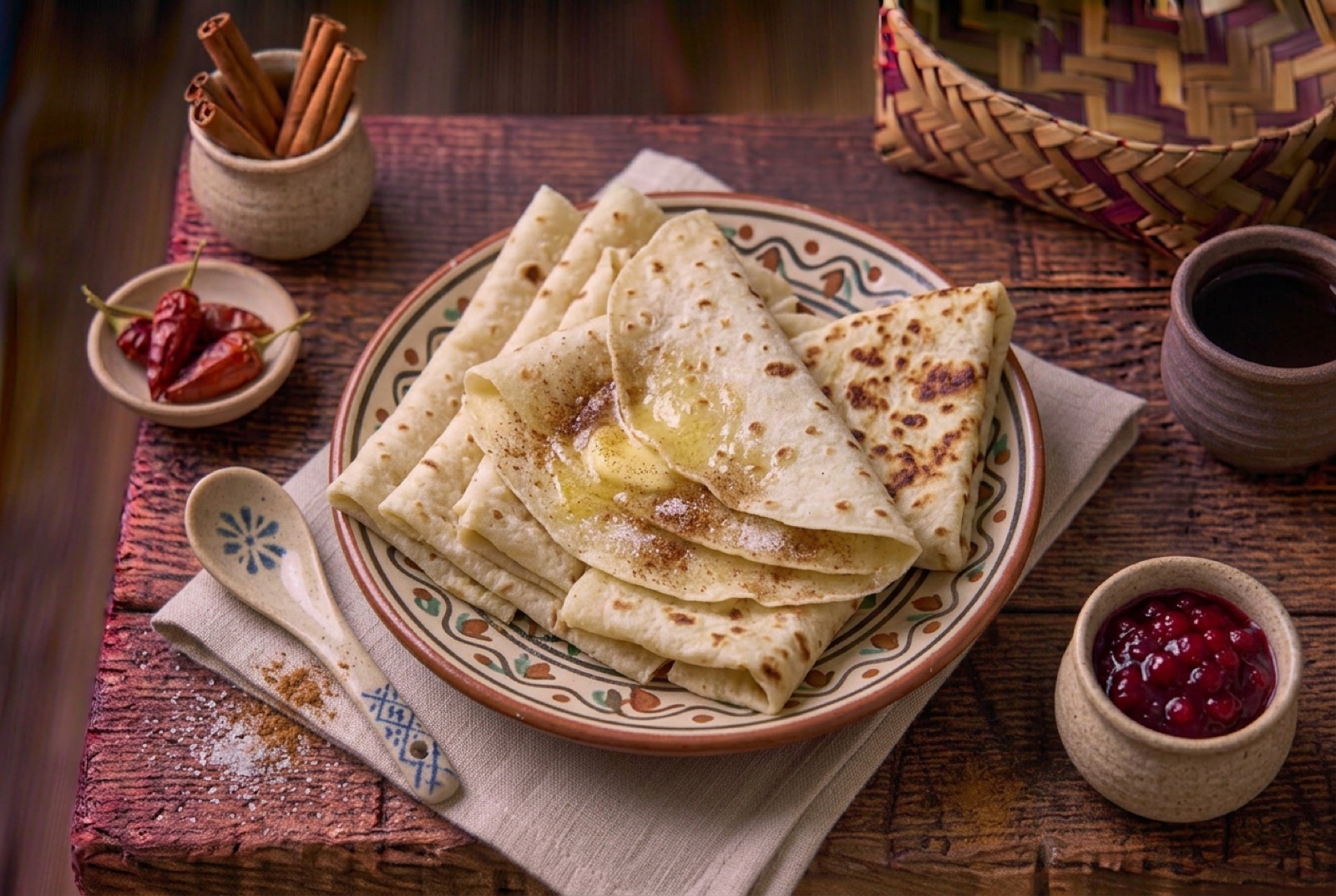
Norway9 hr 10 min
Lefse
Soft Norwegian Potato Flatbread
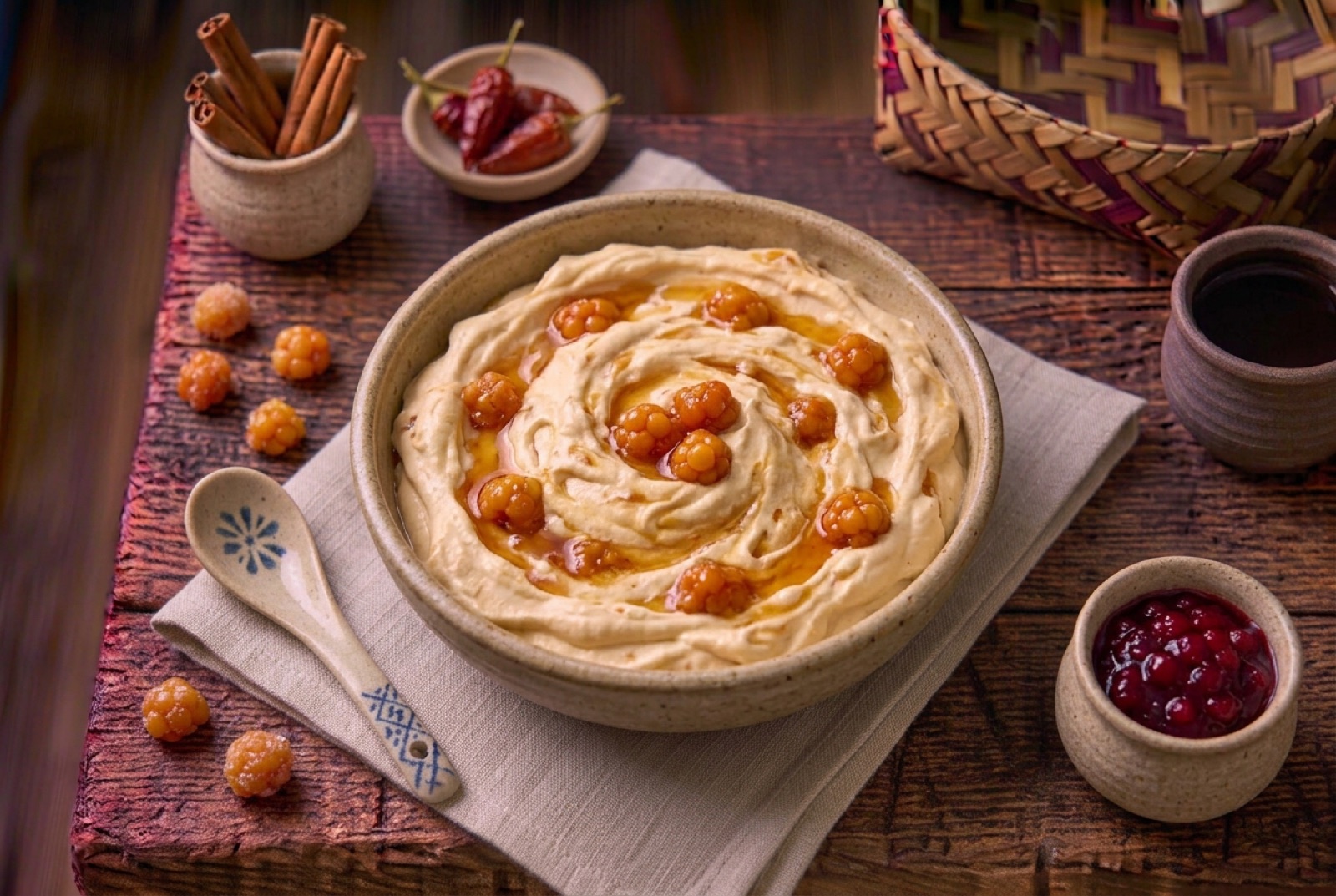
Norway30 min
Multekrem
Norwegian Cloudberry Cream
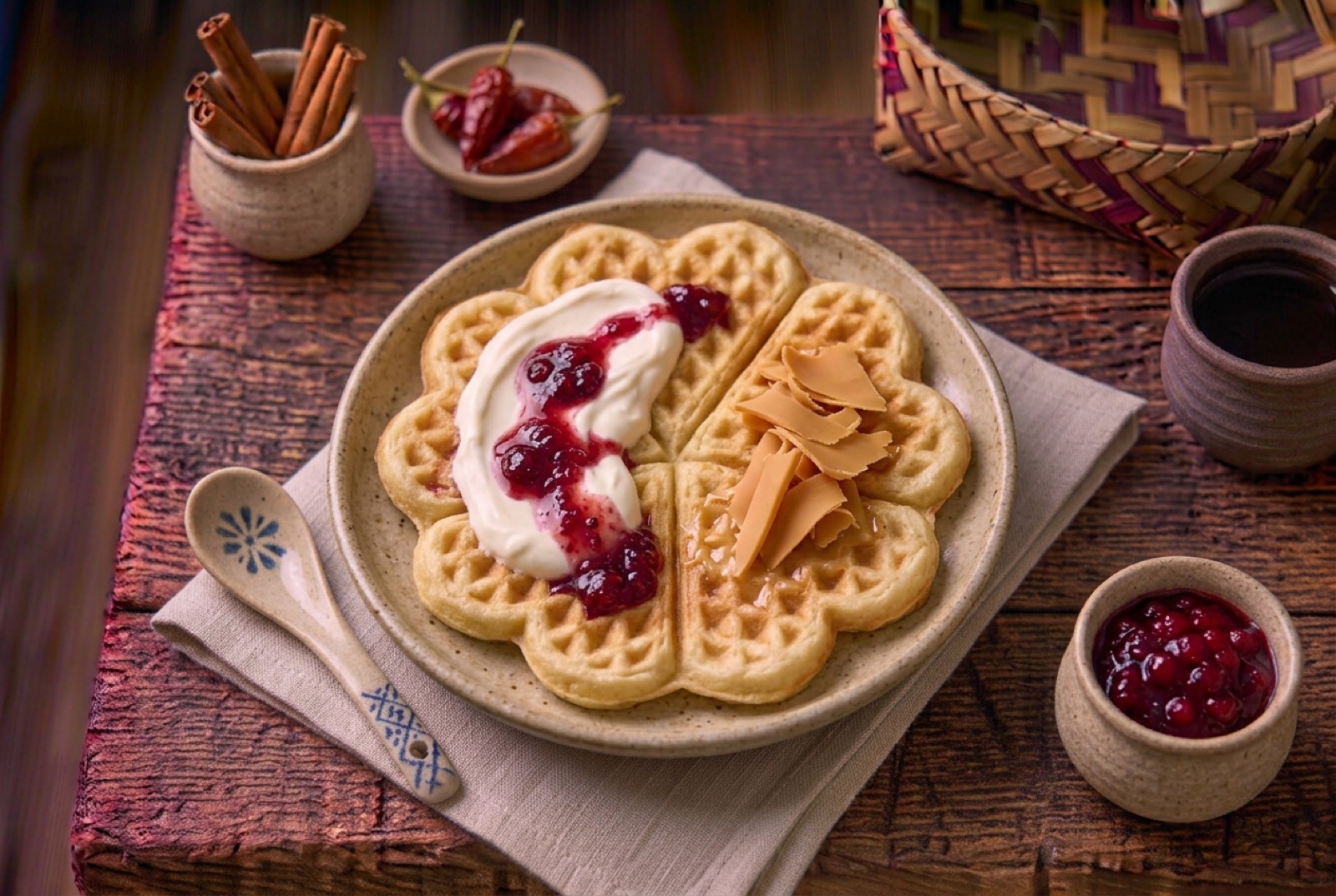
Norway1 hr 5 min
Norske Vafler
Heart-Shaped Cardamom Waffles
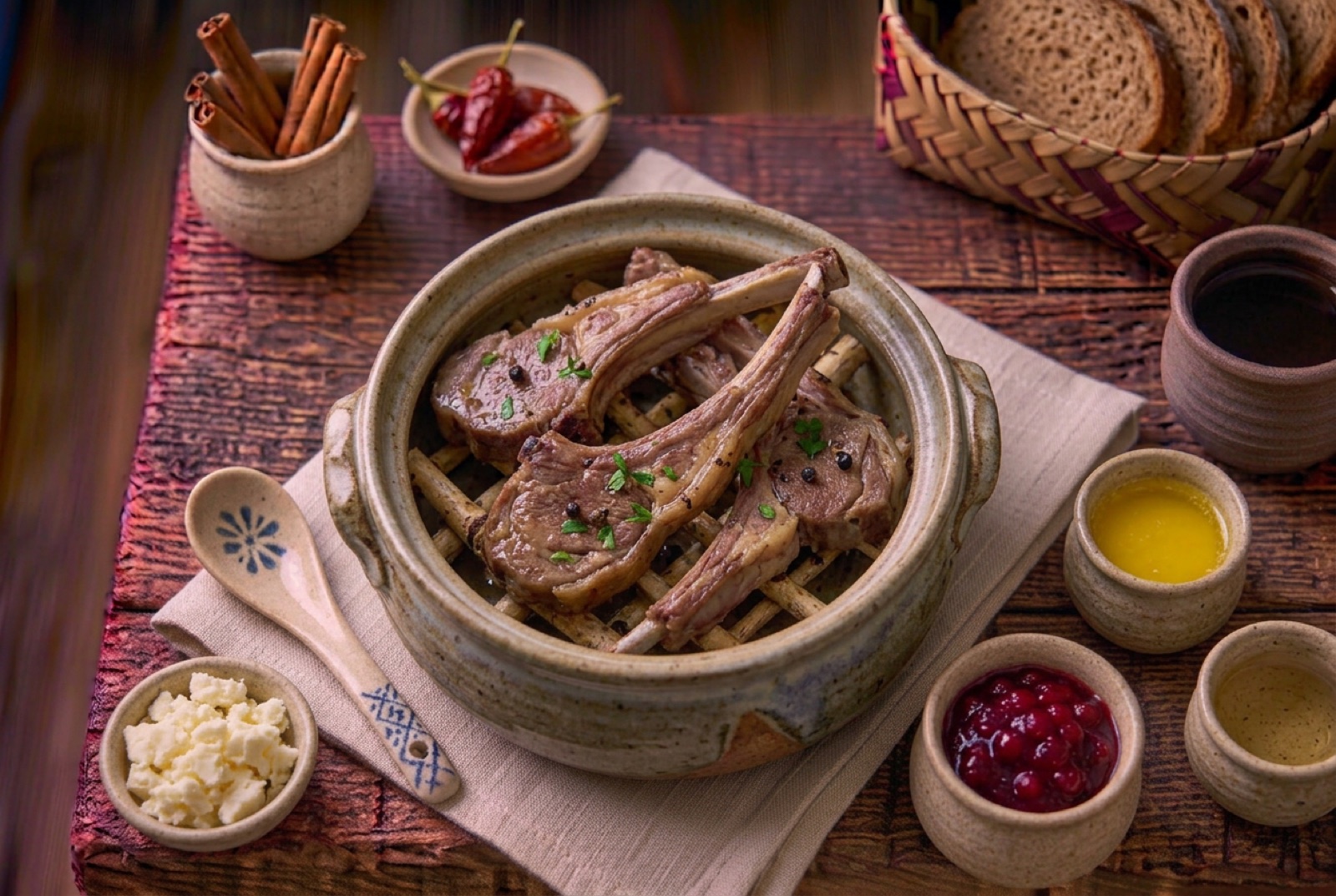
Norway33 hr 30 min
Pinnekjøtt
Steamed Salt-Cured Lamb Ribs
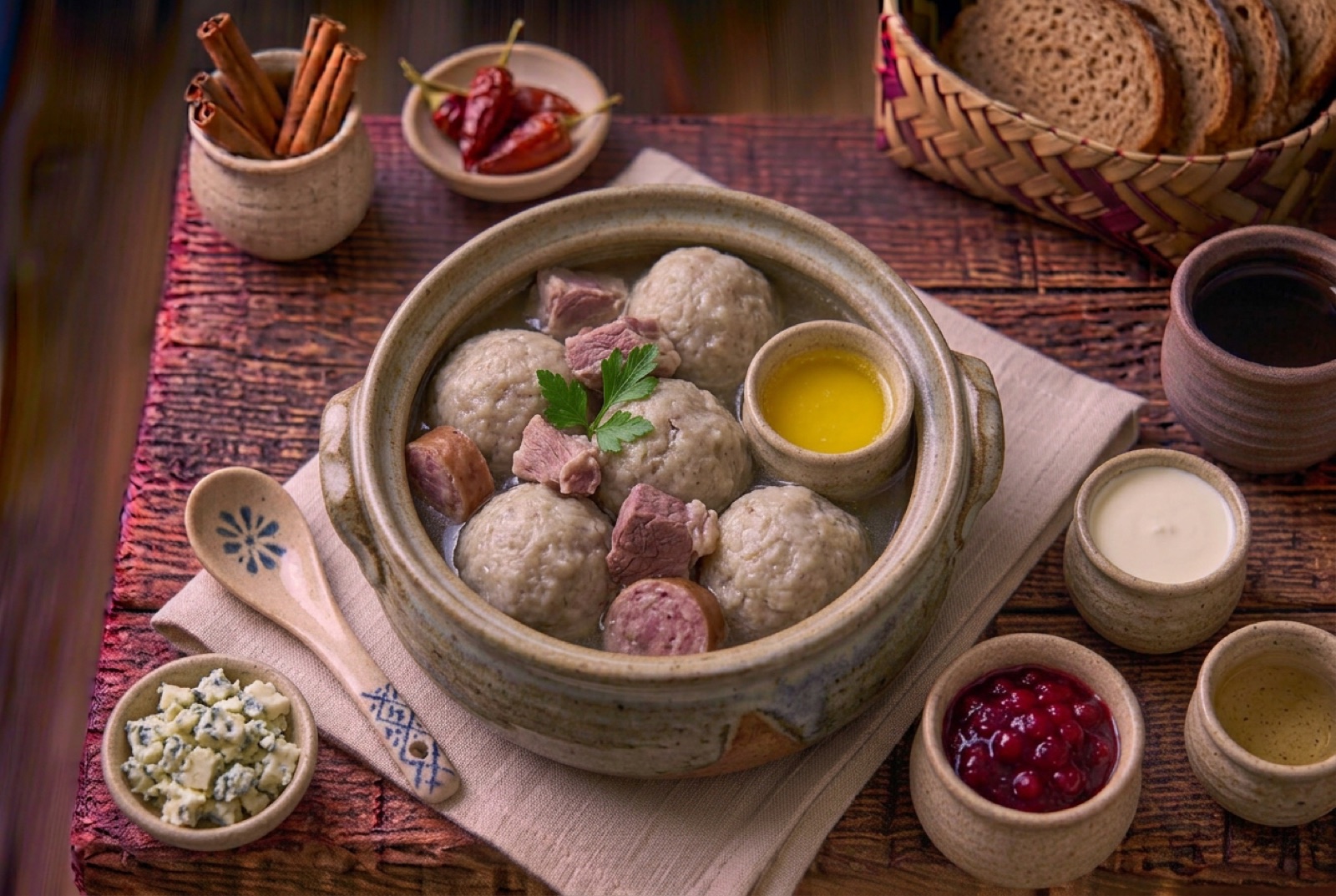
Norway1 hr 30 min
Raspeballer
Norwegian Grated Potato Dumplings
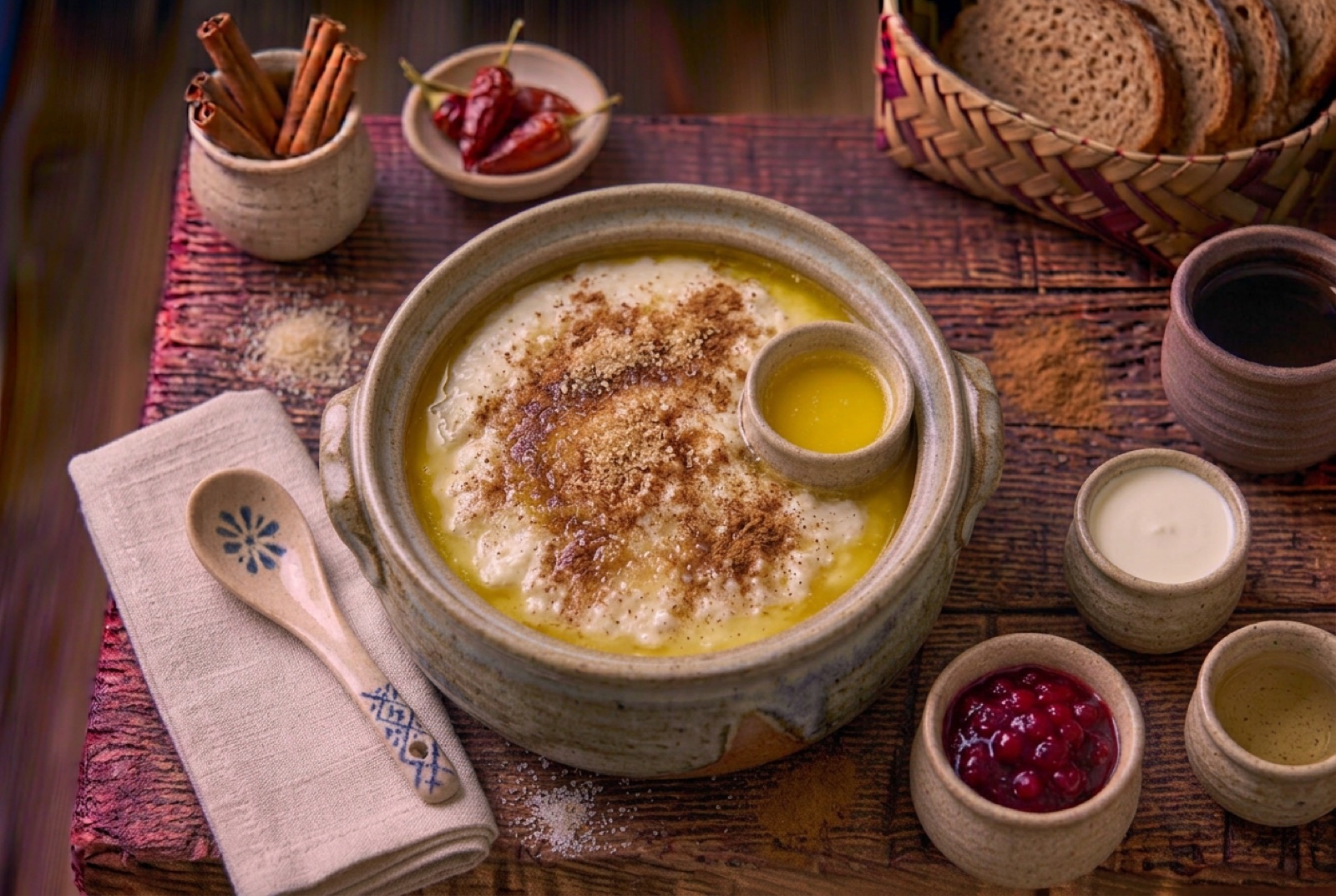
Norway50 min
Rømmegrøt
Norwegian Sour Cream Porridge
Keep traveling.
Norway sits in Nordics, and its kitchen shares borders as well as ingredients with Albania and Austria.
 Albania
 Austria