Frijoles Volteados.
Guatemalan Flipped Refried Black Beans
Frijoles volteados · say it: free-HOH-less vohl-teh-AH-dohs
Volteados means flipped, and that is the whole trick. Cooked black beans are blended smooth with their own dark liquid, then poured into hot fat and cooked, stirred and pushed until the water drives off and the mass tightens into a single glossy log that slides free of the pan when you shake it. You flip it, brown the second side, and roll it onto the plate whole. It tastes deeper and sweeter than plain beans — the long frying concentrates them and gives the outside a faint caramelised skin — and it is the standard partner to eggs, fried plantain, cream and tortillas on a Guatemalan breakfast plate. It takes twenty minutes of attention and no skill beyond patience.


- Gate
- GuatemalaNationwide breakfast staple
- Prep
- 10 min
- Cook
- 25 min
- Total time
- 35 min
- Serves
- 4
- Status
- Easy
- Nutrition / serving · estimated
- Calories 380 kcal
- Protein 15 g
- Carbs 45 g
- Fat 16 g
- Fiber 13 g
- Sugar 3 g
- Sodium 640 mg
Why this recipe works.
- Explains the actual flip — the doneness cue, the pan shake, and the moment the mass releases.
- Uses the bean cooking liquid rather than water, which is where the colour and most of the flavour live.
- Works from a tin of beans in twenty minutes, or from dried beans if you plan ahead.
- Naturally vegan with oil, and the recipe says exactly what changes if you use lard instead.
Ingredients.
6 itemsFor the beans
To serve
Equipment
- Blender
- Non-stick frying pan
- Sturdy spatula
- Two flat plates for flipping
Instructions.
Soften the aromatics
Heat 2 tablespoons of the lard or oil in a wide non-stick pan over medium heat and cook the onion for 6 minutes, until soft, translucent and just starting to take on colour at the edges. Stir in the garlic and cook 30 seconds more, until it smells sweet rather than raw.
Blend the beans
Tip the onion and garlic into a blender with the beans, their liquid and the salt. Blend for a full minute until the purée is completely smooth and glossy black-purple, with no whole beans left anywhere in it.
Tip Any bean that escapes the blades becomes a tear in the log later.
Fry the purée down
Heat the remaining fat in the same pan until it shimmers, then pour in the purée — it will spit, so stand back. Cook over medium heat for about 15 minutes, stirring and folding the edges into the middle every minute or so, until it thickens from a pourable purée to a heavy paste.
Form the log
Keep pushing the mass with the spatula until it gathers into one piece, pulls cleanly away from the sides of the pan, and slides as a single body when you shake the handle. Shape it into a rough log against the far side of the pan and let it sit undisturbed for 2 minutes to form a skin.
Tip If it smears rather than sliding, it is still too wet. Give it another few minutes.
Flip it
Slide the log onto a flat plate, cover it with a second plate, invert the pair, and slide it back into the pan with the browned side facing up. Cook 3 minutes more, until the new underside sets into a matte, slightly crisp crust.
Serve
Roll the log straight out onto a serving plate and serve hot with warm tortillas, or alongside eggs, fried plantain and crumbled fresh cheese for the full Guatemalan breakfast.
Tips from our kitchen.
- Use black turtle beans and keep their cooking liquid. Draining and rinsing them takes away the colour and most of what makes these taste Guatemalan.
- Blend until completely smooth — any whole bean left in the purée creates a weak point where the log tears when you flip it.
- Use a non-stick or well-seasoned pan and more fat than feels comfortable. The beans need to fry, not steam, and a dry pan means a stuck log.
- Keep pushing the mass with a spatula as it thickens, folding it in from the edges. Left alone it scorches on the bottom while the top is still wet.
- The beans are ready to flip when the mass moves as one piece and slides freely if you shake the pan. If it smears, it needs more time.
- To flip safely, slide the log onto a plate, invert a second plate over it, turn it, and slide it back into the pan browned-side up.
Substitutions.
- Lard → Neutral oil or bacon fat
- Lard gives the traditional flavour and the smoothest texture. Oil is fully vegan and works well; bacon fat is not traditional but is very good.
- Home-cooked dried beans → Two tins of black beans, undrained
- Tinned beans make this a twenty-minute dish. Use the liquid in the tin and expect to add a little less extra water, and check the salt since tins vary wildly.
- Black beans → Pinto or red beans
- The technique works identically but the result is brown and milder, and no Guatemalan would call it volteados. Fine if it is what you have.
Variations.
- Frijoles colados
- Stop cooking twenty minutes earlier, while the purée still pours. This is the spoonable version served alongside soup or with tortillas.
- Volteados con chirmol
- A spoonful of charred tomato salsa stirred in near the end, which lightens the beans and adds acidity.
- Sweet bean paste
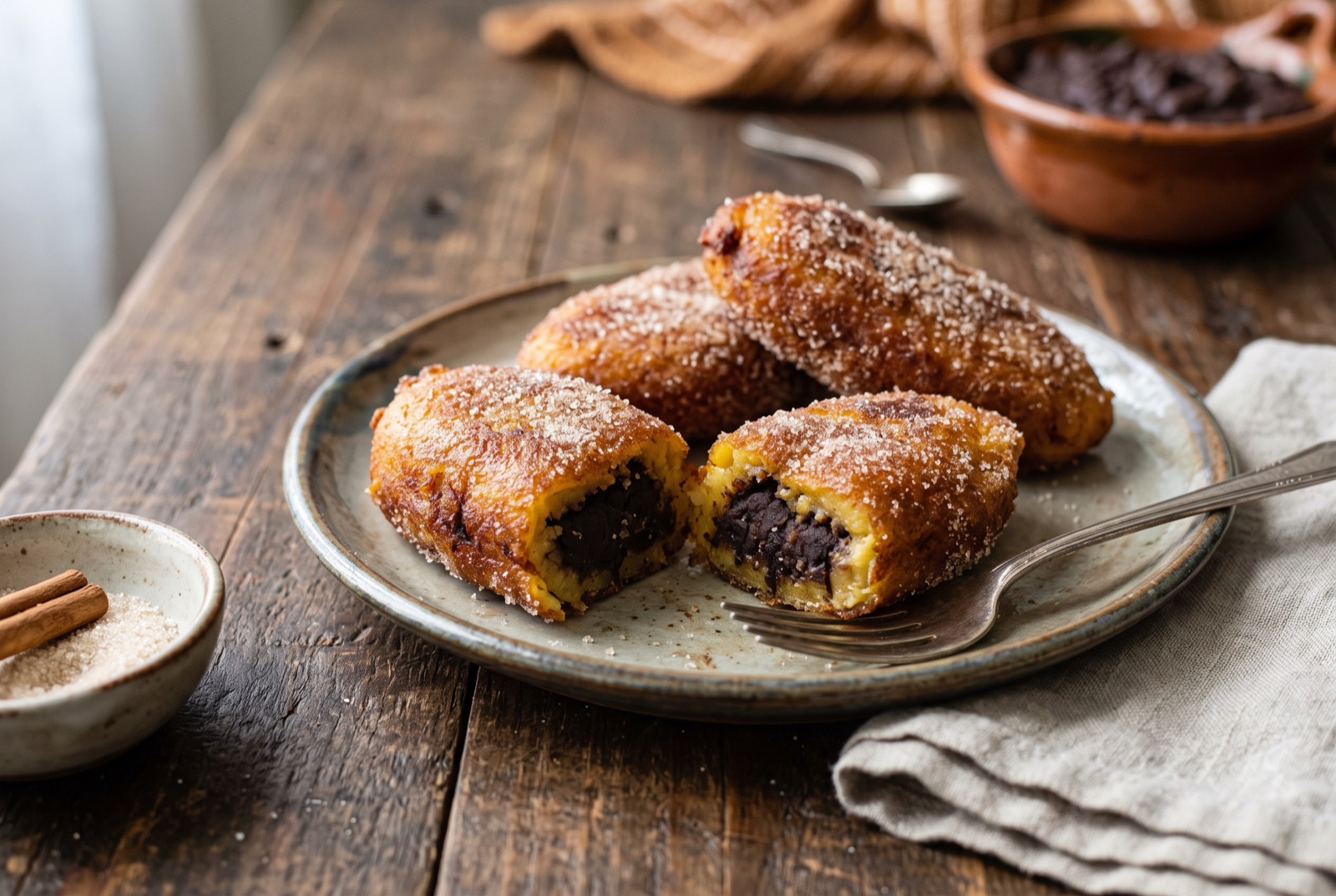
- Cooked with cinnamon and panela instead of onion, then used as the filling for rellenitos de plátano.
Storage & reheating.
Volteados keep 5 days refrigerated and firm up considerably when cold, which makes them easy to slice into a bread roll straight from the fridge. Reheat in a lightly oiled pan over medium heat, breaking the log up and re-forming it, adding a splash of water if it has gone too stiff. They freeze for 3 months in a flat block, and thaw better than most bean dishes because the texture is already dense.
Serve with
Fried eggs, sweet fried plantain, crema, fresh cheese and warm tortillas — the full desayuno chapín.
The story behind Frijoles Volteados.
Black beans are eaten at every meal in Guatemala in one of three states, and the language distinguishes them precisely. Frijoles parados are whole beans standing in their broth. Frijoles colados are the same beans blended and strained into a thin purée. Frijoles volteados are colados cooked so far down that they become solid enough to turn over in the pan. It is a progression of moisture, and the same pot of beans can pass through all three stages across a few days as it gets reheated and reduced — which is exactly how it happens in most households, where volteados are the third-day form of Monday's bean pot.
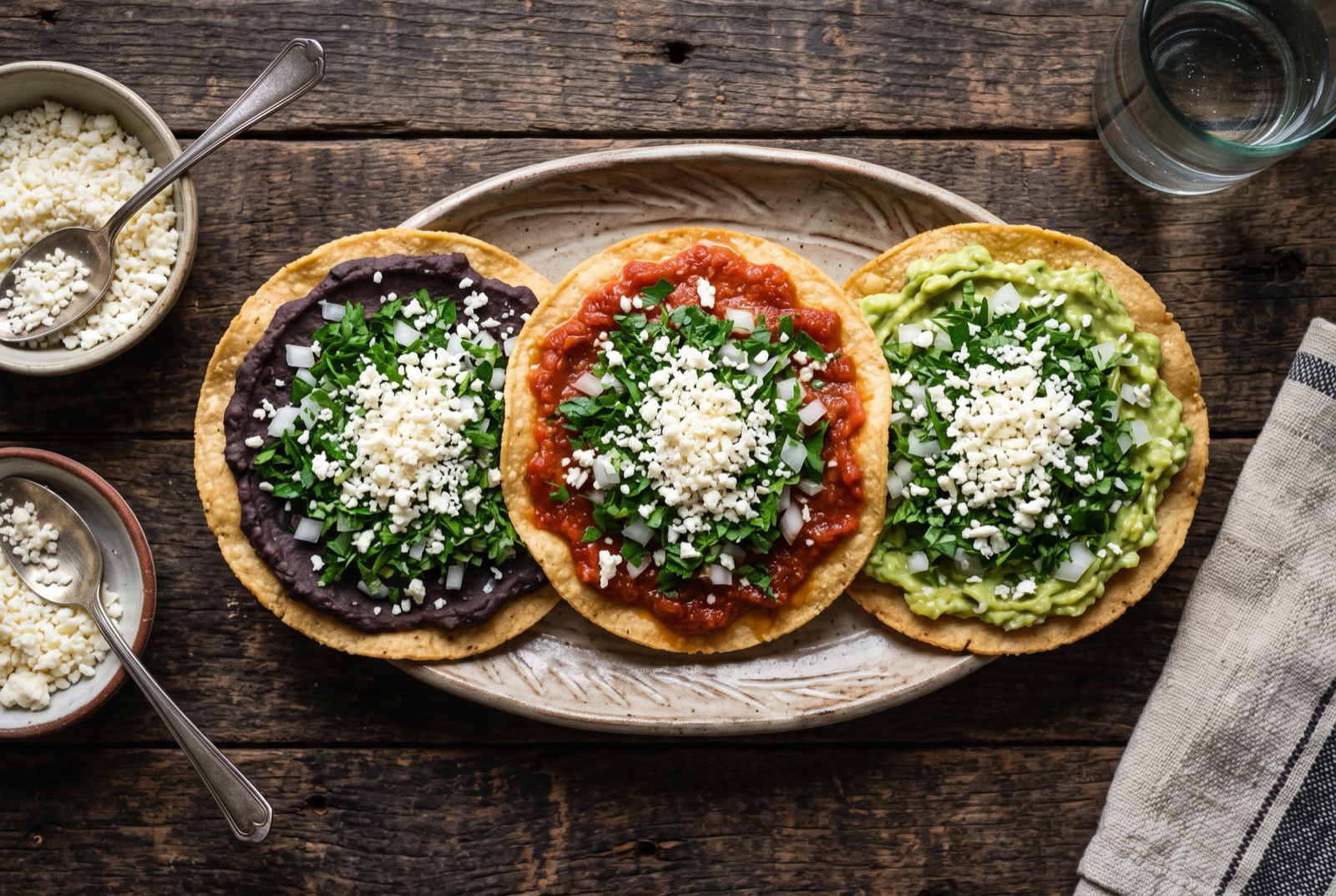
The daily breakfast they belong to is called desayuno chapín: eggs, a spoonful of volteados, fried ripe plantain, crema, fresh cheese and tortillas, with coffee. It is served in hotels, bus stations and homes with essentially no variation, and the beans are the anchor. The same log gets sliced cold into a bread roll for a school lunch, spread on tostadas, or used as filling for rellenitos with sugar and cinnamon added.
Guatemalan volteados are darker and looser than Mexican frijoles refritos and are never made with pinto beans. The colour comes from black turtle beans cooked with their skins, and the cooking liquid is kept and blended in rather than drained, which is why the finished beans look almost black rather than brown. Traditionally the fat is lard, which is worth using if you have it, though oil makes an entirely respectable and vegan version. What no version tolerates is rushing: beans pulled off the heat while still slack will not hold their shape, and the flip is the whole point.
Questions, answered.
What is the difference between frijoles volteados and Mexican refried beans?
Volteados are made from black beans blended with their dark cooking liquid and cooked until dense enough to be flipped over in the pan and served as a whole log, so they are darker and firmer. Mexican refried beans are usually pinto, often mashed rather than blended, and served loose and spreadable rather than shaped.
Why will my beans not hold together to flip?
There is still too much water in them. Keep cooking and pushing the mass with a spatula until it visibly tightens, pulls away from the sides of the pan and moves as one piece when you shake it — this can take several minutes longer than you expect. A blender purée that still has whole beans in it will also tear at the flip.
Can I make frijoles volteados vegan?
Yes, easily. Replace the lard with any neutral oil and the result is completely vegan, since the beans themselves and the onion and garlic are the only other ingredients. Use a generous amount of oil, because too little makes the beans steam and stick rather than frying to a glossy finish.
Do I have to use dried beans?
No. Tinned black beans work well and cut the recipe to under half an hour — use them undrained, since the liquid supplies the colour and body. Dried beans cooked from scratch with an onion give a deeper flavour and better bean broth, so use them when you have the time to soak and simmer.
What do you eat frijoles volteados with?
Most often at breakfast, next to fried eggs, sweet fried plantain, cream, fresh cheese and corn tortillas. They are also sliced cold into bread rolls for lunch, spread on tostadas, and sweetened with cinnamon and sugar to fill rellenitos de plátano for dessert.
You might also like.
All recipes →
Keep exploring Guatemala.
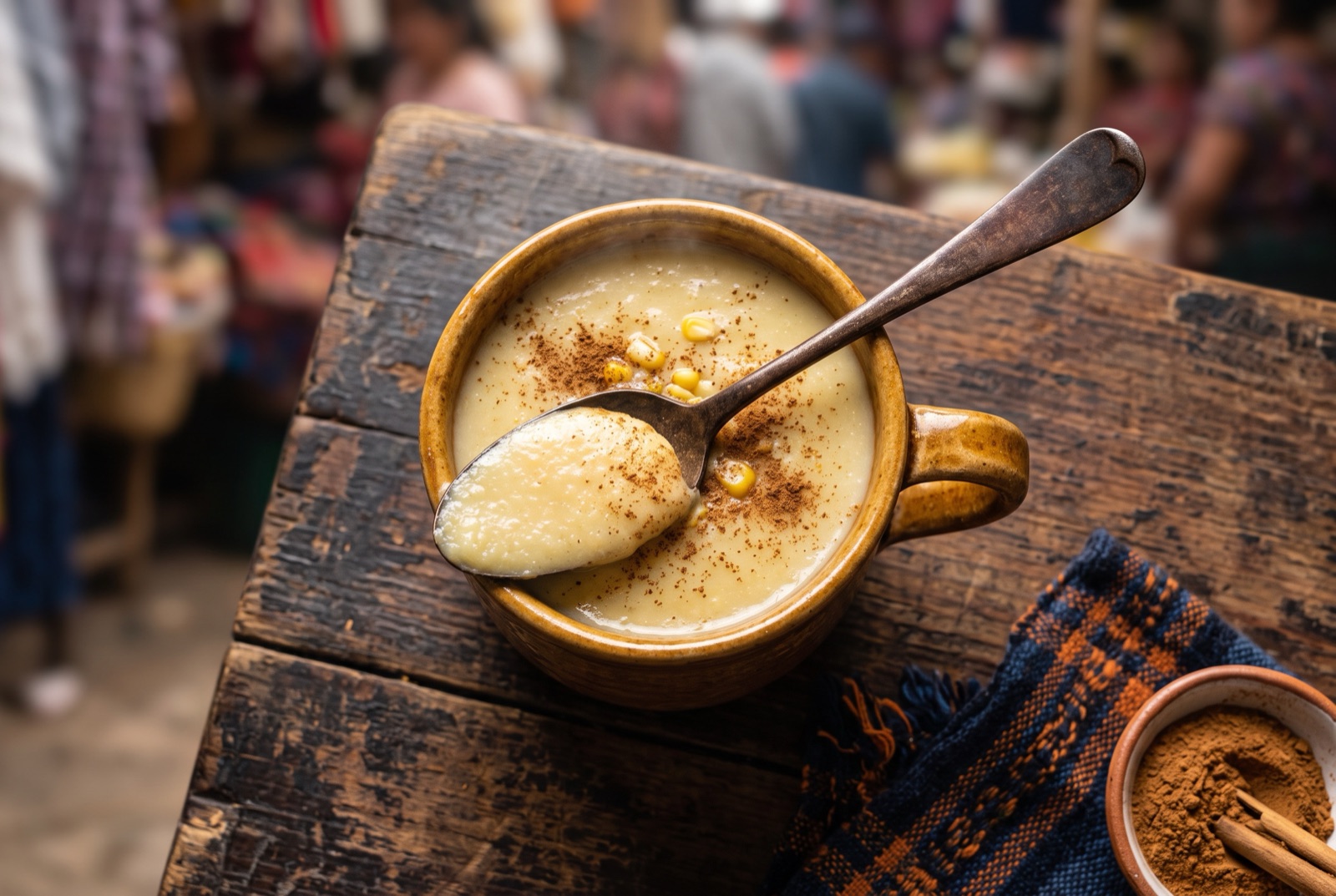
Guatemala has 9 more dishes in the atlas — Atol de Elote and Chiles Rellenos Guatemaltecos, and 7 more.
All Guatemala recipes Black beans recipes Onion recipes Garlic recipes sidebreakfastvegetarianvegangluten freedairy freenut freeRecipe by The DishRoute Kitchen · published August 20, 2026 · updated August 20, 2026