Rellenitos de Plátano.
Plantain Croquettes with Sweet Beans
Rellenitos de plátano · say it: reh-yeh-NEE-tohs deh PLAH-tah-noh
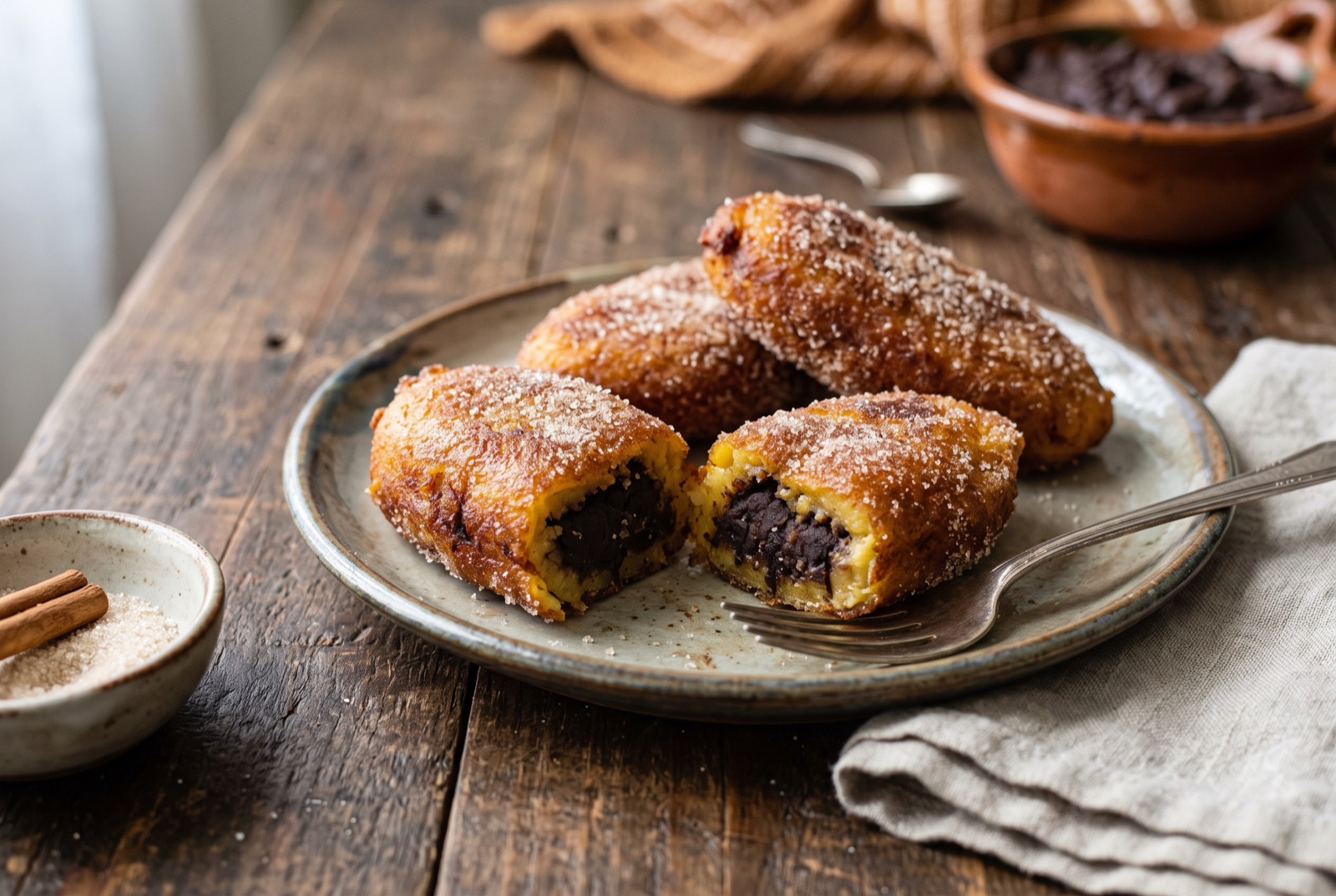
Rellenitos are Guatemala's answer to the doughnut, and they are filled with beans. Blackened, overripe plantains are boiled soft, mashed into a sticky dough, then flattened in the palm around a nugget of black bean paste cooked down with cinnamon and panela until it tastes like date purée. Fried, they turn deep bronze and crisp on the outside while the plantain inside stays warm and almost molten, and the filling reads as sweet-earthy rather than beany. They are rolled in sugar the moment they come out of the oil and eaten with the fingers, sold from baskets and market stalls all over the country, and they are the dish that most reliably surprises people who assume beans cannot be dessert.

- Gate
- GuatemalaNationwide
- Prep
- 30 min
- Cook
- 40 min
- Total time
- 1 hr 10 min
- Serves
- 4
- Status
- Medium
- Nutrition / serving · estimated
- Calories 470 kcal
- Protein 8 g
- Carbs 78 g
- Fat 15 g
- Fiber 9 g
- Sugar 38 g
- Sodium 180 mg
Why this recipe works.
- Straight about the plantain: black-skinned or do not bother, with a workaround if yours are underripe.
- The bean filling is cooked down until it holds a shape, so it will not burst out in the oil.
- Shows how to seal the plantain dough properly, which is the step that decides whether they survive frying.
- Vegetarian, uses four core ingredients, and every one of them is cheap.
Ingredients.
9 itemsFor the dough
For the filling
To fry and finish
Equipment
- Saucepan
- Potato masher or fork
- Frying pan or deep pan for frying
- Slotted spoon
- Wire rack
Instructions.
Boil the plantains
Peel the plantains, cut them into thick chunks, and simmer in salted water with the cinnamon stick for about 15 minutes, until a knife goes through with no resistance. Drain thoroughly and leave them in the colander for 5 minutes so the surface steam escapes.
Tip Drain them properly. Wet plantain makes a dough that will not hold a seal.
Make the sweet bean paste
Blend the drained beans to a smooth purée, then fry it in the tablespoon of oil with the panela and ground cinnamon over medium heat for about 10 minutes, stirring, until the paste darkens, smells of caramel and stiffens enough to hold a ridge behind the spoon.
Mash the dough
Mash the warm plantain with a fork or masher until it forms a smooth, sticky, deep yellow dough with no lumps. Do not add flour or liquid — the plantain has everything it needs. Let it cool until you can handle it comfortably.
Shape the rellenitos
Roll the cooled bean paste into twelve small balls. With wet hands, take a golf-ball lump of plantain dough, flatten it in your palm to about 8 cm across, set a bean ball in the centre, and fold the dough up around it.
Seal them completely
Pinch the dough closed over the filling and roll each one between wet palms into a smooth oval until no seam is visible anywhere on the surface. Set them on a plate as you go, not touching each other.
Tip Any join you can still see is where the filling will escape in the oil.
Fry
Heat the frying oil to about 170°C — a scrap of dough should sizzle steadily and rise within a few seconds. Fry the rellenitos three or four at a time for 3 minutes, turning once, until they are deep bronze all over and firm to a gentle prod.
Roll in sugar and serve
Lift them onto a rack for 30 seconds, then roll each one through the caster sugar while still hot so it sticks in a thin frosting. Serve warm, with crema alongside if you want something to cut the sweetness.
Tips from our kitchen.
- Plantains must be black-skinned and soft to the point of looking spoiled. Yellow ones are starchy, taste of nothing sweet and produce a dough that crumbles.
- Boil the plantains in their peeled chunks only until a knife slides through easily, about 15 minutes. Overboiled plantain turns waterlogged and the dough will not hold together.
- Cook the sweet bean paste until it is thick enough to roll into a ball that keeps its shape in your palm. A loose filling will blow out through the seam in the pan.
- Wet your hands before shaping. Plantain dough is aggressively sticky and damp palms are the only thing that makes it manageable.
- Seal by pinching the dough closed and rolling the ball between your palms until you can see no seam at all. Any visible join is where hot oil gets in and the filling gets out.
- Fry at a moderate heat, around 170°C, for about 3 minutes. Hot oil browns the sugar in the plantain before the inside is hot.
Substitutions.
- Panela → Dark brown sugar or muscovado
- Panela is unrefined cane sugar with a molasses depth; dark brown sugar is the closest supermarket equivalent. Grate panela before using, since a hard cone will not dissolve quickly.
- Home-cooked black beans → A tin of black beans, drained
- Works fine for the filling since it gets blended and cooked down anyway. Drain them, since tin liquid makes the paste take much longer to thicken.
- Deep frying → Shallow fry in 1 cm of oil, turning
- Uses far less oil and gives an almost identical result, though the shape ends up slightly flattened rather than perfectly oval.
Variations.
- Rellenitos de chocolate
- A square of dark chocolate pressed into the bean filling before sealing, so it melts into the centre.
- Rellenitos con crema
- Served warm with a spoonful of thick Guatemalan crema on the side, which balances the sugar and is how many restaurants plate them.
- Baked rellenitos
- Brushed with oil and baked at 200°C for 25 minutes. Less crisp and less rich, but a workable option when you do not want to fry.
Storage & reheating.
Rellenitos are at their best within an hour of frying, while the outside still crackles. They keep 3 days refrigerated and reheat acceptably in a 180°C oven for 10 minutes, though they never return to their original crispness. The bean filling keeps a week refrigerated and freezes for 3 months, so making it ahead is the smart way to plan. Shaped but unfried rellenitos can be refrigerated for a day.
Serve with
A spoonful of crema or thick sour cream, and black coffee.
The story behind Rellenitos de Plátano.
Sweetened bean paste as a dessert filling is not unusual worldwide — East Asia has been doing it with red beans for centuries — but in the Americas it is close to a Guatemalan speciality. The logic is domestic rather than exotic: black beans are cooked in every household every week, plantains ripen faster than anyone can eat them, and panela, the hard cone of unrefined cane sugar, is cheap and always in the cupboard. Rellenitos are what you make with those three things when there is nothing else and someone wants something sweet.
They are street and market food above all, sold warm from covered baskets alongside buñuelos and plátanos en mole, and they belong to the same family of fried sweets that appears around Lent and Holy Week. Some families serve them with a spoonful of crema, which cuts the sweetness usefully; some skip the sugar coating; some add a strip of cinnamon-scented chocolate to the filling, which is delicious and only mildly heretical.
The entire dish depends on plantain ripeness, and this is where foreign attempts fail. The plantain must be at the stage where the skin is black, wrinkled and looks ruined — a yellow plantain with a few spots is starchy, bland and will not mash into anything cohesive. Guatemalan cooks simply wait, leaving them on a shelf for a week or more until they are almost collapsing. If your plantains arrive green, budget a week before you plan to cook, or use the oven trick of baking them at low heat to accelerate ripening, which helps a little though it never fully replaces time.
Questions, answered.
Do rellenitos taste like beans?
Not in the way people expect. Cooked down with cinnamon and panela, black beans lose their savoury character and taste closer to a date or prune purée — earthy, dark and sweet. Combined with the sweet plantain and a sugar coating, the bean flavour reads as depth rather than as beans.
How ripe do the plantains need to be?
Fully black-skinned, wrinkled and soft enough that they look past saving. That stage is when the starch has converted to sugar, which is what makes the dough sweet and pliable. A yellow plantain with a few black spots is not ripe enough and produces a dry, bland dough that cracks when you shape it.
Why do my rellenitos burst open in the oil?
Either the seam was not sealed properly or the filling was too wet. Roll each ball between your palms until no join is visible, and cook the bean paste until it is stiff enough to hold a shape when rolled. Overcrowding the pan also causes it, since the oil temperature drops and the plantain sits absorbing fat instead of setting quickly.
Can I make rellenitos ahead of time?
Make the components ahead and fry at the last minute. The bean filling keeps a week in the fridge and freezes well, and shaped uncooked rellenitos hold for a day refrigerated. Fried ones go soft within a couple of hours, though a ten-minute reheat in a hot oven restores some of the crust.
What is panela and can I substitute it?
Panela is unrefined whole cane sugar sold in hard brown cones or blocks across Latin America, with a strong molasses flavour that ordinary white sugar lacks. Dark brown sugar or muscovado is the closest substitute and works well here. Grate or chop panela before using, because a solid cone dissolves very slowly.
You might also like.
All recipes →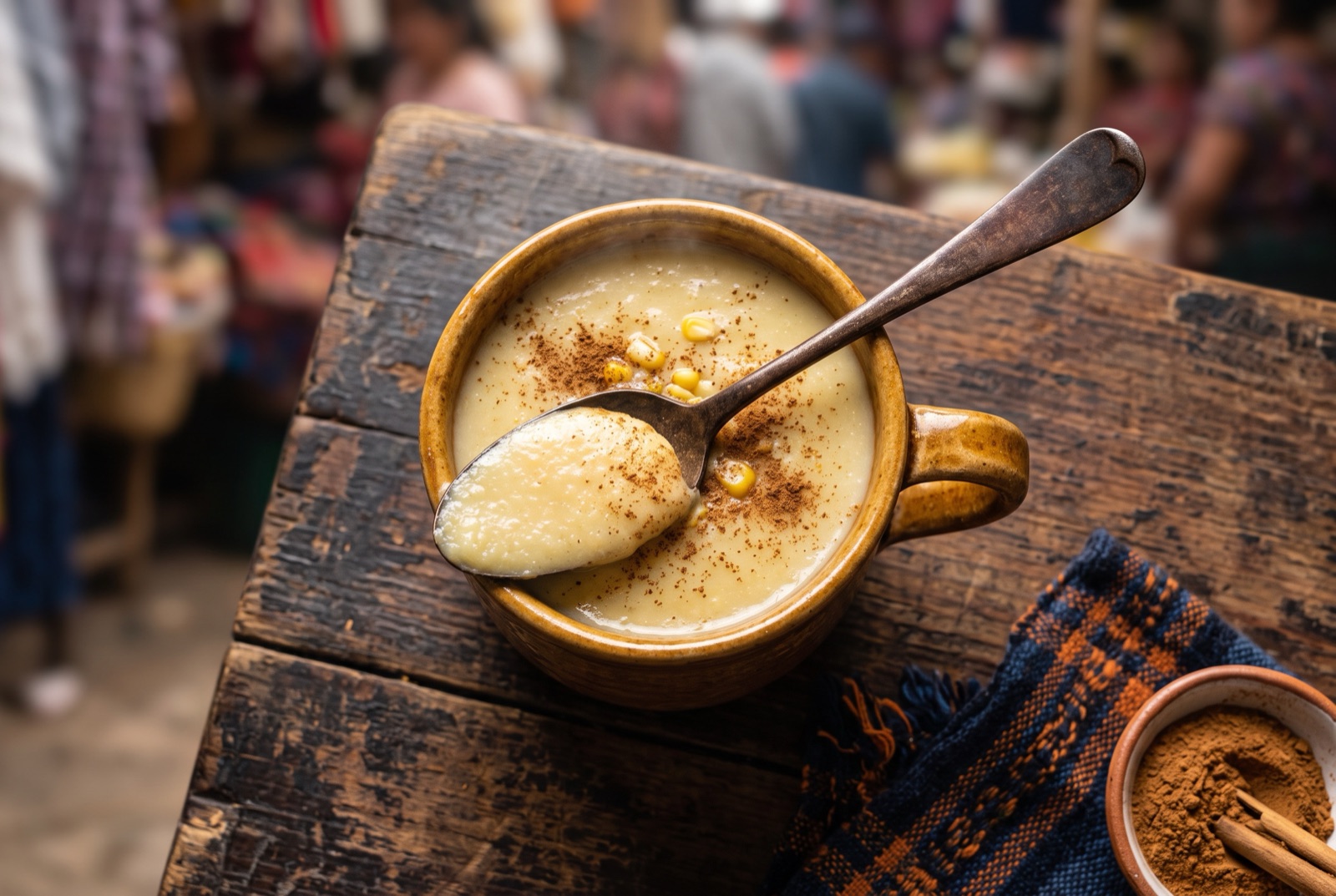

Keep exploring Guatemala.
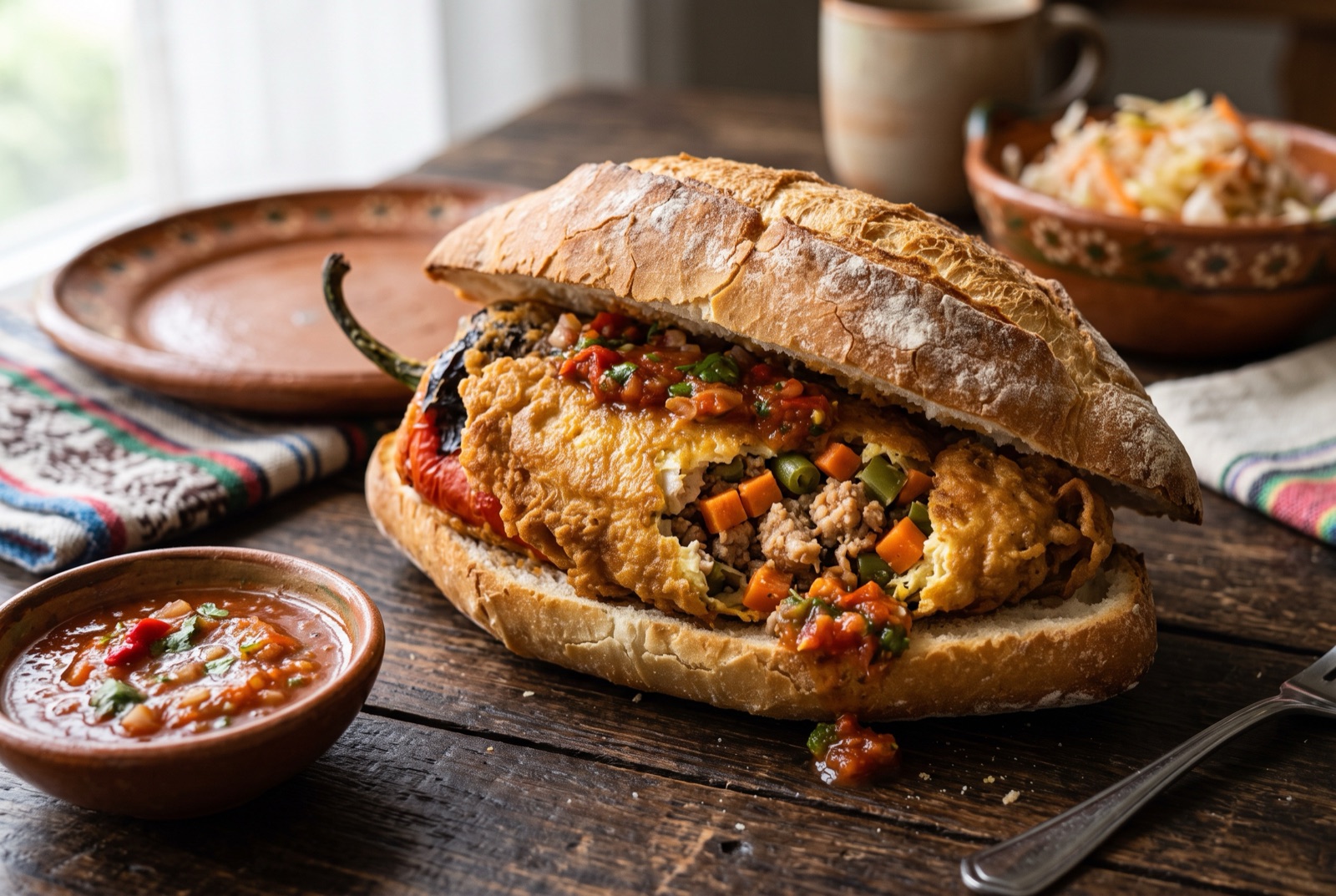
Guatemala has 9 more dishes in the atlas — Atol de Elote and Chiles Rellenos Guatemaltecos, and 7 more.
All Guatemala recipes Plantain recipes Black beans recipes Cinnamon recipes dessertsnackvegetariangluten freedairy freenut freeRecipe by The DishRoute Kitchen · published August 20, 2026 · updated August 20, 2026