Bannann Peze.
Haitian Pressed Fried Plantains
Bannann peze · say it: bah-NAHN peh-ZAY
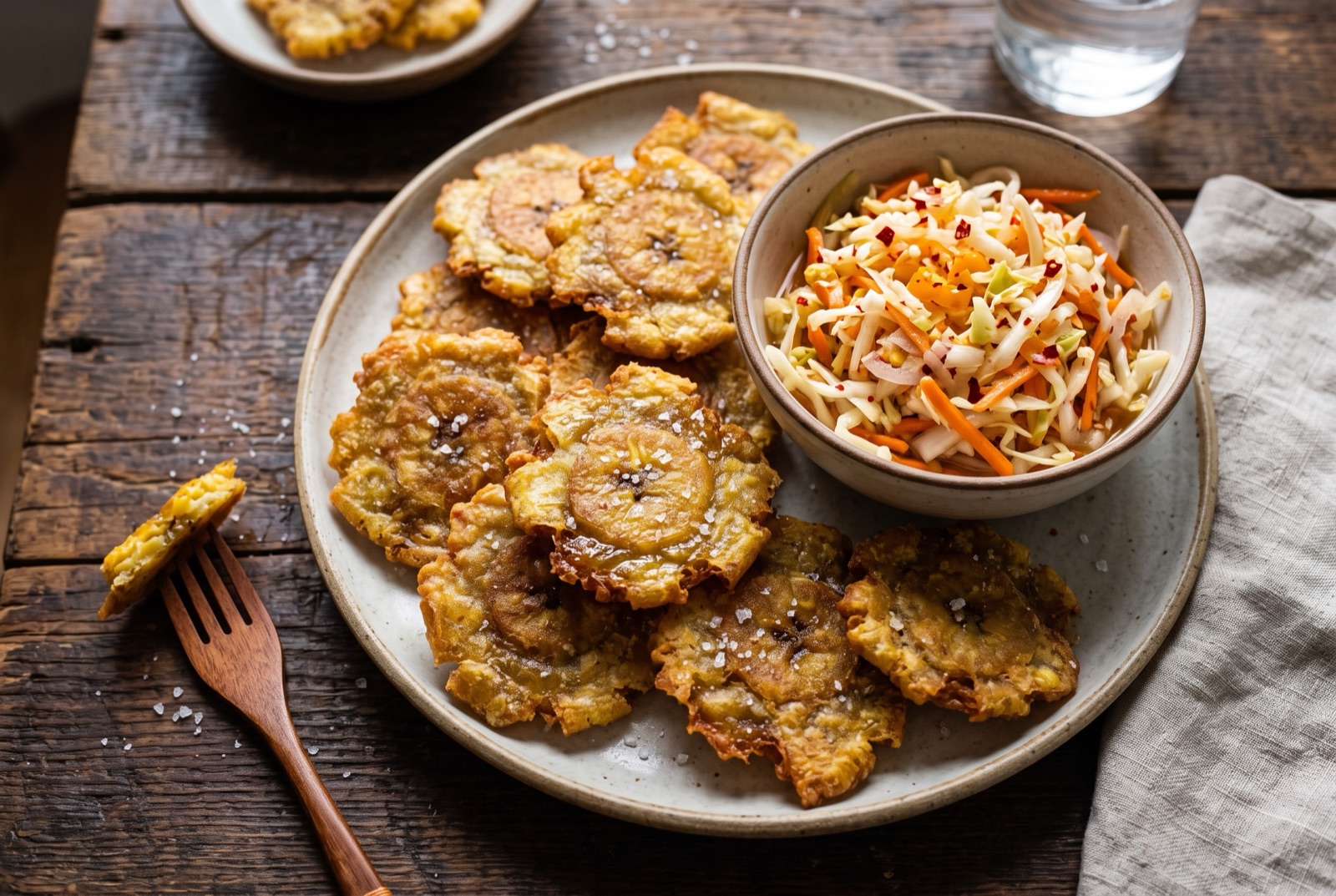
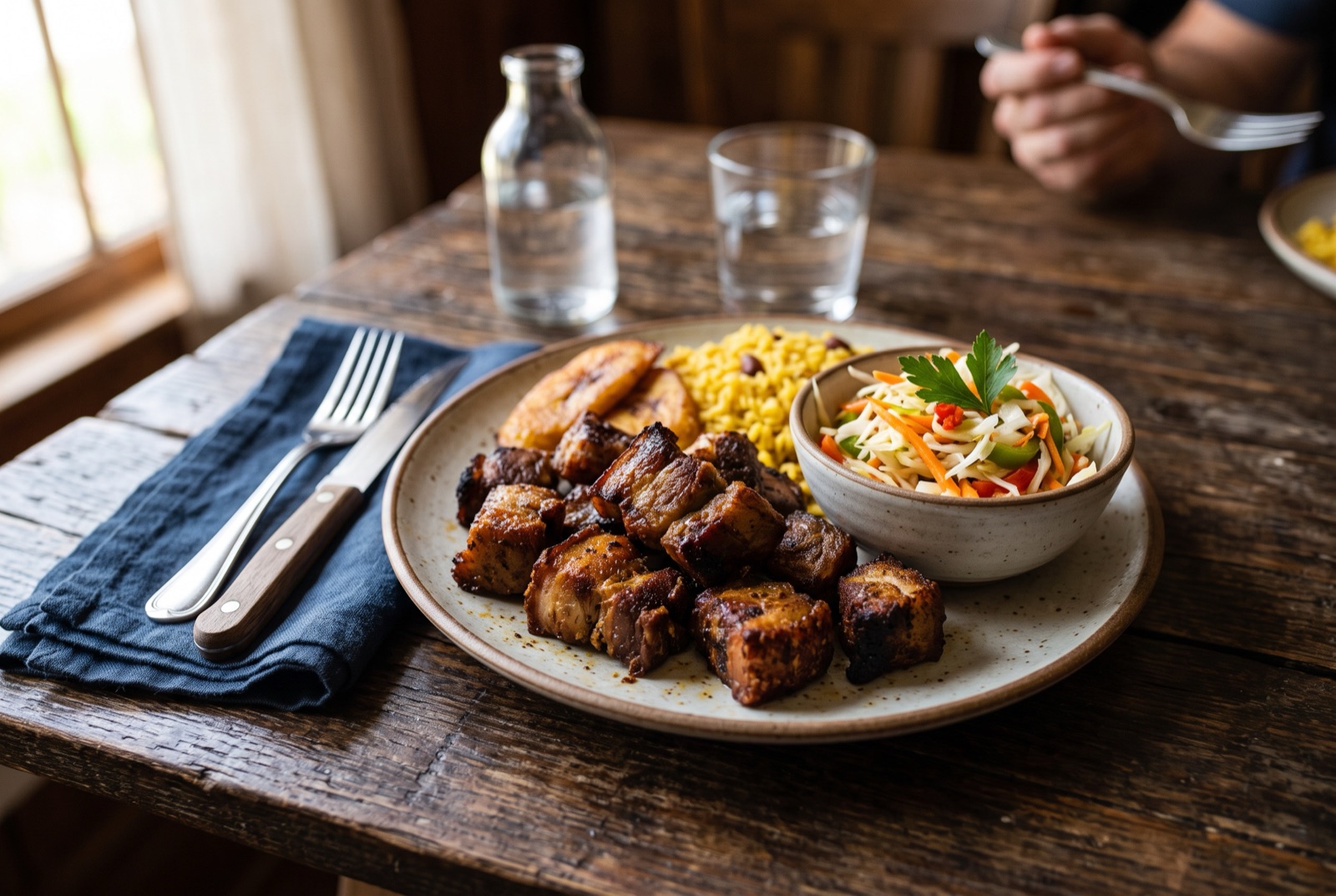
Bannann peze are thick slices of green plantain fried once at a low temperature until they turn pale gold and yield, pressed flat while still hot, then fried a second time in hotter oil until the surface hardens into something between a chip and a chunk of bread. Green plantain is starchy rather than sweet, so the result tastes savoury and faintly nutty, with a crisp shell and a dense, almost potato-like interior. Salted straight out of the oil and served with pikliz, they go beside griyo, fried fish, tasso — essentially anything. The trick is entirely in the two fryings at two different temperatures.

- Gate
- Haiti
- Prep
- 15 min
- Cook
- 20 min
- Total time
- 35 min
- Serves
- 4
- Status
- Easy
- Nutrition / serving · estimated
- Calories 260 kcal
- Protein 2 g
- Carbs 40 g
- Fat 11 g
- Fiber 3 g
- Sugar 15 g
- Sodium 340 mg
Why this recipe works.
- Two-temperature frying explained properly — the low first fry cooks, the hot second fry crisps.
- The salted-water dip that Haitian vendors use for a crunchier, better-seasoned disc.
- Tells you exactly how to peel a green plantain, which defeats most people the first time.
- Uses everyday kitchen objects instead of a tostonera, without any loss of quality.
Ingredients.
6 itemsFor the plantains
For the dipping water
To finish
Equipment
- Deep heavy frying pan
- Tostonera or flat-bottomed can
- Slotted spoon
- Wire rack
Instructions.
Peel and cut
Trim both ends of each plantain, score the peel lengthwise along its ridges without cutting deep into the flesh, and lever the strips off with your thumb. Cut the peeled plantains into 3 cm thick rounds.
Tip Rubbing a little oil on your hands first stops the sticky sap clinging to them.
Mix the dipping water
Stir the salt into the warm water until it dissolves, add the crushed garlic if using, and set the bowl beside the stove. You will dip the pressed plantains into this between the two fryings.
First fry, low and slow
Heat the oil to about 150°C and fry the plantain rounds for 4–5 minutes, turning once, until they are pale gold and a skewer slides in without resistance. They should barely colour at this stage.
Press while hot
Lift the rounds onto a board and press each one flat to about 1 cm thick with a tostonera, a can or a plate lined with baking paper. Work quickly — cooled plantain cracks and falls apart under pressure.
Dip and drain
Dunk each pressed disc into the salted water for two seconds, then shake it hard and blot it on a cloth. It should be damp, not dripping, before it goes anywhere near the oil.
Tip Wet plantain in hot oil spits violently; blot properly and stand back.
Second fry, hot and fast
Raise the oil to 190°C and fry the discs in batches for 2–3 minutes, turning once, until the edges look glassy and deep gold and the surface is hard when tapped with a spoon.
Salt and serve immediately
Drain on a rack, scatter with flaky salt while still glistening, and take them to the table straight away with pikliz. They stiffen and dull within twenty minutes, so nobody should be waiting.
Tips from our kitchen.
- Use plantains that are hard and fully green with no yellow. Half-ripe ones burn before they crisp.
- Score the peel lengthwise through to the flesh and lift it off in sections — trying to peel it like a banana fails.
- Fry first at around 150°C. Too hot and the outside colours before the starchy middle has cooked through.
- Press while the slices are still very hot; a cooled plantain cracks apart instead of spreading flat.
- Dip the pressed discs in salted water for two seconds before the second fry for a crunchier, better-seasoned crust.
- Salt them the second they leave the oil, while the surface is still slick enough for the salt to stick.
Substitutions.
- Green plantain → Green cooking banana, or unripe saba banana
- Both behave similarly. Ordinary dessert bananas do not work at all — they are far too soft and sweet.
- Tostonera press → The flat bottom of a tin can, a small plate, or a wide glass
- Lay a piece of baking paper over the slice first so it does not stick to whatever you press with.
- Deep frying → Air fryer: 10 minutes at 180°C, press, spray with oil, then 8 minutes at 200°C
- Lighter and much less messy. The texture is drier and more biscuit-like than the fried version.
Variations.
- Bannann mi
- Ripe, yellow-black plantains sliced thick and fried once until the sugars caramelise. Sweet, soft, and served alongside savoury food rather than as a snack.
- Garlic bannann peze
- The salted dipping water is replaced with garlic water — crushed garlic steeped in warm salted water — so the plantain picks up garlic all the way through.
- Piled high with toppings
- Pressed plantains used as bases for stewed chicken, avocado or pickled onion, a diaspora habit borrowed from Latin American patacón plates.
Storage & reheating.
Bannann peze are a fry-and-eat dish; they go leathery within an hour or two. If you must get ahead, do the first fry and the pressing, then refrigerate the discs for up to 2 days or freeze them flat on a tray for a month, and do the second fry from cold or frozen straight into hot oil. Fully fried ones can be revived for 5 minutes in a 200°C oven, but they will never match the first ten minutes.
Serve with
Pikliz, griyo or tasso kabrit, and a bowl of sos pwa for dipping.
The story behind Bannann Peze.
Twice-fried green plantain exists across the Caribbean and Latin America under a dozen names — tostones in Puerto Rico and the Dominican Republic, patacones in Colombia and Ecuador, banann peze in Haiti — and arguing about who invented it is unproductive, since plantains arrived with the Atlantic trade and the technique appeared wherever they grew. Haiti's version is distinguished less by the method than by what it is served with: the pikliz, and the fried meats it accompanies on the fritay platter.
The pressing is done with a tool called a tostonera, a hinged wooden press, but Haitian street vendors more often use the flat bottom of a can, a plate, or a folded piece of banana leaf and the heel of a hand. What matters is pressing while the plantain is hot and soft, so it spreads without splitting, and pressing evenly so it fries flat rather than curling. Many cooks dip the pressed disc briefly in salted water before the second fry — this seasons it through and, because the water flashes to steam, gives a slightly puffier, crunchier crust.
Plantain ripeness decides the dish. Fully green plantains are hard, starchy and correct for bannann peze; yellow-spotted ones are sweeter and belong to bannann mi, fried once in thick slices as a sweet side. Using a half-ripe plantain here is a common mistake — the sugars caramelise too fast in the second fry and the disc burns before it crisps.
In Haiti these are everywhere: sold in paper by the roadside, served alongside every restaurant plate, made at home whenever there is oil in the pan. They are also the most forgiving thing in the fritay repertoire, which makes them the sensible place to start if you are cooking Haitian food for the first time.
Questions, answered.
How do I peel a green plantain?
Cut off both ends, then run a knife lengthwise along the ridges of the peel, cutting through the skin but not deep into the flesh. Slide your thumb or the edge of a spoon under each strip and lever it off in sections. Green plantain peel is thick and tight and will not strip away like a banana skin.
Why are my plantains hard and dry inside?
The first fry was too hot or too short, so the outside coloured before the starchy interior cooked. Fry at a gentle 150°C for 4 to 5 minutes until the slices are pale gold and a skewer meets no resistance — the colour should barely change at this stage.
What is the difference between bannann peze and tostones?
They are essentially the same technique — green plantain fried, pressed and fried again — under different names across the Caribbean and Latin America. The Haitian version is defined mainly by what accompanies it: pikliz and the fried meats of the fritay platter rather than a garlic dipping sauce.
Can I use ripe yellow plantains?
Not for this dish. Ripe plantains are sweet and soft, so they collapse under the press and their sugars burn in the second fry. Fry ripe plantains once, in thick slices, and you get bannann mi — a different and also excellent side dish.
Why dip them in salted water between fryings?
It seasons the plantain through rather than only on the surface, and the water that clings turns to steam in the hot oil, which pushes the crust outward and makes it crunchier. Two seconds in the water is enough; any longer and the discs become waterlogged and spit dangerously.
You might also like.
All recipes →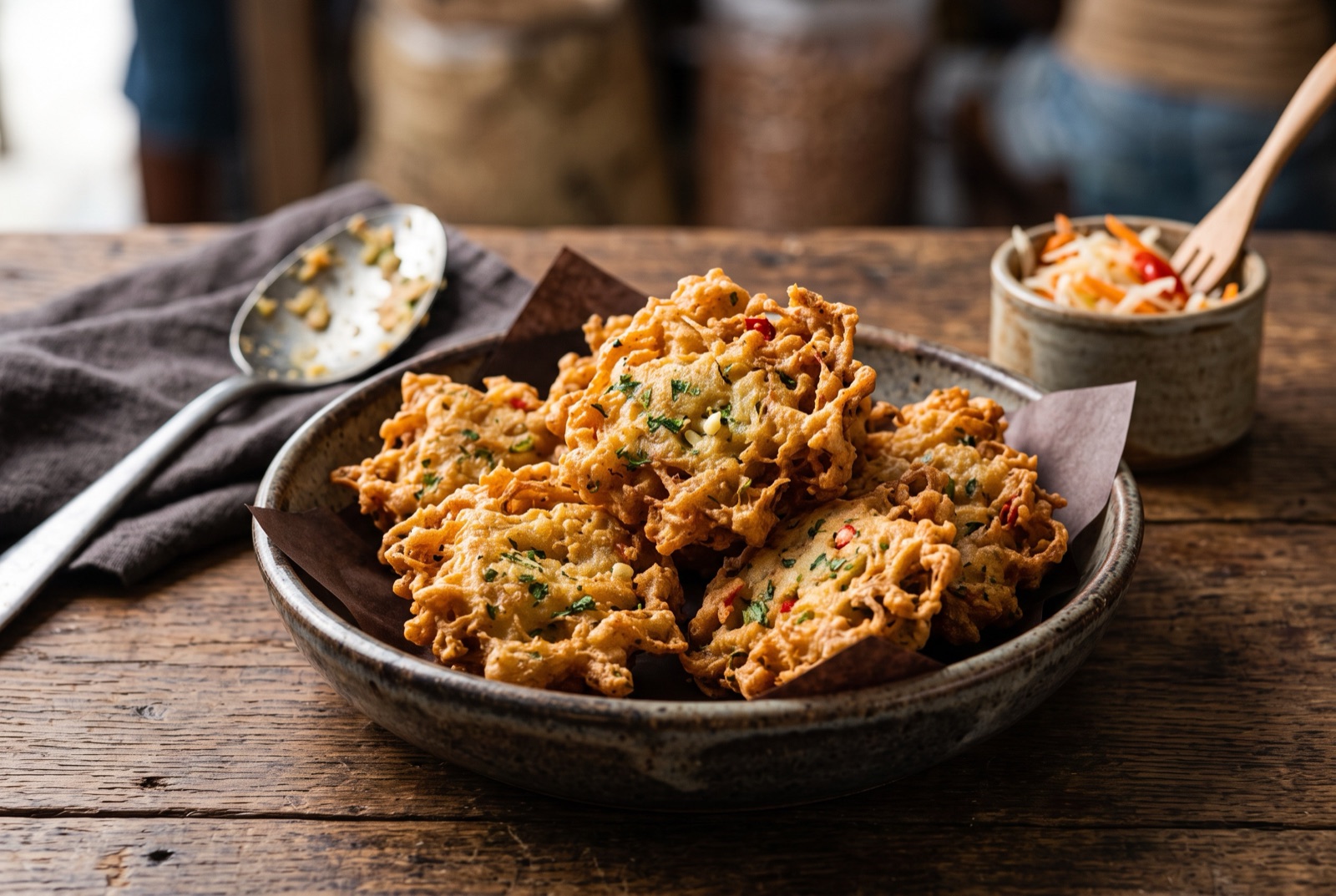
Keep exploring Haiti.
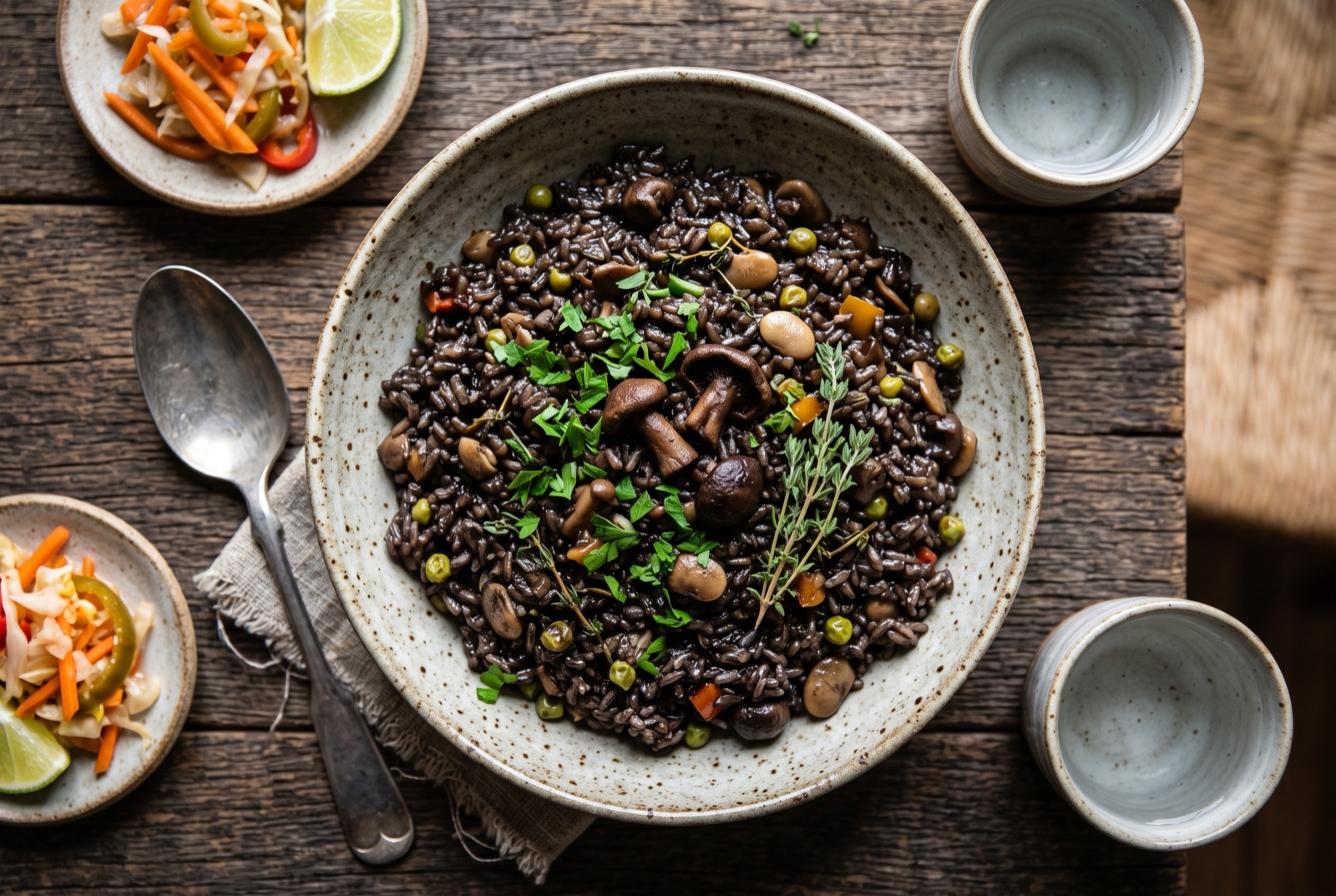
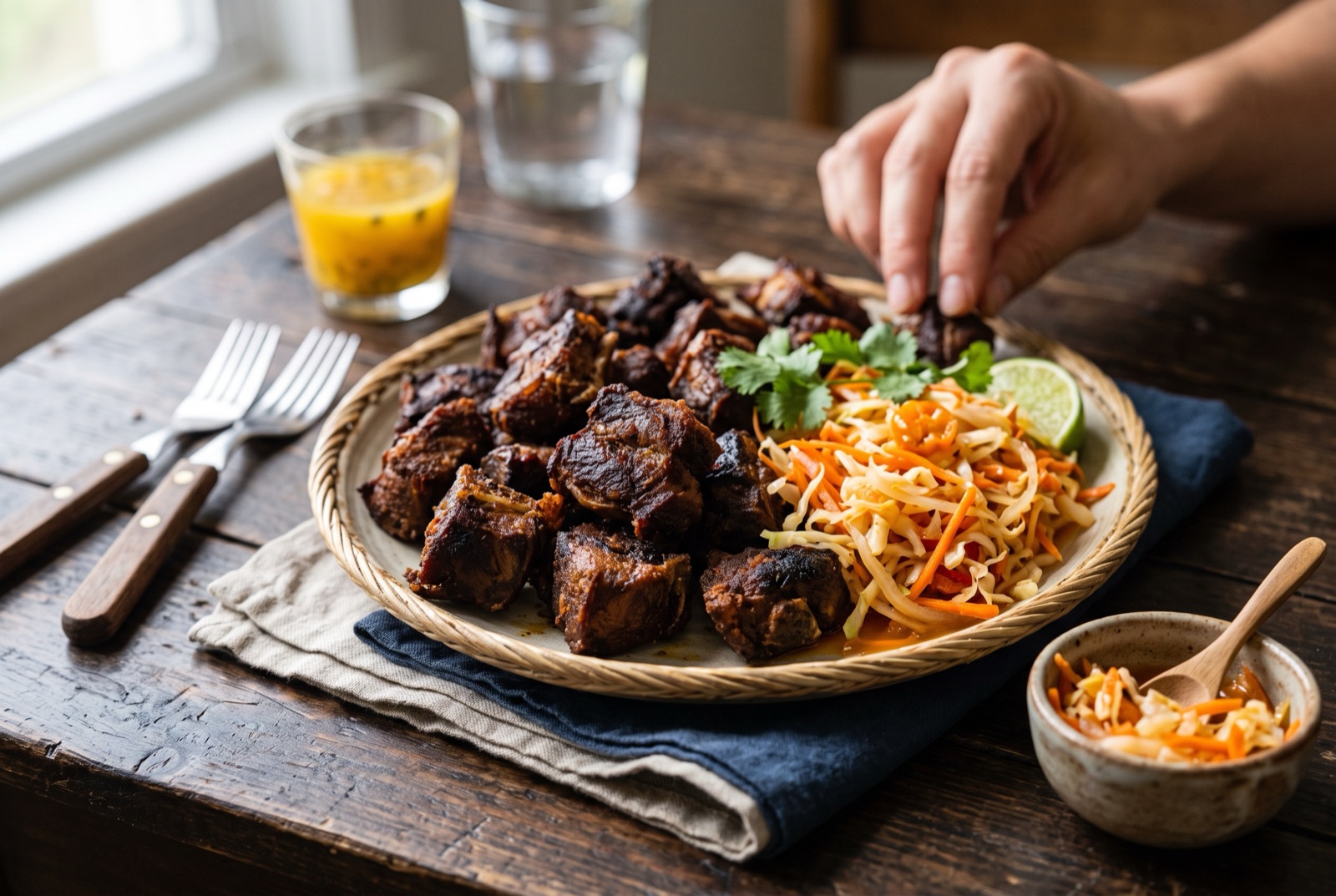
Haiti has 9 more dishes in the atlas — Akra and Diri Djon Djon, and 7 more.
All Haiti recipes Plantain recipes Garlic recipes sidesnackstreet foodvegetarianvegangluten freedairy freenut freeRecipe by The DishRoute Kitchen · published August 20, 2026 · updated August 20, 2026