Akra.
Haitian Malanga Root Fritters
Akra · say it: ah-KRAH
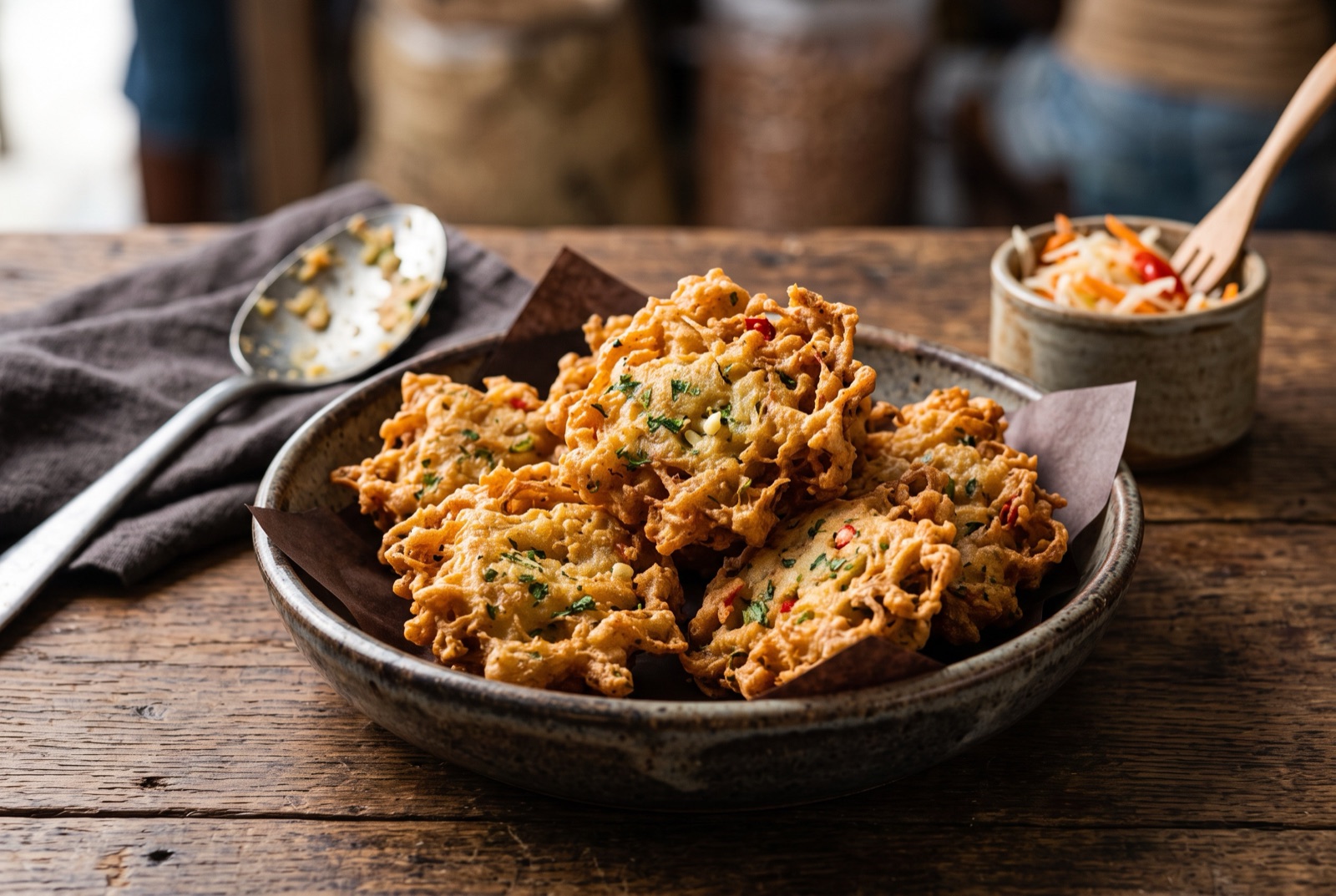
Akra are fritters made from grated malanga — the starchy root sold as taro, dasheen or yautía depending on the shop — beaten with garlic, parsley, scallion and enough Scotch bonnet to make itself known, then spooned into hot oil where it spreads into irregular lace-edged discs. The texture is the point: crisp and frilly at the rim, chewy and slightly gluey in the middle in a way that is entirely deliberate. They taste green and peppery, and they are sold from the same fritay pans as griyo and bannann peze, eaten hot from paper with pikliz on top. No flour is needed; the root binds itself.

- Gate
- Haiti
- Prep
- 20 min
- Cook
- 15 min
- Total time
- 35 min
- Serves
- 4
- Status
- Easy
- Nutrition / serving · estimated
- Calories 250 kcal
- Protein 3 g
- Carbs 35 g
- Fat 11 g
- Fiber 5 g
- Sodium 620 mg
Why this recipe works.
- Uses the root's own stickiness to bind, with no flour or egg diluting the flavour.
- Grating and timing guidance that stops the batter greying and weeping before it fries.
- A test-fritter step, so you can correct the seasoning before committing the whole bowl.
- Names the roots honestly — malanga, taro, yautía, dasheen — so you can actually buy the right thing.
Ingredients.
10 itemsFor the batter
For frying
Equipment
- Box grater
- Large mixing bowl
- Two dessert spoons
- Deep heavy frying pan
- Wire rack
Instructions.
Grate the root
Peel the malanga with a knife rather than a peeler, since the skin is thick and rough, then grate it on the fine side of a box grater into a bowl. The pulp should look wet and cling to itself, not sit in loose shreds.
Tip Squeeze the lime over the pulp immediately — it slows the greying.
Season the batter
Mix in the garlic, parsley, scallions, Scotch bonnet, thyme leaves, salt and black pepper, working them through with a fork until the green flecks are evenly spread. If liquid has pooled at the bottom, tip it off.
Heat the oil and test one
Bring the oil to 175°C, then drop in one heaped teaspoon of batter and fry for two minutes. Taste it once it has cooled slightly and correct the salt and heat in the bowl before frying the rest.
Tip Batter always tastes milder raw than fried — trust the test fritter, not the bowl.
Fry in ragged spoonfuls
Using two spoons, drop uneven tablespoonfuls into the oil, four or five at a time, and fry for 3–4 minutes, turning once. Pull them when the edges are dark gold and lacy and the centres feel firm against the spoon.
Drain and repeat
Lift the fritters onto a wire rack rather than paper so the undersides stay crisp, and let the oil come back up to temperature between batches. Salt them lightly while they are still hot.
Serve straight away
Pile the akra into a bowl and serve immediately with pikliz. They are noticeably better in the first ten minutes, so fry them last and carry them to the table hot.
Tips from our kitchen.
- Grate the malanga on the fine side of a box grater; a coarse grate gives fritters that fall apart in the oil.
- Wear gloves if your skin is sensitive — raw malanga and taro can irritate the hands of some people.
- Fry the batter within ten minutes of grating. Standing batter oxidises grey and releases water.
- Fry one test fritter first and taste it for salt and heat before you commit the whole bowl.
- Use two spoons to drop ragged, uneven spoonfuls; a neat round ball fries dense instead of lacy.
- Keep the oil at 175°C. Cooler and akra soak up fat, hotter and the outside darkens before the middle sets.
Substitutions.
- Malanga → Taro (dasheen), or half taro and half yautía
- Both grate to the same sticky pulp and behave identically in the oil. Potato does not work — it lacks the mucilage that binds the batter.
- Scotch bonnet → Habanero, or a large pinch of cayenne
- Cayenne gives heat without the fruity aroma. If cooking for a mixed table, halve the pepper and serve pikliz alongside.
- Parsley → Culantro (chadon beni) or cilantro
- Culantro is more assertive and very much at home in Caribbean fritters; use about half the quantity.
Variations.
- Akra ak lanmori
- Soaked, flaked salt cod worked into the batter, bringing the Haitian fritter close to Trinidadian accra. Reduce the added salt accordingly.
- Marinad
- The other great Haitian fritter: a flour-based batter with herring or chicken, softer and more dumpling-like than akra and fried from a thicker spoonful.
- Extra-green akra
- Double the parsley and scallion and add a handful of chopped chives, giving fritters that are visibly flecked green and taste sharper.
Storage & reheating.
Akra do not keep. They are best within ten minutes of leaving the oil and are noticeably worse after an hour, as the starchy centre firms up. If you have leftovers, refrigerate for a day and reheat on a rack at 200°C for 6 minutes; they will be crisp but drier. The batter cannot be made ahead at all — it discolours and separates within half an hour.
Serve with
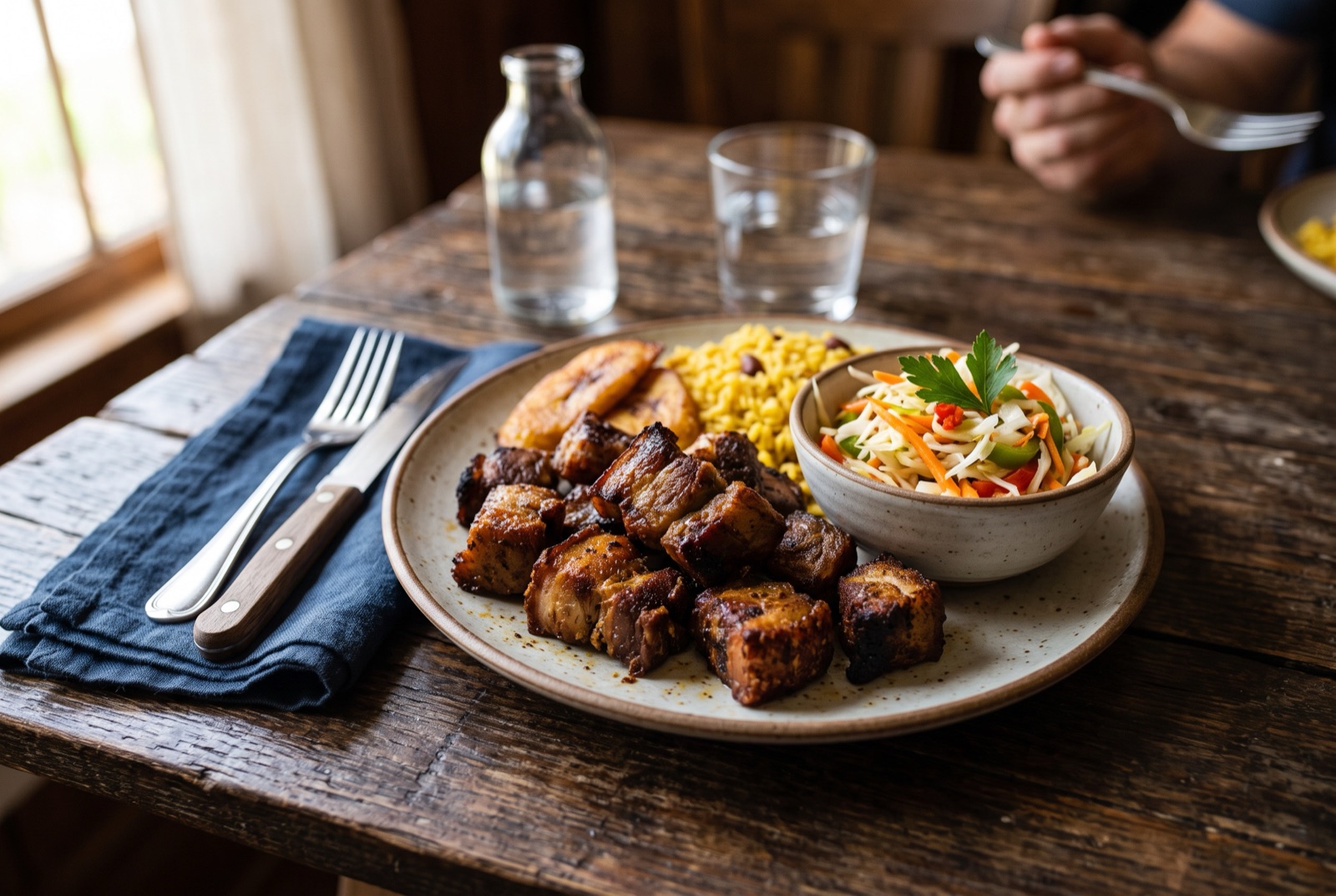
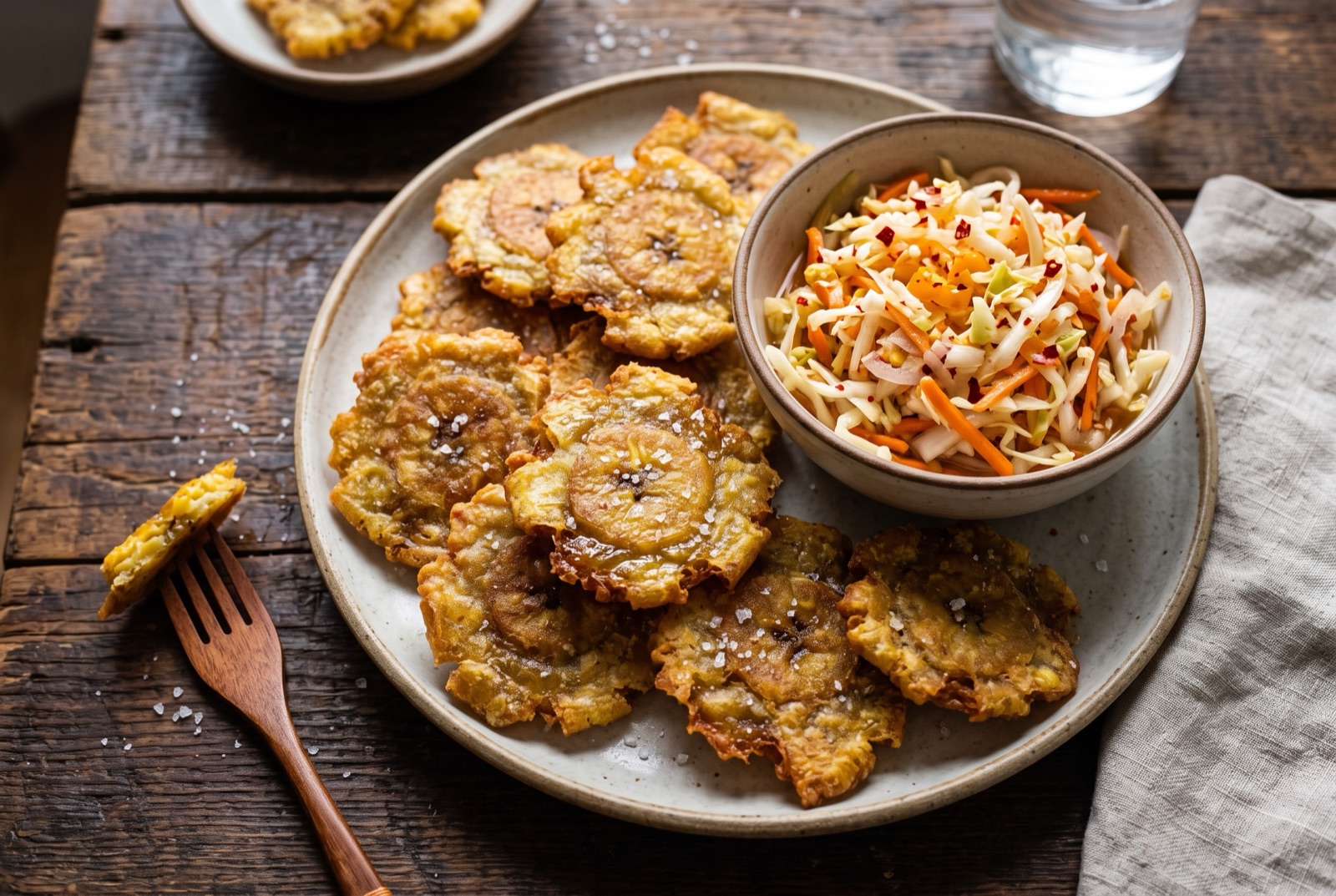
Pikliz, and the rest of a fritay plate — griyo, tasso and pressed plantains.
The story behind Akra.
The name gives the origin away. Akra, akara, accra — the word travels from West Africa, where akara are bean fritters made from peeled black-eyed peas, across the Atlantic to Trinidad, where accra are salt cod fritters, and to Haiti, where it attached to grated root instead. The technique of grating something starchy, seasoning it hard and frying it in spoonfuls is one of the clearest continuities between West African cooking and the food of the Caribbean, and it survived because the ingredients that made it possible grew equally well on both sides.
Malanga is the correct root, and it is worth being specific about because the naming is a mess. What Haitians call malanga is usually Xanthosoma sagittifolium, a cousin of taro (Colocasia) with a hairy brown skin and flesh that ranges from cream to pink-tinged. Both roots grate to a similar sticky pulp and both work here, so the substitution is easy even if the botany is not. What neither of them does is behave like potato: malanga contains far more mucilage, which is what makes the batter cling together without flour or egg.
Because the pulp oxidises quickly, akra batter is made and fried immediately. Left standing it greys, weeps liquid and fries badly, so Haitian cooks grate, season, taste and fry within about ten minutes. This is also why they are a street food rather than a make-ahead one; the vendor grates a batch, fries it out, and grates the next.
They are eaten as a snack rather than a course — mid-morning, mid-afternoon, or as part of a fritay platter with everything else fried alongside. A version with soaked salt cod worked through the batter exists in Haiti too and blurs the line with the Trinidadian accra, which is a fair reminder that these Caribbean fritters are all relatives arguing over the same surname.
Questions, answered.
What is malanga and where can I buy it?
Malanga is a starchy tropical root with rough brown skin and cream to pink flesh, sold in Caribbean, Latin American and African groceries under the names malanga, yautía, taro or dasheen. It grates to a sticky pulp that binds on its own, which is why akra need no flour or egg.
Why is my akra batter turning grey?
Grated malanga oxidises fast once it is exposed to air. It is harmless but unattractive, and the batter also starts weeping liquid, which makes the fritters spit and fall apart. Grate, season and fry within about ten minutes, and add the lime juice as soon as the root is grated to slow the discolouration.
My fritters fell apart in the oil. What went wrong?
Usually the malanga was grated too coarsely, or the batter sat long enough to release water. Grate finely so the pulp is sticky rather than shredded, drain off any liquid that has pooled, and make sure the oil is properly hot at 175°C so the outside sets on contact.
Can I bake or air-fry akra instead?
You can air-fry them at 190°C for about 12 minutes, sprayed with oil and turned halfway, and they will be edible. But the lacy, frilled edges depend on batter spreading in hot oil, so the air-fried version comes out as compact little cakes rather than akra as Haitians would recognise them.
Are akra spicy?
Traditionally yes — the Scotch bonnet is mixed through the batter rather than served alongside, so the heat is built in. Use half a pepper with the seeds removed for a mild batch, and let people add pikliz at the table if they want more. Frying one test fritter lets you check the level before committing.
You might also like.
All recipes →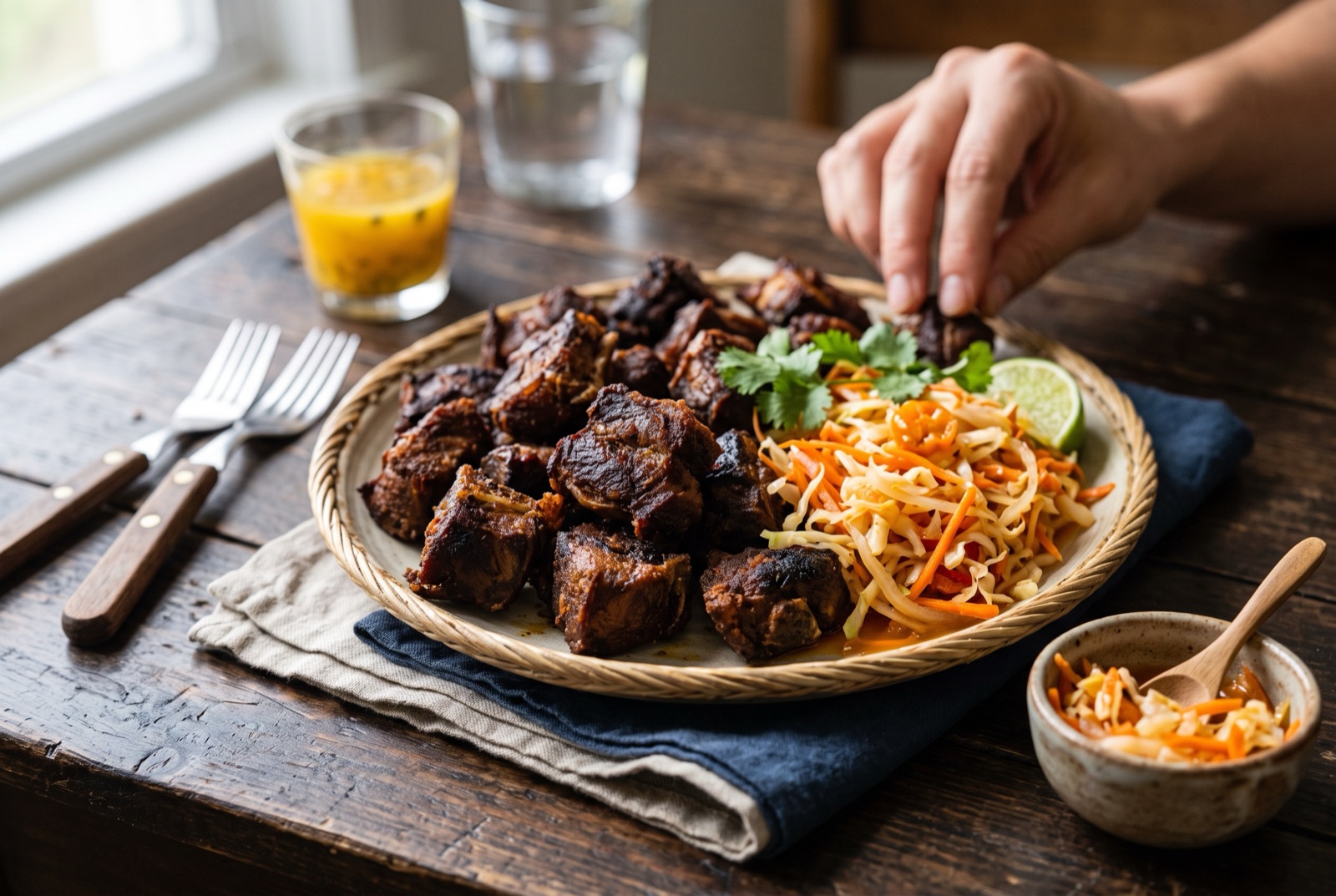
Keep exploring Haiti.
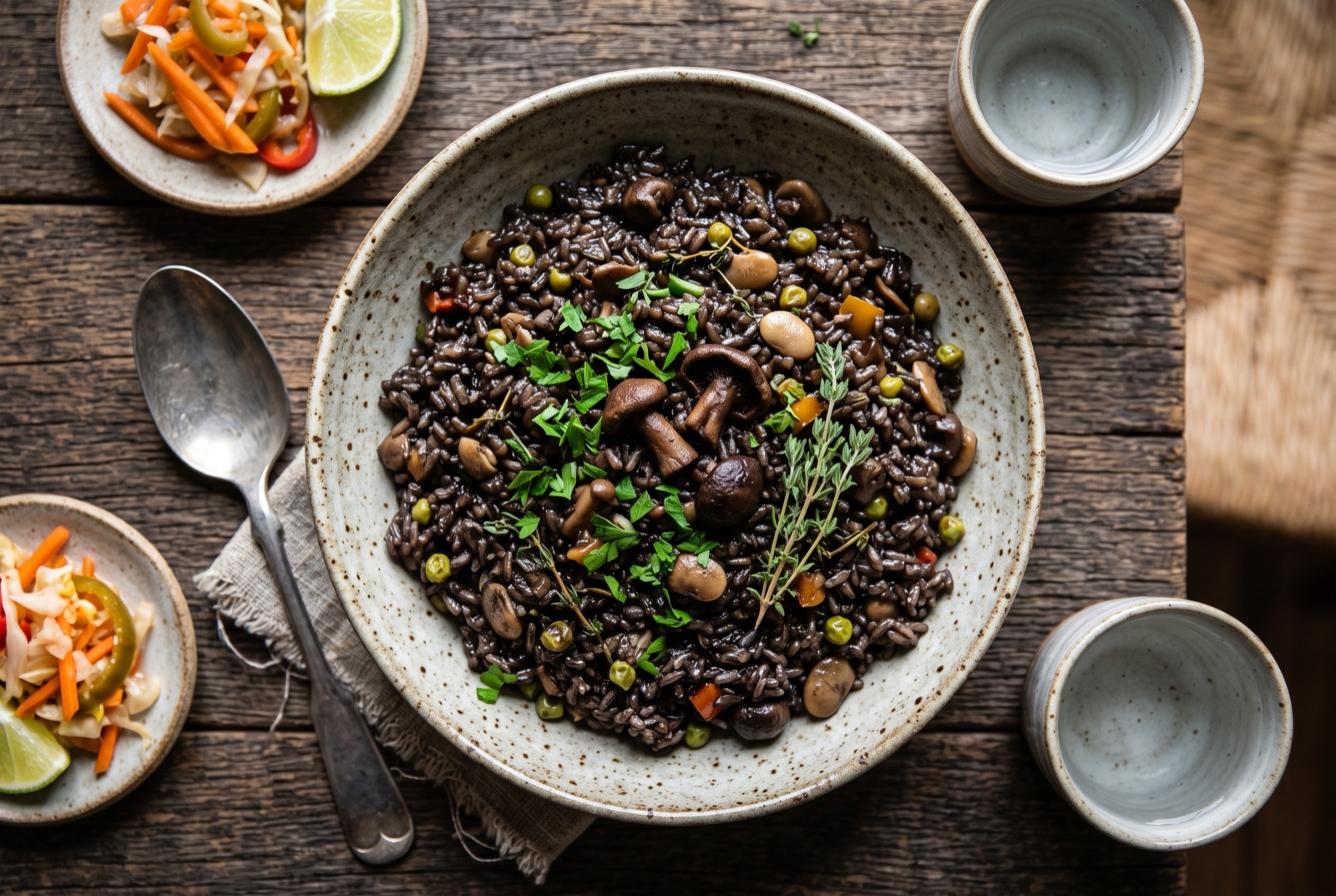
Haiti has 9 more dishes in the atlas — Bannann Peze and Diri Djon Djon, and 7 more.
All Haiti recipes Garlic recipes Parsley recipes Scotch bonnet recipes appetizersnackstreet foodvegetarianvegangluten freedairy freenut freeRecipe by The DishRoute Kitchen · published August 20, 2026 · updated August 20, 2026