Griyo.
Haitian Marinated Fried Pork
Griyo · say it: gree-YOH
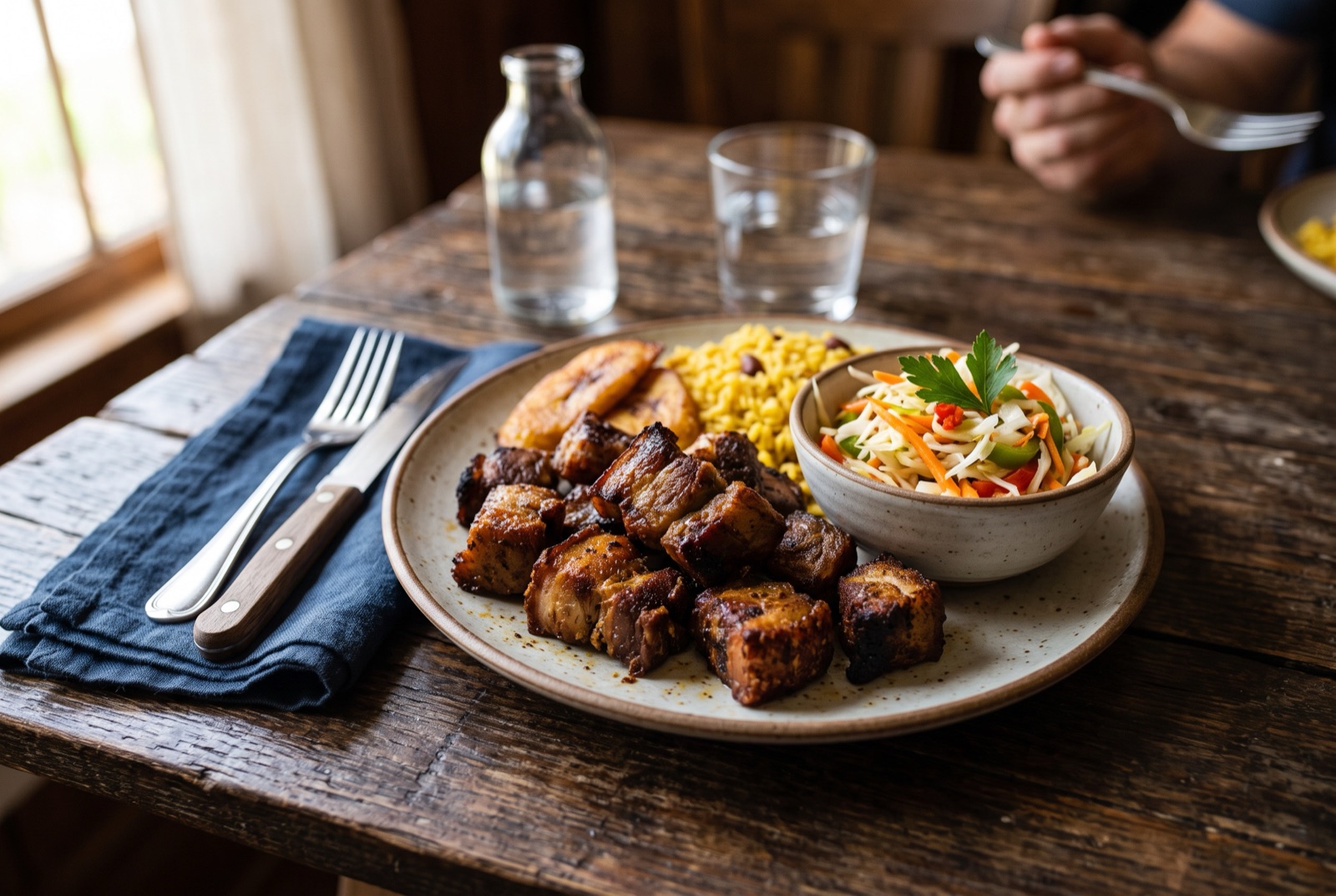
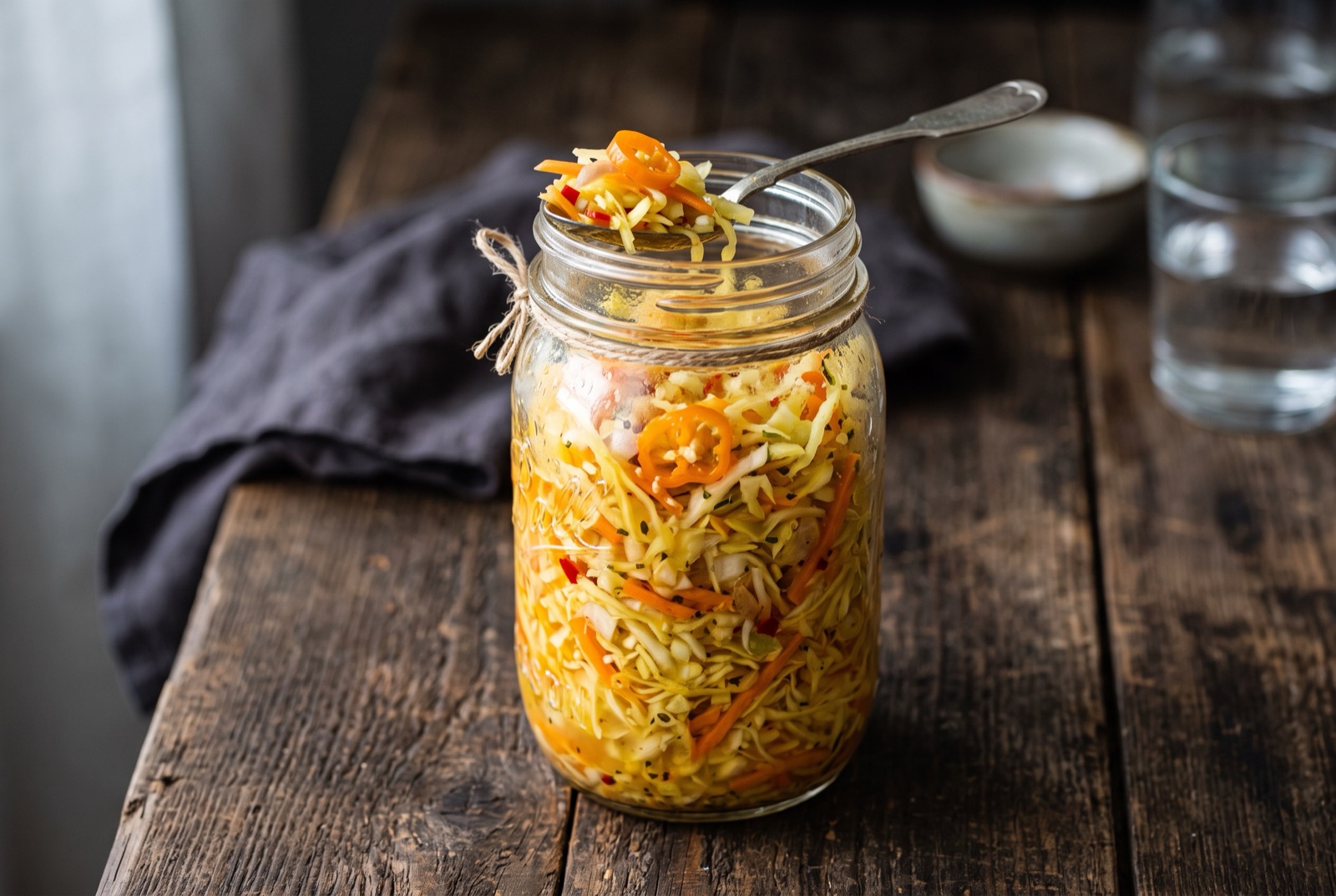
Griyo is pork shoulder cut into fat chunks, marinated for hours in epis and sour orange, simmered in that same marinade until a fork slides in, and then dropped into hot oil so the outside seizes into a rasping, blistered crust while the middle stays juicy. The taste is sharply citric under the richness — garlic, thyme, clove and Scotch bonnet all pushing through the fat — which is why it is never served alone. Pikliz goes on top, pressed plantains and rice go beside it, and the whole plate works on the contrast between crisp, sour and soft. It is the dish Haitians abroad judge a restaurant by.

- Gate
- Haiti
- Prep
- 25 min
- Cook
- 1 hr 20 min
- Total time
- 9 hr 45 min incl. 8 hr rest
- Serves
- 4
- Status
- Medium
- Nutrition / serving · estimated
- Calories 610 kcal
- Protein 44 g
- Carbs 7 g
- Fat 45 g
- Fiber 1 g
- Sodium 880 mg
Why this recipe works.
- Braise-then-fry method done properly, so the seasoning reaches the centre instead of sitting on the surface.
- A full epis marinade built from scratch, with a sour-orange substitution that actually works abroad.
- Clear doneness signals for both stages — when the braise is done and when the crust is right.
- Honest about the oil: shallow-frying in a heavy pan gets you 90% of the street version without a fryer.
Ingredients.
16 itemsFor the pork
For the epis marinade
For cooking
Equipment
- Blender or food processor
- Heavy lidded pot or Dutch oven
- Wire rack
- Deep heavy frying pan
Instructions.
Wash the pork
Put the pork cubes in a large bowl, squeeze over one lime, add a splash of water and rub the meat firmly for a minute. Drain and pat dry — this Haitian pre-wash tightens the surface and takes off the raw-pork smell.
Blend the epis
Blitz the scallions, parsley, garlic, onion, bell pepper, thyme leaves, cloves, olive oil, salt and black pepper with the sour orange and remaining lime juice into a coarse green paste. It should be spoonable, not a smooth purée.
Tip Make double and freeze half in an ice-cube tray — epis is the base of most Haitian savoury cooking.
Marinate overnight
Rub the epis through 1.2 kg of pork until every cube is coated, tuck in the whole Scotch bonnet, cover and refrigerate for at least 4 hours and ideally overnight. Turn the bowl once if you remember.
Braise until tender
Tip the pork and all its marinade into a heavy pot, add the stock, bring to a simmer and cook covered over low heat for 55–65 minutes. It is ready when a fork goes into a cube with no resistance and the meat wants to fall apart if pushed.
Tip Fish out the Scotch bonnet before it bursts unless you want serious heat in the sauce.
Reduce the sauce, dry the meat
Lift the pork onto a wire rack with tongs and leave it to air-dry for 20 minutes. Meanwhile boil the remaining liquid uncovered until it reduces to a glossy, dark sauce that coats a spoon, then strain it and set aside.
Fry hard
Heat the oil to 180°C in a deep heavy pan and fry the pork in two batches for 4–6 minutes, turning once. Pull each piece when the edges are deep mahogany and blistered and the surface sounds hard against the tongs.
Tip Crowd the pan and the temperature crashes — the pork absorbs oil instead of sealing.
Serve hot with pikliz
Drain the griyo briefly on the rack, salt it while it is still steaming, and pile it onto a platter with the reduced sauce spooned over. Serve immediately with pikliz, pressed plantains and rice.
Tips from our kitchen.
- Marinate overnight if you can. Four hours works, but twelve is where the clove and citrus reach the middle of the cube.
- Cut the pork into large 4 cm chunks. Smaller pieces dry out in the second cooking and turn into pork scratchings.
- Dry the braised cubes thoroughly on a rack before frying — wet meat spits violently and steams instead of crisping.
- Reserve the braising liquid. Reduced hard, it becomes a sticky, intensely savoury sauce to spoon over the fried pork.
- Fry in batches with space between the pieces. A crowded pan drops the oil temperature and you get greasy, pale griyo.
- Leave the Scotch bonnet whole in the braise if you want aroma without much heat, and burst it only if you want fire.
Substitutions.
- Sour orange (zoranj si) → Juice of 1 orange plus juice of 2 extra limes
- Seville oranges, if you can find them in winter, are the closest match. The blend is what most diaspora cooks use year-round.
- Scotch bonnet → Habanero, or half a jalapeño for a mild version
- Scotch bonnet has a fruity, almost apricot note that habanero shares; jalapeño gives heat without that perfume.
- Pork shoulder → Pork belly cut into cubes, or boneless country-style ribs
- Belly makes a richer, softer griyo. Loin does not work — it has no fat or collagen and turns to sawdust.
Variations.
- Oven-finished griyo
- Instead of frying, spread the braised cubes on a rack and roast at 220°C for 20–25 minutes, turning once. Less crackle, far less oil, and a fair weeknight compromise.
- Tasso kabrit
- The same twice-cooked logic applied to goat, cut smaller and fried much drier so it turns chewy rather than juicy — a festival plate in its own right.
- Griyo ak sos ti malis
- Served under sos ti malis, a sharp cooked sauce of onion, Scotch bonnet, tomato and sour orange, for people who want the acidity hot rather than pickled.
Storage & reheating.
Braised, undried pork keeps 3 days refrigerated in its liquid and actually improves — fry it to order rather than frying everything at once. Fried griyo keeps 2 days and reheats best spread on a rack in a 200°C oven for 8–10 minutes; a microwave turns the crust to leather. The braised stage freezes well for 3 months in its liquid, so a large batch can be portioned and fried fresh later.
Serve with
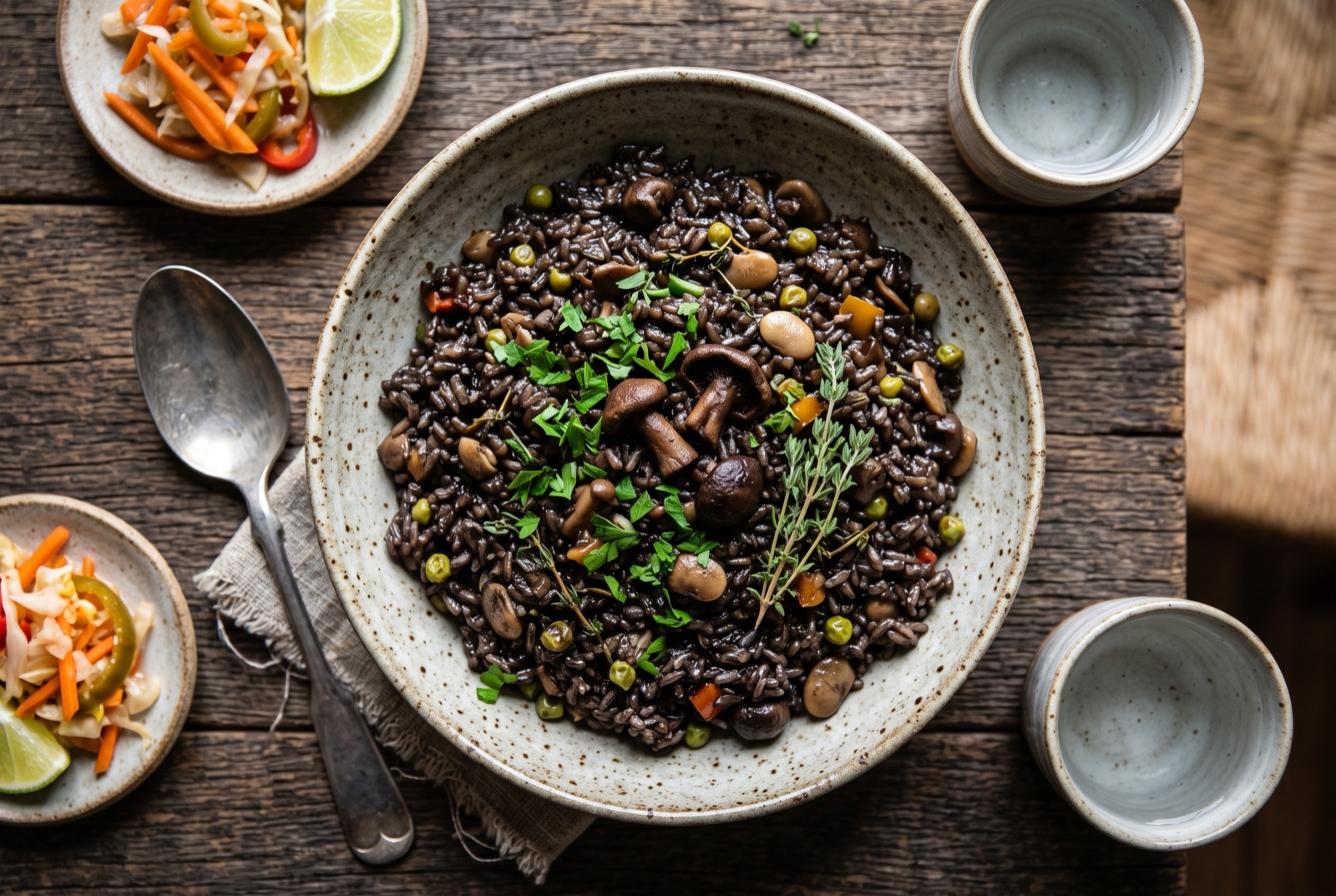
Pikliz, bannann peze and a plate of diri djon djon or rice and red beans — the standard Haitian fritay plate.
The story behind Griyo.
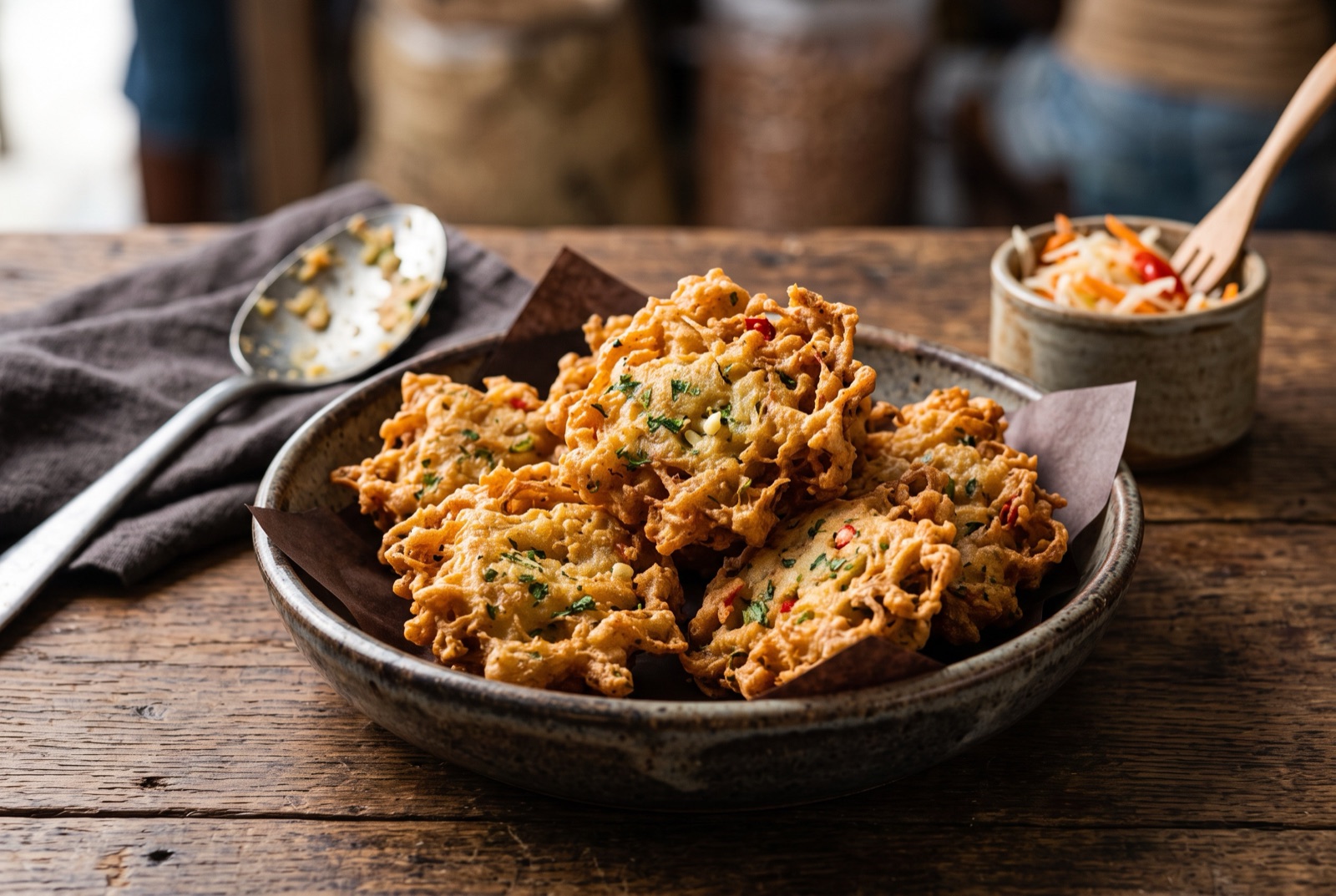
Griyo belongs to the fritay tradition — the fried-food stands that operate on Haitian street corners from mid-morning until the oil runs out. A fritay setup is usually one woman, one deep pan of oil over charcoal, and a rotating cast of griyo, tasso, marinad fritters, akra and bannann peze, all sold by the piece into a paper cone with pikliz heaped on top. It is fast food in the literal sense and celebration food at the same time: the same dish shows up at baptisms, weddings and New Year tables, cooked in far larger pots.
The method itself is old and West African in logic: cook the meat through in liquid first, then fry it dry. Boiling in the marinade does two jobs at once — it tenderises a working cut that would otherwise stay tough, and it drives the seasoning all the way to the centre instead of leaving a flavoured shell around bland pork. Frying afterwards is purely about texture. Cooks who skip the braise and fry raw pork end up with something chewy and one-dimensional, which is the most common mistake made outside Haiti.
Sour orange, zoranj si, is the other non-negotiable. It is a bitter, thin-skinned citrus closer to Seville orange than to the sweet oranges sold in most supermarkets, and Haitian cooks use it both as a wash for the raw meat and as the acid in the marinade. Where it is not available, a mix of orange and extra lime juice gets close enough that no one will complain, though the bitterness is gentler.
On the plate, griyo almost never travels alone. The standard combination is griyo, bannann peze, diri kole ak pwa or diri djon djon, a spoonful of sos pwa, and pikliz — enough vinegar and Scotch bonnet to reset the palate between bites of fried pork. Skipping the pikliz is technically allowed and practically a mistake.
Questions, answered.
What is epis and can I buy it?
Epis is the Haitian green seasoning base — parsley, scallions, thyme, garlic, bell pepper, onion, Scotch bonnet, oil and sour citrus blended into a coarse paste. Haitian and Caribbean groceries sell it in jars, and it freezes well in ice-cube trays, but blending your own takes five minutes and tastes considerably fresher.
Why do I have to cook the pork twice?
The first cooking is a braise in the marinade: it tenderises the shoulder and carries the seasoning to the centre of each cube. The second is a short, hot fry that does nothing but build the crust. Frying raw marinated pork gives you a chewy, hollow-tasting result, which is the single most common error with this dish.
Can I make griyo without deep-frying?
Yes. After braising and drying the cubes, roast them on a rack at 220°C for 20–25 minutes, or air-fry at 200°C for about 15 minutes, turning halfway. You lose some of the shattering crust that hot oil gives, but the flavour is intact and the dish is much lighter.
My griyo came out dry and tough. What went wrong?
Almost always one of three things: the cubes were cut too small, the braise was stopped before the collagen softened, or the fry went on too long. Pork shoulder needs to be genuinely fork-tender before it hits the oil, and the fry should last only 4–6 minutes — just long enough to colour the outside.
How spicy is griyo supposed to be?
The pork itself is mildly warm rather than hot; the heat is meant to come from the pikliz spooned over it at the table. Leaving the Scotch bonnet whole in the braise perfumes the meat without much burn, and each diner adjusts their own plate — which is how it is eaten in Haiti.
You might also like.
All recipes →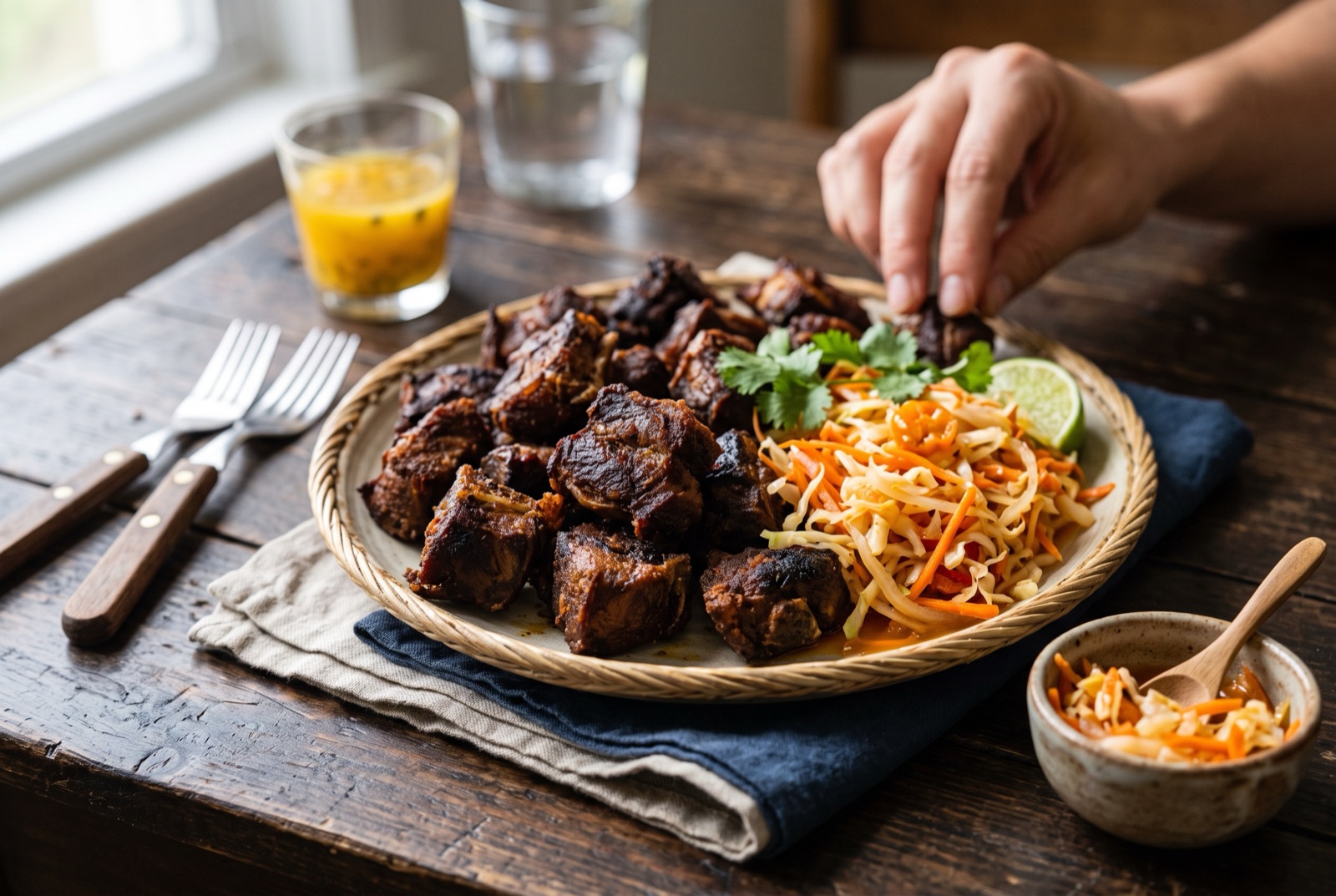
Keep exploring Haiti.
Haiti has 9 more dishes in the atlas — Akra and Bannann Peze, and 7 more.
Recipe by The DishRoute Kitchen · published August 20, 2026 · updated August 20, 2026