Pikliz.
Haitian Spicy Pickled Cabbage Relish
Pikliz · say it: PEEK-leez
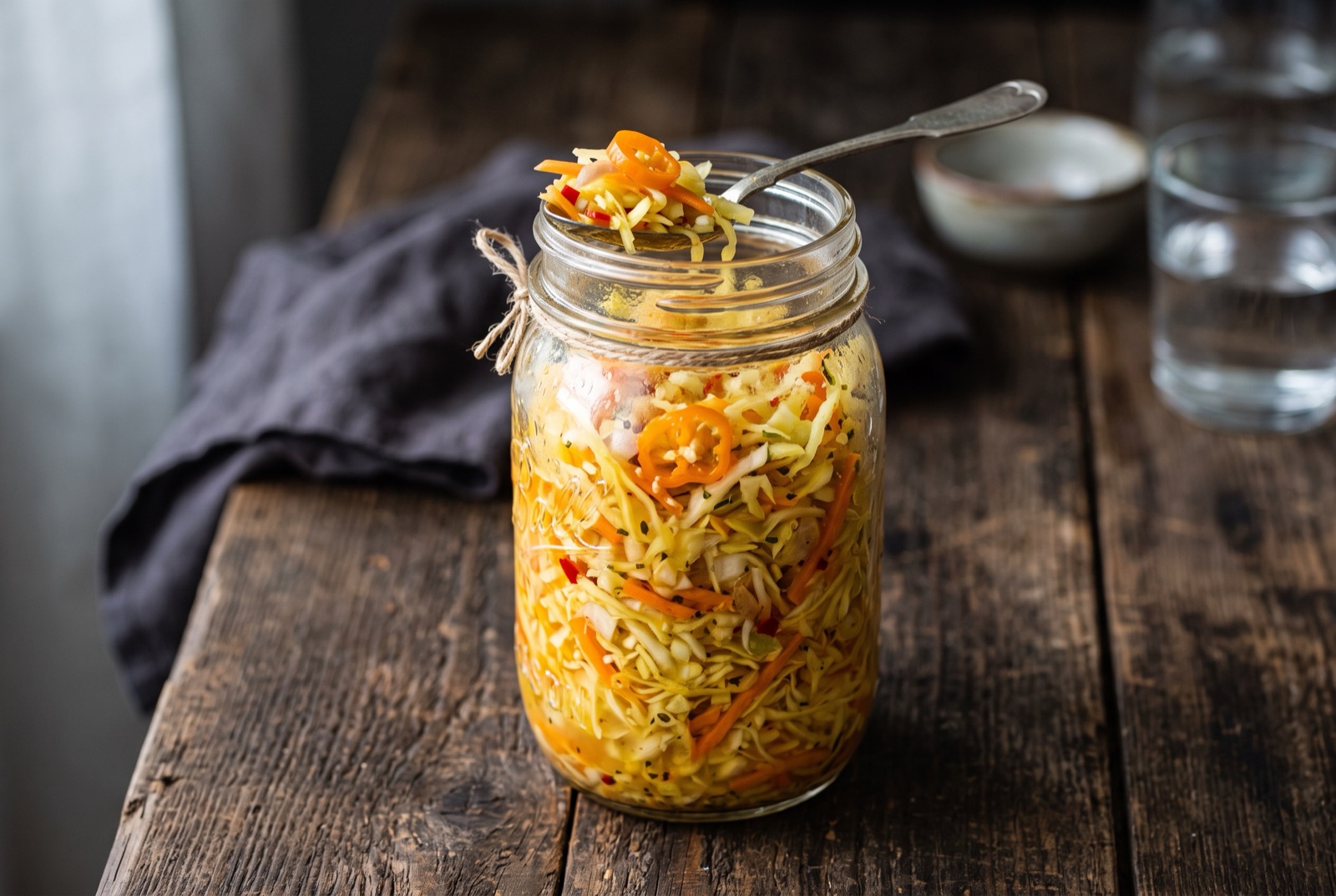
Pikliz is a raw pickle: cabbage and carrot shredded fine, tossed with shallot, Scotch bonnet, cloves and thyme, packed into a jar and covered with vinegar and lime juice. Nothing is cooked and nothing is sweetened, so it stays crunchy and comes out sharp, salty and genuinely hot. Its job on a Haitian table is structural rather than decorative — it sits next to griyo, tasso, fried fish and bannann peze and resets your mouth between bites of fried food. Twenty minutes of shredding buys you a jar that improves for a week and lasts a month, which makes it one of the best returns on effort in Caribbean cooking.

- Gate
- Haiti
- Prep
- 25 min
- Cook
- 0 min
- Total time
- 24 hr 25 min incl. 24 hr rest
- Serves
- 12
- Status
- Easy
- Nutrition / serving · estimated
- Calories 25 kcal
- Protein 1 g
- Carbs 5 g
- Fat 0 g
- Fiber 2 g
- Sodium 320 mg
Why this recipe works.
- Correct ratio of vinegar to lime, so it is sour without stripping the enamel off your teeth.
- Raw-pack method that keeps the cabbage crunchy instead of turning it into limp sauerkraut.
- Clear guidance on heat control, including exactly what to do with the Scotch bonnet seeds.
- Explains how to use the leftover pickling liquid, which Haitian cooks never throw away.
Ingredients.
12 itemsFor the jar
For the brine
Equipment
- Sharp knife
- Large mixing bowl
- Box grater or julienne peeler
- 1 litre glass jar with a tight lid
Instructions.
Shred the vegetables
Cut the cabbage into the finest shreds you can manage with a sharp knife, then grate or julienne the carrots and slice the shallots and bell pepper thinly. Everything should be roughly the same fineness so it packs evenly.
Tip Knife-shredded cabbage stays crisp; a food processor bruises it and the pickle goes limp.
Salt and drain
Toss the shredded vegetables with the salt in a large bowl and leave for 15 minutes, then tip them into a colander and press out the liquid that has collected. This stops the brine being watered down in the jar.
Add the aromatics
Return the drained vegetables to the bowl and mix through the sliced Scotch bonnets, garlic, thyme leaves, whole cloves and peppercorns until the pepper is evenly distributed rather than sitting in one pocket.
Tip Wear gloves for the Scotch bonnets and wash the board immediately afterwards.
Pack the jar
Push the mixture into a clean 1 litre jar in layers, pressing each one down firmly with the back of a spoon so the vegetables compact and there are no large air pockets. Fill to about 3 cm below the rim.
Cover with lime and vinegar
Pour in the lime juice, then top up with white vinegar until everything is fully submerged, tapping the jar to release trapped bubbles. Any vegetable sitting above the liquid will spoil, so press it back under.
Rest before eating
Seal the jar and refrigerate for at least 24 hours, and preferably 3 days, before opening. The cabbage should still snap between the teeth while tasting sour, salty and hot all the way through.
Tips from our kitchen.
- Shred the cabbage by hand with a knife rather than a food processor — processed cabbage bruises and goes soggy.
- Salt the vegetables and let them stand 15 minutes, then drain; this draws out water so the vinegar is not diluted.
- Wear gloves when handling Scotch bonnets, and do not touch your face for a good while afterwards.
- Pack the jar tightly and press down before adding liquid, so nothing floats above the surface and spoils.
- Give it at least 24 hours before eating, and 3 days for the heat to distribute evenly through the jar.
- Save the leftover pickling vinegar when the vegetables are gone — it seasons stews, marinades and bean sauce.
Substitutions.
- Scotch bonnet → Habanero, or 3–4 bird's eye chiles
- Habanero is the closest for both heat and fruitiness. Bird's eye brings the burn but not the aroma.
- Shallots → Red onion, thinly sliced
- Red onion is sharper and slightly more assertive but works fine and is what many households use.
- White vinegar → Apple cider vinegar
- Cider vinegar gives a rounder, fruitier pickle. White vinegar is standard because it is neutral and lets the pepper lead.
Variations.
- Mild pikliz
- Seeds and membranes removed from the peppers and only one Scotch bonnet used for the whole jar — still fragrant, but safe for a table with children at it.
- With green papaya
- Shredded unripe papaya added alongside the cabbage, giving a firmer, slightly slippery texture that holds crunch for longer.
- Pikliz with bell pepper
- Strips of red and green bell pepper added for colour and a mild sweetness that balances a very hot batch.
Storage & reheating.
Pikliz keeps a month refrigerated in a sealed jar, though the crunch fades after about three weeks. Always use a clean fork to take some out, and keep the vegetables submerged under the liquid — anything sitting above the surface will spoil first. It does not need canning or processing, and it should not be frozen: the cabbage collapses completely on thawing.
Serve with
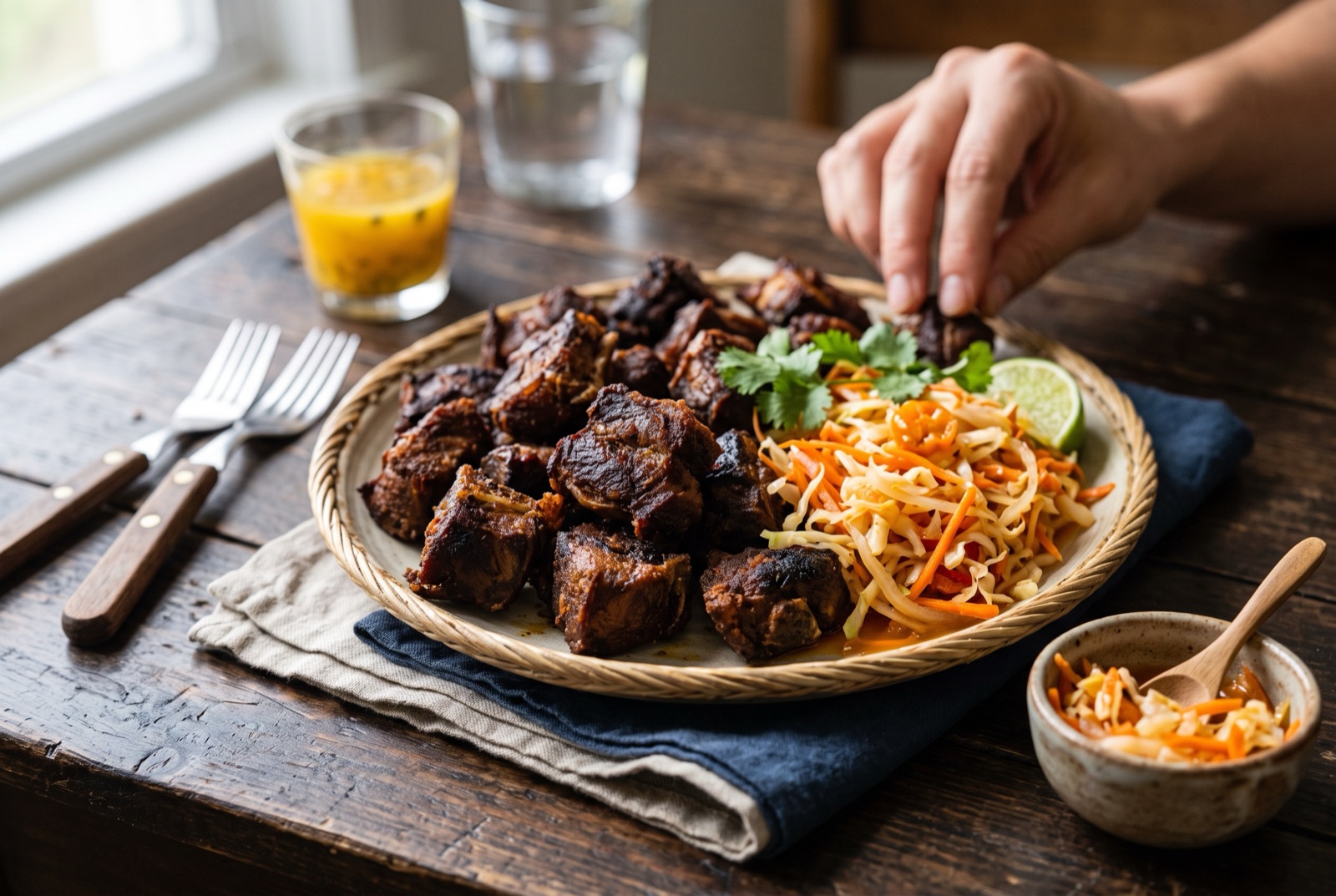
Griyo, tasso kabrit, fried fish, pate kode and bannann peze — anything fried, which in Haiti is most things.
The story behind Pikliz.
Every fried-food culture develops something acidic to eat alongside, and pikliz is Haiti's answer. It descends from the same European pickling habit that produced piccalilli and the French pickled crudités, but the balance is different: no sugar, no mustard, and a quantity of Scotch bonnet that would be unthinkable in either. What arrived as a preservation technique became a condiment defined by heat, and Haitians treat it as a fixed part of the plate rather than an optional garnish.
On the street it is inseparable from fritay. The vendor fries the griyo, the tasso, the akra and the plantains; the jar of pikliz sits on the counter, and a spoonful goes into every paper cone. Nobody asks whether you want it. In homes a jar lives permanently in the fridge door, topped up as it empties, and the vinegar left behind after the vegetables are gone gets used to season stews and marinades — Haitian cooks call that liquid too valuable to pour away.
The heat level is not standardised and is often mischaracterised abroad. Household pikliz can be moderate, made with one or two peppers for a big jar, while street versions can be brutal. What is consistent is that the heat is fruity rather than flat, because Scotch bonnet carries a distinct apricot-like aroma alongside its capsaicin. Removing the seeds and membranes tames it considerably without losing that perfume, which is the sensible move if you are cooking for a mixed table.
Pikliz gets better with time up to a point. On day one it tastes like salted cabbage in vinegar; by day three the pepper has moved through the whole jar and the vegetables have softened just enough to yield. Past three or four weeks the crunch fades, at which point the remaining vegetables are best chopped into a stew and the jar started again.
Questions, answered.
How long before pikliz is ready to eat?
You can eat it after 24 hours, but it is noticeably better at 72. The first day it tastes mostly of vinegar and salt; by day three the Scotch bonnet has spread through the whole jar and the vegetables have softened just enough to bend without going limp.
How do I make pikliz less spicy?
Cut the peppers open and scrape out the seeds and the pale membrane, where most of the capsaicin sits, then use one Scotch bonnet instead of three. You keep the fruity aroma that defines the pickle and lose most of the burn. You can also leave a pepper whole and unpierced for aroma only.
Why is my pikliz soggy instead of crunchy?
Either the cabbage was shredded in a food processor, which bruises the cells, or it was not salted and drained before packing. Salting for 15 minutes pulls out water that would otherwise dilute the vinegar and soften the vegetables from the inside. Hand-shred with a sharp knife for the best texture.
Does pikliz need to be refrigerated?
Yes, once opened. This is a fresh refrigerator pickle, not a canned preserve — nothing is heat-processed, so it relies on acidity and cold. Kept sealed and cold with all the vegetables under the liquid, it is good for about a month.
What do I do with the leftover liquid?
Do not throw it away. Haitian cooks use the spicy pickling vinegar to season bean sauce, to sharpen stews at the end of cooking, to deglaze a pan of fried meat, or as the acid in a marinade. It is essentially a hot pepper vinegar with cabbage and clove behind it.
You might also like.
All recipes →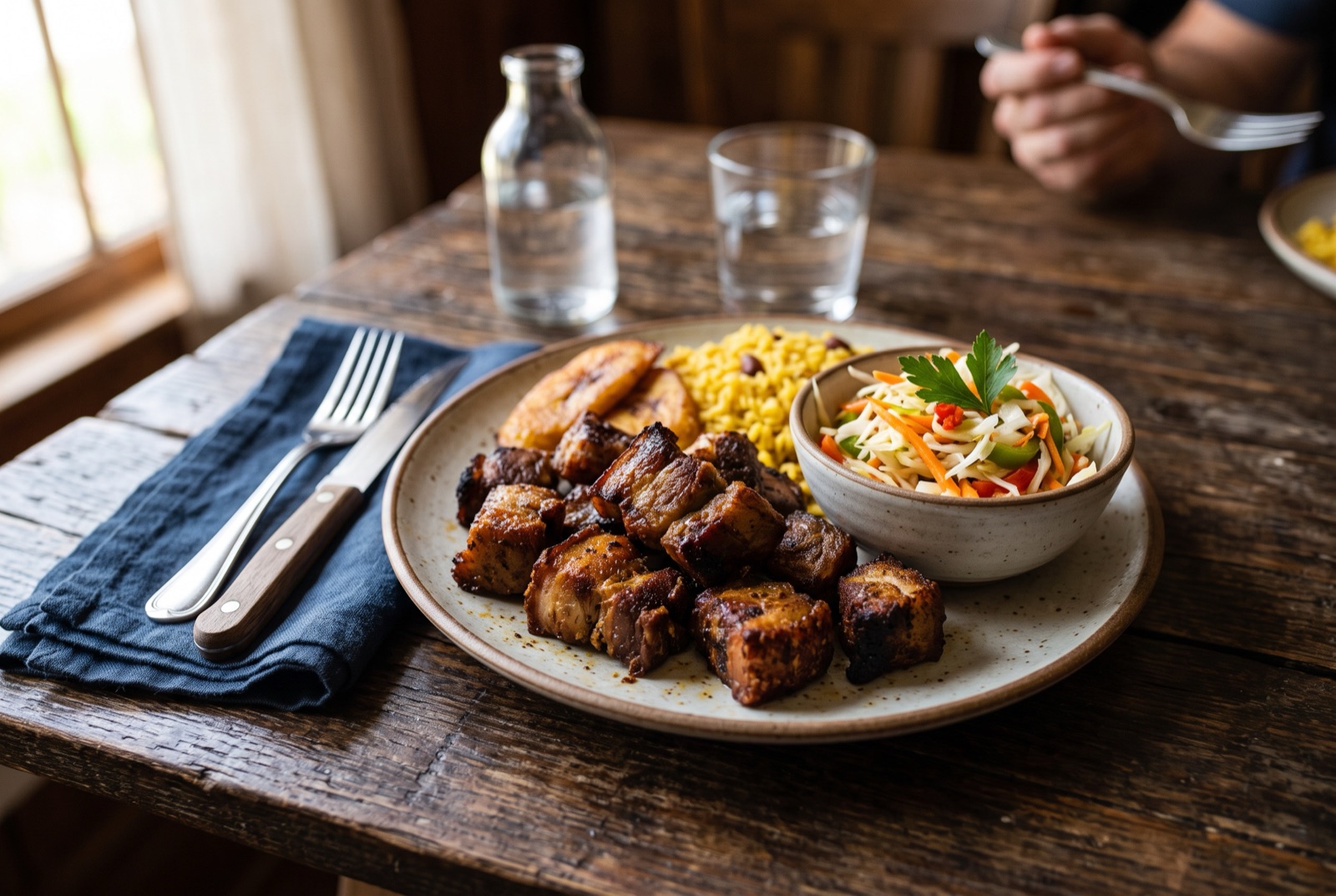
Keep exploring Haiti.
Haiti has 9 more dishes in the atlas — Akra and Bannann Peze, and 7 more.
All Haiti recipes Cabbage recipes Carrot recipes Scotch bonnet recipes saucesidevegetarianvegangluten freedairy freenut freeRecipe by The DishRoute Kitchen · published August 20, 2026 · updated August 20, 2026