Soup Joumou.
Haitian Independence Squash Soup
Soup joumou · say it: soop zhoo-MOO
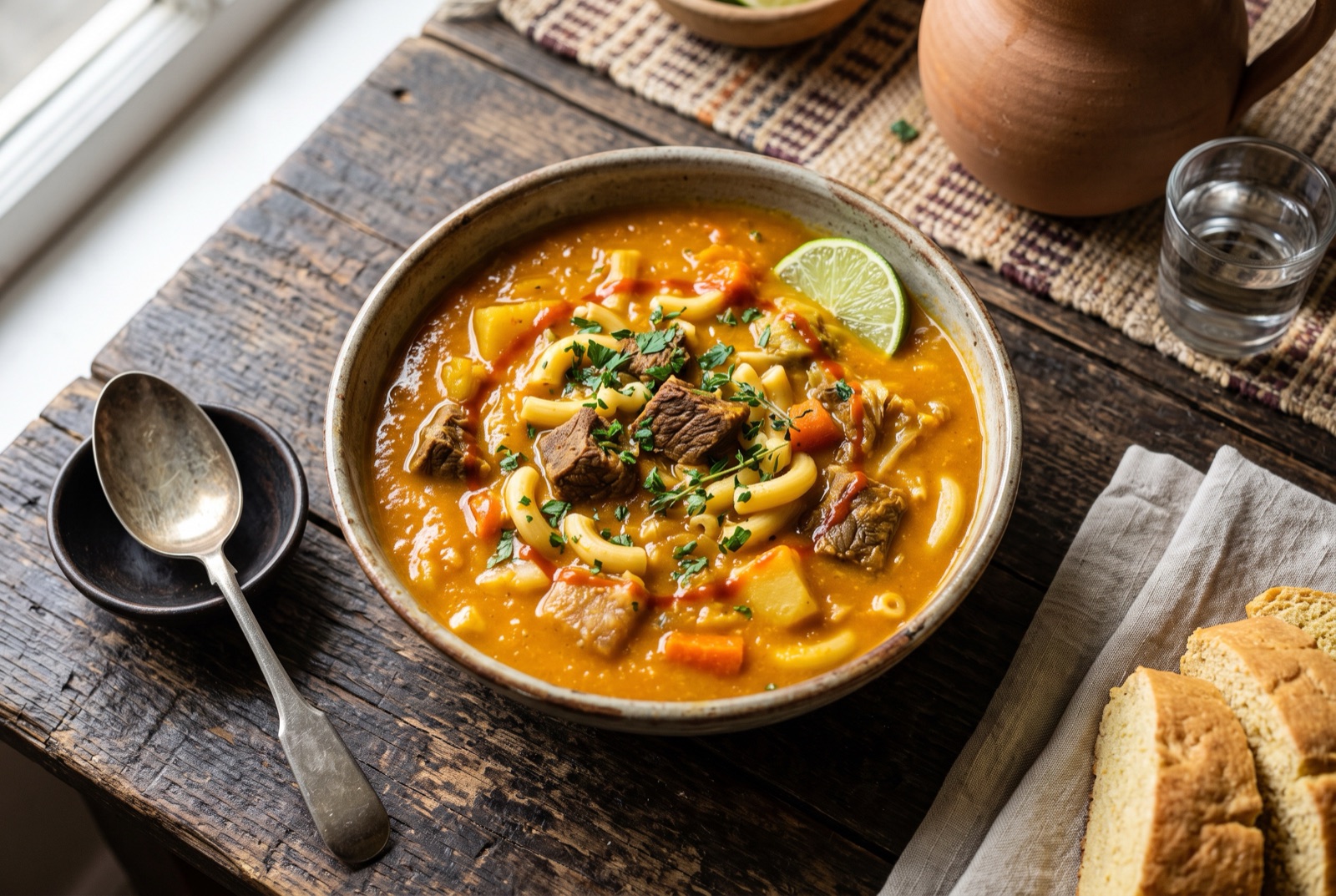
Soup joumou is a thick, golden squash soup built on giraumon — a firm Caribbean pumpkin — pureed into the broth so the whole pot turns velvety, then loaded with beef, potato, carrot, cabbage, turnip and short pasta until a spoon almost stands in it. It tastes rich and gently sweet from the squash, savoury from the beef and its epis marinade, sharpened at the end with lime and Scotch bonnet. Every Haitian household makes it on 1 January, and many make it on Sundays too. UNESCO added it to its intangible cultural heritage list in 2021, which is unusual recognition for what is, at heart, a bowl of soup made from what the garden had.

- Gate
- Haiti
- Prep
- 30 min
- Cook
- 2 hr
- Total time
- 3 hr 30 min incl. 1 hr rest
- Serves
- 6
- Status
- Medium
- Nutrition / serving · estimated
- Calories 420 kcal
- Protein 30 g
- Carbs 44 g
- Fat 13 g
- Fiber 7 g
- Sodium 700 mg
Why this recipe works.
- Squash pureed into the broth rather than left in chunks — that is what gives the soup its body.
- Beef marinated in epis first, so the meat carries flavour instead of only donating it.
- Vegetables added in stages so nothing collapses while the potatoes are still hard.
- States plainly what is documented history and what is family tradition, without inventing either.
Ingredients.
19 itemsFor the beef
For the soup
To finish
Equipment
- Large stockpot
- Blender or immersion blender
- Ladle
- Fine sieve (optional)
Instructions.
Wash and marinate the beef
Rub the beef with the juice of one lime and a little water, rinse and dry it, then coat it thoroughly in the epis. Cover and leave in the fridge for an hour, or overnight if you are cooking on New Year's morning.
Start the beef
Put the beef and its marinade in a large stockpot with 1.5 litres of the water, the cloves, thyme and crushed garlic. Bring to a simmer and cook covered for 45 minutes, skimming any grey foam that rises in the first ten minutes.
Cook and puree the squash
While the beef simmers, boil the squash in the remaining litre of water until a knife slides through with no resistance, about 20 minutes. Blend it with its cooking water until completely smooth — it should look like thick orange cream.
Tip Blend in batches and leave the lid vented; hot squash builds pressure fast.
Combine and add the hard vegetables
Pour the squash puree into the beef pot and stir well, then add the potato, carrot, turnip, onion, celery and leek. Simmer uncovered for 25 minutes, stirring the bottom occasionally so the squash does not catch.
Add cabbage and chile
Stir in the shredded cabbage and drop in the whole Scotch bonnet, then cook for another 15 minutes until the cabbage is soft and the broth has thickened enough to coat the back of a spoon.
Tip Do not pierce the Scotch bonnet unless you want the whole pot fiery.
Add the pasta
Drop in the pasta and cook for a final 8–10 minutes until just tender. If the soup has become too thick to move easily under the ladle, loosen it with a cup of hot water.
Finish and serve
Fish out the Scotch bonnet, thyme stalks and cloves, stir in the butter if using, and season with salt and pepper. Squeeze in the juice of two limes off the heat, taste again, and ladle into bowls with a chunk of beef in each.
Tips from our kitchen.
- Use a dense squash — giraumon, calabaza or kabocha. Watery varieties give a thin soup no amount of simmering fixes.
- Puree the cooked squash with some broth in a blender, then return it; mashing in the pot leaves stringy fibres.
- Add the pasta in the final 10 minutes only, or it swells overnight and turns the leftovers into porridge.
- Keep the Scotch bonnet whole and floating; lift it out before serving unless your table wants real heat.
- Season at the end, not the start — the soup reduces considerably and salt added early concentrates too far.
- A squeeze of lime just before serving is not optional; it cuts the sweetness and makes the whole pot taste finished.
Substitutions.
- Giraumon squash → Calabaza, kabocha or red kuri squash
- All three have the dense, dry flesh the soup needs. Butternut is acceptable but sweeter and wetter, so use a little less water.
- Beef shank → Beef chuck, oxtail, or a mixture
- Shank and oxtail both bring collagen that thickens the broth. Lean cuts like sirloin add nothing and go dry.
- Rigatoni → Vermicelli, broken spaghetti or small macaroni
- Households genuinely disagree on this. Any short or broken pasta works; add it late whichever you choose.
Variations.
- Meatless soup joumou
- Made with vegetable stock and no beef, leaning on the squash, epis and root vegetables. Increasingly common and perfectly good, though not the New Year version.
- With dumplings
- Small flour-and-water dumplings (doumbrey) rolled between the palms and dropped in for the last 15 minutes, adding chew and making the pot stretch further.
- Extra-thick Sunday pot
- More squash, less water and longer reduction, giving a soup closer to a stew that gets eaten with a fork as much as a spoon.
Storage & reheating.
Soup joumou keeps 4 days refrigerated and thickens as it sits — thin it with water or stock when reheating and check the salt again. Reheat gently over medium-low heat, stirring, since the squash puree can catch. To freeze, leave the pasta out entirely and add it fresh on reheating; the base freezes well for 3 months while cooked pasta turns to mush.
Serve with
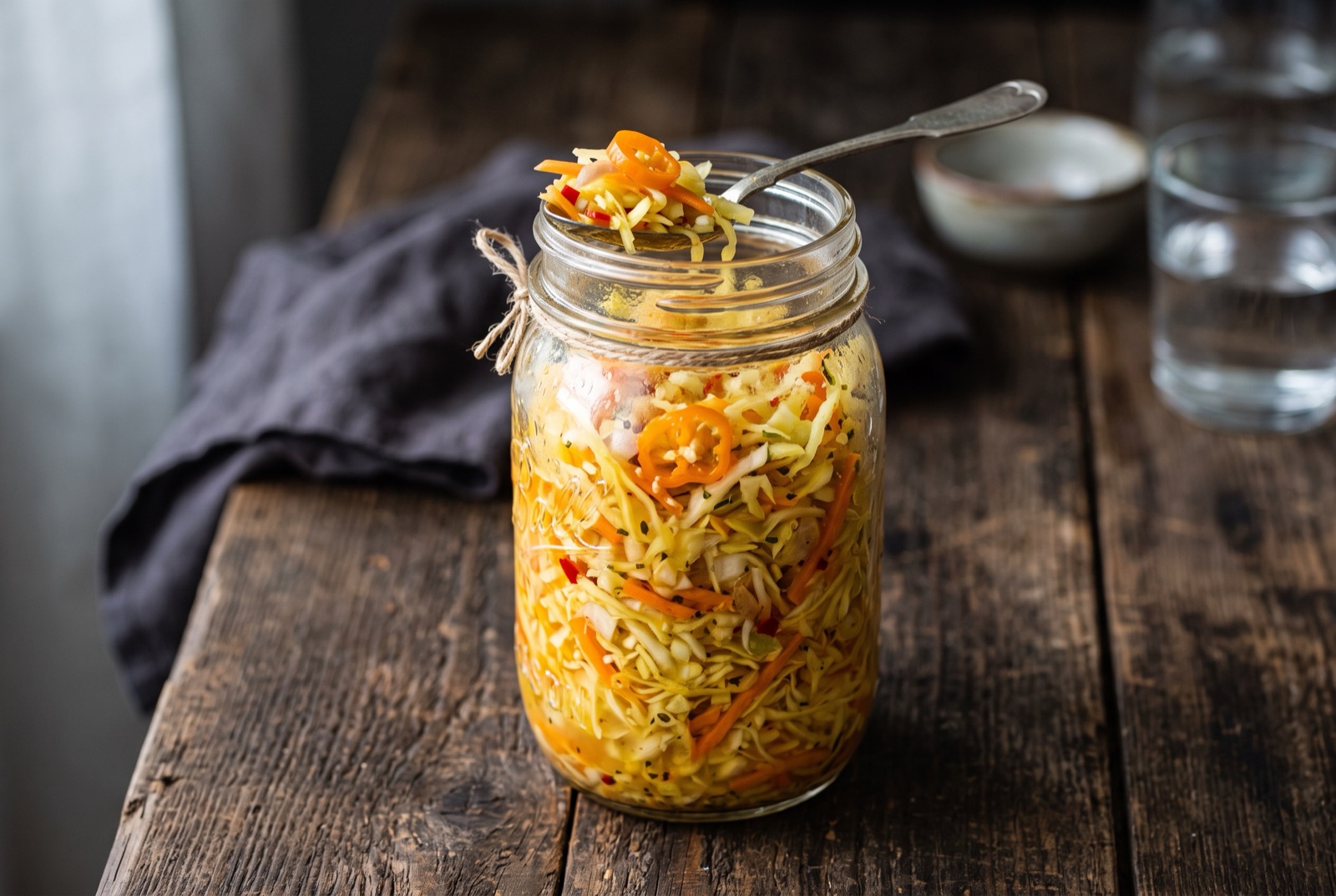
Crusty bread for dipping, and hot pepper sauce or pikliz on the side for those who want it fiery.
The story behind Soup Joumou.
The soup carries a specific meaning. Haiti declared independence on 1 January 1804 after the only successful large-scale slave revolt in modern history, and soup joumou has been eaten on that date ever since as an act of remembrance. The account passed down in Haitian families is that under French colonial rule enslaved people grew and prepared the squash but were not permitted to eat the soup made from it, and that after independence it became the dish of freedom — drunk publicly, shared with neighbours, given away to anyone passing. Historians treat the specific prohibition as oral tradition rather than documented law, and it is honest to say so; what is not in doubt is that the association with 1804 is real, continuous and central to how Haitians understand the dish.
That is why the soup is not just cooked but distributed. On New Year's morning pots go out to neighbours, to church, to people who did not manage to make their own. Households compete quietly over whose is best, and the diaspora keeps the practice alive in Brooklyn, Miami and Montreal exactly as it happens in Port-au-Prince. In December 2021 UNESCO inscribed soup joumou on the Representative List of the Intangible Cultural Heritage of Humanity — the first Haitian element inscribed — which Haitians received as recognition of the history behind the bowl, not the recipe in it.
The construction is French in bones and Caribbean in ingredients: a marinated beef braise, a vegetable soup base, and pasta added at the end, all bound by pureed squash instead of cream or roux. Giraumon is the correct squash — dense, deep orange, low in water — and calabaza or kabocha are the closest supermarket stand-ins. Butternut works but gives a thinner, sweeter soup.
Recipes vary household to household in ways people defend firmly: some add celery and leek, some insist on turnip, some finish with a spoonful of butter, some put in vermicelli and others rigatoni. What is constant is the squash puree, the beef, the clove and thyme, and the lime squeezed in at the end.
Questions, answered.
Why do Haitians eat soup joumou on 1 January?
It marks Haitian independence, declared on 1 January 1804. Family tradition holds that enslaved people prepared the squash soup for French colonists but were barred from eating it, so drinking it freely became a symbol of liberation. Historians regard that specific prohibition as oral tradition, but the link between the soup and independence day is unbroken and deeply held.
What kind of squash is giraumon and what can I use instead?
Giraumon is a dense, deep-orange Caribbean pumpkin with dry flesh that purees smoothly without watering down the broth. Calabaza, kabocha and red kuri are the closest supermarket alternatives. Butternut works in a pinch but is sweeter and wetter, so reduce the added liquid slightly.
Can soup joumou be made vegetarian?
Yes. Build it on vegetable stock with the same epis, thyme, cloves and Scotch bonnet, and let the squash and root vegetables carry the body. It will taste lighter than the beef version. Note that the New Year tradition specifically involves the beef soup, so most households keep meat in on 1 January.
Why did my soup turn out thin?
Usually too much liquid, a watery squash variety, or squash that was left in chunks instead of pureed. The fix is to blend more of the cooked squash into the broth and simmer uncovered until it reduces. Potato mashed into the pot also thickens it without changing the flavour.
When exactly should the pasta go in?
In the last 8 to 10 minutes, once everything else is tender. Pasta added earlier absorbs broth, swells, and keeps swelling in the fridge, so leftovers end up stodgy. If you plan to keep some of the soup, cook the pasta separately and add it to each bowl.
You might also like.
All recipes →
Keep exploring Haiti.
Haiti has 9 more dishes in the atlas — Akra and Bannann Peze, and 7 more.
Recipe by The DishRoute Kitchen · published August 20, 2026 · updated August 20, 2026