Halloumi sti Schara.
Grilled Cypriot Cheese with Lemon and Mint
Χαλλούμι στη σχάρα · say it: hah-LOO-mee stee SHAH-rah
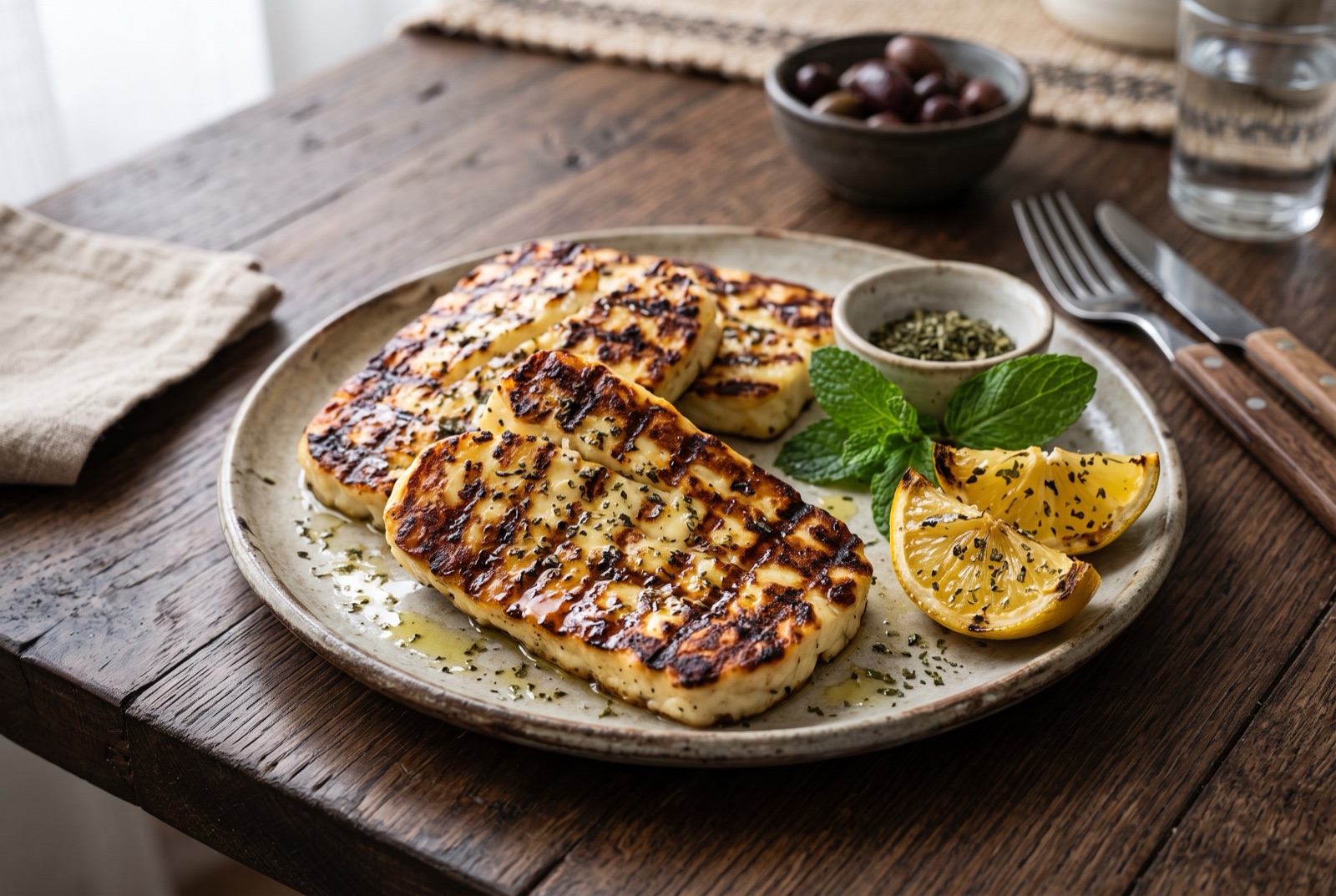
Grilled halloumi is a two-minute dish with a very small margin for error. The cheese is brined, made from sheep and goat milk, and folded around dried mint, and its unusually high melting point means it browns and softens without collapsing — provided you get it off the heat before the interior dries out and turns rubbery. Done right, each slice has a dark, brittle, faintly caramelised crust and a warm, yielding, slightly squeaky centre, and the salt is pulled into line by a hard squeeze of lemon the moment it leaves the pan. On the island it opens practically every meze table, and Cypriots also eat it cold at breakfast with watermelon, which is a better combination than it sounds.

- Gate
- Cyprus
- Prep
- 10 min
- Cook
- 6 min
- Total time
- 16 min
- Serves
- 4
- Status
- Easy
- Nutrition / serving · estimated
- Calories 340 kcal
- Protein 24 g
- Carbs 3 g
- Fat 26 g
- Sodium 1200 mg
Why this recipe works.
- Gets the two variables right — thickness and timing — instead of just saying "grill the halloumi".
- Dries and scores the slices so the crust forms fast, before the inside has time to squeak itself dry.
- Uses a dry pan rather than oiled, which is how it is done in Cyprus and gives a cleaner char.
- Handles the salt honestly, with a soak option for cheese that is too aggressive out of the packet.
Ingredients.
7 itemsEquipment
- Cast-iron griddle pan or charcoal grill
- Sharp knife
- Kitchen paper
Instructions.
Slice and dry the cheese
Cut 450 g of halloumi into slices a centimetre thick and lay them on kitchen paper. Blot the tops as well and leave for five minutes until the surfaces look matte — any brine left on the cheese will steam instead of browning.
Tip If your block tastes very salty, soak the slices in cold water for 10 minutes first, then dry them just as carefully.
Score the slices
Cut a shallow crosshatch about 2 mm deep into one face of each slice with the tip of a knife. This gives the heat more surface to grab and produces a darker, faster crust before the interior has time to dry out.
Heat the pan properly
Set a cast-iron griddle over high heat with no oil and leave it for three or four minutes, until a flicked drop of water skitters and vanishes instantly. A pan that is merely warm will glue the cheese to it.
Grill fast
Lay the slices scored-side down in a single layer and leave them completely alone for 90 seconds to 2 minutes, until deep golden bars have formed and the edges look glassy. Flip once and give the second side the same. Press one gently — it should still feel soft and give under your finger.
Tip Work in batches. Crowding the griddle drops its temperature and you get pale, sweaty cheese instead of char.
Dress and serve immediately
Pile the slices onto a warm plate, squeeze the lemon over while they are still hissing, then scatter with the dried mint, cracked pepper and capers if using, and trickle over the olive oil. Take it to the table straight away and eat it hot.
Tips from our kitchen.
- Cut slices about 1 cm thick. Thinner and the middle dries before the outside browns; much thicker and the centre never warms through.
- Pat the slices completely dry and let them sit on kitchen paper for five minutes. Surface brine steams and prevents browning.
- Use no oil in the pan. Halloumi has enough fat of its own, and added oil spits violently and makes the crust greasy rather than crisp.
- Two minutes a side, maximum. The window between golden-and-soft and brown-and-rubbery is roughly thirty seconds.
- If your halloumi is very salty, soak the slices in cold water for 10 minutes and dry them thoroughly before grilling.
- Serve it the moment it comes off the heat. Halloumi firms up as it cools and is a genuinely different, much tougher thing five minutes later.
Substitutions.
- Cypriot halloumi → Greek Cypriot hellim, Turkish beyaz peynir, or Indian paneer
- Paneer will not squeak and has almost no salt, so season it well. Nothing else behaves quite like halloumi under direct heat.
- Dried mint → Dried oregano, or fresh mint chopped and scattered after cooking
- Dried mint is the Cypriot choice and holds up to heat; fresh mint blackens on contact with the hot cheese, so add it at the table.
- Cast-iron griddle → Charcoal grill, or a heavy non-stick frying pan
- Charcoal is better than any indoor option. A non-stick pan works but gives softer colour, so let it get properly hot before the cheese goes in.
Variations.
- Halloumi with watermelon
- The classic Cypriot summer pairing — cold or barely warm halloumi with cold watermelon and mint. The salt-and-sugar contrast is the point, and it is eaten at breakfast as often as at dinner.
- Halloumi with honey and sesame
- Grilled slices drizzled with thyme honey and rolled in toasted sesame seeds. Modern rather than traditional, but common in tavernas and very good with a dry white wine.
- Souvlaki halloumi
- Cubes threaded onto skewers with peppers, tomato and onion and grilled over charcoal. Turn constantly and pull them off after four minutes total, since cubes dry faster than slices.
Storage & reheating.
Grilled halloumi is a now-or-never dish; it turns tough and squeaky-hard within ten minutes of cooling and reheating does not rescue it. Uncooked halloumi, on the other hand, keeps for months in its sealed brine in the fridge and improves in sharpness as it ages. Once opened, keep it submerged in lightly salted water and change the water every few days. Halloumi freezes surprisingly well for 6 months if wrapped tightly, and can be grilled straight from frozen with an extra minute per side.
Serve with
Warm pita, sliced tomatoes, olives and pickled capers as part of a meze spread — or cold watermelon, which is how most Cypriots eat it in August.
The story behind Halloumi sti Schara.
Halloumi has been made in Cyprus since at least the medieval period — documentary references appear during the Venetian era — and the method is unusual enough to explain the cheese's behaviour. After the curd is set and cut, it is heated in its own whey until the pieces float, which denatures the proteins in a way that stops the cheese melting later. The hot slabs are then folded, dusted with dried mint and stored in brine. That fold, the mint and the brine are the three visible identifiers of real halloumi; the anti-melting property is the invisible one, and it is why the cheese can be grilled, fried, skewered or dropped into soup and still come out in one piece.
The cheese carries considerable political and economic weight for a small island. Halloumi is Cyprus's largest food export by some distance, and the Greek Cypriot and Turkish Cypriot communities both make it — as halloumi and as hellim — with production and protected-name status having been the subject of long, difficult negotiation. Traditionally it was sheep's and goat's milk only; industrial demand has pushed cow's milk into much of the export supply, and Cypriots will tell you, correctly, that the sheep-and-goat version tastes markedly better and browns more kindly.
Age changes the cheese completely. Fresh halloumi, a few days old, is mild, wet and best grilled. Matured halloumi that has sat in brine for months becomes hard, sharp and much saltier, and is grated over pasta the way Italians use pecorino. Between those extremes sits the block most shops sell, which grills well if you dry it thoroughly and do not overcook it.
The home version has one honest limitation: a charcoal grill gives a smokiness that a kitchen griddle cannot, and if you are grilling meat outdoors anyway, the halloumi belongs on the same coals. Indoors, a very hot dry cast-iron pan is the next best thing, and the dish is still worth making on a Tuesday night in ten minutes flat.
Questions, answered.
Why did my halloumi turn rubbery?
It cooked too long. Halloumi does not melt, so heat simply drives moisture out of it, and after about two minutes a side the interior tightens into rubber. Take it off while the centre is still soft and yielding under gentle pressure, and serve it immediately, since it also firms up considerably as it cools.
Why is my halloumi sticking to the pan?
Either the pan was not hot enough when the cheese went in, or the slices were wet. Preheat a cast-iron griddle until a drop of water skitters across it, dry the slices thoroughly on kitchen paper, and do not try to move them for the first minute — halloumi releases itself once a crust has formed.
Do I need to oil the pan for halloumi?
No. Halloumi contains enough fat to release itself from a hot dry surface, and added oil spits, smokes and gives a greasy crust instead of a dry char. The only exception is a barbecue grate with wide bars, where a very light brush of oil on the cheese itself stops it welding to the metal.
Can I make grilled halloumi ahead for a party?
Not really, and this is worth planning around. It has to reach the table hot, so grill it last, in batches, while everything else is already out. If you need something halloumi-based in advance, cube and grill it for a warm salad, where a slightly firmer texture is acceptable and dressing softens it again.
Is halloumi vegetarian?
It depends on the brand. Traditional halloumi is set with animal rennet, though many commercial producers now use microbial or vegetarian rennet and label it accordingly. If it matters, check the packet — Cypriot village halloumi from small dairies is more likely to use animal rennet than large export brands.
You might also like.
All recipes →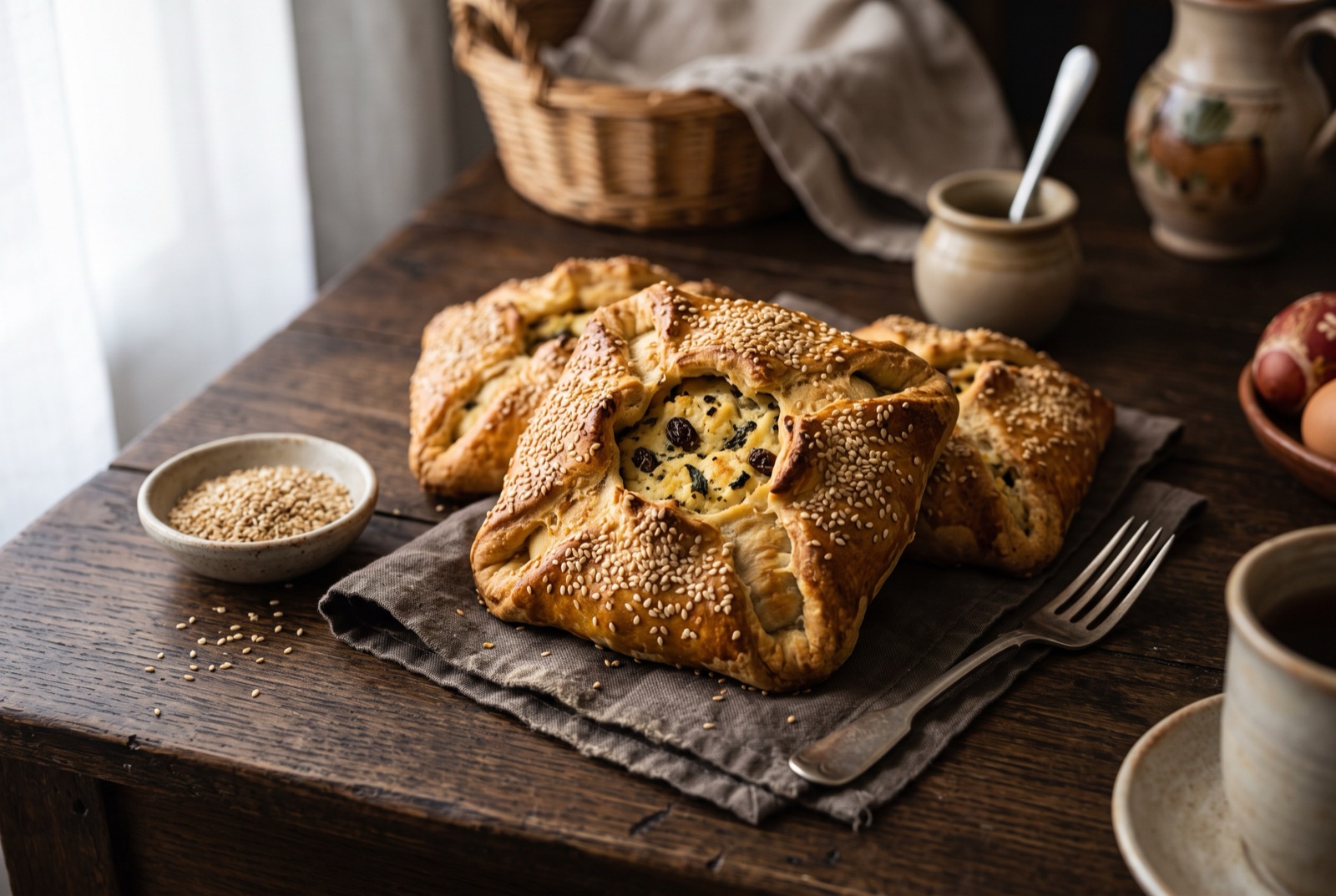
Cyprus3 hr 35 min
Flaounes
Cypriot Easter Cheese and Mint Pastries
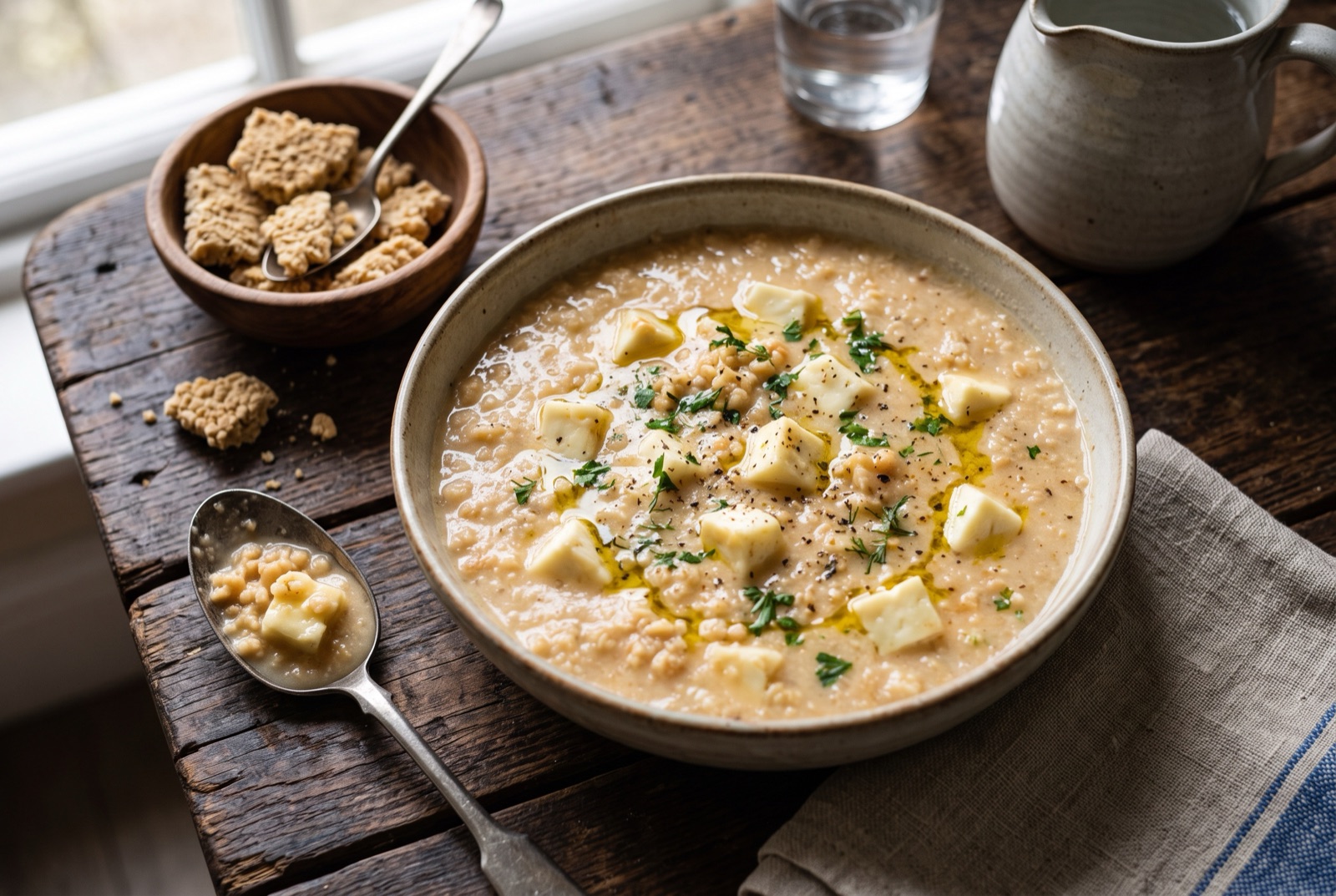
Cyprus2 hr 45 min
Trahanas
Cypriot Fermented Wheat and Yoghurt Soup
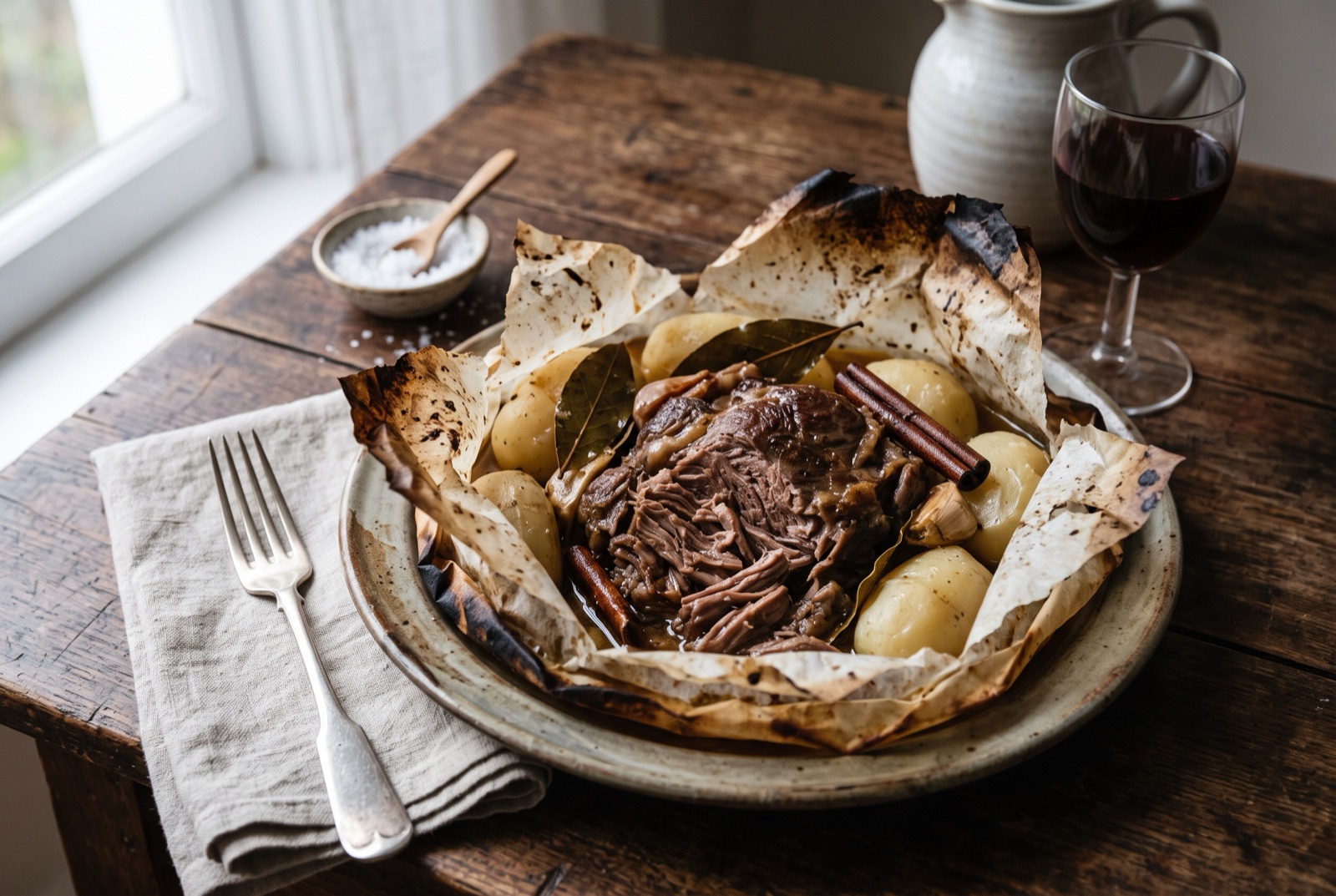
Cyprus5 hr 45 min
Kleftiko
Cypriot Lamb Slow-Baked in a Sealed Parcel
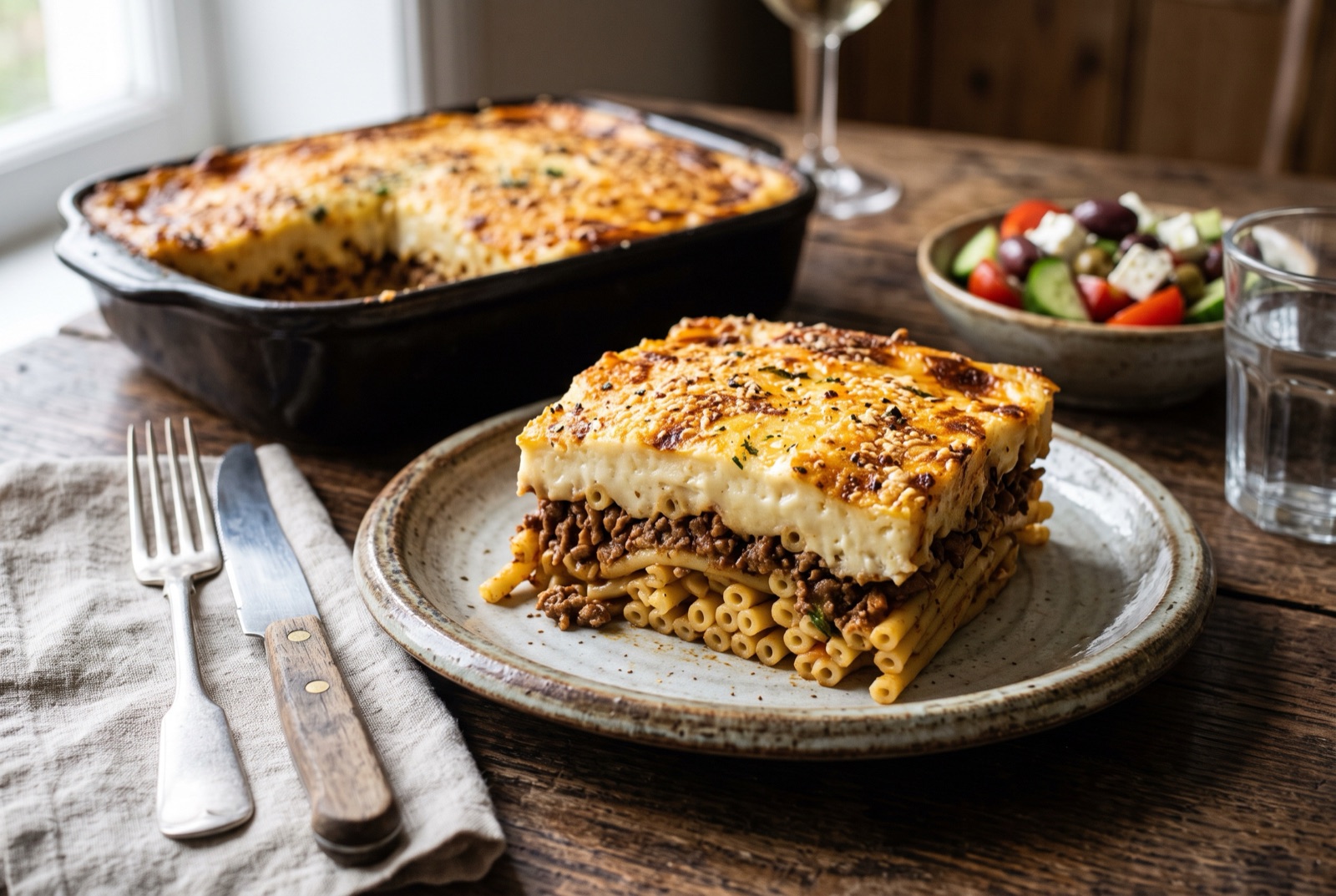
Cyprus2 hr 20 min
Makaronia tou Fournou
Cypriot Baked Pasta with Halloumi Béchamel
Keep exploring Cyprus.
Cyprus has 9 more dishes in the atlas — Afelia and Daktyla, and 7 more.
Recipe by The DishRoute Kitchen · published August 20, 2026 · updated August 20, 2026