Flaounes.
Cypriot Easter Cheese and Mint Pastries
Φλαούνες · say it: flah-OO-nes
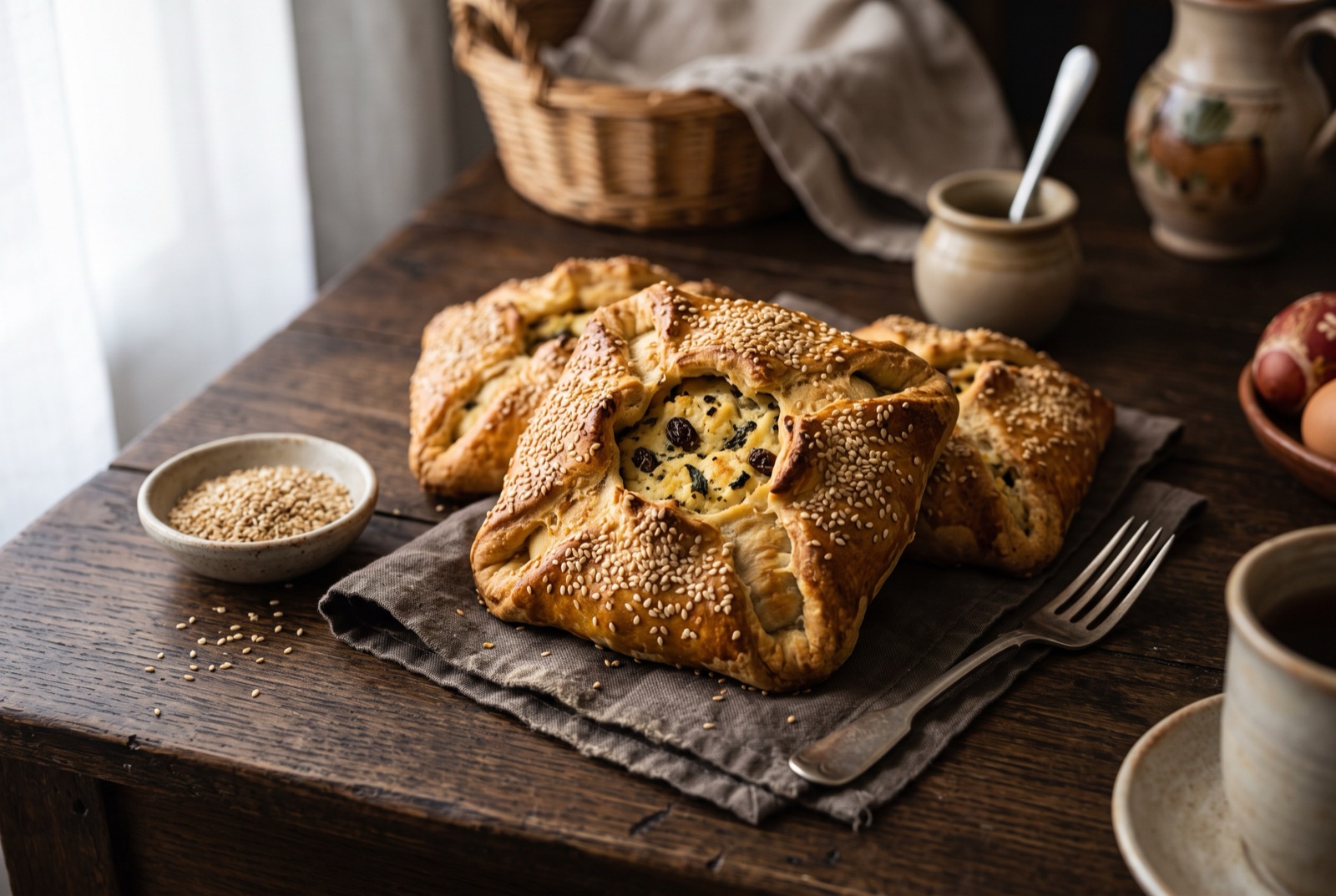
Flaounes are open-topped cheese pastries the size of a hand, made once a year for Orthodox Easter and then eaten obsessively for a week. The dough is enriched and scented with two aromatics most kitchens outside the eastern Mediterranean never meet: mastic, the resin of a Chios shrub, which is piney and faintly medicinal, and mahlepi, ground cherry-stone kernels that smell like marzipan and sour cherry at once. The filling is grated matured cheese bound with egg and raised slightly with yeast, sharpened with dried mint and studded with raisins, so each bite runs salty then sweet. Warm from the oven they are soft and steaming; two days later they are firm, sesame-crusted and, in most Cypriot opinions, better.

- Gate
- Cyprus
- Prep
- 1 hr
- Cook
- 35 min
- Total time
- 3 hr 35 min incl. 2 hr rest
- Serves
- 12
- Status
- Takes skill
- Nutrition / serving · estimated
- Calories 490 kcal
- Protein 22 g
- Carbs 45 g
- Fat 25 g
- Sugar 8 g
Why this recipe works.
- Rests the cheese filling overnight so the yeast lifts it, which is what gives flaounes their characteristic domed, spongy centre.
- Gives a workable substitute blend for flaouna cheese, which is essentially unobtainable outside Cyprus.
- Explains the sesame-and-egg-wash order that most recipes get backwards, so the seeds actually stick.
- Covers the folding and pinching that stops the pastries splaying open halfway through baking.
Ingredients.
18 itemsFor the filling
For the dough
To finish
Equipment
- Stand mixer or large bowl
- Rolling pin
- Mortar and pestle
- Two baking trays with parchment
- Pastry brush
Instructions.
Make the filling a day ahead
Mix both cheeses with the semolina, dried mint and the 5 g of yeast, then work in the beaten eggs until you have a thick, scoopable paste that holds its shape on a spoon. Fold in the raisins, cover and refrigerate overnight — it will rise slightly and smell faintly tangy in the morning.
Tip If it looks wet, add another spoon of semolina. A slack filling is the main cause of pastries that burst open.
Grind the aromatics
Crush the mastic crystals in a mortar with a pinch of the sugar until they are a fine pale powder — the sugar stops the resin balling up against the pestle. Stir the mastic and the ground mahlepi into the flour along with the salt and the 7 g of yeast.
Mix and knead the dough
Rub the softened butter into the flour mixture, then add the eggs, remaining sugar and lukewarm milk and knead for 8 to 10 minutes, until the dough is smooth, elastic and pulls away from the bowl cleanly. It should feel rich and slightly tacky rather than sticky.
Prove the dough
Cover and leave in a warm place for about 90 minutes, until roughly doubled and springy — an indent pressed with a finger should fill back in slowly rather than snapping straight back. Knock it back gently and divide into 12 equal pieces.
Roll, wash and sesame the rounds
Roll each piece into a round about 16 cm across and 3 mm thick. Brush the top with egg wash, then press that face down firmly into a plate of sesame seeds so they embed, and turn it back over so the sesame side is underneath.
Fill and fold
Spoon a generous mound of filling into the centre of each round, leaving a 3 cm border. Fold up three or four sides over the edge of the filling, leaving the middle open, and pinch each corner firmly — then go round and pinch every corner a second time.
Tip Do not overfill. The filling expands by nearly half in the oven and will push out of any weak seam.
Bake until domed and golden
Space the flaounes well apart on lined trays, brush the exposed dough with egg wash and bake at 190°C for 30 to 35 minutes. They are done when the dough is deep gold, the sesame base is toasted, and the exposed filling has puffed into a domed, lightly cracked top.
Cool before eating
Move them to a rack and leave for at least 20 minutes. Straight from the oven the filling is molten and formless; as it cools it sets into a soft, sliceable centre. Serve warm on the day, or from the tin over the following week.
Tips from our kitchen.
- Make the filling the day before. Left overnight, it rises, firms and develops a mild tang — filling used the same day tastes flat and stays dense.
- Grind the mastic with a pinch of sugar in a mortar. Alone it turns gummy and sticks to the pestle in one lump.
- Use mastic sparingly. More than a few grains for a full batch and the pastries taste of pine cleaner instead of resin.
- Roll the dough to about 3 mm — thin enough to fold cleanly, thick enough to hold a heavy wet filling without splitting.
- Egg-wash the dough round first, then press it into the sesame. Sesame applied at the end just falls off in the oven.
- Pinch the folded corners hard, and pinch them twice. The filling expands as it bakes and pushes any lazy seam apart.
Substitutions.
- Flaouna cheese → Equal parts matured halloumi and kefalotyri, or halloumi with pecorino romano
- Use dry, well-aged halloumi rather than fresh — wet cheese makes the filling slack. If your mix tastes very salty, add a spoonful of ricotta to soften it.
- Mastic → Omit, or use a scant pinch of ground fennel seed
- Nothing replicates mastic. Leaving it out gives a perfectly good pastry that simply is not quite a flaouna; fennel provides a vaguely comparable resinous note.
- Mahlepi → A drop of almond extract plus a pinch of ground cardamom
- Mahlepi is stocked by Greek, Turkish and Middle Eastern grocers and keeps for a year, so it is worth buying properly. The substitute approximates the marzipan side but not the sour-cherry edge.
Variations.
- Paphos triangles
- Folded into three corners into a triangle rather than a square, with a smaller open top. The higher dough-to-filling ratio makes them firmer and better keepers.
- Without raisins
- A large minority of Cypriot households consider raisins wrong in a savoury pastry and leave them out entirely. The result is straightforwardly salty and mint-forward.
- Pilavuna
- The Turkish Cypriot version, usually round, sometimes closed rather than open-topped, and often finished with black nigella seeds alongside the sesame.
Storage & reheating.
Flaounes keep 5 days in a tin at room temperature and are widely thought to improve after a day, when the crumb firms and the sesame crust sets. Do not refrigerate them: the fridge dries the dough and turns the cheese filling rubbery. Refresh in a 160°C oven for eight minutes to bring them back. They freeze well for 3 months, baked and fully cooled, and are best reheated from frozen at 170°C for about 15 minutes rather than thawed first.
Serve with
Strong black coffee or tea, hard-boiled eggs dyed red, and whatever else is on the Easter table — flaounes are eaten at any hour for a week afterwards.
The story behind Flaounes.
Flaounes exist because of the fast that precedes them. Orthodox Lent removes meat, dairy and eggs from the table for forty days, and the flaouna is engineered to reintroduce all of them at once: cheese, eggs and butter in a single pastry, baked on Holy Saturday and eaten after the midnight resurrection service. Practically speaking, the fast also produced a surplus — households kept making cheese through Lent without eating it, and the flaouna is where that stored cheese went.
The cheese in question is specific. Flaouna cheese is a firm, matured, lightly salted sheep or goat cheese made expressly for this purpose and sold in Cypriot shops in the weeks before Easter, often already grated. It sits somewhere between halloumi and kefalotyri: sharper and drier than fresh halloumi, less aggressive than a hard grating cheese. Outside Cyprus the standard workaround is a mix of matured halloumi with kefalotyri or pecorino, which gets you close, and the filling is generally left overnight so the cheese, eggs and yeast can ferment slightly and swell.
Regional variation is real and firmly held. Some districts fold the pastry into a square, some into a triangle, some leave a wide open top; some add mint heavily and others barely at all; raisins are compulsory in one village and an outrage in the next. Turkish Cypriot households make a close relative sometimes called pilavuna. What almost everyone agrees on is the sesame: the dough round is brushed with egg and pressed face-down into a plate of sesame seeds before filling, so the base and sides bake into a nutty crust.
It is worth being honest that this is a genuinely demanding recipe — the hardest thing in Cypriot home baking after Christmas breads. There are two aromatics to source, a filling that wants an overnight rest, dough that must be rolled thin without tearing, and a folding technique that takes a few tries before the pastries stop opening in the oven. It is also, not coincidentally, a job traditionally done by three generations around one table, which is exactly the right way to approach it the first time.
Questions, answered.
What is mahlepi and can I skip it?
Mahlepi is a spice ground from the kernels inside the stones of the St Lucie cherry, with an aroma between marzipan and sour cherry. It is central to Cypriot and Greek festive baking. You can skip it, but the dough loses the perfume that makes it recognisable. Greek, Turkish and Middle Eastern grocers stock it and it keeps for a year.
Why did my flaounes open up in the oven?
The seams were not pinched firmly enough, or the filling was too wet. The filling swells as the yeast in it warms and will force any weak corner apart. Pinch each corner twice, hard, and use dry, well-matured cheese — fresh halloumi releases water and turns the filling slack.
What cheese can I use instead of flaouna cheese?
A half-and-half mix of matured halloumi and kefalotyri is the closest widely available substitute; pecorino romano can stand in for the kefalotyri. The essential qualities are dryness and moderate salt, so age the halloumi in the fridge unwrapped for a couple of days if all you can get is a fresh block.
Can I make the filling in advance?
You should. The filling is meant to rest overnight in the fridge so the yeast in it works and the mixture rises and firms up. Same-day filling produces flatter, denser pastries. It can be made up to two days ahead; give it a stir and let it come to room temperature before you fill the dough.
Are flaounes sweet or savoury?
Savoury, but with sweet elements deliberately in play. The cheese and salt dominate, while the raisins and the faintly marzipan-scented mahlepi dough push back the other way. Some households leave the raisins out entirely, which makes them straightforwardly savoury and is equally traditional.
You might also like.
All recipes →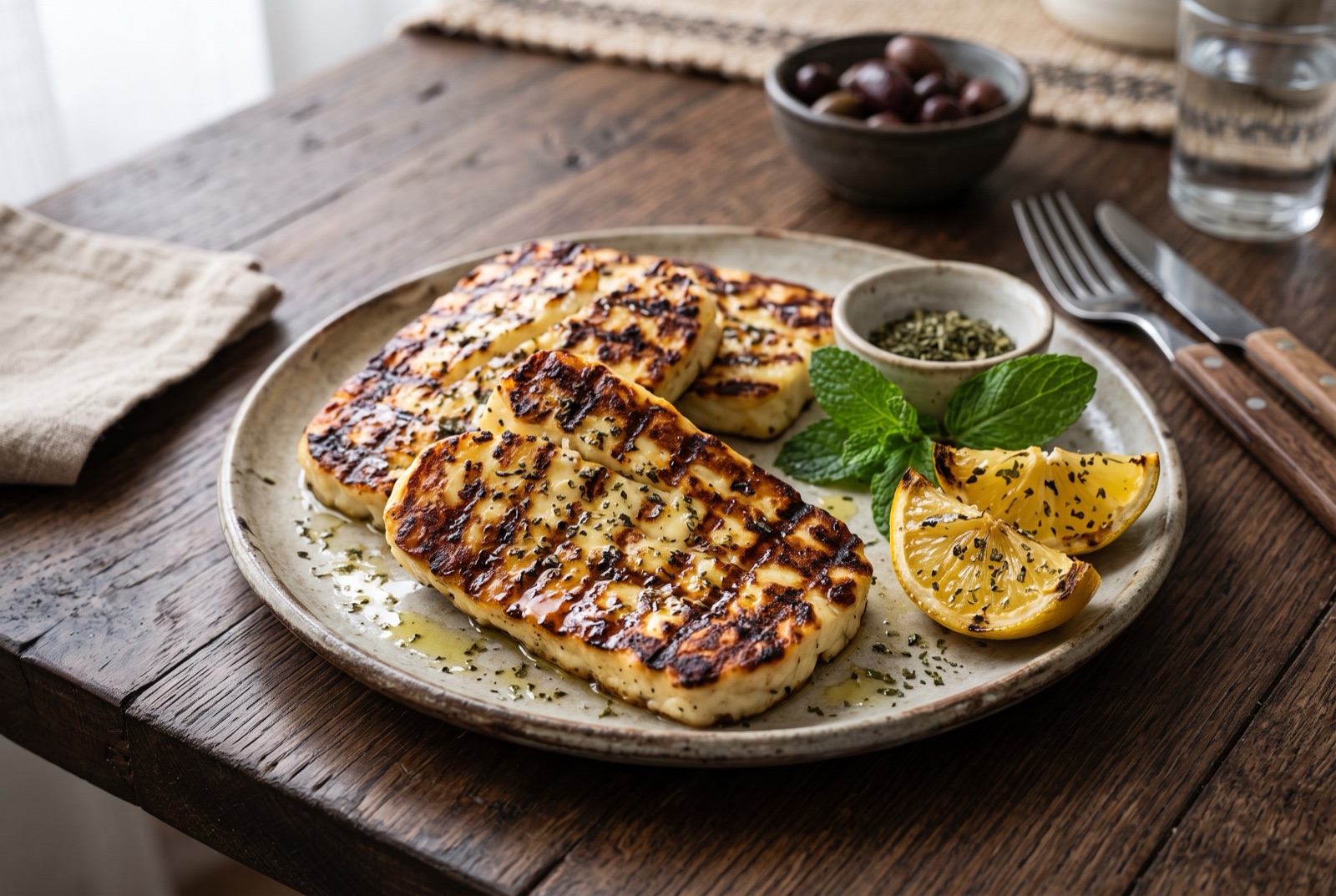
Cyprus16 min
Halloumi sti Schara
Grilled Cypriot Cheese with Lemon and Mint
Cyprus1 hr 45 min
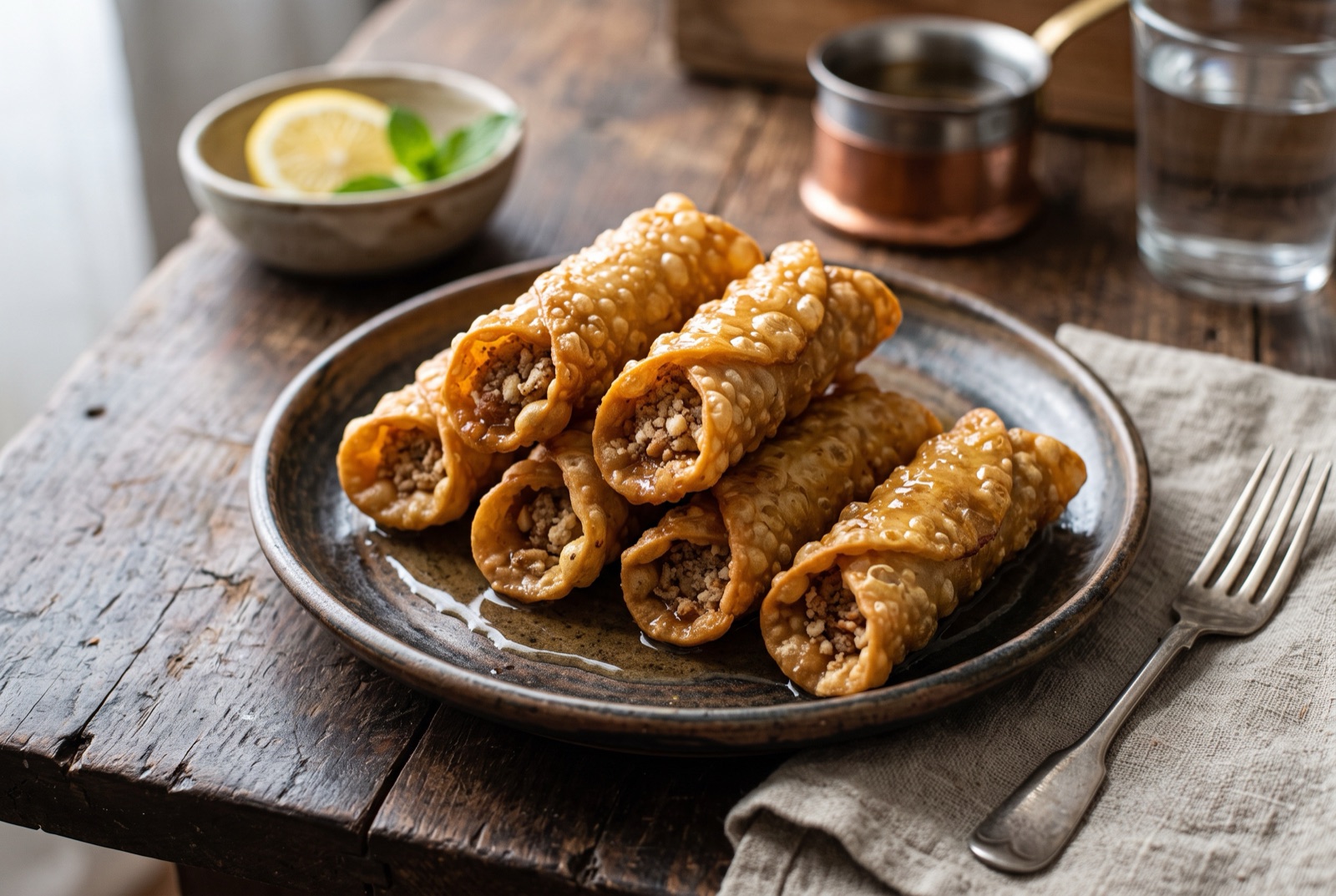
Daktyla
Cypriot Almond-Filled Pastry Fingers in Syrup
Cyprus2 hr 45 min
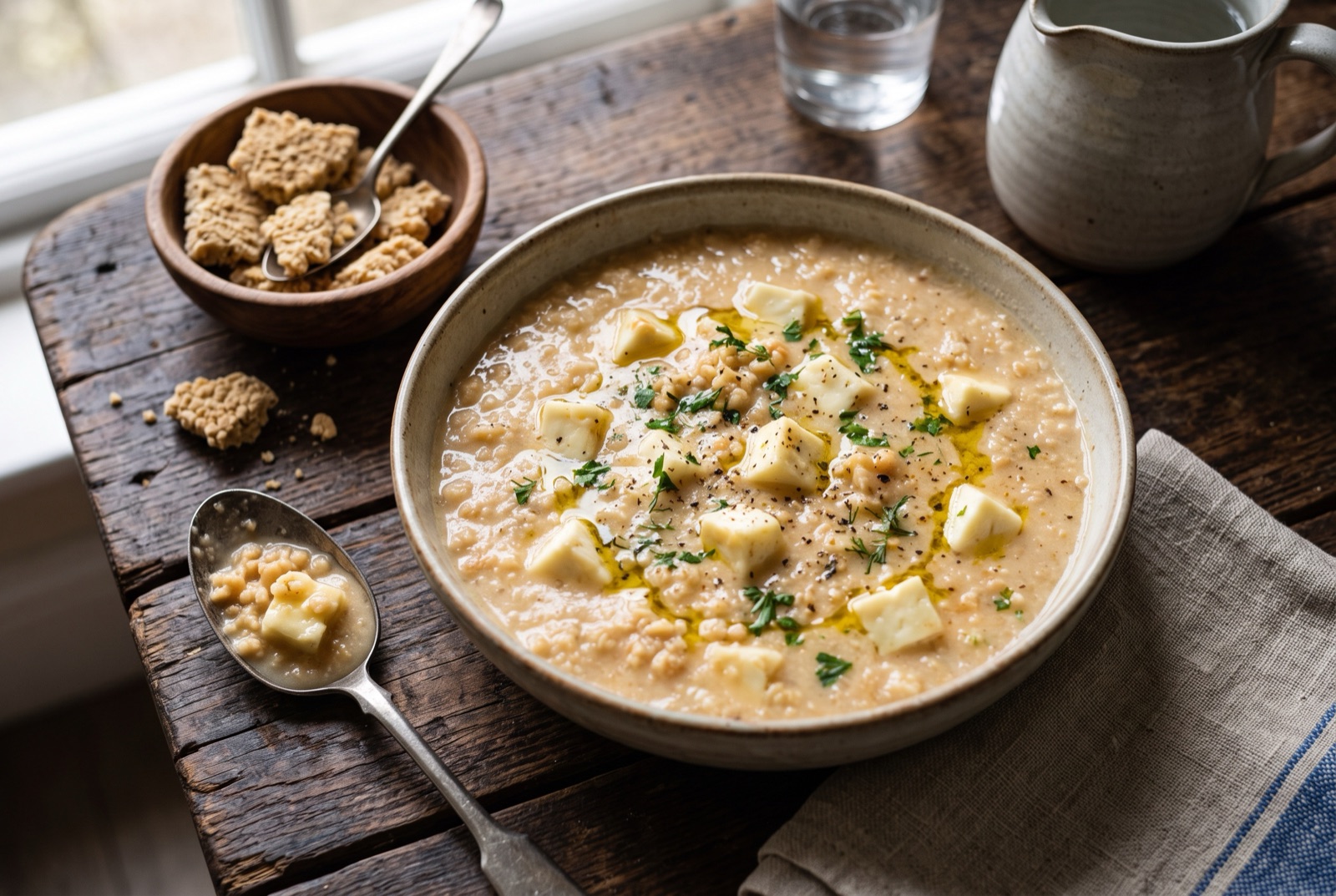
Trahanas
Cypriot Fermented Wheat and Yoghurt Soup
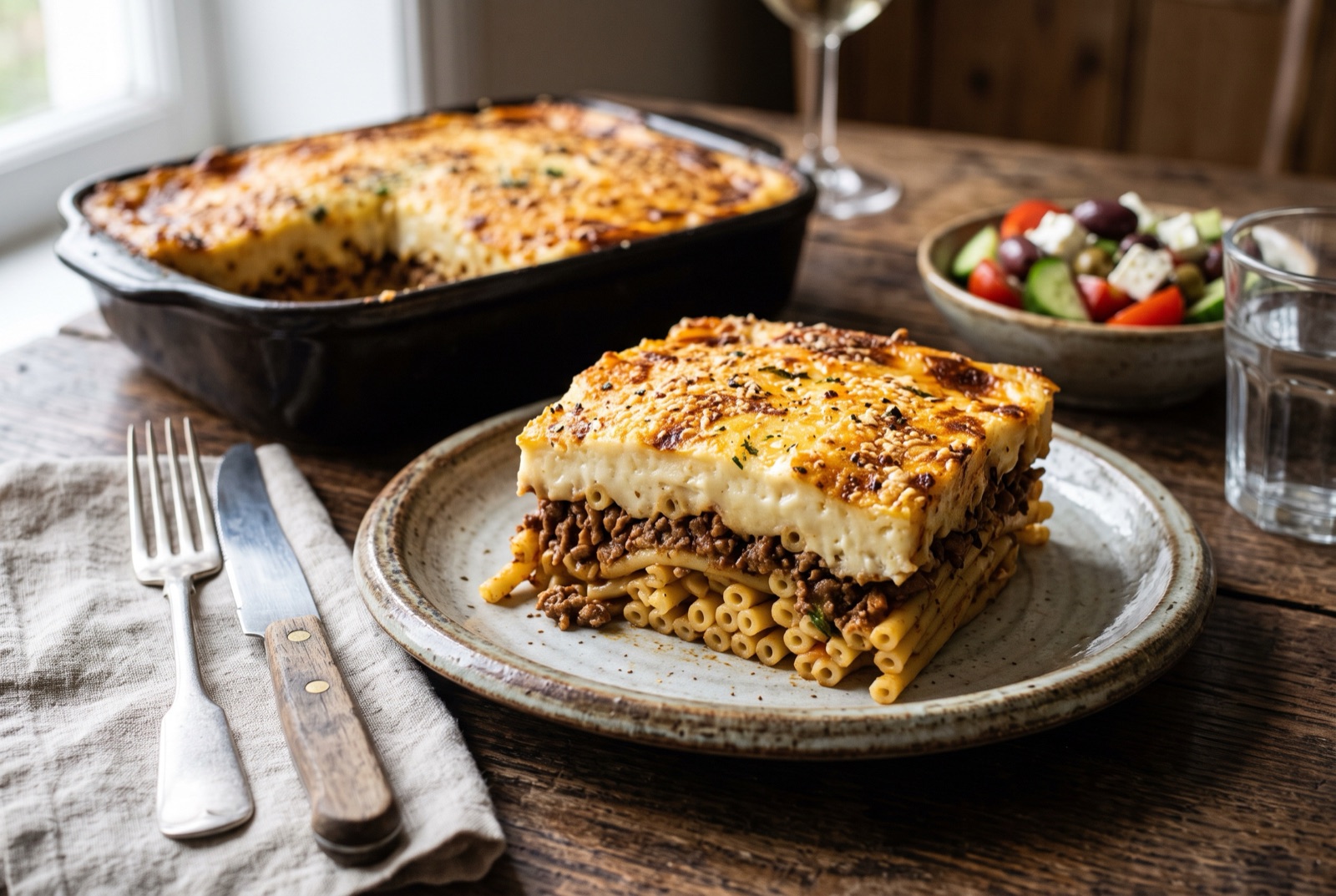
Cyprus2 hr 20 min
Makaronia tou Fournou
Cypriot Baked Pasta with Halloumi Béchamel
Keep exploring Cyprus.
Cyprus has 9 more dishes in the atlas — Afelia and Daktyla, and 7 more.
Recipe by The DishRoute Kitchen · published August 20, 2026 · updated August 20, 2026