Irish Seafood Chowder.
Creamy Fish and Shellfish Soup
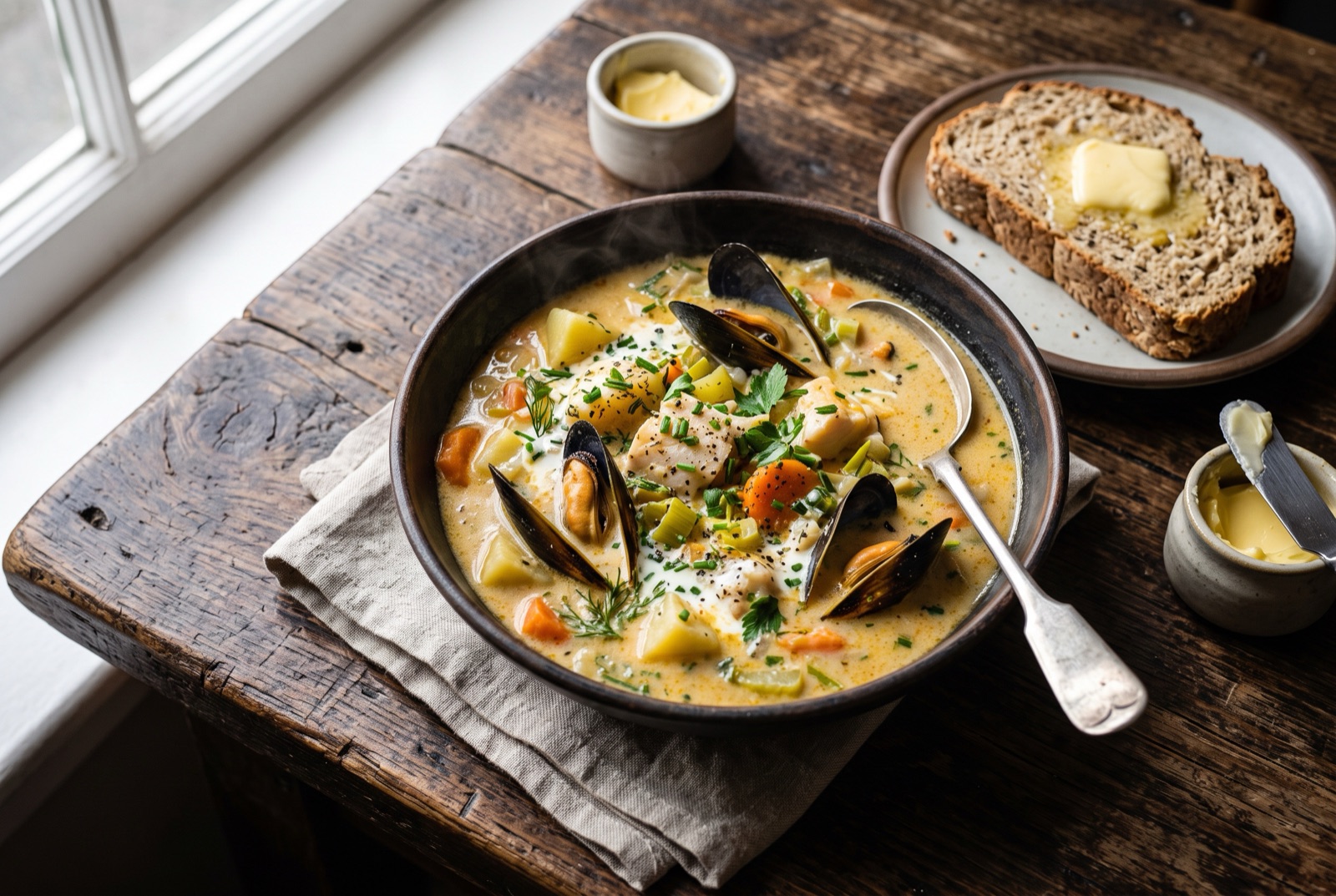
Irish seafood chowder is a thick, creamy soup of smoked haddock, white fish and mussels in a broth built from the mussels' own liquor, with potato, leek and bacon underneath and a lot of parsley on top. It is not a subtle dish: the smoked fish drives the flavour, the cream rounds it, and the potatoes break down just enough to give the body that separates a chowder from a fish soup. Done properly the fish is in soft, distinct flakes rather than shreds, because it goes in last and poaches in the residual heat. Every pub from Kinsale to Donegal serves a version, always with a slab of buttered brown bread, and it is genuinely one of the best things to eat on the Irish coast.

- Gate
- IrelandAtlantic west coast
- Prep
- 25 min
- Cook
- 35 min
- Total time
- 1 hr
- Serves
- 4
- Status
- Medium
- Nutrition / serving · estimated
- Calories 620 kcal
- Protein 45 g
- Carbs 32 g
- Fat 34 g
- Fiber 4 g
- Sodium 1500 mg
Why this recipe works.
- Steams the mussels first and uses their liquor as the backbone of the broth, which is where the sea flavour comes from.
- Adds the fish off the heat at the very end so it poaches into flakes instead of shredding into the soup.
- Balances smoked and unsmoked fish deliberately — all smoked haddock makes a chowder you cannot finish.
- Thickens with potato and a light roux rather than cream alone, so it holds together without tasting of flour.
Ingredients.
18 itemsFor the mussels
For the chowder
For the fish
To finish
Equipment
- Large heavy pot with a lid
- Fine sieve or muslin
- Ladle
Instructions.
Steam the mussels and keep the liquor
Bring the water or wine to a boil in a covered pot, tip in the mussels and steam for 3 to 4 minutes, shaking once, until the shells gape open. Discard any that stay shut, pick most of the meat out of the shells, and strain the liquor through a fine sieve.
Tip Leave a few mussels in their shells to sit on top of each bowl at the end.
Render the bacon and soften the vegetables
Cook the bacon in the dry pot over medium heat for 5 minutes until the fat runs and the edges brown. Add the butter, leeks, onion and celery and sweat for 8 minutes, until everything is soft and translucent with no colour on it.
Make the roux
Stir in the flour and cook for 2 full minutes, stirring constantly, until the paste smells toasted rather than raw and clings to the vegetables. This is the step that keeps the cream from splitting later.
Build the broth and cook the potatoes
Pour in the strained mussel liquor and the stock a little at a time, stirring smooth after each addition, then add the potatoes, bay leaf and thyme. Simmer gently for 15 minutes, until the potato yields completely to a knife and some edges have begun to fray.
Add the cream, then the fish off the heat
Stir in the cream and bring it back to a bare steam, never a bubble. Take the pot off the heat entirely, slide in the smoked haddock and white fish, cover, and leave for 6 to 8 minutes — the residual heat cooks them to opaque, just-firm flakes.
Tip If the fish is still translucent at the centre after eight minutes, return the pot to the lowest heat for two minutes only.
Return the mussels, season and serve
Fold in the shelled mussels to warm through, then taste — with smoked fish and mussel liquor it may need no salt at all, only white pepper and a squeeze of lemon. Ladle into deep bowls, top with the reserved mussels in their shells and the parsley, and serve with buttered brown bread.
Tips from our kitchen.
- Buy undyed smoked haddock or cod. The bright yellow dyed fillets colour the whole pot an alarming shade and taste harsher.
- Discard any mussel that stays open after a firm tap before cooking, and any that stays shut after steaming.
- Strain the mussel liquor through a fine sieve or muslin. There is always grit at the bottom and it will ruin the texture.
- Cut the fish into large 4 cm pieces. Small dice disintegrates and turns the chowder cloudy and woolly.
- Never boil the chowder once the cream and fish are in — it curdles the dairy and toughens the fish within a minute.
- Season last, after the smoked fish and the mussel liquor have both gone in; both are salty and the soup often needs no extra salt at all.
Substitutions.
- Mussels → Clams, or 200 g raw peeled prawns added with the fish
- If you skip shellfish altogether, replace the mussel liquor with 200 ml of fish stock plus a splash of dry white wine.
- Smoked haddock → Smoked cod, smoked pollock or hot-smoked salmon
- Hot-smoked salmon is already cooked, so flake it in at the very end with the heat off.
- Heavy cream → Whole milk plus 2 extra tbsp of butter, or oat cream
- A lighter chowder, less rich but still coherent. Do not use low-fat milk alone; it splits and tastes thin.
Variations.
- Chowder with corn
- Add 150 g of sweetcorn with the potatoes. Common in Irish pubs, borrowed from the American side of the family, and sweetens the bowl noticeably.
- Bacon-free, wine-lifted
- Leave out the bacon and steam the mussels in 150 ml of dry white wine instead of water for a cleaner, sharper broth.
- Chowder pie
- Thicken with an extra spoon of flour, cool, top with mashed potato and bake at 200°C for 25 minutes — the chowder becomes a fish pie.
Storage & reheating.
Best eaten the day it is made. It keeps 2 days refrigerated, but reheat it slowly and never let it reach a boil, or the cream splits and the fish goes rubbery — warm it gently, stirring, until it just steams. Do not freeze the finished chowder: the potatoes go grainy and the cream separates. If you want a head start, make the base with bacon, leek, potato and mussel liquor up to two days ahead, then add cream, fish and mussels when you reheat it.
Serve with
Thick slices of buttered brown soda bread, which is not optional in any pub on the west coast.
The story behind Irish Seafood Chowder.
It is worth being straight about this one: Irish seafood chowder is a modern dish. Chowder itself comes from the Atlantic fishing world — the name is usually traced to the French chaudière, the cauldron a catch was cooked in — and it became a New England institution long before it became an Irish pub staple. Ireland has eaten fish soups and shellfish for as long as there have been people on the coast, but the specific bowl of cream, potato, smoked fish and mussels that now appears on every menu from Clare to Antrim is largely a product of the last fifty years, arriving with the tourist trade and with the food revival that taught the country to value its own seafood.
That revival was needed. For centuries Ireland exported most of its catch and ate remarkably little of it. Fish carried an association with Friday abstinence and penance rather than pleasure, the west coast had poor transport inland, and shellfish that would command high prices in Paris or Madrid went out through the ports while people a few miles away ate potatoes. Oysters, mussels, crab and langoustine were treated as a commodity rather than a cuisine.
What changed the picture was a generation of restaurants and producers from the 1970s onwards who insisted that the best Irish ingredients should stay in Ireland, and a hospitality trade that discovered visitors would happily pay for a bowl of chowder overlooking the Atlantic. The dish stuck because it works: it uses cheap smoked fish alongside a small amount of good shellfish, it stretches, and it is exactly right for the weather. Nobody in Ireland claims it is ancient. It is simply what the coast now cooks.
Questions, answered.
Is seafood chowder actually traditional Irish food?
Not in the historical sense. Chowder is an Atlantic dish with New England roots, and the creamy Irish pub version became widespread only in the last fifty years or so, alongside the tourist trade and Ireland's food revival. Ireland has always had fish soups and abundant shellfish, but this specific bowl is modern. It is a genuinely good modern dish rather than an old one.
Why did my chowder curdle?
It boiled. Cream and milk split when they are heated hard, especially in a pot that also contains salt and the acidity of shellfish liquor. Once the dairy goes in, keep the chowder at a bare steam and never let it bubble, and reheat leftovers the same way. A light roux at the base helps stabilise the dairy and makes splitting less likely.
What fish should I use for seafood chowder?
A mix. Roughly half undyed smoked fish — haddock, cod or pollock — for depth, and half firm fresh white fish such as cod, hake or monkfish for texture, plus shellfish if you have it. Avoid oily fish like mackerel, which overpowers cream, and avoid very delicate fillets like plaice, which vanish into the broth entirely.
Can I use frozen fish and mussels?
Yes. Frozen white fish works well as long as you thaw it fully and pat it dry, because excess water dilutes the chowder. For mussels, frozen cooked ones are convenient but bring no cooking liquor with them, so replace it with fish stock and add the mussels at the very end just to heat through, or they turn to rubber.
How do I make the chowder thicker?
Three ways, in order of preference: use floury potatoes and mash a few pieces into the pot; increase the roux at the start by an extra tablespoon each of butter and flour; or simmer the base uncovered for a few extra minutes before the dairy goes in. Avoid adding cornflour at the end, which gives a slick, glossy texture that reads as wrong in a chowder.
You might also like.
All recipes →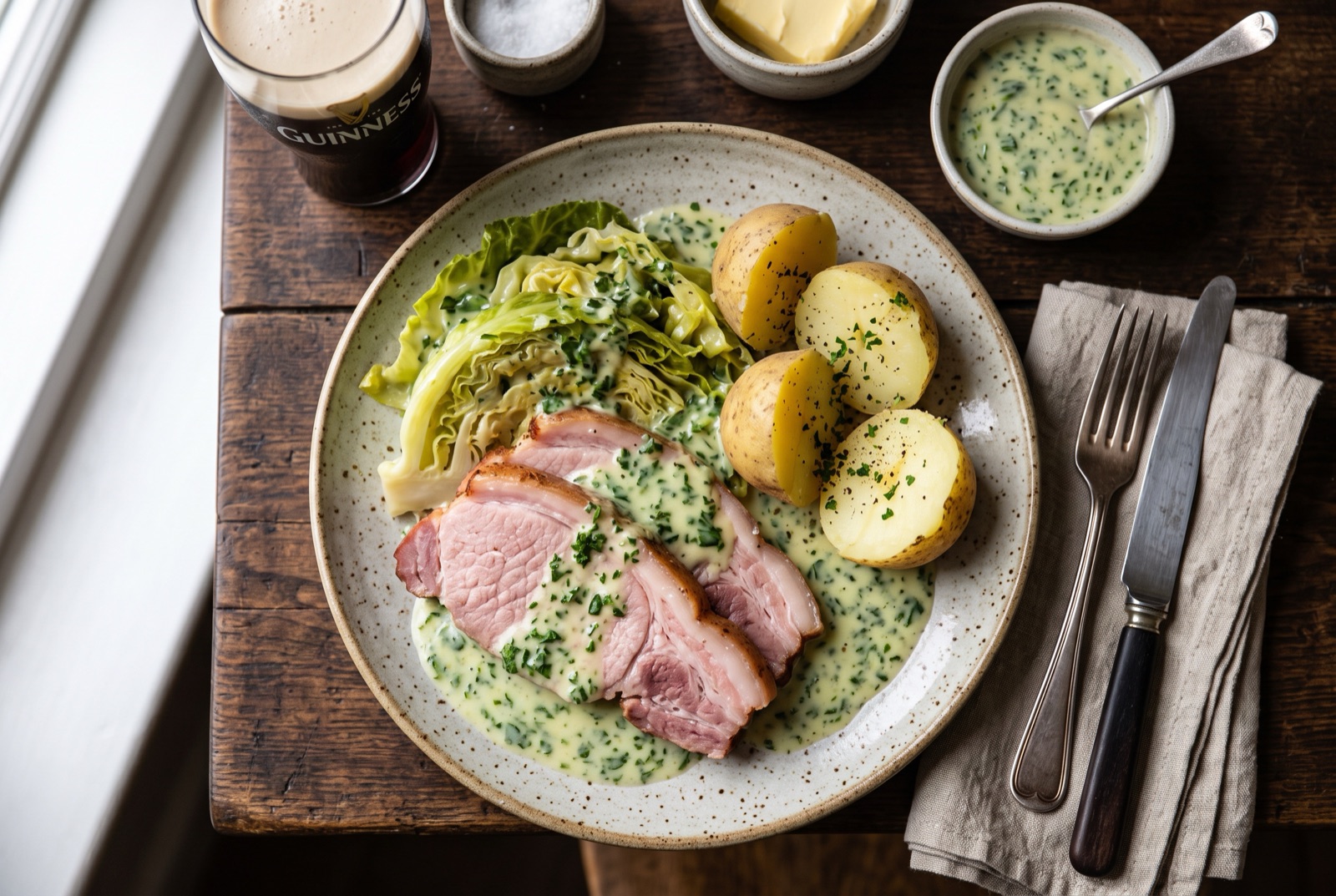
Keep exploring Ireland.
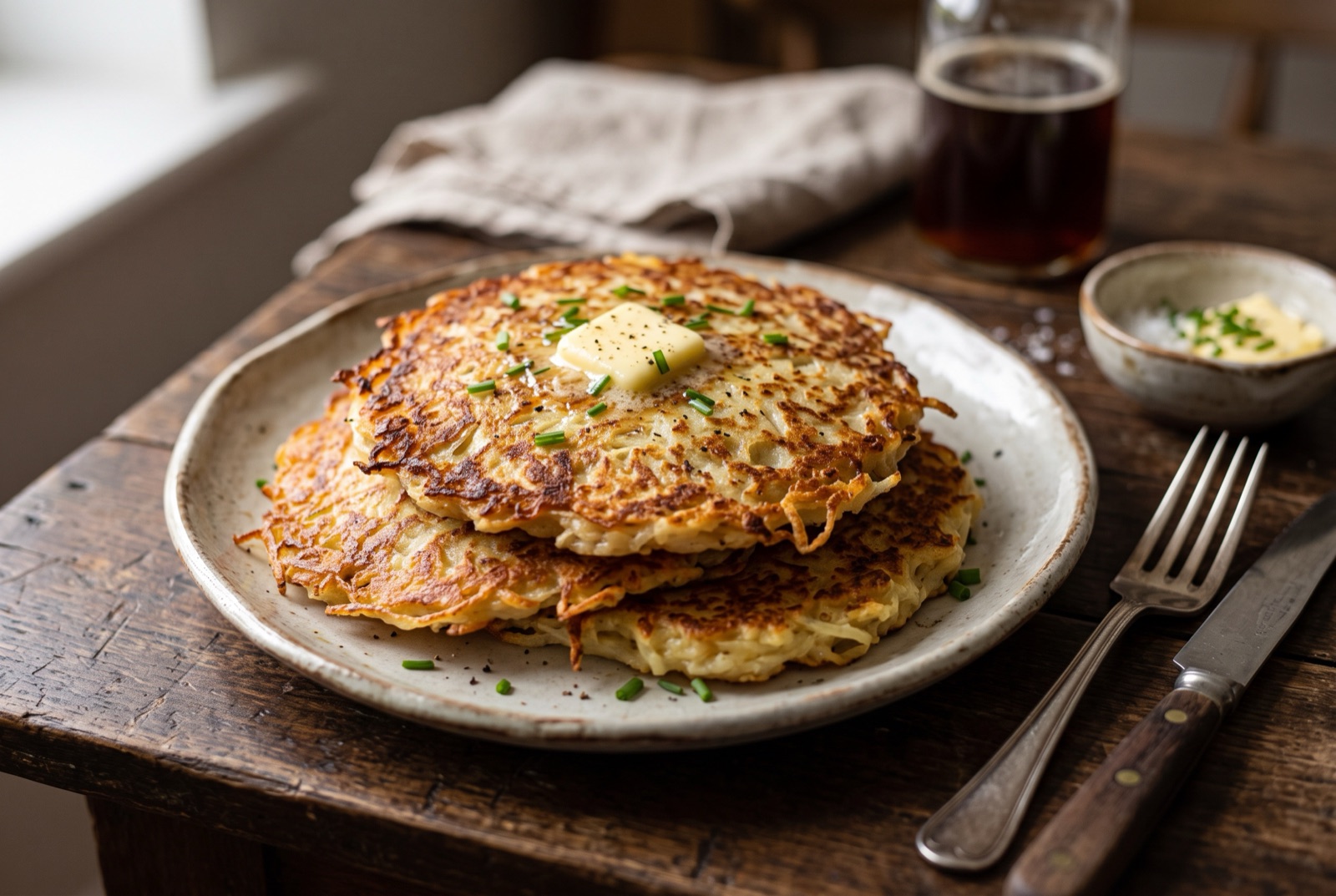
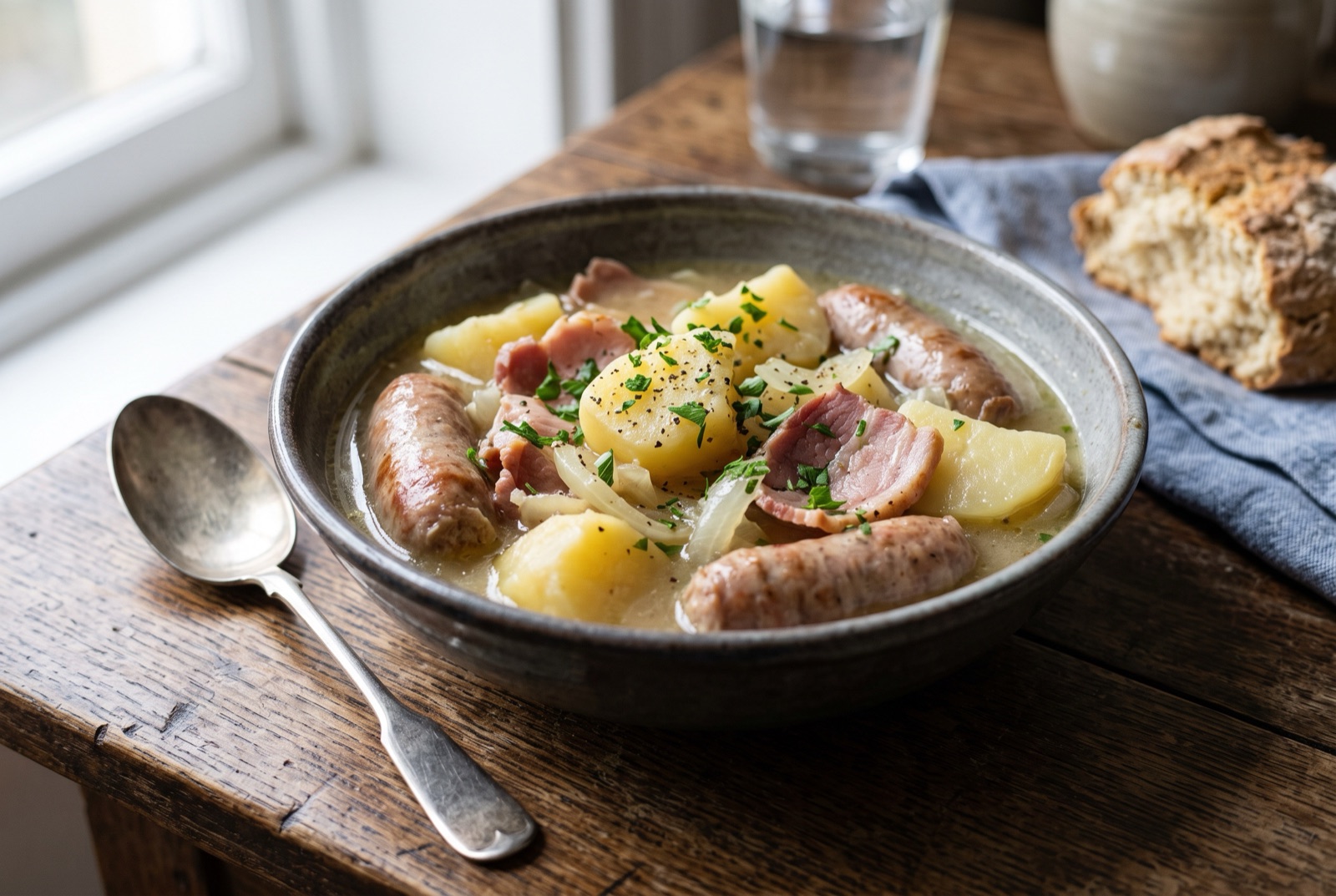
Ireland has 9 more dishes in the atlas — Bacon and Cabbage and Barmbrack, and 7 more.
Recipe by The DishRoute Kitchen · published August 19, 2026 · updated August 19, 2026