Shorba Libiya.
Lamb, Mint and Orzo Soup
شربة ليبية · say it: SHOR-bah LEE-bee-yah
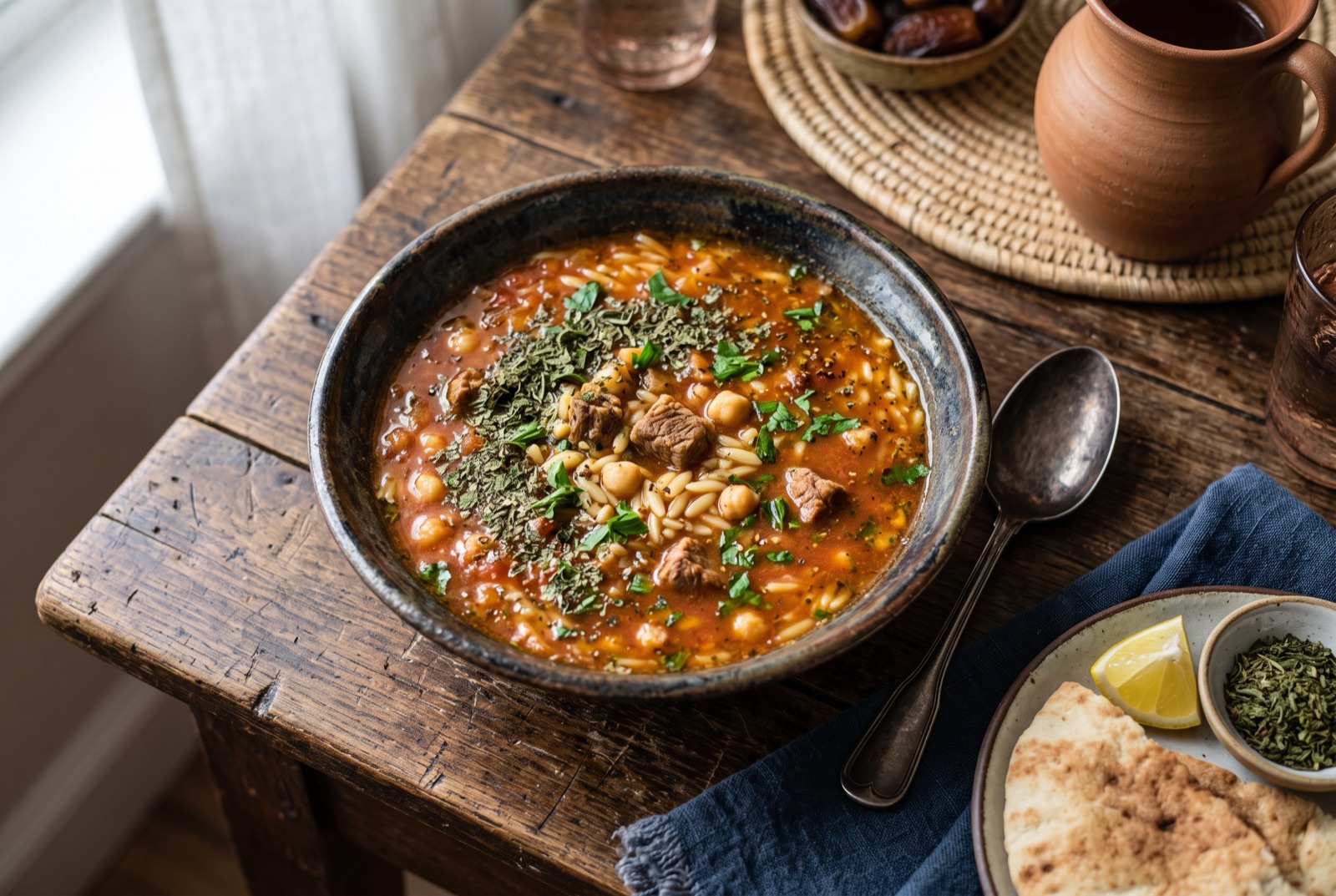
Shorba libiya tastes of tomato paste fried until it is sweet, lamb cooked long enough to shred at the edges, and — unmistakably — dried mint, crumbled in at the very end in a quantity that would look like a mistake in most other cuisines. Orzo goes in near the finish and softens the broth into something between soup and thin stew, thick enough to coat a spoon but still drinkable. Chickpeas add body, hararat adds cinnamon-warm depth rather than heat, and a squeeze of lemon at the table lifts the whole bowl. It is a one-pot soup that asks for about fifteen minutes of real attention and then mostly looks after itself.

- Gate
- Libya
- Prep
- 15 min
- Cook
- 1 hr
- Total time
- 1 hr 15 min
- Serves
- 6
- Status
- Easy
- Nutrition / serving · estimated
- Calories 340 kcal
- Protein 22 g
- Carbs 31 g
- Fat 14 g
- Fiber 5 g
- Sodium 690 mg
Why this recipe works.
- Fries the tomato paste before any liquid goes in, which is the difference between a rust-coloured broth and a pale, sour one.
- Adds the dried mint at the end where its aroma survives, instead of boiling it into nothing.
- Times the orzo so it thickens the soup without swelling into a solid mass in the pot.
- Scales cleanly for a crowd, which is how this soup is actually cooked in Libya.
Ingredients.
15 itemsEquipment
- Large heavy pot
- Ladle
- Sharp knife
Instructions.
Sweat the onion and lamb
Warm the olive oil in a large pot over medium heat and cook the onion for 6 minutes until soft and just beginning to colour at the edges. Raise the heat, add the diced lamb and stir until the meat has lost every trace of pink and any released liquid has cooked off.
Darken the tomato paste
Push the meat to one side, spoon the tomato paste into the clear space and fry it for 3 minutes, pressing it against the hot pot. It is ready when the colour deepens from red to brick and a thin ring of orange oil separates around it.
Tip Keep the heat moderate. Tomato paste catches and turns bitter faster than you expect.
Add tomatoes and spices
Stir in the grated tomatoes, hararat, turmeric and chilli flakes and cook for 2 minutes, until the mixture looks glossy and smells warm and sweet rather than raw. Season generously with salt and black pepper at this point.
Simmer the broth
Pour in the water or stock, add the chickpeas and bring to a simmer. Cover partly and cook for 40 minutes, until the lamb is tender enough to crush against the side of the pot and the broth has taken on a deep rust colour.
Cook the orzo in the soup
Scatter in the orzo and stir once so it does not settle in a clump on the bottom. Simmer uncovered for 10 minutes, stirring occasionally, until the pasta is soft and the soup has thickened enough to leave a trail behind the spoon.
Finish with mint and parsley
Take the pot off the heat, crumble the dried mint between your palms straight into the soup and stir in the parsley. Let it stand for 3 minutes so the mint blooms, taste for salt, and serve with lemon wedges for squeezing over each bowl.
Tips from our kitchen.
- Cut the lamb small, around 1.5 cm. Big chunks need a longer simmer than the rest of the soup wants.
- Crumble the dried mint between your palms as you add it — bruising it that way releases far more aroma than tipping it from the jar.
- Add the orzo only in the last 10 minutes, and expect the soup to keep thickening off the heat as the pasta drinks more broth.
- If the finished soup tastes flat rather than sour, it usually needs salt and lemon rather than more spice.
- Cook it a few hours ahead if you can. The tomato and hararat settle together and the flavour is noticeably rounder.
Substitutions.
- Orzo → Broken vermicelli, tiny soup shapes, or 60 g of short-grain rice
- Rice thickens more aggressively, so use less and expect a heavier bowl. Any small pasta shape works.
- Lamb shoulder → Diced beef chuck, or bone-in lamb neck
- Beef needs 20 minutes more simmering. Neck bones make the best broth of all if you have them.
- Dried mint → A large handful of fresh mint, chopped and stirred in off the heat
- Honest warning: fresh mint tastes green and sharp where dried mint tastes deep and slightly dusty. The soup will be good but it will not taste Libyan.
Variations.
- Shorba with fresh coriander
- Some eastern households stir chopped coriander in alongside the parsley, which pushes the bowl closer to Egyptian tastes and away from the western Libyan version.
- Meatless Ramadan shorba
- Drop the lamb, double the chickpeas and use a well-seasoned vegetable stock. The fried tomato paste and hararat carry it further than you would expect.
- Shorba with lamb shanks
- Simmer two shanks in the broth for 90 minutes, pull the meat off the bone and return it before the orzo goes in, for a richer, more gelatinous soup.
Storage & reheating.
Refrigerate for up to 3 days. The orzo keeps absorbing liquid, so by the next day the soup will have set almost to a stew — loosen it with a good splash of water or stock as you reheat, and check the salt again afterwards. Freeze for up to 2 months, ideally before the pasta goes in; add fresh orzo when reheating so the texture stays clean rather than mushy.
Serve with
Fresh bread, lemon wedges, dates, and a small dish of harissa for anyone who wants heat.
The story behind Shorba Libiya.
During Ramadan this soup is not one option among several — it is the thing the fast is broken with, after the dates and before anything else reaches the table. Libyan households cook it in volumes that assume neighbours and relatives will turn up, and the smell of tomato paste hitting hot oil in the late afternoon is one of the season's markers. Outside Ramadan it drops back into ordinary rotation as the standard first course at family lunches and the automatic dish for anyone who is unwell.
The short pasta in it is a piece of history sitting in plain sight. Italy occupied Libya for roughly three decades in the twentieth century, and one of the durable legacies is a national appetite for pasta of every shape. Orzo and other tiny shapes slid neatly into an existing Maghrebi habit of thickening broths with grain, and now nobody thinks of them as foreign. Similar tomato-and-mint soups exist in Tunisia and Egypt, and the family resemblance is genuine; what marks the Libyan bowl out is the hararat blend and the sheer volume of dried mint.
That mint is worth taking seriously. Libyan cooks use it dried rather than fresh, crumbled between the palms directly into the pot in the last minute of cooking, sometimes with a second pinch added at the table. Added early it boils away into hay; added late it perfumes the whole bowl. Older cooks will also tell you that shorba is judged on colour before taste — it should be a deep rust-orange, not pale pink, which is another way of saying the tomato paste was fried properly.
Questions, answered.
Why did my soup turn into a thick paste overnight?
The orzo carries on soaking up broth long after the pot leaves the heat, and by the next day it will have absorbed most of the liquid. This is normal and not a mistake. Add 200 to 300 ml of water or stock when reheating, bring it back to a simmer, then taste again for salt and lemon since the extra liquid dilutes the seasoning.
Can I use fresh mint instead of dried?
You can, but the result is a different soup. Dried mint has a deep, slightly musty aroma that stands up to tomato and lamb, while fresh mint reads as bright and grassy. If fresh is all you have, chop it finely and stir it in off the heat rather than during cooking, and consider adding a little extra to compensate.
What can I use if I cannot find hararat?
Mix half a teaspoon each of ground cinnamon, black pepper and turmeric with a quarter teaspoon each of nutmeg and ground cloves. Libyan families all blend hararat slightly differently, so there is no single authoritative ratio and a home mix is a legitimate version rather than a compromise.
Is this soup spicy?
Not by default. The warmth comes from cinnamon, pepper and turmeric rather than chilli, so the standard bowl is aromatic rather than hot. Heat is added individually at the table with a spoonful of harissa or dried chilli, which is how Libyan tables generally handle it.
Can I make shorba ahead for a large iftar?
Yes, and it is usually better for it. Cook the soup up to the point before the orzo goes in, refrigerate it, then reheat and add the pasta and mint about ten minutes before serving. That way the broth has had time to settle and the orzo is freshly cooked rather than swollen.
You might also like.
All recipes →
Keep exploring Libya.
Libya has 9 more dishes in the atlas — Bazin and Bsisa, and 7 more.
All Libya recipes Lamb recipes Tomato paste recipes Chickpeas recipes soupdairy freehalal friendlynut freeRecipe by The DishRoute Kitchen · published August 20, 2026 · updated August 20, 2026