Libya.
ليبيا
Libyan cooking is Maghreb food with a shorter ingredient list and a longer memory. Where Moroccan kitchens reach for preserved lemon and fruit, and Tunisian ones for a wall of harissa, Libyan cooks build almost everything on the same three-part foundation: onion softened in olive oil, tomato paste fried until it darkens, and a warm ground-spice blend called hararat that leans on cinnamon, turmeric and black pepper rather than heat. On top of that base go lamb, chickpeas and whatever grain the household lives on — barley in the old inland recipes, semolina couscous on the coast, and pasta everywhere since the Italian occupation put it on Libyan shelves for good. It is not a delicate cuisine and it does not pretend to be. Portions are communal, sauces are meant to be soaked up rather than admired, and the best Libyan food is still the food that arrives in one wide dish with several hands reaching into it.

- Continent
- AfricaMaghreb
- Recipes in atlas
- 10
- Must-try dishes
- 3
- Pantry staples
- 10
Start with the classics.
Must tryThe dishes that explain the Libya kitchen fastest — if you cook only a few things from this page, cook these.
Inside the Libya kitchen.
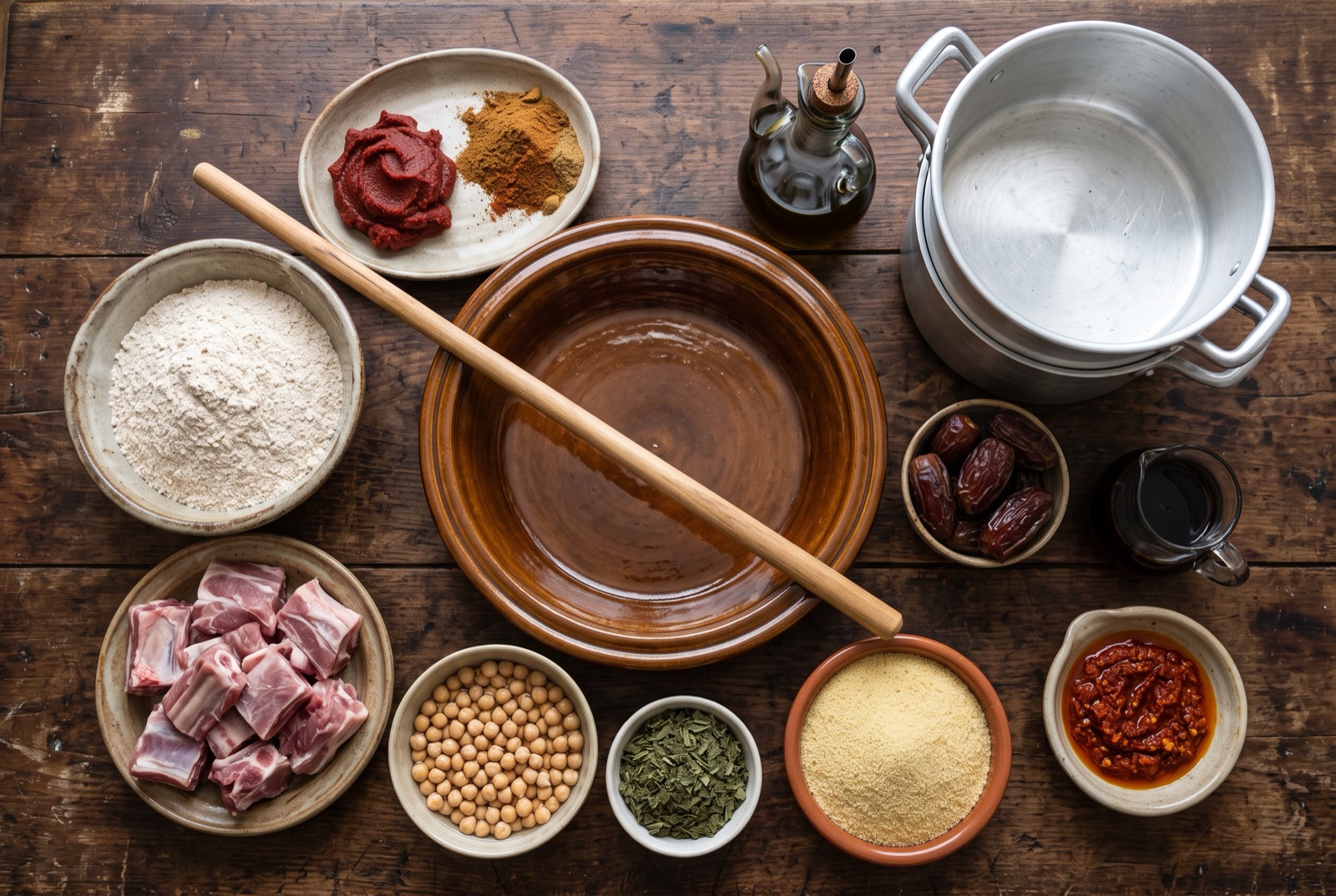
Start with the spice cupboard, because it explains most of what a Libyan pot tastes like. Hararat (also spelled hrarat, and known in some households as bzaar) is a ground blend built around cinnamon, turmeric, black pepper, cloves and nutmeg — warm and slightly sweet rather than pungent. It goes in early, fried with tomato paste so the raw edge cooks off, and it is the reason a Libyan lamb sauce smells different from an Egyptian or Moroccan one made from broadly similar ingredients. Alongside it sit cumin and caraway, which pair up almost automatically whenever fish or harissa is involved, and dried mint, which Libyans use with a heavier hand than most of their neighbours — crumbled into soup at the very end, where its perfume survives instead of boiling away.
Tomato paste deserves its own paragraph. In much of Libyan home cooking it is not a background thickener but the main colouring and sweetening agent, spooned in generously and fried in oil until it turns brick-dark and the fat around it runs orange. That fried-paste stage is the doneness signal to watch for: before it, a sauce tastes tinny and sharp; after it, it tastes round and finished. The same move opens shorba, mbakbaka, hraimi and the sauce that surrounds bazin.
Grains split the country in two directions. Barley is the older staple, ground into the flour that makes bazin and toasted into bsisa, and it carries the flavour of pre-oil Libya — lean, inland, tied to the herding economy of the steppe. Semolina couscous is the coastal and celebratory grain, steamed over the meat pot so it takes on the broth's aroma. And then there is pasta: three decades of Italian colonial rule left Libya with a genuine pasta habit that never went away, so spaghetti and macaroni turn up in tomato-and-lamb sauces that would look at home in Sicily except for the hararat and the chickpeas.
Meals are structured around one central dish rather than courses. A Libyan lunch is typically a single large platter — couscous, bazin, a pasta pot, a tray of stuffed vegetables — set down with bread, a bowl of harissa or hot pepper paste, olives, and a plain salad of chopped tomato, cucumber and onion dressed with lemon and olive oil. Soup, especially the tomato-and-orzo shorba, is a course of its own mainly in Ramadan, when it opens the fast alongside dates and bread.
Regional differences are real but quieter than in Morocco. The western coast around Tripoli is the most Mediterranean and the most Italian-influenced, and it is also where the largest share of Libya's seafood cooking sits. The east around Benghazi leans further towards Egyptian habits and eats more rice. The Amazigh towns of the Nafusa Mountains hold on to barley, olive oil and dried-food traditions, and the Saharan south — Fezzan, Ghadames, Ghat — cooks with dates, camel and millet, and shares more with the Sahel than with the coast. Libyan Jewish communities, most of whom left in the mid-twentieth century, carried hraimi and bsisa with them to Israel, where both dishes are now better documented than they are at home.
Signature pantry.
10 staplesThe ingredients this cuisine cannot function without.
- barley flour
- tomato paste
- hararat spice blend
- lamb
- chickpeas
- dried mint
- olive oil
- dates and date syrup (rub)
- harissa
- couscous
How people eat in Libya.
The default Libyan meal is one platter and several right hands. Cutlery appears for soup and for pasta, but bazin, couscous and stuffed vegetables are traditionally eaten by hand from a shared tray, each person working the wedge of food directly in front of them rather than roaming across the dish. Bread is always on the table and doubles as a scoop and a plate-wiper; leaving sauce behind is considered a small waste. Lunch, eaten in the early afternoon, is the substantial meal of the day, and hospitality runs on refilling rather than asking — a guest who empties a glass of sweet green tea will find it full again. Ramadan reorders everything: the fast breaks on dates and shorba before anyone touches the main dish.
Regional kitchens.
Libya cooks 4 distinctly different ways depending on where you stand — here is what changes between them.
- R1Tripolitania and the Tripoli coast
- The most Mediterranean corner of the country, and the one the Italian decades marked most deeply — pasta in lamb-and-tomato sauce, fried street snacks, and the bulk of Libya's seafood cooking, including hraimi.
- R2Cyrenaica (Barqa) and Benghazi
- The eastern half looks towards Egypt as much as towards the Maghreb: more rice on the table, generous use of dried mint and cumin, and a strong tradition of slow-cooked lamb for weddings and Eid.
- R3The Nafusa Mountains and the Amazigh west
- Berber hill towns where barley never lost its place — bazin, bsisa and rough country breads, cooked with local olive oil and preserved through dry summers rather than shopped for daily.
- R4Fezzan and the Sahara
- Ghadames, Ghat and the southern oases cook with dates, camel meat and millet, and share more with Sahelian kitchens than with the coast. Date syrup here is a staple sweetener, not a specialty item.
All Libya recipes.
10 recipes and counting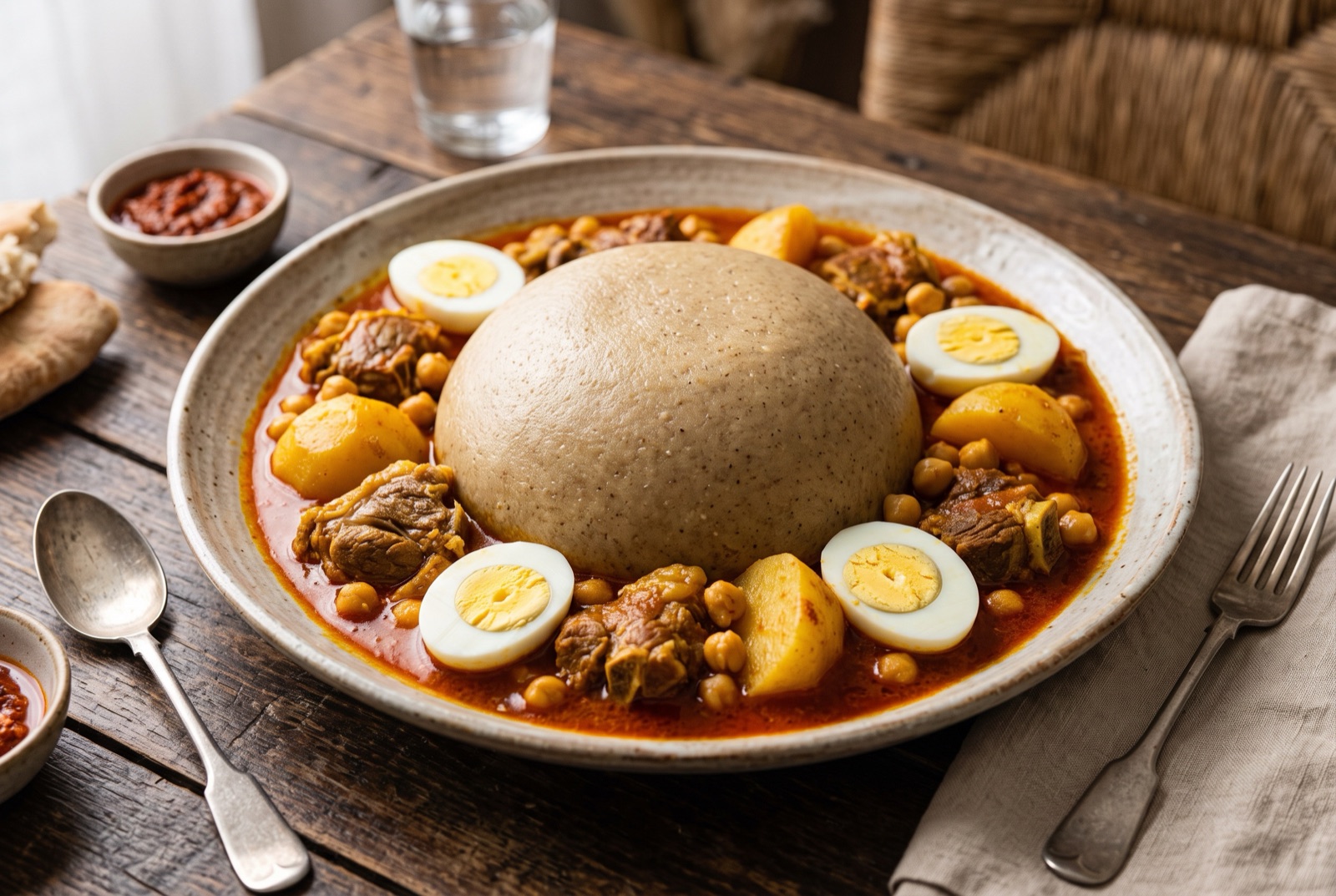
Libya2 hr
Bazin
Libyan Barley Dough Dome with Lamb Sauce
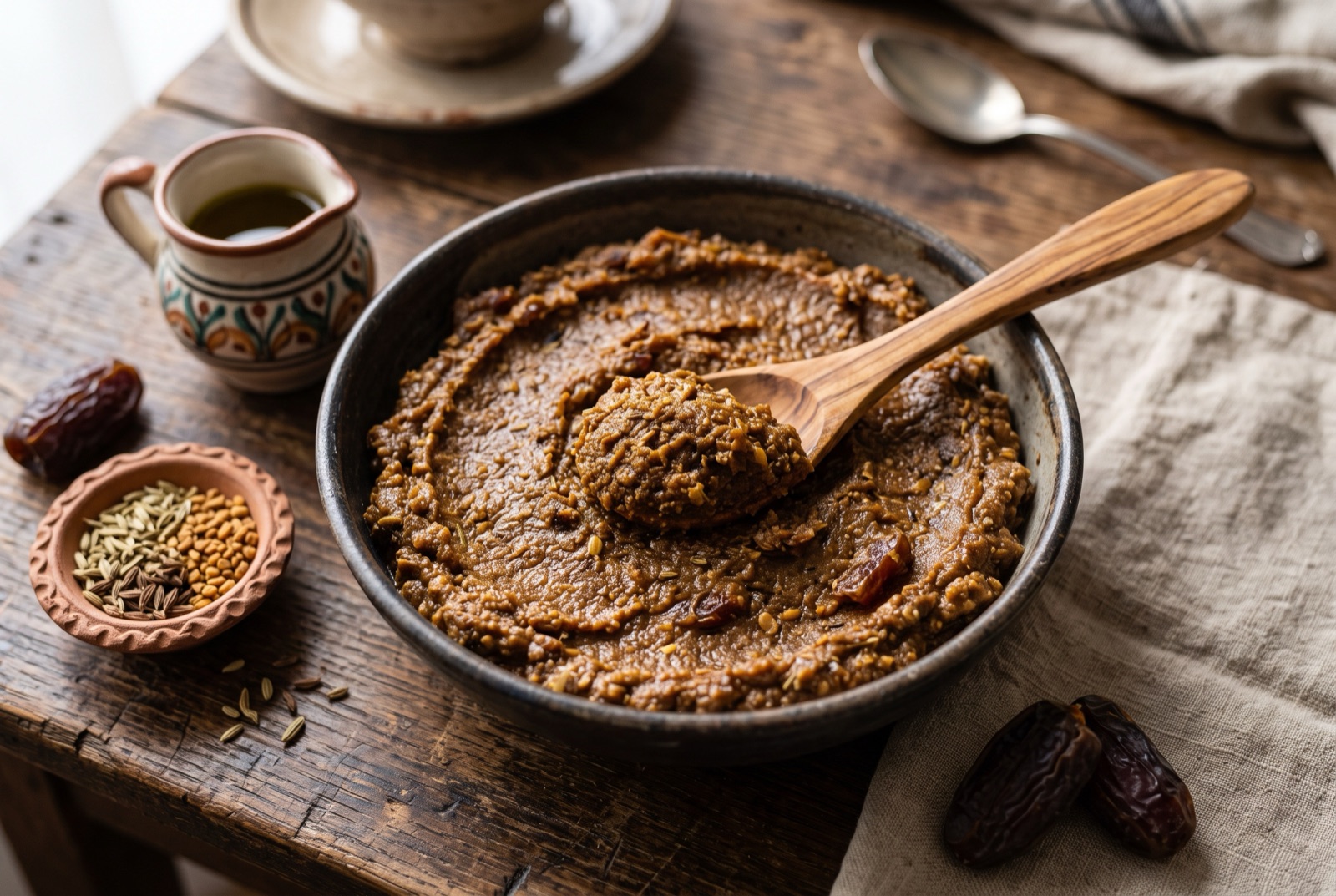
Libya40 min
Bsisa
Toasted Barley Flour Paste with Dates
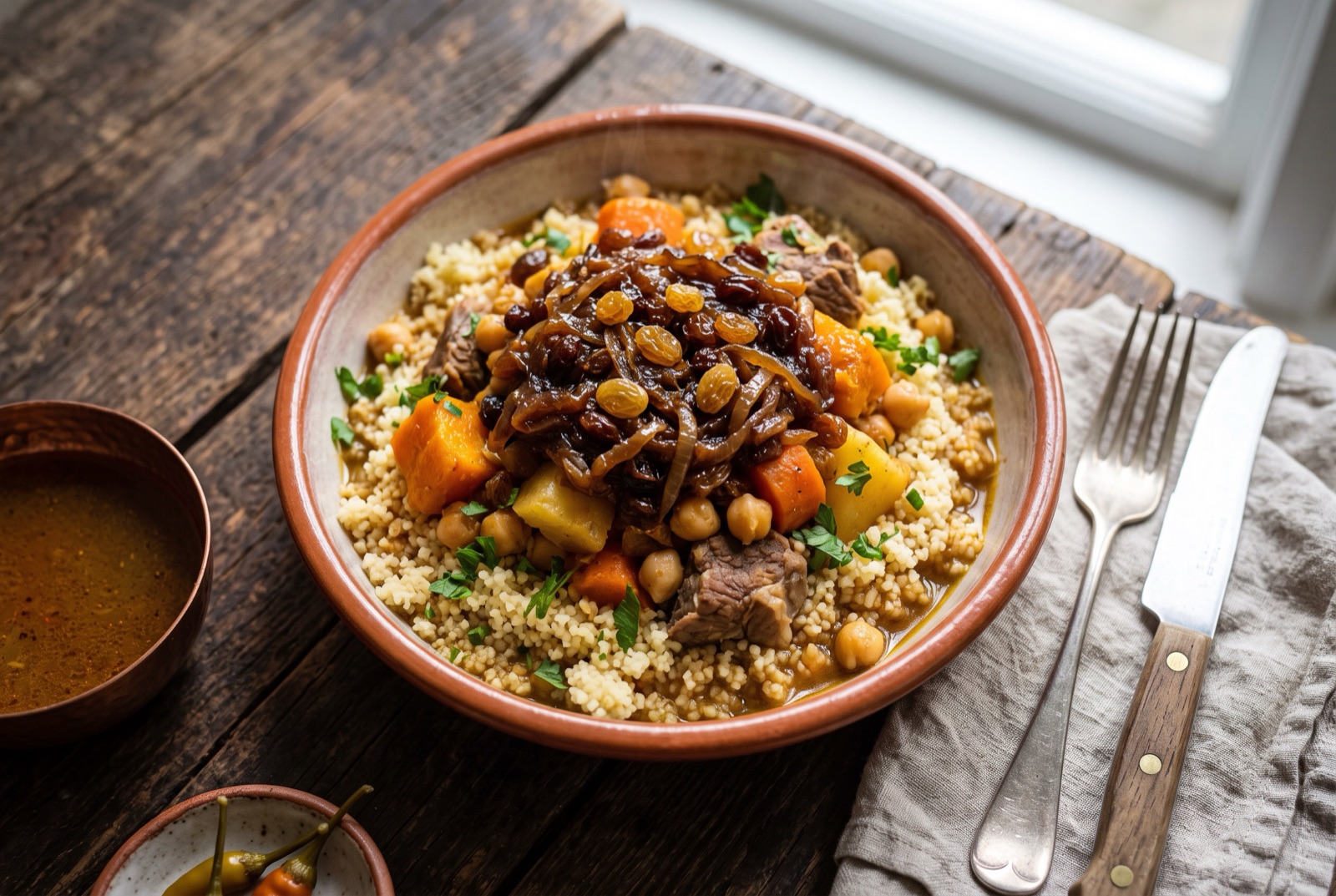
Libya2 hr 5 min
Couscous bil Bosla
Libyan Lamb and Pumpkin Couscous
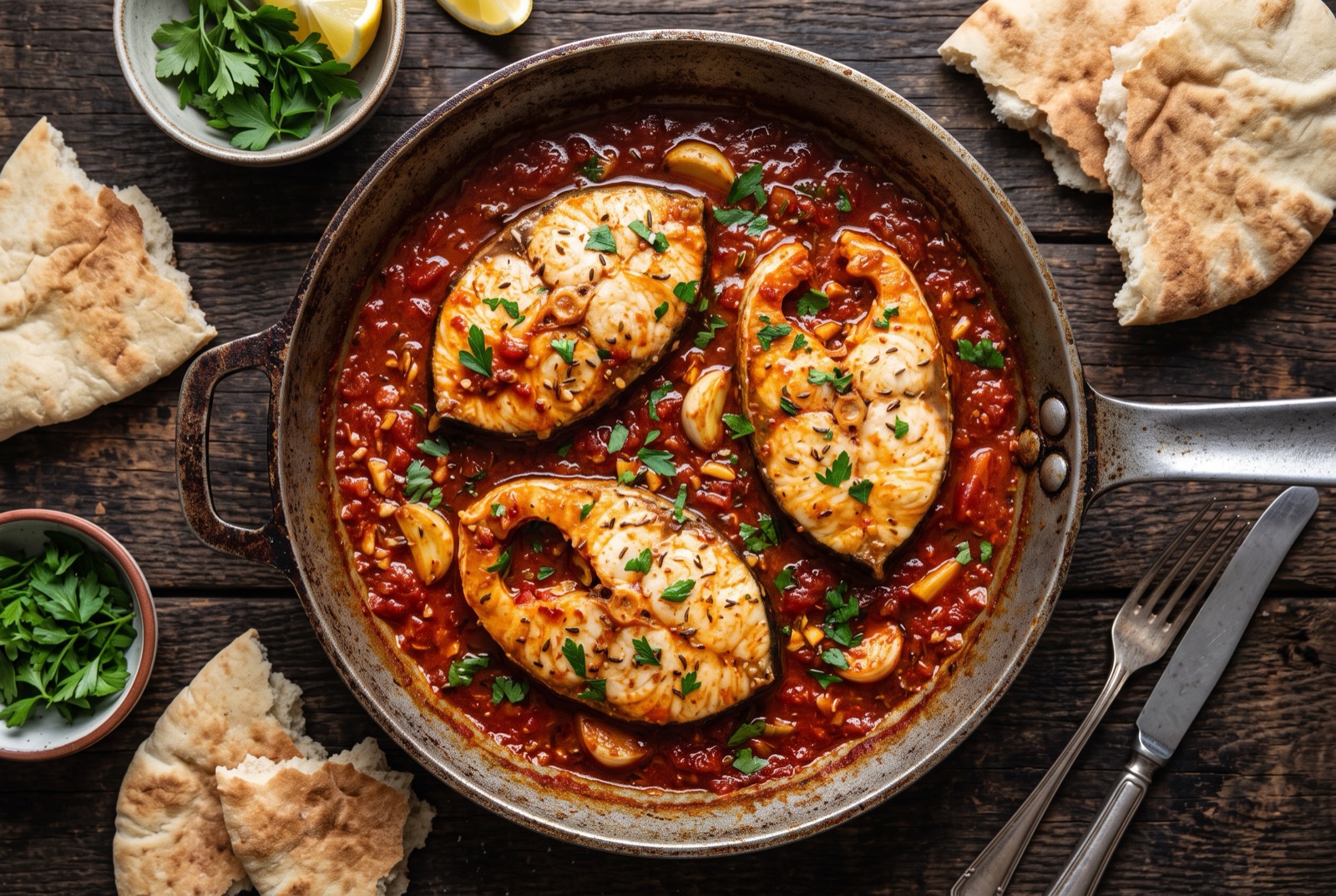
Libya45 min
Hraimi
Libyan Fish in Spicy Tomato Sauce
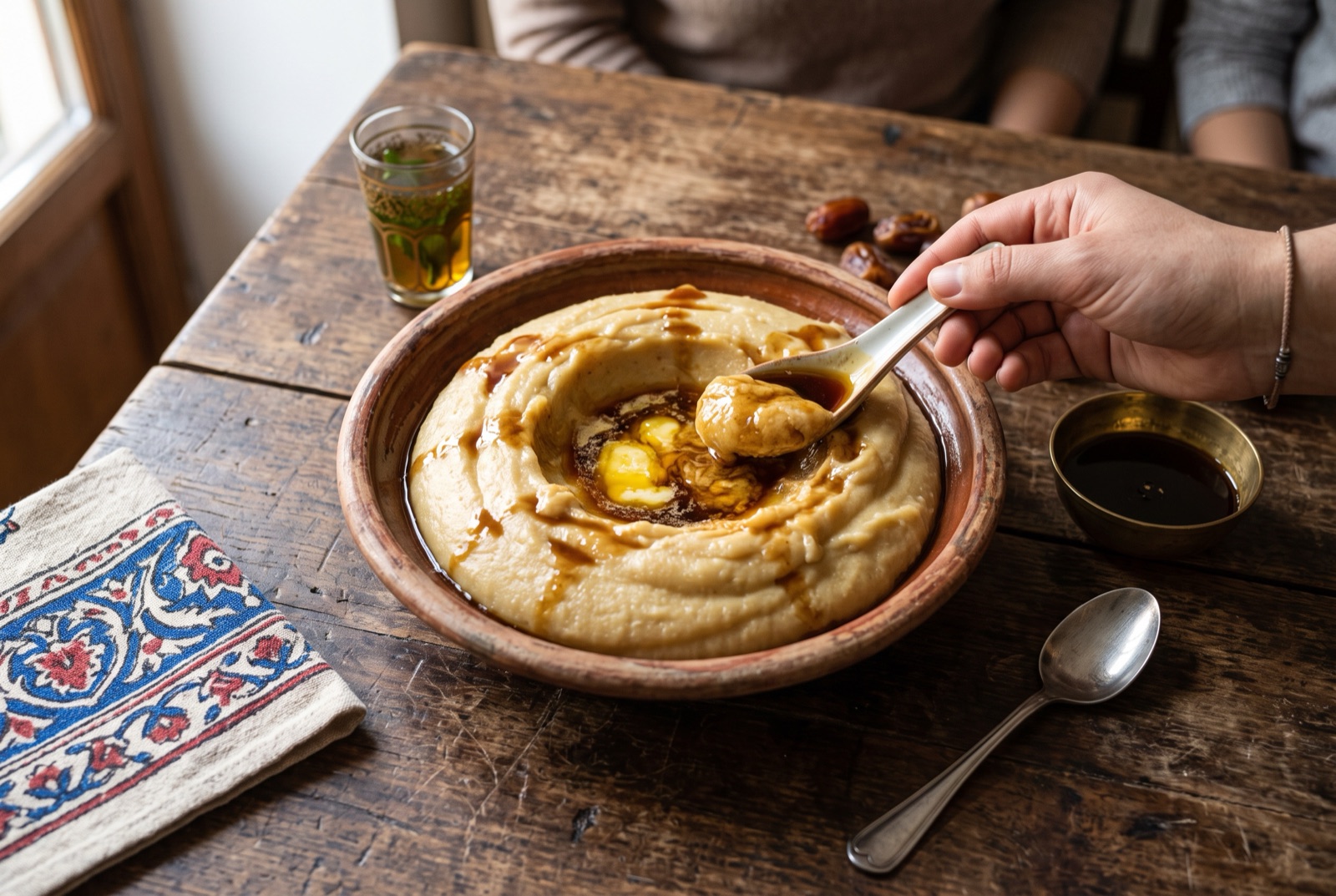
Libya30 min
Libyan Asida
Wheat Pudding with Date Syrup
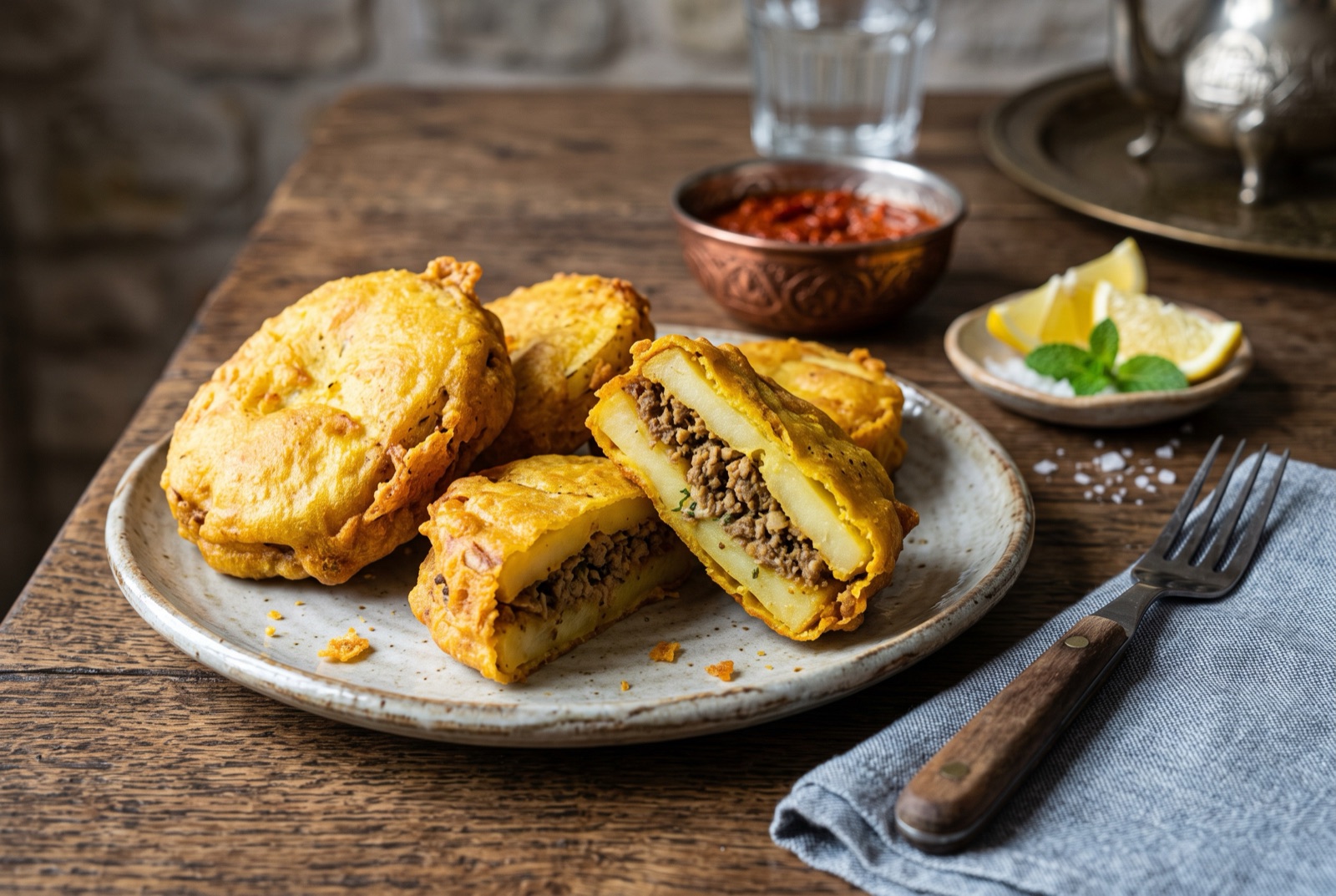
Libya1 hr 5 min
Mbatten
Libyan Stuffed Potato Fritters
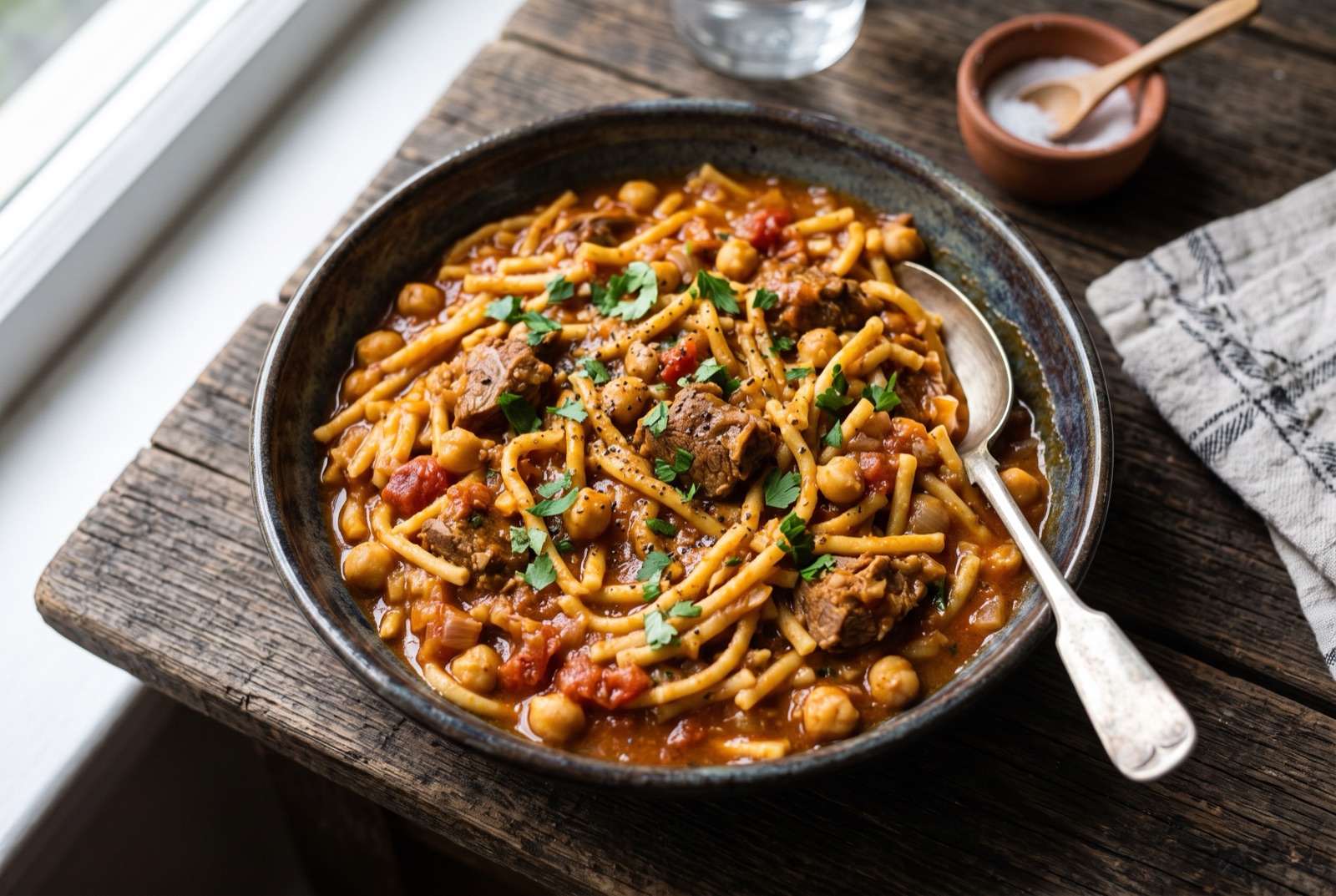
Libya2 hr 10 min
Rishta
Libyan Hand-Cut Noodles with Chickpeas
Libya2 hr 5 min
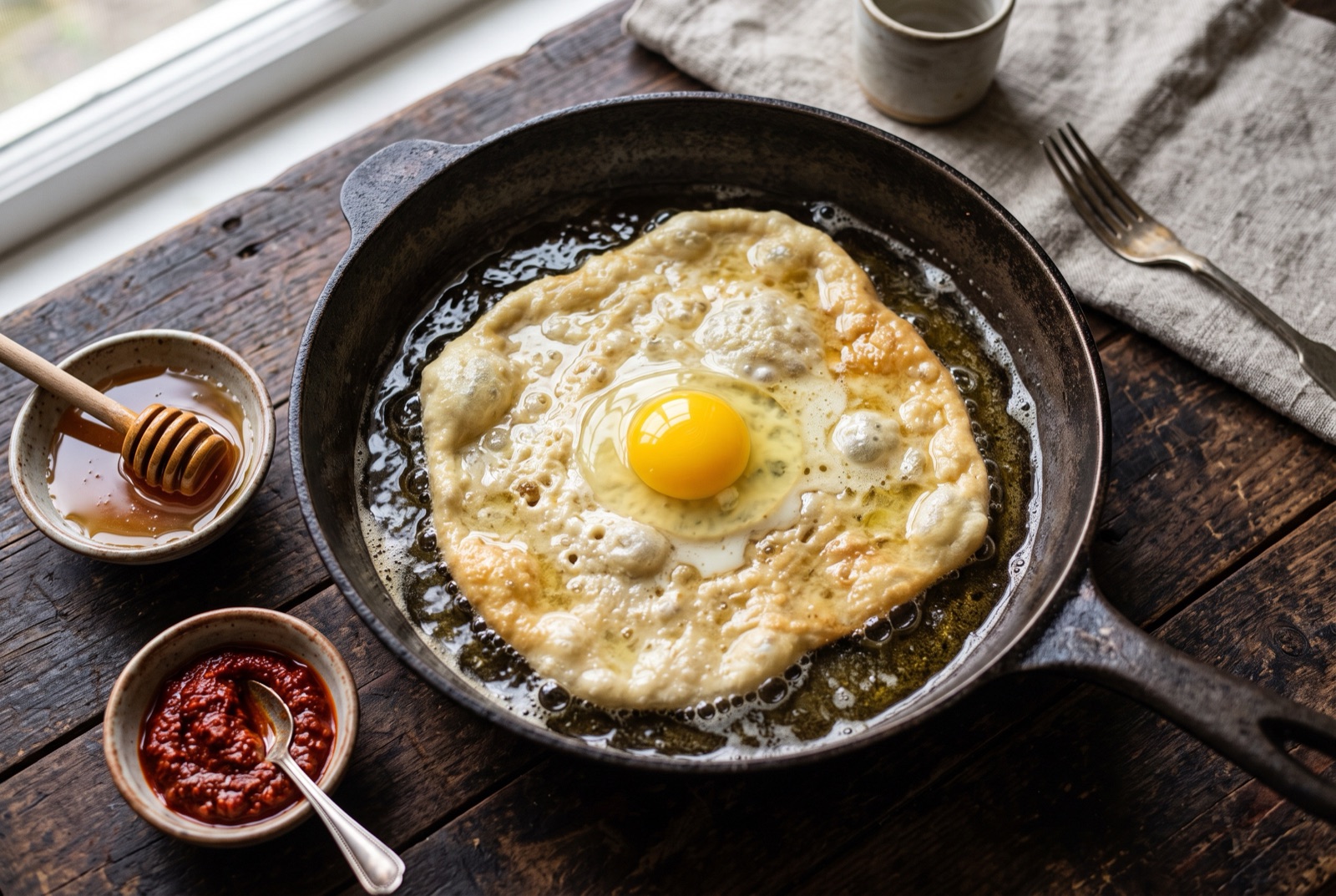
Sfinz
Libyan Fried Dough with Egg
Libya1 hr 15 min
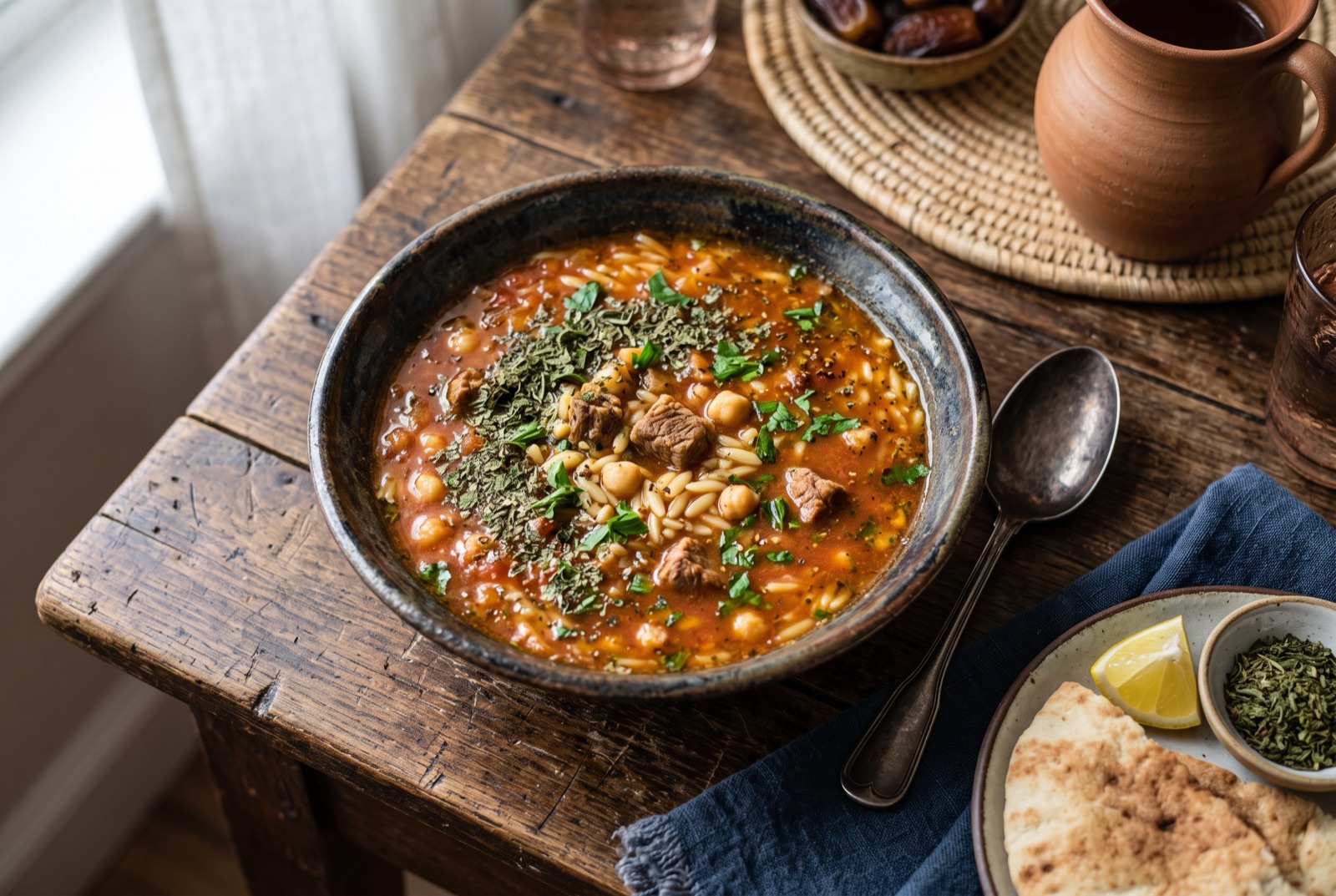
Shorba Libiya
Lamb, Mint and Orzo Soup
Libya3 hr 10 min
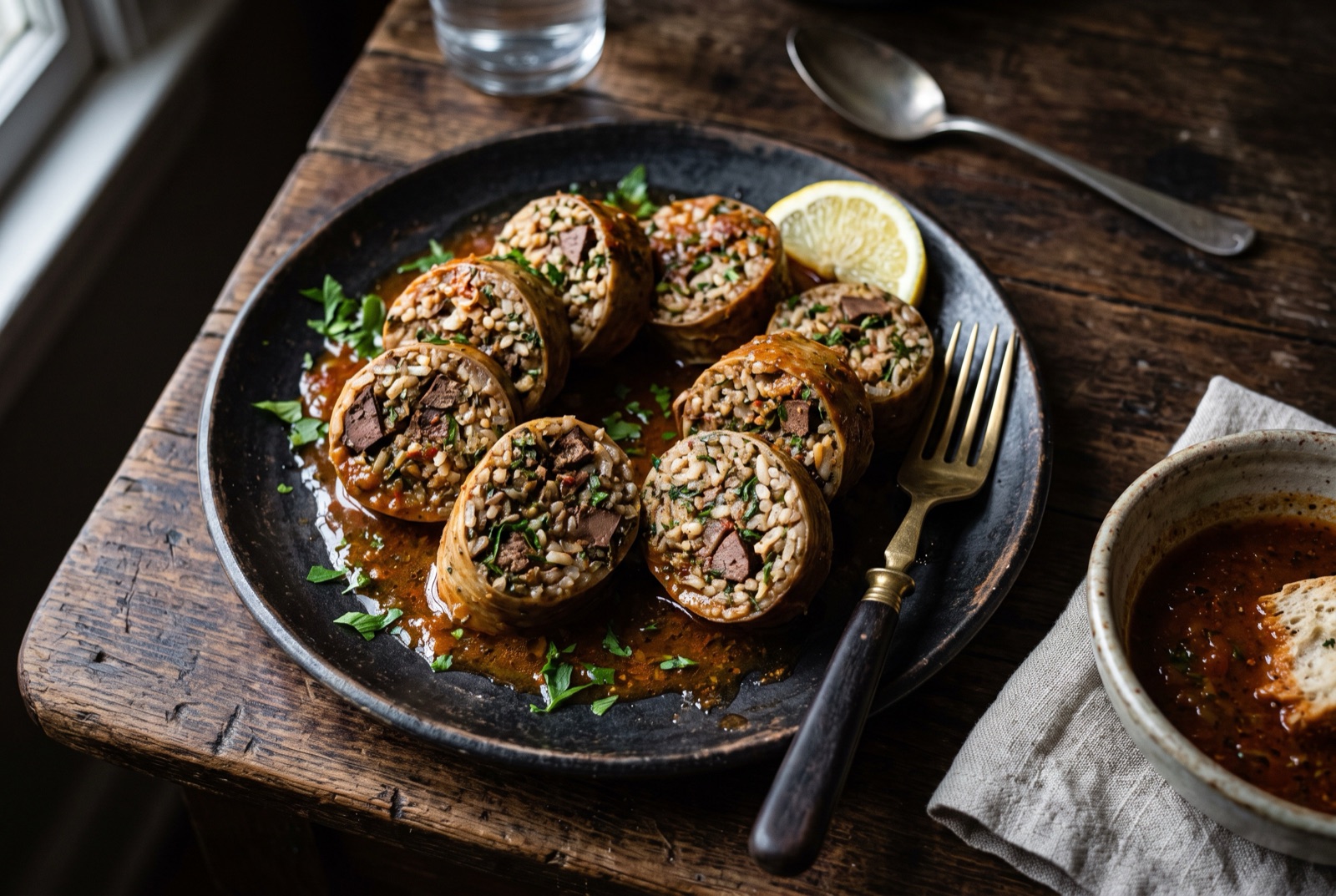
Usban
Libyan Herb and Rice Stuffed Sausage
Keep traveling.
Libya sits in Maghreb, and its kitchen shares borders as well as ingredients with Algeria and Cameroon.
 Algeria
 Cameroon