Sfinz.
Libyan Fried Dough with Egg
سفنز · say it: SFINZ
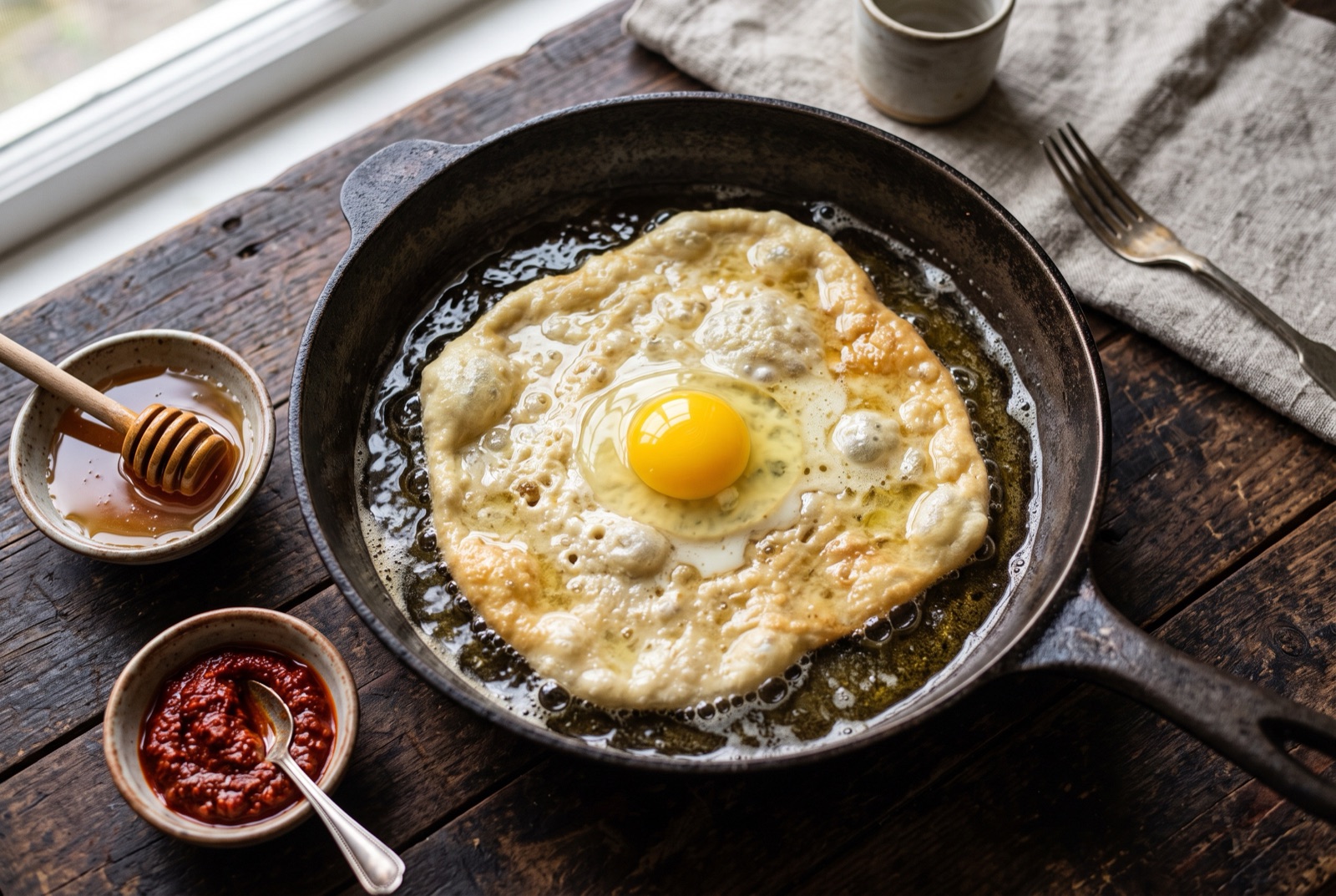
Sfinz is a slack, bubbly yeasted dough pulled thin with oiled hands and lowered into a pan of hot oil, where it swells into a blistered disc with a chewy centre and lacy, crisp edges. An egg is cracked onto the surface while it fries so the white sets into the dough and the yolk stays soft, and the finished round is eaten by hand — drizzled with honey by people with a sweet tooth, smeared with harissa by everyone else. It is Friday-morning food in Libya, sold from small shops that make nothing else, and at home it needs no equipment beyond a bowl, a pan and an hour and a half of patience while the dough rises.

- Gate
- LibyaTripoli
- Prep
- 15 min
- Cook
- 20 min
- Total time
- 2 hr 5 min incl. 1 hr 30 min rest
- Serves
- 4
- Status
- Easy
- Nutrition / serving · estimated
- Calories 540 kcal
- Protein 19 g
- Carbs 55 g
- Fat 26 g
- Fiber 3 g
- Sugar 12 g
Why this recipe works.
- Keeps the dough at the very high hydration that gives sfinz its open, chewy crumb instead of a bready one.
- Stretches the dough straight into the oil with oiled hands, the only technique that works with a dough this loose.
- Times the egg so the white sets into the dough while the yolk is still soft.
- Covers both the honey and the harissa finish, because Libyan tables genuinely serve them side by side.
Ingredients.
9 itemsFor the dough
For frying
To top
To serve
Equipment
- Large mixing bowl
- Wide deep frying pan
- Slotted spoon
- Small bowl of oil for your hands
Instructions.
Mix a very wet dough
Whisk the flour, yeast, sugar and salt in a large bowl, pour in the warm water and beat with a wooden spoon for 2 minutes. The dough should be far too slack to knead — it slaps and stretches rather than folding, and it will not hold a shape at all.
Let it rise until bubbly
Cover the bowl and leave it somewhere warm for about 90 minutes. It is ready when the volume has at least doubled, the surface is a mass of open bubbles, and the whole thing shudders and sinks slightly when you shake the bowl.
Heat the oil
Pour the oil into a wide, deep pan to a depth of about 3 cm and bring it to 175°C. Drop in a scrap of dough as a test: it should rise to the surface within two seconds and colour slowly and evenly, not instantly.
Stretch the dough into the oil
Oil your hands well, tear off a fist-sized piece of dough and stretch it between your fingers into a rough disc about 15 cm across with a slightly thicker rim, then lay it into the oil away from you. The edges should immediately go lacy and start to blister.
Tip Re-oil your fingers between every piece. Dry hands and this dough do not coexist.
Crack on the egg
Within the first minute, while the top of the disc is still soft, crack an egg into the middle and let it spread across the surface. Spoon a little hot oil over the white until it turns opaque but the yolk still trembles when you nudge the pan.
Turn and finish
Once the underside is deep gold, about 2 minutes, flip the disc carefully with a slotted spoon and fry the egg side for 45 seconds, just long enough to set it. Lift onto a rack, fry the remaining pieces, and serve immediately with honey and harissa on the side.
Tips from our kitchen.
- Do not add extra flour to make the dough manageable. It is meant to be sticky enough to pour, and oil on your hands solves the handling problem.
- Let the dough rise until the surface is covered in bubbles and it wobbles and deflates when you shake the bowl.
- Keep a small bowl of oil beside the pan and re-oil your fingers before every piece, otherwise the dough welds to your skin.
- Fry at around 175°C. Cooler oil makes greasy, heavy discs; hotter oil browns the outside before the middle sets.
- Crack the egg on within the first minute, while the top surface is still wet enough for it to grip.
- Serve them the moment they come out — sfinz is at its best inside five minutes and merely good after twenty.
Substitutions.
- Instant yeast → 20 g fresh yeast, or 2 tsp active dried yeast
- Active dried yeast needs proving in the warm water with the sugar for 10 minutes first. Fresh yeast can be crumbled straight in.
- Honey → Date syrup (rub), or sugar syrup
- Date syrup is arguably the more Libyan choice and gives a deeper, less floral sweetness.
- Harissa → Any chilli paste, or crushed dried chilli mixed with olive oil and a little salt
- The point is a sharp, hot contrast against the fried dough, so exact provenance matters less here than heat.
Variations.
- Plain sfinz
- Skip the egg altogether and fry the discs on their own, then dust with sugar or dip in honey. This is the version closest to Moroccan and Tunisian fried dough.
- Sfinz with tuna and harissa
- Top the fried disc with drained tuna, harissa and a squeeze of lemon. Common as a quick lunch rather than a breakfast.
- Two-egg sfinz
- Stretch the dough wider and thinner and crack two eggs on top, breaking the yolks and spreading them across the surface so the whole disc sets into a flat, savoury round.
Storage & reheating.
Sfinz does not keep in any meaningful sense — the texture stiffens within an hour and no reheating brings it back. If you must, warm leftovers in a 190°C oven for 5 minutes on a rack, and accept that they will be crisper and drier than they were. The dough itself, however, can be made the night before and left to rise slowly in the fridge for up to 12 hours, which actually improves the flavour; bring it back to room temperature for an hour before frying.
Serve with
Sweet green tea or strong black coffee, with a jar of honey and a bowl of harissa both on the table.
The story behind Sfinz.
Fried yeasted dough is a Maghrebi constant, and every country on this coast has a version: Morocco fries sfenj into rings sold on a loop of string, Tunisia and Algeria have their own close relatives, and the shared name traces back to the same Arabic root for something spongy. The Libyan take stands apart in shape and in what goes on top. Instead of a ring, sfinz is a flat, irregular disc stretched directly in the oil, and the egg cracked onto it turns breakfast pastry into an actual meal.
In Tripoli the sfinz shop is a specific institution — a counter, a wide vat of oil, a bowl of dough that has been rising since dawn, and a queue that peaks around Friday prayers and on Eid morning. The cook works with bare oiled hands at a speed that looks careless, tearing off a lump, stretching it between the fingers and dropping it in one movement. Orders are called out by topping: honey for the children, harissa for the adults, sometimes both on the same plate.
At home the only real difficulty is accepting how wet the dough should be. It is closer to a thick batter than to bread dough, too loose to knead and impossible to shape on a floured surface, and every instinct says to add more flour. Resisting that is the entire recipe — a stiffer dough fries into something dense and bready rather than the light, hole-riddled, slightly chewy thing sfinz is supposed to be.
Questions, answered.
My dough is far too sticky to handle — did I do something wrong?
Almost certainly not. Sfinz dough is meant to be very wet, closer to a thick batter than to a bread dough, and it cannot be kneaded or shaped on a work surface. The solution is oil rather than flour: coat your hands generously, tear a lump straight from the bowl and stretch it between your fingers over the pan. Adding flour to firm it up produces a dense, bready result.
How do I stop the egg sliding off the dough?
Crack it on early, within the first minute of frying, while the top surface is still soft and slightly wet so the white can settle into the dimples rather than running off a set crust. Stretching the dough with a slightly thicker rim also helps, since it creates a shallow well for the egg to sit in.
What oil temperature should I fry at?
Around 175°C. Test it by dropping in a small piece of dough: it should sizzle immediately and rise to the surface within a couple of seconds, browning gradually over the next minute. If it browns almost instantly the oil is too hot and the centre will stay raw; if it sinks and sits there, the oil is too cool and the dough will absorb it.
Is sfinz sweet or savoury?
Both, and the choice is made at the table rather than in the pan. The dough itself carries only a little sugar and salt, so the same fried disc can be drizzled with honey or date syrup, or spread with harissa and eaten as a savoury breakfast. Libyan households routinely put both toppings out and let people decide.
Can I make the dough the night before?
Yes, and many cooks prefer it. Mix the dough, cover it and refrigerate overnight for up to twelve hours; the slow cold rise develops more flavour. Take the bowl out about an hour before you want to fry so the dough warms up and becomes active again, and expect it to be slightly easier to handle when cold.
You might also like.
All recipes →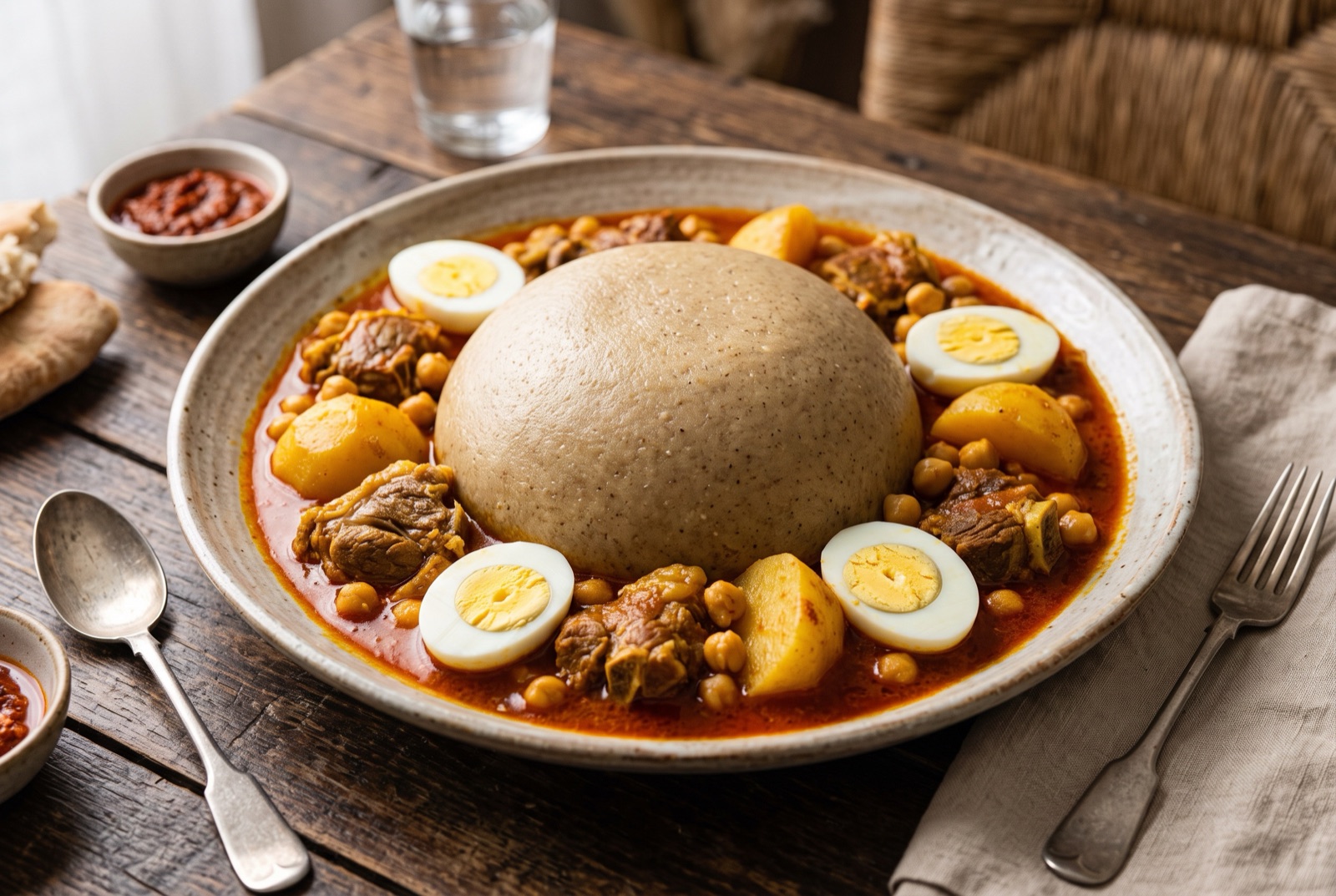
Keep exploring Libya.
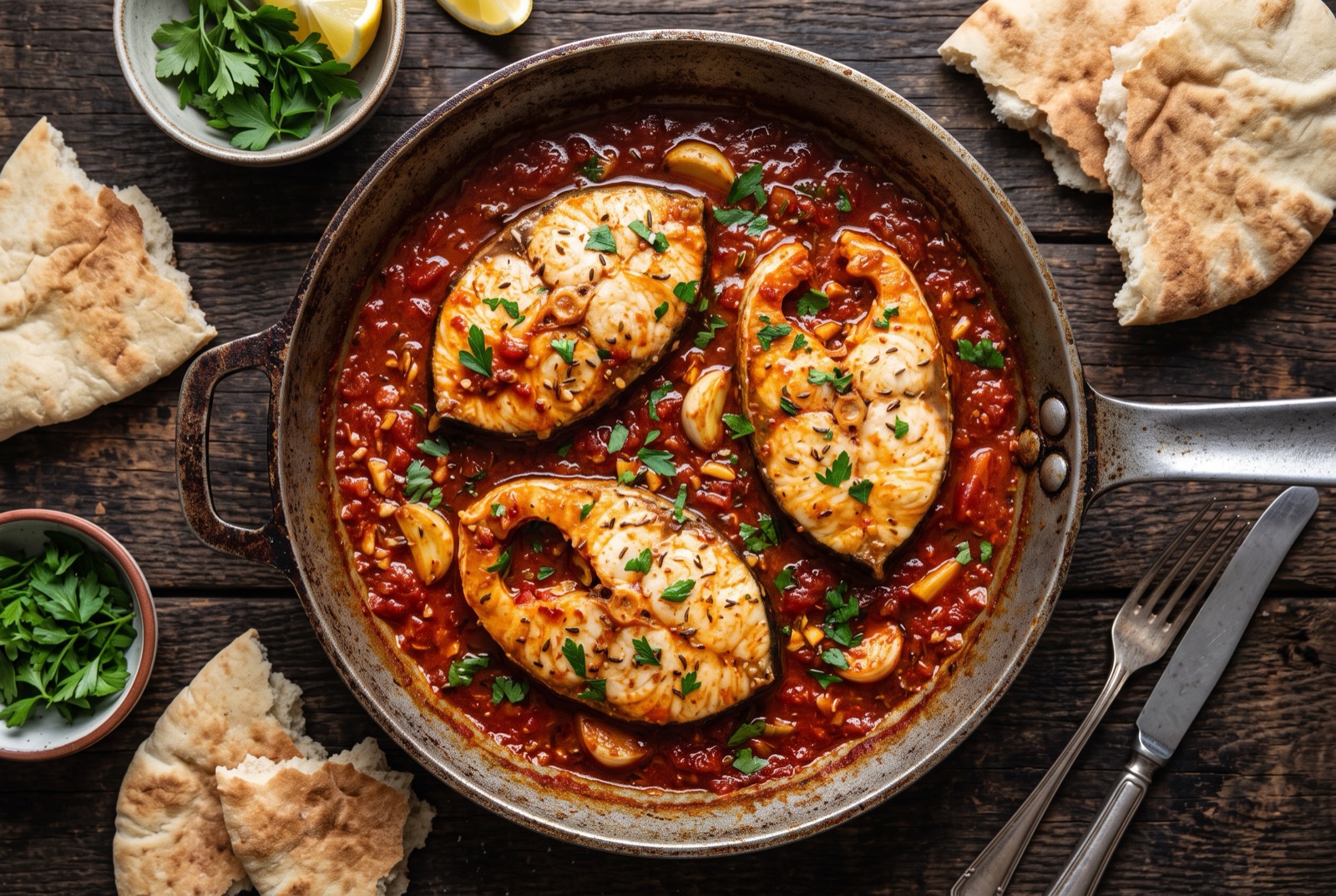
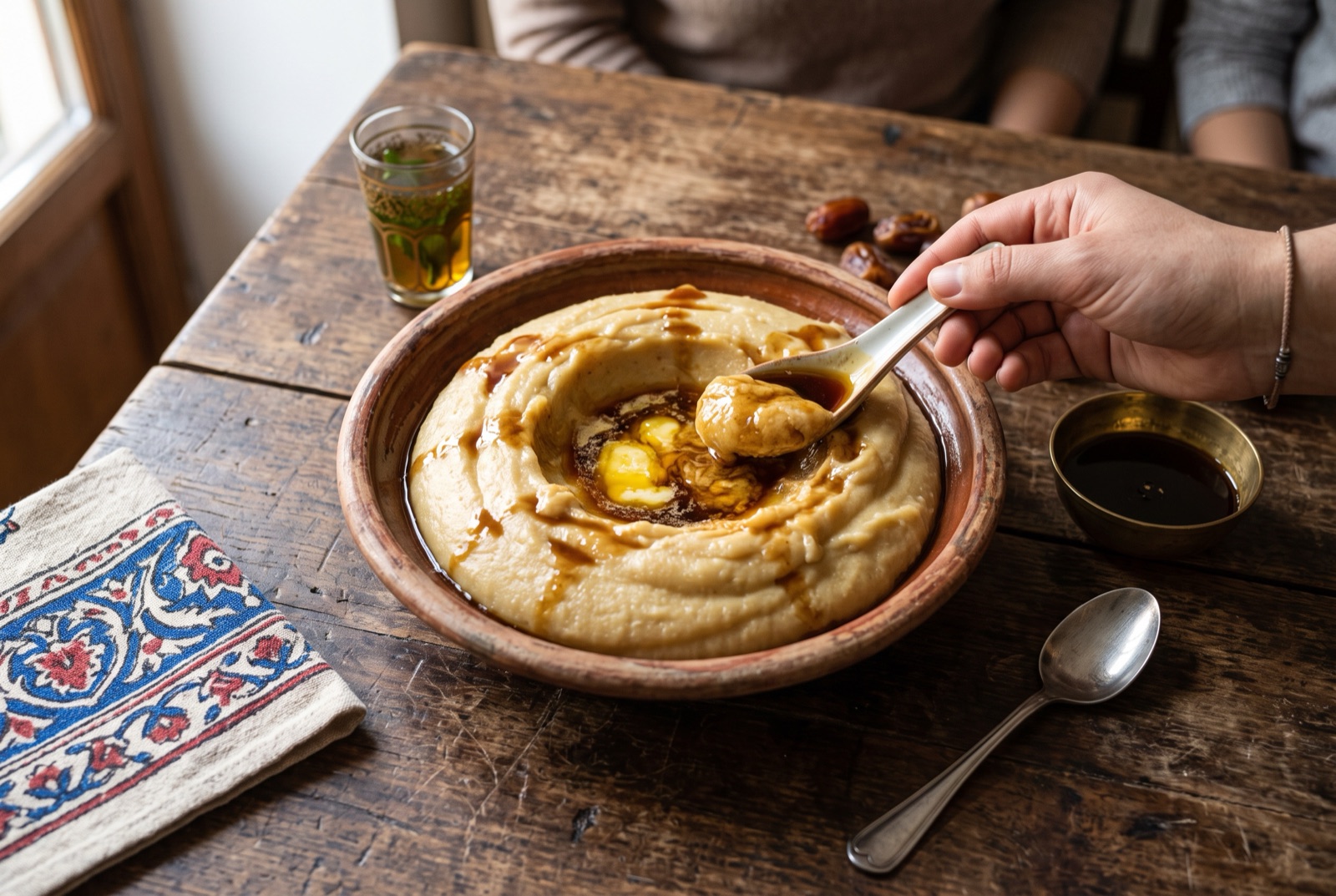
Libya has 9 more dishes in the atlas — Bazin and Bsisa, and 7 more.
All Libya recipes Flour recipes Yeast recipes Eggs recipes breakfaststreet foodvegetariandairy freenut freeRecipe by The DishRoute Kitchen · published August 20, 2026 · updated August 20, 2026