Maneštra.
Istrian Bean, Corn and Smoked Pork Pot
Maneštra · say it: mah-NESH-trah
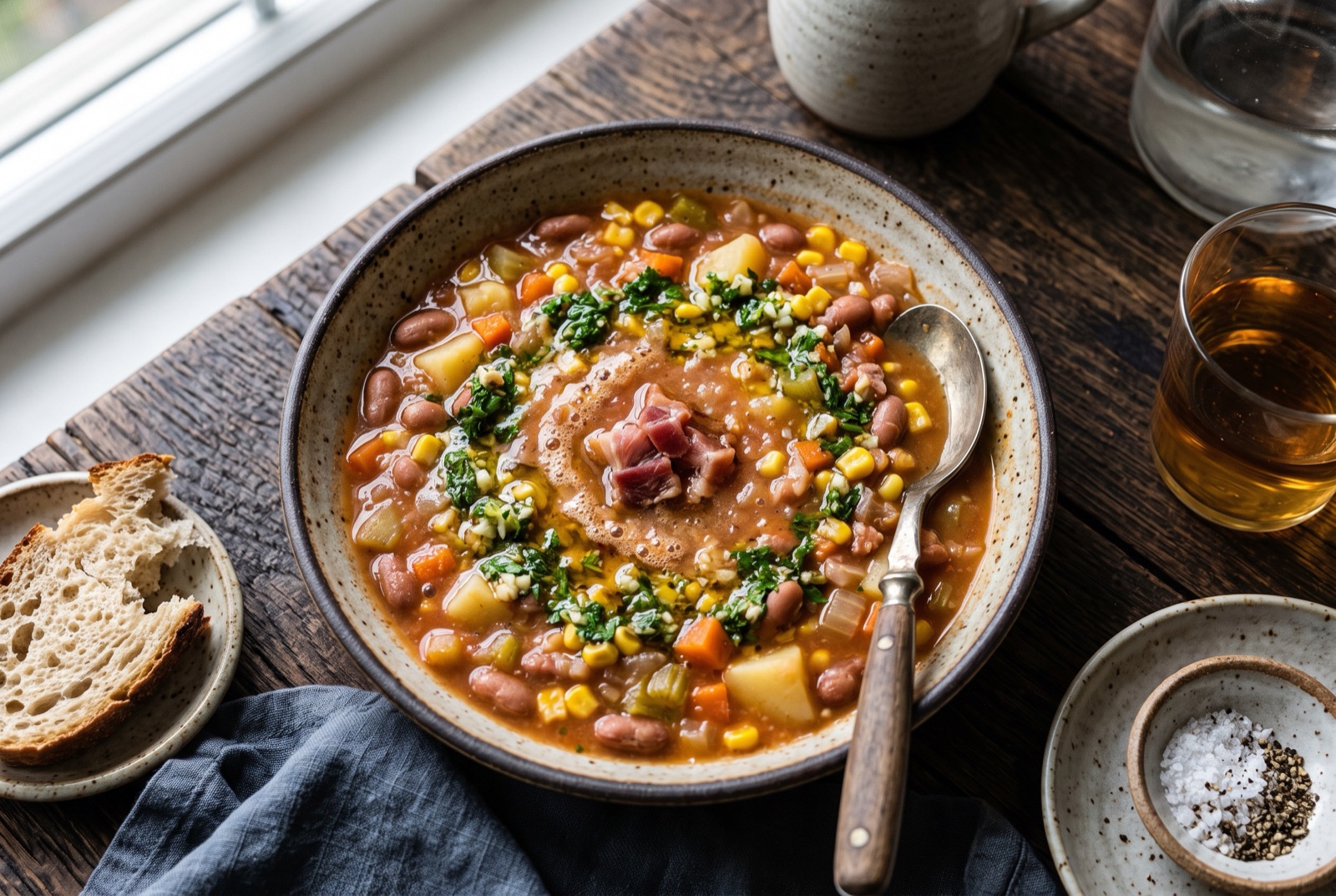
Maneštra is Istria's everyday pot: beans, potato and corn cooked slowly with a piece of smoked or cured pork until the starch thickens the liquid into something between a soup and a stew, then sharpened at the last moment with garlic and parsley pounded together with a little olive oil. It should be thick enough that a spoon stands up in it briefly before falling over. The flavour is smoky and sweet from the corn, deeply savoury from the pork, and then suddenly green and pungent from that final pounded paste, which is the detail that stops it being just another bean soup. It is cheap, filling, made in large quantities, and better the next day.

- Gate
- CroatiaIstria
- Prep
- 20 min
- Cook
- 1 hr 45 min
- Total time
- 10 hr 5 min incl. 8 hr rest
- Serves
- 6
- Status
- Easy
- Nutrition / serving · estimated
- Calories 480 kcal
- Protein 26 g
- Carbs 58 g
- Fat 16 g
- Fiber 14 g
- Sodium 890 mg
Why this recipe works.
- Cooks the pork with the beans from the start so the smoke and salt work through the whole pot rather than sitting on top.
- Keeps the pounded raw garlic and parsley finish, which is the step most published versions leave out.
- Mashes part of the beans to thicken instead of adding flour, giving the correct dense, spoon-coating texture.
- Uses fresh corn cut from the cob for the sweetness that defines the bobići version.
Ingredients.
14 itemsFor the pot
For the finish
Equipment
- Large heavy pot or Dutch oven
- Mortar and pestle, or a board and a heavy knife
- Wooden spoon
Instructions.
Soak the beans
Cover the dried beans with at least three times their volume of cold water and leave them overnight. They should swell to roughly double the size and the skins should look smooth and taut rather than wrinkled. Drain and rinse before using.
Start the beans and pork
Put the drained beans, the piece of smoked pork and the bay leaves in a large pot, cover with the water, and bring to a boil. Skim off the grey foam that rises in the first few minutes, then lower the heat to a gentle simmer and cover.
Tip Skimming matters here — that foam carries a muddy taste that will otherwise stay in the pot.
Build the base
While the beans cook, warm the olive oil in a frying pan and cook the onion, carrot and celery over medium-low heat for 12–15 minutes, until the onion is completely soft, pale gold and smells sweet rather than sharp. Tip the whole lot into the bean pot.
Simmer until tender
Cook everything together for 60–75 minutes, until the beans crush easily against the roof of your mouth and the pork is soft enough to pull apart with a fork. Only now season the pot with salt — earlier salting can keep the bean skins tough.
Add potato and corn cobs
Lift out the pork and set it aside. Add the potato cubes and the stripped corn cobs to the pot and simmer for 15 minutes, until the potatoes are just yielding at the edges. The cobs release a surprising amount of sweetness into the liquid.
Thicken and add the kernels
Fish out the cobs, then crush about a cupful of the beans and potato against the side of the pot with the back of a spoon and stir them back through — the liquid should turn cloudy and noticeably thicker. Add the corn kernels and cook 10 minutes more.
Return the meat
Pull the pork off any bone, chop or shred it into bite-sized pieces, and stir it back into the pot. Taste and correct the seasoning now — the meat brings its own salt, so check before adding more.
Pound the finish and serve
Crush the garlic and parsley to a rough green paste in a mortar with the olive oil, or chop them together and work them under the flat of a knife. Take the pot off the heat, stir the paste through, and serve after two minutes with plenty of bread.
Tip Off the heat, always. Cooking this paste turns it into ordinary soup seasoning and loses the sharp raw hit.
Tips from our kitchen.
- Soak dried beans overnight in plenty of cold water. Rushed beans cook unevenly and some will still be chalky when the rest have collapsed.
- Do not salt the pot until the beans are fully tender. Salted water early on can keep bean skins tough no matter how long you cook them.
- Choose a genuinely smoky piece of pork — pancetta, a ham hock or a smoked rib. Fresh pork gives you a bland pot with meat in it.
- Mash about a cup of the cooked beans against the side of the pot and stir them back in. That is what turns thin broth into proper maneštra.
- Add the corn in the last 15 minutes only, so the kernels stay sweet and slightly firm rather than dissolving into starch.
- Make the pounded garlic and parsley while the pot finishes and stir it in off the heat — cooking it destroys the whole point.
Substitutions.
- Dried borlotti beans → 2 x 400 g tins of borlotti or cranberry beans, drained
- Add tinned beans in the last 25 minutes with a little extra stock, since they need no cooking. The broth will be slightly less silky without the bean cooking liquid.
- Fresh corn on the cob → 250 g frozen sweetcorn kernels
- Frozen corn is a good stand-in and holds its sweetness. Tinned corn is too soft and often too sweet, and disappears into the pot.
- Smoked pancetta or ham hock → Smoked bacon lardons, or for a meat-free pot, 2 tsp smoked paprika plus a dried mushroom or two
- The smoked paprika route makes a genuinely good vegetarian maneštra, though it is a different dish rather than the same one without meat.
Variations.
- Maneštra od bobići
- The best-known version, leaning hard on fresh corn kernels stripped straight from the cob, with the stripped cobs simmered in the pot for extra sweetness.
- Jota
- Beans and sauerkraut instead of corn, sharp and sour, shared with Slovenia and Trieste and eaten mostly in winter.
- Barley maneštra
- Pearl barley added alongside the beans for a chewier, heavier pot — the version that most clearly belongs to the inland hill villages.
Storage & reheating.
Keeps 4 days refrigerated and thickens considerably as it sits, so loosen it with hot water or stock when reheating. Warm it gently over low heat, stirring, and add a fresh spoon of pounded garlic and parsley before serving to bring it back to life — the original one fades overnight. It freezes well for 3 months; freeze before adding the final garlic paste, and add that fresh after thawing.
Serve with
Coarse country bread and a glass of Istrian Teran. Nothing else is needed — it is a whole meal.
The story behind Maneštra.
The name gives the game away — maneštra comes from the Italian minestra, and Istria's food vocabulary is full of these borrowings from the centuries the peninsula spent under Venetian rule and later as a bilingual borderland. But the dish itself is Istrian country cooking rather than an import: it belongs to the interior hill villages more than to the coast, and it is built around whatever the household grew and cured. Maneštra is not one recipe but a category, and Istrian cooks will list a dozen versions without pausing.
The most famous is bobići, named for the fresh corn kernels stripped off the cob that give the pot its sweetness and its yellow flecks. Then there is jota, made with sauerkraut and beans, shared with neighbouring Slovenia and Trieste; maneštra od bobići with fresh beans in summer; versions built on barley, on turnip, on dried broad beans, on chestnuts in autumn. What they share is the structure: a legume, a starch, a piece of cured pig for depth, long slow cooking, and a finish of pounded garlic and herbs.
That finish deserves its own note, because it is easy to skip and it is the whole personality of the dish. Traditionally garlic, parsley and sometimes a piece of pancetta are chopped and crushed together — in a mortar, or simply worked to a paste on a board with the flat of a knife — and stirred into the pot after the heat is off. It stays raw, so it hits the tongue sharp and bright against all that slow-cooked softness. Istrian households also argue mildly about whether the pork should be smoked pancetta, a bone from a cured ham, or a length of ombolo, and the honest answer is that all three work and people use whichever is hanging in the pantry.
Questions, answered.
What exactly is maneštra?
Maneštra is a family of thick Istrian one-pot soups rather than a single recipe. All of them combine a legume, a starchy vegetable and a piece of cured pork, cooked slowly until the pot thickens. The best known is maneštra od bobići, made with fresh corn kernels. Others use sauerkraut, barley, turnip or chestnuts. The name comes from the Italian minestra, a legacy of Istria's long Venetian and bilingual history.
Can I make maneštra without meat?
Yes, though it becomes a different dish rather than the same one minus the pork. Replace the cured meat with two teaspoons of smoked paprika and a couple of dried mushrooms, which supply smoke and savoury depth, and use a good vegetable stock instead of water. Finish with the same pounded garlic and parsley, plus a more generous pour of olive oil.
How thick should it be?
Thick enough that a spoon left upright in the pot pauses before it falls over, but still loose enough to eat with a spoon rather than a fork. If yours is too thin, mash more of the cooked beans against the side of the pot and stir them back in. If it is too thick, add hot water — it will thicken further as it cools anyway.
Do I have to soak the dried beans?
It is strongly recommended. An overnight soak in cold water gives you evenly cooked beans and a shorter cooking time. Skipping it means some beans will still be chalky when others have burst, which ruins the texture of the pot. If you forget, use tinned beans instead rather than trying to cook unsoaked ones alongside potato and corn.
Why is the garlic and parsley added at the end and not cooked?
Because it is meant to stay raw and pungent. Everything else in the pot has been cooking for over an hour and has gone soft, sweet and mellow, so the pounded garlic, parsley and olive oil stirred in off the heat provide the sharp contrast that makes the dish taste finished rather than heavy. Cooking it removes exactly the quality it was added for.
You might also like.
All recipes →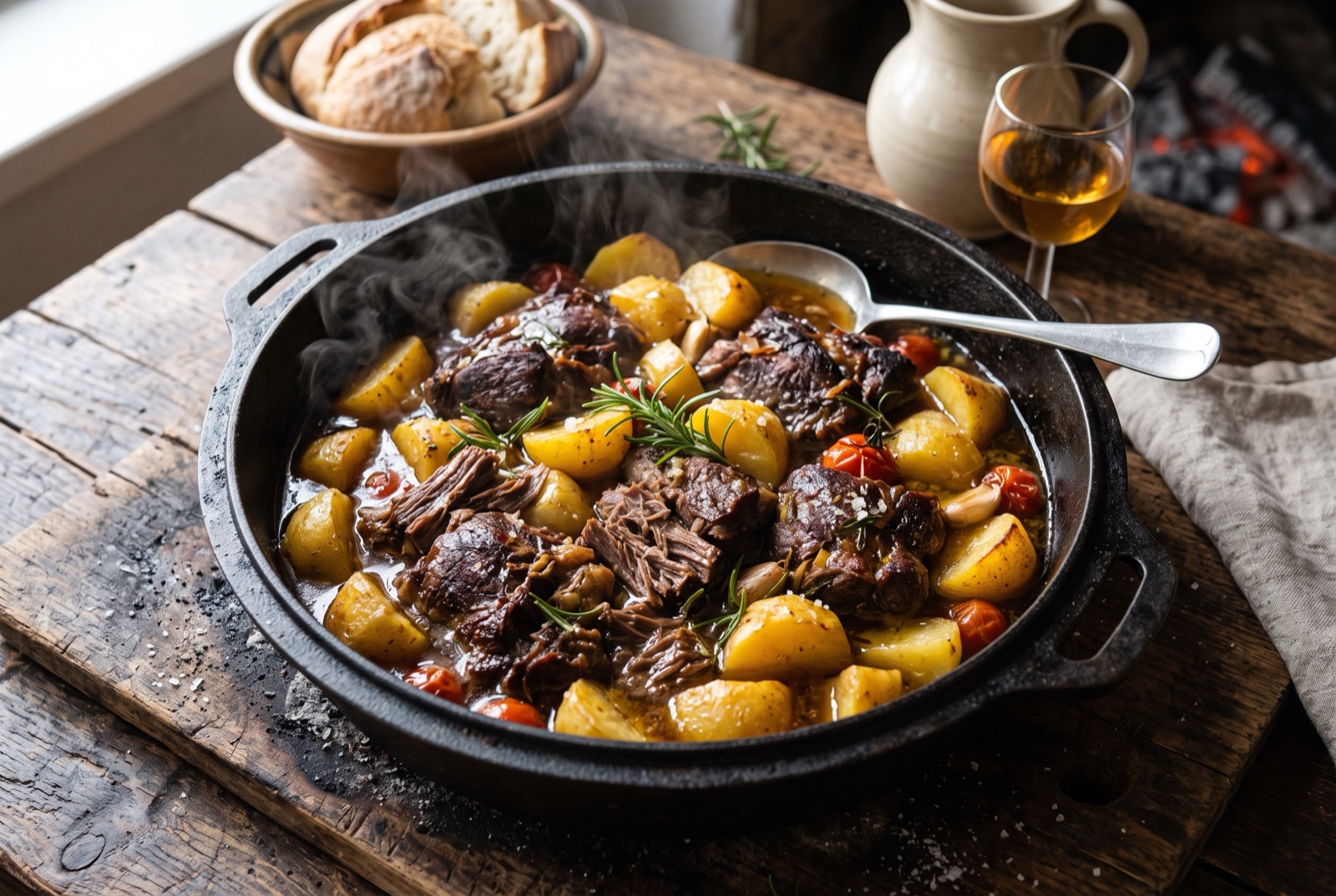
Croatia2 hr 35 min
Ispod Peke
Croatian Veal and Potatoes Baked Under a Bell
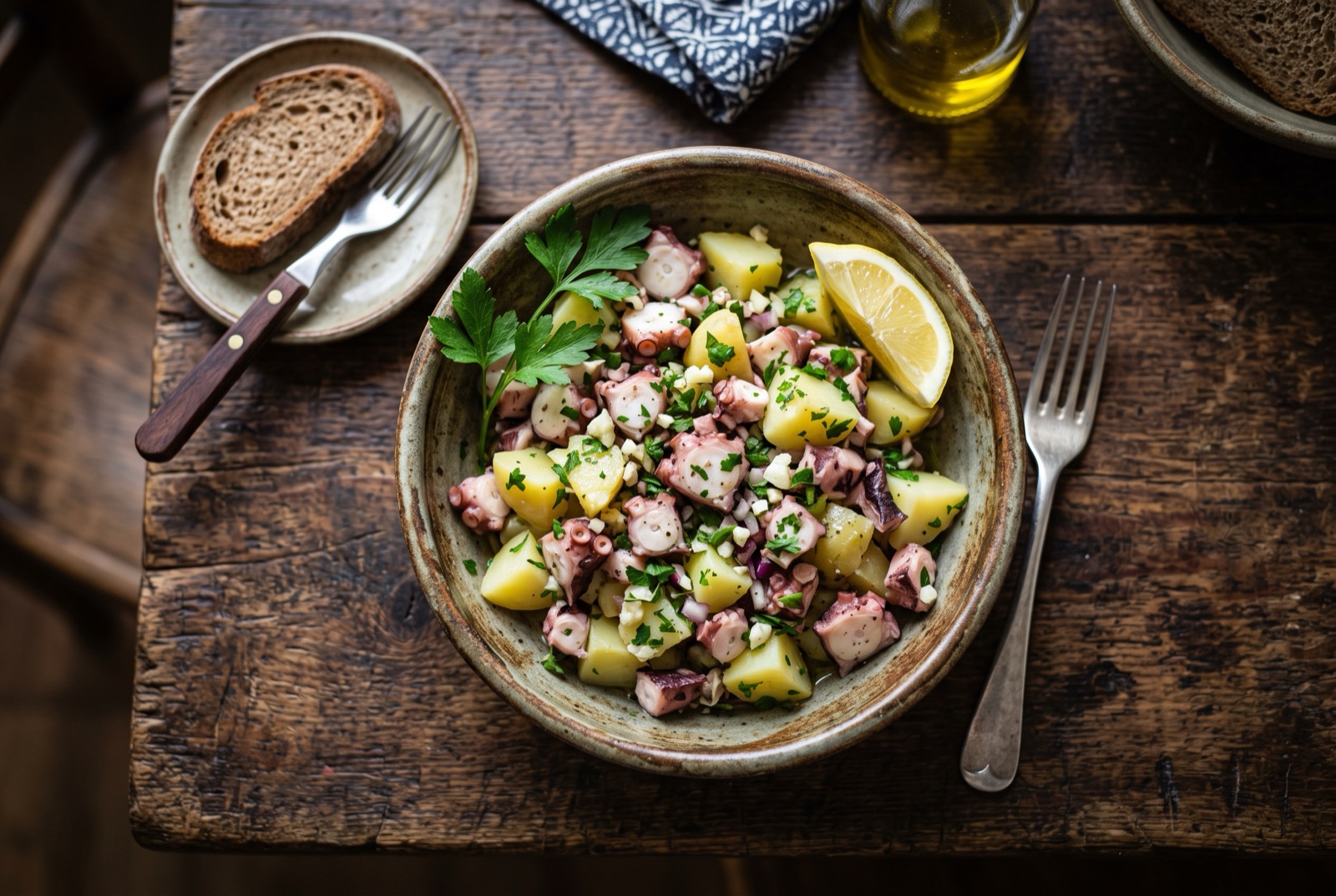
Croatia2 hr 25 min
Salata od Hobotnice
Dalmatian Octopus and Potato Salad
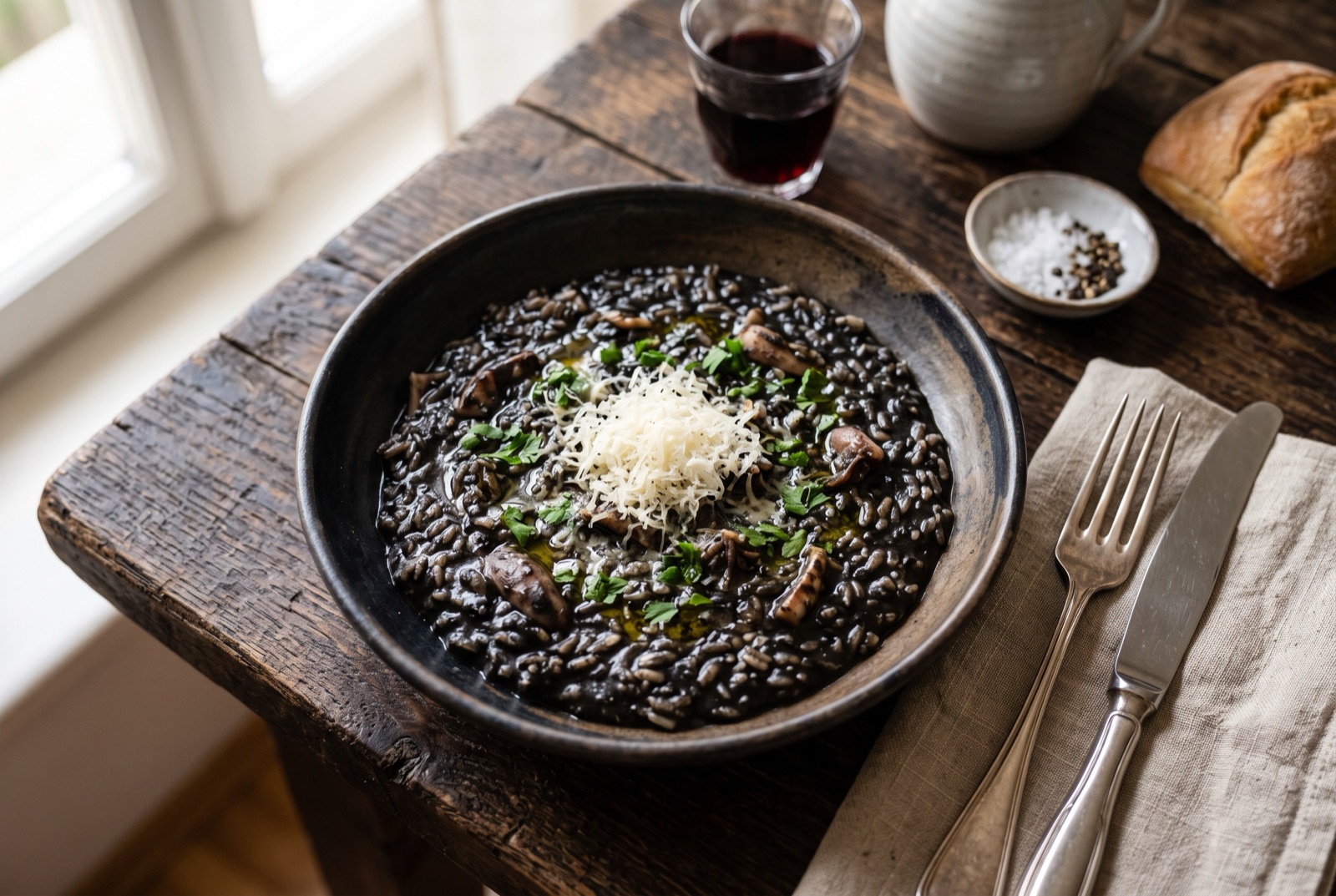
Croatia1 hr 5 min
Crni Rižot
Croatian Black Cuttlefish Risotto
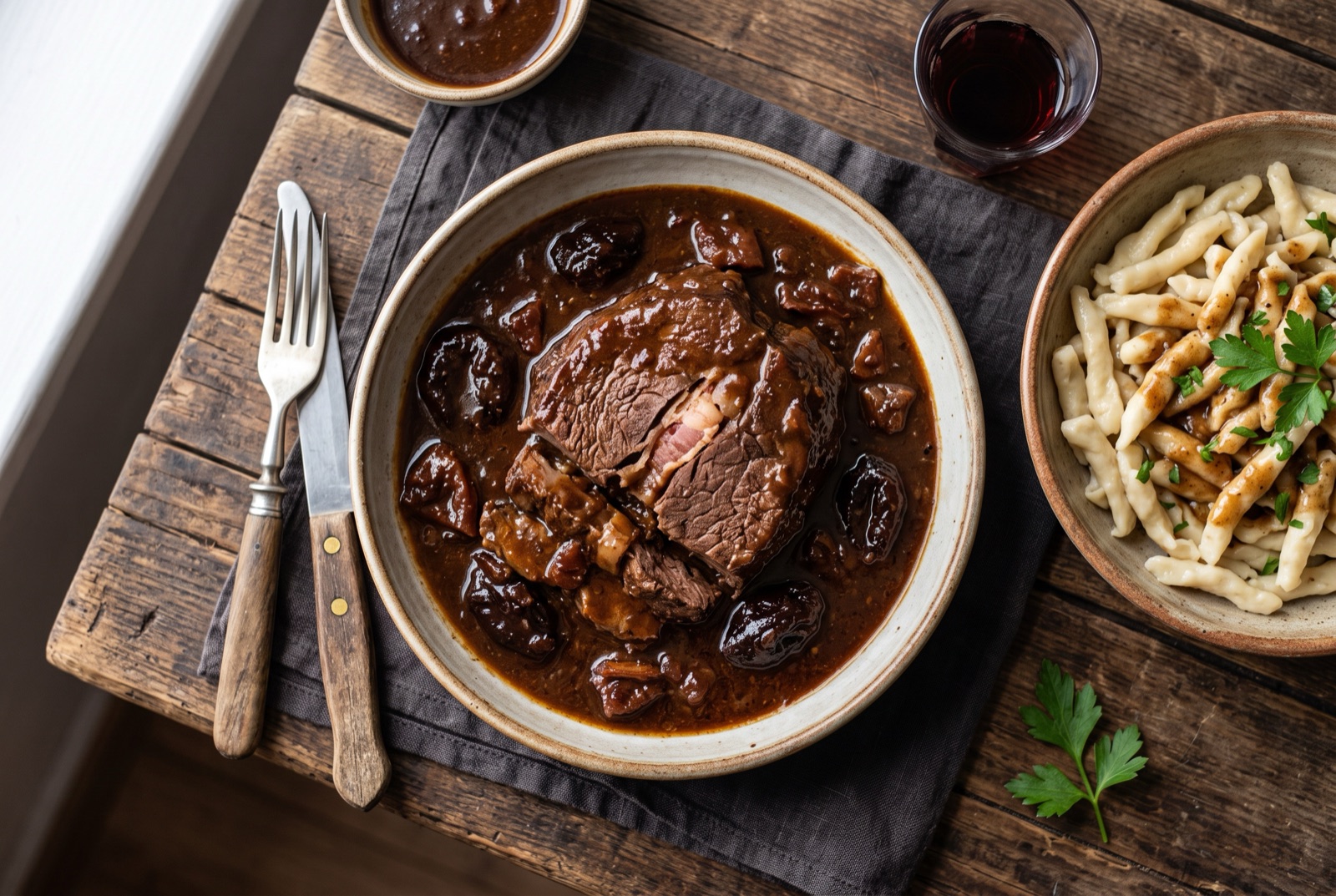
Croatia16 hr 10 min
Pašticada
Dalmatian Beef Braised in Sweet Prošek Wine
Keep exploring Croatia.
Croatia has 9 more dishes in the atlas — Brudet and Crni Rižot, and 7 more.
Recipe by The DishRoute Kitchen · published August 20, 2026 · updated August 20, 2026