Iyan.
Nigerian Pounded Yam Swallow
Iyán · say it: ee-YAHN
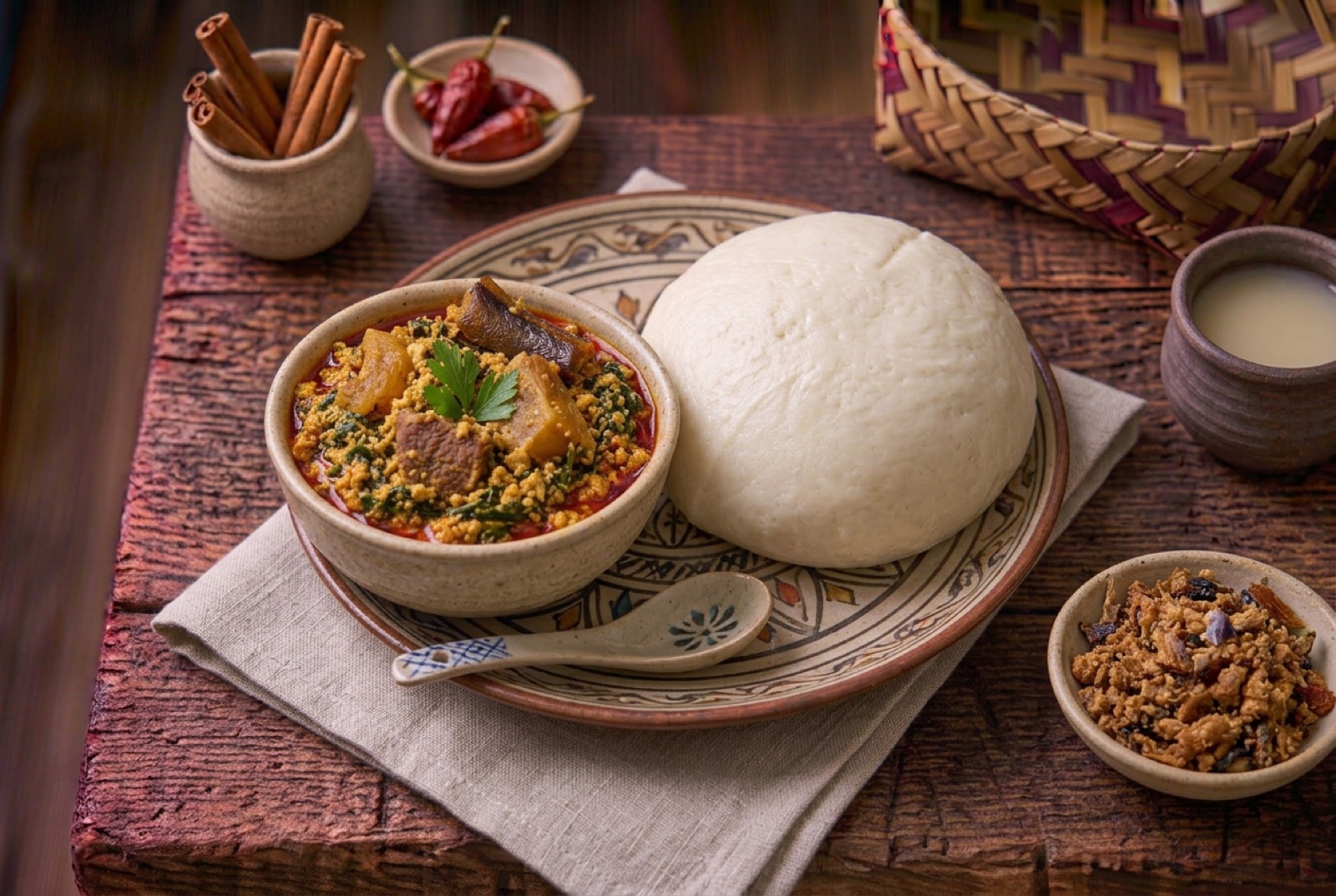
Iyan is boiled white yam beaten into a dough so smooth it looks polished. There is nothing in it but yam, water and the work of a pestle, and that is the point: the flavour is mild, faintly sweet and clean, because it exists to carry a soup rather than compete with one. Correctly made it is dense but elastic, pulling into a thread when you tear off a piece and springing back if you press it. It is the most prestigious of the Nigerian swallows, the one served to guests and at ceremonies, and its reputation rests entirely on texture — a lumpy bowl of iyan is a visible failure that no amount of good soup will hide.

- Gate
- NigeriaSouth-West
- Prep
- 15 min
- Cook
- 35 min
- Total time
- 50 min
- Serves
- 4
- Status
- Medium
- Nutrition / serving · estimated
- Calories 400 kcal
- Protein 5 g
- Carbs 95 g
- Fat 1 g
- Fiber 6 g
- Sodium 20 mg
Why this recipe works.
- Covers the actual pounding technique — the fold between blows — which is what makes the difference between smooth and lumpy.
- Explains how to choose and cut white yam, since the wrong tuber never comes good however hard you beat it.
- Gives a tested food-processor method for people without a mortar, and says plainly where it falls short.
- Sets out how to shape, wrap and serve the balls so they stay warm and pliable at the table.
Ingredients.
4 itemsEquipment
- Large pot
- Wooden mortar and pestle, or a food processor with a dough blade
- Bowl of cold water
- Cling film for shaping
Instructions.
Peel and cut the yam
Cut the tuber into 4 cm discs, then pare away the thick brown skin and the pale fibrous layer just beneath it. Drop the pieces into cold water as you go so the cut surfaces do not oxidise and grey.
Tip Yam sap can irritate skin and dries sticky. Rinse the knife and your hands as you work.
Boil until fully soft
Cover the yam with fresh water, add the salt if using, and boil for 25 to 30 minutes. It is ready when a knife slides through a piece from edge to centre without catching anywhere and the outer surfaces are just beginning to break up.
Tip Test the biggest piece, not the nearest one. One firm core ruins the whole batch.
Drain and start pounding
Reserve a mugful of the cooking water and drain the yam. Tip the hot pieces into the mortar and break them down with steady vertical blows of the pestle until no whole chunks remain, about 3 minutes.
Fold and pound to smoothness
Now work in rhythm: strike, then fold the mass over on itself with a wet hand or the back of a wooden spoon before the next blow. Add the reserved hot water a splash at a time. Keep going for 8 to 12 minutes, until the dough is uniformly white, glossy and shows no visible lumps.
Tip A second pair of hands turning the yam between blows halves the effort and improves the result.
Test the pull
Pinch off a small piece and stretch it. Finished iyan pulls into a smooth thread before it breaks and springs back when pressed with a fingertip. If it tears short or feels grainy, wet your hands and pound for another two or three minutes.
Shape and serve
With wet hands, tear the dough into four portions and roll each into a smooth ball, then wrap in cling film or set on a plate under a cloth. Serve hot alongside a soup, allowing one ball per person.
Tips from our kitchen.
- Buy true white yam with rough brown skin and firm, snow-white flesh. Sweet potato, taro and water yam behave completely differently and will not pound.
- Cut the yam into even 4 cm rounds so every piece finishes cooking at the same moment. Uneven chunks guarantee lumps.
- Boil until a knife goes through with no resistance at all. Yam that is merely tender still holds firm cores that survive pounding.
- Pound the yam while it is genuinely hot. As it cools it stiffens, stops absorbing water and starts fighting back.
- Keep a bowl of cold water beside you and wet your hands and the pestle constantly, or the dough will glue itself to everything.
- Wrap each finished ball in cling film while still hot; it holds shape and stays soft for an hour without drying at the edges.
Substitutions.
- Fresh white yam → Instant pounded yam flour (poundo yam), whisked into boiling water
- Three minutes instead of forty and genuinely widely used in Nigeria. Expect a slightly pasty texture and a duller flavour — it is a shortcut rather than a match.
- Wooden mortar and pestle → A food processor with the dough blade, or a stand mixer with the paddle
- Work in short bursts with hot yam and a little cooking water. It gets impressively close, though the pull is slightly shorter than hand-pounded iyan.
- Pounded yam entirely → Eba, made by stirring cassava garri into hot water
- A different swallow with a tangier taste and grainier bite, but it takes five minutes and pairs with every soup iyan does.
Variations.
- Amala
- Made from elubo, dried yam milled into a dark flour, stirred into boiling water into a soft brown swallow. Standard in Ibadan and Abeokuta, and the usual partner for ewedu and gbegiri.
- Yam and plantain iyan
- A portion of ripe plantain boiled and pounded together with the yam, giving a sweeter, softer, faintly yellow swallow. Common where yam is expensive or scarce.
- Fufu
- Fermented cassava pounded to a similar smooth dough. Sourer and stickier than iyan, with its own devoted following and a much stronger smell during cooking.
Storage & reheating.
Iyan is at its best within an hour of pounding and stiffens as it cools. Wrapped tightly in cling film it holds at room temperature for a few hours; refrigerated it turns hard and rubbery, but it comes back if you steam a ball for 5 minutes or microwave it under a damp cloth for 60 seconds and knead it briefly. Do not freeze it — thawed pounded yam weeps water and never regains its pull. If you are cooking ahead, boil and refrigerate the yam chunks instead, then reheat and pound just before eating.
Serve with
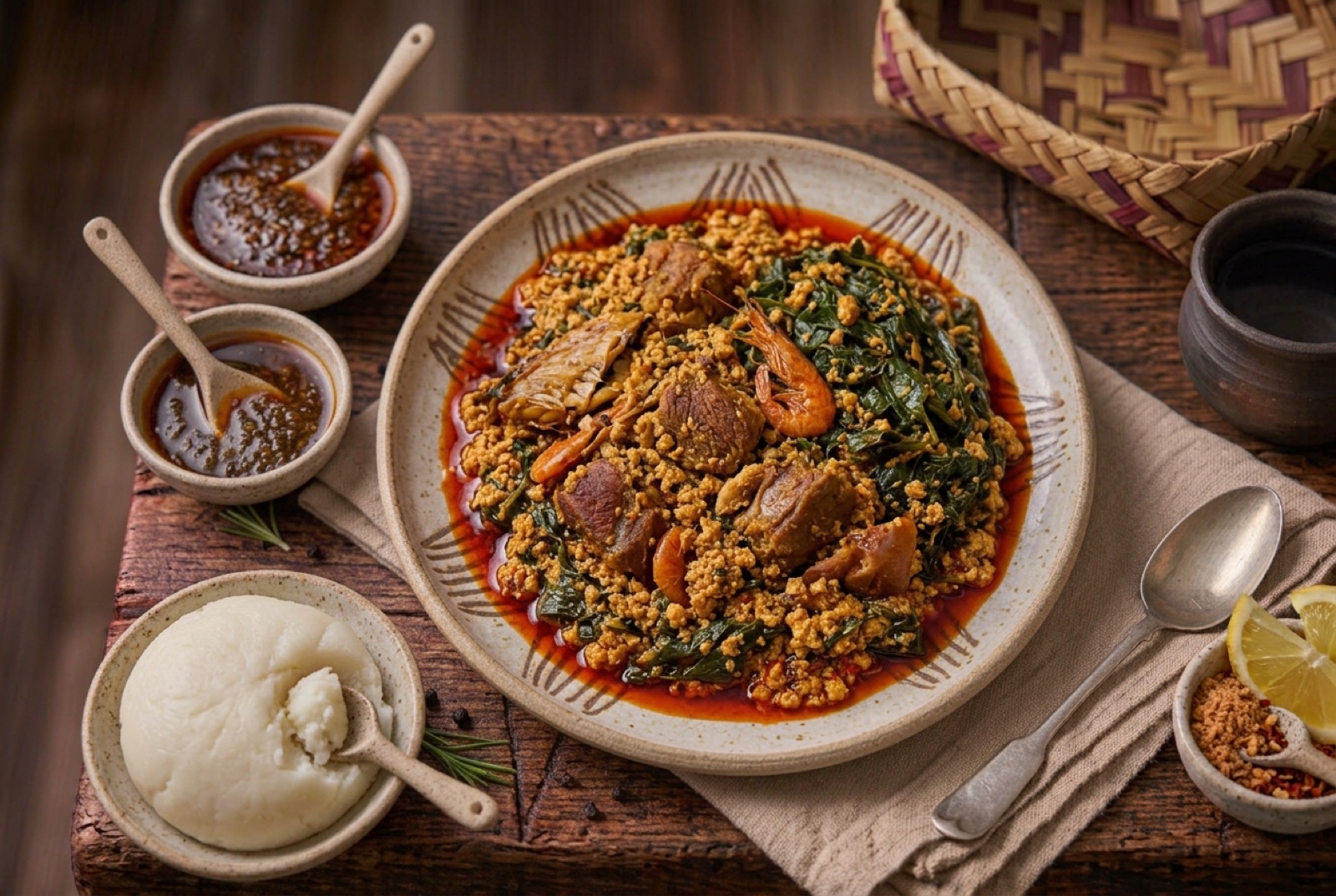
Egusi soup, efo riro, bitterleaf soup or okra soup — iyan is never eaten alone.
The story behind Iyan.
White yam, Dioscorea rotundata, is the crop this dish is built on, and West Africa grows the overwhelming majority of the world's supply. Nigeria alone accounts for the largest share, and in Yoruba, Igbo and Middle Belt farming communities the yam has a standing no other vegetable has: new yam festivals mark the harvest, tubers are given as gifts and bride price, and a household's barn of yams is a measure of its security. Pounding them into iyan is the most respected way to eat one.
The traditional method is physical and communal. Peeled chunks of yam are boiled, then transferred hot into a tall wooden mortar — odo — and struck with a heavy pestle while a second person turns and folds the mass between blows, wetting their hands so it does not stick. Two people working in rhythm can bring a batch to smoothness in ten minutes; one person alone takes considerably longer and will feel it the next day. The sound of pounding in the early evening is a recognisable domestic noise across southwestern Nigeria, and the arrival of electric yam pounders in urban kitchens has been treated as both a convenience and a small loss.
There is also a widely used shortcut, and it is worth being clear about it. Instant pounded yam flour, sold as poundo yam, is dried yam milled to a white powder that you whisk into boiling water; it produces a passable swallow in three minutes and a great many Nigerian households use it on weeknights without embarrassment. It is not the same thing. Real iyan has a springier pull, a cleaner yam taste and a slight sweetness the instant version flattens. This recipe pounds the real thing, and gives the flour method honestly as what it is: a fallback, not an equal. Note that poundo yam and elubo are different products — elubo is the darker yam flour used for amala, which is another swallow entirely.
Questions, answered.
What kind of yam do I need for pounded yam?
White yam, sold in African and Caribbean shops as puna or white guinea yam, with rough bark-like brown skin and dense white flesh. It is not related to sweet potato, which is sometimes labelled yam in North American supermarkets and will collapse into sweet mush if you try to pound it. Water yam and taro also behave differently and are used for other dishes.
Why is my pounded yam lumpy?
Almost always undercooked yam or uneven pieces. Any part of the tuber that is still firm when it goes into the mortar stays as a lump no matter how long you pound. Cut even rounds, boil until a knife meets no resistance anywhere, and start pounding while the yam is still hot enough to be uncomfortable to touch.
Can I make pounded yam without a mortar and pestle?
Yes. A food processor fitted with the dough blade, or a stand mixer with the paddle attachment, will bring hot boiled yam to a smooth elastic dough in a few short bursts with a little cooking water added. Electric yam pounders sold for exactly this purpose are common in Nigerian city kitchens. The texture is very close, if a shade less stretchy.
How do you actually eat pounded yam?
With the right hand. Pinch off a walnut-sized piece from the ball, roll it lightly between your fingers, press a small dent into it with your thumb, use that to scoop up soup, and swallow it without chewing much. The swallow is the vehicle and the soup carries the flavour, which is why chewing it is considered slightly odd.
Is pounded yam gluten-free?
Yes. It contains nothing but yam, water and salt if you use any, so it is naturally gluten-free, vegan and free of dairy and nuts. Check the label if you use instant pounded yam flour, since a few brands are milled in facilities that also handle wheat.
You might also like.
All recipes →
Keep exploring Nigeria.
Nigeria has 9 more dishes in the atlas — Akara and Ayamase, and 7 more.
Recipe by The DishRoute Kitchen · published August 20, 2026 · updated August 20, 2026